


You've probably tried a dozen
Why Supima cotton matters for a women's t-shirt
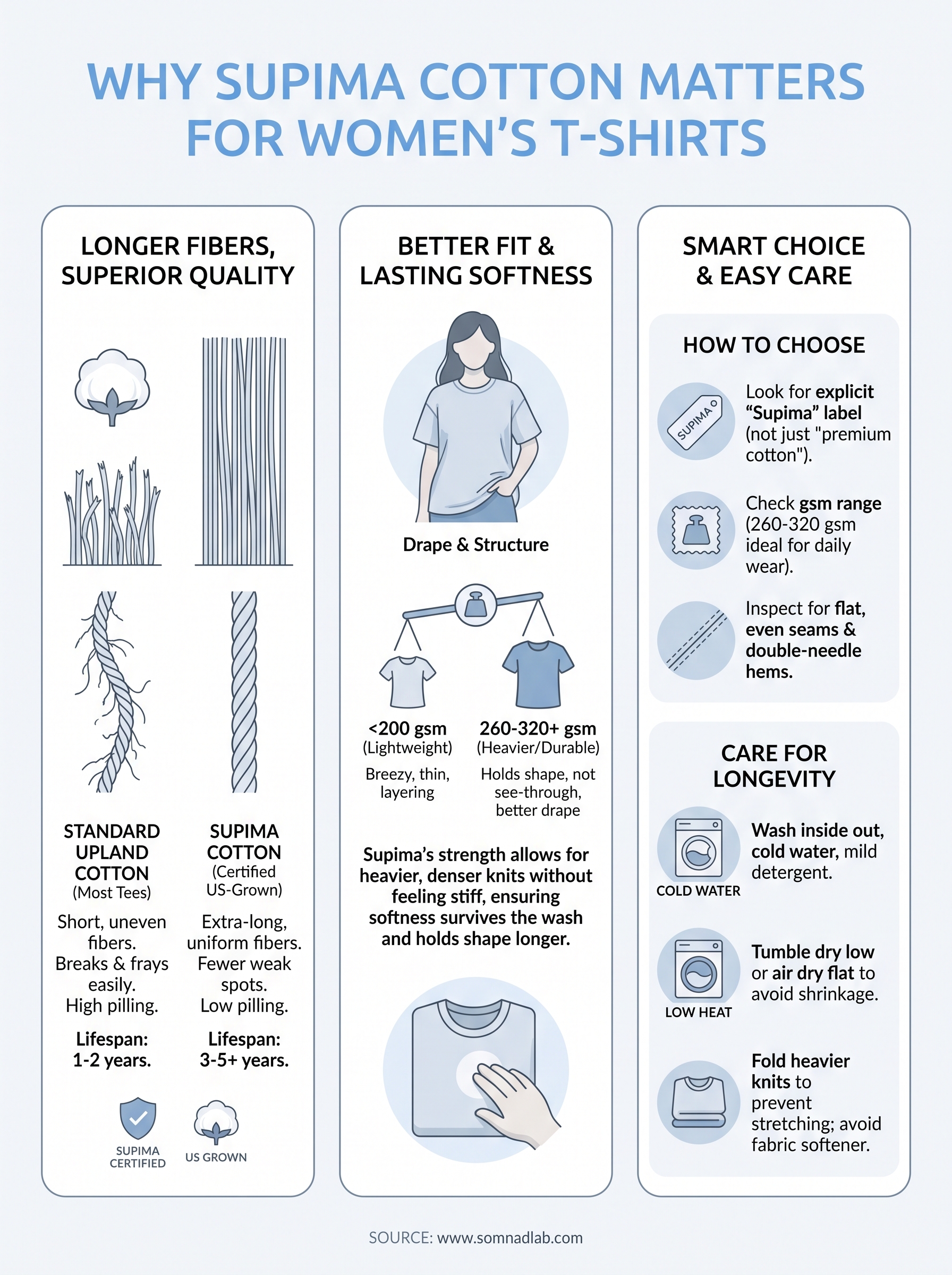
Every great t-shirt starts with the fiber, not the finish. Supima cotton is grown only in the United States from an extra-long staple variety of cotton, and that extra length is what separates a shirt you keep for years from one you toss after a season. When you're shopping for a supima cotton t-shirt for women, you're really shopping for fiber quality first, because everything else, the softness, the drape, the way it holds its shape, traces back to how long and strong those individual cotton strands are.
Longer fibers, fewer weak spots
Standard upland cotton, the kind used in most mass-market tees, has short, uneven fibers that break and fray with washing. Supima fibers run noticeably longer, which means the yarn spun from them has fewer loose ends poking out. Fewer loose ends means less pilling, less fuzzing, and a smoother surface that keeps looking new after dozens of wash cycles. According to the Supima organization, which certifies and promotes the fiber, less than 1% of cotton grown worldwide qualifies as Supima, which explains why it costs more and why it's worth the difference.
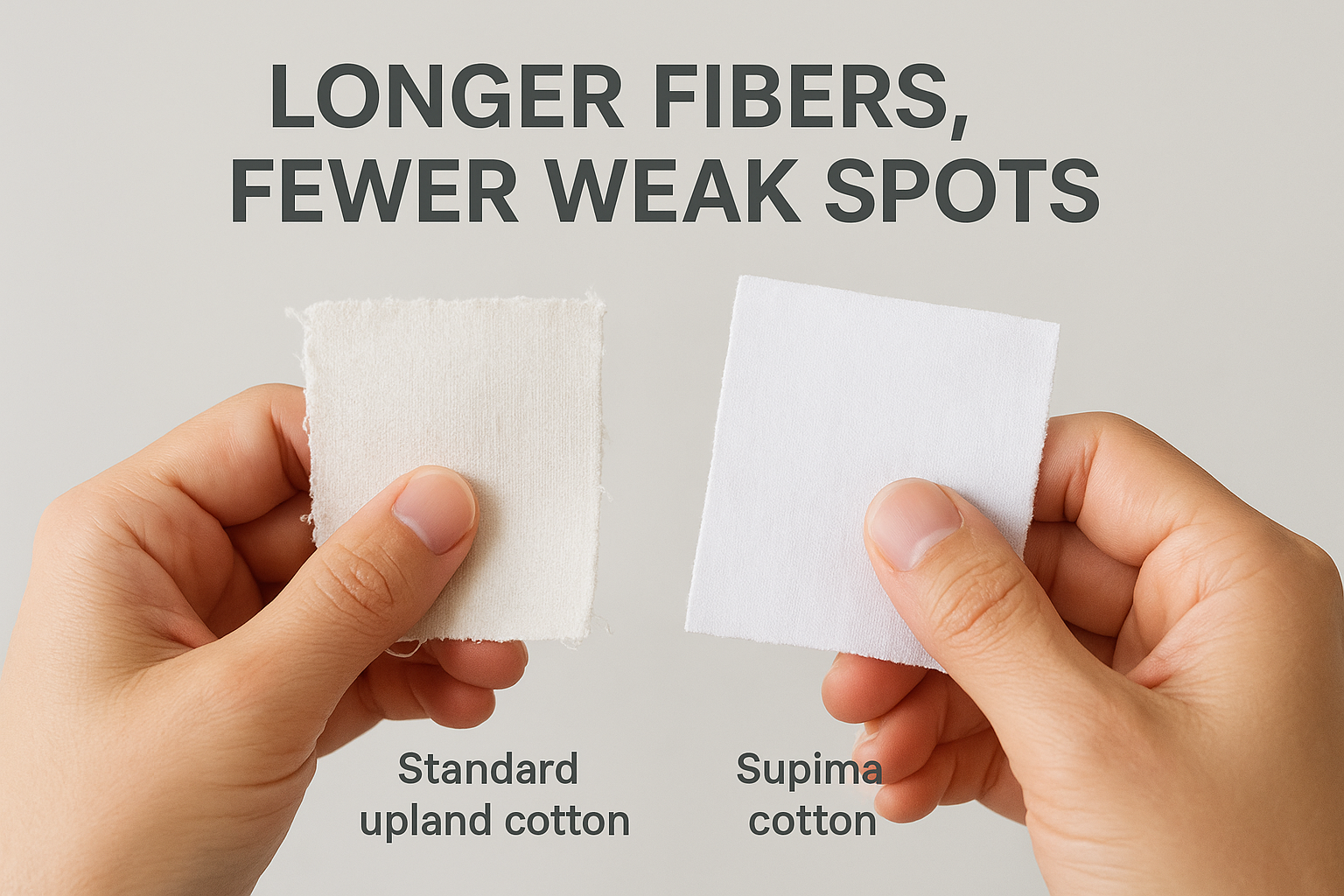
| Cotton type | Fiber length | Pilling tendency | Typical lifespan |
|---|---|---|---|
| Standard upland cotton | Short, uneven | High | 1-2 years |
| Supima cotton | Extra-long, uniform | Low | 3-5+ years with proper care |
A t-shirt is only as good as the fiber it starts from, and Supima starts longer.
Softness that survives the wash
Softness sells the first touch, but durability is what keeps you coming back. A lot of "soft" tees feel great in the store and then go stiff or thin after a few washes because the short fibers break down fast. Supima keeps its hand feel wash after wash because the long fibers resist the friction and abrasion that wreck shorter staple cotton. That's the real test of quality, and the honest answer to whether Supima cotton is worth the extra cost: not how a shirt feels on day one, but how it feels on day one hundred.
Why it matters for fit and drape
Growing appreciation for minimalist, no-logo basics, like the plain t-shirts for women that look expensive, has made fabric weight and drape more important than ever, since there's no branding to distract from a bad fit. Supima's strength lets manufacturers use a heavier, denser knit, like the 300g weight found in our relaxed tee, without the fabric feeling stiff or boxy, and it helps to know how a 210gsm and a 300gsm tee differ in drape. Heavier doesn't mean hotter or bulkier here, it means the shirt hangs properly on the body and doesn't go see-through or shapeless after a wash. That combination of weight and softness is exactly why a well-made supima cotton t shirt women reach for tends to outlast the trendier basics stacked next to it on the shelf.
How to choose the right Supima cotton t-shirt
Picking a supima cotton t-shirt for women gets a lot easier once you know what to look for beyond the price tag. Start with the label. Brands that actually use certified Supima fiber will say so explicitly, often with a reference to the Supima trademark itself, not just a vague "premium cotton" claim. If a product page can't tell you the fiber source, weight, or knit type, that's a red flag worth noticing before you add anything to your cart.
Check the fabric weight
Weight tells you more about durability than any marketing copy will. Lightweight tees under 200 grams per square meter (gsm) feel breezy but wear thin fast, while anything in the 260 to 320 gsm range, the territory most heavyweight cotton tees made for daily wear sit in, holds structure through years of washing. Supima's strength is what makes the heavier weights comfortable instead of stiff, so don't assume heavier automatically means hotter or bulkier.
| Weight (gsm) | Feel | Best for |
|---|---|---|
| Under 200 | Thin, breathable | Layering under jackets |
| 200-260 | Medium, versatile | Everyday casual wear |
| 260-320+ | Substantial, structured | Standalone tee, cooler climates |
The fiber gives you softness, but the weight gives you a shirt that holds its shape.
Look at the knit and stitching
Stitching quality separates a t-shirt built to last from one that unravels at the seams within a month. Flip the shirt inside out before buying if you can, and look for flat, even seams rather than loose or puckered stitching. Double-needle hems on the sleeves and bottom are a small detail that signals a manufacturer took construction seriously.
Match the fit to how you'll wear it
Fit determines whether a supima cotton t-shirt women actually reach for daily, or one that sits in a drawer, so it pays to know how a relaxed cut differs from a regular one. Consider these questions before buying:
- Do you want a relaxed, boxy silhouette or a fitted cut?
- Will you layer it under jackets or wear it alone?
- Does the brand offer true size range consistency across colors?
Getting these answers right up front saves you from returns and disappointment later.
Supima vs. Pima cotton: what's actually different
Shoppers mix these terms up constantly, and honestly, the marketing on a lot of mid-tier brands doesn't help. Pima cotton is a general category, an extra-long staple cotton grown in several countries including Peru, Australia, and the US. Supima is a specific, trademarked subset of that category, grown exclusively in the American Southwest and certified by the Supima organization itself, which is where the real differences in quality and value between Supima and Pima start. Every Supima fiber is technically Pima cotton, but not every Pima fiber qualifies as Supima. That distinction is the whole reason a supima cotton t-shirt for women commands a higher price than a shirt labeled simply "Pima cotton."
Why certification changes quality
Certification means someone is actually checking the fiber, not just the marketing copy. Growers who want the Supima label submit their crop for testing on fiber length, strength, and uniformity, and only the top tier passes. Generic "Pima cotton" claims carry no such oversight, so a shirt tagged that way could contain fiber blended from lower grades, shorter staples, or crops that never went through independent verification. You're trusting the brand's word instead of a third-party standard.
Pima tells you where the cotton might have come from. Supima tells you it actually passed the test.
A quick side-by-side
Here's how the two stack up when you're comparing labels on a rack or a product page:
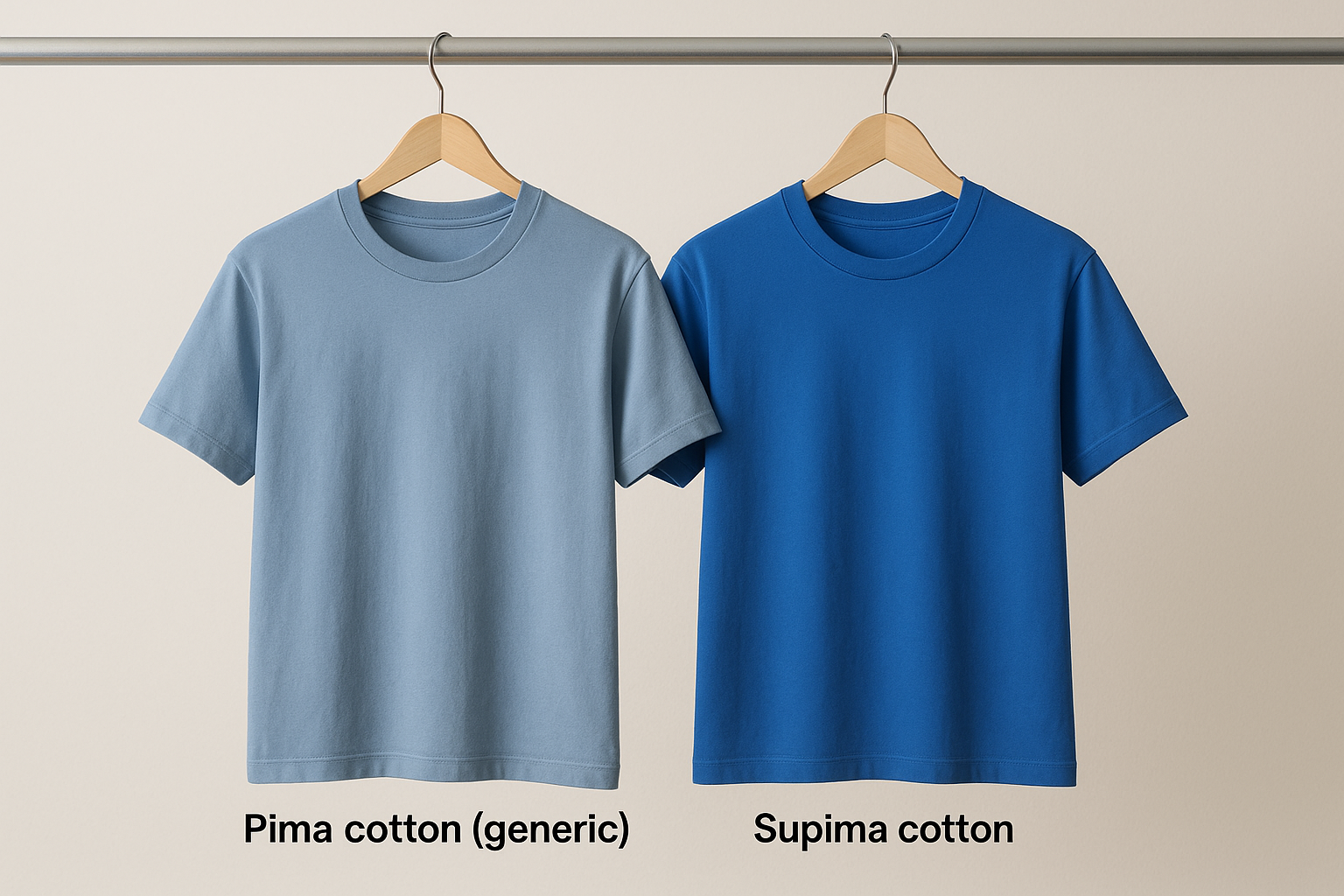
| Factor | Pima cotton (generic) | Supima cotton |
|---|---|---|
| Growing region | Peru, Australia, US, others | US only |
| Certification | None required | Verified by Supima organization |
| Fiber consistency | Variable | Uniform, extra-long staple |
| Typical price point | Mid-range | Premium |
| Traceability | Limited | High, tied to certified US farms |
What this means when you shop
Reading a hangtag or product description with these differences in mind changes how you evaluate a supima cotton t shirt women consider adding to their closet. If a brand says "Pima" without naming Supima specifically, ask why. It might still be a decent shirt, but it's not held to the same fiber standard, and you're paying premium prices without the certification to back it up. Look for the actual word "Supima" on the label or product page, since that single word carries a verifiable standard behind it that "Pima" alone simply doesn't guarantee.
How to care for a Supima cotton t-shirt
Owning a supima cotton t-shirt for women means treating it a little differently than a bargain tee, because the same long fibers that make it soft also respond better to gentle handling. Machine washing is fine, but cold water and a mild detergent protect the fiber's natural strength far longer than hot water and harsh cleaners. Skip fabric softener too, since it coats the fibers with a residue that actually dulls the softness you paid for.
Treat the fiber gently and it rewards you with years of wear, not months.
Washing right
Turn the shirt inside out before it goes in the machine. This one habit cuts down on surface friction against zippers, buttons, and other fabrics in the load, which is where most pilling starts. Wash with like colors and avoid overloading the machine, since a crowded drum means more fiber-on-fiber abrasion during the spin cycle.
Drying and heat
Heat is the real enemy of any supima cotton t shirt women hope to keep for years. Tumble drying on high is how much Supima cotton actually shrinks in practice, and it breaks down fiber structure over time, so a low-heat setting or air drying flat is worth the extra patience. Skip the dryer sheets for the same reason you skip fabric softener, residue buildup flattens the fiber's natural loft.
Storage and small habits
Folding instead of hanging keeps a heavier knit, like a 300g tee, from stretching out at the shoulders over time. A few habits go a long way:
- Wash inside out, cold water, mild detergent
- Air dry flat or tumble dry on low
- Fold rather than hang for heavier weights
- Spot-treat stains instead of scrubbing the whole shirt
Given how these tees are priced, a few extra minutes of care each wash cycle is a small trade for a shirt that still looks new a few years in.
Finding your everyday Supima tee
Good basics aren't complicated once you know what to check. Fiber quality, fabric weight, and honest labeling tell you almost everything about whether a shirt will hold up, and a genuine supima cotton t-shirt for women should pass all three tests without hesitation. Skip the vague "premium cotton" claims and look for the actual Supima name, a weight in the 260 to 320 gsm range, and stitching that holds up to a close look before you buy.
Nothing here is complicated, but it does mean paying attention to details most brands hope you'll skip. That's the whole point of buying fewer, better basics instead of restocking cheap tees every season. If you want to see what a properly built, no-logo supima cotton t shirt women actually reach for looks and feels like, compare the premium relaxed fit t-shirts for women worth buying and judge the fabric for yourself.