


If you've started paying attention to fabric labels, you've probably run into the Supima cotton vs Pima cotton question. Both names get thrown around in product descriptions for premium clothing, bedding, and towels, often interchangeably. But they're not the same thing, and the distinction matters when you're spending real money on pieces you expect to last.
Pima refers to a type of extra-long staple cotton. Supima is a certified subset of it, grown exclusively in the United States under strict quality controls. That difference sounds small on paper, but it shows up in how fabric feels after a year of wear, how well it holds its shape, and whether the price tag actually reflects what you're getting. It's a distinction we care about at SÖMNAD, our tees are built from 300g Supima cotton because we tested both, and the performance gap is real.
This article breaks down the technical differences between Supima and Pima cotton, covers where each one excels, and helps you decide whether the premium is justified for your needs.
What makes Pima and Supima different
Both Pima and Supima cotton belong to the Gossypium barbadense species, which produces longer, finer fibers than standard upland cotton. The fiber length is what separates these cottons from the commodity cotton used in most mass-market clothing. Calling them interchangeable because they share a species is like treating a regional wine and a certified estate bottle as identical because they come from the same grape.
Where Pima cotton comes from
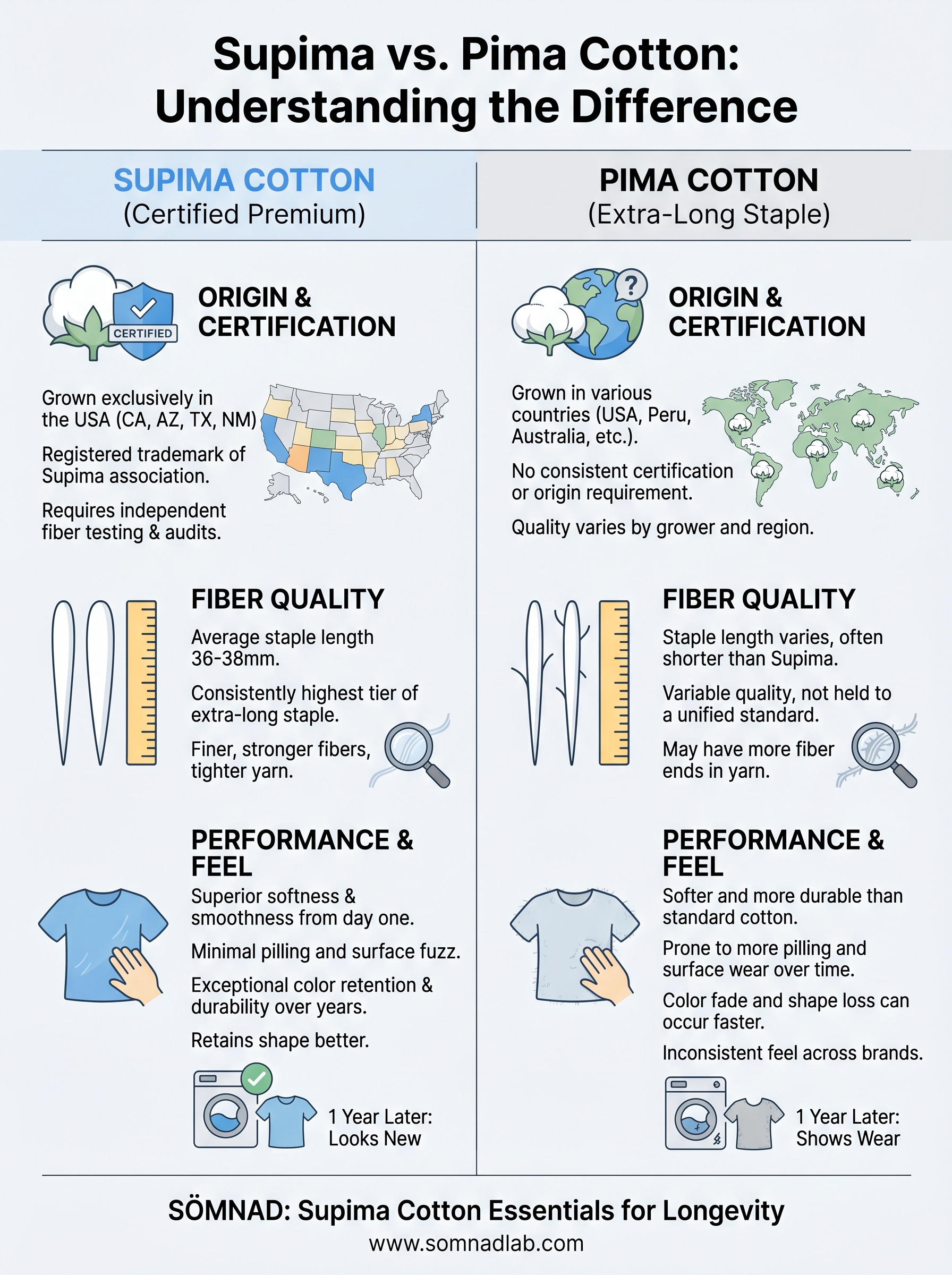
Pima cotton gets its name from the Pima Native American people of Arizona, who helped develop the crop in the early 20th century. Today, Pima cotton grows across several countries, including Peru, Australia, and the United States. The label "Pima" itself carries no geographic or quality certification requirement, which means any grower can apply the name to their extra-long staple cotton regardless of where it was produced or how it was processed.
That absence of standards creates real inconsistency. A Pima cotton shirt from one brand may feel noticeably different from one sold by another, even though both labels say the same thing. When you're comparing Supima cotton vs Pima cotton, this lack of standardization is one of the most practically important distinctions to understand before you spend money on a premium item.
What Supima certification actually means
Supima is a registered trademark managed by Supima, a nonprofit trade association that represents growers of American Pima cotton. To carry the Supima label, a product must use cotton grown exclusively in the United States, specifically in California, Arizona, Texas, and New Mexico, and it must pass independent fiber testing that verifies staple length, strength, and color grade.
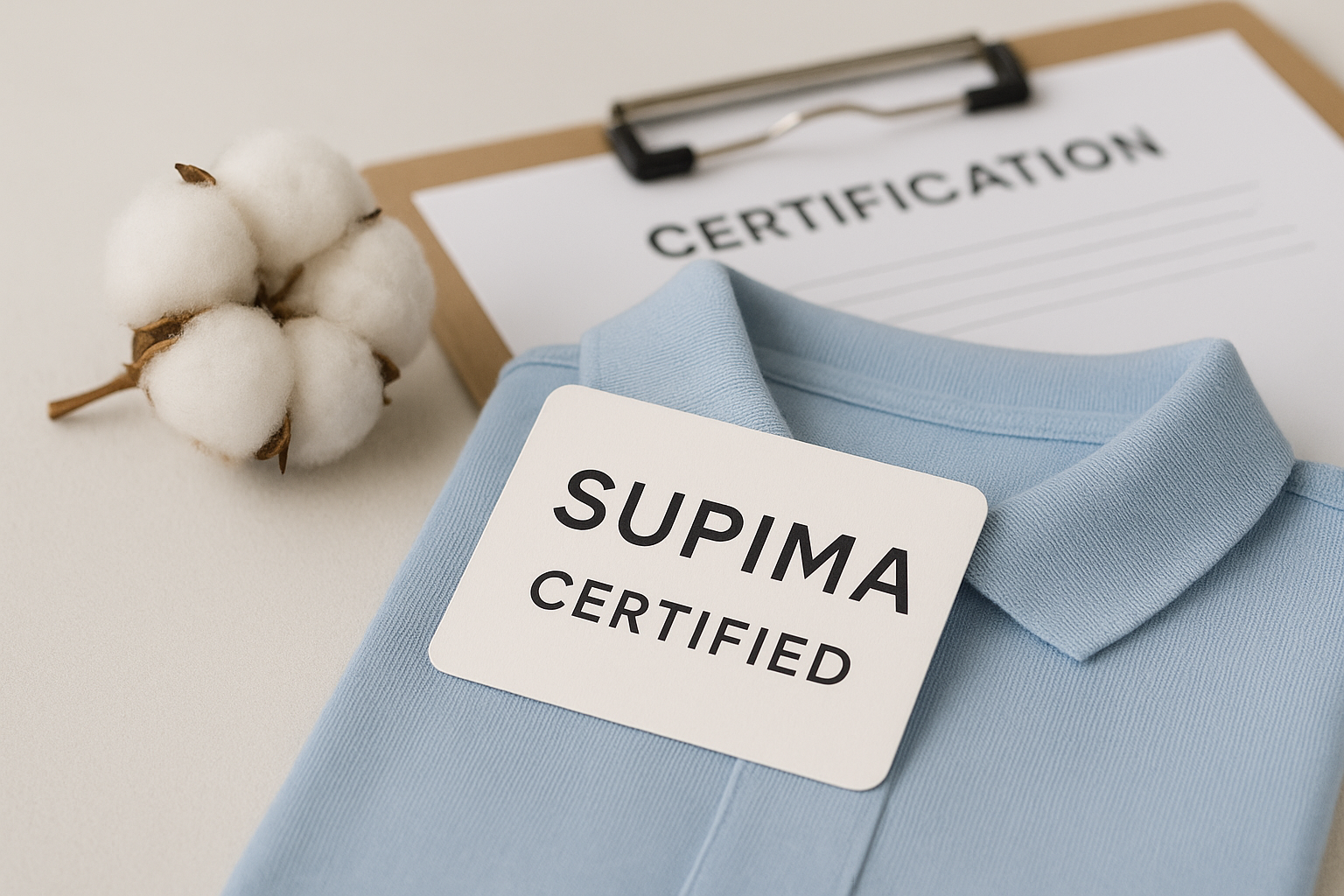
The Supima certification creates a traceable supply chain from field to finished product, which is something the broader Pima label cannot guarantee.
Brands that license the Supima trademark agree to audits and supply chain verification throughout production. That level of accountability is uncommon in the cotton industry, and it's why two garments using the same marketing language can deliver completely different results in your hands depending on which one carries the Supima mark.
The quality gap in practice
Supima cotton fibers average 36 to 38 millimeters in staple length, placing them at the top end of what extra-long staple cotton produces. Standard Pima cotton, depending on origin and growing conditions, often falls shorter. Longer fibers mean fewer fiber ends protruding from the yarn, which translates directly to less pilling, reduced surface fuzz, and a smoother hand feel that holds up through repeated washing.
These differences compound over time. A well-constructed Supima garment at 300 grams per square meter will still feel close to new after a year of weekly washes. Pima cotton without certification, even when marketed as premium, tends to show wear much faster because the fiber quality and yarn construction are not held to a consistent, verifiable standard.
Why extra-long staple cotton feels better
When you run your hand across a fabric and immediately notice it feels different from what you expected, fiber length is usually the reason. Extra-long staple cotton, the category that both Supima and Pima belong to, produces fibers that spin into tighter, smoother yarn with fewer exposed ends poking out from the surface. That structural difference is what separates a shirt that feels refined from one that feels like any other shirt on the rack.
Fiber length changes the feel from day one
Standard upland cotton fibers measure roughly 25 to 28 millimeters in length. Extra-long staple cotton starts at 34 millimeters and goes higher from there. Those additional millimeters allow manufacturers to spin finer yarn counts without sacrificing tensile strength, which means the finished fabric sits closer to your skin with less friction and almost no surface texture to irritate you. You notice the difference the moment you put the garment on, not just after it has been through a dozen wash cycles.
Longer fibers also reflect light more evenly across the fabric surface, which is why premium long-staple cotton often looks noticeably richer in color than cheaper alternatives made from short-staple yarn.
Why the difference compounds over time
Short-fiber cotton starts to pill and shed almost immediately, because the loose fiber ends catch on each other during both wear and washing. Long-staple fibers stay locked into the yarn structure far longer, which keeps pilling and surface degradation minimal even after repeated laundering. When you are comparing Supima cotton vs Pima cotton on this specific point, both outperform standard cotton by a wide margin, though certified Supima holds the edge because its staple length and fiber strength meet a consistent, verified standard rather than varying by country of origin or growing season.
This durability is not just a comfort factor. It functions as a cost-per-wear calculation. A well-constructed 300g Supima tee that still looks and feels sharp after two years of regular wear costs far less than a cheaper shirt you replace every six months.
How to choose between Supima and Pima
The right choice depends on what you're buying, how often you plan to use it, and what level of accountability you expect from the label. Both cotton types outperform standard upland cotton by a significant margin, so if your baseline is an average cotton shirt, either upgrade will feel like a clear step forward. The real decision point comes when you're comparing them directly and weighing what matters most to you.
When Pima is the right call
Pima cotton works well for lower-stakes purchases where you want a soft, refined feel without committing to certified premium pricing. If you're buying from a brand with transparent sourcing and a strong track record, uncertified Pima can still deliver a solid experience, since some producers hold their supply chain to high standards even without the Supima trademark.
Good use cases for Pima cotton include:
- Casual wear you plan to rotate out seasonally
- Bedding accessories you replace more frequently
- Items where you want better quality than commodity cotton without strict certification requirements
When Supima is worth the extra cost
Supima becomes the clear choice when longevity and consistency matter most. If you're building a wardrobe of pieces you plan to wear regularly for several years, the certification removes guesswork entirely. You're getting verified fiber length, verified strength, and a traceable supply chain, not just marketing language on a hangtag. When comparing supima cotton vs pima cotton for investment pieces like everyday tees or premium bedding you wash weekly, Supima's consistent quality standard protects that investment more reliably over time.
If you want fabric that still feels and looks sharp after two years of regular wear, certified Supima is the more defensible choice.
Pay close attention to fabric weight as well. A Supima tee at 300 grams per square meter holds structure and drapes better than a lighter alternative, combining certified fiber quality with substantial construction.
How to spot real Supima and quality Pima
Knowing the difference between Supima and Pima cotton on paper is useful, but identifying it in an actual product is where most buyers lose confidence. Marketing copy on clothing tags and product descriptions frequently uses premium-sounding language without any substance behind it. Understanding what to look for keeps you from paying premium prices for standard cotton with premium branding.
Look for the trademark, not just the name
Real Supima carries a licensed trademark that brands must apply and qualify for through the Supima association. When you're comparing supima cotton vs pima cotton in a store or online listing, look for the official Supima trademark logo on the label or product page, not just the word "Supima" in a headline. Any brand can write "Supima-quality" in ad copy, but only licensed brands can display the actual trademark, because the association audits usage and pulls licenses from non-compliant manufacturers.
If the product page describes the cotton as Supima without linking to any licensing or certification detail, treat that claim with skepticism.
Evaluate Pima quality without certification
Pima cotton without a certification mark requires more scrutiny on your part, but a few practical signals help you separate well-sourced Pima from something labeled opportunistically. Start by checking where the cotton originates. Peruvian Pima from established mills has a strong reputation for fiber consistency and processing standards, even without the Supima trademark. Look for brands that publish their sourcing information openly rather than burying it in vague material descriptions.
Pay attention to fabric weight as a secondary indicator. Quality long-staple cotton garments typically list GSM (grams per square meter) because producers who invest in good fiber also invest in construction. Lightweight, unspecified "Pima" products with no material details tend to reflect lower-grade sourcing. You can also check customer reviews specifically for comments about pilling after washing, since that is one of the earliest and most reliable signs that the fiber quality does not match what the label claims.
How to care for long-staple cotton
Long-staple cotton, whether Supima or quality Pima, rewards consistent, low-stress laundering more than any other care factor. The fibers are inherently more durable than standard cotton, but poor washing habits accelerate wear faster than the fiber length can compensate for. Getting the basics right from the start is what separates a shirt that still looks sharp after three years from one that looks tired after six months.
Washing and temperature
Turn your garments inside out before washing to protect the outer surface from friction against other items in the drum. Use cold or warm water rather than hot, since high temperatures stress the fiber structure and cause shrinkage even in well-constructed long-staple cotton. A gentle cycle with a mild, pH-neutral detergent cleans effectively without stripping the natural oils that give the fiber its characteristic softness. When comparing supima cotton vs pima cotton pieces you already own, both respond well to this approach, though certified Supima tends to recover more consistently if you occasionally wash at slightly higher temperatures.
Avoid fabric softeners entirely. They coat the fiber surface with a residue that progressively dulls the natural texture and reduces breathability over time.
Keep these wash rules in mind as a quick reference:
- Cold or warm water, never hot
- Gentle cycle only
- pH-neutral detergent without brighteners
- No fabric softeners or dryer sheets
- Wash inside out every time
Drying and storage
Air drying flat is the best option for long-staple cotton knits like tees, since hanging a wet garment stretches the fabric and distorts the shape before it has a chance to set. If you use a machine dryer, keep the heat setting low and remove the piece while a small amount of moisture remains, then finish drying at room temperature. This preserves both fiber integrity and original dimensions.
When storing, fold heavier knit pieces rather than hanging them, since sustained weight on a hanger causes shoulder distortion over time. Keep garments in clean, dry storage away from direct sunlight to prevent yellowing, which affects light-colored long-staple cotton regardless of certification.
Final takeaways
The supima cotton vs pima cotton question comes down to one core issue: how much consistency matters to you. Both cottons outperform standard upland cotton on softness, durability, and long-term appearance. Pima is a solid choice when you're buying from a brand with transparent sourcing and honest material details. Supima removes the guesswork entirely through verified fiber standards, US-grown origin, and licensed trademark accountability that follows the cotton from field to finished product.
For everyday pieces you plan to wear regularly over several years, certified Supima at a substantial fabric weight is the more defensible investment. You get verified quality rather than marketing language, and the performance difference becomes obvious after a year of regular wear and washing. If you want a starting point built around exactly that standard, take a look at SÖMNAD's Supima cotton essentials and see how the material holds up in practice.