


You spent good money on a Supima cotton tee. You pull it from the dryer, hold it up, and something feels off. The fit is tighter. The length is shorter. So, does Supima cotton shrink? The short answer: yes, it can, but significantly less than regular cotton, and how you wash and dry it makes all the difference.
At SÖMNAD, we build our relaxed tees from 300g Supima cotton because the fiber is longer, stronger, and more dimensionally stable than standard cotton. But even premium fabric isn't immune to heat and agitation. We've tested our materials extensively, and we know exactly where the risks are, and how to avoid them.
This article breaks down the actual shrinkage rates you can expect from Supima cotton, what causes it at the fiber level, how it compares to regular cotton and other common fabrics, and the specific care steps that keep your garments fitting the way they should. No guesswork, no vague advice, just practical information based on how this fabric actually behaves.
Why Supima cotton shrinks less than regular cotton
Supima cotton is grown exclusively in the United States from the Gossypium barbadense plant, a species known for producing extra-long staple fibers that typically measure 1.5 inches or longer. Standard upland cotton, the fiber behind most mass-market garments, produces short-to-medium staple fibers averaging closer to 1 inch. That size gap might sound minor, but it creates fundamental differences in how the yarn is constructed, how the fabric behaves under stress, and ultimately, how much your garment shrinks over time.
The fiber length advantage
When cotton is spun into yarn, shorter fibers need more twist to hold together and form a stable thread. That extra twist stores mechanical tension inside the yarn structure. Heat and moisture, both present during washing and drying, cause that tension to release, and the fibers contract. This contraction is what you physically see as shrinkage. Longer Supima fibers require far less twist to form a stable yarn, so the stored tension is lower, and the degree of contraction when heat is applied is reduced accordingly.
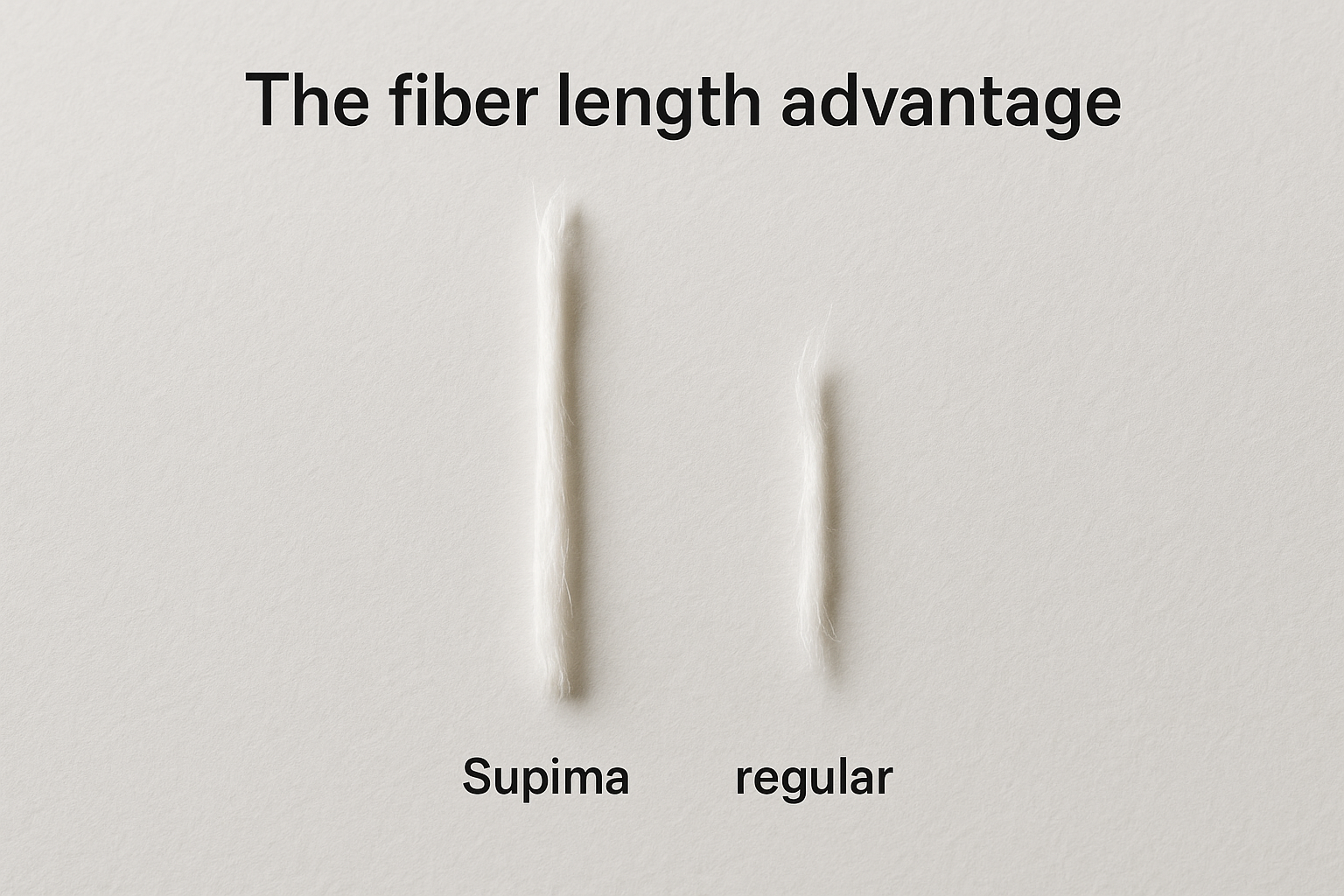
The extra-long fiber length in Supima cotton directly reduces the stored tension in yarn, which is the primary mechanical reason it shrinks less than regular cotton under heat and agitation.
When you consider whether does supima cotton shrink compared to regular cotton, the data consistently shows Supima shrinks at roughly half the rate under equivalent washing and drying conditions. Extra-long staple fiber is the core structural advantage, and it makes a measurable difference in how your garment fits after its first few washes. That said, the fiber alone does not make a garment shrink-proof, and the specific construction and care method still determine the final outcome.
How fabric weight and knit construction affect stability
Fabric weight adds another layer of protection against shrinkage. Heavier cotton fabrics, like the 300g Supima cotton in SÖMNAD tees, contain more fiber mass per square inch. That density gives the structure greater resistance to distortion when exposed to heat and agitation in a dryer or washing machine. Lighter Supima fabrics in the 150g to 180g range are more susceptible because there is simply less material mass to stabilize the structure under stress.
Knit construction also plays a direct role. Jersey knit fabric, the standard construction for most cotton tees, is built from interlocked fiber loops. When those loops are made from long, low-tension Supima fibers, they recover shape more reliably after washing. Short-fiber loops, by contrast, distort more easily and recover less completely, leaving your garment noticeably smaller after several wash cycles. Choosing a garment with both premium fiber and appropriate fabric weight gives you the best starting point for long-term dimensional stability.
What shrinkage rates to expect in real life
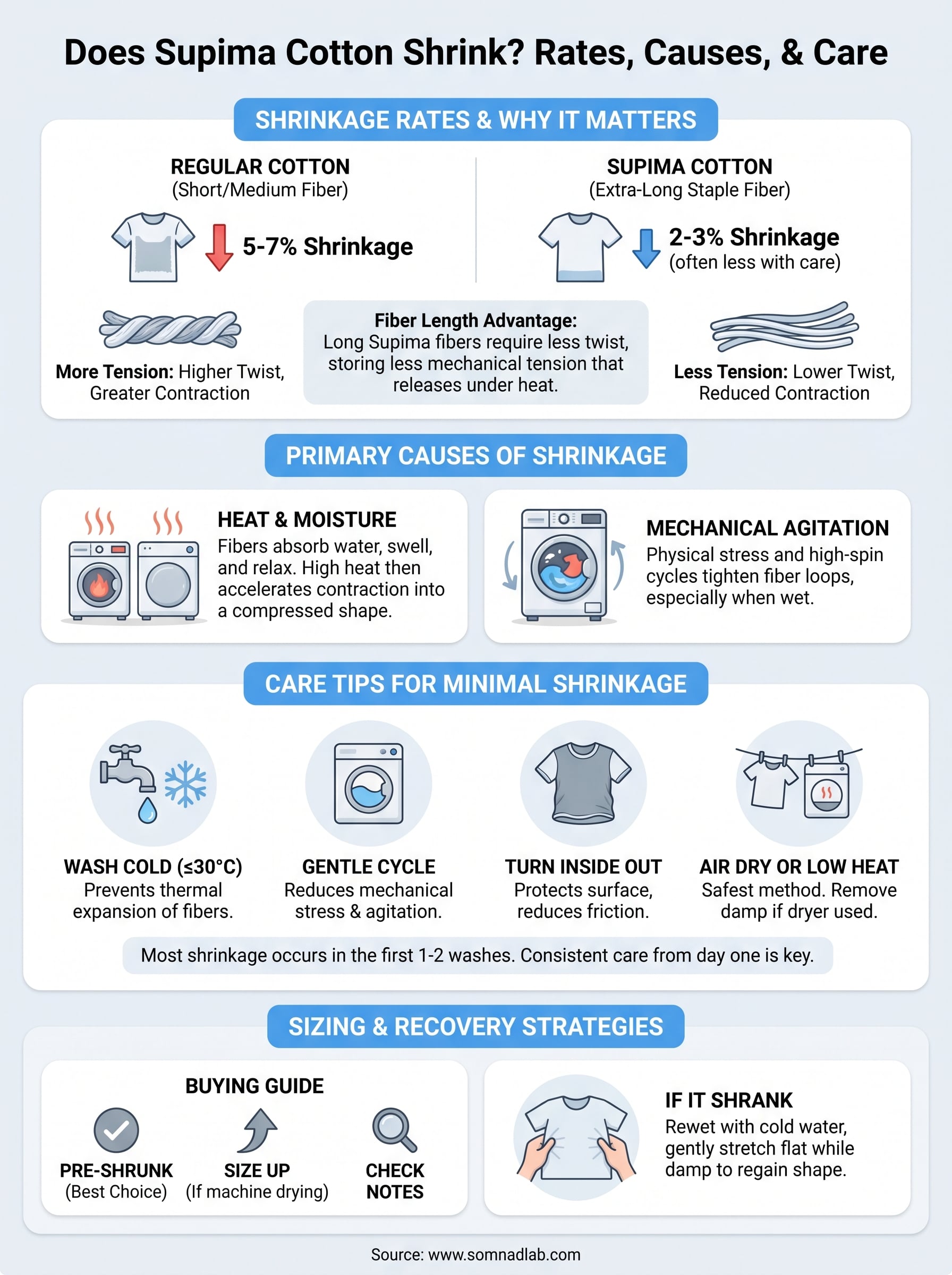
When people ask does supima cotton shrink, the honest answer comes down to specific numbers. Standard upland cotton garments typically shrink between 5% and 7% after the first wash and dry cycle under warm or hot conditions. Supima cotton garments, tested under the same conditions, generally shrink between 2% and 3%, and often less when washed in cold water and air dried. That difference matters in practical terms: a 30-inch shirt body in regular cotton could lose nearly 2 inches in length after a few washes, while a Supima version under careful handling might lose less than 1 inch total.
On a standard tee, the difference between 2% and 6% shrinkage across a 28-inch body length is approximately 1.5 inches, which is enough to change how a garment sits on your torso entirely.
First wash versus long-term shrinkage
The first wash carries the highest shrinkage risk for any cotton garment, including Supima. During this initial cycle, residual tension from the knitting and finishing process releases, and the fabric settles into its more stable resting state. After the first wash, additional shrinkage slows considerably. Most Supima garments stabilize within the first two to three washes, meaning the majority of any dimensional change happens early.
Long-term shrinkage from repeated washing adds up gradually rather than dramatically. A well-constructed 300g Supima cotton tee washed correctly over two years will show far less cumulative change than a lightweight standard cotton shirt after the same number of cycles. Your care habits during those early washes set the trajectory for how the garment holds its shape across its full lifespan, which is why getting the first few cycles right matters more than most people expect.
What causes shrinkage in Supima garments
Even if you know that does supima cotton shrink less than regular cotton, understanding why it shrinks at all helps you prevent it. Cotton fibers, including Supima, are hygroscopic, meaning they absorb water readily. When fibers absorb moisture, they swell and relax, which temporarily disrupts the yarn and fabric structure. Heat then causes those relaxed fibers to contract, and if that contraction happens while the fabric is compressed in a dryer drum, the garment locks into a smaller shape.
Heat and moisture as the primary drivers
Hot water and high dryer temperatures are responsible for the majority of shrinkage in Supima garments. Water causes the fibers to swell by breaking the hydrogen bonds that hold the fiber's crystalline structure in its stretched state. High heat then accelerates contraction as those bonds reform in a compressed position. The result is a garment that is measurably shorter and tighter than when you bought it. Reducing both water temperature and drying temperature directly limits how much this cycle can occur.
The combination of heat and moisture during drying is more damaging to garment dimensions than hot water washing alone, because the dryer applies sustained heat while the fabric is in motion.
Mechanical agitation and its effect on fiber structure
Agitation from your washing machine puts physical stress on the fiber loops in a knit fabric. That stress, combined with moisture, causes the loops to tighten and shift out of position. High-spin cycles compound the problem by compressing wet fabric under centrifugal force before it enters the dryer. For Supima cotton, which carries more structural stability than standard cotton, gentle wash cycles reduce this risk significantly. Choosing a low-agitation or delicate setting gives the fabric room to move without distorting the knit structure permanently.
How to wash and dry Supima cotton to prevent shrinkage
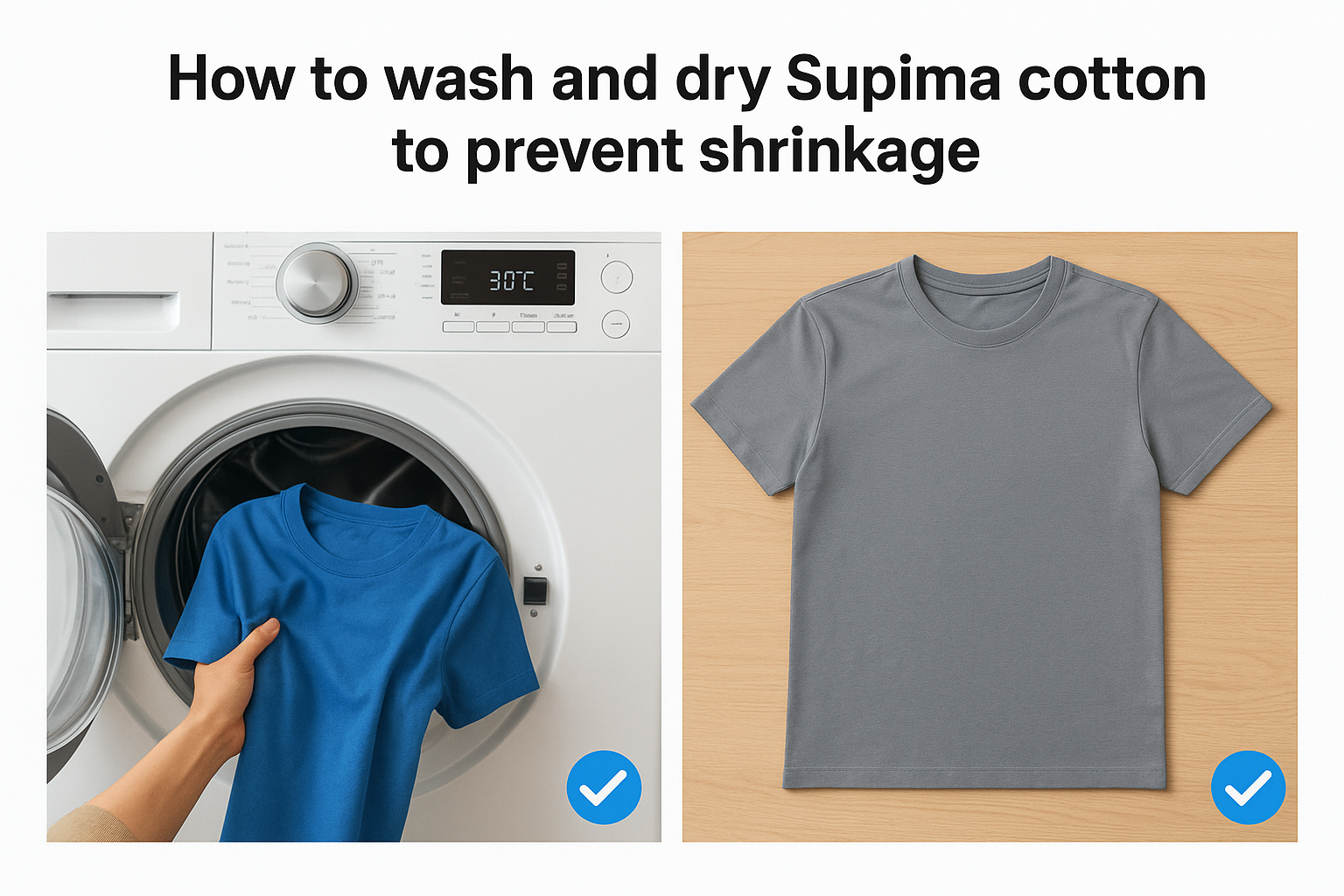
The practical answer to does supima cotton shrink less when cared for correctly is yes, significantly less. Cold water washing and low heat drying are the two most important habits you can build for keeping Supima garments in their original shape. Every decision you make at the washing machine and dryer affects how your tee fits a year from now, so getting the routine right from the first wash is worth the small effort.
The right washing settings
Cold water is your default for every Supima cotton wash. Water temperatures at or below 30°C (86°F) prevent the thermal expansion that loosens fiber bonds and triggers contraction on the dry cycle. Set your machine to a gentle or delicate cycle to reduce agitation, which keeps the knit structure from shifting under mechanical stress. Turn your garment inside out before washing to protect the outer surface and reduce friction against other items in the load.
- Use cold water (30°C or below)
- Select a gentle or delicate wash cycle
- Turn the garment inside out
- Avoid washing with heavy items like jeans or towels
- Use a mild detergent without bleach or optical brighteners
The right drying approach
Air drying is the safest method for any Supima cotton garment. Lay the garment flat on a clean surface rather than hanging it, because wet cotton stretches under its own weight when suspended. If you use a dryer, select the lowest heat setting available and remove the garment while it still feels slightly damp, then lay it flat to finish drying.
Removing your garment from the dryer while it is still slightly damp and finishing the drying process flat reduces heat-driven contraction more than any other single step.
How to handle shrinkage and sizing decisions
The practical question of does supima cotton shrink often comes up when deciding what size to buy in the first place. Pre-shrunk garments have already gone through a controlled shrinkage process at the factory, which means the dimensional change you see at home will be minimal. If a garment is not labeled pre-shrunk, factor in a small reduction, particularly in length, when selecting your size.
Buying the right size from the start
Sizing up by one size is a practical strategy if you plan to machine dry your Supima cotton garments regularly, even on low heat. Most of the shrinkage happens during the first two washes, so a garment that fits slightly loose at purchase will settle closer to your target fit after those initial cycles. Check the product's sizing notes for any pre-shrink information before ordering, since brands that communicate this detail clearly are usually more transparent about their construction overall.
- If the garment is pre-washed or pre-shrunk, order your normal size
- If it is not pre-treated, consider sizing up one step, especially in length
- Air drying from day one keeps your standard size accurate over time
What to do if your garment already shrank
Rewetting a shrunken cotton garment in cold water and then gently stretching it back to its original dimensions while damp can partially restore the shape. Lay it flat on a clean surface and use your hands to ease the fabric outward along the length and across the chest. Repeat this process after each wash if the garment remains slightly tighter than you want, since repeated gentle stretching gradually conditions the fiber structure to hold a larger shape.
This method works best within the first few washes, before the fiber has fully locked into its shrunken position.
Final takeaways
Does Supima cotton shrink? Yes, but far less than regular cotton, and your care routine determines most of the outcome. The extra-long staple fiber in Supima creates a structurally stable yarn that resists the contraction that plagues shorter-fiber fabrics. Most of the dimensional change happens in the first two washes, which means your habits from day one set the trajectory for how the garment fits long term.
Cold water washing, a gentle cycle, and low-heat or air drying are the three habits that protect your investment. If your garment does tighten slightly, rewetting it and stretching it flat while damp can recover most of the lost length before the fibers lock in permanently. Buying pre-shrunk garments from brands that communicate their construction clearly removes most of the guesswork from sizing decisions entirely.
If you want a tee built to hold its shape wash after wash, explore the premium Supima cotton essentials at SÖMNAD.