


Logos used to mean status. Now they mean the opposite. If you have spent any time browsing menswear lately, you have probably noticed the shift toward pieces that whisper instead of shout, and that is exactly what quiet luxury menswear is about: exceptional fabric, precise construction, and zero branding to distract from either.
Finding brands that actually deliver on this is harder than it sounds. Plenty of labels slap a premium price tag on mediocre cotton and call it minimalist. This list cuts through that noise. We looked at fabric weight and sourcing, construction details like reinforced seams and clean drape, and whether a brand's "basics" actually hold their shape after twenty washes, not just five.
Below you will find 12 brands worth your money in 2026, ranging from heritage tailoring houses to newer direct-to-consumer names building understated wardrobes from the ground up, much like the minimalist men's clothing brands built for timeless wear we have covered before. We included SÖMNAD here too, since our approach to 300g Supima tee shirts and no-logo design fits squarely into this category. Read through, and you will walk away with a shortlist for building a wardrobe that looks expensive because it is well made, not because it says so.
1. SÖMNAD
What it's known for
SÖMNAD builds its entire catalog around one idea: a tee shirt should be the hardest-working item in your closet, not the cheapest. The brand sources 300g Supima cotton, a heavier weight than almost anything you will find at a mainstream retailer, and cuts it into a relaxed silhouette that drapes instead of clings, which is why it keeps turning up among the Supima cotton t-shirts that feel truly premium. There is no embroidered logo, no chest print, no tag visible from the outside, which is the same standard we applied when ranking no logo t-shirts for everyday minimalist style. The quality argument rests entirely on hand feel and how the shirt holds its shape after repeated washing, which is the same test we used to judge every other brand on this list.
A quiet luxury tee should look better after twenty washes than it did on day one, not worse.
The philosophy here is "less, but better," and it shows up in small decisions: seams reinforced at stress points, a neckline that resists stretching out, and a fit designed for layering under sweaters and jackets or wearing alone. This is the same logic that drives brands like Auralee and Sunspel, except SÖMNAD sells direct to consumer, which keeps the price closer to production cost than to markup.
Signature pieces
The relaxed tee is the anchor product and the one worth starting with if you are testing the brand, and it holds up well against other boxy, relaxed-cut tees for men. It comes in a small, tightly edited color range rather than a dozen seasonal shades, which fits the minimalist ethos better than a rotating drop calendar would. SÖMNAD keeps the assortment narrow on purpose:
- Relaxed tee (300g Supima cotton, boxy fit)
- Long sleeve version for cooler months
- Core neutral colorway (black, white, stone)
Check the current lineup and sizing notes on the SÖMNAD product pages before you order, since the relaxed cut runs true to size but sits looser through the body than a standard fitted tee.
Price range
SÖMNAD tees land in the affordable end of quiet luxury, generally under $80, which puts the brand well below Auralee or The Row for a comparable fabric weight. That gap matters if you are building a rotation of five or six basics rather than buying one showpiece item. You get the heavier cotton and construction detail without paying for a runway collection subsidizing the tee.
Who it's for
SÖMNAD suits someone who wants one or two genuinely excellent basics rather than a closet full of mediocre ones. If you already own tailored pieces from heritage houses and need a foundation layer that will not pill or sag under them, this is the entry point. It also works well for readers newer to quiet luxury who want to understand the category before committing to four-figure pieces from names like Loro Piana or Zegna further down this list.
2. Brunello Cucinelli
What it's known for
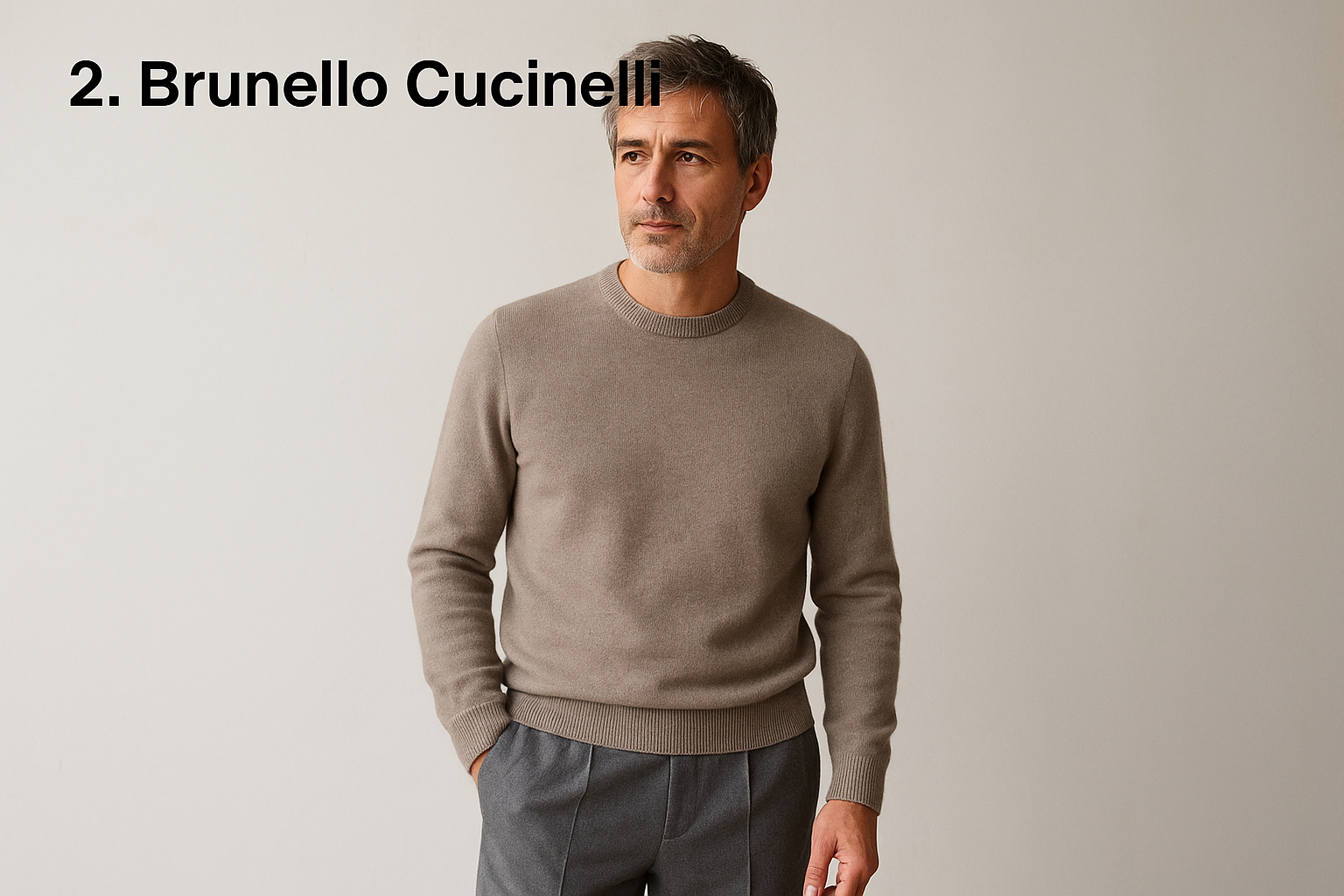
Brunello Cucinelli built an entire company around the idea that cashmere doesn't need a logo to prove its worth. The Italian house, based in Solomeo, is often called the godfather of quiet luxury menswear, and it earned that reputation decades before the term became a search trend. Every piece carries a muted color palette, mostly greige, navy, and stone, chosen specifically so nothing competes with the fabric itself. Craftsmanship happens close to home, with much of the knitwear still produced in small Umbrian workshops rather than outsourced factories.
True quiet luxury doesn't need a search trend to explain why it costs what it costs.
Signature pieces
Cucinelli's cashmere sweaters are the pieces most people associate with the brand, and for good reason. The knit is dense, the shoulder seams sit flat, and the sweaters resist pilling far longer than mass-market cashmere.
- Crewneck and half-zip cashmere sweaters
- Unstructured suiting in wool-cashmere blends
- Suede and leather outerwear
- Relaxed chino trousers with a soft hand
Price range
Expect to pay $1,200 to $3,000 for a cashmere sweater, with outerwear and suiting climbing well past $4,000. This places Cucinelli firmly at the top of the price ladder among understated wardrobe brands, above Zegna and roughly in line with Loro Piana. There's no entry-level tier here the way there is with SÖMNAD or A.P.C., so this is a considered purchase rather than a casual add-to-cart.
Who it's for
Someone who has already built the foundation of their wardrobe and wants a handful of investment pieces that will outlast every trend cycle fits Cucinelli best. It suits readers with the budget for a slower, more deliberate approach to dressing, where two exceptional sweaters replace ten mediocre ones. If the price feels out of reach right now, treat it as the aspirational end of this list and build toward it with more accessible brands first.
3. Loro Piana
What it's known for
Loro Piana controls its supply chain from the raw fiber up, which is rare in menswear and explains why the brand commands such loyalty among quiet luxury buyers. The Italian house sources its own vicuña and baby cashmere, often buying entire harvests before competitors get a look at them, and that vertical control shows up in fabric that feels noticeably finer than what other houses call cashmere. Zegna actually owns a majority stake in Loro Piana today, though the two brands keep distinct identities on the shelf. Color choices stay muted on purpose: taupe, oatmeal, deep navy, nothing that pulls attention away from the hand-feel of the cloth.
When a brand owns the herd, the fabric, and the finishing, the quality argument writes itself.
Signature pieces
Outerwear is where Loro Piana earns its reputation, and the Storm System jacket line in particular has become shorthand for understated wealth dressing.
- Storm System field and bomber jackets
- Baby cashmere sweaters and scarves
- Vicuña overcoats (limited runs)
- Suede loafers and driving shoes
Price range
A cashmere sweater starts around $1,500, and outerwear routinely runs $3,000 to $6,000, with vicuña pieces climbing past $10,000. That puts Loro Piana above Cucinelli on outerwear specifically, though the two trade places depending on the exact garment. There is no discount entry point here, so budget for a single standout piece rather than a rotation, which is the clearest argument there is for buying less and buying better.
Who it's for
Buyers who already understand fabric quality and want the rarest version of it will get the most from Loro Piana. It fits someone building a small collection of outerwear that will still look right in fifteen years, not a shopper looking for everyday basics. If that budget feels steep, the fabric philosophy still applies at a fraction of the cost with brands like Sunspel or SÖMNAD.
4. The Row
What it's known for
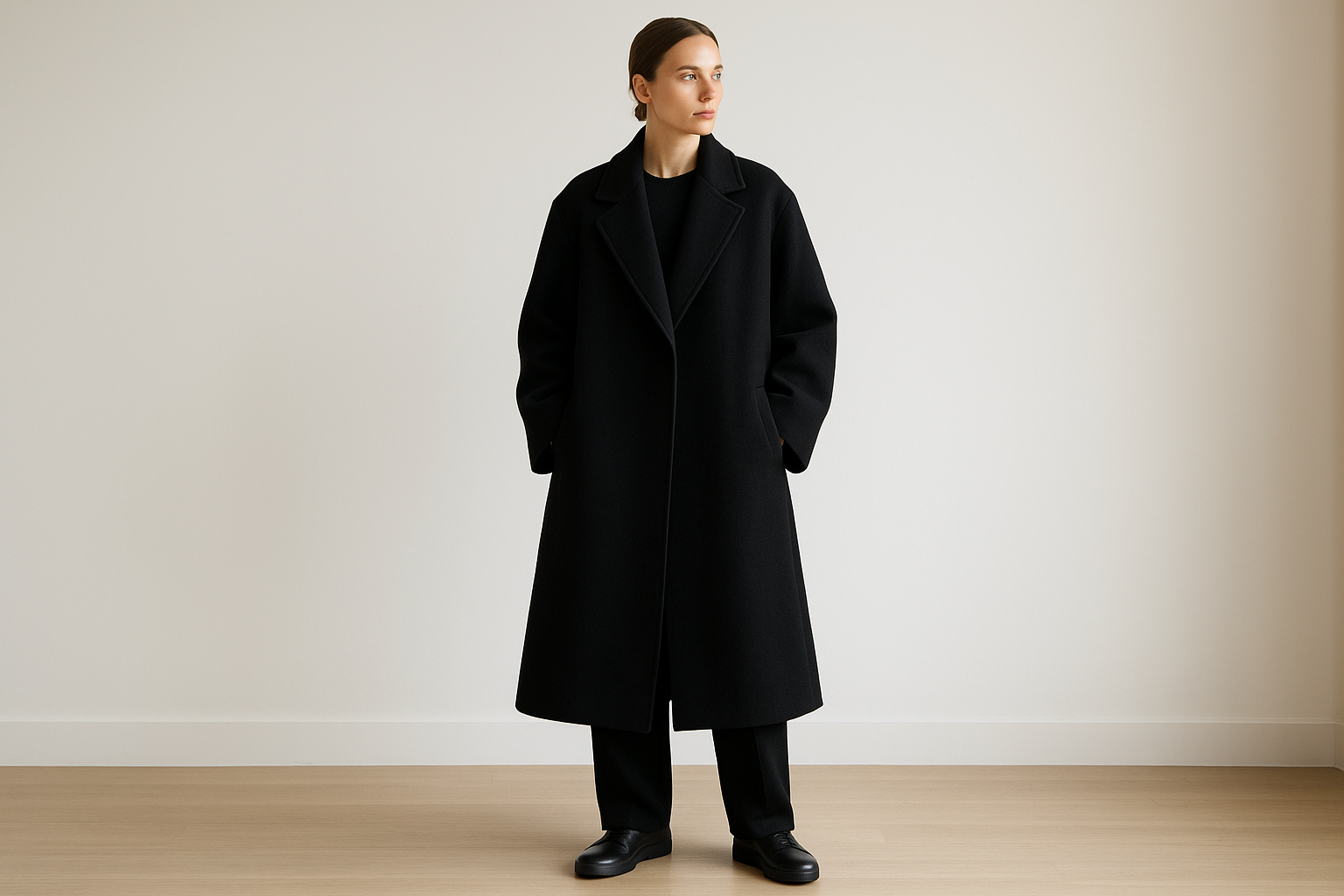
Mary-Kate and Ashley Olsen founded The Row on a simple bet: that exacting minimalism could command the same respect as heritage tailoring, and over a decade later that bet has paid off. The brand builds menswear around oversized silhouettes, dense wool crepe, and a color palette that rarely strays from black, cream, and grey. Nothing here chases a season. A coat from three years ago looks identical to one sold today, which is the entire point for shoppers tired of trend cycles dressed up as quiet luxury menswear.
The Row proves that restraint, done well enough, becomes its own kind of statement.
Signature pieces
Outerwear carries the brand's reputation, particularly coats cut with volume that still reads as tailored rather than sloppy. Fabric weight does the heavy lifting instead of embellishment.
- Oversized wool overcoats
- Cashmere crewneck sweaters
- Straight-leg wool trousers
- Leather goods and minimal sneakers
Price range
Sweaters typically start around $1,000, and outerwear climbs to $4,000 or higher depending on the fabric. Trousers land in the $600 to $900 range, which puts The Row above Sunspel or A.P.C. but slightly below Loro Piana on comparable outerwear. Sizing runs oversized by design, so expect to size down if you want anything close to a fitted silhouette.
Who it's for
Someone drawn to architectural, almost sculptural clothing will get more mileage out of The Row than someone chasing classic tailoring. This suits readers comfortable with volume and drape over a traditional fit, and who value design pedigree alongside fabric quality. If sharp lines and structured suiting matter more to you than oversized proportions, Zegna or Jil Sander further down this list will likely fit your closet better.
5. Zegna
What it's known for
Zegna has spent over a century perfecting wool, and that single-minded focus still defines the Italian house today. The brand grows much of its own fiber through the Oasi Cashmere and Casentino wool projects, giving it the same vertical control that made Loro Piana famous, since the two companies now share ownership. Tailoring is where Zegna separates itself from softer quiet luxury names: jackets keep a defined shoulder and structured chest, built for someone who still wants to look sharp rather than relaxed. Muted tailoring in navy, charcoal, and taupe dominates the lineup, with almost nothing loud enough to distract from the cloth.
Zegna is proof that quiet luxury and sharp tailoring were never opposites.
Signature pieces
Suiting anchors the brand, but the knitwear and outerwear built around the Oasi wool deserve equal attention.
- Unstructured wool sport coats
- Triple Stitch sneakers
- Cashmere and wool travel suits
- Oasi Lino shirting for warmer months
Price range
Sport coats generally start near $2,000, with full suits running $2,500 to $4,500 depending on fabric. Knitwear sits closer to $600 to $900, cheaper than Cucinelli's cashmere but still well above SÖMNAD or A.P.C. Sneakers and leather goods add another few hundred dollars, so building even a small Zegna rotation requires real budget commitment.
Who it's for
Men who need tailoring for work but refuse to wear anything visibly branded will find Zegna's approach exactly right. It suits someone transitioning from suit-and-tie corporate dressing into something softer without losing structure entirely. If your closet leans casual rather than tailored, the oversized shapes at The Row or the relaxed knits at Auralee will likely serve you better than Zegna's sharper cut.
6. Lemaire
What it's known for
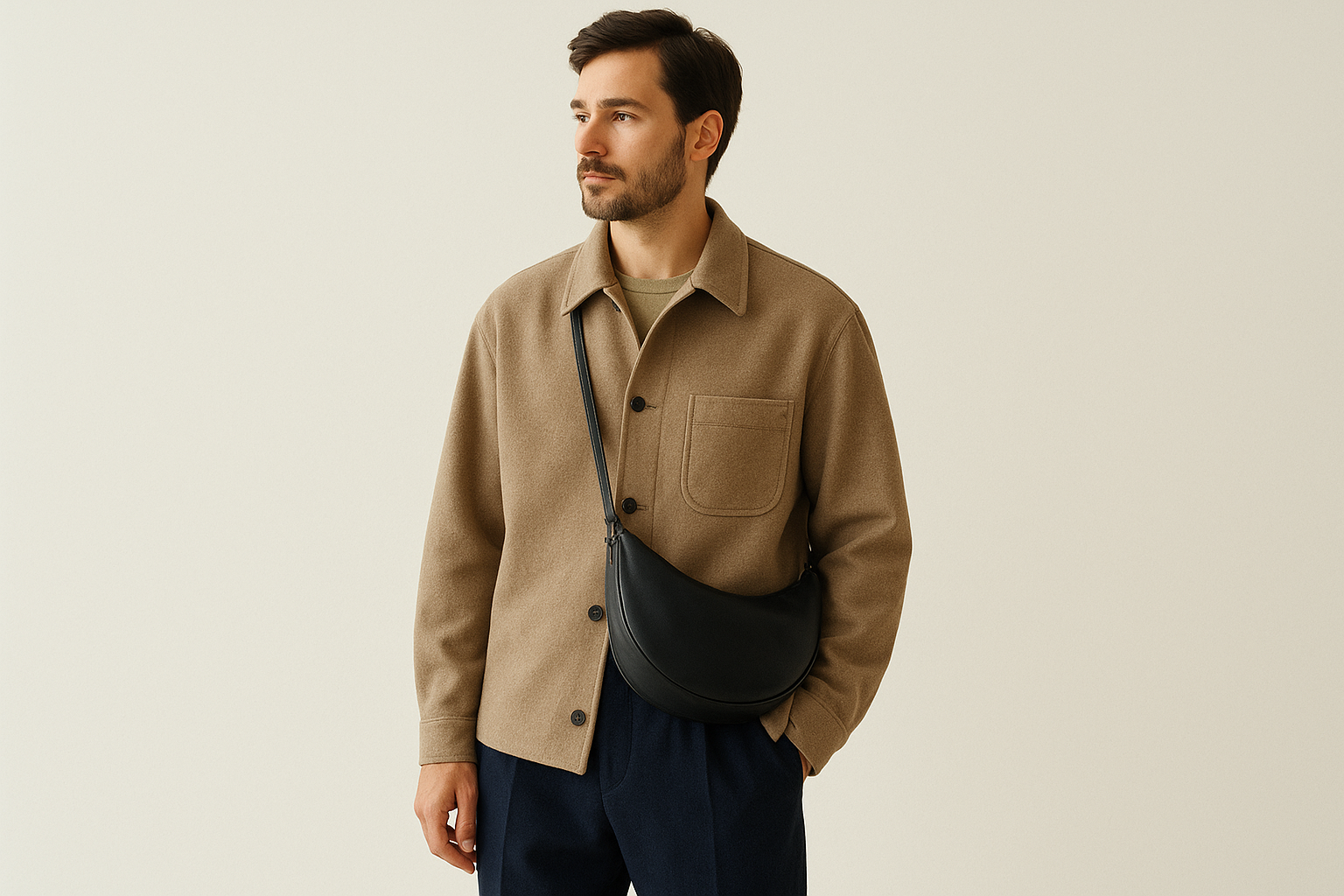
Christophe Lemaire spent years as artistic director at Hermès before launching his own label with Sarah-Linh Tran, and that background shows in how the brand handles quiet luxury menswear without ever touching a French heritage house's price tag. Lemaire builds around soft, rounded silhouettes and a muted palette of clay, olive, and washed indigo, favoring drape over sharp tailoring. Utility details like curved pockets and asymmetric closures give the clothes a quiet distinctiveness that photographs plainly but feels considered in person.
Lemaire proves French minimalism doesn't require a French luxury price tag to feel deliberate.
Signature pieces
Outerwear and workwear-inspired pieces carry the brand's identity, particularly its Croissant bag line, which crosses into menswear styling constantly despite being marketed as unisex.
- Wool-blend overshirts and field jackets
- Curved-leg trousers
- Croissant crossbody bags
- Cotton twill shirting
Price range
Shirts and trousers generally run $300 to $500, with outerwear climbing to $800 to $1,200. That puts Lemaire noticeably below Zegna and The Row, closer to a mid-tier entry point for shoppers who want European design language without the four-figure commitment. Bags add another $500 or so, which is where Lemaire earns real loyalty among repeat buyers.
Who it's for
Someone who likes softness and asymmetry more than crisp tailoring will connect with Lemaire faster than with Zegna or Jil Sander. This fits a reader building an understated wardrobe around workwear silhouettes rather than suiting, someone who wants pieces that feel considered without looking dressed up. If you already own a couple of SÖMNAD basics for the foundation layer, Lemaire's overshirts and trousers slot naturally on top of your year-round minimalist wardrobe essentials without clashing with the minimalist through-line.
7. Auralee
What it's known for
Auralee, founded in 2015 by designer Ryota Iwai in Tokyo, treats fabric development as its actual product rather than a supporting detail. The brand co-develops custom yarns with mills in Japan, Italy, and beyond, then builds entire seasons around fabrics you cannot buy anywhere else. This obsession with proprietary fabric development is what separates Auralee from brands that simply source premium cotton or wool off the shelf. Colors stay in the same muted register as everything else on this list, but the surface texture and drape of the cloth itself carry the design.
Auralee builds the fabric first and lets the garment follow, which is the opposite of how most brands work.
Signature pieces
Knitwear is where Auralee's fabric research shows up most clearly, particularly its super-fine cotton and wool blends that feel closer to cashmere than cotton has any right to.
- Washed cotton crewneck sweaters
- Wool-cashmere overshirts
- Relaxed chino and wide-leg trousers
- Cotton pique polos with a heavier hand than typical
Price range
Expect $250 to $450 for knitwear and shirting, with outerwear reaching $700 to $1,200. That places Auralee well below Zegna or Loro Piana but above Lemaire on comparable knitwear, largely because of the custom fabric development rather than the construction alone. Trousers and basics sit closer to the $200 to $350 range, making the brand more accessible than its fabric pedigree might suggest.
Who it's for
Buyers who care more about fabric science than logo prestige, and who understand why expensive t-shirts feel better in the first place, will find Auralee among the most rewarding names in quiet luxury menswear. It suits someone who already owns foundational basics from a brand like SÖMNAD and wants to layer in pieces with more textural interest without abandoning the muted palette. If you want design pedigree over fabric innovation specifically, Lemaire or Jil Sander will likely serve that instinct better.
8. Sunspel
What it's known for
Sunspel has been making cotton basics in England since 1860, and the brand still runs its own factory in Long Eaton rather than outsourcing production overseas. That continuity is the whole pitch: a t-shirt made the same way for over a century, using long-staple cotton spun and knitted domestically. The brand keeps its silhouette classic rather than oversized, favoring a fitted cut that sits close to the body instead of the relaxed drape you see at Auralee or SÖMNAD. Quiet luxury menswear doesn't get more literal than a company that has spent 160 years perfecting one garment.
A brand that has made the same t-shirt for 160 years has earned the right to call it a classic.
Signature pieces
The Riviera t-shirt is Sunspel's calling card, worn by Daniel Craig in Casino Royale and referenced in menswear forums constantly since. Beyond the tee, the brand's knitwear and underwear lines get the same manufacturing attention.
- Riviera crewneck t-shirt (fitted cut)
- Loopback cotton sweatshirts
- Merino wool polo shirts
- Cotton boxer shorts and undergarments
Price range
T-shirts generally run $90 to $120, with sweatshirts and knitwear landing between $150 and $300. That puts Sunspel above SÖMNAD but well below Auralee or Lemaire on comparable basics, largely because you're paying for heritage manufacturing rather than custom fabric development. Outerwear tops out around $500, keeping the brand approachable compared to most names on this list.
Who it's for
Someone who wants a fitted, classic silhouette rather than an oversized one will prefer Sunspel over The Row or Auralee. This suits a reader who values manufacturing heritage and doesn't mind paying a premium over SÖMNAD for a tighter cut and a longer brand history behind the label.
9. Jil Sander
What it's known for
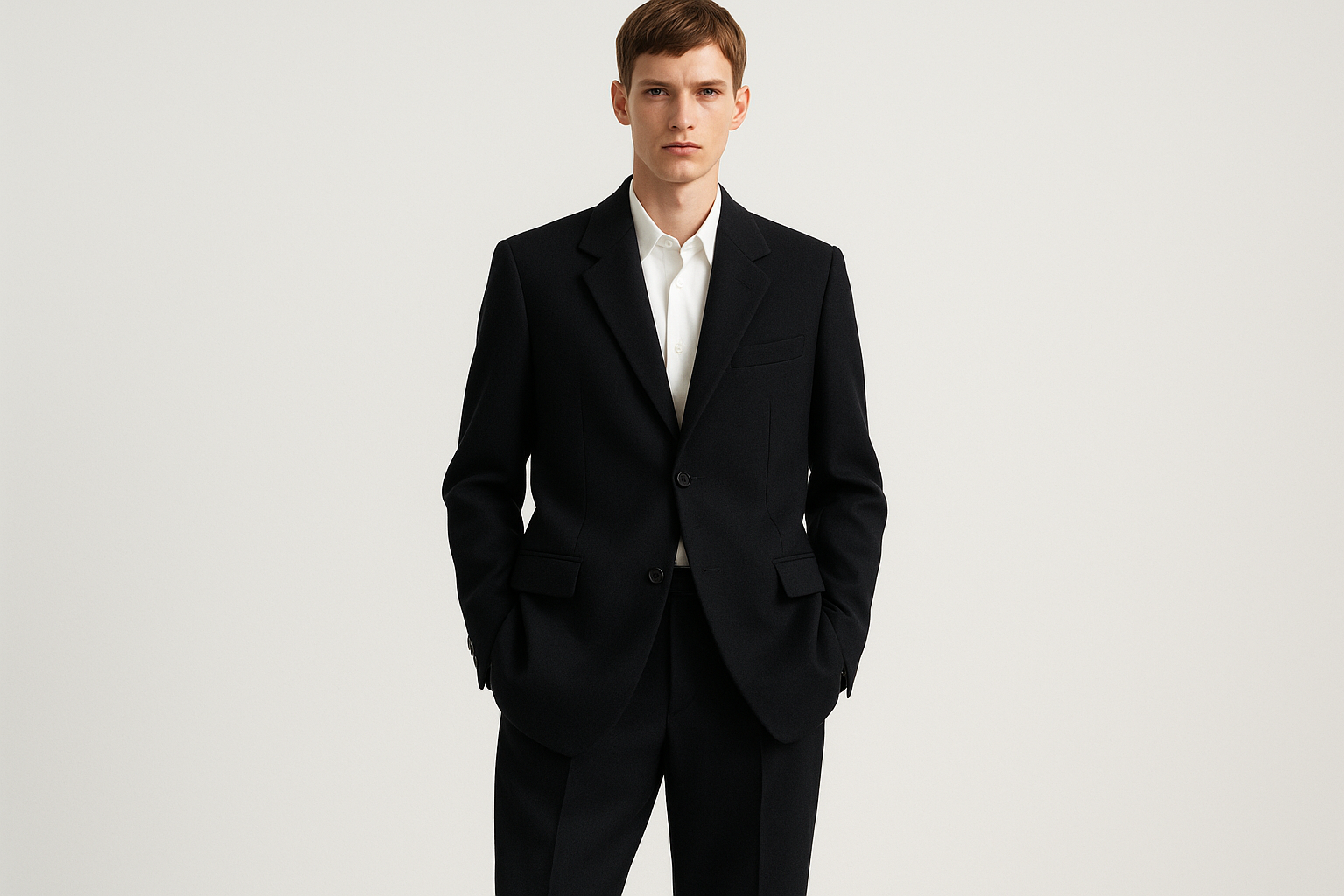
Jil Sander earned the nickname "Queen of Minimalism" back in the 1990s, and the house has never really abandoned that title under successive creative directors. The brand builds architectural tailoring around precise geometry rather than soft drape, favoring sharp shoulders and clean lines over the relaxed silhouettes you see at Auralee or Lemaire. Fabric choices lean toward technical wool blends and dense cottons, engineered to hold a crisp shape rather than soften with wear. Nothing here chases decoration. A jacket's value comes entirely from the cut and the way the seams sit, which is the same standard this whole list of quiet luxury menswear brands gets held to.
Minimalism at Jil Sander isn't the absence of design, it's design with nothing left to remove.
Signature pieces
Outerwear and tailoring carry the brand's identity most clearly, particularly coats built with structured shoulders that read as sculptural without ever looking stiff.
- Single-breasted wool overcoats
- Structured blazers with minimal lapel detail
- Cotton poplin shirting
- Technical wool trousers with a clean front
Price range
Tailoring typically runs $1,200 to $2,500, with outerwear climbing to $2,000 to $3,500 depending on fabric weight. That places Jil Sander above Zegna on comparable jackets but below Loro Piana's outerwear, largely because you're paying for design precision rather than rare fiber sourcing. Shirting sits closer to $300 to $450, a more accessible entry point into the brand.
Who it's for
Readers who want sharp, architectural dressing over soft, relaxed shapes will get more from Jil Sander than from The Row or Auralee. It suits someone building a tailored wardrobe who still wants every piece stripped of visible branding. If structure isn't your priority, Lemaire's softer silhouettes will likely fit your closet better.
10. A.P.C.
What it's known for
Jean Touitou founded A.P.C. in Paris in 1987 on the idea that raw denim and simple tailoring could outlast every trend that tried to replace them. The brand still designs everything from its Paris studio, favoring a narrow color palette of indigo, navy, and grey over anything that photographs loudly. A.P.C. sits at the accessible end of French minimalism, closer to Lemaire in spirit but priced for a younger, more budget-conscious shopper who still wants the same quiet luxury menswear logic applied to everyday pieces.
A.P.C. shows that raw denim and a plain label can carry as much weight as a runway house's crest.
Signature pieces
Denim is the brand's real signature, particularly its raw selvedge jeans that break in and fade the way vintage pairs do. Everything else in the lineup takes cues from that same workwear-adjacent honesty.
- Petit Standard and New Standard raw denim jeans
- Cotton twill overshirts
- Merino wool crewneck sweaters
- Canvas totes and small leather goods
Price range
Jeans typically run $200 to $260, with sweaters and overshirts landing between $200 and $350. That puts A.P.C. below Lemaire and well below Zegna or The Row, making it one of the more approachable entry points into understated wardrobe building on this list. Leather goods and bags add another $150 to $400 depending on size and material.
Who it's for
Someone new to quiet luxury who wants to test the philosophy without committing four figures will find A.P.C. an easy starting point for building a minimalist wardrobe step by step. This fits a reader who values denim and workwear basics over tailoring, and who wants French design language at a price closer to SÖMNAD than to Loro Piana. If tailoring matters more than denim, Zegna or Jil Sander will serve that need better.
11. Norse Projects
What it's known for
Norse Projects launched in Copenhagen in 2004 and built its reputation on Scandinavian design discipline applied to everyday clothing rather than statement pieces. The brand treats Scandinavian minimalism as a functional philosophy, not just an aesthetic, favoring clean lines, muted tones, and fabric choices that hold up through cold, wet weather. Nordic design sensibility shows up in the restraint: no oversized logos, no seasonal gimmicks, just well-proportioned basics in navy, olive, and stone. Compared to the French minimalism of Lemaire or A.P.C., Norse Projects leans more utilitarian, closer to workwear roots than runway pedigree.
Scandinavian design has always trusted function to do the talking, and Norse Projects builds an entire wardrobe around that idea.
Signature pieces
Outerwear is where Norse Projects earns its loyal following, particularly technical jackets built for actual Nordic winters rather than city styling alone. The brand's cotton oxford shirting carries the same quiet reliability into warmer months.
- Gore-Tex and technical shell jackets
- Cotton oxford button-downs
- Merino wool crewneck sweaters
- Relaxed chino trousers
Price range
Shirts and knitwear typically run $150 to $250, with technical outerwear climbing to $400 to $700. That places Norse Projects above SÖMNAD and A.P.C. but comfortably below Auralee or Lemaire, making it a solid mid-tier option among high quality basic clothing brands for men. Trousers sit closer to $150 to $200, keeping the brand approachable for someone assembling a full seasonal rotation rather than a single showpiece.
Who it's for
Someone who values function alongside minimalism will find Norse Projects more practical day-to-day than Jil Sander or The Row. This suits a reader who wants technical performance built into quiet basics, particularly if you live somewhere with real weather to dress against. If pure fabric luxury matters more than utility, Auralee will likely reward you more.
12. Cos
What it's known for
Cos launched in 2007 as H&M Group's answer to a question the mass market rarely asks: what if minimalist design didn't require a designer price tag? The brand built its identity on architectural silhouettes translated into accessible materials, borrowing the geometric shapes and muted palette you'd expect from Jil Sander but manufacturing at a scale that keeps costs down. Quality sits a notch below the tailoring houses on this list, but the design language is genuinely considered rather than watered down. Cos remains the most affordable entry point into quiet luxury menswear here, and it sits alongside the other affordable luxury clothing brands worth trying if you are still deciding whether the whole category is worth the investment.
Cos proves you can borrow the silhouette of quiet luxury before you can afford the fabric behind it.
Signature pieces
Outerwear and clean basics carry the brand's identity, with boxy cotton shirting and structured coats doing most of the heavy lifting each season.
- Oversized wool-blend overcoats
- Boxy cotton poplin shirts
- Merino wool crewneck sweaters
- Straight-leg trousers in technical cotton
Price range
Shirts and knitwear typically run $60 to $120, with outerwear landing between $150 and $350. That puts Cos well below every other name on this list, including SÖMNAD and A.P.C., making it the most budget-friendly way to test minimalist silhouettes before committing to pricier fabric. Trousers sit closer to $90 to $130, so a full seasonal wardrobe stays within reach even on a modest budget.
Who it's for
Someone testing whether they actually like minimalist dressing before spending real money will get the most value from Cos. This fits a reader who wants the silhouette and color discipline of quiet luxury without yet paying for the fabric research behind brands like Auralee or Loro Piana. Once the aesthetic sticks, upgrading individual pieces to heavier cotton or wool becomes the natural next step.
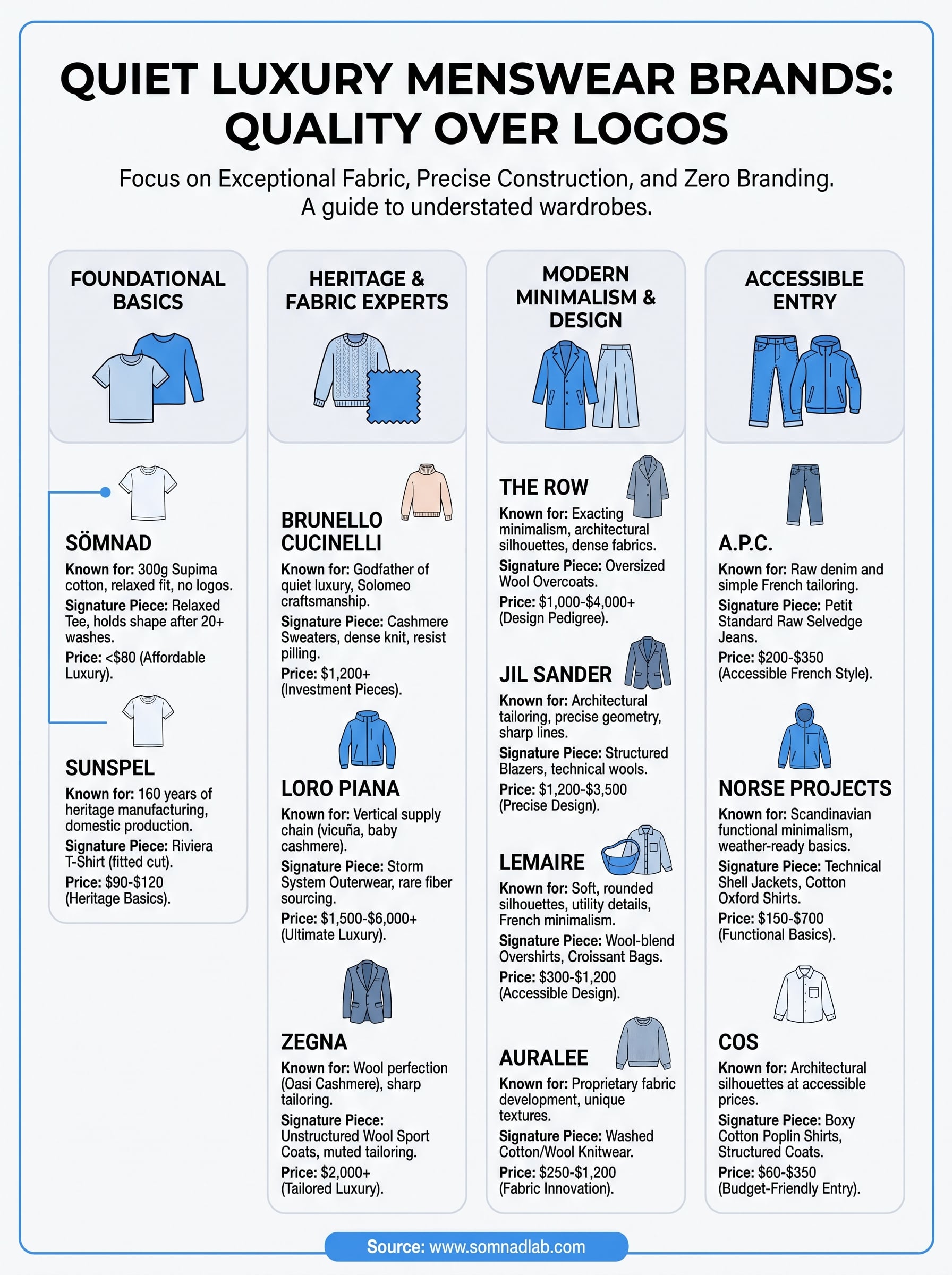
Finding your own quiet luxury staples
Building a quiet luxury menswear wardrobe isn't about owning one brand's entire catalog. It's about matching fabric weight and construction to what you actually wear week to week, then upgrading piece by piece as your budget allows. Start with the foundation layer: a heavier cotton tee or a well-cut knit that holds its shape after real wear, not just a photo shoot. Everything else, the tailoring, the outerwear, the workwear pieces, stacks on top once that base is solid.
Granted, you don't need twelve brands in rotation to get this right. Pick two or three that match your fit preference and budget, then stop shopping. If you're starting that foundation layer today, browse the full SÖMNAD collection: the relaxed tee gives you the 300g Supima cotton and no-logo construction this whole category is built on, at a price that leaves room for everything else on this list.