


The difference between a 210gsm vs 300gsm t-shirt isn't just a number on a spec sheet, it changes how the shirt feels on your body, how it drapes, and how long it holds up. Yet most brands bury fabric weight deep in their product descriptions, if they mention it at all. That leaves you guessing whether a "premium" tee is actually built to last or just priced like one.
At SÖMNAD, we build our relaxed tee around 300gsm Supima cotton because we believe the fabric should do the talking, no logos, no gimmicks. But that doesn't mean 300gsm is the right pick for everyone. A 210gsm shirt serves a completely different purpose, and understanding where each weight excels helps you spend smarter on basics that actually work for your wardrobe.
This guide breaks down the real differences between 210gsm and 300gsm t-shirts, thickness, drape, durability, breathability, and when each weight makes sense. By the end, you'll know exactly which one fits your needs rather than relying on vague marketing labels.
Why GSM matters when comparing t-shirts
GSM stands for grams per square meter, and it measures fabric weight by telling you how much one square meter of that material actually weighs. A higher number means denser, heavier fabric, while a lower number signals a lighter, airier weave. When you're comparing a 210gsm vs 300gsm t-shirt, that 90-gram difference isn't subtle. It shows up in how the shirt feels in your hand, how it sits on your shoulders, and how it behaves after 50 washes.
Fabric weight is one of the most reliable indicators of a t-shirt's quality, structure, and intended use.
Most brands skip this number entirely, leaving you to judge a shirt by how it looks on a hanger. But GSM gives you a concrete measure that cuts through vague terms like "heavyweight" or "premium feel." Understanding it helps you match the right shirt to the right situation rather than buying on guesswork.
GSM determines structure and opacity
A shirt's weight directly controls how much structure it holds when you put it on. A 210gsm tee typically drapes loosely and conforms to your body, making it better suited for layering or warmer climates. A 300gsm tee, by contrast, holds its shape independently and sits with more presence. This matters if you want a shirt that looks intentional on its own versus one that works as part of a layered outfit.
Opacity is also tied to GSM. Lighter fabrics at 210gsm can become translucent under direct light, which limits how you can wear them. At 300gsm, the fabric is dense enough that see-through is rarely a concern, giving you more confidence wearing the shirt across a range of settings.
GSM signals long-term value
Weight also hints at how a shirt will age over time. Heavier fabrics tend to resist pilling, shrinkage, and structural breakdown because there's simply more material holding things together. A 210gsm shirt may soften nicely but can lose its shape faster with repeated wear and washing. A 300gsm shirt typically maintains its silhouette longer, which matters if you're building a wardrobe of basics you plan to keep for years.
210gsm vs 300gsm t-shirt at a glance
When you stack a 210gsm vs 300gsm t-shirt side by side, the differences come down to four core attributes: weight, structure, breathability, and longevity. Neither option is universally better. Each weight is optimized for a specific type of wearer and a specific set of conditions, and picking the wrong one means spending money on a shirt that never quite fits how you live.
Choosing the right GSM starts with knowing what you actually want the shirt to do.
Key differences side by side
The table below gives you a direct comparison across the attributes that matter most when buying a t-shirt. Use it as a starting point before diving into the detailed breakdowns that follow.
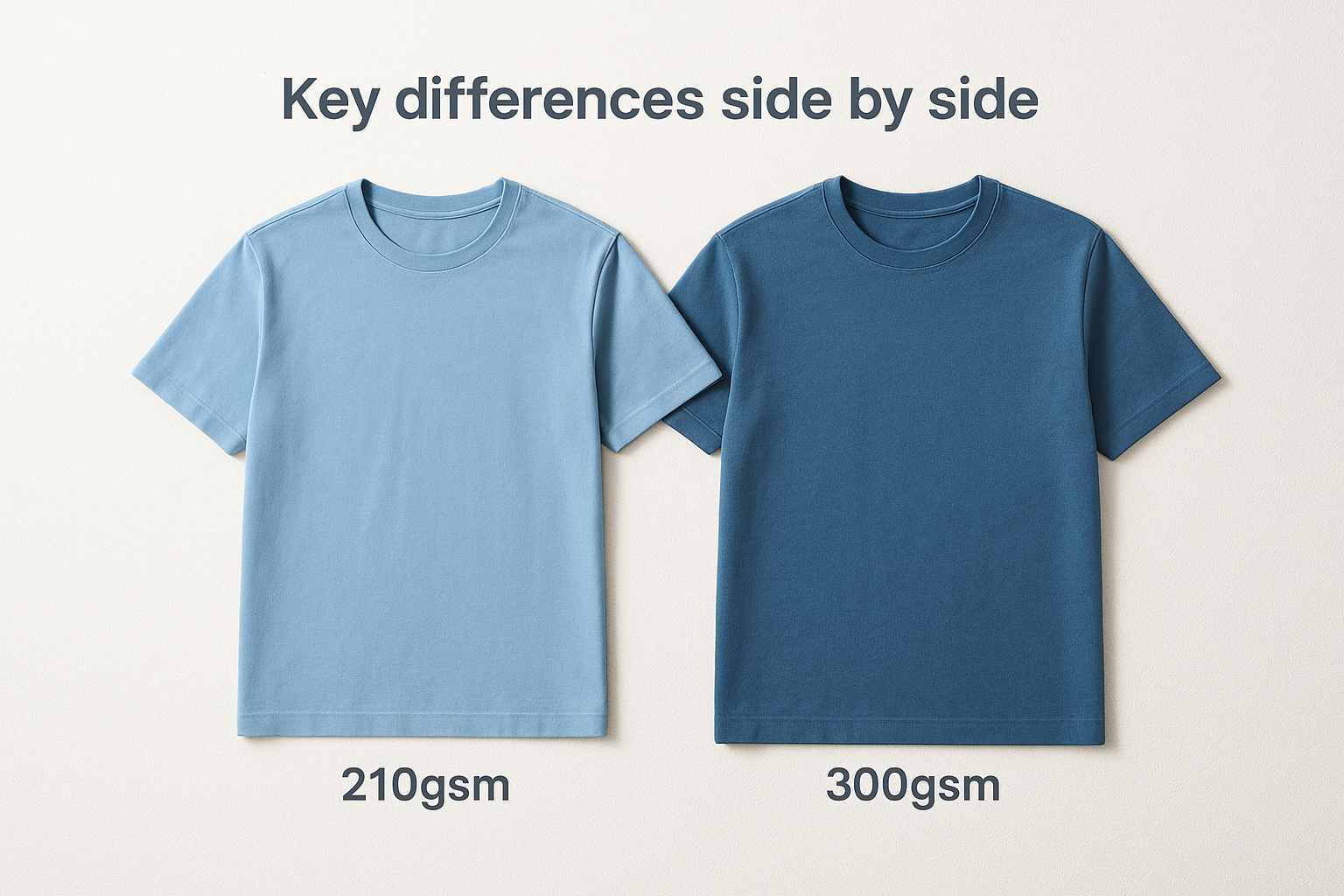
| Attribute | 210gsm | 300gsm |
|---|---|---|
| Weight and feel | Light, soft | Substantial, sturdy |
| Drape | Flows loosely | Holds its shape |
| Opacity | Can appear sheer | Fully opaque |
| Breathability | High | Moderate |
| Best use | Layering, warm weather | Standalone wear, cooler climates |
| Long-term durability | Good | Excellent |
Who each weight suits best
A 210gsm shirt works well if you run warm, live in a hot climate, or want a base layer that disappears under other pieces. It delivers when lightness and breathability are your top priorities. A 300gsm shirt suits someone who wants a tee that looks intentional on its own, maintains its silhouette after repeated washing, and feels substantial without turning stiff. If you're investing in a wardrobe basic built to last years, the heavier fabric justifies the cost.
Thickness, drape, and hand feel differences
When you pick up a 210gsm vs 300gsm t-shirt, the difference registers in your hands before you ever put it on. A 210gsm shirt feels light and supple, almost like a second skin, while a 300gsm shirt carries a noticeably denser weight that signals substance from the first touch.
How thickness changes the fit
Thickness affects how a shirt behaves the moment you pull it over your head. A 210gsm tee drapes softly and follows the contours of your body, which can work in your favor if you want a streamlined silhouette. The lighter weight means the fabric moves with you rather than holding a fixed shape.
A 300gsm shirt does the opposite. It maintains its structure independently of your body, so the silhouette looks consistent whether you're sitting or standing. This works well when you want a tee that presents as a finished, intentional piece without anything layered over it.
What hand feel tells you about quality
With a 210gsm fabric, the hand feel is smooth and pliable, but you may notice it feels thin against the fingertips. That thinness is an early signal of how the shirt will perform over repeated wear and washing.
Hand feel is one of the fastest ways to gauge whether a fabric will hold up or wear out early.
A 300gsm fabric feels substantially denser and slightly textured, which reflects the tighter weave and higher cotton content. That tactile weight translates directly into how the shirt sits on your body and how long it keeps that quality feel after regular use.
Durability, opacity, and long-term wear
When you buy a t-shirt, you're making a bet on how long it will hold up. A 210gsm fabric will feel great on day one, but the lighter weave means less fiber per square meter holding the structure together. Over repeated washing cycles, that thinner construction can start to pill, stretch out at the collar, or develop thin patches at the seams before a heavier shirt shows any signs of wear.
Opacity and how it affects everyday use
Opacity is where the 210gsm vs 300gsm t-shirt gap becomes most visible, literally. A 210gsm shirt can turn translucent under bright lighting or direct sunlight, which limits where and how confidently you can wear it. A 300gsm shirt gives you full coverage in any light, so you're not adjusting your plans based on whether you'll be outside or in a well-lit room.
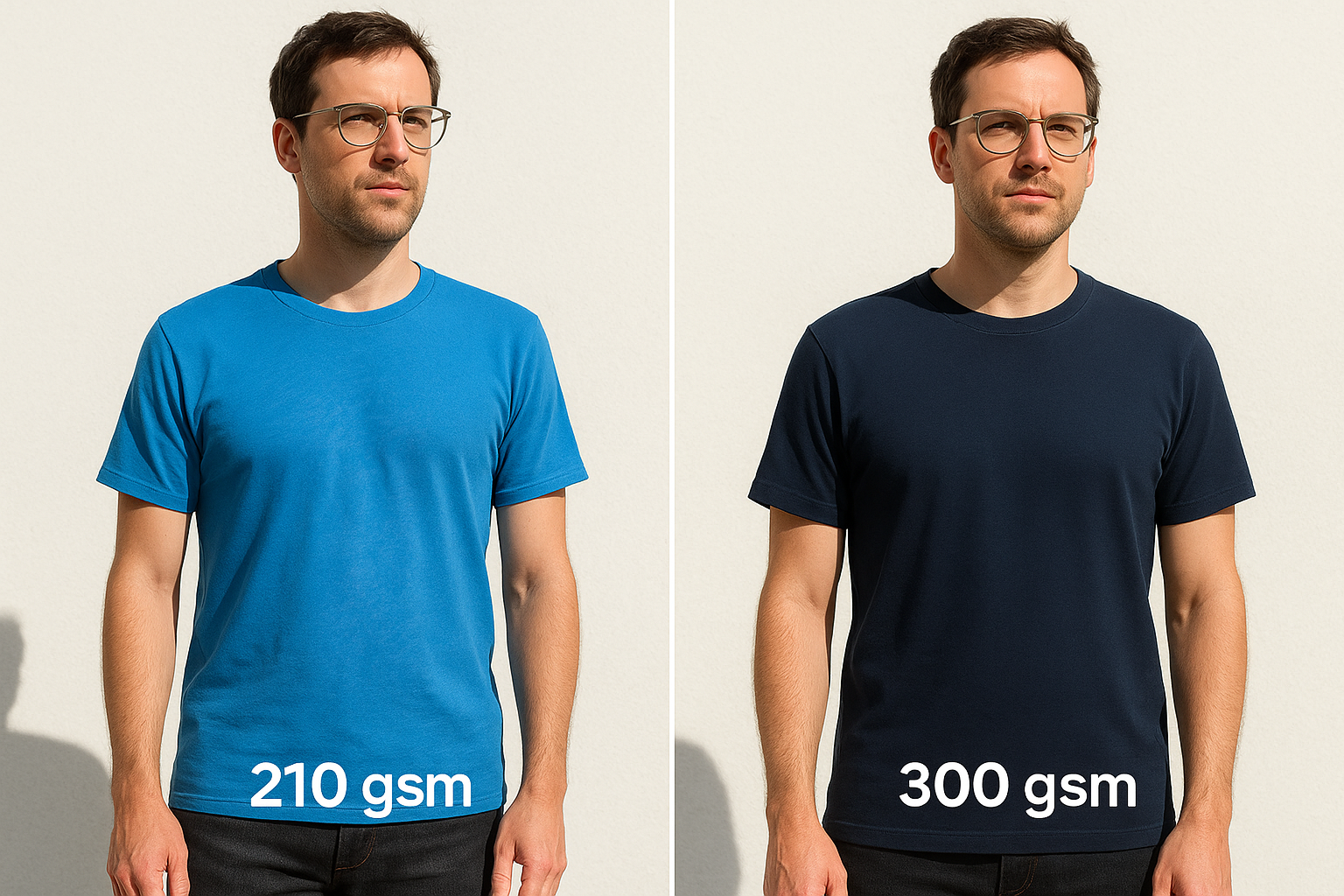
The opacity difference alone is enough to push many people toward 300gsm as their default everyday tee.
How each weight holds up over time
A 300gsm shirt maintains its shape because there's more material resisting the stress of washing, stretching, and daily movement. The denser weave holds the collar firm, keeps the hem from flaring, and resists the slow fabric thinning that signals a shirt reaching the end of its life.
With a 210gsm option, you trade some of that longevity for lightness. The shirt can still last, but it requires more careful washing and may need replacing sooner if you wear it frequently.
How to choose 210gsm or 300gsm for your needs
Deciding between a 210gsm vs 300gsm t shirt comes down to one question: what do you actually need the shirt to do? If you're building a foundational wardrobe piece you plan to wear on its own across multiple settings, that answer will push you in a different direction than if you're stocking up on base layers for active or warm-weather use. Knowing your priorities upfront saves you from buying the wrong weight twice.
The right GSM isn't the highest number, it's the one that matches how you actually dress.
Pick 210gsm when lightness is the priority
A 210gsm shirt fits best when you run warm, dress in multiple layers, or want something that packs small and breathes easily. It works well for travel, hot climates, or athletic use where a heavier fabric would trap heat and slow you down.
- Base layering under jackets or flannels
- Hot-weather casual wear
- Travel packing where fabric weight matters
Pick 300gsm when longevity and presence matter
If you want a shirt that stands on its own as a finished outfit, resists wear over years of regular use, and stays fully opaque in any light, 300gsm is the right call. It suits cooler climates, professional-casual settings, or anyone building a minimal wardrobe where each piece needs to earn its place long term.
- Standalone everyday wear without layering
- Year-round basics in temperate or cooler climates
- Investment pieces built to last multiple years
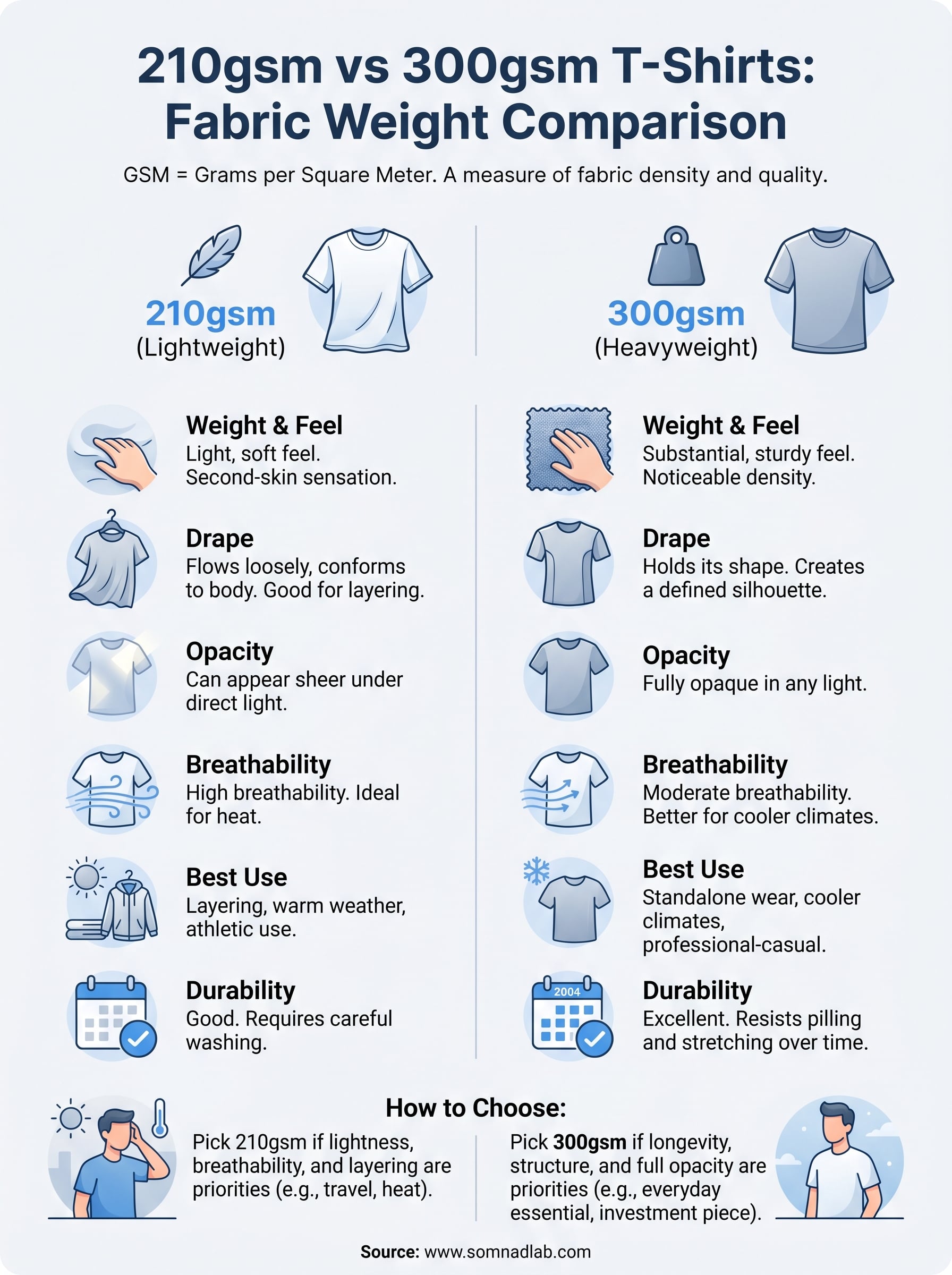
Quick wrap-up and next step
The 210gsm vs 300gsm t shirt decision is simpler than most brands make it look. A 210gsm shirt delivers breathability and light layering for warm climates or active use. A 300gsm shirt gives you structure, full opacity, and a silhouette that holds up over years of regular wear. Neither weight is wrong. Each one fits a different set of priorities, and now you have the information to pick the right one rather than guessing at a product page.
If your priority is a daily essential built to last, SÖMNAD's relaxed tee is cut from 300gsm Supima cotton with no logos, no filler, and no compromise on construction. The fabric is chosen specifically because it earns its place in a long-term wardrobe rather than wearing out after a season. Take a closer look at the SÖMNAD relaxed tee and see whether it fits what you're building.