


The difference between a relaxed fit vs regular fit t-shirt comes down to how much room the garment gives your body, and that single variable changes everything about how a shirt looks, feels, and moves with you. Yet most brands treat "fit" as an afterthought, stamping a label on a size chart and calling it done. The result? Shirts that don't match expectations when they arrive at your door.
Understanding the actual distinctions, through the chest, shoulders, body length, and how fabric falls away from the torso, is the difference between a t-shirt that works for you and one that sits in a drawer. Fit determines silhouette. It dictates whether a tee looks sharp tucked into trousers or layered under a jacket, and whether it flatters your frame or fights it.
At SÖMNAD, we build our relaxed tee from 300g Supima cotton with intentional proportions, so we've spent serious time thinking about what separates these two fits. This guide breaks down the measurable differences in cut, length, drape, and styling between relaxed and regular fit t-shirts, so you can choose with confidence, not guesswork.
Why fit terms matter when buying tees
When you shop for a t-shirt online, fit labels are the only clue you get before the package arrives. Unlike shopping in a store where you can hold a shirt against your body, online buying puts all the weight on two or three words printed next to the size. "Relaxed fit," "regular fit," "classic cut" - these terms are supposed to translate shape and proportion into something useful. In reality, brands use them inconsistently, which means a "regular fit" from one label can look nothing like a "regular fit" from another.
Fit labels are not standardized
No industry body governs what "relaxed" or "regular" actually means in clothing. A brand can call a shirt relaxed because it's half an inch wider at the chest than their standard, or because it's genuinely oversized with a dropped shoulder seam. Both shirts get the same label. This inconsistency is why so many people return t-shirts that looked right on the product page but felt completely off when worn. You're not misjudging sizes; you're working with imprecise, unregulated language.
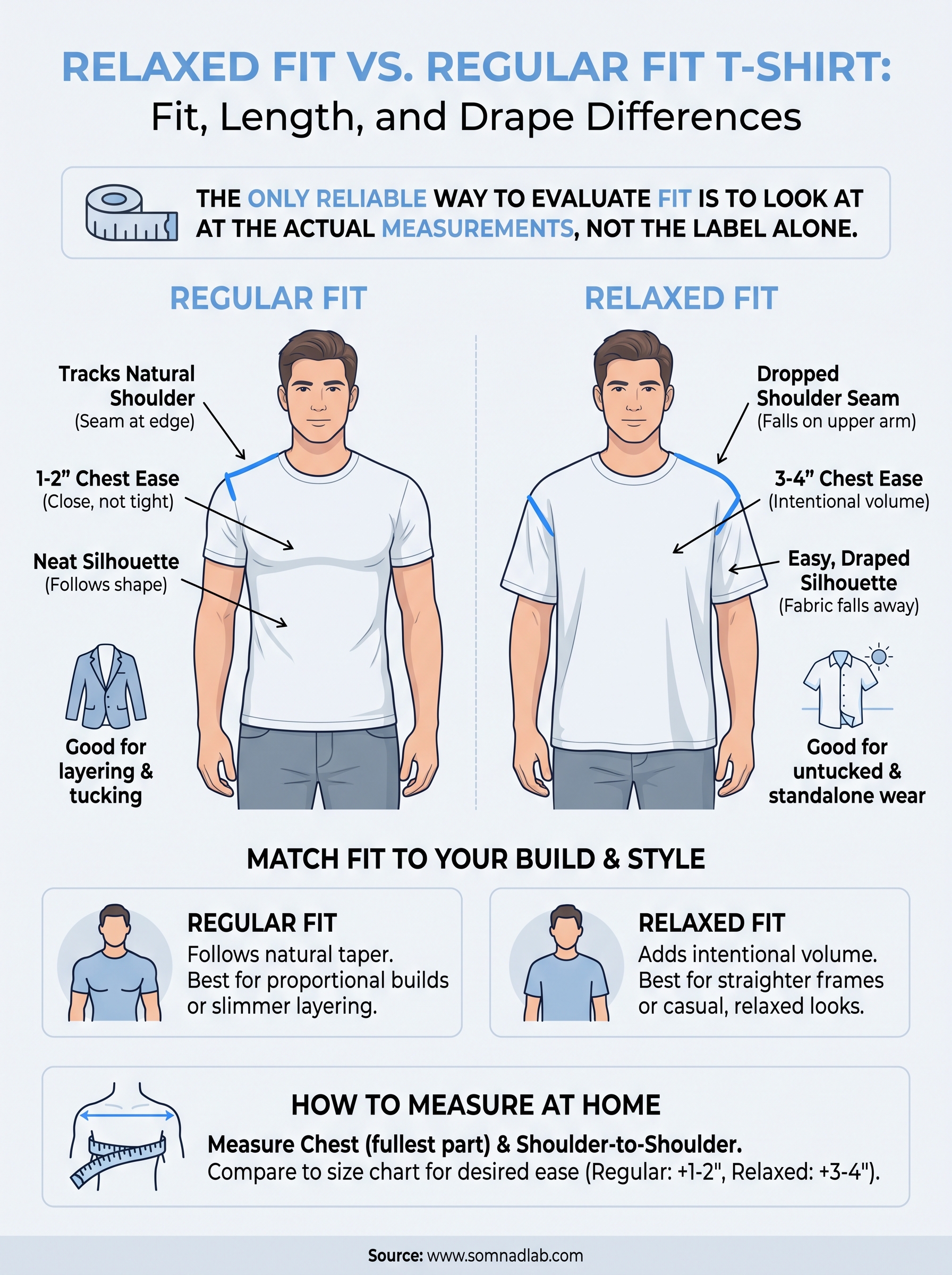
The only reliable way to evaluate fit is to look at the actual measurements, not the label alone.
Understanding the underlying dimensions that separate a relaxed fit vs regular fit t-shirt gives you a real framework that works across brands. When you know that a relaxed cut typically adds two to four inches across the chest compared to a regular cut, and usually drops the shoulder seam further down the arm, you can read any size chart with that in mind and make a confident, informed decision before checkout.
Why the stakes are higher with basics
With graphic tees or statement pieces, fit is one factor among many. With a plain t-shirt, fit is almost everything. The fabric weight and construction both matter, but fit is the first thing someone else notices and the first thing you feel when you put it on. A basic tee in the wrong fit reads as an accident. The same shirt in the right fit looks considered and deliberate.
This matters even more for everyday essentials you wear constantly. A shirt you reach for three times a week needs to work across different situations: worn alone on a warm afternoon, layered under a heavier shirt in the fall, tucked into chinos for a casual meeting. Each context rewards a different relationship between fabric and body. Getting the fit right from the start means the shirt handles all of those situations without compromise, and without you second-guessing whether it looks right.
Relaxed fit vs regular fit in plain English
Strip away the marketing language and the core difference is straightforward: regular fit follows the shape of your body, staying close without being tight, while relaxed fit adds intentional volume throughout the chest, body, and sometimes the shoulders. Neither is better in an absolute sense. Each serves a different purpose, and understanding that purpose helps you pick the right shirt before it arrives at your door.
What regular fit actually means
A regular fit t-shirt is designed to track your body's natural shape at a moderate distance. The chest measurement typically sits one to two inches wider than your actual chest, giving you enough room to move comfortably without excess fabric pooling at the sides. The side seams run straight down from the underarm, creating a clean, vertical line when you stand still.
Regular fit works well if you want a shirt that reads as neat without being form-fitting. It sits close enough to show your shape but leaves enough room for a natural range of motion. Most people consider this the default cut for a standard tee.
What relaxed fit actually means
Relaxed fit adds more room across every horizontal dimension, chest, waist, and hem, and often drops the shoulder seam further down your arm, shifting where the sleeve begins. The result is a softer, more casual silhouette that doesn't cling anywhere. Fabric drapes away from the torso rather than following it, which changes how the shirt moves with you throughout the day.
The dropped shoulder is one of the most reliable signs that a shirt was built with a genuinely relaxed fit in mind, not just made slightly wider than standard.
When you compare a relaxed fit vs regular fit t-shirt side by side on a flat surface, the relaxed version looks structurally different, not just bigger. The extra width is distributed with intention, creating an easy, unforced silhouette rather than a shirt that simply appears too large for its wearer.
Fit, length, and drape differences you can see
You can spot the difference between a relaxed fit vs regular fit t-shirt before anyone puts it on. Lay both shirts flat and the relaxed version looks structurally distinct, not just marginally larger. The extra room is built into specific areas, and each change has a visible consequence when the shirt is worn.
Chest and shoulder measurements
The most obvious difference sits across the chest and at the shoulder seam. A regular fit typically adds one to two inches of ease above your actual chest measurement, keeping the fabric close to your body without pulling. A relaxed fit extends that ease to three or four inches and often shifts the shoulder seam further down your arm, sometimes by an inch or more.
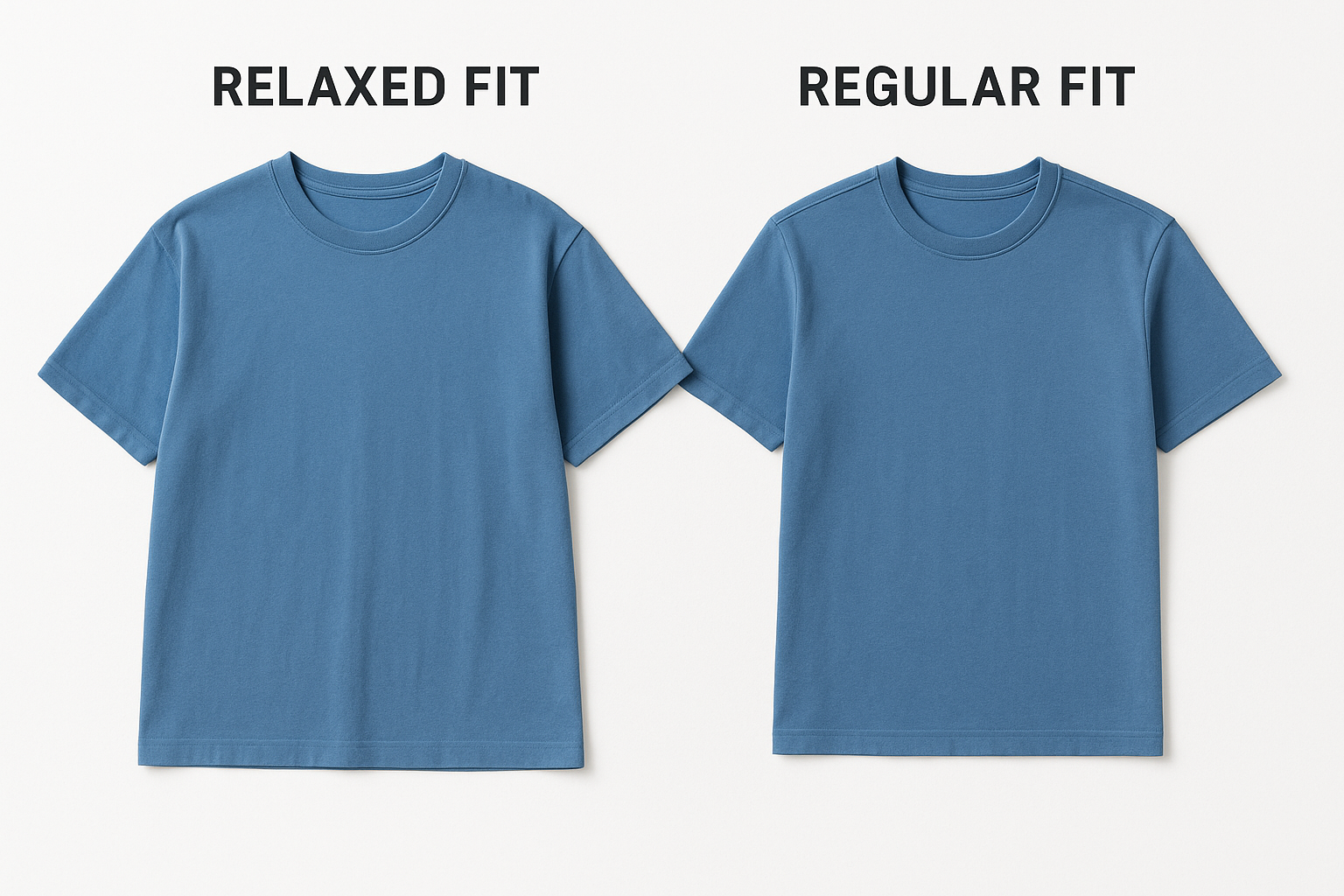
That dropped shoulder seam is the clearest sign that a shirt was cut with genuine volume in mind, not just stretched wider at the chest.
That seam position changes where the sleeve starts and how the upper body reads. On a regular fit, the shoulder seam sits at the edge of your natural shoulder. On a relaxed fit, it falls onto your upper arm, creating a softer, less structured look across the top of the shirt.
Body length and hem width
Relaxed fit tees often run slightly longer than their regular fit counterparts, typically by half an inch to a full inch. That added length works with the wider hem to keep the shirt balanced. A wide hem on a short body looks boxy; the extra length corrects that proportion.
The hem width on a relaxed fit is noticeably broader, which means the fabric swings freely when you move rather than staying anchored to your hips. Regular fit hems track closer to your sides. Both are functional, but they create different silhouettes depending on whether you tuck the shirt in or wear it loose.
How to choose the right fit for your body and style
Choosing between a relaxed fit vs regular fit t-shirt is less about hard rules and more about what you want the shirt to do. Your body shape plays a role, but so does how you plan to wear the shirt, what you layer it with, and the overall look you're going for. Both fits work across a wide range of body types; the real decision comes down to silhouette and context.
Match the fit to your build
If your shoulders are broader than your waist, a regular fit follows that natural taper and keeps the shirt looking proportional without excess fabric bunching at the sides. If your build runs straighter from shoulder to hip, a relaxed fit can work well because the added volume fills that space intentionally rather than clinging unevenly.
Taller frames generally carry the extra length and volume of a relaxed fit more easily, but this is not a fixed rule - try both and compare how each sits on your shoulders.
Shorter torsos can look swamped by a full drop-shoulder relaxed cut. In that case, look for a relaxed fit with a moderate drop rather than an extreme one, or go with a regular cut to keep your proportions balanced and clean.
Match the fit to how you wear it
Your styling habits matter as much as your measurements. If you wear tees tucked into trousers or layered under a slim jacket, a regular fit gives you a cleaner result with less bunching at the waist. If you wear shirts untucked, layered loosely, or as a standalone piece in warmer weather, a relaxed fit creates an easy silhouette that reads as deliberate rather than accidental.
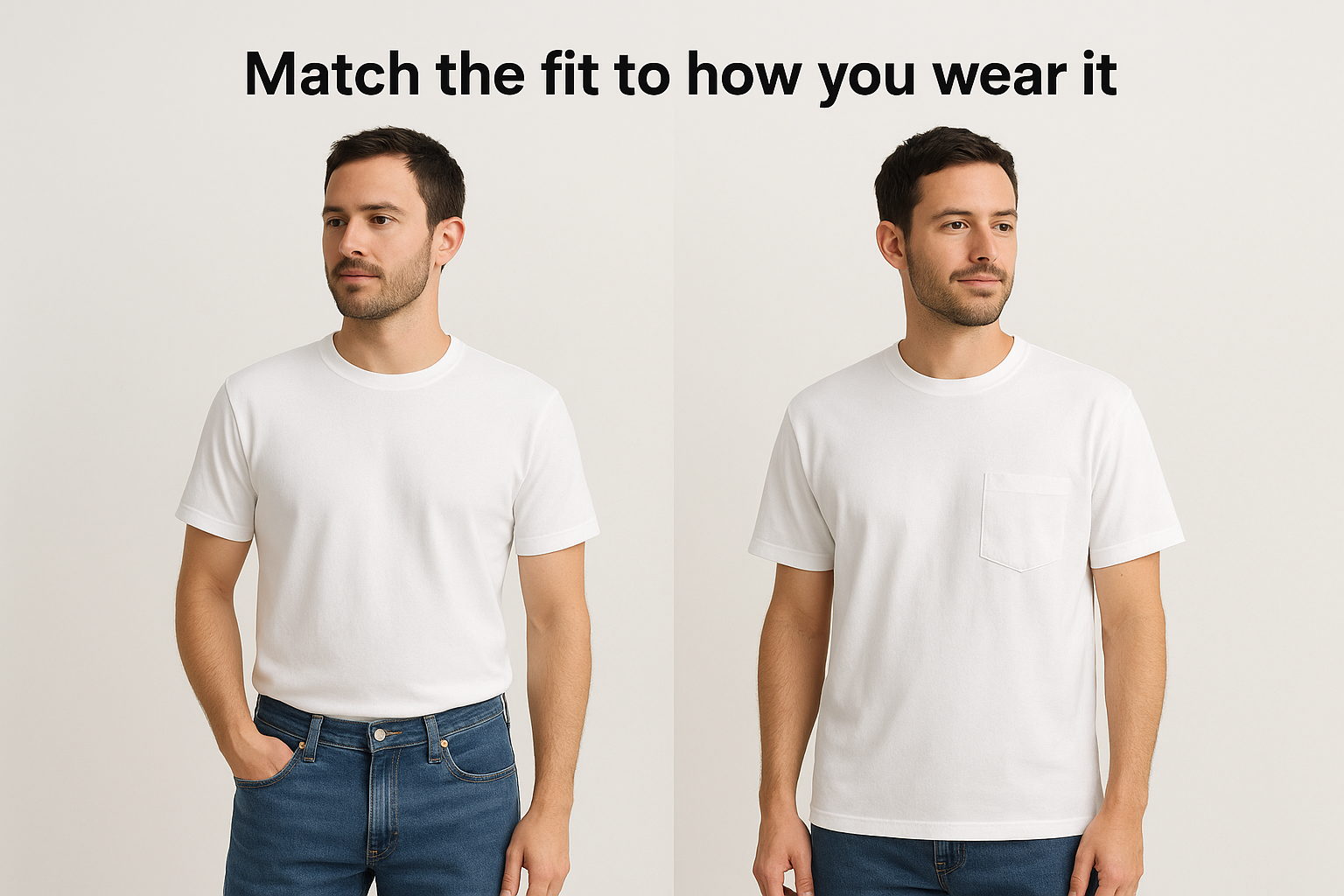
Think about the three or four situations where you reach for a t-shirt most often. The fit that handles most of those situations without adjustment is the right one for your wardrobe.
How to size and measure at home
Getting accurate measurements at home takes about two minutes and removes most of the guesswork from choosing between a relaxed fit vs regular fit t-shirt. You need a soft measuring tape and a mirror, or someone to help you. If you don't have a measuring tape, a piece of string and a ruler work just as well.
The two measurements that matter most
Your chest measurement is the most important number. Wrap the tape around the fullest part of your chest, just under your armpits, keeping it parallel to the floor and snug but not tight. Write that number down. Your second measurement is your shoulder width: measure from the edge of one shoulder across to the edge of the other while standing naturally. These two numbers together tell you more about which fit will work than any size label alone.
A shirt size tells you roughly where you fall on a scale; your actual measurements tell you how a specific cut will sit on your body.
How to use your measurements
Once you have your chest and shoulder measurements, compare them against the shirt's size chart, specifically the "chest" and "shoulder" columns, not just the general size. For a regular fit, look for a chest measurement one to two inches above your own. That ease keeps the shirt close without pulling. For a relaxed fit, you want three to four inches of ease above your chest measurement, which is where the dropped shoulder and wider body start to look intentional rather than oversized.
Pay attention to the shoulder column as well. If the shirt's shoulder measurement lines up with your own natural shoulder edge, that's a regular fit behaving as expected. If it runs an inch or more longer, you're looking at a genuine drop-shoulder cut. Matching both numbers to your body type gives you a reliable result before the shirt ever ships.
Quick recap and next step
The core difference in a relaxed fit vs regular fit t-shirt comes down to intentional volume. Regular fit stays close to your body with one to two inches of ease, tracks your natural shoulder line, and works well tucked or layered under structured pieces. Relaxed fit adds three to four inches of ease, drops the shoulder seam onto your upper arm, and creates a soft, unforced silhouette that reads as deliberate when worn untucked.
Your measurements drive the decision more than your size label does. Chest ease and shoulder width tell you how a specific shirt will actually sit on your body. Use those two numbers against any size chart and you'll land in the right territory before the shirt ships.
If you want a relaxed tee built with 300g Supima cotton and proportions that hold their shape, take a look at what SÖMNAD offers and find the fit that works for your wardrobe.