


You've probably scrolled through a dozen tabs by now, comparing a supima cotton crew neck t-shirt from Uniqlo against something similar on Amazon, wondering why prices swing from $15 to $60 for what looks like the same basic tee. That gap isn't random, and it usually comes down to details most product pages never explain clearly.
Here's the short answer: Supima is an American-grown extra-long staple cotton, and it matters because longer fibers mean stronger, smoother yarn that resists pilling and holds its shape wash after wash. A crew neck made from it should feel noticeably heavier and denser than a standard cotton tee, not just softer to the touch on day one.
In this guide, we'll break down what actually makes a shirt qualify as genuine Supima, how to spot the construction details that separate a $20 shirt from a $60 one, and what proper care routine keeps that quality intact for years. We built our own 300g Supima tee around these exact standards, so we'll point out what to check whether you buy from us or anywhere else.
Why supima cotton makes a real difference in a crew neck tee
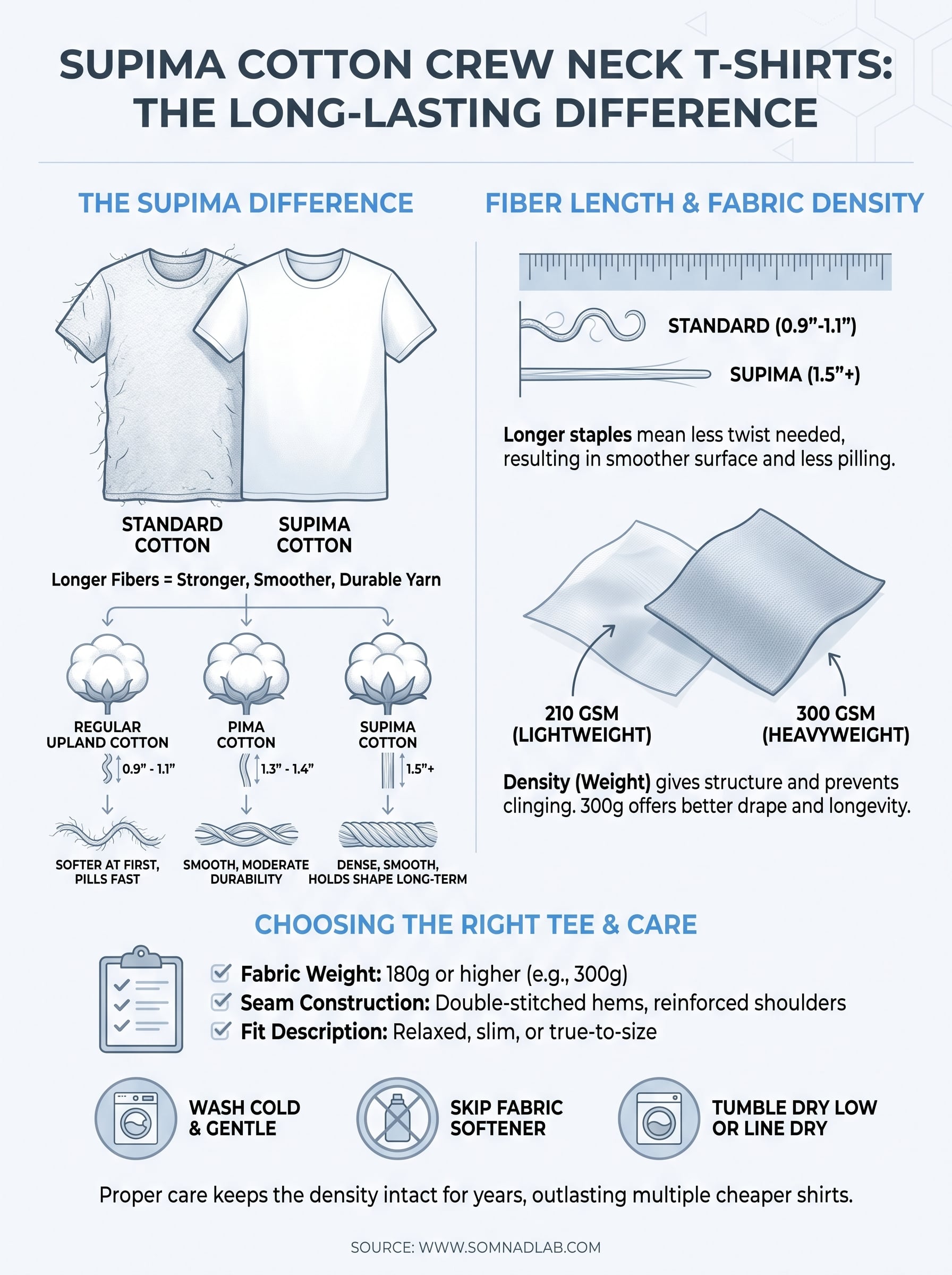
Most cotton tees fall apart at the seams (literally) because they're spun from short, weak fibers packed together with a lot of twist to hold them in place. Extra-long staple cotton like Supima changes that math entirely, and it helps to know what Supima cotton actually is before comparing price tags. The fibers run up to 1.5 inches, compared to roughly 0.9 to 1.1 inches for standard upland cotton, so spinners need less twist to build a strong yarn. Less twist means a smoother surface, fewer loose fiber ends poking out, and a fabric that resists pilling instead of pilling within a few washes.
A longer fiber makes a stronger yarn, and a stronger yarn is the entire reason a Supima tee outlasts a bargain one.
Fiber length and what it does to the fabric
Here's how the numbers actually compare, since specs explain the price gap better than marketing copy does:
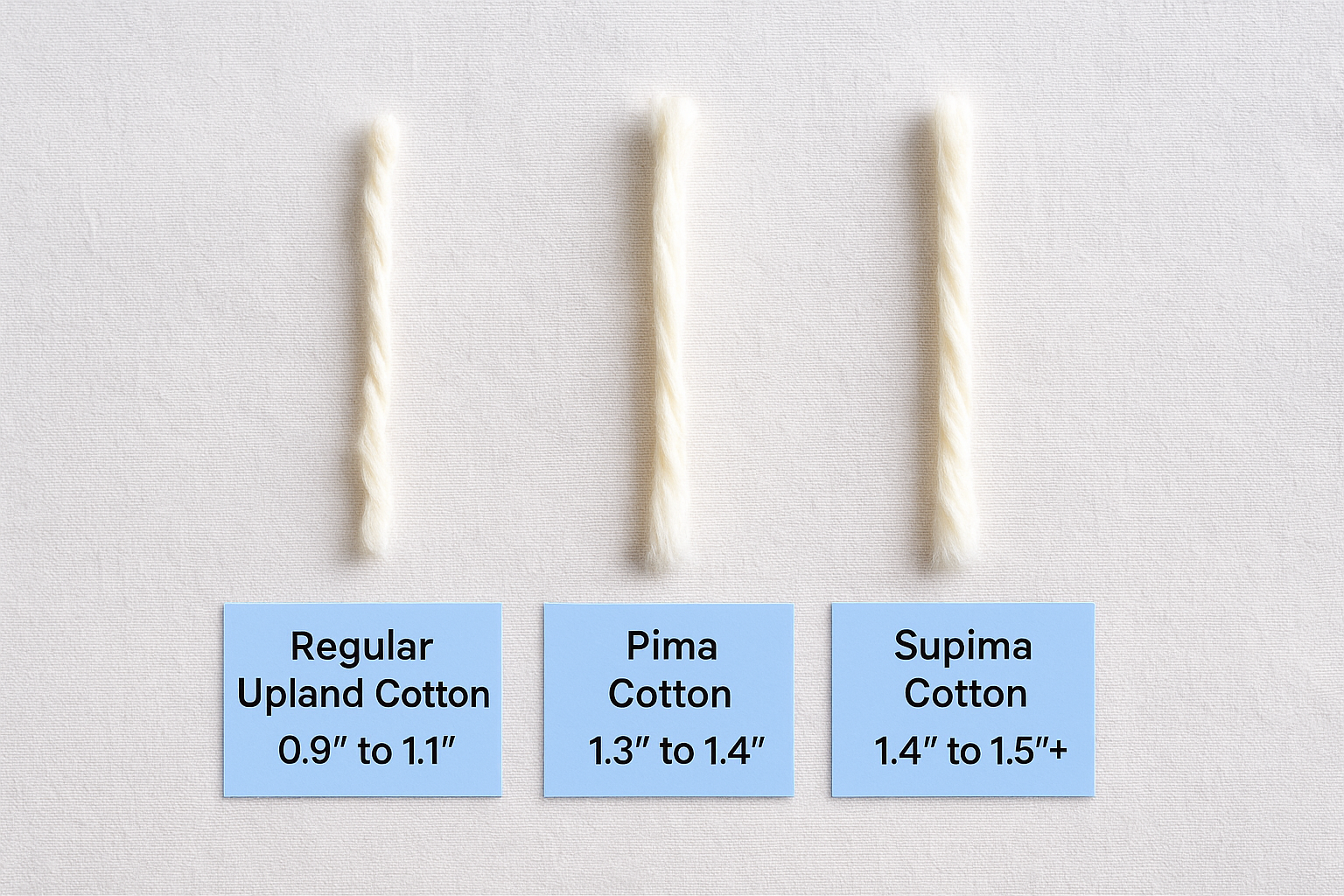
| Cotton type | Fiber length | Typical feel |
|---|---|---|
| Regular upland cotton | 0.9" to 1.1" | Softer at first, thins and pills fast |
| Pima cotton | 1.3" to 1.4" | Smooth, moderate durability |
| Supima cotton | 1.4" to 1.5"+ | Dense, smooth, holds shape long-term |
Why that translates to a better everyday shirt
Density is the other half of the story. A 300g weight, like the one we use in our own crew neck, gives the shirt enough structure to drape cleanly instead of clinging or going see-through after a few washes, and the difference between a 210gsm and a 300gsm tee shows up in exactly that drape. Supima's own certification program (run by the American Pima cotton growers) requires that the fiber meet strict length and strength benchmarks before a brand can even use the name, which is worth checking if a listing just says "pima blend" without specifics.
How to choose the right supima cotton crew neck t-shirt
Shopping for a genuine Supima tee gets easier once you know which details actually matter versus what's just marketing filler. Look past the word "soft" on a product page and check for hard numbers: fabric weight in grams, a stated fiber length, or an actual Supima license mark rather than a vague "premium cotton" claim. Brands that use real Supima usually say so explicitly, since the certification costs money and they want credit for it.
If a listing can't tell you the fabric weight or fiber source, assume it's cutting corners somewhere else too.
A quick checklist before you buy
- Fabric weight: aim for 180g or higher; our own crew neck runs 300g for structure that holds up over years
- Seam construction: double-stitched hems and reinforced shoulder seams resist stretching out
- Neckline ribbing: should spring back immediately when stretched, not sag
- Fit description: check if it's cut relaxed, slim, or true-to-size before ordering
Getting the fit right matters as much as fabric quality, since even the densest cotton looks sloppy in the wrong cut, so it pays to know how a relaxed cut compares to a regular one before you order.
How to care for your supima cotton t-shirt
Quality cotton still needs the right treatment, or you'll undo everything the fiber length gives you. A supima cotton crew neck t-shirt rewards low heat and minimal agitation, since the same density that makes it durable also means it holds onto excess heat and friction damage longer than a thin, cheap tee would show right away, so it's worth following a proper Supima washing and drying routine.
Wash cold, skip the dryer's high heat, and a Supima tee will outlast three cheaper shirts combined.
The wash routine that actually protects the fabric
Stick to this sequence and you'll keep the fabric dense and pill-free for years:
- Turn the shirt inside out before washing to protect the outer surface from friction
- Wash in cold water on a gentle cycle, since heat breaks down cotton fibers faster than wear does
- Skip fabric softener, which coats fibers and dulls the natural sheen Supima is known for
- Tumble dry on low or line dry flat to prevent shrinkage and shoulder stretching
Why over-drying ruins otherwise great cotton
High heat is the single fastest way to shorten a Supima tee's lifespan. Repeated tumble drying on high breaks down fiber integrity and is also how much Supima cotton shrinks in practice, and you'll notice thinning at the collar and hem long before the rest of the shirt shows wear.
Supima vs regular cotton vs pima: what sets it apart
Confusion between these three terms costs shoppers money, since a tag that just says "pima" isn't the same guarantee as Supima. Pima cotton is a general category grown in several countries, including Peru and parts of the American Southwest, and quality varies by farm and harvest, which is the crux of how Supima compares to plain Pima. Supima is a trademarked term owned by the Supima cotton growers association, and only cotton grown in the US that passes strict length and strength testing can carry that name. Regular upland cotton, the stuff in most fast-fashion basics, doesn't even compete on fiber length, which is why it wears out fastest, and the softness, strength, and color gap against regular cotton is measurable.
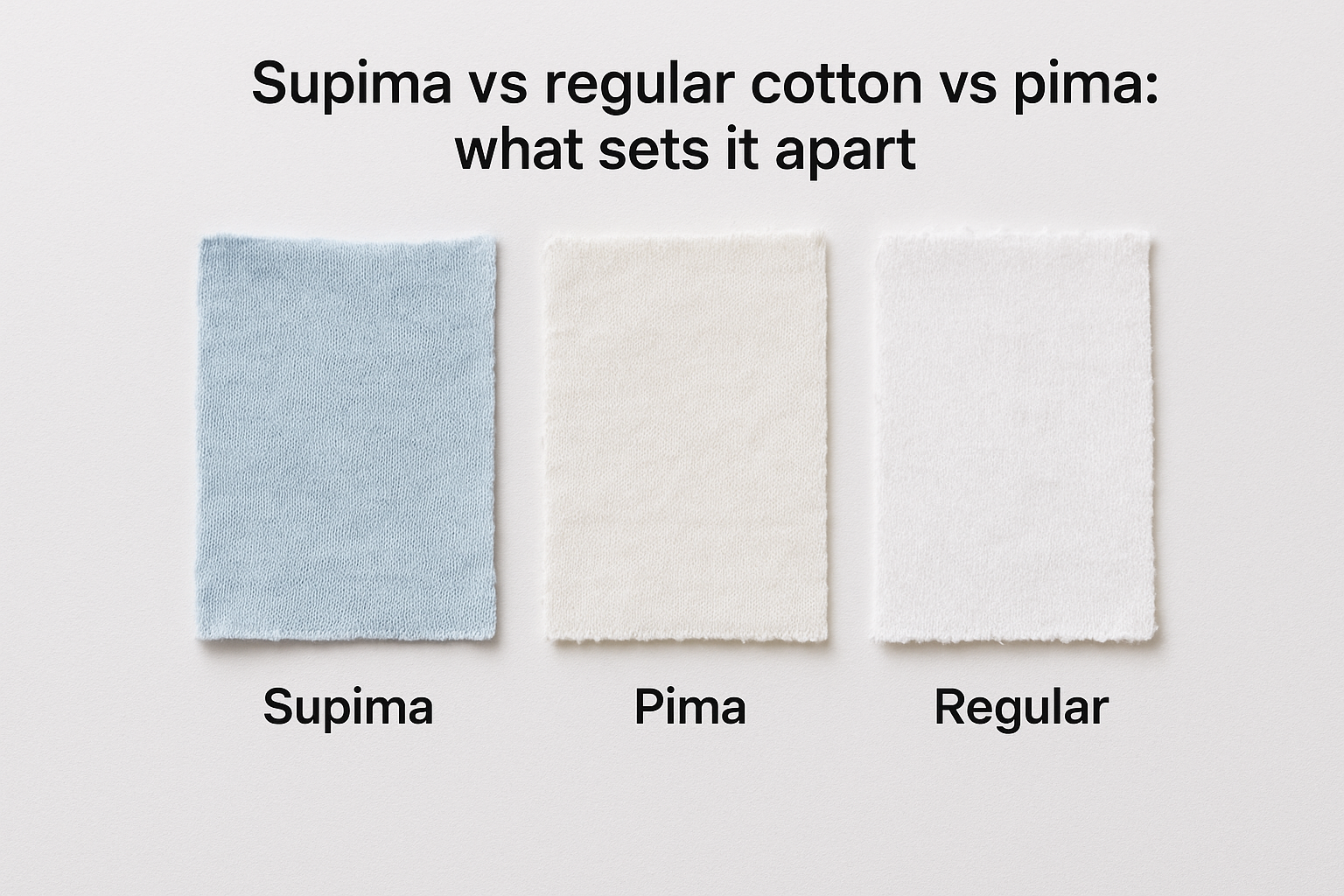
Pima tells you the cotton is long-staple, but Supima tells you it passed a test to prove it.
What the trademark actually guarantees
Here's what separates the three in practice:
- Regular cotton: short fibers, cheapest to produce, pills within months
- Pima cotton: longer fibers, decent quality, but no consistent certification standard
- Supima cotton: US-grown, independently tested, licensed by name, consistent batch to batch
That licensing step matters more than it sounds. Without it, brands could call anything "pima-like" and charge accordingly.
Where to buy a quality supima crew neck tee
Retailers handle Supima very differently, and that's where most of the price confusion starts. Uniqlo sources Supima for select lines but blends it with other fibers in cheaper items, so you have to read the tag closely instead of trusting the collection name. Amazon listings vary wildly since third-party sellers can slap "pima" on a tag with zero verification, which is exactly the gap the licensing system exists to close. Specialty basics brands, including ours, tend to publish exact fabric weight and fiber sourcing because that transparency is the whole selling point of paying more for a plain tee.
The retailer matters less than whether they'll actually show you the fiber source and gram weight in writing.
Before you buy anywhere, confirm these three things:
- Stated fabric weight in grams, not just "heavyweight" as a vague label
- Explicit Supima naming on the product page, not just "premium cotton"
- Return policy that lets you test the fit and fabric hand before committing
Our Supima crew neck tee lists all three upfront, which is the standard every listing should meet.
The bottom line on supima cotton tees
A supima cotton crew neck t-shirt earns its price through fiber length, not marketing language. Longer staples build stronger yarn, stronger yarn resists pilling, and a dense weave holds its shape through years of washes instead of months. Buying smart means checking the specifics: fabric weight in grams, explicit Supima naming, and seam construction that won't stretch out by the third wear. Skip any listing that leans on vague words like "soft" or "premium" without backing them up.
Care matters just as much as the initial purchase. Cold water, low heat, and skipping fabric softener will keep that density intact for the long run, which is the entire point of paying more upfront. Regular cotton simply can't compete on longevity, and generic pima without certification leaves you guessing.
If you want a tee built to these exact standards from day one, see which Supima tees actually feel premium, including our own 300g Supima crew neck with its fiber sourcing listed in full.