


Supima cotton makes up less than 1% of the world's cotton supply. It's longer-staple, softer, and more durable than conventional cotton, which is exactly why we build every SÖMNAD tee around 300g Supima cotton fabric. But that premium fiber only keeps its edge if you treat it right. Search for supima cotton washing instructions and you'll find a mess of generic laundry advice that could apply to any fabric. Supima deserves better than that.
The wrong wash cycle, the wrong dryer setting, or even the wrong detergent can undo what makes Supima cotton worth paying for in the first place: the softness, the structure, the color depth. We've tested our fabrics through hundreds of wash cycles, so we know exactly where things go sideways, and how to prevent it.
This guide covers everything from water temperature and detergent choice to drying methods and long-term storage. Whether you own SÖMNAD pieces or any other Supima cotton garment, these care instructions will help you preserve fit, feel, and color for years. No guesswork, no unnecessary complexity, just what actually works.
What makes Supima cotton different
Supima cotton is a trademarked variety of Pima cotton grown exclusively in the United States. The "Su" in Supima stands for "Superior," and the name is licensed only to growers and manufacturers who meet strict quality standards set by the Supima association. Extra-long staple (ELS) fibers are what separate it from conventional cotton, which relies on shorter, coarser fibers. Those longer fibers produce yarn that is finer, stronger, and smoother than standard cotton before a single stitch is sewn. Understanding that structural difference is the first step toward caring for it correctly.
The fiber behind the fabric
Standard cotton fibers measure roughly 1 inch or shorter. Supima cotton fibers stretch between 1.4 and 1.5 inches, which sounds like a minor difference but produces measurable results in the finished garment. Longer fibers twist together more tightly into yarn, which reduces the number of fiber ends that poke out from the surface. Fewer exposed ends means less pilling, less surface fuzz, and a noticeably smoother hand feel compared to regular cotton, and that smoothness holds up over time rather than degrading after the first few washes.
The structure also makes Supima cotton stronger at the thread level. A shirt made from ELS fibers resists tearing and abrasion better than one made from standard cotton, which is why Supima garments maintain their shape, color depth, and softness across far more wash cycles. That durability is not guaranteed, though. The wrong care routine degrades the fiber just as it would with any cotton, only you have more to lose because the material you started with was significantly better.
Long-staple fibers are only as good as the care you give them: heat and mechanical agitation are the two fastest ways to shorten the life of any premium cotton garment.
Why that matters when you wash it
The same properties that make Supima cotton feel premium also make it respond differently to heat and mechanical stress than cheaper fabrics. Fine yarn construction and tight fiber twist make Supima more sensitive to high wash temperatures than most standard cotton garments. Heat causes the fibers to contract sharply and lose the smooth alignment that gives Supima its characteristic softness and drape, which is why shrinkage is a bigger concern here than with basic cotton tees.
Following accurate supima cotton washing instructions is not just about preventing shrinkage. It is about preserving the specific fiber architecture that makes the fabric worth choosing in the first place. Agitation in a hot cycle breaks down the inter-fiber bonds faster than it does in standard cotton, because the finer fibers carry less structural redundancy per strand. Cold water and low mechanical action protect that alignment, which in turn protects the feel, the fit, and the color saturation. Every washing decision you make either preserves or erodes that foundation, and the gap between good care and poor care shows up faster on a fabric this refined.
Before you wash: check label and sort
Before you run any garment through a wash cycle, two minutes of prep work saves you from problems that are impossible to reverse. Supima cotton washing instructions vary slightly between manufacturers because fabric weight, dye type, and garment construction all affect how a specific piece should be treated. The care label on your garment is the authoritative starting point, and skipping it is the single most common mistake that leads to shrinkage or color loss.
Read the care label first
The care label gives you manufacturer-tested guidance specific to that garment. Look for water temperature symbols (a tub icon with dots or numbers indicating the maximum temperature) and wash cycle recommendations such as hand wash, delicate, or normal. A single dot inside the tub means cold water only, which is the most common instruction for premium Supima cotton garments. Two dots indicate warm water is acceptable, typically up to 104°F (40°C).
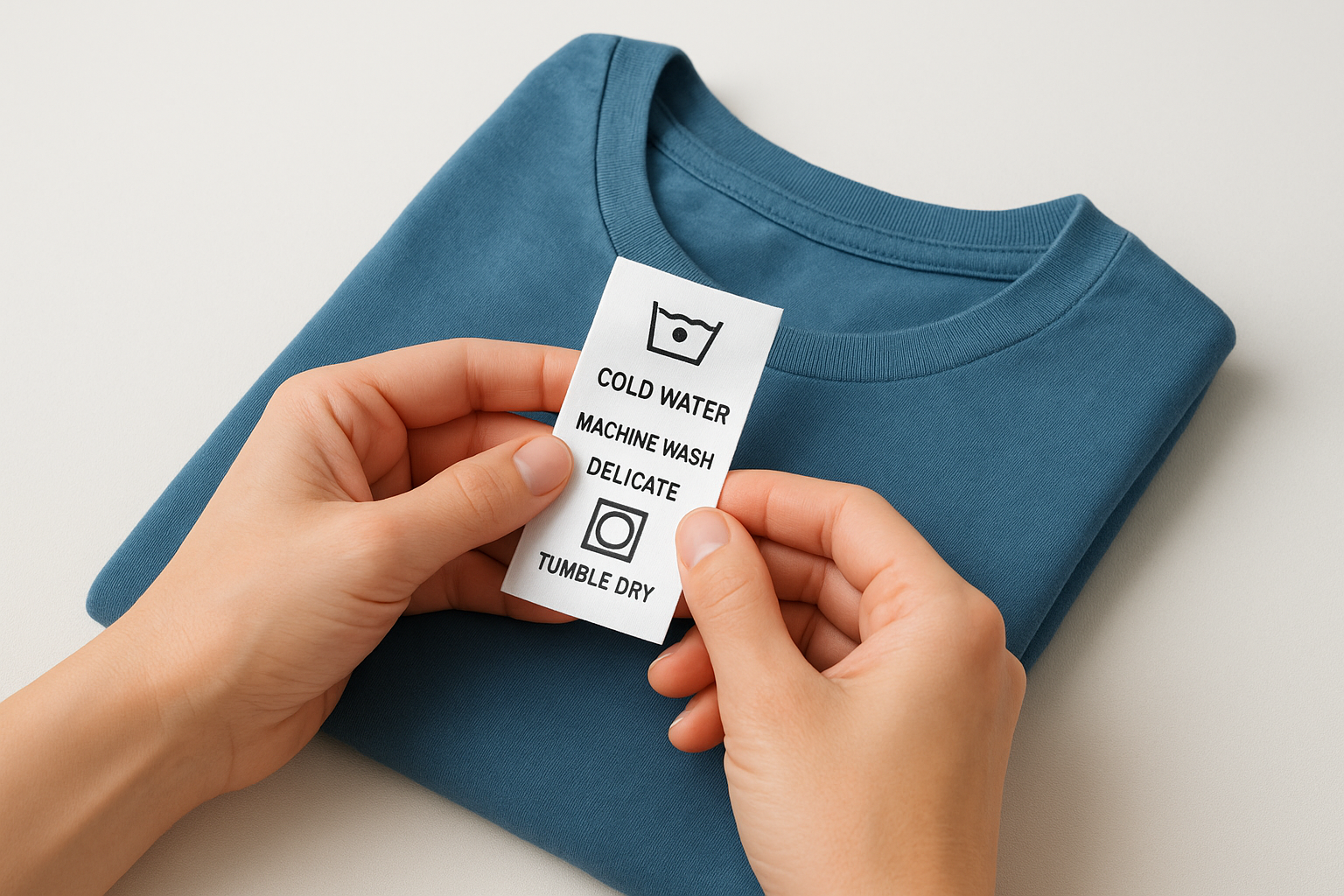
If the label says "hand wash only," treat that as a firm instruction rather than a suggestion. Machine agitation, even on a delicate cycle, adds mechanical stress that hand washing avoids entirely.
Also check for dry cleaning symbols (a circle) or tumble dry restrictions (a square with a circle inside). Some heavier Supima cotton pieces, like a 300g tee, tolerate low-heat tumble drying, while lighter knits may require flat drying to hold their shape.
Sort by color and weight
Sorting protects both the color and the structure of your Supima cotton. Wash darks with darks and lights with lights for at least the first several washes, since new dyes can bleed and permanently stain lighter fabric. After five or six washes, color transfer risk drops significantly, but keeping similar colors together remains good practice.
Beyond color, sort by fabric weight before loading your machine. Washing a heavy Supima cotton tee alongside lightweight items creates uneven mechanical stress during the spin cycle. Heavier garments dominate drum movement and can stretch or distort lighter pieces. Keeping similar weights together gives every garment a consistent, controlled wash.
Wash Supima cotton the right way
Now that your garment is sorted and the care label is checked, the wash itself comes down to three variables: water temperature, detergent, and cycle type. All three directly affect fiber integrity, which means following accurate supima cotton washing instructions matters more with Supima than it does with conventional cotton. One wrong setting is recoverable; repeated wrong settings compound into visible damage.
Set the water temperature correctly
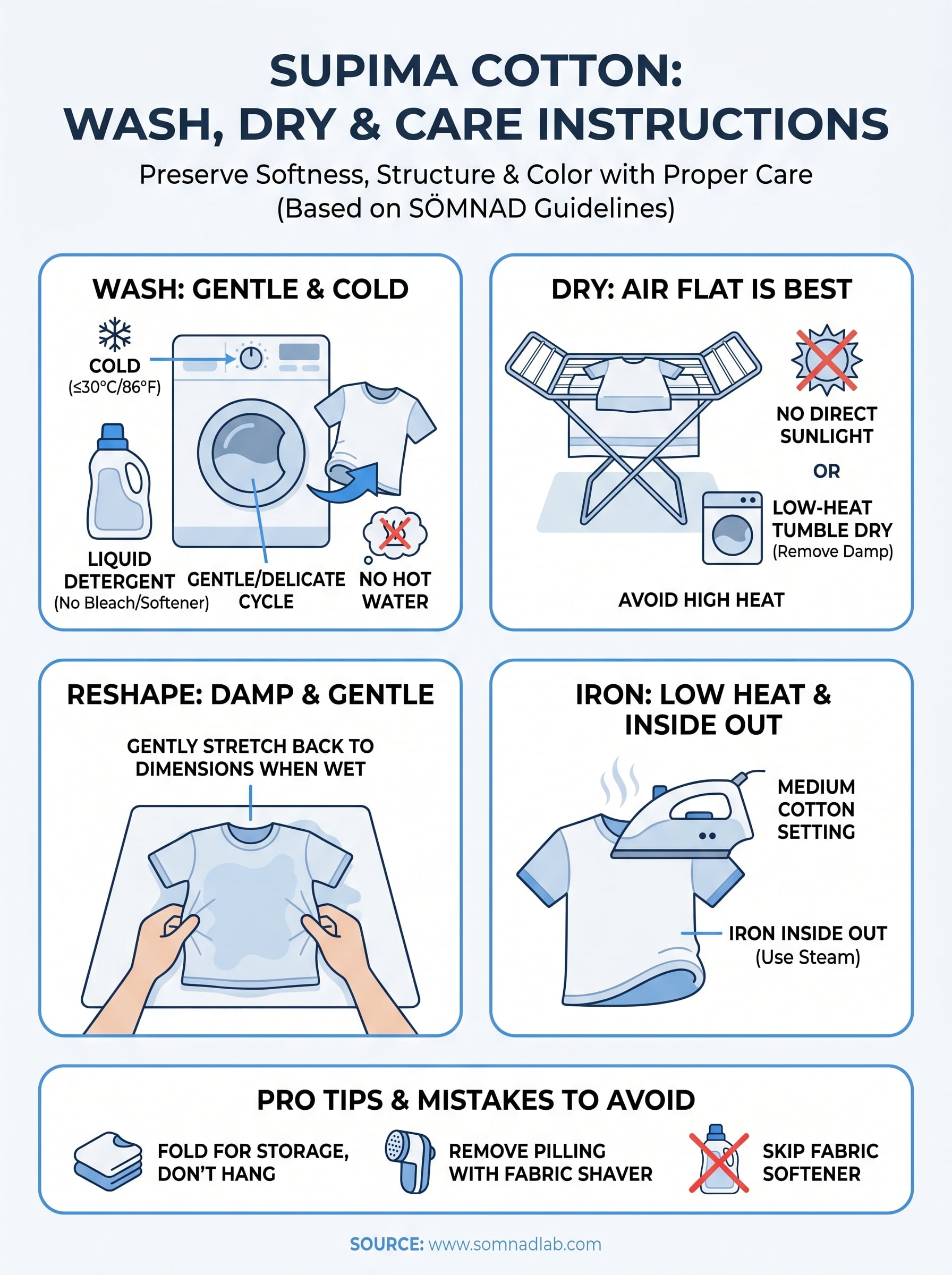
Cold water is the default for Supima cotton. 30°C (86°F) or below covers the vast majority of everyday washing situations and keeps the long-staple fibers in their natural, aligned state. That alignment is what preserves the softness and shape you paid for. Warm water up to 40°C (104°F) is acceptable for heavier Supima pieces when the care label explicitly permits it, but anything above that threshold forces the fibers to contract and lock into a shortened position. One hot wash can reduce a garment by a full size, and that shrinkage is permanent.
| Wash temperature | When to use |
|---|---|
| Cold (up to 30°C / 86°F) | Everyday washing, all Supima cotton garments |
| Warm (up to 40°C / 104°F) | Heavier garments only, if care label permits |
| Hot (above 40°C / 104°F) | Never for Supima cotton |
Never wash Supima cotton above 40°C (104°F). Even a single hot-water cycle causes fiber contraction that cannot be reversed.
Pick the right detergent and cycle
Liquid detergent outperforms powder with Supima cotton because it dissolves completely in cold water without leaving granular residue on the fibers. Choose a gentle or delicate formula and stay away from anything containing bleach, optical brighteners, or fabric softener. Bleach degrades the cotton fiber at a structural level, while fabric softener deposits a coating that blocks natural breathability and progressively dulls the hand feel with every wash.
For cycle selection, use the delicate or gentle setting on your machine. Lower agitation and a reduced spin speed protect the yarn structure from friction that causes pilling and weakens the weave. Turn your garment inside out before loading it to reduce surface contact with the drum walls, which helps preserve color depth across repeated washes.
Dry, reshape, and iron without damage
How you dry Supima cotton matters as much as how you wash it. High heat in the dryer is the second most common cause of irreversible shrinkage after hot water, and it happens fast. Complete these steps correctly and you protect everything that proper supima cotton washing instructions worked to preserve: the fiber alignment, the soft hand feel, and the garment's original dimensions.
Choose your drying method
Air drying is the safest option for any Supima cotton garment. Lay the piece flat on a clean, dry surface rather than hanging it, since hanging a wet garment pulls the fabric downward and stretches the shoulders and body out of shape over time. Keep it away from direct sunlight, which fades dye and dries the fibers unevenly.
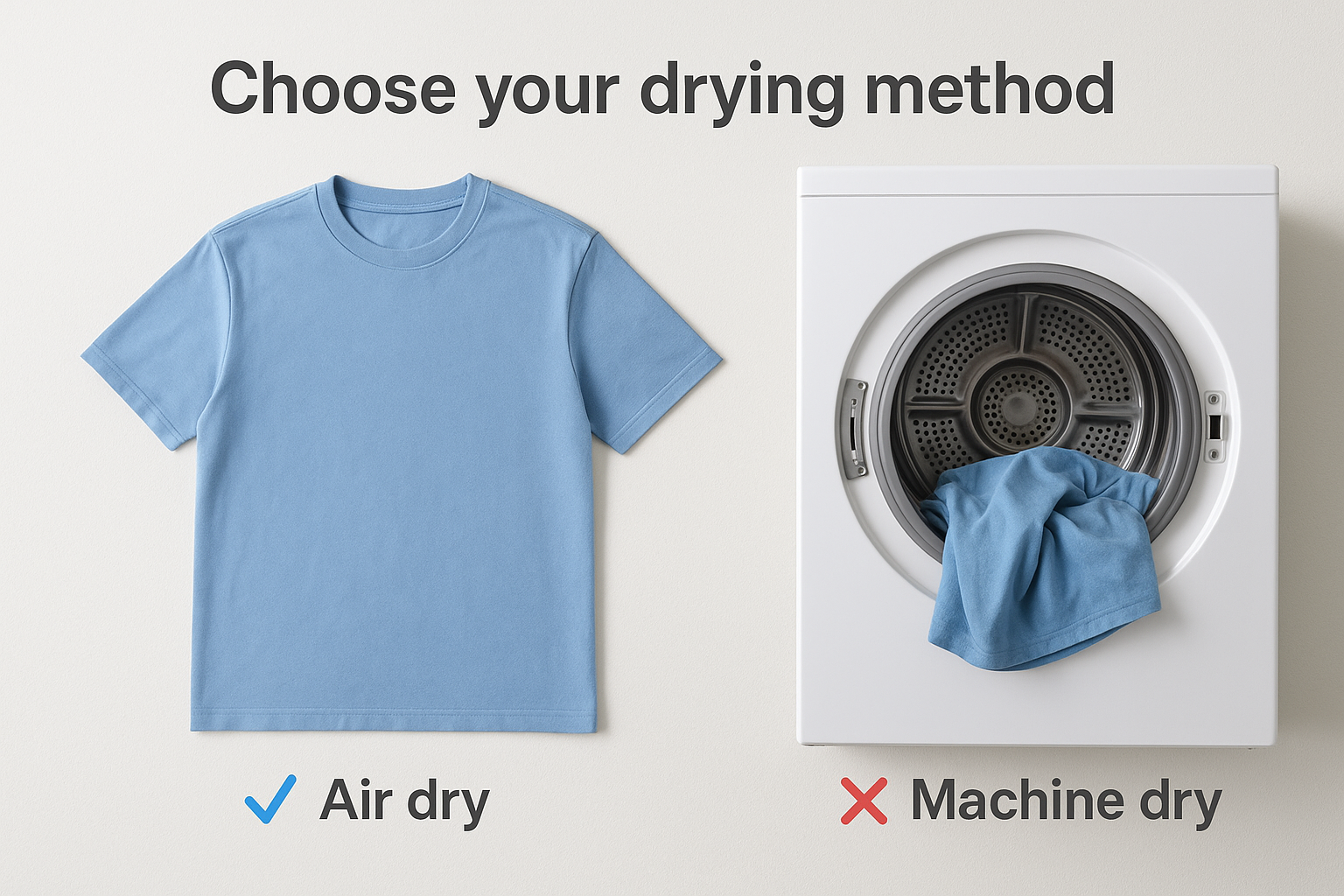
If you use a dryer, select the lowest heat setting available and remove the garment while it is still slightly damp, then finish with air drying. Most 300g Supima cotton tees handle low-heat tumble drying well, but shrinkage risk increases with every cycle at even moderate heat. Never use a high-heat setting.
Remove your garment from the dryer before it is fully dry. Overdrying at any heat level stiffens the fibers and accelerates wear.
Reshape while the fabric is damp
Damp cotton is workable. Once you pull your garment from the wash or dryer, gently stretch the fabric back to its original dimensions by hand before laying it flat to finish drying. Smooth out any bunching around the collar, cuffs, and side seams. This two-minute step keeps the structure intact and eliminates the need to iron most of the time.
Iron without scorching the fiber
When ironing is necessary, turn the garment inside out and use a medium heat setting, specifically the cotton setting rather than linen or high. Keep the iron moving at all times rather than pressing in one spot. If your iron has a steam function, use it: steam relaxes the fibers gently and reduces the pressure needed to smooth wrinkles, which lowers the risk of heat damage to the fabric surface.
Fix shrinkage, pilling, and common mistakes
Even with solid supima cotton washing instructions in hand, problems still happen. A hot wash, one trip through a high-heat dryer, or a gradual buildup of pilling can make a premium garment look worn before its time. Most of these issues have practical fixes, and the ones that do not can still be prevented from getting worse with the right approach going forward.
Unshrink a Supima cotton garment
Shrinkage in Supima cotton is caused by heat-induced fiber contraction, which locks the long-staple fibers into a shortened, compressed position. You can often partially reverse this with a simple soak method. Fill a basin with lukewarm water and a tablespoon of hair conditioner, submerge the garment, and let it sit for 30 minutes. The conditioner relaxes the fiber bonds without damaging the cotton. After soaking, gently stretch the garment by hand back toward its original dimensions while it is still wet, then lay it flat to air dry.
This method works best on minor to moderate shrinkage. A garment that has been through multiple hot cycles may only partially recover.
Remove pilling without damage
Pilling on Supima cotton is less common than on standard cotton because of the longer fiber structure, but it can still develop in high-friction areas like underarms and collar edges after extended wear. Use a fabric shaver or lint roller rather than scissors or tape, which can snag and pull the surface fibers. Move the fabric shaver in slow, flat passes with light pressure. Never press hard or rush the process, as aggressive shaving thins the fabric over time.
Avoid the most common washing mistakes
Repeated small errors cause the same cumulative damage as one major mistake. Here are the habits that degrade Supima cotton fastest:
- Washing in hot water even once causes irreversible shrinkage
- Using fabric softener coats the fibers and kills breathability over time
- Tumble drying on high heat accelerates fiber breakdown and distorts the fit
- Hanging wet garments stretches the shoulders and body out of shape
- Leaving garments in the drum after the cycle ends causes permanent creasing
Cutting these out protects the fabric's structure and softness across every wash going forward.
Keep your Supima cotton in top shape
Supima cotton rewards consistency. Every decision you make in the laundry room, from water temperature to drying method, either preserves or chips away at the fiber quality that separates this fabric from standard cotton. Following solid supima cotton washing instructions keeps the long-staple fiber structure intact, which means your garments hold their softness, shape, and color wash after wash.
Storage matters too. Fold your Supima cotton pieces rather than hanging them long-term, since gravity pulls fabric out of shape over months on a hanger. Keep them away from direct sunlight in your drawer or wardrobe, and store clean garments only, since body oils and residue break down cotton fibers faster during storage.
Ready to wear fabric that holds up to this level of care? Shop the SÖMNAD collection and see what 300g Supima cotton feels like through years of proper washing and wear.