


Most cotton t-shirts start pilling, fading, and losing shape within a few washes. That's not a fabric problem, it's a fiber quality problem. The difference between Supima cotton vs regular cotton comes down to fiber length, and that single factor affects everything from how soft the shirt feels on day one to how it holds up after fifty washes.
Regular cotton accounts for roughly 90% of the world's cotton supply. Supima makes up less than 1%. At SÖMNAD, we build our essentials from 300g Supima cotton because the performance gap between these two fibers is real and measurable, not marketing spin. When you're paying more for a basic tee, you should know exactly what you're getting and why it matters.
This article breaks down the technical and practical differences between Supima and regular cotton across softness, tensile strength, color retention, and shrinkage. By the end, you'll have a clear picture of where the premium actually goes, and whether it's worth it for your wardrobe.
What Supima cotton is and what regular cotton is
Both Supima and regular cotton come from the same plant species, but they are not the same fiber. Supima is a trademarked name referring specifically to American-grown Pima cotton, which belongs to the extra-long staple (ELS) category of cotton fibers. Regular cotton, by contrast, is almost always Upland cotton, a shorter-staple variety that dominates global production. Understanding the distinction between these two tells you a lot about the quality gap you're dealing with when comparing fabrics and why the price difference between a Supima tee and a standard cotton tee exists at all.
What makes Supima cotton different at the source
Supima cotton grows exclusively in the United States, primarily in California, Arizona, New Mexico, and Texas. The fiber length, called staple length, runs 36mm or longer, placing it firmly in the ELS category alongside Egyptian Giza cotton. The name "Supima" is short for Superior Pima, and the Supima Association of America owns and licenses the trademark. Any product carrying the Supima label must contain certified American Pima cotton, which creates a verifiable quality standard rather than a loose marketing claim that any brand can attach to their product.
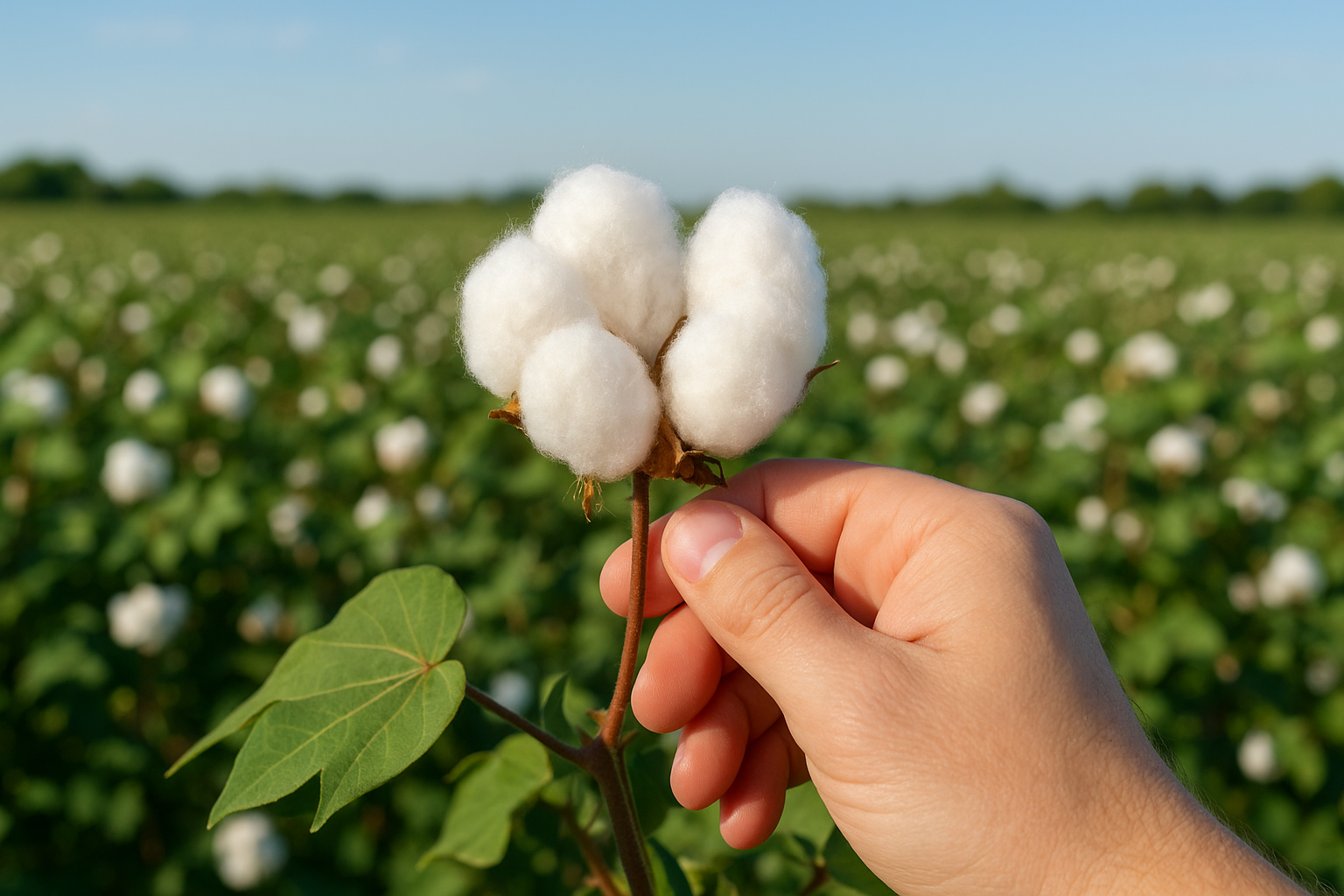
Supima represents less than 1% of total global cotton production, so when you see the certified label, you're dealing with a genuinely controlled and limited material.
The fiber is also finer in diameter compared to standard Upland cotton. Finer, longer fibers allow spinners to pack more individual fibers into a single yarn, which creates a denser and smoother thread. Fewer exposed fiber ends on the surface of the woven or knitted fabric means significantly less pilling and a texture that holds up through dozens of washes rather than degrading after the first few cycles.
What regular cotton actually means
Regular cotton is almost always Upland cotton (Gossypium hirsutum), which accounts for roughly 90% of the world's cotton production. Upland cotton carries a staple length that typically falls between 22mm and 32mm, well below the ELS threshold. This doesn't make Upland cotton a bad material. It powers the entire global textile industry and covers everything from denim to flannel shirts to basic tees sold at every price point.
Quality within Upland cotton varies depending on growing conditions, harvesting methods, and processing techniques. Some manufacturers comb and ring-spin Upland cotton to remove short fibers and align the remaining ones more consistently, which lifts its performance toward the mid-range. But even well-processed Upland cotton starts with a shorter fiber, and that structural ceiling stays with the fabric regardless of what processing happens afterward.
When you're comparing Supima cotton vs regular cotton, the fiber length difference is the root cause of every downstream performance gap you'll notice across softness, tensile strength, and color retention. Your fabric's performance in six months comes down to decisions made at the fiber level before any spinning, weaving, or knitting begins.
Why staple length changes softness and strength
Staple length is the single most important variable in cotton quality because it determines how the fiber behaves at every stage of production. Longer fibers twist together more consistently during spinning, creating a tighter, more uniform yarn with fewer loose ends poking out from the surface. When you compare Supima cotton vs regular cotton, this structural difference at the fiber level explains why every performance metric downstream, from softness to tensile strength, lands differently.
How fiber length drives softness
Softness isn't about how the fabric is finished or chemically treated before it reaches you. It starts with fiber diameter and length. Supima fibers average around 36mm and are finer in diameter than standard Upland cotton fibers, which means more individual fibers fit into each yarn. When yarn contains more, finer fibers twisted together, the fabric surface that touches your skin is smoother and more even, with almost no rough fiber tips breaking through.
The softness you feel in a well-made Supima tee on day one actually improves with washing, because longer fibers hold their position in the yarn rather than migrating to the surface and creating texture.
Regular cotton, with its shorter 22mm to 32mm staple, produces yarn with more exposed fiber ends. Those ends are what cause the rough texture you sometimes feel against your skin, and they're the same ends that tangle and form pills on the fabric surface after repeated friction and mechanical stress.
How fiber length drives strength
Strength in cotton fabric comes down to how well individual fibers grip each other inside the yarn. Longer fibers create more contact points along each twist, which means more friction holds the yarn together under tension. Supima yarn handles pulling, stretching, and repeated washing without breaking down at the fiber-to-fiber contact points the way shorter staple yarns do under the same conditions.
Upland cotton yarns carry fewer contact points per unit of yarn length, so they're more likely to thin out under repeated mechanical stress. That's why a regular cotton tee loses its shape and structural integrity faster, even with careful washing and low-heat drying.
Supima vs regular cotton in real-world wear
Fiber science matters, but what you actually notice is how the shirt looks and feels after three months of regular use. When comparing Supima cotton vs regular cotton in practice, the differences show up in three specific areas: how much the garment shrinks after washing, how long it holds color, and how well it maintains its original shape through repeated wear and mechanical stress.
How shrinkage compares after washing
Shrinkage happens when fiber tension built up during spinning and knitting releases under heat and moisture. Longer Supima fibers hold their position inside the yarn structure more reliably than shorter Upland cotton fibers, so they move less when exposed to heat and water. A well-made Supima tee shrinks 2% to 3% after the first wash, and that's largely it. Subsequent washes produce minimal further change, which means the fit you try on in the store is close to the fit you'll live with.
Regular cotton shrinks more aggressively, often 5% to 8% in the first wash depending on thread count and construction. If you've ever bought a standard cotton tee that fits perfectly off the rack and then pulled something noticeably smaller out of the dryer, that's shorter-staple fiber releasing tension it was holding since the knitting stage.
Pre-washing your garment before wearing it for the first time locks in the fit, regardless of which cotton type you're working with.
Color retention over time
Color lives in the fiber, not just on the surface of the fabric. Finer, denser Supima fibers absorb dye more deeply and hold more dye molecules per unit of yarn, which translates directly to richer color that resists fading through UV exposure and repeated washing cycles. A Supima navy tee looks close to the same shade after thirty washes that it did on day one.
Regular cotton fades faster because shorter, coarser fibers hold less dye and release it more readily under friction and heat. That characteristic faded look on older cotton basics is not a styling choice; it's the fiber doing what its structure allows.
How to spot genuine Supima and buy with confidence
When you're comparing Supima cotton vs regular cotton in a store or online, the quality difference isn't visible to the naked eye before you buy. Brands can legally use terms like "premium cotton" or "long-staple cotton" without any third-party verification backing those claims. Knowing what to look for protects you from paying a Supima price for a standard Upland cotton product.
Look for the certified Supima label
The most reliable signal is the official Supima certification mark, which the Supima Association of America licenses only to brands using verified American Pima cotton. This mark appears on hangtags, inside labels, or product description pages, and it means the cotton has passed traceability standards from farm to finished garment. If a product claims Pima or extra-long staple cotton without this certification, there's no guarantee the fiber actually meets the standard.
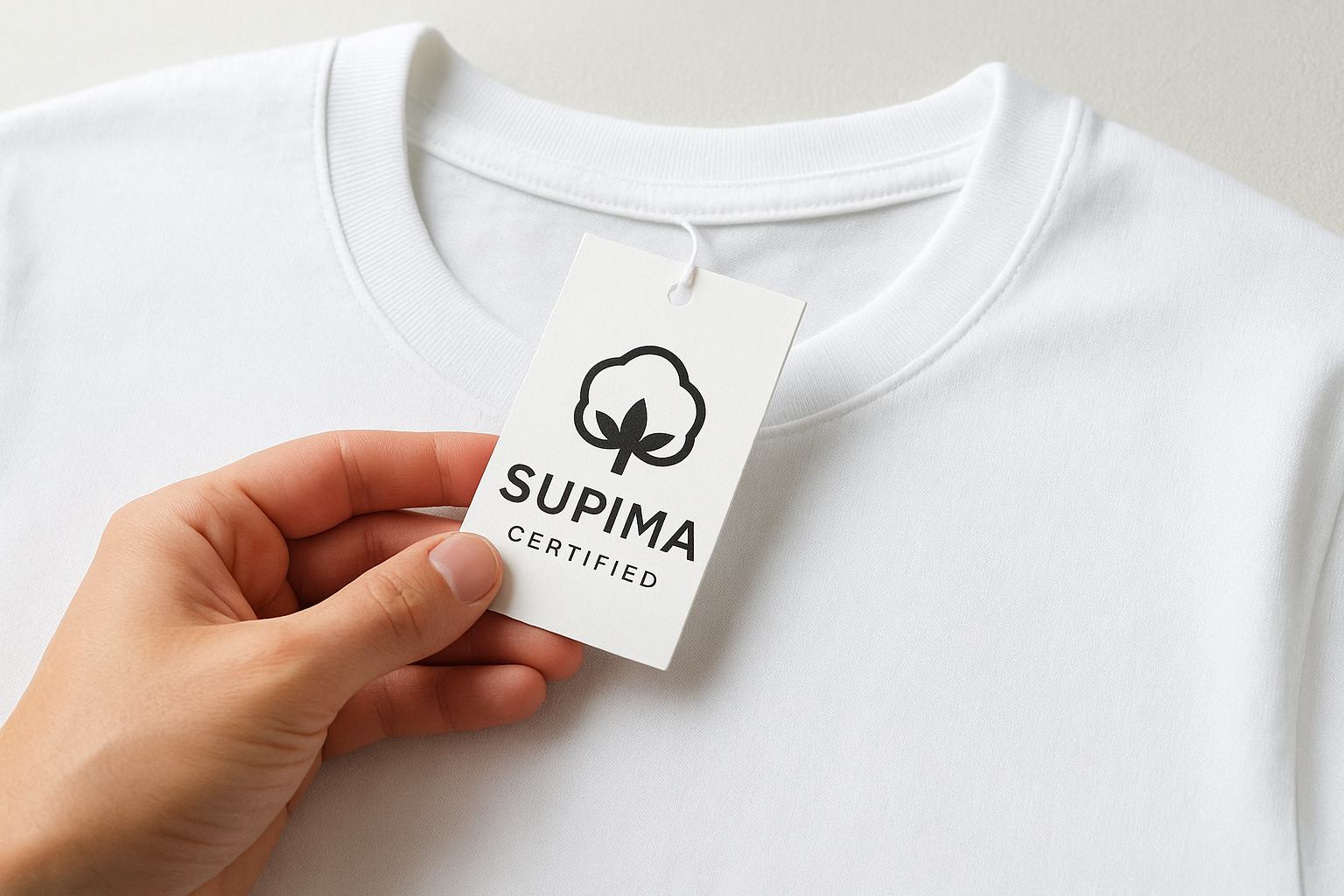
The Supima Association maintains a public list of licensed brands, so you can verify whether a brand is authorized to use the trademark before you hand over your money.
Check the fabric weight and composition details
Fabric weight tells you a lot about construction quality before you touch the shirt. Heavier weights, typically 280 grams per square meter and above, signal that the brand used more fiber per unit of fabric, which correlates directly with durability and drape. A 300g Supima cotton fabric, like the weight SÖMNAD uses in its relaxed tee, sits at the premium end of what a daily t-shirt can reasonably weigh without becoming stiff or restrictive.
Look at the product composition listed on the label or the product page. A genuine Supima garment lists 100% Supima cotton or 100% American Pima cotton alongside the certification mark. If you see "cotton blend" or a vague "premium cotton" claim with no certification present, treat it as standard Upland cotton regardless of how the brand describes it in its marketing copy.
How to care for Supima and regular cotton
Knowing the difference between Supima cotton vs regular cotton doesn't stop at the point of purchase. How you wash and dry each fabric determines how long those performance advantages actually last. Both cotton types respond to heat and mechanical stress, but the longer Supima fiber tolerates routine washing better when you follow a few straightforward guidelines.
Washing temperature and cycle selection
Cold or warm water, not hot, is the right setting for both Supima and regular cotton. Hot water accelerates fiber swelling, which forces even long-staple Supima fibers to release tension and shrink beyond the minimal amount they're designed to. For regular cotton, hot water compounds the shrinkage problem it already has from shorter fibers. Set your machine to cold (60°F) or warm (80°F) and run a gentle or delicate cycle to reduce the mechanical friction that pulls fiber ends to the surface and creates pilling over time.
Turning your garment inside out before washing reduces surface abrasion on the exterior fabric face, which directly protects color and texture through every wash cycle.
Avoid washing cotton with rough materials like denim or garments with exposed zippers in the same load. The abrasion from harder fabrics wears down the cotton surface faster than the fiber itself would degrade under normal use, and this applies equally to both Supima and Upland cotton tees.
Drying and long-term storage
Air drying is the single best thing you can do to preserve a Supima cotton garment's shape and weight over time. Lay the shirt flat on a clean surface or hang it on a wide hanger to dry at room temperature. If you use a dryer, select low heat and remove the garment while it still carries a small amount of residual moisture, then reshape it by hand and let it finish drying flat.
Regular cotton tolerates the dryer reasonably well after its initial shrinkage has occurred, but repeated high-heat drying still degrades fiber integrity faster than air drying does. Storing folded cotton basics in a drawer rather than on a hanger prevents shoulder distortion that builds up when fabric hangs under its own weight for extended periods.
Key takeaways
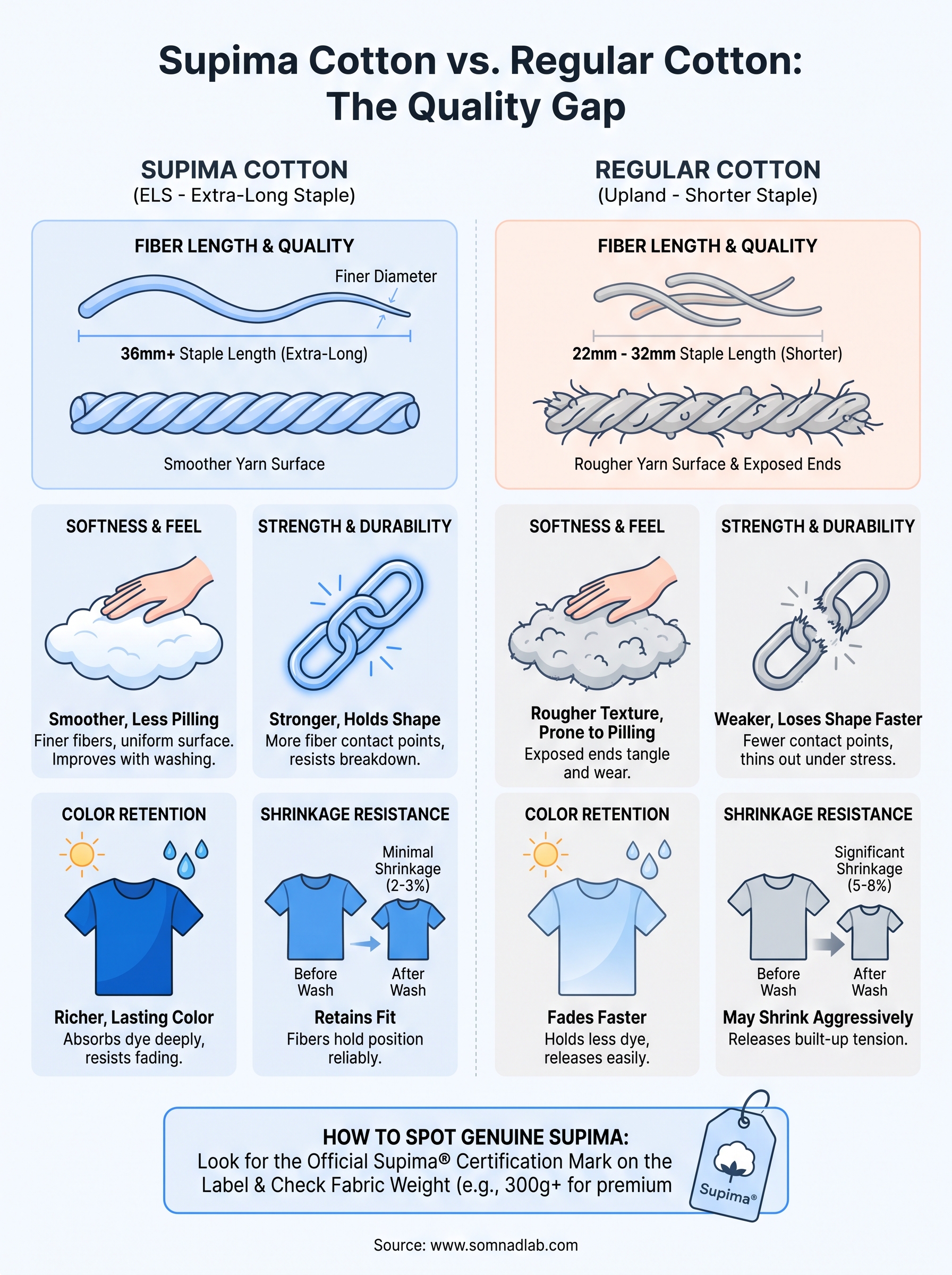
The gap between Supima cotton vs regular cotton comes down to one structural fact: fiber length. Supima's extra-long staple fibers, running 36mm or longer, produce yarn that is smoother, stronger, and more color-stable than anything standard Upland cotton can deliver at its shorter 22mm to 32mm range. That single difference at the fiber level explains every real-world advantage you experience across softness, shrinkage resistance, and color retention after repeated washing.
Paying more for a Supima garment makes sense when you're buying a daily essential you'll wear for years rather than months. Look for the certified Supima mark on the label and check fabric weight before you commit. A heavier construction like 300g signals that the brand invested in the material rather than cutting corners at the fiber level. If you want to see what a well-built Supima essential actually feels like, explore SÖMNAD's Supima cotton tees and judge the quality for yourself.