


Most cotton t-shirts start pilling, fading, or losing shape within a handful of washes. You toss them, buy replacements, and repeat the cycle. The problem isn't cotton itself, it's the type of cotton. When you compare Supima cotton vs regular cotton, the gap in fiber quality, softness, and longevity is significant, and it directly affects how your clothes look and feel over time.
Supima represents less than 1% of the world's cotton supply, grown exclusively in the United States. Its extra-long staple fibers produce fabric that's measurably softer, stronger, and more resistant to wear than conventional cotton. But those advantages come at a higher price point, which raises a fair question: is the upgrade actually worth your money?
At SÖMNAD, we build our essentials around 300g Supima cotton because we've tested the alternatives and the difference isn't subtle. It shows up in how the fabric drapes, how it holds its structure wash after wash, and how it feels against your skin on day one versus day two hundred. That hands-on experience with both materials is exactly what shaped this guide.
Below, we break down the real differences between Supima and regular cotton, fiber length, durability, softness, color retention, cost, so you can decide for yourself whether the premium is justified. No vague claims. Just the specifics that matter when you're choosing what goes into your everyday rotation.
What Supima cotton is vs regular cotton
Supima is a trademarked name owned by the Supima Association of America, and it refers specifically to extra-long staple (ELS) Pima cotton grown exclusively in the United States. The name combines "Superior" and "Pima," which points directly at what separates it from the conventional cotton you find in most affordable garments. Not every cotton labeled "Pima" qualifies as Supima - the designation requires growers to be licensed and their product to be verified at multiple points in the supply chain.
Where Supima cotton comes from
Supima cotton grows in a handful of states across the American Southwest and West, primarily California, Arizona, New Mexico, and Texas. These regions provide the dry heat, long growing season, and specific soil conditions that ELS cotton requires to develop its characteristic long fibers. The Supima Association licenses and tracks the cotton from farm through finished product, which means when you see the Supima name on a label, the fiber has been verified and not just claimed by a marketing team.
That verification process matters more than it might seem at first. The global cotton market contains a significant amount of mislabeled product, where standard cotton gets sold as Pima. Supply chain tracing and third-party certification are what give Supima its credibility, and that infrastructure is part of what you're paying for when you buy a garment made from it.
When a brand uses Supima cotton, they're held to a licensed standard - not just reaching for a marketing term.
What regular cotton actually is
Regular cotton, often called upland cotton, makes up roughly 90% of the world's cotton supply. It grows across a wide range of climates in countries including the United States, India, China, and Brazil. The fiber length of upland cotton typically falls between 0.75 and 1.1 inches, which is shorter than what Supima produces. That difference in length might sound minor, but it has a direct impact on how the fabric behaves in manufacturing and in everyday use.
Upland cotton is not low-quality by default. It produces perfectly functional fabric for a wide range of products, from workwear to bedding to everyday basics. The core issue is that shorter fibers require more joining points during spinning, which introduces more loose ends into the yarn. Those loose ends create friction, and friction is exactly what causes pilling, surface roughness, and early breakdown after repeated washing.
How the fibers compare side by side
When you look at Supima cotton vs regular cotton side by side, the defining difference is staple length. Supima fibers measure around 1.4 to 1.5 inches, placing them firmly in the extra-long staple category. Longer fibers spin into finer, smoother, stronger yarn because there are fewer joins in the thread, which translates directly into fabric that feels softer, pills less, and holds its structure wash after wash.
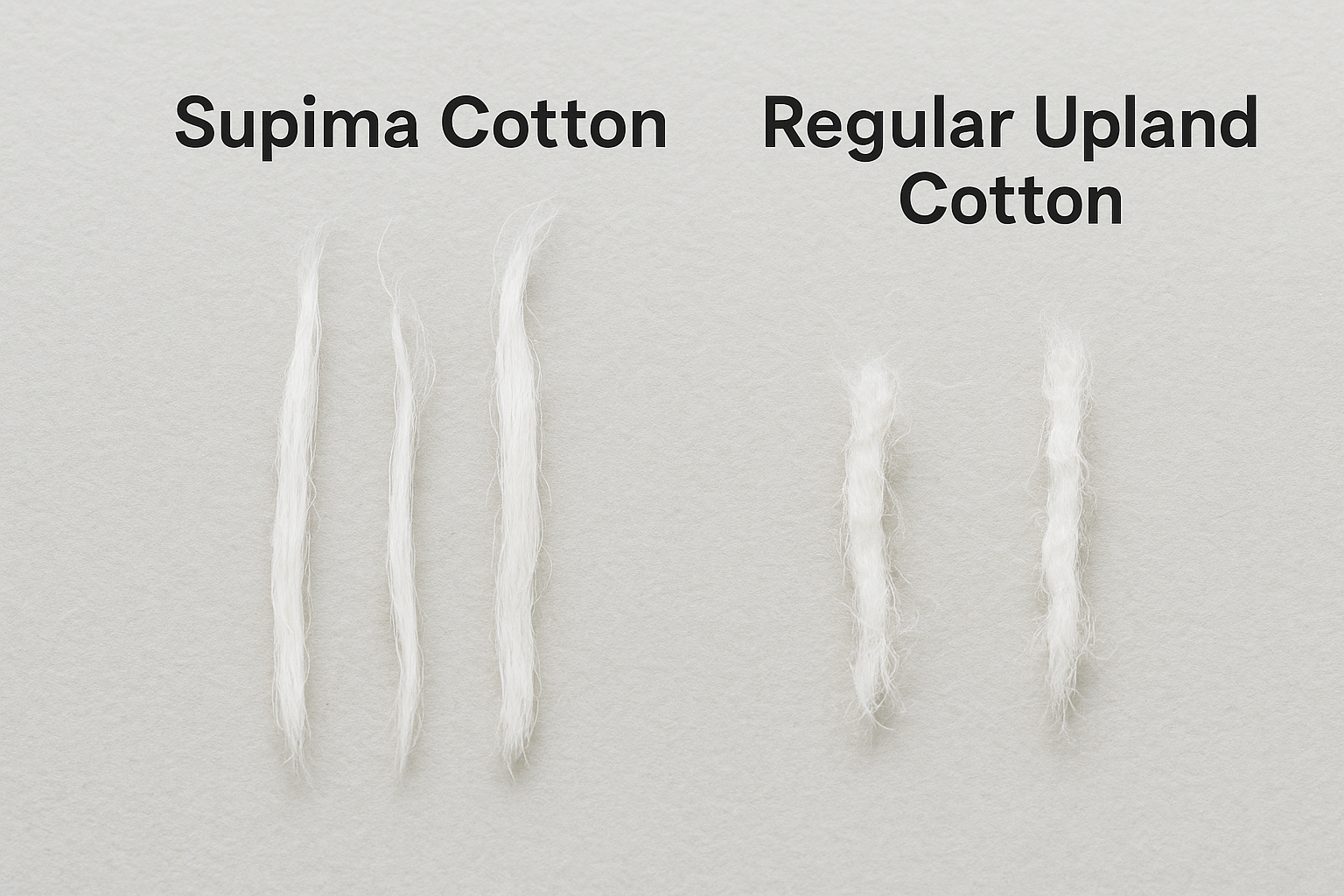
| Property | Supima Cotton | Regular Upland Cotton |
|---|---|---|
| Staple length | 1.4 - 1.5 inches | 0.75 - 1.1 inches |
| Share of global supply | Under 1% | Around 90% |
| Origin | USA only (licensed) | Global |
| Fiber category | Extra-long staple (ELS) | Short to medium staple |
The numbers in that table give you a clear starting point, but they only tell part of the story. The practical effects of those fiber differences, how they translate into softness, durability, and color retention over time, are what you actually experience when you wear the fabric day after day.
Why staple length changes feel and wear
The difference between a 1.4-inch Supima fiber and a 0.9-inch upland cotton fiber might seem trivial until you understand what happens during spinning. Cotton fibers don't get used as individual strands. They get twisted together into yarn, and that yarn gets woven or knitted into fabric. The length of each fiber determines how many times the yarn needs to join shorter pieces together to reach the same thread length, and those joins are where fabric starts to fail.
How fiber length affects softness
When spinners work with longer fibers, they twist fewer individual strands together to produce the same amount of yarn. Fewer fiber ends stick out from the surface of the thread, which means less friction against your skin. Short-staple cotton produces yarn with more protruding fiber ends per inch, and those ends are what create that scratchy or rough texture you notice in cheaper basics. The fabric might feel acceptable on the shelf, but after a few washes those loose ends break free, clump together, and form the small fuzzy balls called pills.
The softness of a finished garment is largely determined before a single thread is woven - it starts with fiber length.
Supima fabric feels noticeably smoother on day one, and it stays that way because the longer fibers stay locked in place through repeated washing. When you compare Supima cotton vs regular cotton in terms of surface texture after 50 washes, the gap becomes obvious. The Supima piece maintains a clean, flat surface while the upland cotton equivalent develops a duller, rougher feel that no amount of fabric softener fully corrects.
How fiber length affects durability
Longer fibers create stronger yarn because each strand overlaps more with its neighbors during the spinning process. That increased overlap means the individual fibers grip each other more effectively, producing yarn that resists breaking under tension. Regular upland cotton yarn, built from shorter fibers with fewer overlap points, breaks down faster under the mechanical stress of washing, wringing, and daily wear.
This matters practically when you're thinking about cost per wear. A Supima tee that holds its weight, shape, and surface quality for three years costs you less per wearing than an upland cotton tee that stretches out and pills within six months. The fiber length difference is the structural reason that premium price holds up under scrutiny.
How Supima performs in real life
The theory about fiber length is useful, but what you actually care about is how a garment holds up through real use. Supima cotton's performance advantages show up in three specific areas you'll notice without running any tests: how the fabric feels after repeated washing, how well it holds its color, and how consistently it keeps its original structure over months of wear.
Softness that holds through washing
Most cotton basics feel their best on the first or second wear. After that, the surface quality declines because short-staple fibers break free from the yarn and accumulate on the surface as pills. Supima's extra-long fibers stay locked in place through mechanical stress, so the fabric maintains a smooth, flat surface wash after wash.
You won't retire a Supima tee because it developed an unpleasant texture. The softness on day one is roughly what you'll still feel on day one hundred, and that consistency is something regular upland cotton simply can't match over the same number of washes.
Pilling is not a fabric care problem - it's a fiber length problem, and Supima solves it at the source.
Color retention
Finer yarn spun from longer fibers absorbs dye more evenly and holds it more deeply than coarser upland cotton yarn. That structural difference means Supima garments resist fading and color shift through repeated washing more effectively. When you compare supima cotton vs regular cotton side by side after 30 washes, the Supima piece typically retains noticeably richer, truer color.
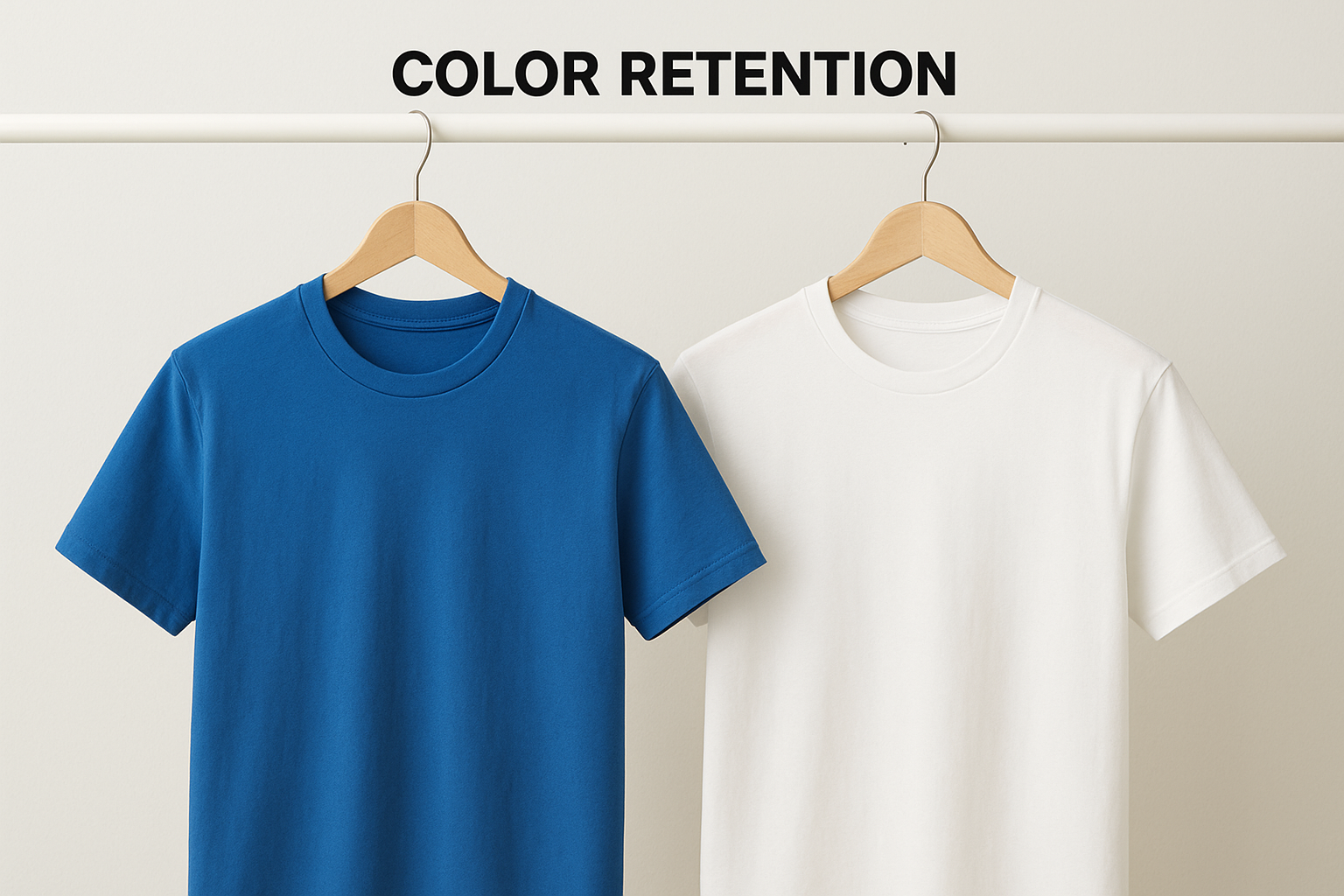
For basics you plan to wear frequently, that color stability matters more than it sounds. A white tee stays closer to white. A black tee holds its depth longer. Regular cotton tends to develop a washed-out, grayish cast that no detergent corrects.
Shape and structure
Supima's stronger yarn means garments hold their cut and dimensions through wear and washing. Regular upland cotton stretches unevenly over time, particularly around the collar and shoulder seams where tension accumulates. Supima fabric resists that distortion because the tighter fiber-to-fiber grip in the yarn keeps the fabric from elongating under repeated stress.
The practical result is that a well-constructed Supima garment holds its fit for years rather than months. That directly reduces how often you replace it, which changes the cost calculation significantly when you factor in price per wear rather than purchase price alone.
How to choose based on your use and budget
The right choice between Supima and regular cotton comes down to two practical factors: how often you'll wear the item and how long you need it to last. Neither material is the correct answer for every situation. If you're buying a basic tee you'll reach for three or four times a week, fiber quality has a direct impact on what you'll still be wearing a year from now. If you're buying something for occasional use or a short-term need, the premium may not be justified.
When regular cotton makes sense
Regular upland cotton works well in situations where longevity isn't the primary concern. Workwear that gets stained, dirty, or put through physically demanding conditions makes more sense in standard cotton because the damage comes from the environment rather than fiber degradation. The same logic applies to items worn only a handful of times per season, or children's clothing where growth makes replacement inevitable regardless of fabric quality.
Budget constraints are also real. If you're building out a wardrobe from scratch and need to cover multiple categories at once, spreading your budget across regular cotton basics is a reasonable short-term approach. You'll replace them more frequently, but the cost is spread out over time rather than concentrated upfront.
When Supima is worth the cost
When you're evaluating supima cotton vs regular cotton for garments you wear constantly, the math shifts in favor of Supima. A tee you reach for four days a week accumulates hundreds of wears in a single year. At that frequency, regular upland cotton degrades visibly within six months, while Supima maintains its surface quality and original shape across the same wash count. The higher purchase price divides across significantly more wears.
Cost per wear, not purchase price, is the number that actually tells you whether a garment is worth buying.
Your everyday essentials are the clearest case for Supima. Foundational pieces like relaxed tees, crewnecks, and layering basics are the garments you wear repeatedly without much thought, and they absorb the most mechanical stress from washing and daily use. Those are exactly the items where fiber quality becomes visible over time, and where investing in Supima stops feeling like a premium and starts feeling like the obvious choice.
How to care for Supima and regular cotton
Both Supima and regular cotton respond well to straightforward care, but small differences in how you wash and dry each fabric can meaningfully extend or shorten a garment's lifespan. Supima's longer fibers give it more resilience than upland cotton, but that advantage only holds if you avoid the specific conditions that accelerate cotton fiber breakdown regardless of fabric quality or price point.
Washing temperature and cycle selection
Cold water washing is the single most effective habit you can build for both fiber types. Hot water weakens the bonds between individual fiber strands in the yarn, which accelerates shrinkage and surface degradation with each wash cycle. For Supima cotton specifically, washing in cold water on a gentle or normal cycle preserves the tight fiber-to-fiber grip that keeps the fabric smooth and resistant to pilling over hundreds of washes.
The most damage to cotton happens in the wash, not through wearing - controlling water temperature is the most direct way to extend garment life.
Regular upland cotton is more vulnerable to mechanical agitation and heat than Supima, so keeping cycles shorter and temperatures lower gives you more usable washes before the fabric starts showing visible wear. Turning garments inside out before washing reduces friction on the outer surface, which matters especially for regular cotton where loose fiber ends are already more exposed and prone to clumping into pills over time. A mild, dye-safe detergent without bleach or optical brighteners also helps both fiber types retain their original color and surface texture longer.
Drying and long-term maintenance
Machine drying on high heat is where most cotton garments lose shape and structure faster than anywhere else in the care routine. Heat causes cotton fibers to contract, and repeated high-temperature drying cycles compound that contraction into permanent shrinkage that no amount of stretching corrects afterward. For both fiber types, a low heat setting or air drying preserves dimensional stability considerably longer.
When comparing supima cotton vs regular cotton in terms of drying behavior, Supima holds its shape better at lower temperatures because its longer fibers resist distortion more effectively under heat stress. Regular upland cotton benefits even more from air drying since its shorter fibers have less structural grip to begin with. Hanging to dry or laying flat away from direct sunlight prevents both heat distortion and UV-related color fading, which accumulates across both fiber types with prolonged exposure and visibly dulls fabric that would otherwise last years longer.
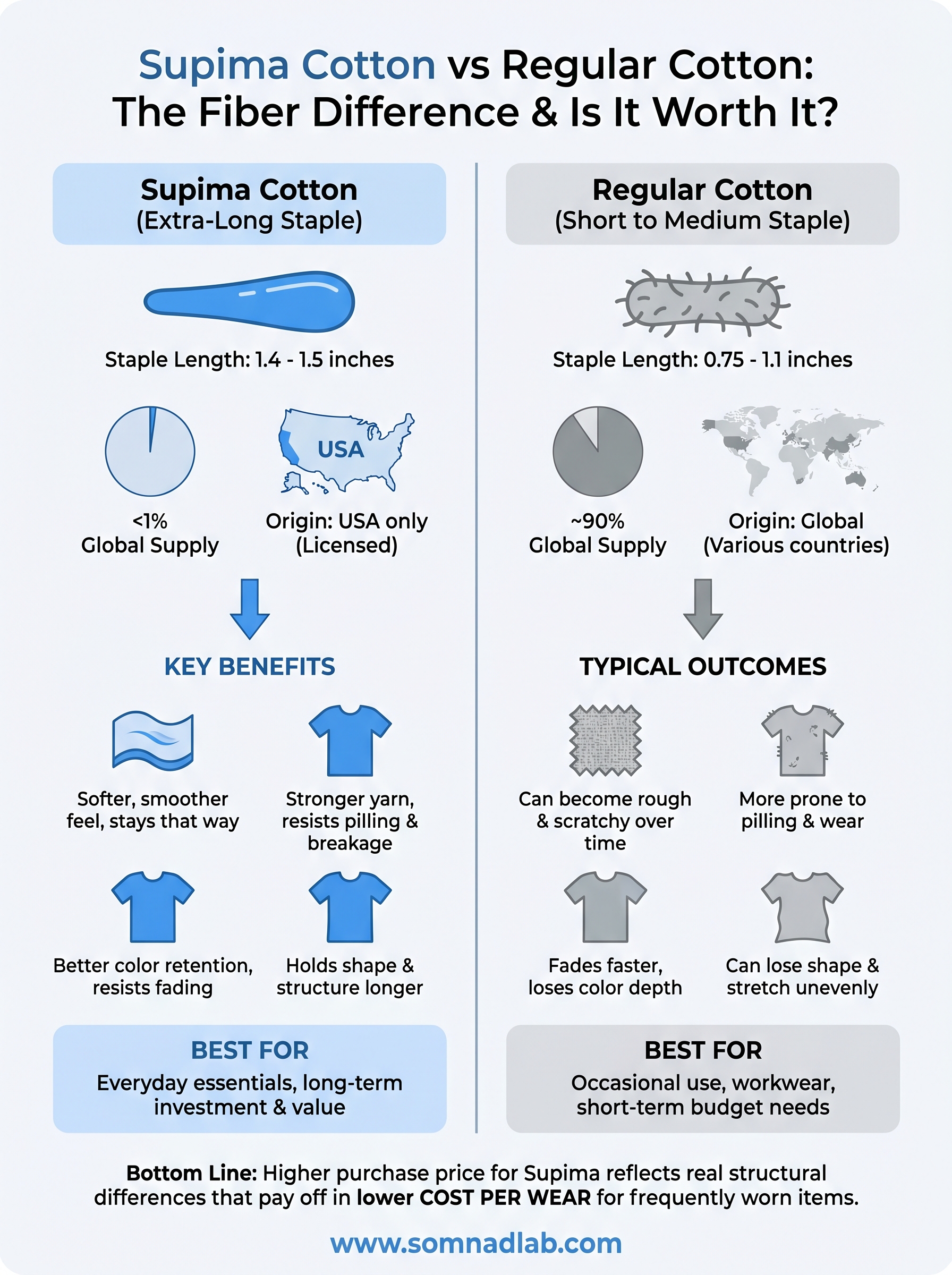
Bottom line
When you compare supima cotton vs regular cotton, the core question isn't which fabric is better in the abstract. It's whether the gap in fiber quality shows up in the ways that matter to your actual wardrobe. For occasional-use items or short-term purchases, regular upland cotton does the job. For the pieces you reach for constantly, that gap becomes visible and measurable within months.
Supima's extra-long staple fibers deliver softness that holds through repeated washing, stronger yarn that resists shape loss, and color that stays truer over time. Those aren't marketing claims. They follow directly from how longer fibers behave during spinning and wearing. The higher purchase price reflects real structural differences in the cotton itself, and the cost per wear math consistently favors Supima for everyday essentials.
If you want to see what that standard looks like in a finished garment, explore SÖMNAD's 300g Supima cotton essentials.