


The debate around Supima cotton vs Egyptian cotton comes up every time someone starts caring about what their clothes and sheets are actually made of. Both names carry a reputation for quality, but they're not the same thing, and the differences matter more than most product descriptions let on.
At SÖMNAD, we build our essentials from 300g Supima cotton, so this isn't an abstract comparison for us, it's a material decision we've made deliberately and stand behind. We chose one over the other for specific, measurable reasons related to fiber consistency, durability, and how the fabric performs after dozens of washes. That firsthand experience with both materials is exactly what shaped this breakdown.
This article covers the origin, fiber quality, feel, durability, and cost of each cotton type, so you can make a more informed purchase, whether you're shopping for apparel or bedding, and understand what you're actually paying for when you see either name on a label.
What Supima cotton and Egyptian cotton are
Both cotton types come from extra-long staple (ELS) fibers, which are the longest, strongest fibers a cotton plant produces. Regular cotton has short, rough fibers that pill and break down faster. ELS cotton behaves differently, creating a smoother, more durable yarn that holds its integrity through repeated use. That shared trait is what puts both materials in the premium tier, but it's also where the comparison starts to get more complicated.
Supima cotton: American-grown and certified
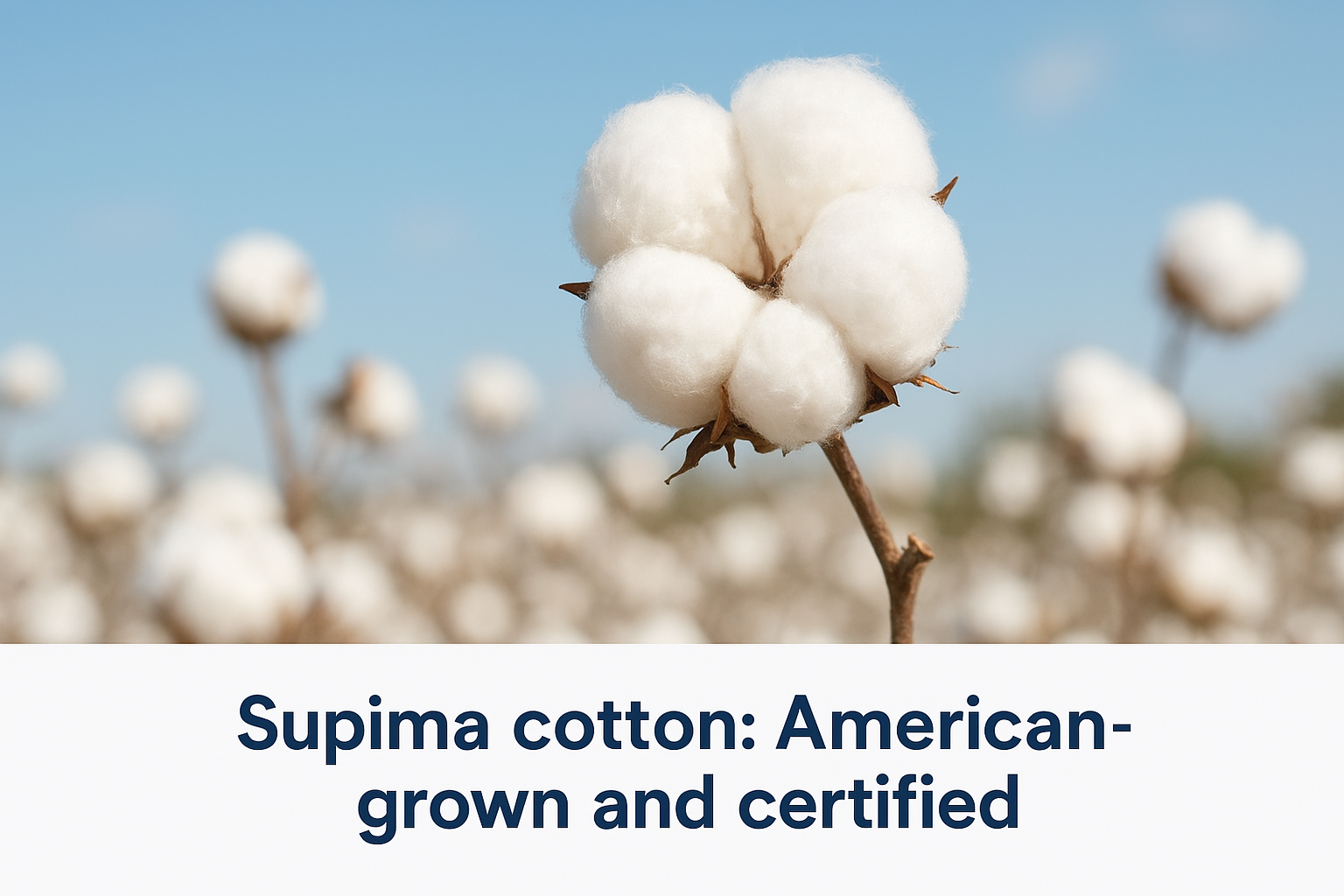
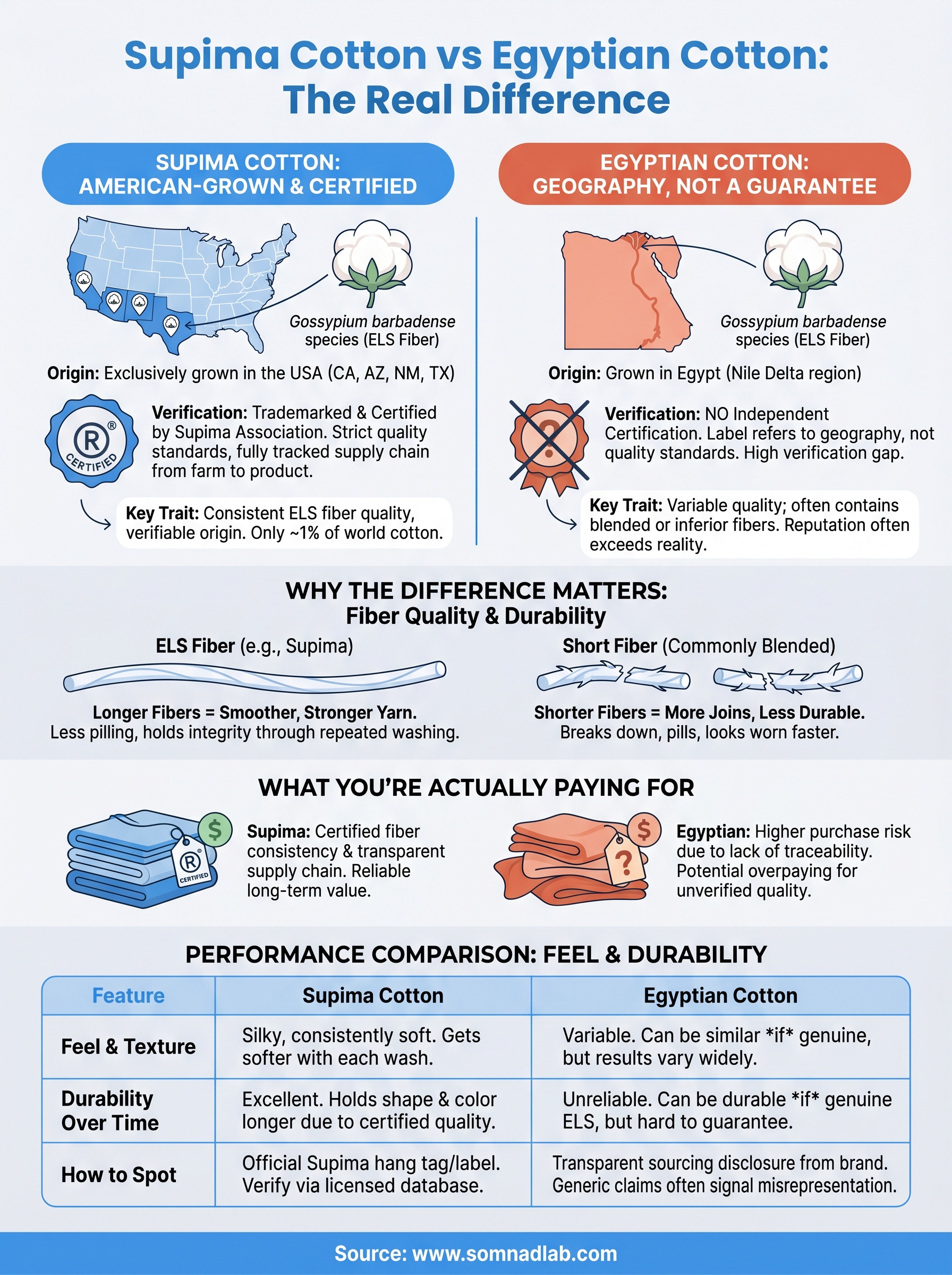
Supima is a trademarked name owned by Supima, a nonprofit association that licenses the name only to growers and manufacturers who meet strict quality standards. The fiber comes from Gossypium barbadense, a specific cotton species grown exclusively in the United States, primarily in California, Arizona, New Mexico, and Texas. Only about 1% of the world's cotton qualifies as Supima. Every bale is tracked from farm to finished product, which means when you see the Supima label, you can verify the fiber's origin. The lower yield per acre compared to standard cotton is one reason it costs more to produce and purchase.
Supima's certification process is one of the most transparent in the textile industry, making it significantly easier to trust the label than most cotton designations.
Egyptian cotton: geography, not a guarantee
Egyptian cotton refers to cotton grown in Egypt, also from the Gossypium barbadense species. The Nile Delta's climate and soil historically produced exceptional ELS fibers, and the reputation built around Egyptian cotton is well-earned for the genuine article. The problem is that the label "Egyptian cotton" carries no independent certification equivalent to Supima's. Studies have found that a significant portion of products sold as Egyptian cotton contain little to no actual Egyptian ELS fiber. When evaluating supima cotton vs egyptian cotton, this verification gap is a practical issue worth understanding before you spend money on either.
Why the difference matters
The cotton label on your clothing or bedding isn't just marketing. Fiber length and source verification directly affect how a product feels when you first use it and how it holds up after a year of regular washing. When you compare supima cotton vs egyptian cotton, the core issue isn't simply which sounds more premium. It's whether the material in your hands actually matches what the label claims, and whether you're getting real value for what you spend.
What fiber quality does to durability
Longer fibers create smoother, stronger yarns because they require fewer joins per inch of thread. Fewer joins mean less surface friction, less pilling, and a fabric that stays intact through repeated use. Short-fiber cotton breaks down at those join points, which is why low-grade cotton shirts look worn after a handful of washes. ELS fibers from either Supima or genuine Egyptian cotton simply don't behave that way.
Fabric that holds its structure after 50 washes is more economical than fabric that looks tired after 10.
What you're actually paying for
When you pay a premium price for either cotton type, you're buying fiber consistency and, in Supima's case, a certified supply chain. Without that certification, a product labeled Egyptian cotton may contain blended or inferior fibers. That accountability gap is exactly why understanding the difference protects your purchasing decisions.
How Supima and Egyptian cotton compare
When you put supima cotton vs egyptian cotton side by side, fiber consistency and long-term performance are what actually separate them. Genuine versions of both feel soft and strong out of the package, but Supima's certification structure means you're more likely to receive consistent fiber quality across every item you purchase, regardless of which manufacturer produced it.
Feel and softness
Supima cotton has a naturally silky texture that gets softer with each wash rather than rougher or thinner. Authentic Egyptian cotton delivers a similar hand feel when the fiber quality is real, but results vary widely because no independent body enforces the label consistently.
| Supima Cotton | Egyptian Cotton | |
|---|---|---|
| Texture | Silky, consistent | Variable |
| Certified quality | Yes | No |
| Softens with washes | Yes | Depends on fiber |
Durability over time
Supima holds its shape and color noticeably longer because the certification enforces fiber quality at the source. Real Egyptian ELS cotton is genuinely durable when you actually receive it, but traceability is absent, making that a difficult guarantee to count on before you buy.
Authentic Egyptian ELS fiber can perform comparably in durability, but the purchase risk is higher given the lack of third-party verification. That's the practical reality you're working with in this comparison.
Consistent fiber length is the single biggest predictor of how long a fabric stays feeling new.
How to spot real Supima or Egyptian cotton
Knowing what to look for before you buy saves you from paying premium prices for inferior fiber. The label alone is not enough to confirm quality, and that's especially true when comparing supima cotton vs egyptian cotton, since the two materials come with very different levels of traceability and accountability.
Identifying Supima cotton
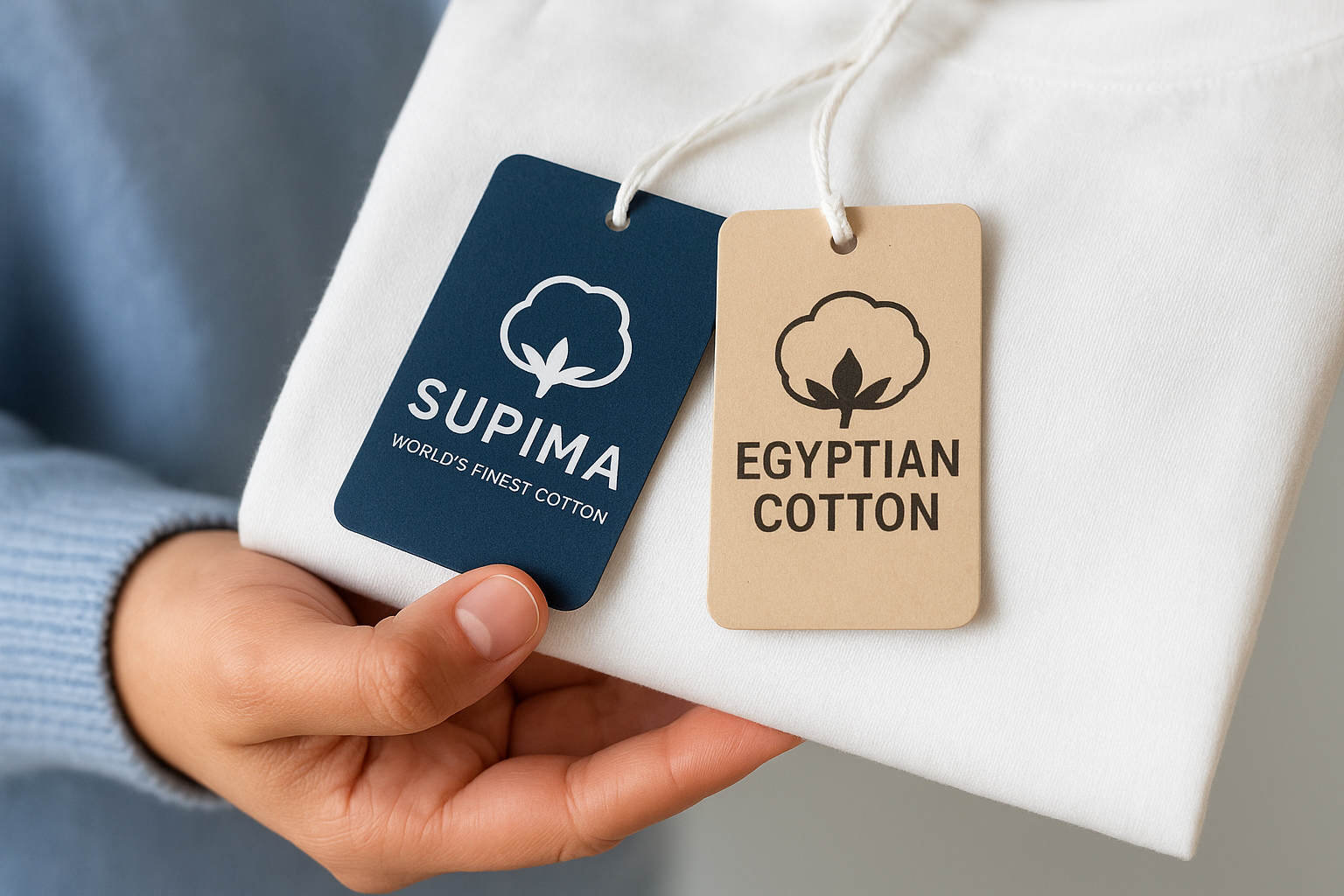
Supima products carry an official Supima hang tag or label that you can verify through Supima's licensed retailer database. Reputable brands that use Supima cotton display the certification clearly because it adds credibility to their pricing and confirms the supply chain. Watch for these warning signs that indicate the fiber is not genuine Supima:
- "Supima-like" or "Supima blend" on the label
- No hang tag or certification reference anywhere on the product
- Prices well below the market average for certified ELS fiber
Identifying Egyptian cotton
Egyptian cotton is harder to verify because no independent certification body enforces the label the way Supima's association does. Your best approach is to buy from brands that provide transparent sourcing disclosures, can explain where the fiber originates, and don't hesitate to share that information. Generic "Egyptian cotton" claims on low-priced products almost always signal that the fiber does not match the label.
When a brand cannot explain where their Egyptian cotton fiber comes from, treat the quality claim as unverified.
How to choose based on feel, climate, and budget
Choosing between Supima and Egyptian cotton ultimately comes down to three practical factors: what you want the fabric to feel like, where you live, and how much you're willing to spend. The supima cotton vs egyptian cotton comparison shifts depending on which of these factors matters most to you.
Feel and daily use
Supima cotton delivers a consistently silky texture that improves with each wash, making it reliable for frequent wear or daily use. The feel stays predictable because the fiber quality is certified from source to finished product.
Genuine Egyptian ELS cotton can match that softness in bedding applications, but the result depends entirely on whether you actually received real fiber. Without source verification, the feel you expect may not reflect what you get.
Climate and care
Hot, humid climates benefit from lighter fabric weights regardless of cotton type, so weave construction and weight matter as much as fiber origin. In cooler climates, a heavier Supima weight like 300g holds warmth without adding stiffness.
Your local climate affects how a fabric performs day-to-day more than the fiber name alone.
Budget and risk
Supima cotton costs more upfront, but the certified supply chain reduces your risk of overpaying for inferior fiber. With Egyptian cotton, low price points almost always signal blended or misrepresented fiber, making those apparent savings unreliable over time.
Final Takeaway
The supima cotton vs egyptian cotton comparison comes down to one practical reality: Supima gives you fiber quality you can verify, while Egyptian cotton gives you a reputation that varies widely depending on whether the product actually contains what the label claims.
Both materials can deliver exceptional softness and durability when genuine. The difference is that Supima's certification removes the guesswork, making it the more reliable choice whether you're buying a t-shirt, bedding, or any other everyday essential where long-term fabric performance matters.
Your best purchase is one where you know exactly what you're getting. Premium pricing should come with transparent sourcing, and that's what separates a well-made garment from one that looks and feels identical on day one but falls apart by month six. If you want to see what certified Supima cotton feels like in a well-constructed everyday essential, explore SÖMNAD's collection.