


Most "ethical" labels on clothing tags don't tell you much. Vague claims about being green or responsible get printed on tags every day, while the actual factory conditions and fabric sourcing stay hidden. If you're hunting for ethical brands clothing shoppers can actually trust, you need more than a marketing sticker, you need brands that publish their supply chains and back up the claims with real material choices.
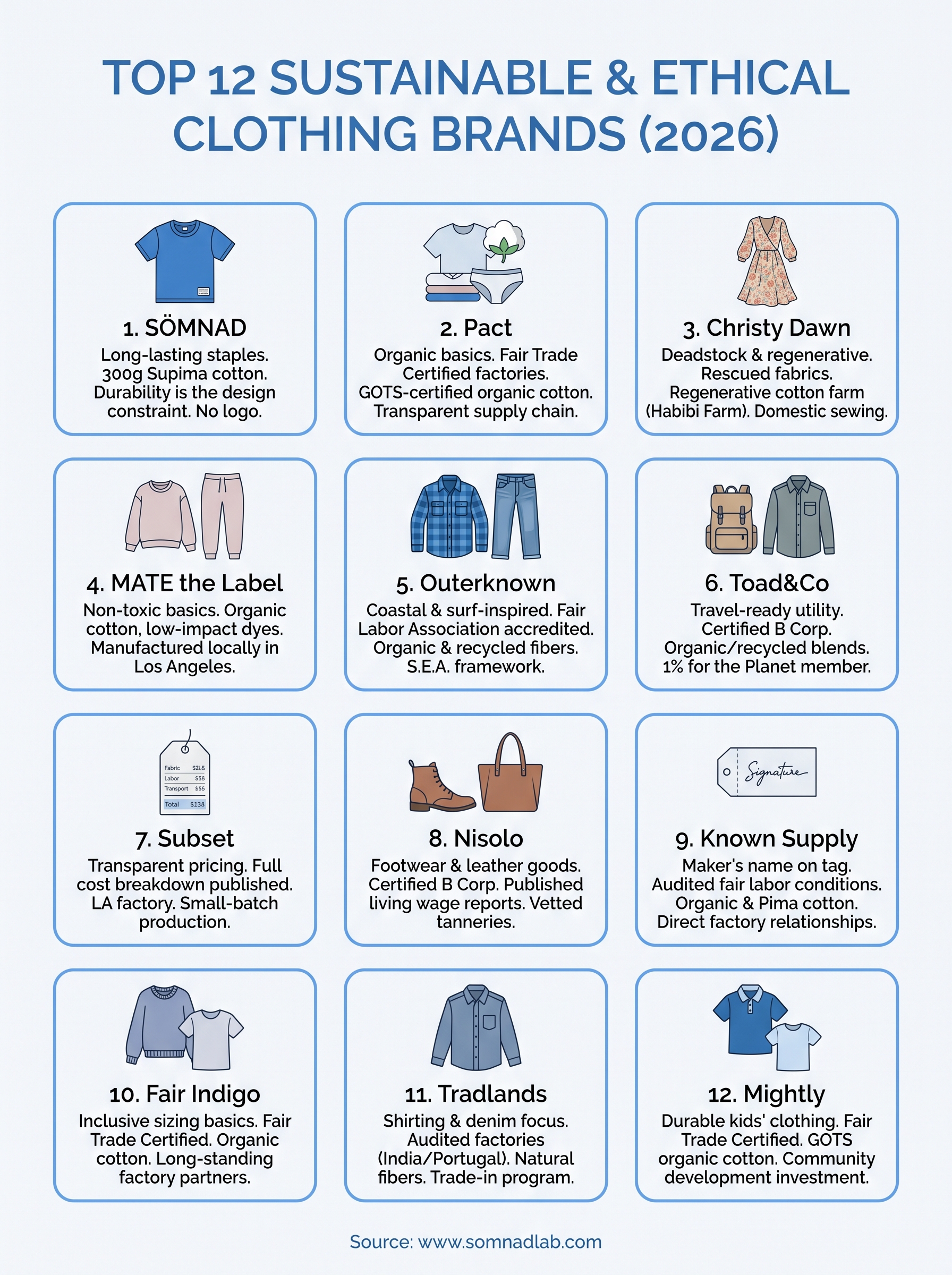
This list answers that search directly: twelve companies making sustainable and ethical clothing worth your money in 2026, chosen for verified labor practices, honest fabric sourcing, and construction meant to outlast a few seasons. You'll find options across price points and styles, including picks suited to slow fashion wardrobes and everyday basics that hold up to repeat wear.
We built this guide the way we build our own products at SÖMNAD: fewer items, better materials, no logo required to prove quality. Below, you'll see what separates a brand that's genuinely accountable from one riding a trend, plus specific picks for women's ethical clothing and versatile staples anyone can layer year-round.
1. SÖMNAD
SÖMNAD tops this list because it treats sustainability as a design constraint, not a marketing angle. The brand builds its entire catalog around 300g Supima cotton, a long-staple fiber that resists pilling and holds its shape wash after wash, so you're not replacing the same tee every six months. Instead of chasing seasonal drops, SÖMNAD keeps a tight core lineup of everyday essentials, which cuts down on the overproduction and deadstock waste that plague fast fashion.
How it's ethical and sustainable
SÖMNAD's approach to ethical sustainable clothing comes down to three pillars it repeats on every product page: superior fabric, clean fit, and durability that survives repeated wear. There's no logo stitched anywhere, which forces the quality to speak through the material itself rather than a brand mark you're paying to advertise. Fewer SKUs also mean tighter quality control at the factory level, since the brand isn't juggling dozens of fits and fabrics at once.
Buying one shirt that lasts five years beats buying five shirts that last one year each.
Who it's best for
Shoppers who want a minimalist wardrobe built on staples, not statement pieces, will find SÖMNAD's catalog easiest to shop. It suits people layering for work, travel, or daily wear who'd rather own three excellent tees than ten mediocre ones. If you've been searching for clothing brands that are ethical but also refuse to sacrifice fit and softness for a sustainability label, this is where to start:
- People tired of tees that lose shape after a few washes
- Minimalists who want quality over logo visibility
- Anyone building a capsule wardrobe of long-wear basics
- Shoppers who value transparent fabric sourcing over vague green claims
Price range
SÖMNAD's relaxed tee runs in the premium-basics bracket, generally landing between $45 and $65 depending on style and any limited releases. That price reflects the heavier 300g fabric weight and the cost of sourcing Supima cotton, which costs more than standard cotton but performs noticeably better over time. You can browse current pricing and availability directly on somnadlab.com.
2. Pact
Pact built its name on organic basics priced closer to mall brands than premium boutiques, which makes it one of the most accessible sustainable brands clothing shoppers can find. The Boulder-based company sells underwear, tees, loungewear, and baby clothes made almost entirely from GOTS-certified organic cotton, a certification that verifies both the farming practices and the chemical inputs used through every production stage.
How it's ethical and sustainable
Certifications do the heavy lifting here. Pact holds Fair Trade Certified status on its factories, which means workers receive audited wages and safe conditions, not just a company promise. The brand also publishes factory locations and partners with the Global Organic Textile Standard to back its organic claims, giving you a paper trail most fast fashion labels never offer.
A certification you can look up beats a claim you have to take on faith.
Who it's best for
Pact suits budget-conscious shoppers who still want verified ethics, especially anyone stocking up on women's ethical clothing basics like tanks, leggings, and underwear multipacks. Parents shopping for organic baby onesies also gravitate here, since Pact's kids' line carries the same certifications as its adult basics.
- Shoppers who want organic cotton without boutique pricing
- Parents looking for certified-safe baby and kids' clothing
- Anyone restocking everyday underwear and loungewear
Price range
Most Pact items sit between $18 and $48, with tees and underwear on the lower end and outerwear pieces pushing toward the top. That pricing makes it one of the more approachable entry points into ethical basics.
3. Christy Dawn
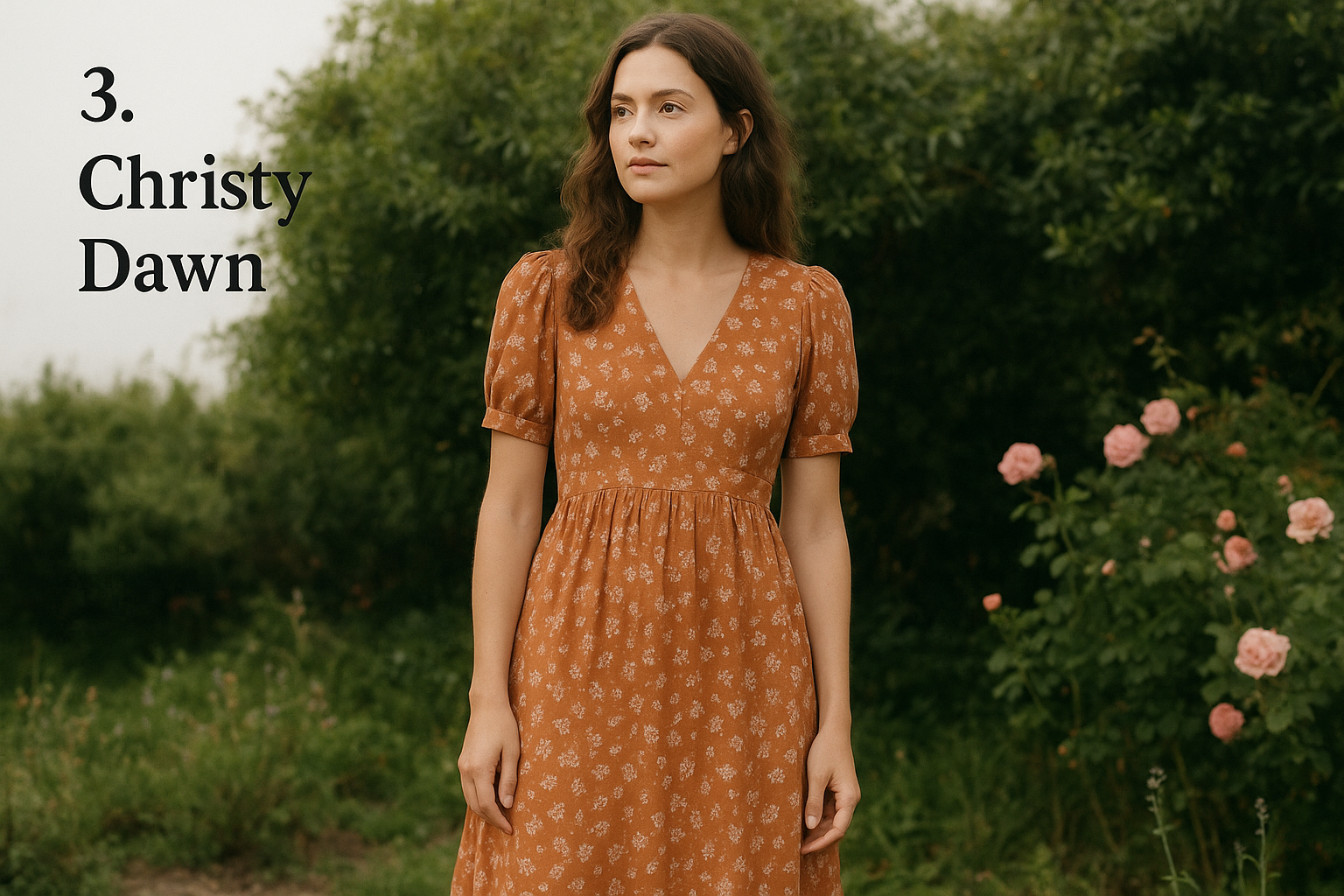
Christy Dawn built its reputation on romantic, vintage-inspired dresses made almost entirely from deadstock fabric, the leftover yardage that would otherwise sit in a warehouse or head to a landfill. The Los Angeles label rescues these rolls from big manufacturers and turns them into limited-run pieces, so no two seasons look quite the same. Anyone searching for ethical clothing brands women's shoppers actually recommend tends to land here first, thanks to the brand's flowing silhouettes and instantly recognizable prints.
How it's ethical and sustainable
Beyond deadstock sourcing, Christy Dawn runs its own regenerative cotton farm in India, called Habibi Farm, where the brand grows and harvests fiber using practices that rebuild soil health instead of depleting it. Every garment is sewn domestically or through small, audited facilities the brand names on its site rather than hiding behind vague sourcing language.
Fabric that would've been trash somewhere else becomes the whole point of the dress here.
Who it's best for
Christy Dawn suits shoppers who want statement dresses with a story, not basics. If you're drawn to prairie silhouettes, flowing midi dresses, or slow fashion clothing brands that limit runs on purpose, this is your label.
- Women who prefer dresses over separates
- Shoppers who like knowing exactly where their fabric came from
- Anyone comfortable paying more for a truly limited run
Price range
Dresses typically run $168 to $328, reflecting the small-batch production and domestic sewing that keeps runs tight and sizing limited.
4. MATE the Label
MATE the Label makes the kind of laid-back basics you'd actually live in: sweatshirts, joggers, and tees dyed without the toxic chemicals most textile factories use. The Los Angeles brand built its whole identity around non-toxic dyeing, swapping heavy metals and formaldehyde-based fixatives for low-impact, water-based dyes that still hold color through repeated washing.
How it's ethical and sustainable
MATE sources 100% organic cotton for nearly every piece and manufactures everything within 15 miles of its Los Angeles headquarters, which cuts shipping emissions and keeps the brand close enough to its own factory floor to actually verify conditions. Workers are paid fair wages under direct oversight rather than through a subcontracted chain the brand can't fully see. This local-first model is a distinguishing feature among good ethical clothing brands, since so many competitors outsource production across borders they never visit.
When your factory is down the street, there's nowhere to hide bad practices.
Who it's best for
MATE fits shoppers who want cozy, elevated basics for lounging or errands, not tailored pieces. It's a strong pick for anyone who wants trendy sustainable clothing brands without sacrificing the soft, worn-in feel of a good sweatshirt. Parents also shop here for matching family sets, since MATE runs kids' and baby lines alongside its adult collection.
- Shoppers who live in sweats and joggers
- Anyone sensitive to harsh dyes or chemical finishes
- Families wanting matching organic basics across sizes
Price range
Most pieces land between $48 and $98, with sweatshirts and joggers toward the higher end and tees closer to the floor. That places MATE solidly in the mid-tier of ethical basics pricing.
5. Outerknown
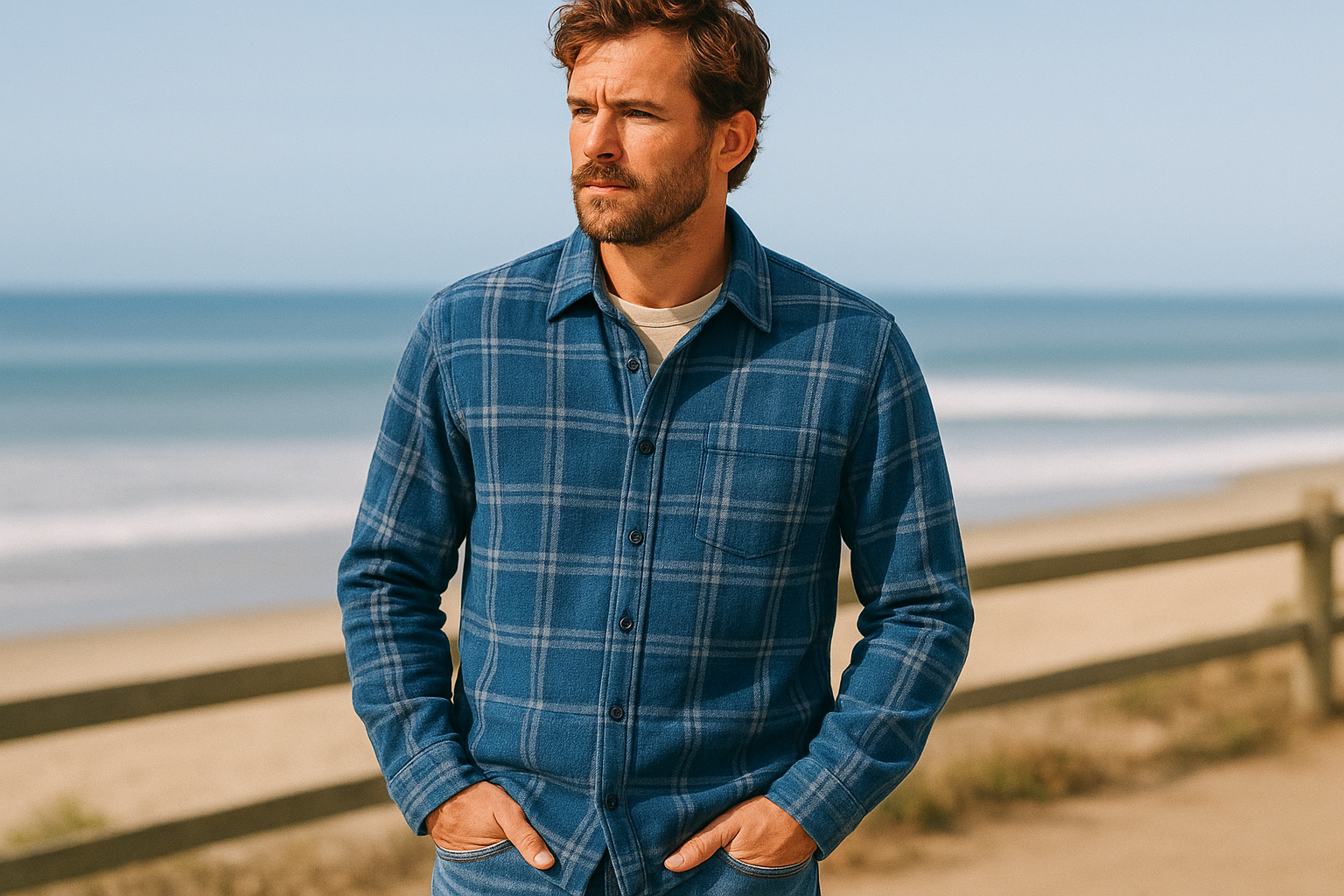
Outerknown grew out of professional surfer Kelly Slater's frustration with how much of the surf industry relied on cheap, disposable clothing. The California brand builds relaxed shirts, denim, and outerwear meant for beach towns and city streets alike, using organic and recycled fibers wherever conventional cotton would otherwise show up. Its Blanket Shirt, woven from surplus yarn, has become something of a cult item precisely because it started as a waste-reduction experiment rather than a fashion statement.
How it's ethical and sustainable
Outerknown holds Fair Labor Association accreditation, one of the harder-earned labels in apparel, requiring third-party audits of every factory in its supply chain. The brand also co-founded S.E.A. (Sustainability, Ethics, Accountability), a certification framework other companies can now use to vet their own factories. Denim lines run on recycled cotton and reduced water-washing processes that cut typical dyeing water use dramatically.
A brand that builds its own certification standard has more to prove than one that just buys a label.
Who it's best for
Outerknown suits shoppers who want sustainable ethical clothing with a coastal, laid-back edge rather than strict minimalism. It works well for people who live in denim and button-downs and want pieces that transition from surf trips to weekday errands.
- Surf and outdoor enthusiasts wanting verified labor practices
- Denim shoppers looking for recycled-fiber options
- Anyone who prefers relaxed, textured fabrics over crisp basics
Price range
Expect $78 to $248 across the catalog, with tees near the bottom and outerwear or selvedge denim pushing toward the top.
6. Toad&Co
Toad&Co started in a Lake Tahoe garage decades ago, long before "sustainable" became a marketing checkbox, and it still makes the kind of travel-ready flannels, tees, and dresses you'd pack for a cabin trip or a flight. The brand leans on organic cotton, hemp, and recycled polyester blends that hold up to hiking trails and airport layovers equally well, which sets it apart from labels that treat sustainability as a single capsule collection rather than a catalog-wide standard.
How it's ethical and sustainable
Toad&Co is a certified B Corporation, meaning it passes an independent audit covering worker pay, environmental impact, and supply chain transparency, not just a self-reported claim on its website. The brand also belongs to 1% for the Planet, donating a slice of sales to environmental nonprofits every year. Factories are named and mapped on the brand's site, a level of openness still rare among sustainable brands clothing shoppers hope to find.
A B Corp badge means someone outside the company checked the math on its claims.
Who it's best for
Toad&Co suits shoppers who want popular sustainable clothing brands with genuine outdoor utility, not just city-friendly basics. It fits travelers, hikers, and anyone who wants one flannel that works camping and at brunch.
- Outdoor enthusiasts wanting certified ethical gear
- Travelers who need durable, packable pieces
- Shoppers who value B Corp accountability over marketing language
Price range
Most items fall between $58 and $148, with knitwear and outerwear at the top of that range.
7. Subset
Subset built its brand around a simple idea: show customers exactly what a garment costs to make, then charge a fair markup instead of the industry-standard 5x to 10x. The Los Angeles label publishes a full cost breakdown on every product page, itemizing fabric, labor, packaging, and shipping, so you see precisely where your money goes. That radical transparency has made it a favorite among shoppers researching what are ethical clothing brands actually doing differently instead of just claiming it.
How it's ethical and sustainable
Every Subset piece is cut and sewn in the same Los Angeles factory the founders visit regularly, which keeps oversight direct rather than outsourced through layers of subcontractors. Fabrics lean toward organic cotton and recycled blends, and the brand keeps drops small and demand-based, avoiding the overproduction that leaves warehouses full of unsold stock.
Publishing your actual production costs is a harder promise to fake than a sustainability badge.
Who it's best for
Subset fits shoppers who care as much about pricing honesty as fabric quality, especially anyone skeptical of markup on basics like tees, hoodies, and sweatpants. It's a strong match for younger buyers who research supply chains before checkout and want receipts, not slogans.
- Shoppers who want itemized cost transparency
- Anyone tired of guessing why a basic tee costs $60
- Buyers who prefer domestically sewn essentials
Price range
Most pieces run $28 to $78, with the brand's transparent pricing model keeping costs notably lower than comparable ethical basics elsewhere on this list.
8. Nisolo
Nisolo started as a shoe company in Peru and grew into one of the most transparent leather goods brands in the country, publishing an annual report that tracks exactly how close its factory wages come to a true living wage. The Nashville-based brand makes boots, sandals, and bags, along with a smaller apparel and accessories line, all built around the idea that fair labor shouldn't be a footnote buried in a sustainability page. For anyone researching good ethical clothing brands that go beyond shirts and dresses, Nisolo's footwear and leather goods round out a wardrobe most lists skip.
How it's ethical and sustainable
Nisolo earned its B Corporation certification by opening its books to outside auditors, and it goes further by releasing a public "Wage Action" report every year, naming specific factories and showing worker pay against local living-wage benchmarks. Leather comes from tanneries the brand vets directly, and it's pushed suppliers toward lower-impact tanning processes rather than accepting industry defaults.
A brand that publishes its wage gaps, not just its wins, has nothing left to hide.
Who it's best for
Shoppers rounding out an ethical wardrobe with footwear and leather goods, not just tops and dresses, will get the most use from Nisolo.
- Anyone replacing fast-fashion shoes with durable, repairable pairs
- Shoppers who want leather goods with traceable sourcing
- People who value published wage data over vague ethics claims
Price range
Shoes and boots typically run $88 to $220, with bags reaching similar or slightly higher price points depending on leather and construction.
9. Known Supply
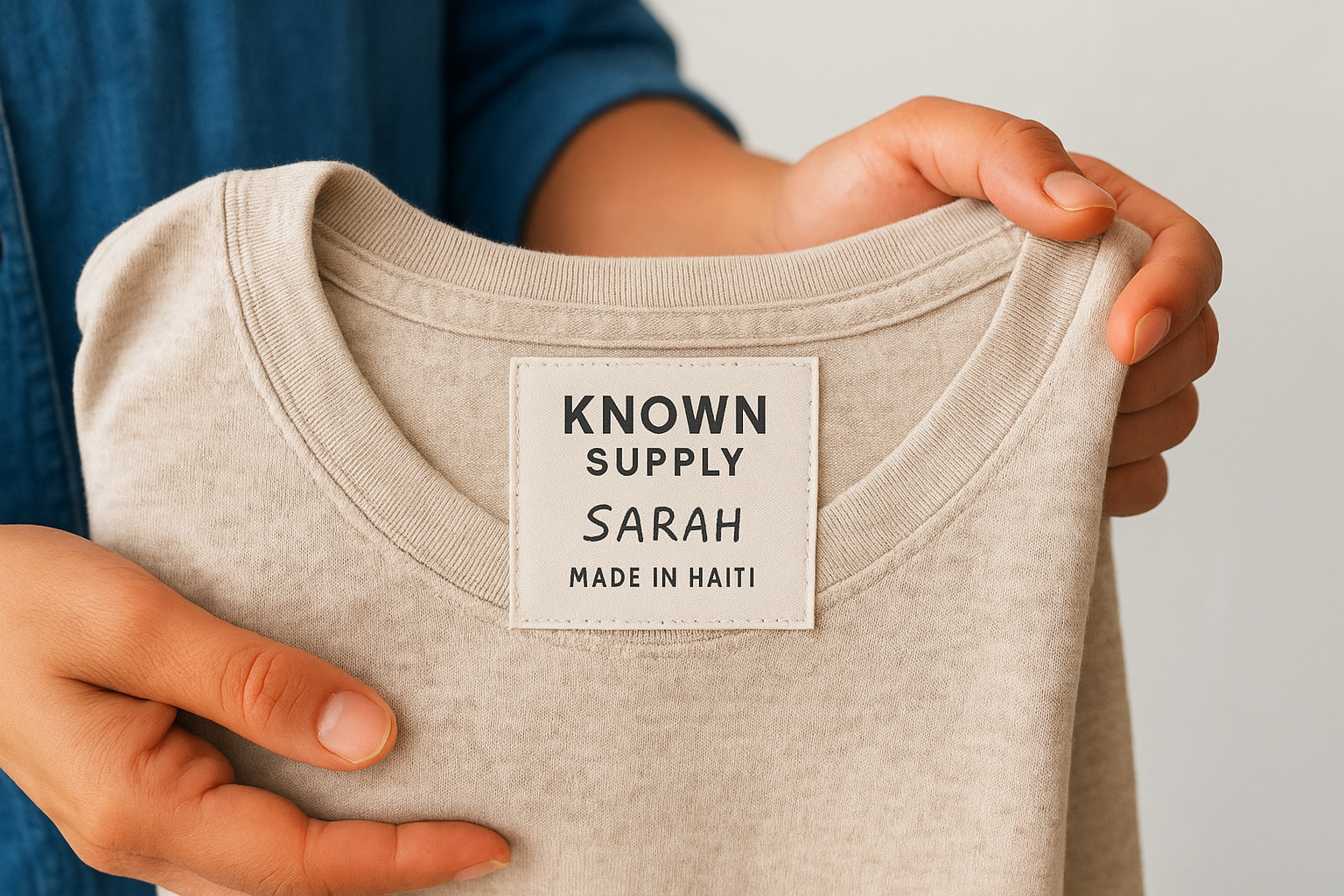
Known Supply flips the usual anonymous factory model by putting the maker's actual name on every garment tag, so you know exactly who sewed your shirt. The brand makes basics, tees, and sweatshirts, but the real product is the story behind each piece, since Known Supply partners with a small set of factories in places like Peru and Haiti and treats those relationships as long-term rather than transactional. For shoppers comparing ethically sustainable clothing options, this signed-tag model is one of the more literal ways a brand can prove a real person made your clothes.
How it's ethical and sustainable
Every factory in Known Supply's network operates under fair labor conditions, audited for wages, hours, and safety, and the brand keeps its supplier list small on purpose to maintain close oversight rather than chasing the cheapest bid available. Fabrics run mostly organic and Pima cotton, chosen for durability over trend cycles.
Putting a maker's name on the tag turns an abstract supply chain into an actual person you can picture.
Who it's best for
Shoppers who want their purchase to feel personal, not just responsibly sourced, will connect with Known Supply's model. It suits anyone building a wardrobe of good ethical clothing brands basics who also wants a tangible link to the person behind the stitching.
- Shoppers who value maker transparency over brand storytelling alone
- Anyone stocking basics like tees, crewnecks, and hoodies
- Buyers who want to support small, named factories directly
Price range
Most items fall between $30 and $60, keeping the brand firmly in accessible basics territory.
10. Fair Indigo
Fair Indigo has been quietly making Fair Trade Certified basics since long before sustainability became a shopping category, focusing on women's tees, dresses, and sweaters cut for real bodies rather than sample sizes. The Wisconsin-based catalog brand keeps a low profile online, but it's one of the longer-running names among ethical clothing brands women's shoppers search for, especially those who want size-inclusive fits without sacrificing certified labor standards.
How it's ethical and sustainable
Fair Indigo built its name on Fair Trade Certified production, meaning every factory in its network undergoes audits for wages, working hours, and safety conditions rather than relying on the brand's own word. Cotton is largely organic, and the company has stuck with the same small group of overseas partners for years, which lets it monitor conditions directly instead of shuffling through the lowest bidder each season.
Sticking with the same factories for years, not just a season, is how a brand actually gets to know its supply chain.
Who it's best for
Fair Indigo suits shoppers who want certified fair trade basics in extended size ranges, since the brand offers cuts many boutique ethical labels skip entirely. It's a solid pick for women replacing everyday sweaters, tees, and dresses without hunting through niche size charts.
- Shoppers who need extended or plus sizing in ethical basics
- Anyone who prioritizes Fair Trade Certified sourcing specifically
- Buyers who prefer long-standing factory relationships over rotating suppliers
Price range
Most pieces run $30 to $80, placing Fair Indigo in the accessible-to-mid range of certified ethical basics.
11. Tradlands
Tradlands built its reputation on the kind of button-down shirt you buy once and wear for a decade, not the flimsy shirting that puckers after a season. The California brand focuses almost entirely on shirting and denim for women, cut generously and stitched with reinforced seams meant to survive daily wear. Shoppers researching ethically sustainable clothing with a longer shelf life than typical fast fashion tend to find Tradlands through word of mouth rather than ads.
How it's ethical and sustainable
Tradlands manufactures in audited factories in India and Portugal, partners it names publicly and revisits regularly rather than swapping for cheaper bids. Fabrics run heavy on organic cotton and linen, chosen for how well they age rather than how cheap they weave. The brand also runs a trade-in program, buying back worn Tradlands pieces to resell secondhand, which extends the life of every garment beyond a single owner.
A brand that buys its own clothes back has real confidence in how long they'll last.
Who it's best for
Women hunting for classic shirting that fits an actual range of body types will find Tradlands' extended size range a relief after shopping boutique labels that stop at a medium.
- Shoppers who live in button-downs for work or travel
- Anyone wanting extended sizing in tailored ethical pieces
- Buyers interested in resale and trade-in programs
Price range
Shirts and tops generally run $88 to $148, with denim reaching toward the higher end of that range.
12. Mightly
Mightly closes out this list with a category most ethical roundups skip entirely: kids' clothing that holds up to actual childhood. The brand makes organic cotton uniforms and everyday basics sized for toddlers through tweens, built to survive grass stains, playground scrapes, and the wash cycle abuse only a seven-year-old can inflict. Parents searching for sustainable brands clothing for their own wardrobe often overlook that the same standards apply to kids' clothes, and Mightly fills that gap directly.
How it's ethical and sustainable
Every piece carries Fair Trade Certified production, meaning the factories sewing school uniforms and playwear undergo the same wage and safety audits as adult apparel lines, not a watered-down kids' version of the standard. Cotton is GOTS-certified organic throughout, and Mightly donates a portion of profits to Fair Trade USA's community development fund, which reinvests directly in the farming and manufacturing communities behind the fabric.
Kids' clothes take more abuse than anything in your closet, so the ethics behind them deserve the same scrutiny.
Who it's best for
Parents replacing fast-fashion school uniforms and everyday basics will find Mightly's sizing and durability solve a real problem.
- Parents needing certified organic school uniforms
- Families wanting durable basics that survive daily wear
- Shoppers extending ethical standards to kids' wardrobes, not just their own
Price range
Most items run $18 to $38, keeping Mightly firmly in accessible territory for parents outfitting growing kids without constant repurchasing.
Building a wardrobe you can feel good about
None of these twelve brands got here by accident. Each one publishes real evidence, whether that's audited wages, named factories, or fabric sourcing you can trace back to a farm. That's the actual test for ethical brands clothing shoppers should apply to any label: can you verify the claim, or are you just trusting a tag? Skip the brands that hide behind vague green language and stick with the ones willing to show their work.
Question every vague sustainability claim you see going forward, and favor the brands that back words with receipts. Building a wardrobe this way costs a little more upfront but saves you from replacing the same cheap tee every year. Start small: swap one fast-fashion staple for a piece built to outlast it. If you want a place to begin, shop SÖMNAD's core essentials and see what fewer, better basics actually feel like.