


Spending more on fewer, better pieces sounds great in theory, until you check price tags from most premium brands and wonder if you need a second mortgage for a t-shirt. The good news: affordable slow fashion brands exist, and they're making it genuinely possible to dress well without draining your bank account. You just have to know where to look.
The real shift happening right now isn't about choosing between cheap and ethical. It's about brands figuring out how to deliver quality materials and honest construction at prices that don't punish you for caring about what you wear. At SÖMNAD, this is exactly what drives us, building everyday essentials from fabrics like 300g Supima cotton, designed to hold their shape wash after wash, without the inflated markup that comes with logo-heavy branding. We believe the best basics prove their worth through what they're made of, not what's printed on them.
That philosophy, less, but better, is shared by a growing number of brands doing things the right way. So we put together this list of 14 affordable slow fashion brands that prioritize durability, ethical production, and thoughtful design. Every pick looks and feels far above its price point. Whether you're building a capsule wardrobe from scratch or replacing fast fashion staples one piece at a time, these brands are worth your attention.
1. SÖMNAD
SÖMNAD builds everyday essentials around a single principle: quality you can feel, not quality you need a logo to confirm. The brand strips away inflated pricing and unnecessary branding to focus on what actually matters, superior fabric weight, precise fit, and construction that holds up over years of regular wear.
What to buy from SÖMNAD
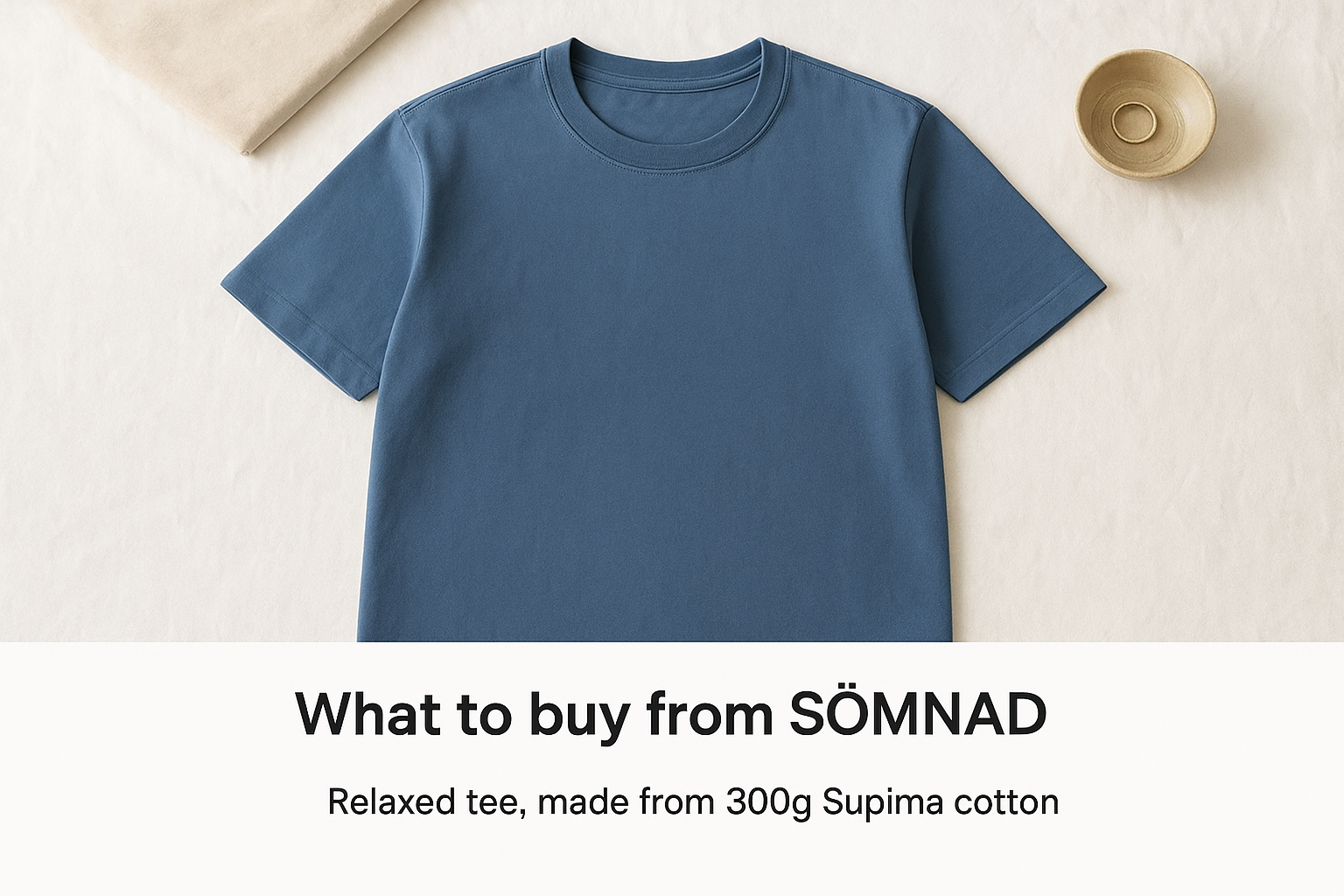
Start with the relaxed tee, SÖMNAD's flagship piece. It's made from 300g Supima cotton, which puts it in a noticeably heavier and softer category than most basics you'll find elsewhere. If you're building a minimal wardrobe, this tee works as a standalone piece or a layering foundation that earns its place in almost every outfit you put together.
Why SÖMNAD doesn't look cheap
The answer comes down to fabric weight and clean construction. Most budget basics use 150-180g cotton, which looks thin and loses its shape fast. SÖMNAD's 300g Supima cotton holds its structure wash after wash, so the fit looks intentional rather than worn-out. There are no logos competing for attention, which means the garment's quality does all the communicating.
When a piece of clothing doesn't need a brand name to look good, that's the clearest sign the material is doing its job.
Fabric and construction details to check
When you're reviewing SÖMNAD pieces, pay attention to fabric weight listed in grams per square meter (GSM). Anything at or above 280g signals a genuinely substantial fabric. Supima cotton, specifically, is a US-grown long-staple variety known for softness and durability that outlasts standard cotton by a significant margin. Check the stitching at the seams and shoulder areas for consistency, since these spots reveal the most about how a garment was actually assembled.
Pricing and cost-per-wear tips
SÖMNAD sits in a mid-range price point that feels higher than fast fashion but makes clear sense once you calculate cost-per-wear. If a tee costs $60 and you wear it three times a week for three years, the per-wear cost drops below $0.15. Compare that to a $15 fast fashion tee that pills and loses shape after 20 washes, and the math shifts decisively in SÖMNAD's favor. Among affordable slow fashion brands, SÖMNAD delivers one of the cleaner value equations available today.
2. Pact
Pact builds its entire line around organic cotton and Fair Trade certified factories, making it one of the more accessible affordable slow fashion brands if you want clean basics without sacrificing ethics. The range covers everyday staples from underwear to tees to loungewear, all at prices that stay competitive with conventional mid-range retailers.
What to buy from Pact
The Go-To Tee and organic cotton joggers are reliable entry points. Both pieces use Pact's standard organic cotton construction and come in a solid range of neutral and seasonal colors, making them easy to integrate into your minimal wardrobe without overthinking the process.
Why Pact doesn't look cheap
Pact keeps its aesthetic clean and unfussy, which does a lot of the visual work. The cuts are relaxed but structured enough to avoid looking sloppy, and the organic cotton holds its color better than conventionally dyed fabrics because it lacks the chemical residue that causes fading after repeated washing.
Fabric that holds its color through dozens of washes signals quality more reliably than any price tag.
Materials and certifications to look for
Look for GOTS (Global Organic Textile Standard) certification on Pact listings, which confirms both organic fiber content and responsible processing throughout the supply chain. Fair Trade certification on manufacturing means workers receive fair wages, and that claim has been independently verified rather than self-reported.
Pricing and where the deals show up
Pact's regular pricing runs between $25 and $50 for most basics, which is reasonable for certified organic apparel. Their sale section updates frequently, and signing up for their email list reliably surfaces discount codes that bring prices down further without requiring much effort on your end.
3. Kotn
Kotn is a Canadian brand that sources Egyptian cotton directly from the farms where it's grown, cutting out the middlemen that inflate costs and obscure supply chain conditions. The result is a line of clean, minimal basics that punch above their price point, making Kotn a strong pick among affordable slow fashion brands for anyone building a wardrobe around quality essentials.
What to buy from Kotn
The classic crew neck tee and relaxed long sleeve are your best starting points. Both pieces showcase Kotn's Egyptian cotton in a way that feels immediately different from standard basics, with a softness and drape that holds up through repeated washing rather than degrading after a few cycles.
Why Kotn doesn't look cheap
Kotn's aesthetic stays deliberately understated, which lets the fabric quality carry the visual weight. The fits are proportioned carefully, avoiding the boxy shapelessness that makes cheap basics look sloppy. Because the cotton is long-staple Egyptian variety, the fiber length produces a smoother surface finish that reads as elevated even in casual settings.
Fabric that drapes well without any structure underneath is one of the clearest signals that the material quality is doing its job.
Materials and supply chain notes
Kotn publishes direct sourcing information for its Egyptian cotton farms, which gives you real transparency rather than vague sustainability claims. Look for their MADE SAFE certification on specific products, which verifies that no harmful chemicals were used in production.
Pricing and best-value picks
Most Kotn basics land between $30 and $60, with regular sale events that bring core items down noticeably. The multi-pack tee bundles offer the strongest cost-per-wear value if you wear basics daily.
4. Quince
Quince operates on a straightforward premise: cut out the traditional retail markups and sell premium-material pieces directly to you at a fraction of what comparable items cost at legacy brands. The brand covers a wide range of categories, from cashmere and merino knitwear to linen and silk basics, making it one of the more versatile picks among affordable slow fashion brands looking to cover multiple wardrobe needs at once.
What to buy from Quince
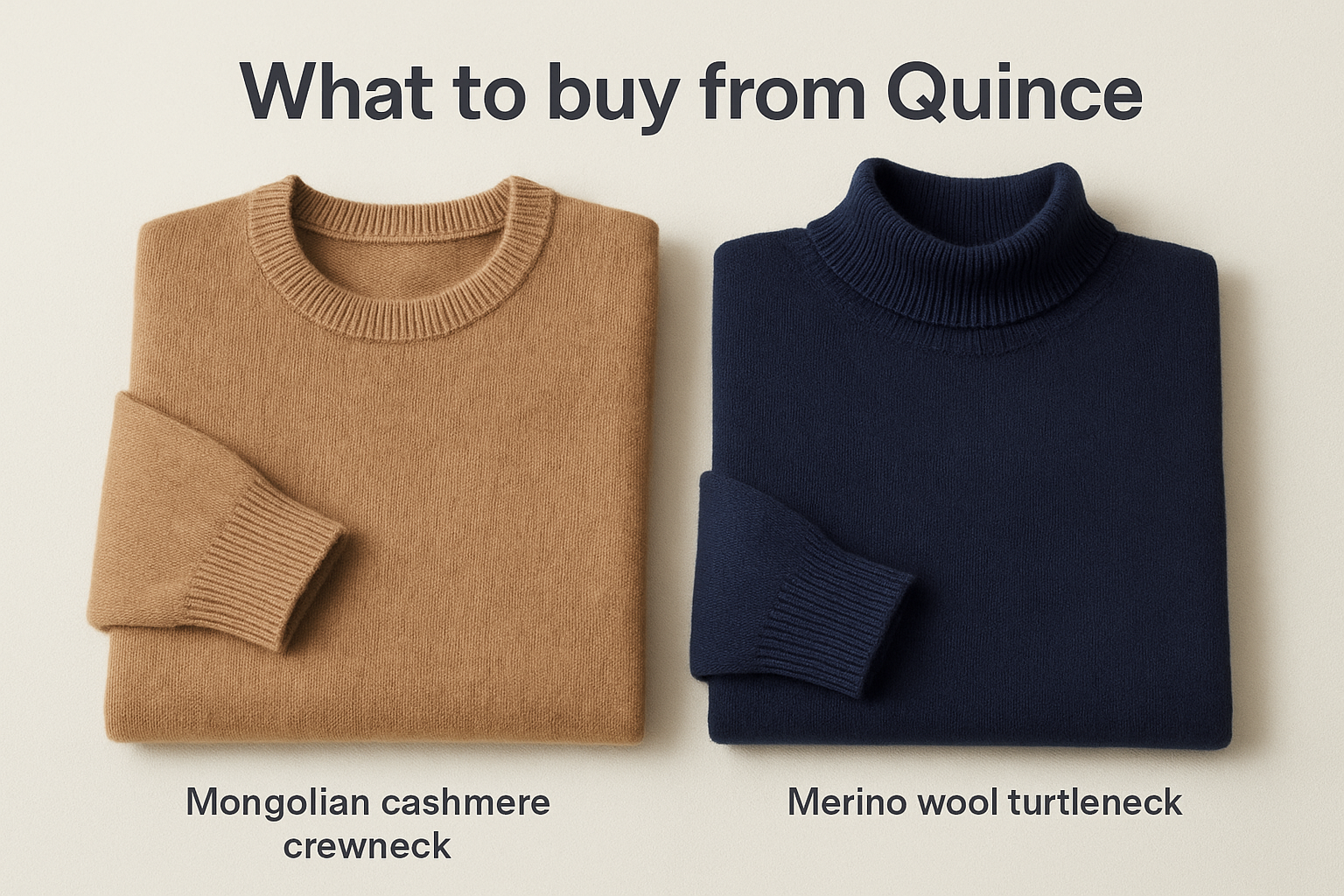
The Mongolian cashmere crewneck and merino wool turtleneck are the clearest demonstrations of what Quince does well. Both pieces use fiber grades that would cost two to three times more elsewhere, and they wear and photograph in a way that reads as significantly more expensive than the actual price tag suggests.
Why Quince doesn't look cheap
Quince invests in high-grade natural fibers rather than in marketing, which keeps costs down without compromising the look or feel of the finished garment. Cashmere that's properly sourced and knit at the right gauge holds its shape and resists pilling in ways that immediately separate it from lower-quality alternatives.
Natural fibers at the right grade eliminate the visual and tactile cues that make a garment look budget-level.
Material specs to verify before you buy
Before purchasing, check the ply count on knitwear and confirm the fiber content percentage in the product description. A two-ply cashmere construction resists pilling far better than single-ply alternatives, and 100% stated fiber content confirms you're not getting a blend passed off as pure material.
Pricing and return-policy checks
Quince prices most cashmere and merino pieces between $50 and $120, which is a substantial discount from comparable retail options. Their return policy accepts unworn items within 365 days, giving you genuine flexibility to evaluate fit and quality before committing fully.
5. Everlane
Everlane built its reputation on radical price transparency, publishing the breakdown of what each garment costs to make and what markup you're paying. That model attracted a loyal following of shoppers who wanted honest basics at mid-range prices, and while the brand has evolved over the years, its core lineup of everyday essentials still delivers reliable quality among affordable slow fashion brands.
What to buy from Everlane
The Uniform Collection is your safest entry point, specifically the classic crew tee and the Performance Chino. Both pieces reflect the kind of clean, functional design Everlane does best, and they hold up visually across casual and semi-casual settings without requiring much styling effort.
Why Everlane doesn't look cheap
Everlane invests in cut and proportion more than many brands at this price point, which is what separates a well-finished basic from something that looks like it came off a fast fashion rack. The brand's consistent use of muted, wearable color palettes also helps the pieces read as considered rather than trend-chasing.
A garment that fits your actual body will always look more expensive than one made from fancier fabric that doesn't.
Fit and fabric tips to avoid misses
Everlane's sizing can run inconsistent across categories, so check the size guide measurements directly rather than relying on your standard size. For knitwear specifically, look for pieces labeled 100% cotton or 100% merino rather than blended options, since the single-fiber constructions tend to hold their shape and drape better over time.
Pricing and how to shop sales smartly
Most Everlane staples fall between $30 and $80, which stays competitive for the quality level. Their Choose What You Pay sale events periodically surface past-season pieces at meaningful discounts, giving you a direct route to the strongest cost-per-wear value in their catalog.
6. Boody
Boody is an Australian brand built around organic bamboo viscose as its primary material, covering a focused range of everyday essentials including underwear, tees, and activewear basics. The brand holds B Corp certification and concentrates on pieces worn closest to the body, where fabric quality is most noticeable.
What to buy from Boody
Your best starting points are Boody's bamboo tees and everyday underwear, both of which showcase the material's signature softness without requiring much deliberate styling. The fitted scoop tee and relaxed crew layer cleanly under other pieces and work well as the base of a minimal wardrobe.
Why Boody doesn't look cheap
Bamboo viscose has a natural drape and subtle sheen that reads as more refined than standard cotton basics at a similar price point. Boody's cuts stay close without being tight, which keeps each silhouette looking intentional. Among affordable slow fashion brands, Boody is notable because the material itself does most of the visual work without any embellishment needed.
Fabric that moves naturally and holds its drape after washing signals real attention to material quality far better than any label can.
Fabric feel and care tips for longevity
Care matters more with bamboo viscose than with standard cotton. Follow these steps to protect each piece:
- Wash cold on a gentle cycle to prevent fiber breakdown
- Air dry flat rather than using a machine dryer
- Skip fabric softeners, which coat bamboo fibers and reduce their natural breathability
Pricing and bundle strategies
Most individual Boody pieces run between $20 and $45. Their multi-pack underwear and tee bundles consistently offer the strongest per-unit value and are the most efficient way to build out your everyday basics without inflating the cost-per-wear.
7. Yes Friends
Yes Friends is a UK-based brand that builds its lineup around recycled and organic materials, keeping the focus on everyday staples that work across multiple seasons without leaning on trend-driven design. The brand keeps production small and intentional, which is exactly the approach that separates genuine affordable slow fashion brands from labels that use sustainability as a marketing layer without backing it up.
What to buy from Yes Friends
The organic cotton tees and recycled fleece sweatshirts are the clearest expression of what Yes Friends does well. Both pieces use materials that hold their structure over time and come in a muted, wearable color range that integrates cleanly into a minimal wardrobe without requiring any coordination effort.
Why Yes Friends doesn't look cheap
Yes Friends keeps its cuts relaxed but proportioned, which prevents the pieces from sliding into shapeless territory. The brand avoids loud branding entirely, letting the fabric quality and clean silhouette do the communicating. That restraint is what gives each piece a finished look that reads as considered rather than incidental.
When a brand puts nothing on the outside of a garment, everything the garment communicates comes from how it's made.
What to check on fabric weight and finish
Before buying, confirm the GSM on cotton pieces in the product description. Heavier weights, generally above 240g, will hold their shape and drape better through repeated washing. Also check that seams lie flat in product photos, since uneven finishing at the hem or collar is usually the first place quality gaps show up.
Pricing and shipping considerations
Most Yes Friends basics fall between $30 and $55. Since the brand ships internationally, factor in shipping costs and estimated delivery times before placing an order, as these can shift the overall value depending on your location.
8. tentree
tentree is a Canadian brand built around environmental impact reduction, planting ten trees for every item sold while maintaining a product line of everyday basics and activewear that keeps sustainability front and center. The brand holds B Corp certification and positions itself clearly among affordable slow fashion brands that back their environmental claims with verified third-party standards rather than self-reported marketing.
What to buy from tentree
The Organic Cotton Classic Tee and hemp-blend joggers are the strongest starting points. Both pieces reflect tentree's focus on natural and recycled fiber construction, and they come in a rotating selection of neutral and earth-toned colors that integrate easily into a minimal wardrobe without requiring significant styling effort.
Why tentree doesn't look cheap
tentree keeps its design language deliberately simple and uncluttered, which lets the fabric and construction do the visual work. The brand's use of natural fiber blends and low-impact dyes produces a finished look that holds its color and structure well past the point where conventional basics would start showing wear.
Consistent color retention through repeated washing is one of the most reliable signs that a brand invested seriously in its dyeing and finishing process.
Material blends that hold up best
tentree's organic cotton and hemp blend pieces tend to outlast their standard cotton-only alternatives because hemp fiber adds tensile strength without sacrificing softness. Look for listings that specify at least 30% hemp content for the most durable results across extended wear.
Pricing and seasonal-sale timing
Most tentree basics fall between $35 and $70. Their end-of-season clearance events, typically appearing in January and July, surface the strongest discounts on core pieces without requiring you to chase promotional codes throughout the year.
9. Toad & Co
Toad & Co builds its line around outdoor-ready basics and travel-friendly clothing that hold up across real use conditions, not just casual weekend wear. The brand carries bluesign and Fair Trade certifications, placing it firmly among affordable slow fashion brands that connect ethical production to practical, lasting design.
What to buy from Toad & Co
Start with the Primo Organic Tee and the Sunkissed Hoodie, both of which demonstrate the brand's strength in functional construction with a clean, casual finish. These pieces move between active settings and everyday wear without looking out of place in either context, making them reliable anchors for a minimal wardrobe you actually use.
Why Toad & Co doesn't look cheap
Toad & Co invests in cut refinement and material finishing, which keeps each piece looking intentional rather than purely utilitarian. The brand avoids the technical, performance-gear aesthetic that makes many outdoor-adjacent basics look more like gear than clothing, letting fabric quality and relaxed proportions carry the visual weight instead.
A garment built for movement that still looks polished at rest is the clearest sign a brand understands both construction and design.
What to look for in travel-ready fabrics
When you review Toad & Co listings, prioritize pieces made with organic cotton, hemp blends, or recycled polyester in higher weight classes. These materials resist wrinkling and hold their shape through extended wear and repeated packing, which is the practical advantage of travel-ready construction over standard everyday basics.
Pricing and ways to lower the total
Most Toad & Co pieces fall between $45 and $90. Their outlet section and seasonal sale events consistently surface discounted core items, and signing up for their email list gives you early access to markdowns before they reach the general public.
10. Colorful Standard
Colorful Standard is a Copenhagen-based brand that focuses on heavyweight organic cotton basics in an unusually wide spectrum of colors, making it a reliable option among affordable slow fashion brands for anyone who wants to build a wardrobe with real variety without sacrificing quality or construction.
What to buy from Colorful Standard
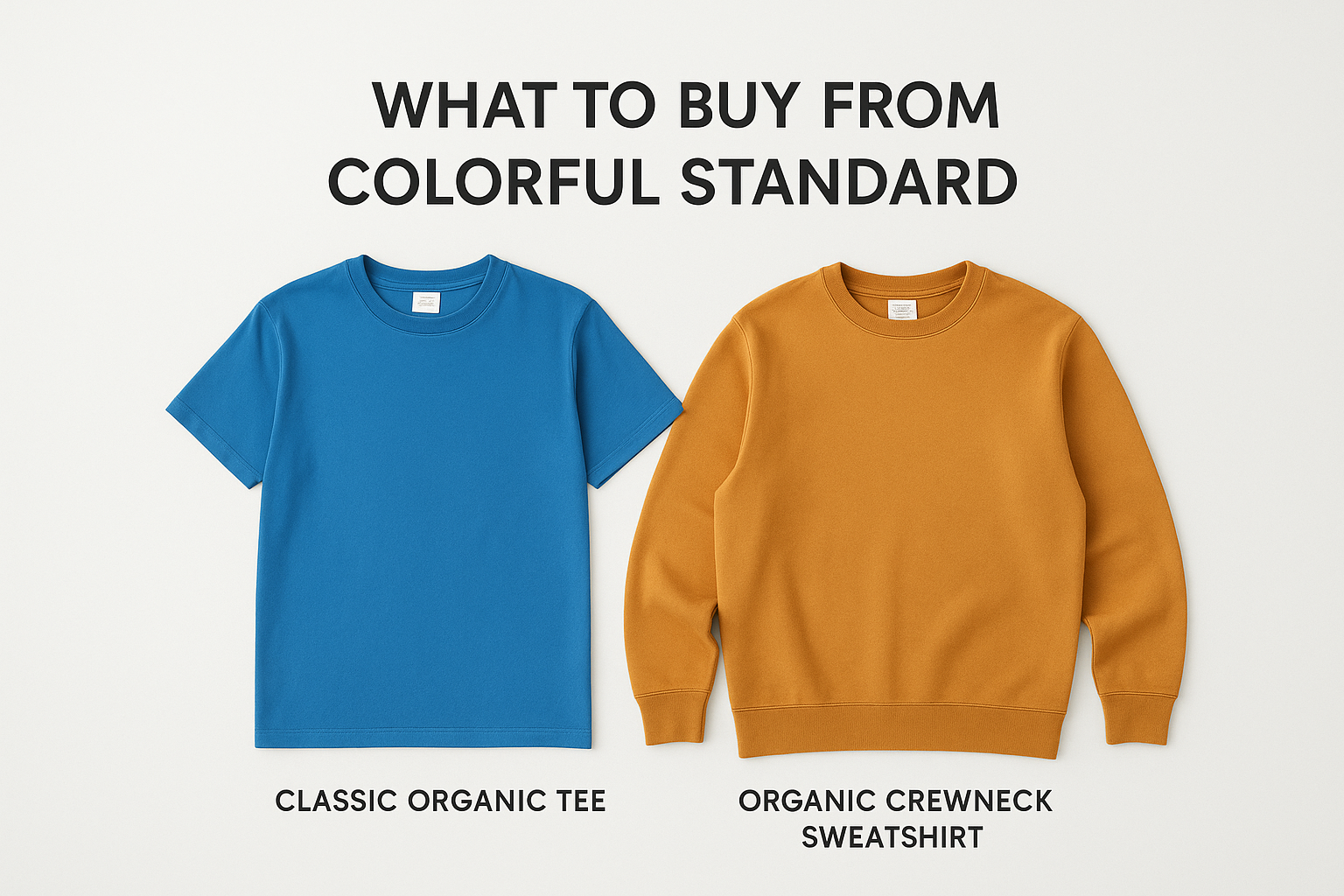
The Classic Organic Tee and Organic Crewneck Sweatshirt are the clearest entry points. Both pieces use 100% organic cotton at weights that sit noticeably above the industry average for basics, and they come in dozens of colorways that range from standard neutrals to more distinctive earthy and saturated tones that distinguish your wardrobe without requiring any extra effort.
Why Colorful Standard doesn't look cheap
Colorful Standard's 220g organic cotton carries a substantial feel that immediately separates it from lighter basics. The brand keeps all branding minimal and internal, so nothing interrupts the clean surface of each piece. A structured but relaxed fit adds to the polished read, keeping silhouettes intentional across all colorways.
A clean, uninterrupted surface on heavyweight cotton communicates quality faster than any label or detail ever could.
Color and dye details to pay attention to
Colorful Standard uses GOTS-certified dyes throughout its production process, which means the dyeing meets organic and non-toxic standards verified by an independent body. Certified dyes tend to bond more consistently to organic fibers, which translates directly to color that holds through repeated washing rather than fading early.
Pricing and building a capsule set
Most pieces run between $45 and $90. Buying two or three pieces in complementary tones lets you build a functional capsule set that covers the full week without redundancy.
11. MagicLinen
MagicLinen is a Lithuanian brand that focuses exclusively on European linen, producing a range of clothing and home goods that demonstrates what happens when a brand commits to a single material and learns it thoroughly. The brand has built a strong reputation among affordable slow fashion brands for delivering relaxed, well-constructed linen pieces that wear beautifully across seasons.
What to buy from MagicLinen
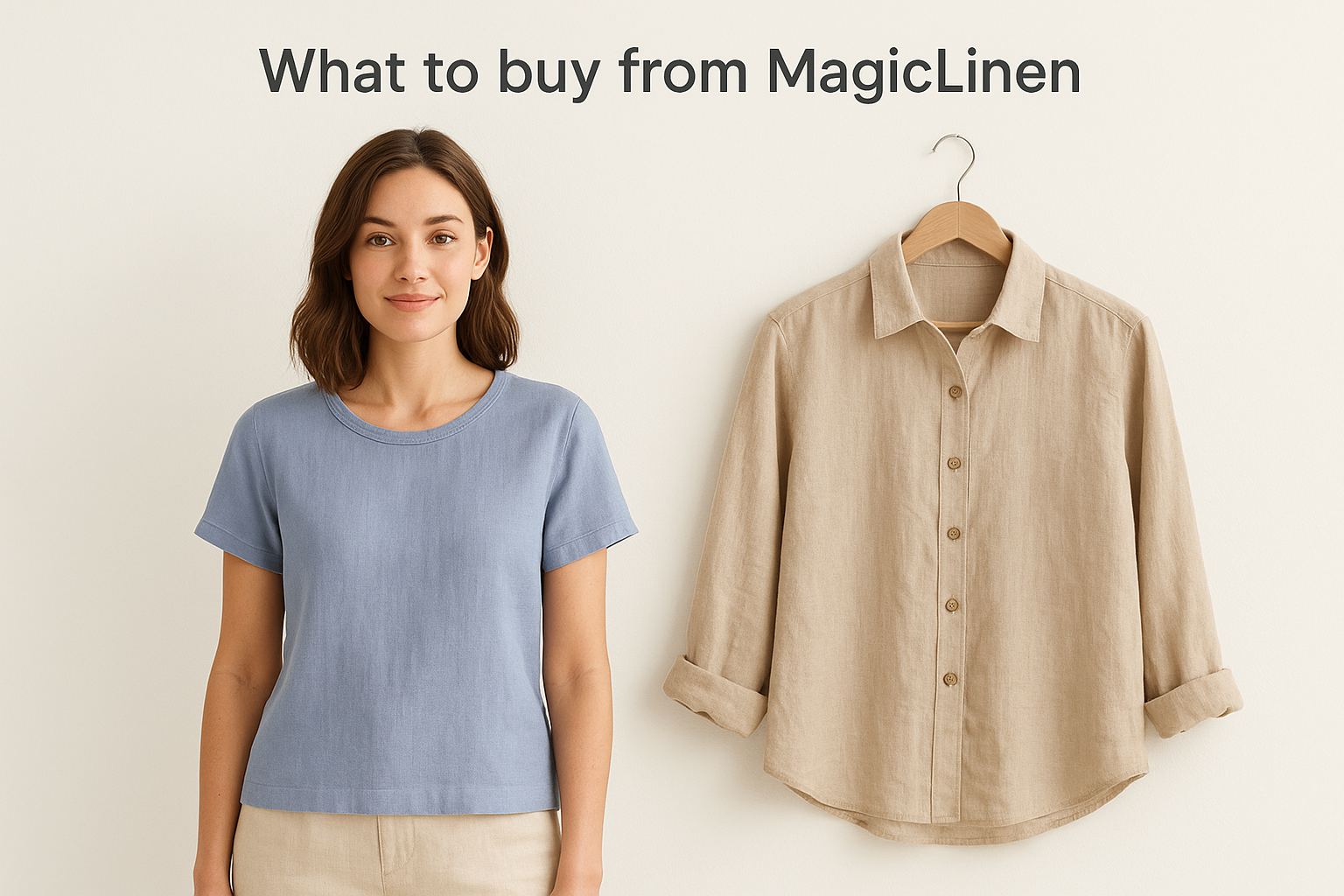
Start with the linen relaxed tee or the linen shirt, both of which highlight the material's natural texture without looking unfinished. These pieces serve as reliable warm-weather staples and layer cleanly under knitwear as temperatures drop, giving you genuine year-round versatility from a single purchase.
Why MagicLinen doesn't look cheap
Linen carries a natural, slightly irregular surface texture that reads as considered rather than budget-level, particularly when cut and finished with care. MagicLinen keeps its silhouettes clean and proportioned, which prevents the fabric from looking shapeless, and the brand avoids any branding that would compete with the material's quiet visual authority.
Clothing that improves visually with each wash signals that the material was chosen with longevity in mind from the start.
Linen weight, opacity, and shrinkage tips
Check the GSM on any linen piece before buying, since lighter weights can be sheer and prone to wrinkling in ways that look unintentional. Linen does shrink slightly in the first wash, so size up one step if you prefer a relaxed fit. Always air dry to preserve the fiber structure.
Pricing and how to buy fewer better pieces
Most MagicLinen clothing falls between $40 and $80. Buying two or three pieces in complementary neutrals gives you a functional linen rotation that covers warm months without requiring additional purchases.
12. Jungmaven
Jungmaven is a California brand that has built its entire identity around hemp as a primary fabric, producing a focused line of tees, fleece, and everyday basics designed to wear in and improve over time. The brand sits among affordable slow fashion brands that take a single material seriously rather than spreading across too many fiber categories at once.
What to buy from Jungmaven
Start with the Hemp Tee or the Valley Crewneck, both of which give you the clearest sense of how Jungmaven uses hemp blends across different garment weights. These pieces work as standalone casual wear and hold up visually in layered outfits without losing their shape or surface finish through repeated washing.
Why Jungmaven doesn't look cheap
Jungmaven keeps its branding minimal and its cuts relaxed but structured, which prevents the pieces from reading as shapeless or careless. The natural variation in hemp fiber produces a subtle surface texture that reads as considered rather than budget-level, and the brand's consistent color palette of earthy neutrals strengthens the overall visual coherence of every piece they make.
Fabric that improves in texture and softness with every wash signals that the material was built for the long term, not just the first impression.
Hemp blend guidance for feel and drape
Most Jungmaven pieces combine hemp with organic cotton, typically in ratios ranging from 55% hemp to 45% cotton. Higher hemp content increases breathability and durability while the cotton component softens the initial feel.
Pricing and the smartest entry items
Most Jungmaven tees land between $45 and $65, with the Hemp Tee representing the clearest entry point for first-time buyers who want to evaluate the material before committing to heavier or more structured pieces.
13. Threads 4 Thought
Threads 4 Thought builds its line around recycled and sustainable materials, focusing on performance-friendly basics that work across active and everyday settings without leaning on technical aesthetics or heavy branding.
What to buy from Threads 4 Thought
Start with the recycled fleece hoodie and organic cotton tees, both of which reflect the brand's focus on functional construction that holds up through repeated wear and washing. These pieces integrate cleanly into a minimal wardrobe that covers low-key active use and everyday casual settings without requiring separate purchases for each context.
Why Threads 4 Thought doesn't look cheap
The brand keeps its cuts clean and proportioned, which prevents pieces from sliding into the shapeless territory that drags down many activewear-adjacent basics. Threads 4 Thought avoids heavy external branding, letting fabric quality and consistent fit communicate the value instead. Among affordable slow fashion brands, this restraint is what separates pieces that wear well from those that look budget-level regardless of the materials used.
A garment that holds its silhouette through active use and everyday wear signals that the brand invested in construction, not just fabric.
Performance-fabric details to check
When reviewing Threads 4 Thought listings, look for pieces that specify recycled polyester or TENCEL content, both of which hold their shape and breathability better than standard alternatives across extended wear cycles. Confirm that seam placement sits away from high-friction zones, since this is where construction quality separates functional basics from those that wear out quickly.
Pricing and multi-pack value picks
Most Threads 4 Thought basics land between $30 and $65. Their multi-pack tee bundles offer the clearest cost-per-wear advantage if you rotate basics daily, bringing the per-unit price down without requiring you to sacrifice material quality or construction standards.
14. Etsy
Etsy doesn't fit the typical brand profile on this list, but it belongs here because it gives you direct access to independent makers producing small-batch, sustainable clothing you won't find through conventional retail channels. Used strategically, it's one of the most effective paths among affordable slow fashion brands for sourcing pieces built to last.
What to buy on Etsy for slow fashion
Focus on natural fiber basics, hand-sewn linen garments, and upcycled denim pieces, all of which appear in quantity from independent makers on the platform. Search terms like "organic cotton tee handmade" or "linen shirt slow fashion" will surface sellers whose work aligns with the principles this list is built around.
Why Etsy finds can look expensive
Independent makers work in small batches with premium materials, which produces a level of finish and individuality that mass production simply can't replicate. The visible handcraft in seams, hems, and fit details communicates intentionality that reads as elevated regardless of price.
Clothing made by a single person using quality materials carries a visual finish that distinguishes it from anything produced at scale.
How to vet sellers and listings fast
Before buying, check the seller's star rating and read at least ten recent reviews that include photo evidence. Confirm the product listing specifies material weights, fiber content percentages, and country of production. Sellers who include care instructions and sourcing notes signal the transparency that reliable slow fashion makers prioritize.
Pricing and negotiation tips without overpaying
Most handmade slow fashion pieces on Etsy fall between $35 and $85, which is reasonable for genuine small-batch production. Many sellers accept custom orders, and messaging them directly about bundle pricing on multiple items frequently produces informal discounts not listed publicly.
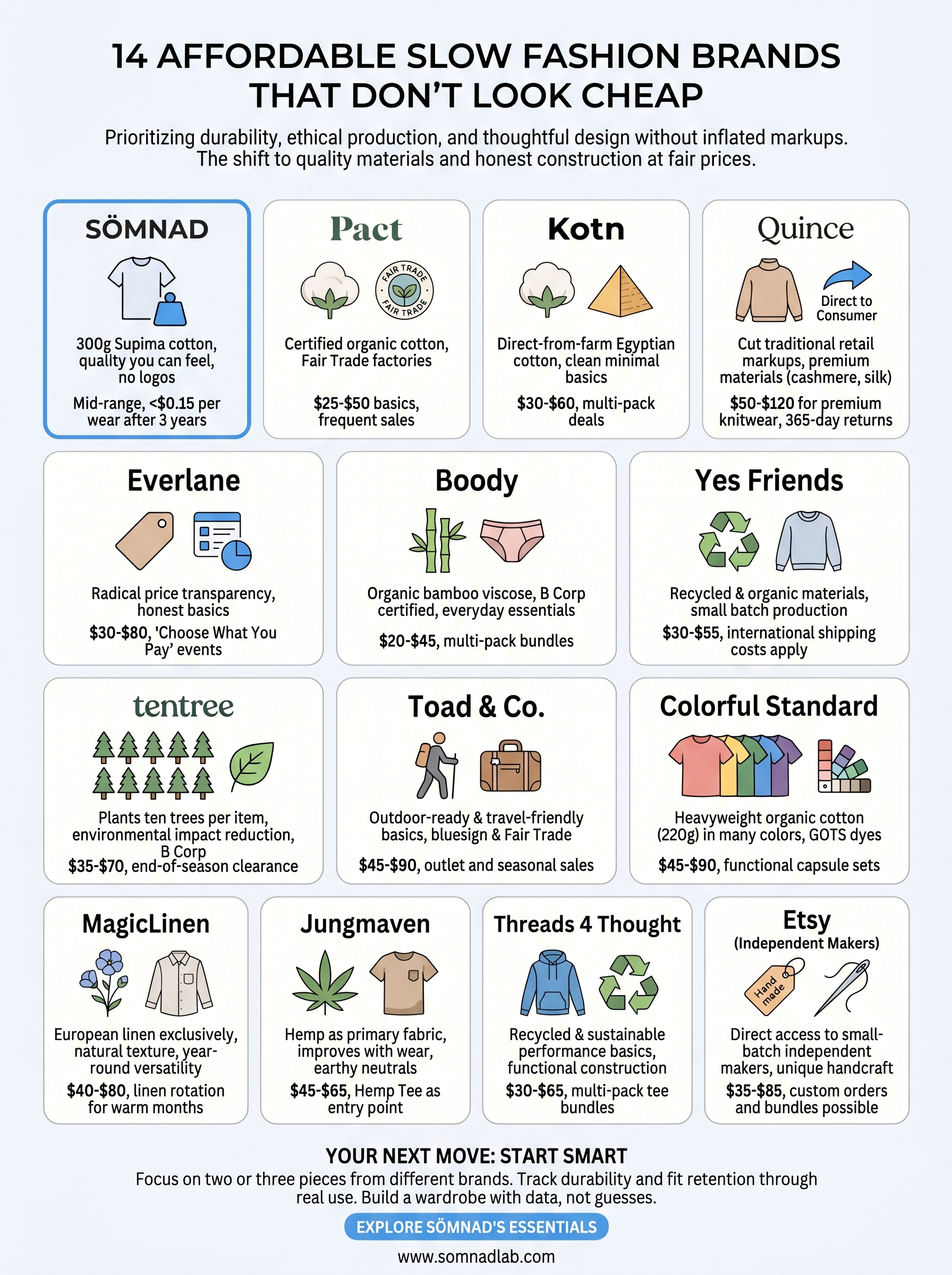
Your next move
Every brand on this list proves that affordable slow fashion brands don't require you to compromise on how your clothes look or how long they last. The real work now is picking the right starting point for your wardrobe, not buying everything at once. Choose two or three pieces from different brands, wear them regularly, and track how they hold up through real use before expanding further.
Building this way gives you concrete data on fabric quality, fit retention, and overall value rather than guesses based on marketing copy. Start with the basics you reach for most often, whether that's a heavyweight tee, a relaxed sweatshirt, or a linen shirt, and replace them with pieces that earn their place through durability.
If you want to start with a tee built to last, explore SÖMNAD's everyday essentials and see exactly what 300g Supima cotton looks and feels like in practice.