


Most people own more clothes than they need and still feel like they have nothing to wear. That's the paradox of buying cheap, disposable basics, they fade, stretch, lose shape, and end up replaced within months. Quality over quantity clothing flips that cycle. Instead of filling your closet with items that barely survive a season, you invest in fewer pieces that actually last, fit well, and hold up wash after wash.
This isn't just a philosophy, it's a practical shift that saves money, reduces waste, and simplifies your daily routine. Choosing durable fabrics, thoughtful construction, and clean design over trendy, logo-heavy fast fashion means every piece in your wardrobe earns its place. It's the principle we built SÖMNAD around: less, but better. Premium Supima cotton. No unnecessary branding. Essentials that keep their shape and structure long after checkout.
In this article, you'll learn what quality over quantity actually looks like in practice, from identifying well-made garments to building a wardrobe that works harder with fewer items. Whether you're starting from scratch or editing what you already own, this guide gives you a clear framework for buying less and buying better.
What quality over quantity clothing means
Quality over quantity clothing is the practice of choosing fewer, better-made garments instead of accumulating large amounts of cheap, disposable pieces. It prioritizes fabric quality, construction, and longevity over low price tags and trend cycles. The result is a smaller wardrobe where every item actually gets used, fits well, and holds up over years of regular wear.
The goal isn't to spend more money overall. It's to spend it more deliberately, on pieces that deliver lasting value instead of items you'll replace in six months.
It starts with how a garment is made
The clearest sign of quality is what goes into the fabric. High-grade natural fibers like Supima cotton, merino wool, and linen outperform synthetic blends in softness, breathability, and durability. A 300g Supima cotton tee, for example, holds its structure and color far longer than a standard shirt made from cheaper, lower-weight fabric.
Construction details matter just as much as the material itself. Reinforced seams, consistent stitching, and proper finishing are signs that a manufacturer paid close attention to how a garment performs under repeated wear and washing. A piece built this way doesn't pill, shrink, or lose its shape after a few cycles in the laundry.
It's about value per wear, not price per item
A $15 t-shirt that you replace three times a year costs more over time than a $60 shirt that lasts five years. Quality over quantity clothing reframes how you think about cost, shifting the focus from the sticker price to the total cost across the life of the garment.
Value per wear is a straightforward calculation: divide the price of an item by how many times you realistically expect to wear it. A durable, well-fitting basic that you reach for every week delivers far more value than a trendy piece that sits unused after two wearings.
Why quality beats quantity over time
When you buy cheap clothing repeatedly, the total cost compounds quickly. Fast fashion pieces wear out, stretch, or fade within months, sending you back to the store to replace them. That cycle doesn't just drain your wallet; it drains your time and closet space too. Quality over quantity clothing breaks that loop by giving you pieces that stay in rotation for years, not seasons.
The real cost of cheap clothing isn't visible at checkout. It shows up in replacements, frustration, and waste.
The financial case is straightforward
A poorly made garment costs less upfront but rarely survives a year of regular use. Multiply that by dozens of items across a few years and the spending adds up fast. A well-constructed basic costs more initially, but its extended lifespan drops the cost per wear significantly, often making it the cheaper option over any meaningful timeframe.
Here's how the math typically plays out:
- $20 shirt replaced 3x per year = $60 annually
- $60 shirt lasting 3+ years = $20 annually
Your closet works harder with fewer pieces
Fewer items in your closet means less decision fatigue and faster mornings. You spend less time sorting through things you never wear and more time using what you own. When every piece holds its shape and color after repeated washing, getting dressed becomes simpler and less frustrating than managing a closet packed with items that have already started to fail.
How to spot well-made clothes
Knowing what to look for before you buy is the core skill behind quality over quantity clothing. Most of the signs of good construction are visible and tactile, meaning you can assess them before spending a single dollar, whether you're shopping in a store or reading a product description online.
Check the fabric first
Fabric weight and fiber composition are your starting point. Heavier fabrics like 280g-300g cotton hold their shape and resist pilling far better than lighter, cheaper alternatives. Natural fibers like Supima cotton, merino wool, and linen breathe better, feel softer against the skin, and last significantly longer than synthetic blends.
If a garment doesn't list its fabric composition and weight clearly, that's usually a sign the manufacturer doesn't want you to know.
Look at the stitching and seams
Run your fingers along the seams of any garment you're considering. Tight, even stitching with no loose threads indicates careful construction. Flip the item inside out and check the finish. Reinforced seams at stress points, like armholes and shoulder joins, tell you the manufacturer built the piece to survive repeated wear, not just a few washes.
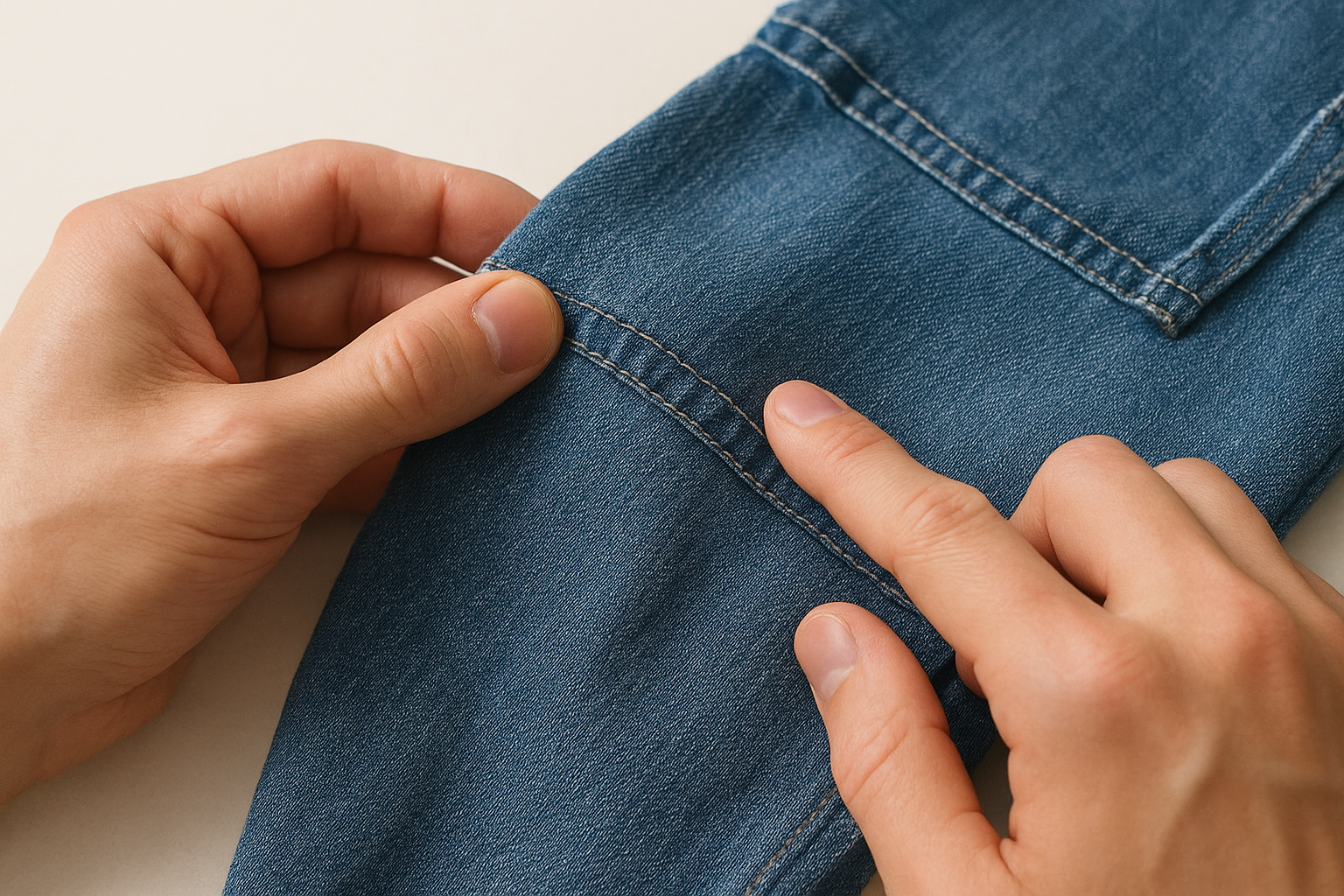
Check buttons and zippers too. Solid, securely attached hardware that doesn't wobble or snag is a reliable indicator of overall build quality throughout the garment.
How to buy less and still have outfits
Buying less doesn't mean running out of options. It means building a small set of versatile, well-made pieces that combine easily into multiple outfits. Quality over quantity clothing works best when you treat your wardrobe as a connected system rather than a loose collection of individual items bought on impulse.
A wardrobe of 20 pieces that all work together beats a closet of 80 items where nothing pairs well.
Start with neutral basics
Neutral colors like white, black, navy, and grey form the foundation of a flexible wardrobe. These tones pair with almost everything, which means fewer total items produce more outfit combinations than a mix of bold, trend-driven pieces that clash or go out of style quickly.
Build around a core set of items
Identify the five to ten pieces you reach for most often, then build outward from those. A simple, structured approach looks like this:
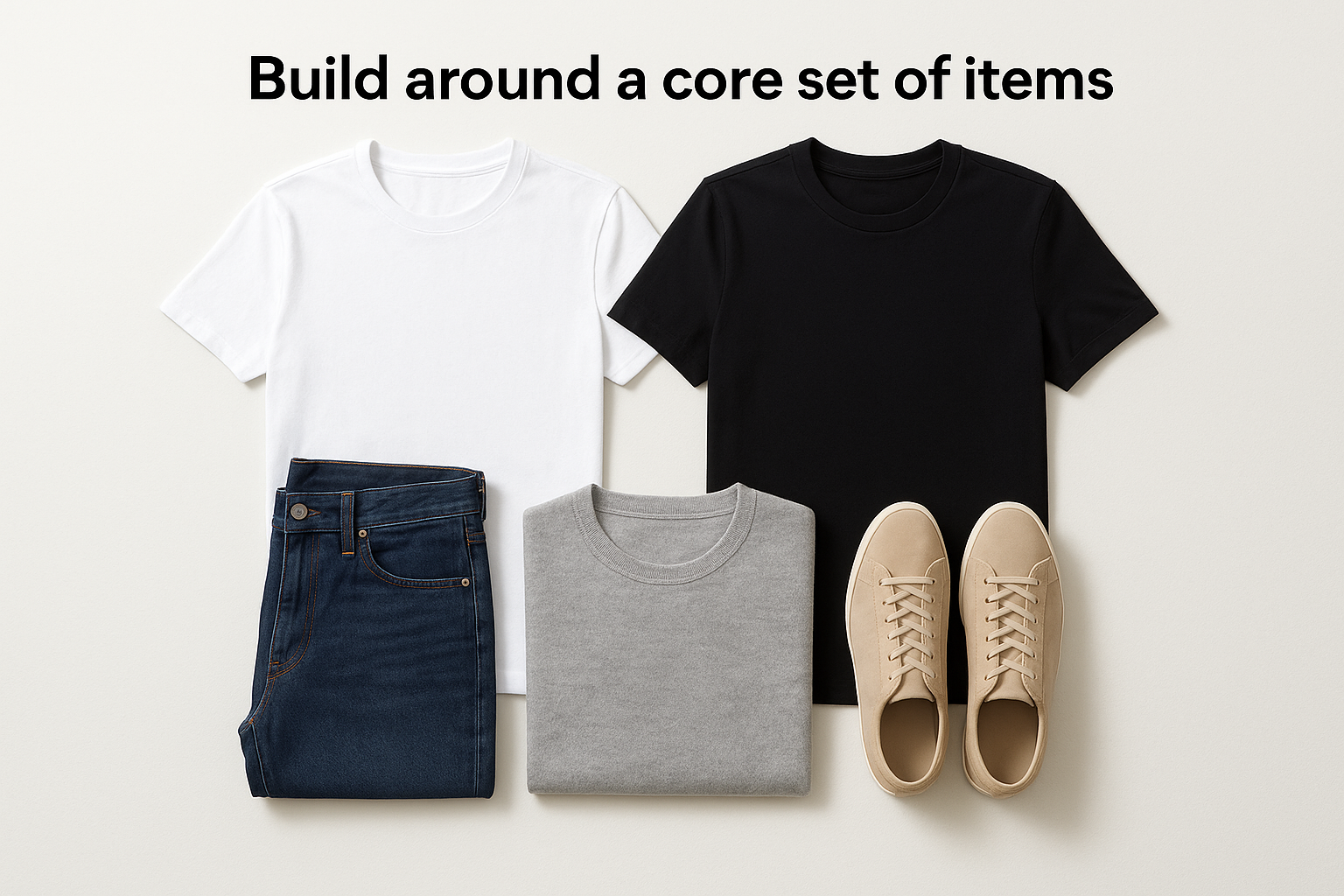
- 3-4 quality tees or tops
- 2-3 versatile bottoms
- 1-2 layering pieces or outerwear
- Footwear in neutral tones
Filling gaps deliberately, rather than buying whatever looks appealing in the moment, keeps your wardrobe tightly curated. Every item you add should work with at least three pieces you already own, which ensures nothing sits unused and everything contributes to your rotation.
How to care for clothes so they last
Buying quality over quantity clothing is only half the equation. How you maintain your garments determines whether they actually reach their potential lifespan, or wear out years earlier than they should. Simple, consistent habits make a significant difference in how long a piece holds its shape, color, and structure.
The best garment care routine isn't complicated. It's mostly about washing less, washing right, and storing properly.
Wash less and wash right
Most clothes don't need washing after every wear, especially basics made from premium natural fibers like Supima cotton or merino wool. Overwashing accelerates fading, fiber breakdown, and shrinkage. Spot clean when possible, and air garments out between wears to extend the time between full washes.
When you do wash, cold water and a gentle cycle protect fabric integrity far better than hot water washes. Turn items inside out to reduce friction against the outer surface, and avoid high-heat drying whenever possible. Air drying is the single most effective way to prevent shrinkage and preserve the structure of well-made basics.
Store clothes properly
Folding heavy knits and tees rather than hanging them prevents shoulder distortion over time. Hang structured pieces like shirts and outerwear on wide, padded hangers that support the shoulder seam. Keep your storage area dry and avoid compressing garments tightly, which breaks down fibers and causes permanent creasing.
Final takeaways
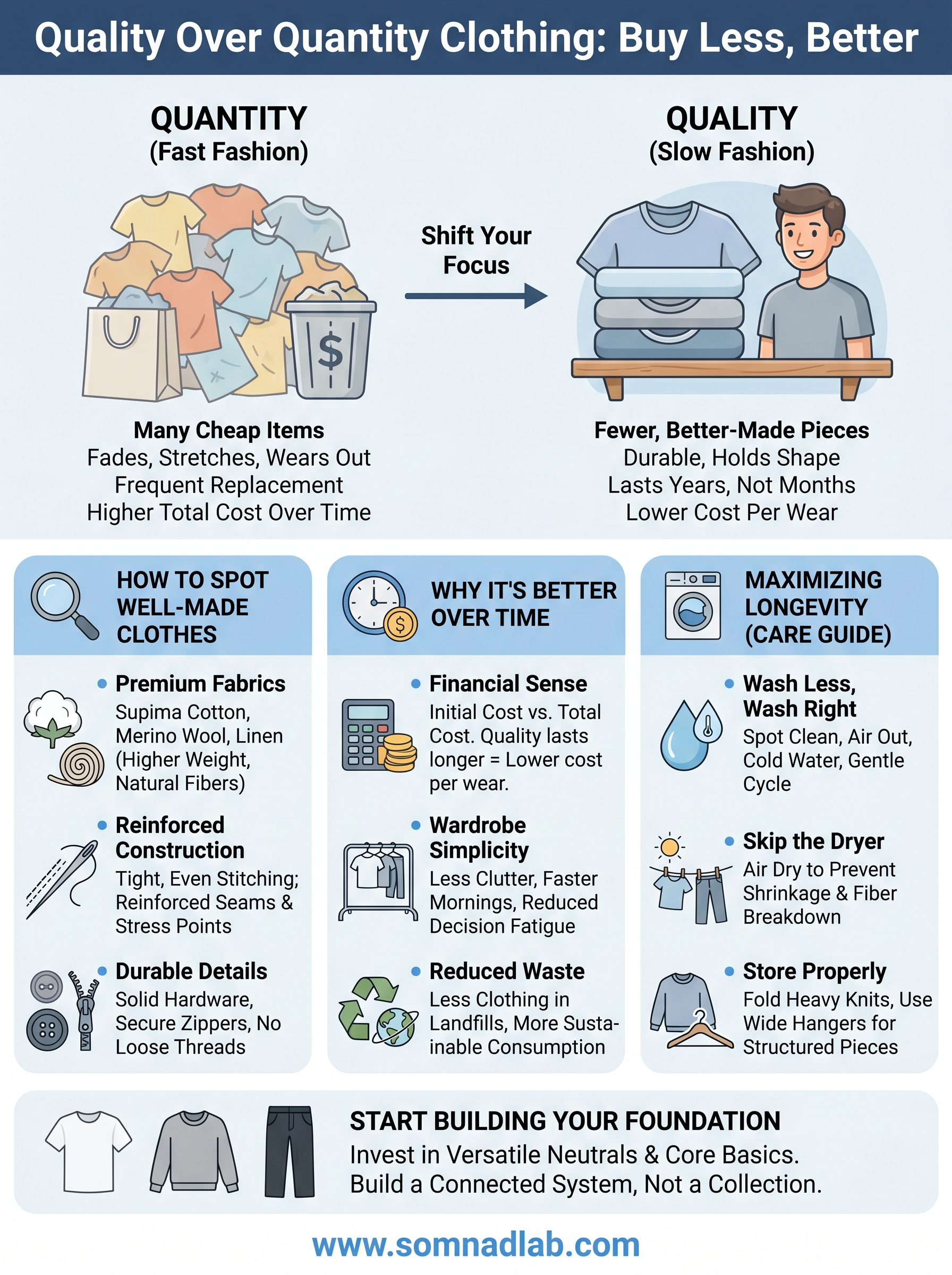
Quality over quantity clothing comes down to a simple shift in how you think about your wardrobe. Fewer, better-made pieces outlast and outperform a closet packed with cheap, disposable items that need constant replacement. Every decision you make at the point of purchase, from checking fabric weight to inspecting seam construction, determines how long a garment actually serves you.
The practical steps outlined here are clear and repeatable. Build from neutral basics, assess fabric quality and construction before buying, wash less and wash right, and store garments properly. These habits compound over time, turning a small, deliberate wardrobe into one that works harder and costs less to maintain across the years.
Ready to put it into practice? SÖMNAD's premium everyday essentials are built on exactly this principle: superior Supima cotton, clean fit, no logos, and construction that holds up long after most fast fashion falls apart.