


Most of your closet probably gets replaced every year or two. Seams split, fabric thins out, colors fade after a handful of washes. You buy again. And again. That cycle isn't accidental, it's the business model behind most clothing sold today. So what is slow fashion, and why does it push back against that entire system?
Slow fashion is a deliberate shift in how clothes are designed, produced, and purchased. It prioritizes durable materials, ethical manufacturing, and intentional consumption over speed and volume. Instead of churning out dozens of new styles every week, slow fashion brands focus on getting a smaller number of pieces right, pieces that hold up, fit well, and don't need replacing every season. It's the difference between buying ten cheap tees that fall apart and owning a few that actually last.
That philosophy sits at the core of what we do at SÖMNAD. Our entire approach, 300g Supima cotton, clean construction, no logos or unnecessary markup, exists because we believe everyday basics should be built to stay in your rotation for years, not weeks.
This article breaks down the principles behind slow fashion, the real benefits it offers beyond just "being green," and concrete examples of what it looks like in practice. Whether you're rethinking your buying habits or just curious about the movement, this will give you a clear, honest picture of what slow fashion actually means.
What slow fashion means in plain English
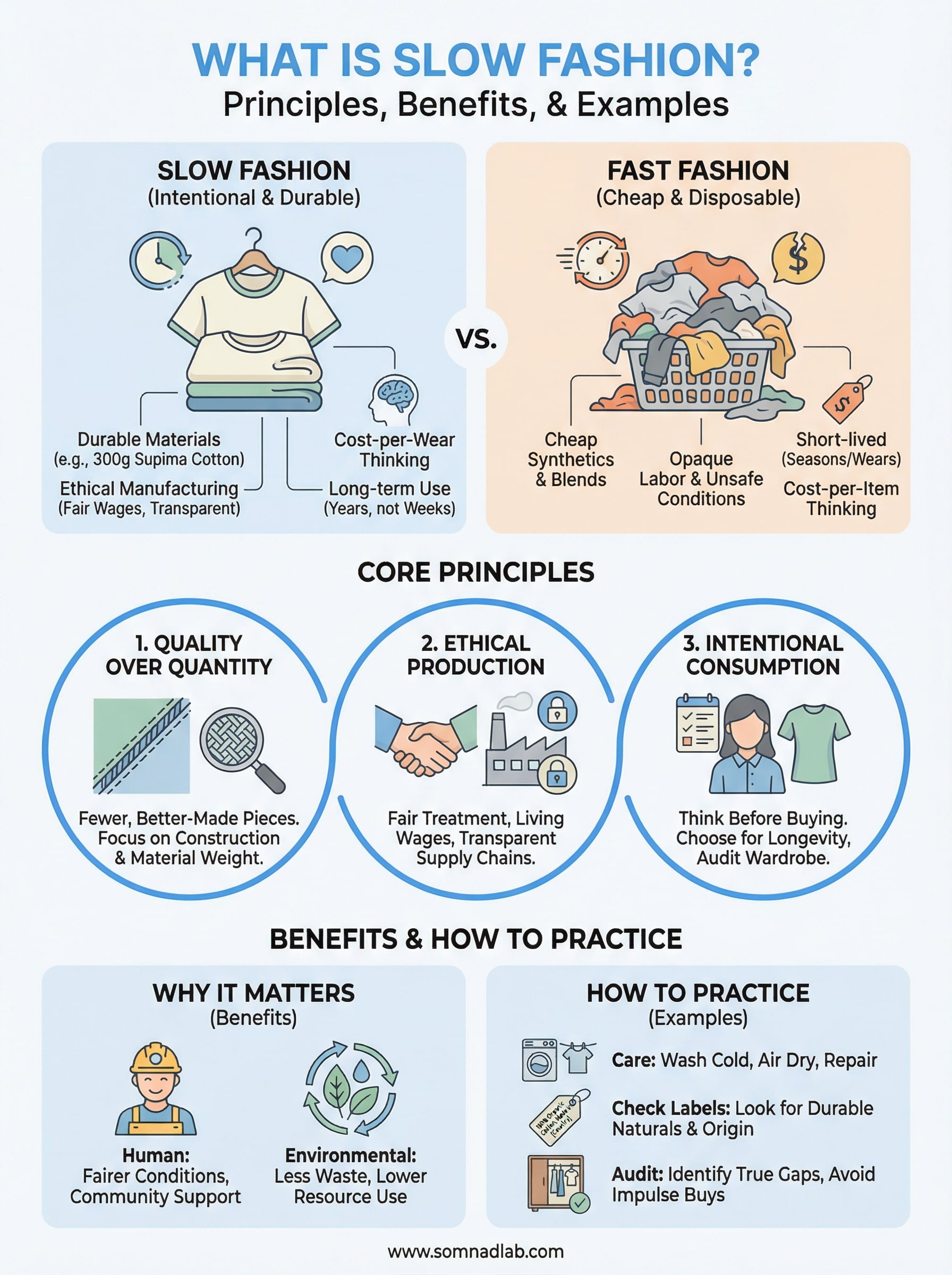
Slow fashion is a way of designing, making, and buying clothing that prioritizes quality, ethics, and longevity over speed and low cost. When you ask what is slow fashion at its most direct level, the answer is this: it's a deliberate rejection of the system that treats clothes as cheap, disposable, and endlessly replaceable. The "slow" part isn't about being behind the times. It means intentional, considered, and built to stay in your life for years rather than weeks.
Where the term came from
The phrase "slow fashion" was coined by sustainability consultant Kate Fletcher in 2007, drawing a direct parallel to the slow food movement that challenged fast food culture in the 1980s and 90s. Just as slow food argued that how food is grown, prepared, and consumed carries real consequences, slow fashion argues that how clothing is designed, manufactured, and sold has serious impacts on factory workers, natural resources, and ultimately on what ends up in your closet. The term gave a name to something many people were already feeling: that the accelerating pace of fashion wasn't serving anyone except the brands pushing volume.
Slow fashion shifts the question from "how much does this cost?" to "what does making this actually cost, and who pays for it?"
Fletcher's framing moved the conversation away from blaming individual consumers for buying cheap clothes and toward examining the industry structures that make cheap, short-lived clothing the default in the first place. That distinction matters because slow fashion isn't a personal failure to resist temptation. It's a recognition that the current system was built around maximizing throughput, and that choosing differently requires some awareness of what you're opting out of.
What it actually asks of you
Slow fashion doesn't require you to swear off shopping entirely or rebuild your wardrobe from scratch in a weekend. What it actually asks is more manageable: think before you buy, and choose things built to hold up. That means looking at what a garment is made from, whether it fits what you already own, and whether you can honestly see yourself wearing it two or three years from now rather than donating it after a season.
In practical terms, slow fashion favors natural, durable materials like Supima cotton, merino wool, or linen over synthetic blends that pill, stretch, or degrade after a handful of washes. It favors brands that can give you a straight answer about where and how a product was made. It also favors a smaller wardrobe of pieces you consistently reach for over a large one stuffed with things that never quite get worn. The goal isn't restriction for its own sake. It's getting more actual use, comfort, and value out of what you own, and spending less time and money replacing things that shouldn't have worn out so fast to begin with.
One useful way to think about it: slow fashion asks you to shift from cost-per-item thinking to cost-per-wear thinking. A tee that costs three times more but lasts five times longer isn't the expensive choice. It's the efficient one. That reframe is at the center of the entire movement, and it's why slow fashion tends to attract people who are less interested in owning more and more focused on owning better.
Why slow fashion matters
Understanding what is slow fashion is one thing, but knowing why it matters is what actually changes how you shop. The clothing industry produces roughly 100 billion garments per year, and most of those garments are designed with a short lifespan in mind. When clothes wear out quickly and get discarded, the cost doesn't disappear. It shifts: to landfills, to overworked factories, and to the communities closest to production sites.
The real price of cheap clothing doesn't vanish. It gets paid by someone else, somewhere further down the chain.
The human cost behind low prices
Fast production schedules and ultra-low retail prices exist because someone, somewhere, absorbs the difference. In many garment-producing countries, factory workers face long hours, unsafe conditions, and wages that fall well below a living standard. The 2013 Rana Plaza collapse in Bangladesh, which killed over 1,100 garment workers, made that reality impossible to ignore for anyone paying attention to where their clothes come from. Slow fashion pushes back against that system by prioritizing transparent supply chains and fair treatment of the people who actually make your clothes.
Choosing slow fashion doesn't mean every brand you support operates perfectly, but it does mean you start asking better questions before you buy. When a brand can tell you where a garment was made and under what conditions, that transparency signals that workers are part of the process, not a liability to be hidden from the customer.
The environmental pressure of disposable clothing
Textile production is one of the more resource-intensive industries on the planet. Growing conventional cotton requires significant water and pesticide inputs, and synthetic fibers shed microplastics into waterways with every wash cycle. When clothes are built to be discarded after a season, those inputs multiply with each replacement purchase.
Slow fashion reduces that pressure by extending the useful life of each garment. A shirt made from 300g Supima cotton that holds its shape and color through years of regular wear represents a fraction of the environmental load of three or four cheap replacements covering the same period. Less production, less waste, and fewer resources consumed per year of actual use. That math is straightforward, and it's a core reason the movement continues to grow.
Slow fashion vs fast fashion
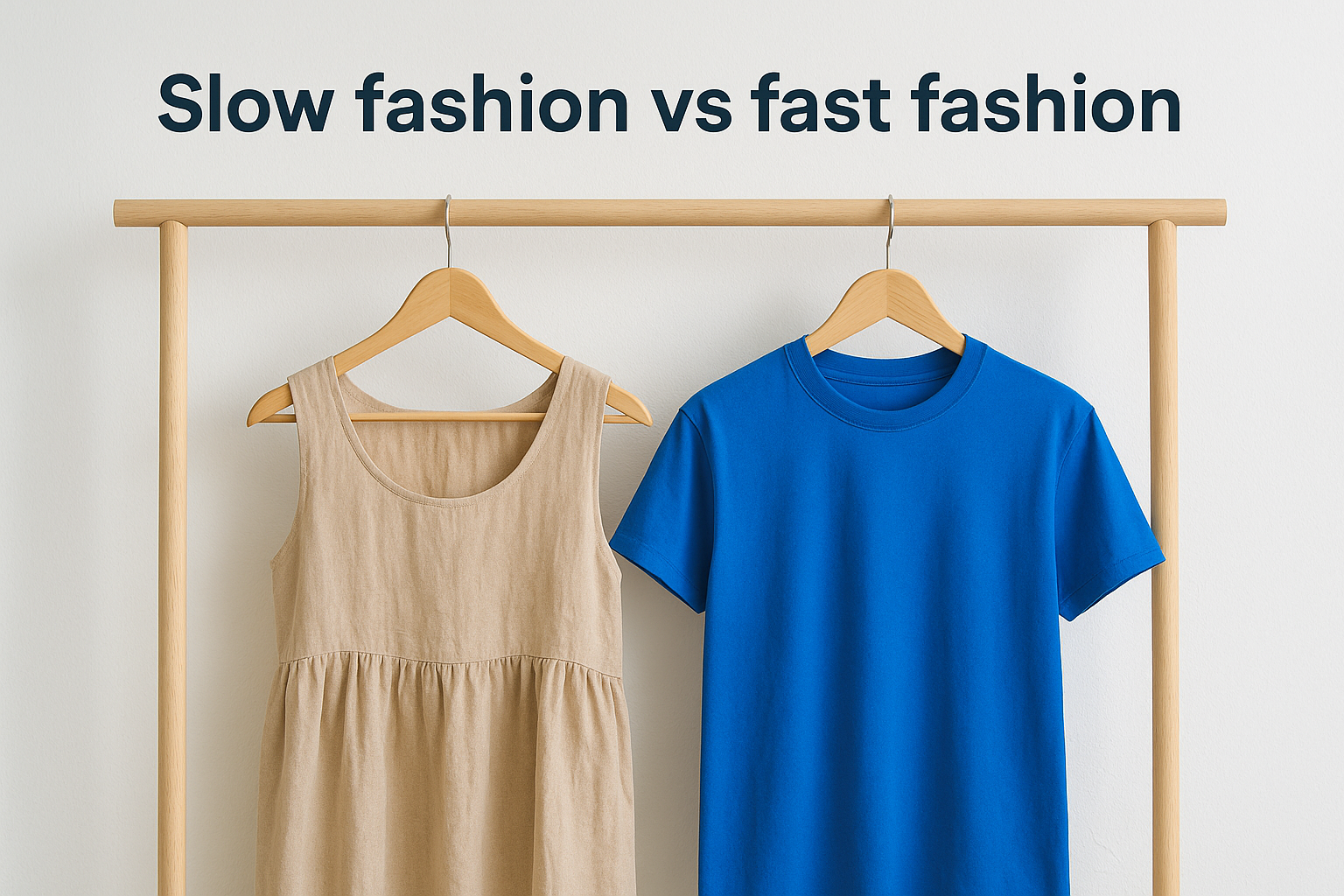
To understand what is slow fashion, it helps to understand what it's pushing back against. Fast fashion is built on a simple formula: produce clothes as cheaply and quickly as possible, sell them at low prices, and count on customers to return when those clothes wear out or fall out of trend. The business model works by compressing the time between design and retail shelf down to weeks, and by keeping per-unit costs so low that replacement feels easier than repair.
How fast fashion works
Fast fashion brands release dozens of micro-collections per year instead of the traditional two seasonal drops. Zara, for example, introduced new styles nearly twice a week at peak volume. That pace requires cheap labor, cheap materials, and supply chains optimized for speed rather than quality or accountability. The result is clothing that often survives fewer than ten washes before it pills, fades, or loses its shape. That's not a flaw in the system. It's the system working as intended: the faster your clothes degrade, the sooner you buy again.
Fast fashion doesn't just sell you a garment. It sells you a replacement cycle.
Here's a direct comparison of where the two models differ:
| Factor | Fast fashion | Slow fashion |
|---|---|---|
| Production pace | Weeks, continuous drops | Seasonal or limited releases |
| Material focus | Low-cost synthetics and blends | Durable naturals like Supima cotton or linen |
| Labor standards | Often opaque, cost-driven | Transparent, fair wage focused |
| Intended lifespan | One to two seasons | Years of regular wear |
| Price logic | Low per-item cost | Higher upfront, lower cost-per-wear |
Where slow fashion draws the line
Slow fashion doesn't just slow the pace. It changes the goal entirely. Rather than maximizing the number of garments sold, it focuses on maximizing the useful life of each one. That requires a completely different approach to materials, construction, and even how a brand communicates with you about its products.
Your buying decisions shift too. When you choose slow fashion, you're no longer asking what's cheapest right now. You're asking what will still fit well, look right, and hold up two or three years from now. That reframe puts you in control of the replacement cycle instead of the other way around.
Core principles of slow fashion
When you dig into what is slow fashion at a structural level, you find a handful of consistent principles that drive every brand and buying decision within the movement. These principles aren't marketing language or vague ideals. They are specific, concrete standards that shape how a garment is designed, manufactured, and eventually worn into the ground before it's ever replaced. Understanding them gives you a clear framework for evaluating any brand or purchase against something real.
Slow fashion principles don't exist to make shopping harder. They exist to make your choices mean something.
Quality over quantity
The most foundational principle of slow fashion is prioritizing fewer, better-made items over a large number of cheap ones. This applies to both brands and buyers. A slow fashion brand focuses its energy on getting a smaller range of products right, using premium materials and careful construction rather than spreading resources thin across hundreds of styles. For you, that means building a wardrobe where most pieces see regular rotation rather than one where the majority of items get worn twice a year.
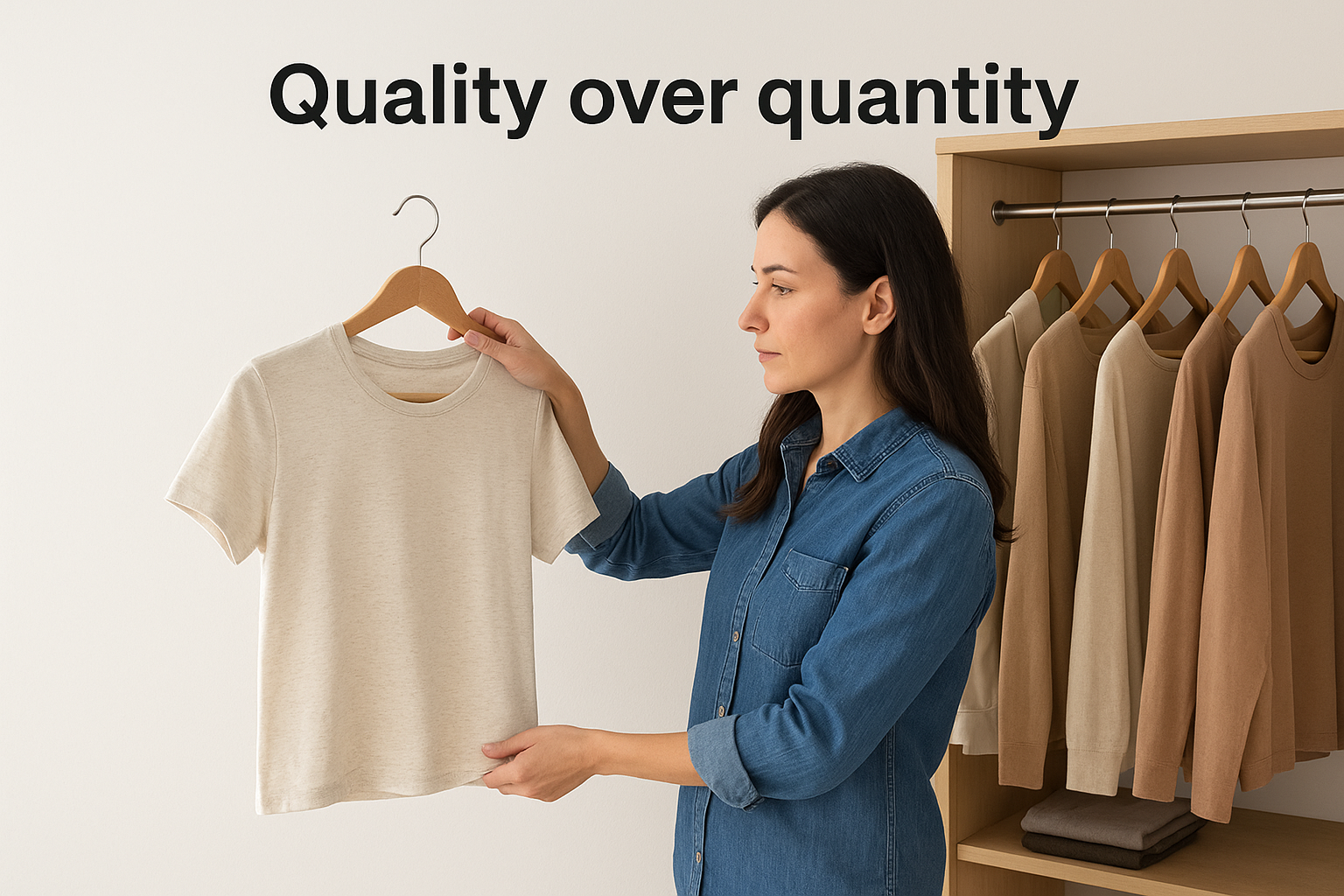
Quality in this context means things you can actually measure: fiber weight, weave density, seam reinforcement, and colorfastness after repeated washing. A 300g Supima cotton tee, for example, retains its structure and color through years of use in a way that a lightweight blended fabric simply won't. That durability is the whole point.
Ethical production
Slow fashion holds that every person involved in making a garment deserves fair treatment and safe conditions. That means living wages, reasonable hours, and factories that workers aren't afraid to talk about publicly. Brands that operate by this principle are willing to name their factories, share audit results, and answer direct questions about their supply chain rather than deflecting with vague language about being "responsibly sourced."
Ethical production also extends to material sourcing and environmental impact at the factory level, covering water usage, chemical treatments, and waste handling. Transparency across all of those areas separates brands genuinely committed to the principle from those using it as surface-level positioning.
Intentional consumption
The third principle places responsibility on the buyer as well as the brand. Intentional consumption means choosing with purpose: buying something because it fits your life and your existing wardrobe, not because it's briefly on sale or trending. It also means caring for what you own by following wash instructions, making minor repairs, and wearing a garment until it genuinely reaches the end of its life rather than replacing it the moment something newer appears.
How to practice slow fashion in real life
Knowing what is slow fashion gives you a framework, but applying it changes what you actually do with your time and money. The good news is that practicing slow fashion doesn't require a dramatic overhaul. It starts with a few specific, repeatable habits that shift how you think about your wardrobe over time.
Small decisions made consistently add up faster than any single dramatic purchase ever will.
Audit what you already own
Before buying anything new, take stock of what's already in your closet. Pull everything out and identify which pieces you reach for consistently and which ones haven't moved in six months. If something isn't getting worn, the problem usually isn't that you need more clothes. It's that you bought things that don't work well together or don't fit the life you're actually living. Knowing what you own well makes it far easier to buy with precision rather than impulse.
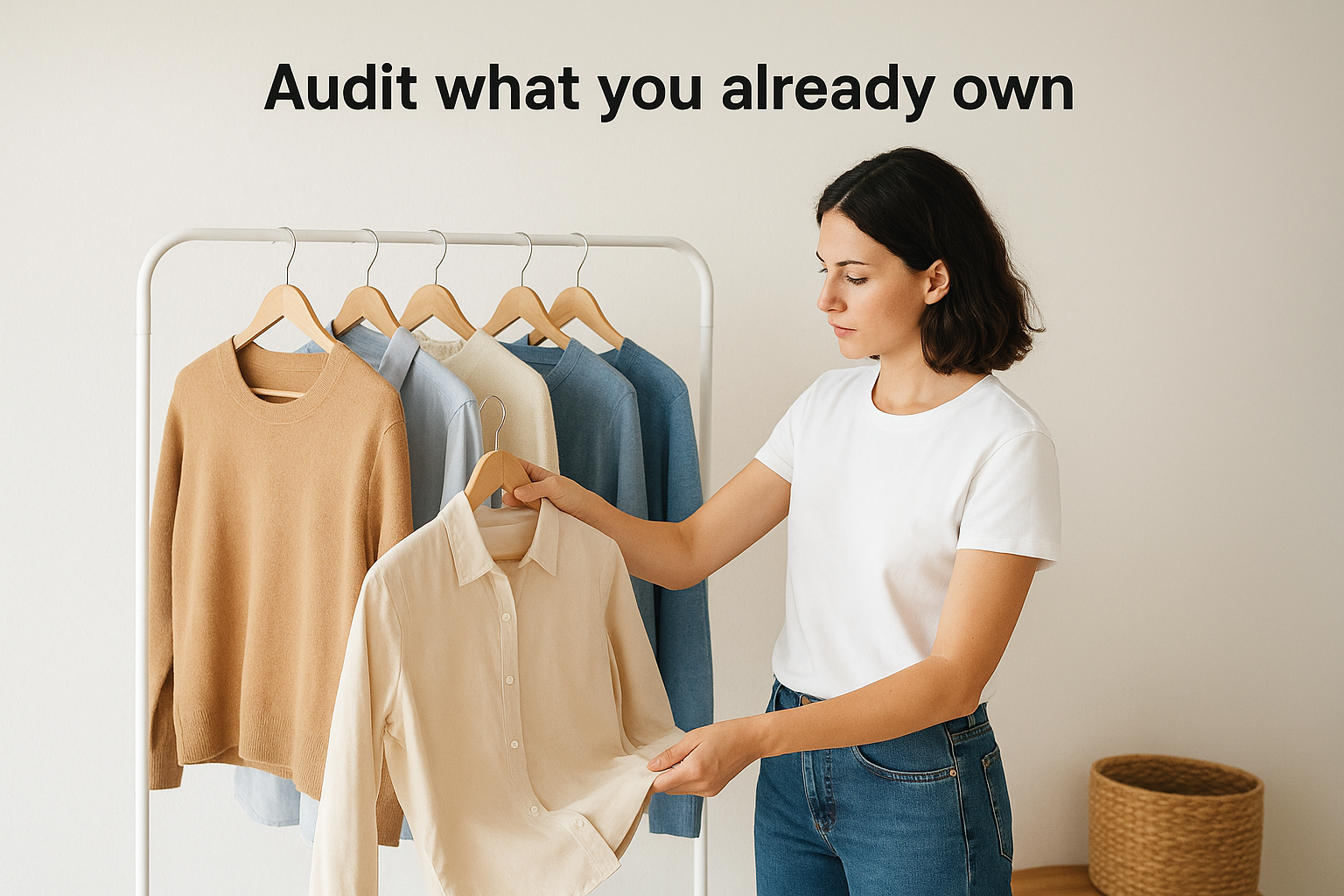
Once you have a clear picture of your wardrobe, you can identify genuine gaps rather than perceived ones. That might mean you need one well-made long-sleeve shirt rather than four mediocre options that none of them quite hit the mark.
Set a standard before you shop
Deciding on your criteria before you browse protects you from buying things that won't hold up. Ask yourself three questions: Is this made from a durable material? Does it fit something I already own? Can I see myself wearing it two years from now? If any answer is no, put it back. That simple filter cuts out most impulse purchases before they reach your cart.
Applying that standard consistently also pushes you toward brands that can answer basic questions about fabric weight, country of origin, and construction. If a brand can't or won't tell you what's in the garment or where it was made, that's a signal worth paying attention to.
Care for what you own
How you maintain your clothes has a direct effect on how long they last. Washing on cold, air drying when possible, and following care labels extends the lifespan of even premium garments by years. Treating a small stain immediately, storing knits folded rather than hung, and making minor repairs before they become major ones all add real time to what your clothes can do for you.
Good care habits turn a great garment into a long-term investment rather than a purchase that just happens to cost more.
Examples of slow fashion and what to look for
Understanding what is slow fashion in theory is useful, but seeing it in practice makes the concept concrete. Slow fashion shows up in specific, recognizable ways: in how a brand talks about its materials, in how it handles limited inventory, and in whether it gives you honest, detailed product information rather than vague language about "sustainability" or "craftsmanship" with nothing to back it up.
The clearest signal that a brand operates with a slow fashion mindset is that it has fewer products and more information about each one.
What slow fashion brands actually do differently
Slow fashion brands tend to carry a narrow range of products rather than sprawling catalogs. That constraint is intentional. When a brand focuses on a small number of items, it can put real attention into material selection, fit, and construction quality. You'll often find detailed product pages that specify fiber content, weight, weave, and country of manufacture instead of the vague "high-quality materials" language that tells you nothing. Patagonia, for example, publishes supply chain information and repair guides directly on its site, treating durability as a feature rather than an afterthought.
Brands operating in this space also tend to avoid seasonal sales cycles designed to push volume. Instead of discounting constantly to move inventory, they hold prices and let product quality justify the cost. When something sells out, it may stay out of stock rather than being immediately restocked with a cheaper version to meet demand.
What to look for when you evaluate a garment
When you're standing in front of a product page or holding something in a store, a few specific details separate slow fashion pieces from cheap alternatives. Look for natural fiber content with real weight behind it, Supima cotton, merino wool, or heavyweight linen all hold up significantly better than lightweight blends or synthetics. Check seam construction and hem finishing: clean, reinforced stitching indicates attention to the parts of a garment that tend to fail first.
Ask whether the brand publishes its fabric source or factory location. Brands with nothing to hide typically make that information easy to find. Also check for reviews that mention durability over time, not just initial impressions. A garment that still looks right after two years of washing and wearing tells you more about its quality than any product description will.
Conclusion
Now that you understand what is slow fashion, the core question becomes simple: does this last, and do you know who made it? Those two questions cut through most of the noise. Slow fashion isn't a trend or a luxury reserved for people with large budgets. It's a buying standard anyone can apply by choosing fewer, better-made pieces and holding them long enough to get real value out of them. The principles behind it, quality materials, ethical production, and intentional consumption, work together to make your wardrobe something you actually rely on rather than constantly rebuild.
Your closet doesn't need to change overnight. Start with one deliberate decision: replace something worn out with a piece built to genuinely last. If you want a clear starting point, SÖMNAD's everyday essentials are designed around exactly that idea. 300g Supima cotton, clean construction, and no unnecessary markup mean what you buy stays in your rotation for years, not just one season.