


You spent good money on a thick, substantial cotton tee, and now you're wondering: does heavyweight cotton shrink? It's a fair concern. Heavier fabrics feel like they should hold up better, but cotton is cotton, and heat has a way of tightening fibers regardless of weight. The short answer is yes, heavyweight cotton can shrink. But how much, and whether it actually becomes a problem, depends on a few specific factors you can control.
At SÖMNAD, we build our essentials from 300g Supima cotton, which puts us squarely in heavyweight territory. That means we've spent a lot of time testing how dense cotton fabrics respond to washing, drying, and long-term wear. We're not guessing here, this is something we deal with at the production level every time we develop a garment.
This article breaks down exactly how much shrinkage to expect from heavyweight cotton, what causes it, and the practical steps you can take to prevent it from affecting your fit. Whether you're buying your first heavyweight tee or trying to preserve one you already own, you'll walk away with clear answers and a plan.
What heavyweight cotton means in plain English
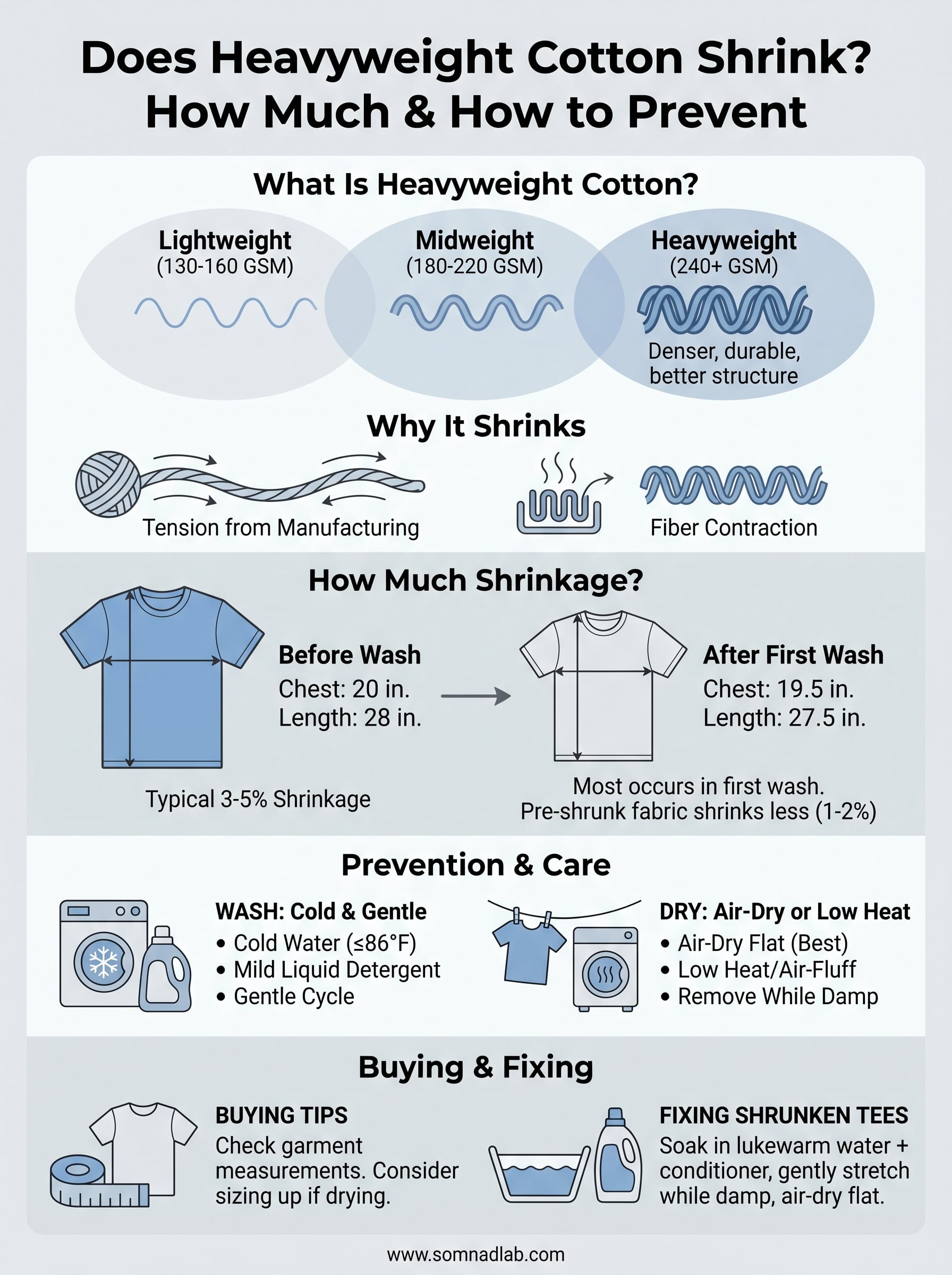
Cotton fabric weight is measured in grams per square meter, commonly shortened to GSM. That single number tells you how dense and heavy the fabric is before any garment is cut or sewn. A lightweight T-shirt fabric sits around 130-160 GSM. A midweight piece runs roughly 180-220 GSM. Heavyweight cotton starts at around 240 GSM and climbs from there, with premium basics often landing between 270-320 GSM or higher.
GSM and what it tells you about a fabric
GSM is not just a number on a product page. It reflects the actual fiber density packed into every square meter of cloth, which directly affects how the fabric feels, drapes, and holds its shape over time. Higher GSM means more cotton fiber per unit of area, which produces a thicker hand feel, better structure, and a longer-lasting garment. When you ask does heavyweight cotton shrink, the answer connects directly to this density, because more fiber means more potential for those fibers to tighten when exposed to heat.
The GSM of a fabric is one of the most reliable indicators of how a garment will perform in the wash and over years of wear.
Here is a quick reference for where heavyweight cotton lands relative to other fabric weights:
| Weight Category | GSM Range | Common Use |
|---|---|---|
| Lightweight | 130-180 GSM | Summer tees, casual basics |
| Midweight | 180-230 GSM | Year-round everyday tees |
| Heavyweight | 240+ GSM | Premium tees, structured basics |
What separates heavyweight cotton from the rest
When you pick up a heavyweight cotton tee, the difference is immediate. The fabric does not cling, droop, or turn translucent in sunlight. It holds its shape through the day and across dozens of washes because the fiber construction is simply more substantial. Brands that work with heavyweight fabrics choose that weight deliberately, because lighter fabrics compromise both structure and longevity.
Heavyweight cotton also tends to rely on longer-staple fibers like Supima or Pima cotton, which produce smoother, stronger yarns. That combination of dense weave and premium fiber is what gives heavyweight garments their characteristic feel and durability, and it is what you feel when you hold a 300g tee against something that weighs half as much.
Why heavyweight cotton shrinks
Cotton is a natural cellulose fiber, and that origin is why it shrinks. During fabric production, yarn is stretched under mechanical tension to create a workable, consistent material. That tension stays locked into the fabric until heat and moisture release it, at which point the fibers contract back toward their natural, relaxed state.
The tension built into every cotton fiber
During spinning and weaving, cotton fibers absorb significant mechanical stress. They are pulled, aligned, and held in position by the structure of the fabric itself. When you ask does heavyweight cotton shrink, you are really asking how much stored tension exists in those fibers and how easily heat releases it. Because heavyweight fabrics contain more fiber per square meter, there is more stored tension in total, which means more potential movement when heat enters the picture.
The shrinkage you see after the first wash is largely the release of tension built into the fabric during manufacturing.
Why heat triggers the change
Hot water and dryer heat are the two main accelerants. High temperatures break the hydrogen bonds that hold cotton fibers in their stretched position, allowing them to contract and tighten. The dryer is typically worse than the wash cycle because it combines intense heat with constant tumbling agitation. Here are the three conditions that drive the most shrinkage:
- Dryer heat above 135°F
- Wash water above 104°F
- Long, high-agitation cycles
Each of these conditions gives cotton fibers the energy they need to release built-up tension and pull inward, which is why your laundry habits matter as much as the fabric itself.
How much heavyweight cotton can shrink
The actual shrinkage range for heavyweight cotton typically falls between 3% and 5% across the full life of the garment. On a size medium tee with a 20-inch chest, that translates to roughly half an inch to a full inch of chest reduction. Most of that movement happens early, concentrated in the first one or two washes, after which the fabric stabilizes considerably.
First wash vs. long-term shrinkage
The first wash is where you lose the most ground. Untreated heavyweight cotton can shrink 3-5% in a single hot cycle, pulling noticeably across the chest and shortening the body length. After that initial release of built-up tension, continued shrinkage slows to a fraction of a percent per wash. Your garment largely finds its settled dimensions by the second or third wash if you maintain consistent care from that point forward.
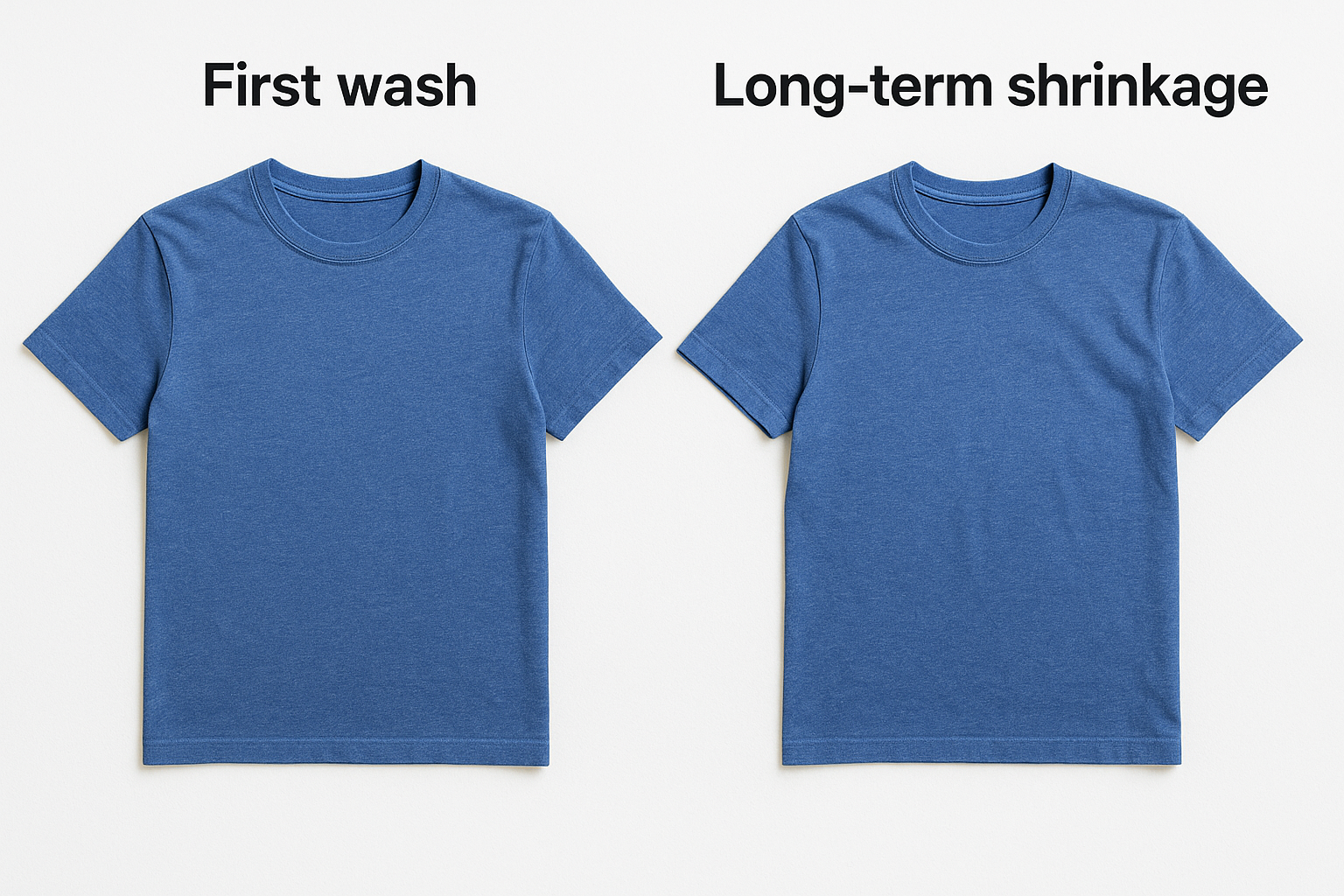
Most of the shrinkage in heavyweight cotton happens in the first wash, not gradually over years of wear.
What pre-shrinking does to those numbers
Many quality manufacturers pre-shrink their fabric before cutting garments, a process called pre-washing or pre-treatment. When a brand does this correctly, you can expect first-wash shrinkage to drop closer to 1-2% rather than 3-5%. That is a meaningful difference in real terms.
If you're asking does heavyweight cotton shrink after pre-treatment, the honest answer is yes, but far less than untreated fabric. Pre-shrinking removes the majority of stored tension before the garment ever reaches you, so the fit you buy is much closer to the fit you keep.
How to prevent shrinkage in the wash and dryer
The good news is that preventing most shrinkage is straightforward once you know which conditions to avoid. If you're already asking does heavyweight cotton shrink, you're ahead of most people who only notice the problem after the damage is done. Cold water and low heat are your two best tools, and using them consistently keeps your heavyweight tee close to the dimensions you bought it in.
Wash settings that protect the fabric
Turn your machine to a cold or cool cycle, ideally at or below 86°F, and select a gentle or delicate spin setting. Hot water is the fastest way to release stored fiber tension, so keeping the temperature low removes that trigger entirely. A mild, liquid detergent works better than powder here because it dissolves fully without leaving residue that stiffens the fabric over repeated washes.
Cold water washing alone can cut your first-wash shrinkage by more than half compared to a hot cycle.
Dryer habits that preserve shape
The dryer does more damage than the wash cycle in most cases because it combines high heat with constant mechanical tumbling. Your safest option is to air-dry your heavyweight tee by laying it flat on a clean surface, which removes heat from the equation entirely.
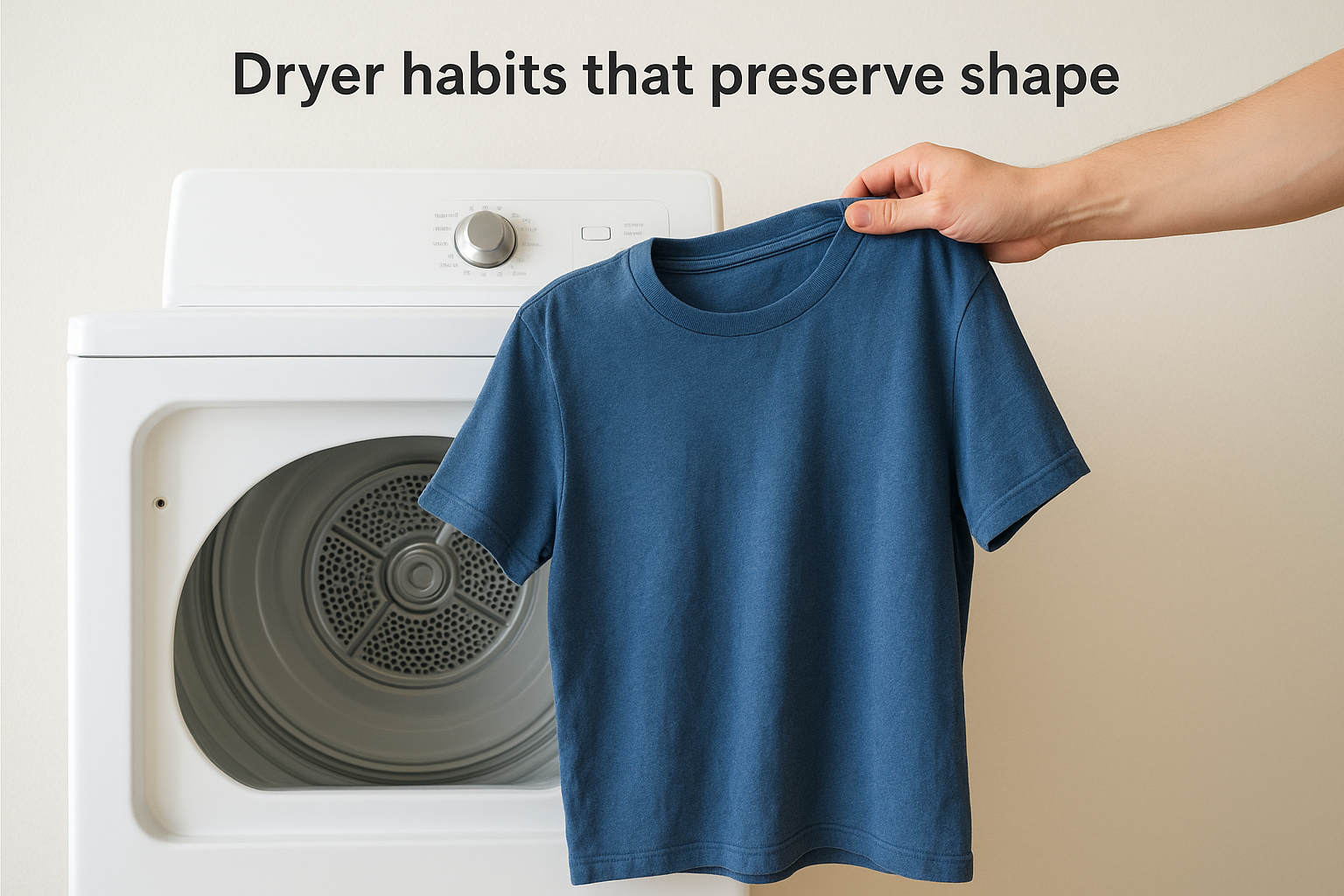
If you need to use the dryer, follow these steps to reduce damage:
- Set it to the lowest heat or air-fluff setting
- Pull the shirt out while it still feels slightly damp
- Let it finish drying flat at room temperature
That approach prevents the over-drying that locks fibers into a contracted, shrunken position.
How to buy the right size and keep the fit
Buying the right size in heavyweight cotton starts with knowing that most quality brands size their garments to account for expected shrinkage. If the brand pre-shrinks their fabric before cutting, the size you buy should be the size you keep through consistent cold-wash care. If you plan to use a dryer regularly, buying one size up gives you a practical buffer for the first wash.
Sizing up by one when you're unsure of a brand's pre-shrink process costs nothing and can save you from replacing a garment you love.
Measurements matter more than the label
Chest width, body length, and shoulder width are the three numbers that tell you the most about how a shirt will fit before and after washing. Size labels vary significantly by brand, so checking actual garment measurements against your own body is the most reliable approach. Most brands publish a size guide directly on their product pages.
Here are the key measurements to compare before you buy:
- Chest width: measured across the front at the armhole
- Body length: from the top of the shoulder to the hem
- Shoulder width: from seam to seam across the back
Keeping the fit long term
Once your heavyweight tee settles after the first wash or two, consistent care locks in those dimensions. Stick to cold water and air-dry when possible. For anyone still asking does heavyweight cotton shrink after it stabilizes, the answer is very little with proper care from that point forward.
- Wash cold every time
- Air-dry flat when you can
- Pull it from the dryer while still slightly damp
How to fix a heavyweight tee that shrank
If a heavyweight tee has already lost an inch of chest width, your options are limited but real. Cotton fibers that contracted under heat can partially relax again when you reintroduce moisture and gentle tension, which is the basis of every effective unshrinking method. The results depend on how much the fabric shrank and how recently it happened, but a tee that shrank in the last few washes is more recoverable than one that has been washing small for a year.
Freshly shrunken cotton responds better to stretching than fabric that has been locked in a contracted shape through repeated washes.
The soaking method
Fill a basin or sink with lukewarm water and a tablespoon of hair conditioner or baby shampoo. Submerge the shirt completely and let it soak for 20-30 minutes. These products work by relaxing the cotton fiber structure just enough to allow gentle reshaping. After soaking, press out the water without wringing, then lay the shirt flat and slowly stretch it by hand in the areas that shrank most, typically the chest and body length. Pin it to a towel or flat surface and let it air-dry fully in the stretched position.
What to expect realistically
This method typically recovers half an inch to a full inch depending on how severe the shrinkage was. If you're still asking does heavyweight cotton shrink back to its original size after treatment, the honest answer is probably not completely, but meaningful recovery is achievable. Think of this as damage control rather than a full reversal.
Next steps for a better fit
Now that you know does heavyweight cotton shrink and exactly how much movement to expect, you can make smarter decisions from the start. Buy from brands that pre-shrink their fabric, wash cold every time, and pull your tee from the dryer while it still holds a little moisture. Those three habits handle the majority of the problem before it starts.
If you want a heavyweight tee that already accounts for shrinkage at the production level, fabric selection and pre-treatment matter as much as how you wash. SÖMNAD builds every tee from 300g Supima cotton with fit stability in mind, so the size you order is the size you keep. Check the full size guide and garment measurements before you buy, and you will rarely need to think about shrinkage again. Start with premium heavyweight essentials that are built to hold their shape from day one.