


Most guys own too many clothes and not enough wardrobe. Scroll through any men's wardrobe essentials list online and you'll find the same recycled advice, buy a navy blazer, get some chinos, maybe a "nice watch." But the real problem isn't knowing what to buy. It's that nobody talks about the quality threshold where basics actually start working for you instead of against you.
A wardrobe built on cheap basics needs constant replacing. Tees lose shape after a few washes. Fabric pills. Collars warp. You end up spending more over time and looking worse in the process. The fix isn't buying more, it's buying fewer things made from materials that hold up. That's the principle behind everything we make at SÖMNAD: less, but better. Premium fabrics, clean construction, no logos, no filler.
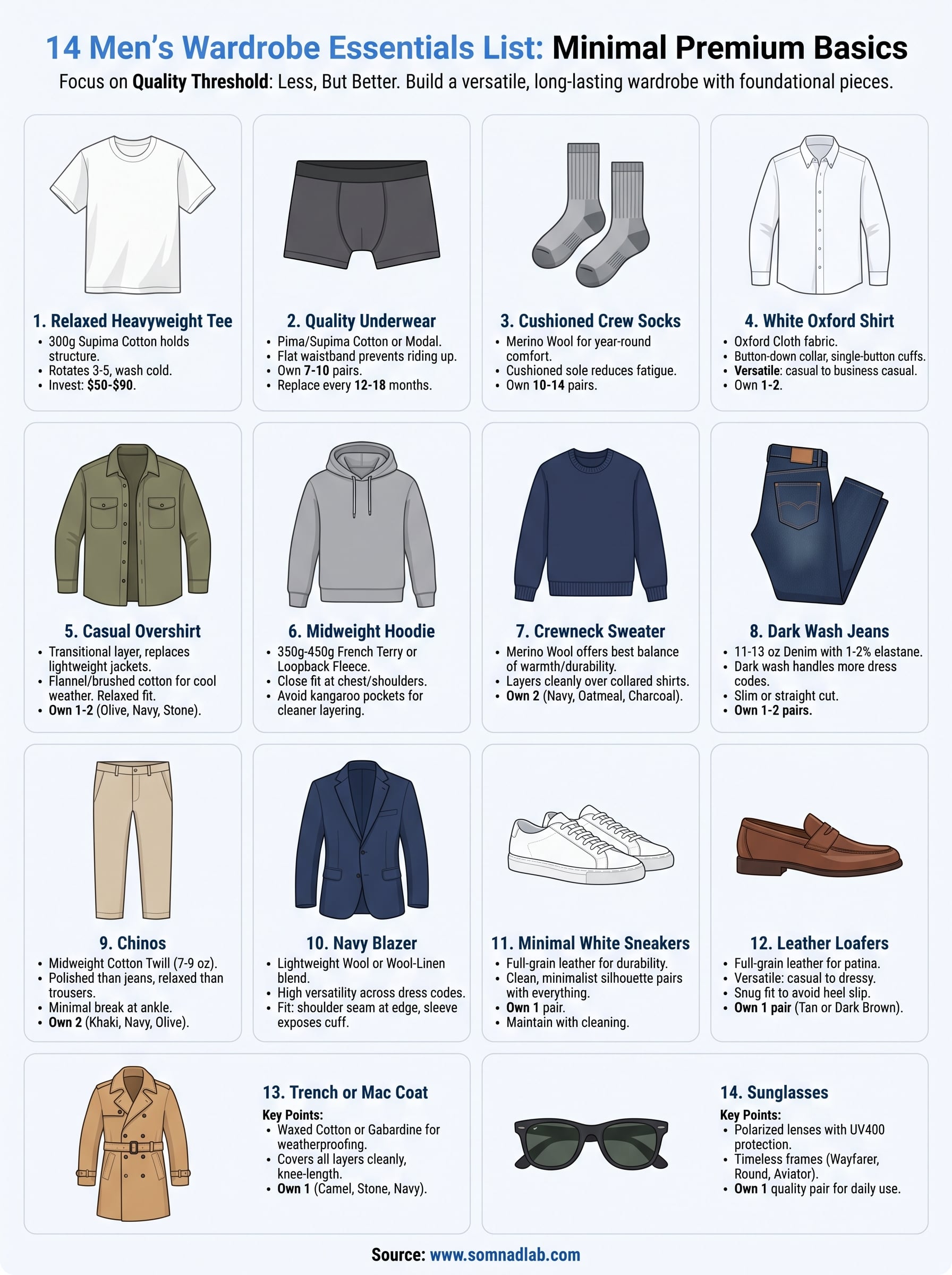
This guide breaks down 14 foundational pieces that form a complete, versatile men's wardrobe, from tees and outerwear to footwear and accessories. Each item earns its spot by working across seasons, pairing with everything else on the list, and lasting long enough to justify the investment. No trend-chasing. No filler picks. Just the building blocks of a wardrobe that actually functions day to day.
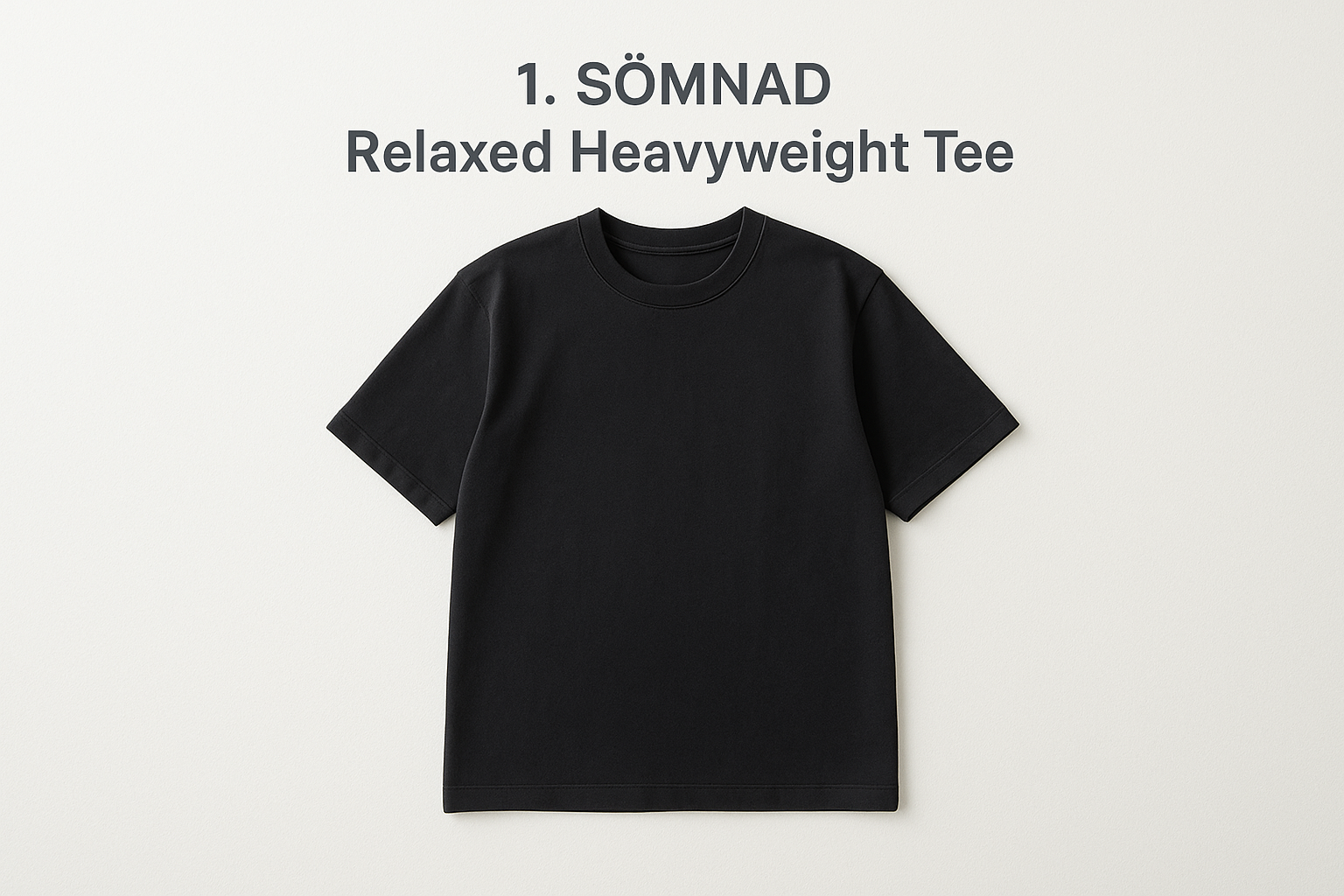
1. SÖMNAD Relaxed Heavyweight Tee
The SÖMNAD relaxed heavyweight tee sits at the top of any serious men's wardrobe essentials list because it does the most work. You wear it alone, layer it under an overshirt, or throw it under a blazer. No other single item gets more daily use, which makes the quality of the fabric and construction matter more here than anywhere else.
Why it earns a spot in a minimal wardrobe
A premium heavyweight tee works harder than a standard one because the fabric holds its structure through repeated washing. Lightweight tees go thin and misshapen fast. A 300g cotton tee keeps its silhouette, drapes cleanly, and looks intentional rather than like an afterthought. That's the difference between a tee that anchors an outfit and one that undermines it.
The quality of your foundation piece sets the tone for everything layered on top of it.
Fabric and build details to check
Supima cotton is the standard to look for. It's grown in the US, has a longer fiber than standard cotton, and produces a softer, denser fabric that resists pilling and fading. SÖMNAD uses 300g Supima cotton in the relaxed tee, which puts it firmly in the heavyweight category that holds shape wash after wash. Check also for reinforced stitching at the shoulder seams and neck, since those spots fail first on cheaper tees.
Fit and color guidance for most guys
The relaxed fit sits wider in the chest and shoulders without going boxy, so it works across most body types. Shoulder seams should land at the edge of your shoulder, not drape down your arm. For color, white, black, and warm gray cover the most outfit combinations and pair with everything else on this list without creating friction.
How many to own and rotation tips
Three to five tees give you enough to rotate without over-washing any single piece. Washing less frequently preserves the fabric longer. Turn them inside out, wash in cold water, and skip the dryer when you can. A five-tee rotation with proper care will last years, not months.
Typical price range
Expect to pay $50 to $90 for a genuine heavyweight Supima cotton tee. Below that range, brands typically cut corners on fabric weight or construction. Above it, you're often paying for a label rather than better quality.
2. Quality Underwear
Underwear rarely makes it onto a men's wardrobe essentials list, but it deserves a spot near the top. Everything you wear on the outside layers over it, and if what's underneath fits poorly or bunches up, it pulls your outer clothes off-kilter in ways you can't fix by adjusting the outer layer.
Why better underwear changes how everything fits
Cheap underwear shifts throughout the day. Bunching and riding up create visible lines under chinos or trousers and force constant adjusting. Well-made underwear holds its position, keeps its shape through dozens of washes, and gives your outer layers a clean foundation to sit against.
The fit of your base layer directly affects how polished everything worn above it looks.
Fabric options and what to avoid
Pima or Supima cotton gives you softness and breathability for everyday wear. Modal and micro modal options feel slightly lighter and work well in warmer months. Avoid 100% synthetic fabrics for daily use since they trap heat and develop odor faster than natural fibers do.
Fit details that prevent riding up
Look for a waistband that sits flat without digging in or folding over. The leg opening should grip lightly without pinching. Boxer briefs tend to work best for most body types because they cover enough to prevent thigh chafing while staying low-profile under fitted pants and chinos.
How many to own and replacement timing
Seven to ten pairs covers a full week with buffer room. Replace them once the waistband loses elasticity or the fabric thins out, typically every 12 to 18 months with regular washing.
Typical price range
Expect to spend $10 to $25 per pair for quality construction. Multi-packs often bring that per-unit cost down without dropping material standards.
3. Cushioned Crew Socks
Socks rarely make it onto a men's wardrobe essentials list, but they absorb more daily wear than almost anything else you own. Worn every single day against shoe leather and pavement, low-quality pairs thin out fast, lose their elastic, and slide down into your heel by noon.
Why socks matter more than most guys think
A cushioned sole reduces foot fatigue on long days and creates a buffer between your foot and hard shoe construction. Your shoes also fit and feel better when the sock beneath them holds its position rather than bunching up at the toe.
The right sock makes every pair of shoes you own more comfortable to wear.
Material choices for sweat and durability
Merino wool handles odor and temperature regulation better than any synthetic option, making it the strongest choice for year-round use. Cotton-blend socks work well in mild climates but absorb moisture without releasing it, so avoid them for high-activity days or warmer months.
Length and thickness for sneakers and loafers
Crew-length socks hit mid-calf and stay visible at the right height whether you're wearing white sneakers or leather loafers. Medium cushioning gives you comfort underfoot without making the fit too tight inside your shoe. Avoid ankle-length socks with loafers since the gap of bare skin at the ankle reads as unfinished.
How many to own and laundry tips
Ten to fourteen pairs gives you a full two-week rotation with buffer room. Wash in cold water and air dry when possible to preserve cushioning and elastic longer.
Typical price range
Expect to pay $10 to $20 per pair for quality construction with genuine cushioning and durable fiber content.
4. White Oxford Shirt
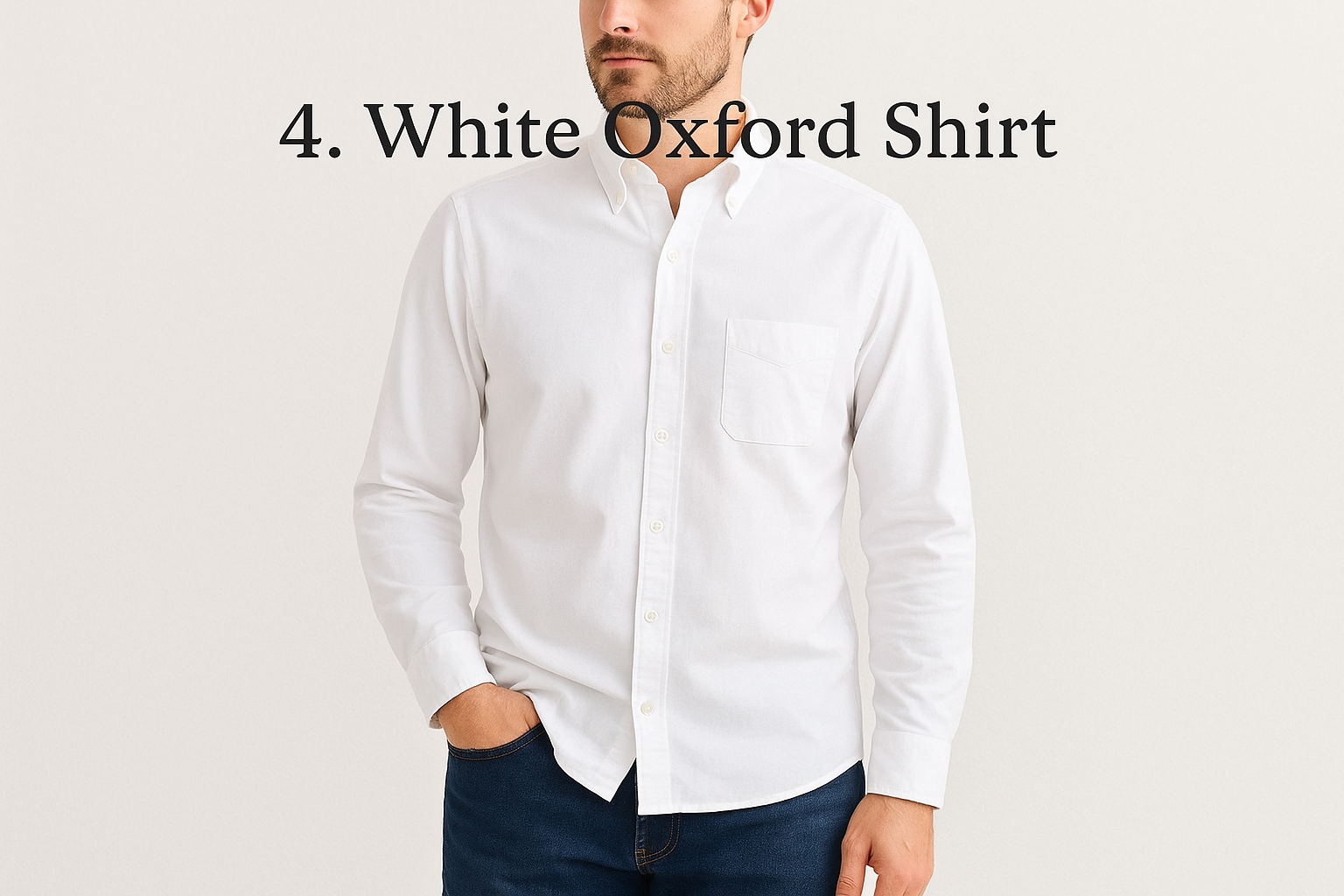
The white Oxford shirt covers more dress codes than any other top on a standard men's wardrobe essentials list. You wear it open-collar with jeans on the weekend, tuck it into chinos for a work meeting, or layer it under a crewneck sweater when temperatures drop. No other shirt delivers that range without looking forced.
Where it fits in casual to business casual outfits
An Oxford shirt lands cleanly across casual and business casual contexts because the fabric has enough texture to feel relaxed but enough structure to look considered. You can leave it untucked with dark denim and white sneakers, or tuck it into chinos and add a blazer for anything more formal.
A white Oxford shirt is the one top that works across nearly every context without requiring you to rebuild the outfit around it.
What makes an Oxford an Oxford
Oxford cloth is a basket-weave fabric with a slightly textured surface and a soft hand feel. That texture separates it from a dress shirt. The weave adds weight and body so the shirt holds its shape when worn untucked and drapes cleanly when tucked in.
Collar, cuff, and pocket details that look modern
Look for a button-down collar with short collar points that lie flat without a tie. Cuffs should close with a single button and sit at the wrist bone without flaring. Skip the chest pocket if you want the cleanest look since a pocket-free placket reads as more refined.
How many to own and when to size up
One to two white Oxfords covers most wardrobes. Size up if you plan to layer it over a tee or if your shoulders feel tight in your regular size.
Typical price range
Expect to spend $60 to $120 for an Oxford made from quality cloth with solid construction at the collar and cuffs.
5. Casual Overshirt
An overshirt earns its place on any men's wardrobe essentials list because it fills the gap between a shirt and a jacket. Worn open over a tee or buttoned as a standalone layer, it adds visual structure without the formality of a blazer or the bulk of a coat.
What it replaces and why it layers so well
The overshirt replaces the lightweight jacket across three seasons of the year. You wear it over a heavyweight tee in spring and fall, and under a coat in winter. Its shirt-style construction keeps it flat against your torso, so it sits cleanly beneath outerwear without adding unnecessary volume at the shoulders.
One overshirt used across three seasons costs less than three separate transitional layers combined.
Best fabrics by season and climate
Flannel and brushed cotton work well in fall and winter because they add warmth without bulk. Chambray and linen-cotton blends keep the overshirt functional in warmer months by letting air move through the fabric. Avoid heavy wool options since they overlap too much with coat territory and limit how you can layer them.
Fit rules so it does not look like a coat
The hem should fall at or just below the hip, not mid-thigh. Shoulders need to sit at your actual shoulder edge, not drape past it. A relaxed chest with a defined shoulder line keeps the silhouette intentional rather than shapeless.
How many to own and core colors
One to two overshirts covers most wardrobes. Prioritize these colors for the broadest pairing range:
- Olive
- Navy
- Stone
Typical price range
Expect to pay $70 to $130 for an overshirt built from quality fabric with reinforced buttons that hold through regular wear.
6. Midweight Hoodie
A midweight hoodie earns a spot on any serious men's wardrobe essentials list because it fills the gap between a lightweight tee layer and a structured sweater. Worn alone in mild weather or under a coat when temperatures drop, it adds warmth without bulk and covers the casual end of your wardrobe without looking like you abandoned any effort to get dressed.
When a hoodie looks sharp instead of sloppy
The difference between a sharp hoodie and a sloppy one comes down to fit and fabric quality. A hoodie that fits correctly reads as intentional. One that's oversized with a thin, pilled fabric reads as an afterthought. Wear it over a clean heavyweight tee with dark jeans and white sneakers and it looks considered rather than lazy.
Fit is what separates a hoodie that elevates a casual outfit from one that drags it down.
Fabric weight, fleece types, and shrink risk
French terry and loopback cotton fleece both work well in a midweight hoodie. French terry runs slightly lighter and more structured. Loopback fleece adds more softness and warmth. Either way, look for a fabric weight between 350g and 450g for year-round usefulness. Pre-shrunk construction matters since untreated cotton can drop a full size after the first wash.
Fit details that work with jackets
The chest and shoulders should fit close without pulling. The hem should fall at your hip so it sits flat under a coat rather than bunching at the waist. Avoid kangaroo pockets that add front bulk if you plan to layer the hoodie under outerwear regularly.
How many to own and best neutral colors
One to two hoodies covers most wardrobes. Stick to charcoal, navy, or stone for the broadest pairing range across your other basics.
Typical price range
Expect to spend $70 to $120 for a hoodie built from quality fleece with solid seam construction that holds through regular washing.
7. Crewneck Sweater
A crewneck sweater belongs on every men's wardrobe essentials list because it bridges the gap between casual and polished without committing fully to either. You wear it over a tee on cold days, layer it over an Oxford for a business casual look, or carry it as a backup layer when temperatures shift. Few pieces work this hard across that many contexts.
Why the crewneck beats trendier knits for versatility
Turtlenecks and V-necks have their place, but neither covers as much ground as a crewneck. The neckline sits high enough to layer cleanly over a collar without creating a messy stack of fabric at the throat. Shawl collars and cable-knit textures read as seasonal; a plain crewneck reads as permanent.
A crewneck sweater is the one knit layer that gets more use the longer it stays in your wardrobe.
Wool, cotton, and cashmere tradeoffs
Merino wool gives you the best balance of warmth, breathability, and durability for everyday wear. Cotton sweaters work in milder climates but offer less insulation per layer. Cashmere feels exceptional but pills faster and costs significantly more than merino for comparable warmth. Start with merino if you're building from scratch.
Fit guidelines for layering over an Oxford
The body should sit close without pulling across the shoulders or chest. Your shirt collar should peek out cleanly at the neck, not bunch beneath the sweater. Sleeve length should reach your wrist bone when your arm hangs at your side.
How many to own and color picks
Two crewnecks cover most wardrobes well. Prioritize navy, oatmeal, or charcoal for maximum pairing range with the rest of your basics.
Typical price range
Expect to spend $80 to $180 for a merino crewneck with quality construction that holds its shape through regular wear.
8. Dark Wash Jeans
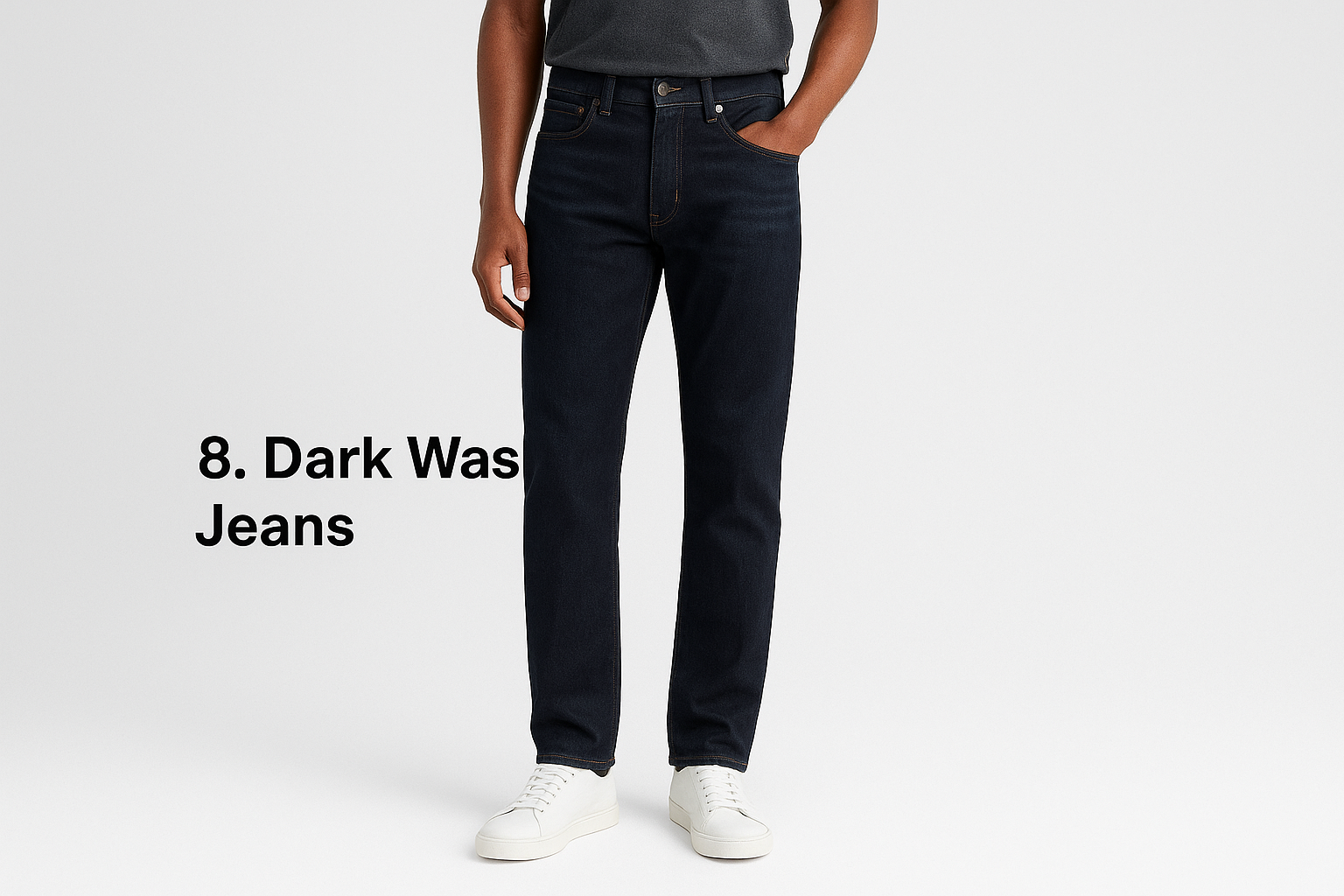
Dark wash jeans hold a place on any men's wardrobe essentials list because they handle more dress codes than any other bottom in your wardrobe. Wear them with a heavyweight tee and sneakers for a casual day, or pair them with a crewneck and loafers for something more considered. The versatility comes from the color, which reads as polished rather than worn-in.
Why dark denim covers the most situations
A dark indigo or charcoal wash mimics the visual weight of a tailored trouser from a distance, which means you can wear dark jeans in settings where lighter denim would fall short. Mid-wash and distressed jeans narrow your options. Dark denim widens them.
The darker the wash, the more situations your jeans can handle without a second thought.
Denim weight, stretch, and fade expectations
Look for denim in the 11 to 13 oz range for a fabric that holds structure without feeling stiff. A small percentage of elastane, around 1 to 2 percent, adds enough give to stay comfortable through a full day without making the fabric look soft or shapeless. Expect some fading at the thighs and knees after six months of regular wear.
Fit guide for straight, slim, and relaxed cuts
Slim and straight cuts both work well for most body types. The thigh should sit close without pulling, and the hem should land at your ankle with minimal break. Relaxed cuts work if the waist and seat fit correctly without excess fabric pooling at the back.
How many to own and wash frequency
One to two pairs handles most wardrobes well. Wash dark denim inside out in cold water and avoid the dryer to preserve the color and fabric longer. Washing every 5 to 10 wears rather than after every use extends the life of the denim significantly.
Typical price range
Expect to spend $80 to $160 for dark wash jeans with quality denim construction and a wash that holds its depth through repeated wear.
9. Chinos
Chinos fill a specific gap in your wardrobe that neither jeans nor dress trousers can cover cleanly. They sit in a middle register that reads more polished than denim but more relaxed than a suit trouser, which makes them one of the most useful bottoms on any men's wardrobe essentials list.
When chinos work better than jeans
Jeans work for most casual situations, but chinos step in when you need something slightly more considered. Business casual environments, client-facing meetings, and dinner settings where dark denim feels too casual all call for a clean pair of chinos. The smoother fabric surface and absence of visible contrast stitching give your overall look more polish without requiring a full trouser.
Chinos occupy the exact territory where jeans fall short and dress trousers feel like too much.
Fabric weight and construction details to look for
Lightweight to midweight cotton twill in the 7 to 9 oz range handles most climates and seasons well. Look for a brushed finish on the interior of the fabric, which adds softness without changing the outer appearance. Avoid chinos with heavy synthetic content since they wrinkle worse and lose their shape faster than cotton-dominant blends.
Fit and hem length rules for clean lines
The seat and thigh should fit close without pulling. Excess fabric pooling at the back pockets signals a size too large. Your hem should fall at the ankle with minimal break, no more than half an inch of fabric resting on your shoe.
How many to own and best colors
Two pairs covers most wardrobes well. Prioritize these colors for the broadest pairing range:
- Khaki
- Navy
- Olive
Typical price range
Expect to spend $70 to $130 for chinos built from quality cotton twill with consistent construction at the waistband and pockets.
10. Navy Blazer
A navy blazer delivers more outfit versatility per dollar than almost any other item on a men's wardrobe essentials list. Wear it over a tee and dark jeans for a casual look, pair it with chinos and an Oxford for a meeting, or layer it under a trench coat in winter. No single piece moves as freely across dress codes without requiring you to rebuild anything underneath it.
What makes a blazer the highest leverage upgrade
Adding a blazer to a plain outfit changes how it reads entirely. A navy blazer signals intention, which is why it lifts a simple tee-and-jeans combination without asking you to swap out any other item. The structure of the jacket does the work for you.
One navy blazer worn consistently does more work than three trend-driven jackets worn occasionally.
Fabric choices that keep it wearable year-round
Lightweight wool or a wool-linen blend covers the widest temperature range without overheating or looking too stiff. Avoid heavy tweeds and thick flannel since they restrict the blazer to cold-weather use only. Cotton blazers work in summer but crease faster and hold less structure through a full day of wear.
Fit checkpoints and tailoring priorities
The shoulder seam must land at your exact shoulder edge, not past it. The chest should close with one button without pulling across the body. Sleeve length should expose about half an inch of shirt cuff below the jacket sleeve. If the shoulders fit correctly, a tailor can adjust the chest and sleeves for under $40.
How many to own and how to style it down
One navy blazer covers nearly every situation that calls for a jacket. Style it down by pairing it with a white tee, dark jeans, and white sneakers to keep the look relaxed. Budget between $150 and $350 for quality construction in a fabric that holds its shape through regular wear.
11. Minimal White Sneakers
A clean pair of white sneakers belongs on every men's wardrobe essentials list because they pair with more outfits than any other casual shoe you own. Wear them with dark jeans and a tee, chinos and an overshirt, or even beneath a blazer for a relaxed take on smart casual. Their neutrality is the entire point.
Why one clean sneaker pair simplifies outfits
A single well-chosen white sneaker removes the daily decision of which shoe works with what. A minimal silhouette with no loud branding or thick sole reads as intentional rather than trend-driven, which means it stays relevant far longer than a statement sneaker does.
One clean sneaker that works with everything is worth more than five pairs that each work with only a few things.
Leather vs canvas and sole choices
Full-grain leather uppers hold their shape better than canvas and clean up easily with a damp cloth. Canvas options breathe more but scuff faster and absorb stains deeper into the fabric. Look for a thin, flat rubber sole rather than a chunky midsole, since the lower profile keeps the sneaker versatile enough to wear under chinos without looking out of place.
Fit, shape, and how to keep them looking good
Your sneakers should fit true to size with a low-profile toe box that doesn't crowd your foot. Wipe the uppers down after each wear with a damp cloth and use a white sole eraser to remove scuffs from the midsole before they set.
How many to own and when to replace
One pair handles most wardrobes well. Replace them when the sole wears uneven or the upper creases deeply enough to hold dirt permanently.
Typical price range
Expect to spend $80 to $160 for leather white sneakers with quality construction that holds shape through regular wear.
12. Leather Loafers
Leather loafers fill a gap that neither sneakers nor dress shoes cover cleanly. They hit a middle register that reads polished enough for business casual but relaxed enough for weekend wear, making them one of the most versatile items on any men's wardrobe essentials list.
Why loafers cover casual to dressy better than most shoes
The slip-on construction removes laces from the equation, which cleans up the silhouette considerably. A leather upper with a low profile sits closer to dress shoe territory than a sneaker does, so you can wear the same pair with chinos to a meeting and dark jeans at dinner without the footwear reading as the wrong choice.
One pair of leather loafers covers more situations than any other single shoe in your wardrobe.
Leather types, sole options, and comfort tips
Full-grain leather holds its shape the longest and develops a patina that improves the look over time. Suede works in casual settings but requires more upkeep and suffers in wet weather. For soles, a leather or crepe option gives you more flexibility underfoot than hard rubber does, which matters significantly on days you wear them for hours.
Fit rules to avoid heel slip
Your heel should sit firmly without lifting when you walk. A snug fit at the throat of the shoe holds the loafer in place through a full day of wear. If your heel still slips, size down rather than adding insoles, which alter how the shoe sits on your foot.
How many to own and sock guidelines
One pair in tan or dark brown covers the most combinations across your wardrobe. Wear no-show socks to keep the ankle line clean, or reach for a visible crew sock in cooler months for a more layered look.
Typical price range
Expect to spend $120 to $250 for full-grain leather loafers with quality construction that holds shape and conditions well through regular wear.
13. Trench or Mac Coat
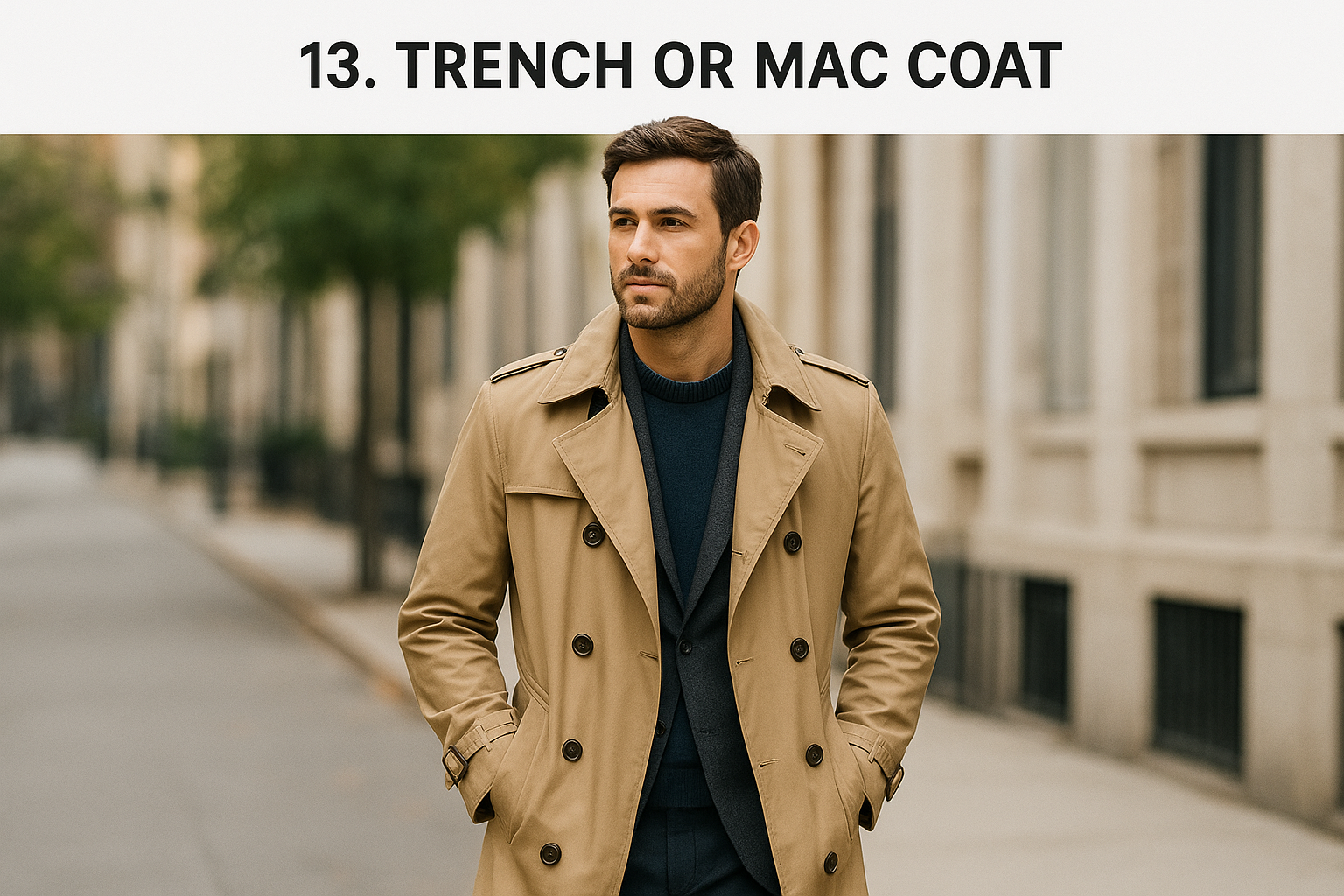
A trench or mac coat belongs on any complete men's wardrobe essentials list because it solves a specific problem no other jacket in your wardrobe handles: covering everything underneath while still looking intentional. You can layer a blazer, crewneck, and hoodie beneath it without the coat fighting your overall silhouette.
What problem it solves that other jackets do not
Most jackets top out at a certain temperature and bulk threshold. A wool overcoat adds warmth but sits too heavy for mild rainy days, while a denim jacket handles mild cool but offers zero weather protection. The trench or mac coat covers wet and cold simultaneously while keeping the silhouette clean above whatever you're wearing underneath it.
One coat that handles rain, wind, and cold across three seasons removes the need for multiple transitional jackets.
Weatherproofing and fabric considerations
A waxed cotton or tightly woven gabardine construction gives you genuine weather resistance without requiring a technical fabric that looks out of place in a city setting. Look for taped seams at the shoulders where water pushes through first on lesser coats.
Fit and length rules for layering over a blazer
Your coat should fall at or just below the knee for maximum layering clearance. The shoulders need to sit at your actual shoulder edge, and the chest should close cleanly over a blazer without pulling across the back.
How many to own and best colors
One coat handles most wardrobes well. Camel, stone, and navy pair cleanly with every other basic on this list without creating friction across combinations.
Typical price range
Expect to spend $150 to $400 for a trench or mac coat built from quality weatherproof fabric with solid construction at the seams.
14. Sunglasses
Sunglasses close out this men's wardrobe essentials list as the one accessory that earns daily use across every season. A well-chosen pair protects your eyes and sharpens your overall look without requiring any coordination with the rest of your outfit.
Why one good pair counts as an everyday essential
Most guys treat sunglasses as an afterthought, grabbing whatever is near the register. A quality pair worn consistently does more for your daily look than a drawer full of cheap options that you lose or break within months. They finish an outfit the same way a clean shoe does: quietly and without demanding attention.
One pair you reach for every day is worth more than five pairs you cycle through without conviction.
Frame styles that work with most face shapes
Stick to timeless silhouettes rather than trend-driven shapes. These three frame styles cover the widest range of face shapes:
- Wayfarer: square jaw lines, oval faces
- Round or oval lens: square and angular faces
- Aviator: most face shapes with a longer face length
Lens features worth paying for
Polarized lenses cut glare from reflective surfaces like water, glass, and pavement, which matters on long days outdoors. Look for UV400 protection, which blocks both UVA and UVB rays fully. Lens color affects how you see contrast; gray lenses keep colors true while brown lenses add contrast in low light.
How many to own and care basics
One pair handles most wardrobes well. Store them in a hard case when not in use and clean the lenses with a microfiber cloth rather than fabric or paper, which scratches coatings over time.
Typical price range
Expect to spend $80 to $200 for a pair with genuine polarized lenses and a frame built from acetate or metal that holds its shape through regular use.
Your Next Step
This men's wardrobe essentials list gives you a clear starting point, but the actual work is in choosing quality over quantity at every step. You do not need all 14 items at once. Start with the pieces you reach for most often and build from there. A heavyweight tee, dark jeans, and one good overshirt cover more situations than a full closet of forgettable basics ever will.
Every item on this list earns its spot by working across seasons, pairing with everything else, and lasting long enough to justify the cost. That is the entire logic behind building a minimal wardrobe: fewer pieces, chosen well, maintained consistently. When each item holds its standard, nothing in your rotation becomes dead weight.
If you want to start with the foundation piece, the relaxed heavyweight tee built from 300g Supima cotton, visit SÖMNAD and see what quality looks like without the logo markup.