


Most men own far more clothes than they actually wear. A handful of items get picked up on repeat while the rest just takes up space. That's the entire argument for men's capsule wardrobe essentials, a tighter rotation of pieces that all work together, so every combination in your closet is one you'd actually leave the house in. Fewer decisions, zero wasted purchases.
The challenge isn't convincing yourself to own less. It's knowing exactly which pieces earn a permanent spot. A capsule wardrobe falls apart fast if even one item fits poorly, pills after three washes, or only works with a single outfit. Every piece has to pull its weight. That means prioritizing fabric quality, versatile fit, and construction that holds up season after season, which is exactly the standard we build to at SÖMNAD with our premium everyday essentials.
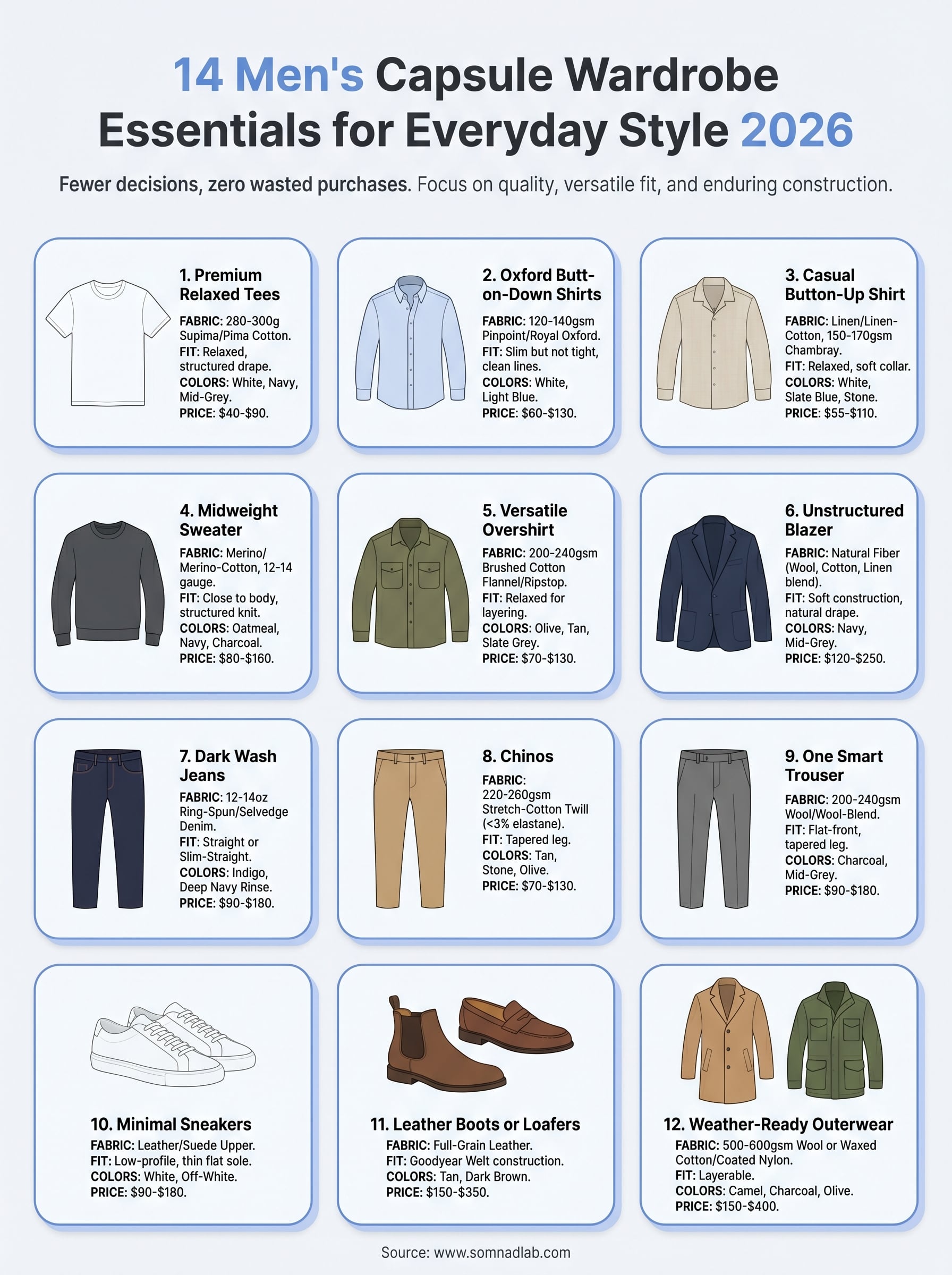
This guide breaks down 14 specific items that form a complete, functional capsule wardrobe for men in 2026. No filler picks, no aspirational pieces you'll never actually reach for. Just a practical list of staples, from tees to outerwear, with clear reasoning on what to look for in each one so you can build a wardrobe that works harder with less.
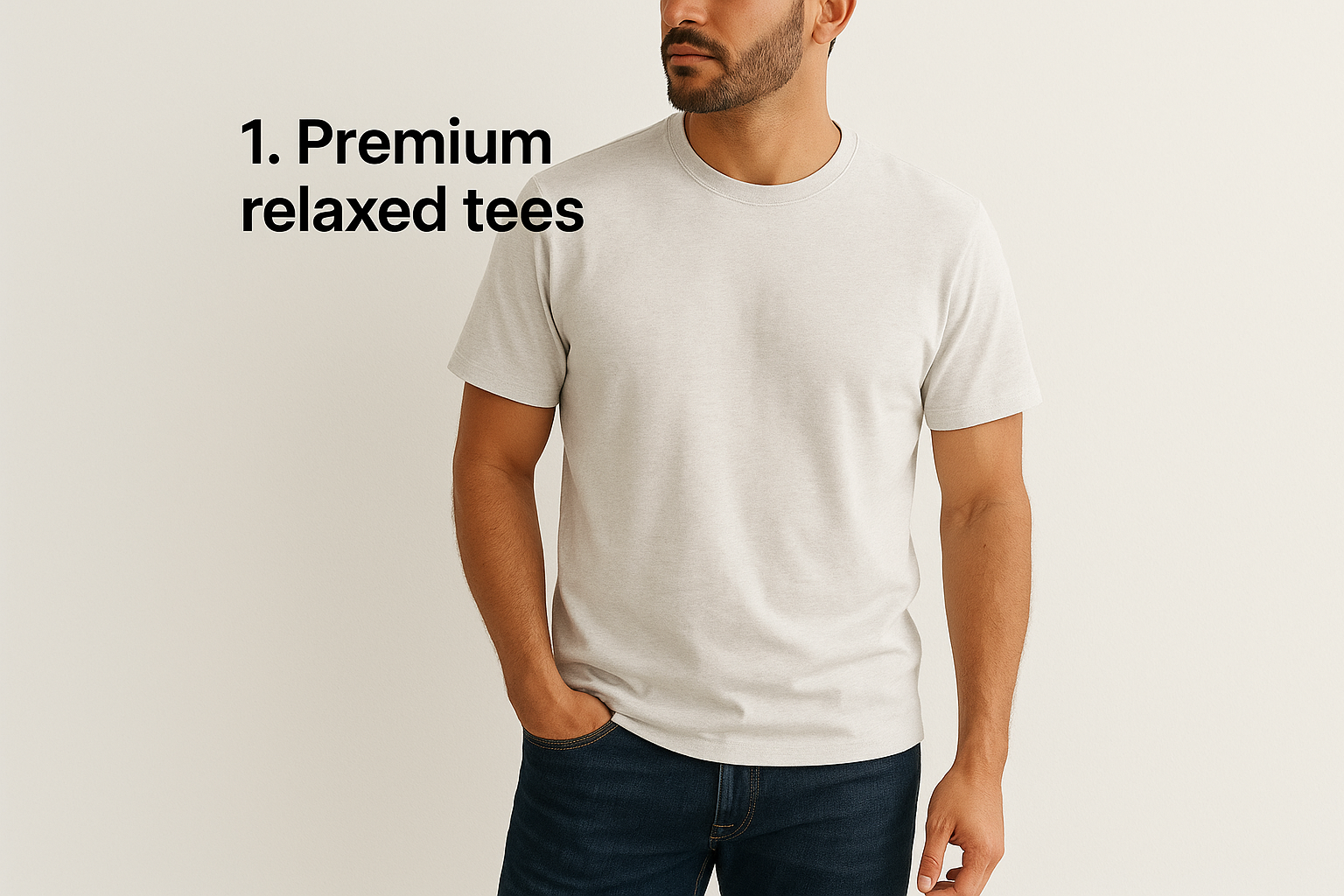
1. Premium relaxed tees
The relaxed tee sits at the foundation of any complete set of men's capsule wardrobe essentials. You reach for it more than almost anything else you own, which means a poor-quality version drags down every outfit it touches. Investing here pays off immediately because a well-made tee works under an overshirt, on its own in warmer months, or layered beneath a blazer without looking like an afterthought.
What to buy for 2026
For 2026, the standard to aim for is 280-300g Supima or Pima cotton, which gives you a shirt that holds its shape, resists pilling, and softens with each wash rather than degrading. At SÖMNAD, our relaxed tee is built from 300g Supima cotton because that weight sits in the sweet spot between structure and comfort, heavy enough to drape well but not stiff or boxy.
The fabric weight and fiber quality determine whether a tee lasts two seasons or two years.
A relaxed cut works better than a slim fit here. Slim tees restrict movement and read as dated. A relaxed silhouette tucks cleanly when you want it to and hangs well when you don't.
Fit and fabric checklist
Before you buy any tee, run through these checkpoints:
- Fabric weight: 280g minimum, Supima or Pima cotton preferred
- Shoulder seam: sits right at the edge of your shoulder, not drooping
- Body length: covers your waistband with a small amount of room to move
- Side seams: flat and clean, no puckering or twisting after washing
- Collar: holds its shape after repeated washing without curling or flaring
Colors that do the most work
Your tee collection should cover white, navy, and a mid-grey as the three workhorses. White pairs with everything and gives you the cleanest base for layering. Navy and grey read as slightly more intentional than black in most casual contexts, though black earns a slot if your wardrobe already leans that direction. Olive is a strong fourth option if you tend toward earth tones.
How to wear it in real life
Tuck a white Supima tee into dark wash jeans with leather loafers and you have a complete outfit that requires no thought but reads as deliberate. Layer a grey tee under an unstructured blazer for situations that need a bit more weight. On warmer days, wear it on its own with chinos and minimal sneakers. The relaxed cut keeps it from looking underdressed.
Typical price range
Expect to pay $40-$90 for a quality relaxed tee from a brand focused on fabric and construction. Anything under $30 almost always cuts corners on material weight or stitching. Above $100 you're typically paying for a label rather than a better shirt.
2. Oxford button-down shirts
The Oxford button-down is the most versatile top in any rotation of men's capsule wardrobe essentials. It bridges the gap between casual and polished without any effort on your part, working equally well in a business meeting and a Saturday lunch without requiring a complete outfit change underneath.
What to buy for 2026
Look for a pinpoint or royal Oxford weave in a fabric weight between 120-140gsm. That weight gives you enough structure to wear the shirt untucked without looking sloppy, while still breathing well across three seasons.
Fit and fabric checklist
The fit should be slim but not tight, with clean lines through the chest and a body length that sits just below your hips when worn untucked.
- Collar: holds its roll and stays flat without a collar stay
- Placket: lies smooth with no puckering at the buttons
- Fabric: 100% cotton Oxford weave, no polyester blends
A collar that collapses the moment you move ruins the entire shirt, so check that the button-down tabs actually hold their position before you buy.
Colors that do the most work
White and light blue are your two non-negotiable Oxford shirts. Both work under a blazer, over a tee, or on their own with dark jeans. A pale pink or chambray blue earns a slot once you have those two bases covered.
How to wear it in real life
Wear a white Oxford tucked into grey chinos with leather loafers for a clean, office-ready look. Leave it untucked over dark wash jeans with minimal sneakers for a more relaxed weekend outfit that still reads as intentional.
Typical price range
A well-constructed Oxford shirt runs $60-$130. Brands that focus on fabric quality and clean construction rather than visible branding consistently land in this range.
3. Casual button-up shirt
The casual button-up is a different animal from the Oxford. Where the Oxford lives in structured, semi-formal territory, a casual button-up in linen, chambray, or brushed cotton rounds out your men's capsule wardrobe essentials with a relaxed layer that still looks put together. This is the shirt you reach for on weekends, travel days, or any situation where a crisp Oxford would feel overdressed.
What to buy for 2026
For 2026, linen and linen-cotton blends are the strongest choices for a casual button-up. They breathe well, develop texture with wear, and look intentionally relaxed rather than carelessly underdressed. A mid-weight chambray in the 150-170gsm range works as a year-round alternative that holds its shape better across cooler months.
Fit and fabric checklist
A relaxed fit through the chest and shoulders is what you want, with a hem length long enough to wear untucked cleanly.
- Fabric: linen, linen-cotton blend, or chambray cotton
- Buttons: corozo or horn-style buttons hold up better than plastic
- Collar: soft, unfused, and drapes naturally without stiffening
- Stitching: flat seams with no loose threads after the first wash
A stiff, fused collar on a casual shirt undermines the whole point of owning one.
Colors that do the most work
White, slate blue, and stone cover the widest ground for a casual button-up. These three neutrals pair with every bottom in your wardrobe and layer cleanly under heavier pieces when the weather shifts.
How to wear it in real life
Wear a linen button-up open over a white tee with chinos and loafers for a summer weekend look that requires no effort. Button it up and tuck it loosely into dark jeans with minimal sneakers when the weather cools.
Typical price range
A well-made casual button-up runs $55-$110. Natural fiber construction accounts for most of the cost, and it's worth every dollar compared to synthetic alternatives that trap heat and pill after a handful of washes.
4. Midweight sweater
A midweight sweater fills the gap between a tee and a jacket, and few pieces in your wardrobe earn that slot as consistently. A well-chosen sweater works across three seasons and layers cleanly under outerwear or over a shirt without adding bulk that reads as overdressed.
What to buy for 2026
For 2026, focus on merino wool or a merino-cotton blend in a 12-14 gauge knit. That weight gives you warmth without bulk, and merino regulates temperature well enough to wear in cool offices and cold evenings alike. A crewneck or a simple mock neck are the two silhouettes that integrate most cleanly with the rest of your men's capsule wardrobe essentials.
Merino at 12-14 gauge hits the right balance: structured enough to wear alone, slim enough to layer under a coat without binding.
Fit and fabric checklist
The fit should sit close through the body without restricting movement, with sleeves that end right at your wrist bone. Run through these points before committing:
- Fabric: 100% merino or merino-cotton blend, 12-14 gauge
- Construction: fully fashioned knit holds its shape after repeated washing
- Ribbing: firm at cuffs and hem with no stretching after the first wear
Colors that do the most work
Oatmeal, navy, and charcoal cover the most ground. These three neutrals layer cleanly over any shirt in your wardrobe and pair with every bottom you own without any visual conflict.
How to wear it in real life
Layer a charcoal merino crewneck over a white Oxford and under an unstructured blazer for a clean three-layer combination that works in most settings. Wear it on its own over dark jeans with leather boots when the temperature drops.
Typical price range
Quality merino sweaters run $80-$160. Below that range, you typically get lower-grade wool that pills quickly and loses its shape within a season.
5. Versatile overshirt
The overshirt is one of the more underrated pieces in a complete set of men's capsule wardrobe essentials. It functions as a light outer layer, a casual jacket replacement, and an open shirt depending on the temperature, which gives it a range most single-purpose garments can't match.
What to buy for 2026
For 2026, focus on brushed cotton flannel or a midweight ripstop in the 200-240gsm range. Both fabrics give you enough structure to wear the overshirt as a standalone layer without looking underdressed, and they hold up to frequent wear without pilling or fading. Avoid quilted or technical versions unless your wardrobe skews heavily utilitarian.
The overshirt earns its place specifically because it bridges the gap between a shirt and a jacket without fully committing to either.
Fit and fabric checklist
The fit should be relaxed through the shoulders and chest, with enough room to layer over a tee or lightweight sweater without pulling at the seams. Check these points before buying:
- Body: drops slightly past the hip, clean hem with no flare
- Pockets: chest pockets that lie flat when empty
- Fabric: brushed cotton, flannel, or ripstop with reinforced stitching at stress points
Colors that do the most work
Olive, tan, and slate grey cover the widest range. These three work with every bottom in your wardrobe and layer cleanly without competing with what's underneath.
How to wear it in real life
Wear a tan overshirt open over a white tee with dark jeans and minimal sneakers for an easy weekend outfit. Button it up and wear it as a standalone top over chinos when the weather sits in that in-between range where a coat feels like too much.
Typical price range
Quality overshirts run $70-$130. Brushed cotton and flannel construction accounts for most of the cost, and a well-made version lasts multiple seasons without losing its shape.
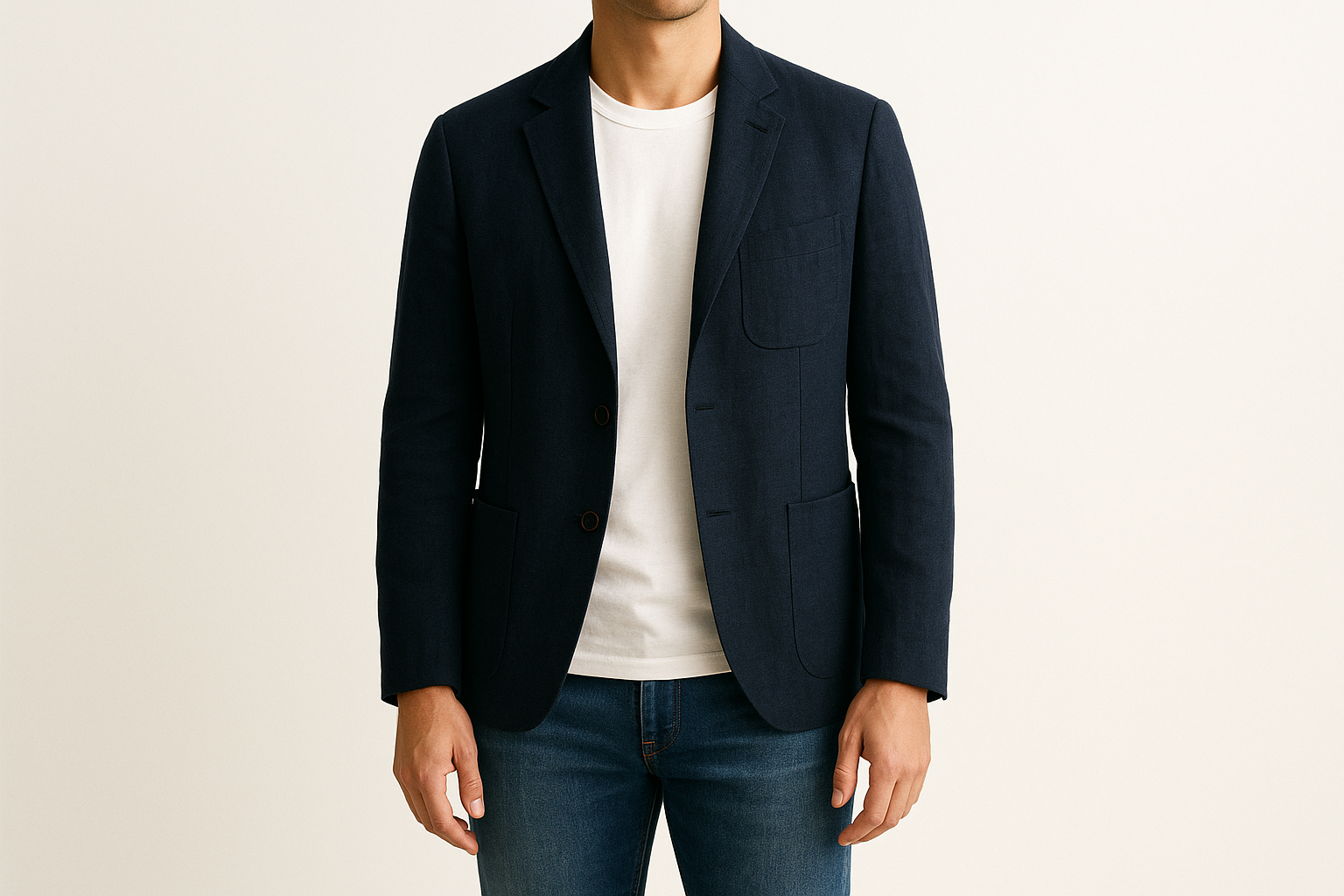
6. Unstructured blazer
The unstructured blazer is the single piece in your men's capsule wardrobe essentials that does the most to shift an outfit upward without requiring a complete wardrobe change. No other layer lifts a simple tee-and-jeans combination into something that reads as intentional as quickly as this one does.
What to buy for 2026
For 2026, prioritize a soft-construction blazer in a natural fiber such as wool, cotton, or a linen blend. The absence of heavy interfacing and padding is what makes this piece versatile. It drapes naturally over whatever you layer underneath, which means it works with a relaxed tee just as well as it does with a button-down shirt.
An unstructured blazer fails if the shoulders are cut too wide or the chest is too boxy, so fit matters more here than with almost any other piece.
Fit and fabric checklist
The fit should follow your shoulders without any padding or overhang. A clean chest and a body length that hits just below your hips keeps the silhouette proportional across different outfit combinations.
- Shoulder seam: sits exactly at the edge of your shoulder with no droop
- Chest: skims the body without pulling when you move
- Fabric: wool, cotton, or linen with minimal lining
Colors that do the most work
Navy and mid-grey are your two foundation choices. Both pair with every bottom in your wardrobe and work across casual and semi-formal occasions without adjustment. A tan or camel tone earns a slot once those two are covered.
How to wear it in real life
Throw a navy blazer over a white tee with dark jeans and leather loafers for a clean combination that works in most settings. Layer it over a merino crewneck during cooler months for added warmth without extra bulk.
Typical price range
Quality unstructured blazers run $120-$250. Natural fiber construction and soft tailoring account for most of that cost, and a well-made version holds its shape across multiple seasons without losing its drape.
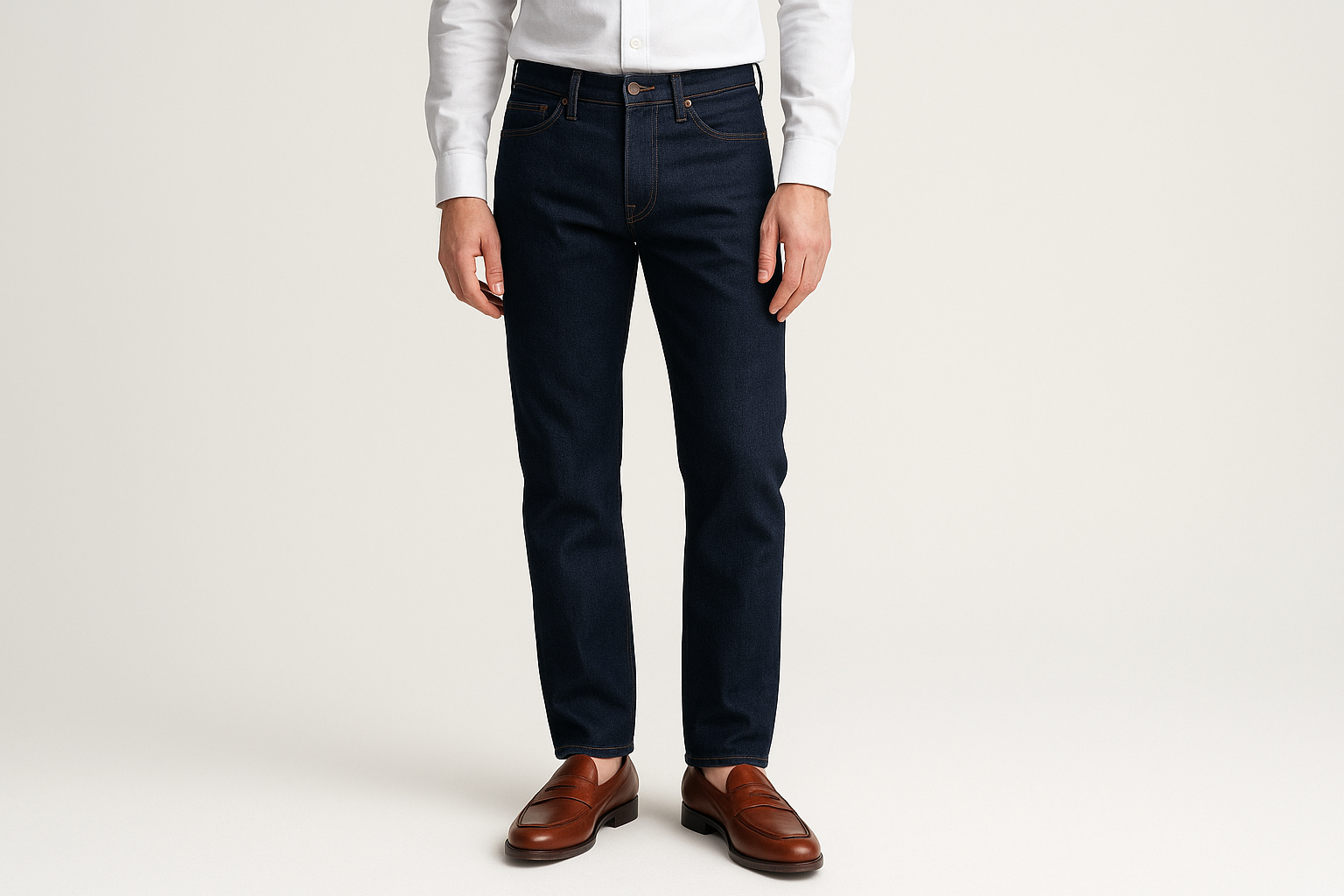
7. Dark wash jeans
Dark wash jeans are the most adaptable bottom in any set of men's capsule wardrobe essentials. They carry a rare ability to shift between casual and semi-formal contexts depending on what you pair them with, which makes them one of the hardest-working pieces you'll own.
What to buy for 2026
For 2026, look for a straight or slim-straight cut in a medium to heavyweight ring-spun or selvedge denim, ideally 12-14oz. That weight gives you enough structure to hold its shape through repeated wear without going stiff or losing its drape after the first few washes.
Fit and fabric checklist
The fit should sit cleanly at your natural waist with a straight leg that lands right at the top of your shoe. Check these points before buying:
- Rise: mid to high, sits at the natural waist without pulling at the hips
- Thigh: enough room to move without excess fabric bunching at the knee
- Fabric: 98-100% cotton denim, 12oz minimum weight
- Hem: clean finish with no fraying straight out of the bag
Colors that do the most work
Indigo and deep navy rinse are your two core options. Both read as clean neutrals that pair with every top in your wardrobe without creating visual conflict.
A true dark wash without heavy distressing keeps your jeans appropriate in casual and semi-formal settings alike.
How to wear it in real life
Pair dark wash jeans with a white Oxford shirt and leather loafers for a combination that covers most social and semi-professional situations without overthinking it. Swap the loafers for minimal sneakers and reach for a relaxed tee when the occasion calls for something more casual.
Typical price range
Quality dark wash jeans run $90-$180. Selvedge construction and ring-spun cotton account for most of that cost, and a well-made pair holds its color and shape across years of regular wear.
8. Chinos
Chinos occupy the space between jeans and dress trousers in your men's capsule wardrobe essentials, and that middle ground is exactly what makes them worth owning. They pair with everything from a relaxed tee to a button-down shirt, which means a single pair of chinos covers more outfit combinations than almost any other bottom in your rotation.
What to buy for 2026
For 2026, look for chinos in a stretch-cotton twill in the 220-260gsm range. That weight gives you enough structure to hold a clean line through the leg while allowing enough movement to wear them comfortably across a full day.
Avoid anything with more than 3% elastane, since higher stretch content causes chinos to bag at the knees after a few wears.
Fit and fabric checklist
The fit should sit at your natural waist with a tapered leg that ends cleanly at the top of your shoe without excess fabric bunching at the ankle. Check these points before you buy:
- Rise: mid to high, sits cleanly without pulling
- Fabric: 97-100% cotton twill with minimal stretch
- Leg: tapered from thigh to ankle with no flare
Colors that do the most work
Tan, stone, and olive are your three foundation colors. Each pairs with every top in your wardrobe and transitions naturally between casual and semi-formal settings without adjustment.
How to wear it in real life
Pair olive chinos with a white Oxford shirt and leather loafers for a clean, low-effort combination that works in most settings. Swap the shirt for a relaxed tee and minimal sneakers when the occasion calls for something more casual.
Typical price range
Quality chinos run $70-$130. Cotton twill construction and a clean cut account for most of that cost, and a well-made pair holds its shape across repeated wears without sagging or losing its line.
9. One smart trouser
A single pair of well-cut smart trousers completes your set of men's capsule wardrobe essentials by giving you a bottom that jeans and chinos simply cannot cover. When a situation calls for genuine polish, you need a trouser that reads as intentional without requiring a full suit around it.
What to buy for 2026
For 2026, focus on a flat-front trouser in a wool or wool-blend fabric in the 200-240gsm range. That weight holds a clean line through the leg without feeling heavy or formal, and wool's natural drape gives you a silhouette that looks sharp whether you're standing or seated. Avoid pleated cuts unless your build specifically benefits from extra room through the thigh.
Fit and fabric checklist
The fit should sit at your natural waist with a tapered leg that breaks cleanly at the top of your shoe. Check these points before buying:
- Rise: mid to high, sits flat at the waist without pulling
- Fabric: wool or wool-blend, 200gsm minimum
- Leg: tapered from hip to ankle, no excess fabric at the knee
- Lining: half-lined through the seat for durability without stiffness
Colors that do the most work
Charcoal and mid-grey are your two core options. Both pair with nearly every top in your wardrobe and read as polished without requiring a specific occasion to justify wearing them.
A charcoal trouser with a white shirt and leather loafers covers more situations than most men expect.
How to wear it in real life
Pair a charcoal trouser with a merino crewneck and leather boots for a clean combination that works in smart-casual settings. Swap in a button-down Oxford for anything that requires slightly more formality.
Typical price range
Quality smart trousers run $90-$180. Wool construction and a tailored cut account for most of that cost, and a well-made pair holds its shape across repeated wears without bagging at the knees.
10. Minimal sneakers
A clean pair of minimal sneakers fills the footwear gap that leather shoes can't cover in your everyday men's capsule wardrobe essentials. They anchor casual outfits without competing with the rest of what you're wearing, which makes them one of the most-reached-for pieces in a tight rotation.
What to buy for 2026
For 2026, focus on a low-profile silhouette with a thin, flat sole and no heavy branding or technical detailing. Court-style and runner-inspired silhouettes with clean toecaps work well because they stay versatile across multiple outfit types without dating quickly.
Fit and fabric checklist
The construction determines how long a sneaker holds up before creasing and splitting. Run through these checkpoints before committing:
- Upper: leather or suede holds its shape longer than canvas under daily wear
- Sole: thin rubber with minimal height, flat profile preferred
- Lining: breathable and smooth with no rough edges at the heel
Colors that do the most work
White and off-white cover the most ground and pair cleanly with every bottom in your wardrobe. A grey or light tan option earns a slot once you have a white pair, giving you a slightly warmer neutral for earth-toned outfits.
White leather sneakers with a flat sole are one of the few footwear choices that genuinely work from casual to smart-casual without adjustment.
How to wear it in real life
Pair white minimal sneakers with dark wash jeans and a relaxed tee for a clean, effortless combination. They also work well under chinos with a casual linen button-up when you want a polished look without reaching for leather shoes.
Typical price range
Quality minimal sneakers run $90-$180. Leather construction and clean finishing account for most of that cost, and a well-made pair holds its shape across years of regular wear.
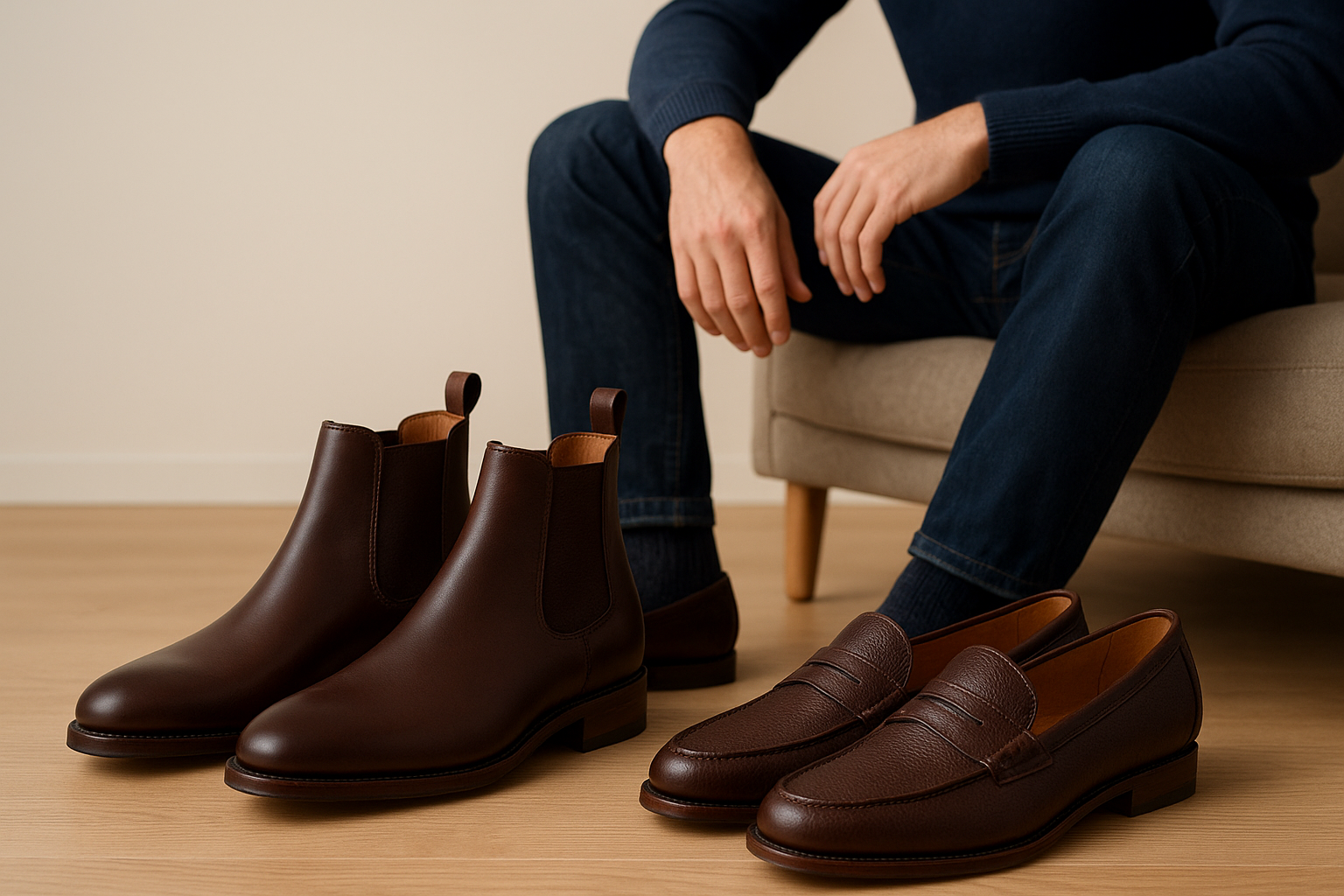
11. Leather boots or loafers
Leather footwear covers situations that sneakers simply cannot. In any complete set of men's capsule wardrobe essentials, a quality pair of boots or loafers serves as your go-to for occasions that need a more polished base without committing to formal dress shoes.
What to buy for 2026
For 2026, choose between a Chelsea boot in smooth leather or a penny loafer in a full-grain or pebble-grain leather. Both silhouettes stay versatile across smart-casual and semi-formal contexts without dating quickly. A leather sole with a rubber insert extends durability while keeping the profile clean.
Fit and fabric checklist
The construction quality determines how long the shoe holds up before the upper creases unevenly or the sole separates. Check these points before buying:
- Leather: full-grain holds its shape and develops a patina; avoid bonded or split-grain leather
- Sole: leather or leather-rubber combination for durability and flexibility
- Last: a slightly rounded or almond toe keeps the silhouette versatile across outfit types
- Stitching: Goodyear welt construction allows resoling, which extends the life of the shoe significantly
A Goodyear-welted boot resoled once or twice will outlast three pairs of cheaper construction shoes combined.
Colors that do the most work
Tan and dark brown cover the widest range and pair cleanly with every bottom in your wardrobe. Black earns a slot if your rotation skews darker and you need a cleaner formal option.
How to wear it in real life
Wear tan Chelsea boots with dark wash jeans and a merino crewneck for a complete outfit that reads as effortless and considered. Loafers pair cleanly with chinos and a casual button-up when you want polish without rigidity.
Typical price range
Quality leather boots or loafers run $150-$350. Full-grain leather and Goodyear welt construction account for most of the cost, and a well-made pair lasts years with basic maintenance.
12. Weather-ready outerwear
A quality outer layer ties together your complete set of men's capsule wardrobe essentials by protecting everything underneath while still looking intentional. Outerwear gets more visible wear than almost any other piece you own, which makes construction quality and material a priority rather than an afterthought.
What to buy for 2026
For 2026, focus on a wool overcoat or a water-resistant field jacket depending on your climate. A midweight wool overcoat in the 500-600gsm range covers most urban environments across fall and winter, while a waxed cotton or coated nylon field jacket fills the gap in wetter climates where wool alone falls short.
Fit and fabric checklist
The fit should allow a blazer or midweight sweater underneath without pulling at the shoulders or chest. Check these points before buying:
- Fabric: 500gsm+ wool for overcoats, waxed cotton or coated nylon for field jackets
- Shoulder seam: sits right at the edge of your shoulder with no droop
- Length: mid-thigh for an overcoat, hip-length for a field jacket
A coat that pulls across the shoulders the moment you layer underneath it is the wrong size, regardless of how it looks on the hanger.
Colors that do the most work
Camel, charcoal, and olive cover the widest range for outerwear. Each one pairs with every bottom in your wardrobe without creating visual conflict or limiting your outfit options.
How to wear it in real life
Wear a camel overcoat over a navy merino sweater and dark jeans for a clean winter combination that requires no further thought. A field jacket works equally well layered over a relaxed tee with chinos on cooler days when a heavy coat feels like too much.
Typical price range
Quality outerwear runs $150-$400. Wool and waxed cotton construction account for most of that cost, and a well-made piece holds its shape and weather resistance across multiple seasons without needing replacement.
Next steps
Building your men's capsule wardrobe essentials comes down to one principle: buy fewer things, but make each one count. Every item on this list was chosen because it pulls weight across multiple outfits and holds up through repeated wear, not because it photographs well or carries a recognizable logo. Start with the pieces you currently reach for most and replace them with better versions before adding anything new.
Resist the urge to buy everything at once. Prioritize fabric quality and fit above all else, because a well-made tee you wear three times a week contributes more to your wardrobe than five mediocre pieces you rotate reluctantly. Work through the list deliberately, and your closet will shrink while your options actually expand.
If you want a foundation built on 300g Supima cotton and honest construction, start with premium everyday essentials from SÖMNAD and build outward from there.