


Your closet doesn't need more clothes. It needs the right ones. If you're staring at a full rack and still feel like you have nothing to wear, the problem isn't quantity, it's that you're missing the foundation. Men's basic clothing essentials are the pieces that quietly do the heavy lifting: they layer well, fit right, and never look dated a year later.
This list answers a simple question: what should actually be in a man's wardrobe if he wants to look put-together without overthinking it every morning. We're not talking about trends or seasonal drops. We're talking about twelve core pieces that work in rotation, mix with almost anything you own, and hold up wash after wash instead of stretching out or fading within a month.
Below, you'll find the exact items to prioritize, from the tee you wear under everything to the layers that carry you from a Tuesday commute to a Saturday dinner. We'll cover fabric and fit details worth checking before you buy, so you're not guessing which
1. The premium crewneck t-shirt
Every list of men's basic clothing essentials starts here for a reason. A good crewneck tee is the piece you reach for more than anything else you own, whether it's layered under a flannel or worn solo with jeans on a Saturday afternoon. Get this one wrong and everything you build on top of it looks a little off.
What to look for
Weight is the first thing to check, and most guys skip it entirely. A cheap tee runs 150 to 180 grams per square meter and starts pilling within a few washes. A premium tee, like the 300g Supima cotton version SÖMNAD builds its whole lineup around, holds its shape and density even after a year of regular wear. Look for a ribbed crewneck collar that snaps back after you pull it over your head, double-stitched hems, and a fit that sits close to the body without clinging. Supima and pima cotton fibers are longer than standard cotton, which means less fuzzing and a smoother hand-feel over time.
The heavier and longer the cotton fiber, the longer the shirt actually lasts.
How to style it
A well-made crewneck works as both a foundation and a standalone piece. Consider these combinations:
- Under an oxford or flannel, left unbuttoned for a layered look
- With chinos and white sneakers for a clean weekend outfit
- Tucked into dark jeans with a leather belt for something slightly dressed up
- Alone with shorts in warmer months, since a heavier fabric drapes better than thin cotton
Stick to neutral colors first, white, black, heather grey, navy, before adding anything bolder. Neutrals pair with everything else on this list.
What to expect to pay
Pricing tracks almost directly with fabric weight and finishing quality. Budget tees fall apart faster, which means you're replacing them two or three times a year.
| Tier | Price Range | Fabric Weight | Expected Lifespan |
|---|---|---|---|
| Budget | $10-$20 | 150-180 gsm | 3-6 months |
| Mid-range | $25-$45 | 180-220 gsm | 6-12 months |
| Premium | $45-$70 | 240-300+ gsm | 2-3+ years |
Spending more upfront on a heavyweight cotton tee almost always works out cheaper per wear once you factor in how often you're replacing the budget alternative.
2. Well-fitted dark wash jeans
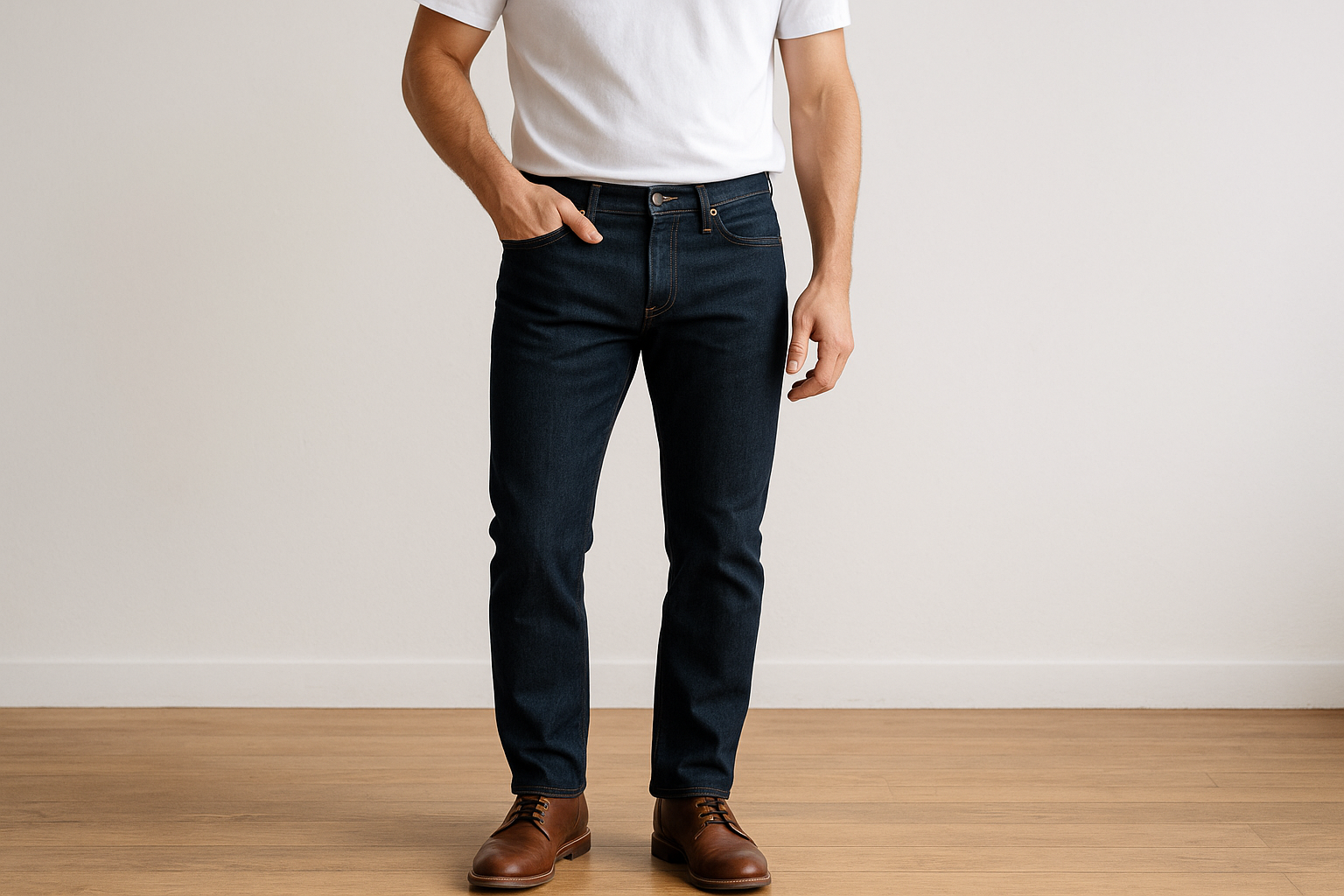
Jeans sit at the center of almost every casual outfit you own, and dark wash denim is the one pair that pulls double duty between weekend errands and a dinner reservation. Get the fit and wash right, and a single good pair replaces three or four mediocre ones cluttering your drawer.
What to look for
Weight and stretch percentage matter more than the label on the back pocket. Look for 14-16 oz denim blended with a small percentage of elastane, usually under 2%, for structure that doesn't sag by afternoon. A straight or slim-straight cut through the leg avoids both the skinny-jean look and the baggy silhouette that dates fast. Check the rise too; a mid-rise sits at your natural waist and tucks cleaner under shirts than a low-rise cut ever will.
A dark wash and a clean fit do more for your outfit than any logo stitched on the back pocket.
How to style it
Dark wash reads dressier than light wash, which is exactly why it works across more occasions than any other pair you'll buy. Rotate it through these combinations depending on the day:
- Rolled once at the ankle with boots for cooler weather
- Tucked oxford shirt with a leather belt for office-casual days
- White sneakers and a crewneck tee for weekend errands
- Under a navy blazer for dinner or travel days
What to expect to pay
Quality denim holds its shape through hundreds of washes, while cheap denim stretches out at the knees within weeks and never bounces back. Expect to pay more for heavyweight or selvedge denim, since it's milled in smaller runs and woven denser than mass-market fabric.
| Tier | Price Range | Denim Weight | What You Get |
|---|---|---|---|
| Budget | $30-$50 | 10-12 oz | Fades fast, knees stretch within months |
| Mid-range | $70-$120 | 12-14 oz | Holds shape for a year or two |
| Premium | $130-$250+ | 14-16 oz | Selvedge construction, years of wear |
Once you find a fit and wash that works, buy a second pair immediately. Denim this good rarely stays in stock.
3. Versatile chinos
Chinos fill the gap between jeans and dress pants, and that's exactly why they belong on any list of men's basic clothing essentials. They read as more polished than denim but stay comfortable enough for a full day of errands, meetings, or travel. A single pair in the right color earns its spot in heavier rotation than almost anything else you own.
What to look for
Fabric weight and weave matter as much here as they do with denim. Look for a cotton twill blend around 7-9 oz, heavy enough to hold a crease without feeling stiff. A slim-straight or tapered leg keeps the silhouette current without going skinny, and a flat front sits cleaner than pleats under a shirt. Check the waistband construction too. A curved waistband with belt loops sewn flat, rather than bunched, means the pants sit smoother against a tucked shirt.
The right pair of chinos should look dressed up with a blazer and dressed down with a tee, without you changing anything but the shirt.
How to style it
Chinos flex harder than most guys give them credit for. Try these pairings depending on the setting:
- Khaki or stone chinos with a white tee and sneakers for weekend wear
- Navy chinos under an oxford shirt for the office
- Olive chinos with boots and a sweater in cooler months
- Tucked with a belt and loafers for anything semi-formal
What to expect to pay
Quality chinos run from $40 at the low end to $150 for tailored, heavier twill versions. Budget pairs tend to sag at the knee and fade unevenly within a few months, while mid-weight cotton holds color and shape through a full season of regular wash cycles. Spend toward the middle of that range if you want one pair that lasts, rather than three that don't.
4. A classic oxford shirt
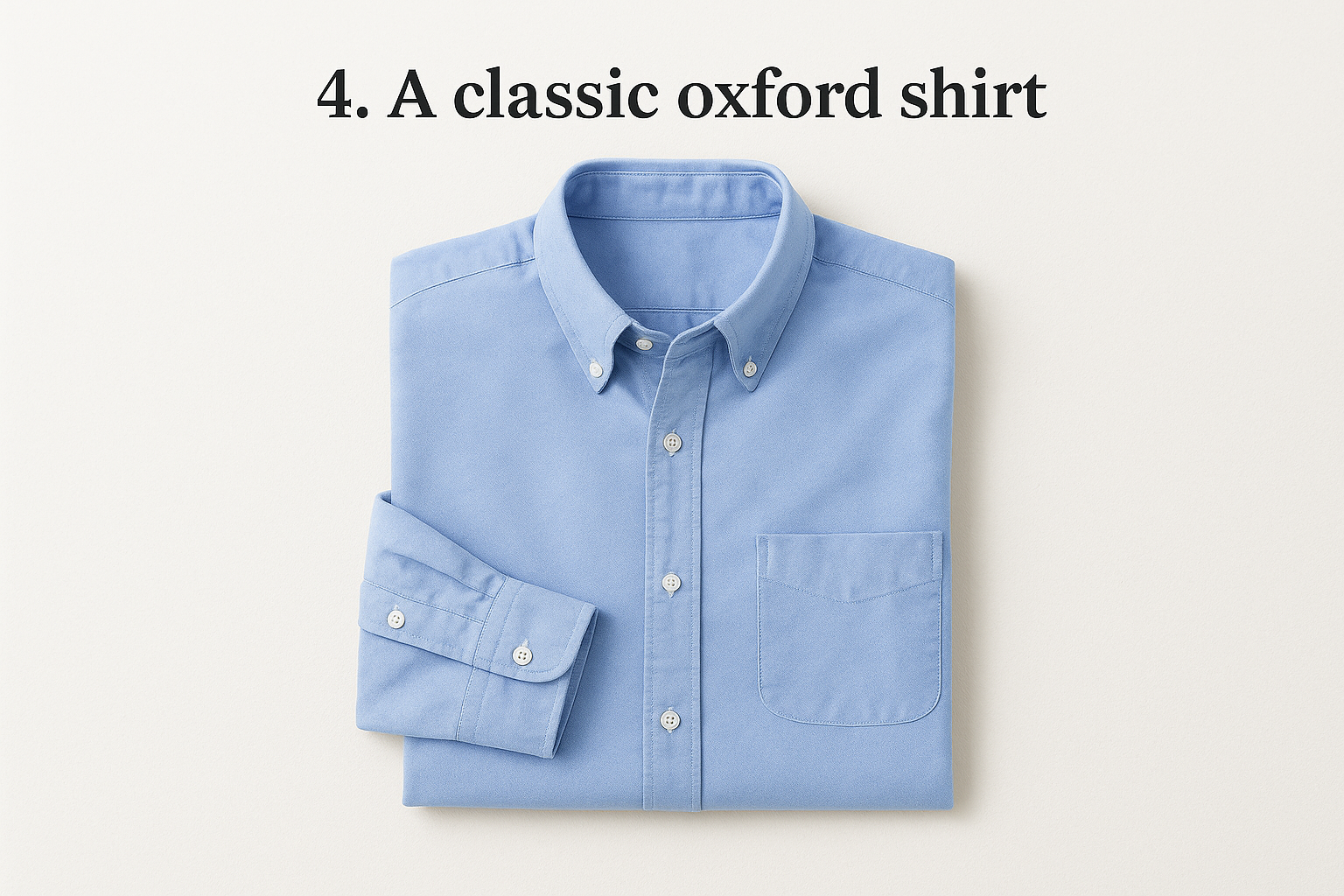
An oxford shirt bridges the gap between a t-shirt and a suit, which makes it one of the hardest-working pieces on this list of men's basic clothing essentials. It reads sharp enough for a client meeting but relaxed enough to wear untucked with jeans on a Sunday. Once you own a well-cut one in white or light blue, you'll reach for it more than any other button-up in your closet.
What to look for
Fabric weight decides how the shirt drapes and how long it holds up. Look for a 100% cotton oxford weave in the 4-5 oz range, heavy enough to resist wrinkling but not so thick it feels stiff. A button-down collar keeps its shape without a tie, and a single chest pocket adds a touch of casual detail without cluttering the front. Check the stitching at the yoke and cuffs too; reinforced seams are the difference between a shirt that survives five years of washing and one that frays at eighteen months.
A great oxford shirt looks equally at home tucked into chinos or thrown over a tee, which is why one good version replaces three mediocre ones.
How to style it
Layer or wear it solo depending on the occasion:
- Buttoned and tucked with chinos for work
- Left open over a crewneck tee for a casual layered look
- Rolled sleeves and untucked with jeans on weekends
- Under a navy sweater for cooler months
What to expect to pay
Quality oxford shirts run from $50 at the low end to $150 for heavier, tailored versions. Budget shirts thin out and yellow at the collar within a year, while a denser cotton weave holds its color and structure through hundreds of wash cycles. Spend closer to $80-$100 if you want one shirt that lasts rather than three that don't.
5. A cotton crewneck sweater
A cotton crewneck sweater fills the gap between a t-shirt and a jacket, and it's the piece most guys underbuy. It works in that awkward 55-65°F range where a tee feels thin and a jacket feels like overkill. Once you own one in a neutral color, it becomes the default layer for half the year, from office days to weekend dinners.
What to look for
Weight and knit density decide whether a sweater holds its shape or sags by lunchtime. Look for midweight cotton, around 300-400 gsm, knit tight enough that you can't see through it when held up to light. Ribbed cuffs and a ribbed hem keep the shape from stretching out after a few wears, and a slightly cropped body length pairs better with everything else in your closet than an oversized fit. Avoid anything with visible lint or loose weave right out of the box; that's a sign the yarn won't hold up past a few washes.
A cotton crewneck sweater should feel substantial in your hands, not thin like a t-shirt with sleeves added on.
How to style it
A good crewneck sweater layers over almost everything on this list:
- Over an oxford shirt with the collar peeking out, for office days
- With chinos and boots for a clean fall outfit
- Layered over a crewneck tee on cooler weekend mornings
- Under a lightweight jacket for extra warmth without bulk
Stick to navy, grey, or oatmeal first. Those three colors work with every pair of jeans and chinos you already own.
What to expect to pay
Quality cotton sweaters run from $40 at the low end to $130 for heavier, denser knits. Budget versions pill fast and lose shape at the elbows within a season, while a tighter, heavier knit holds its form through repeated wear and washing. Spend closer to $70-$90 if you want a sweater that still looks new after a full winter of rotation.
6. An everyday hoodie
A hoodie earns its place among men's basic clothing essentials because it works when nothing else does, on lazy Sundays, gym runs, or travel days when you want comfort without looking sloppy. Skip the graphic logos and oversized fits that dominate fast fashion racks. The version worth owning is plain, well-cut, and heavy enough to function as outerwear on its own.
What to look for
Fabric weight separates a hoodie that holds its shape from one that sags by its second wear. Look for midweight fleece, around 350-450 gsm, with a brushed interior that stays soft instead of matting down. A ribbed hem and cuffs keep the shape tight, and a properly lined hood, one that doesn't collapse flat when down, signals better construction. Flat-lock seams at the shoulders reduce bulk under a jacket, which matters if you plan to layer it.
A hoodie is basic wear only if it's built like a real garment, not a printed sweatshirt with a drawstring.
How to style it
A good hoodie moves between casual settings without much thought:
- Over a crewneck tee for errands or travel days
- Under a lightweight jacket for extra warmth on cold mornings
- With joggers or sweatpants for a matched loungewear look
- With jeans and sneakers for a low-effort weekend outfit
Stick to solid colors, charcoal, navy, or heather grey, so it doesn't compete with whatever you're layering it under.
What to expect to pay
Quality hoodies run from $35 at the low end to $120 for heavyweight, garment-dyed versions. Budget hoodies thin out at the elbows and lose their shape after a handful of washes, while a denser fleece blend keeps its structure and color for years. Spend closer to $60-$80 if you want one hoodie that replaces the three you'd otherwise cycle through in a single winter.
7. A tailored navy blazer
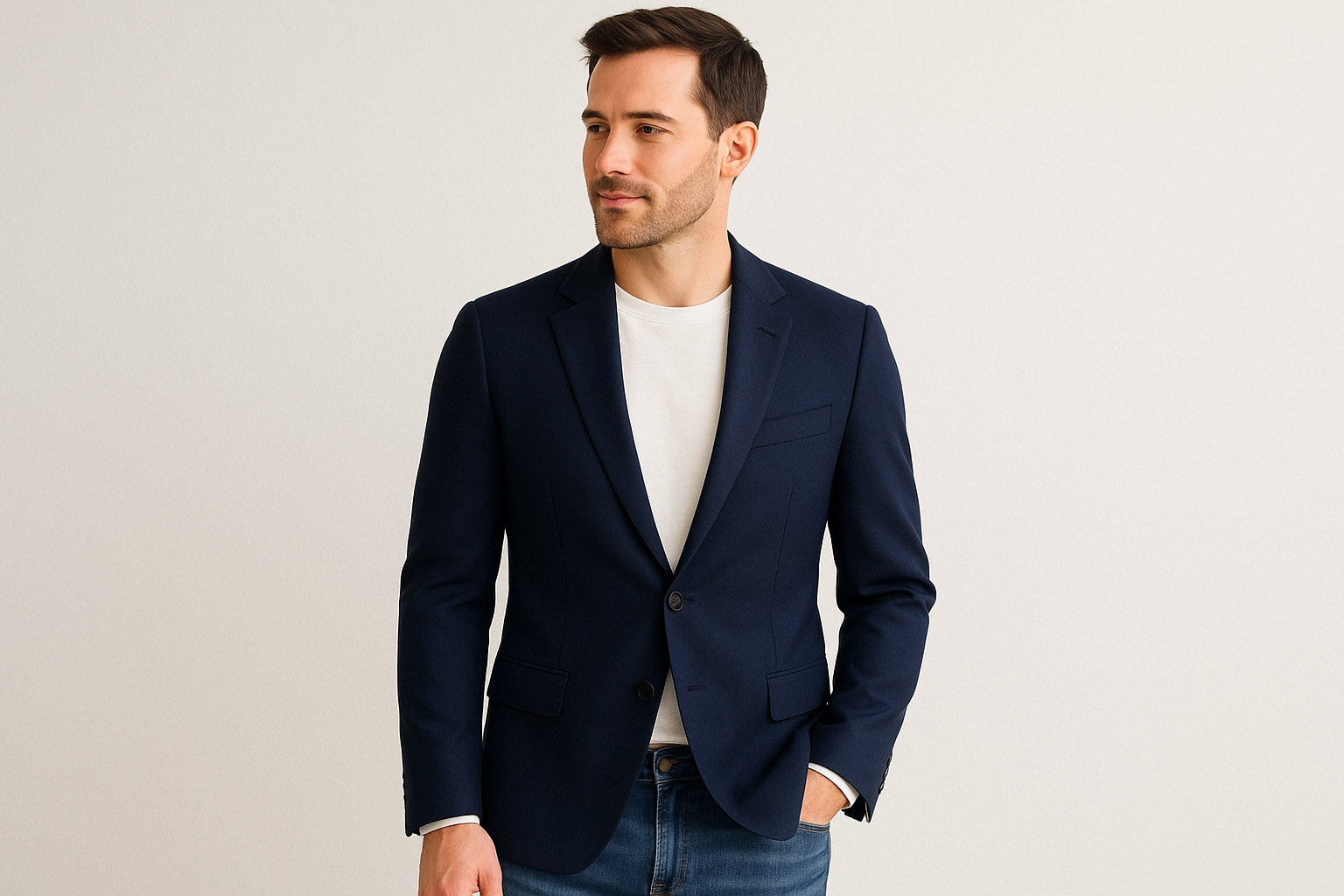
A navy blazer is the one piece on this list that instantly raises the ceiling of your wardrobe. It turns a plain tee and jeans into something you could wear to a dinner reservation, and it layers over almost everything else in this lineup. Among men's basic clothing essentials, it's the closest thing to a shortcut for looking put-together with zero extra effort.
What to look for
Fit matters more here than with any other item on this list. Shoulders should sit flat with no divots or bunching, since that's the one thing a tailor can't easily fix. Look for a half-canvassed or fully canvassed construction, which molds to your body over time instead of collapsing flat like fused, budget versions. A wool or wool-blend fabric in the 9-11 oz range holds structure through wear and travel without wrinkling in a bag. Sleeve length should stop right at your wrist bone, showing a quarter inch of shirt cuff.
A blazer that fits through the shoulders will always look better than a more expensive one that doesn't.
How to style it
A navy blazer bridges casual and dressed-up outfits without much adjustment:
- Over a crewneck tee and jeans for dinner or a date
- With chinos and a button-down for work that isn't quite suit-and-tie
- Paired with dark denim and boots for travel days
- Rolled sleeves, no tie for a relaxed evening look
Keep the rest of the outfit simple. A navy blazer already does the visual work, so let plain pieces support it instead of competing with it.
What to expect to pay
Quality blazers run from $150 at the low end to $500 or more for fully canvassed wool versions. Budget blazers use fused interlining that bubbles and separates after dry cleaning, while a canvassed construction ages into the shape of your body instead of falling apart. Spend closer to $250-$350 if you want one blazer that lasts a decade instead of two seasons.
8. Minimalist white sneakers
A clean pair of white sneakers replaces half the shoes in your closet, since it moves from errands to dinner without looking out of place either way. Among men's basic clothing essentials, they're the one item that instantly modernizes an outfit built from older, dressier pieces like chinos or a blazer. Skip anything with chunky soles, mesh panels, or a visible logo splashed across the side.
What to look for
Material decides how the shoe ages, and full-grain leather beats canvas or synthetic every time for structure and longevity. Look for a minimal silhouette with a low profile, clean stitching, and a sole that's flat rather than exaggerated. A cupsole construction, where the sole wraps slightly up the sides, holds up better than glued-on rubber that separates within a year. Check the color of the sole too; a plain white or off-white sole yellows less visibly than bright white over time.
A sneaker with no logo and clean lines will outlast every trend cycle that comes after it.
How to style it
White sneakers work with nearly everything else on this list:
- With jeans and a crewneck tee for a default weekend look
- Under chinos for smart-casual days at the office
- With a blazer and dark denim for a modern dressed-down outfit
- Paired with no-show socks to keep the low-profile look intact
Keep them clean. A scuffed or yellowed pair undoes the whole minimalist effect faster than any other item in your rotation.
What to expect to pay
Quality white sneakers run from $60 at the low end to $250 for premium leather versions. Budget pairs crease deeply and yellow within months, while full-grain leather ages into a softer patina instead of falling apart. Spend closer to $100-$150 if you want a pair that still looks sharp after a full year of regular wear.
9. Classic leather boots
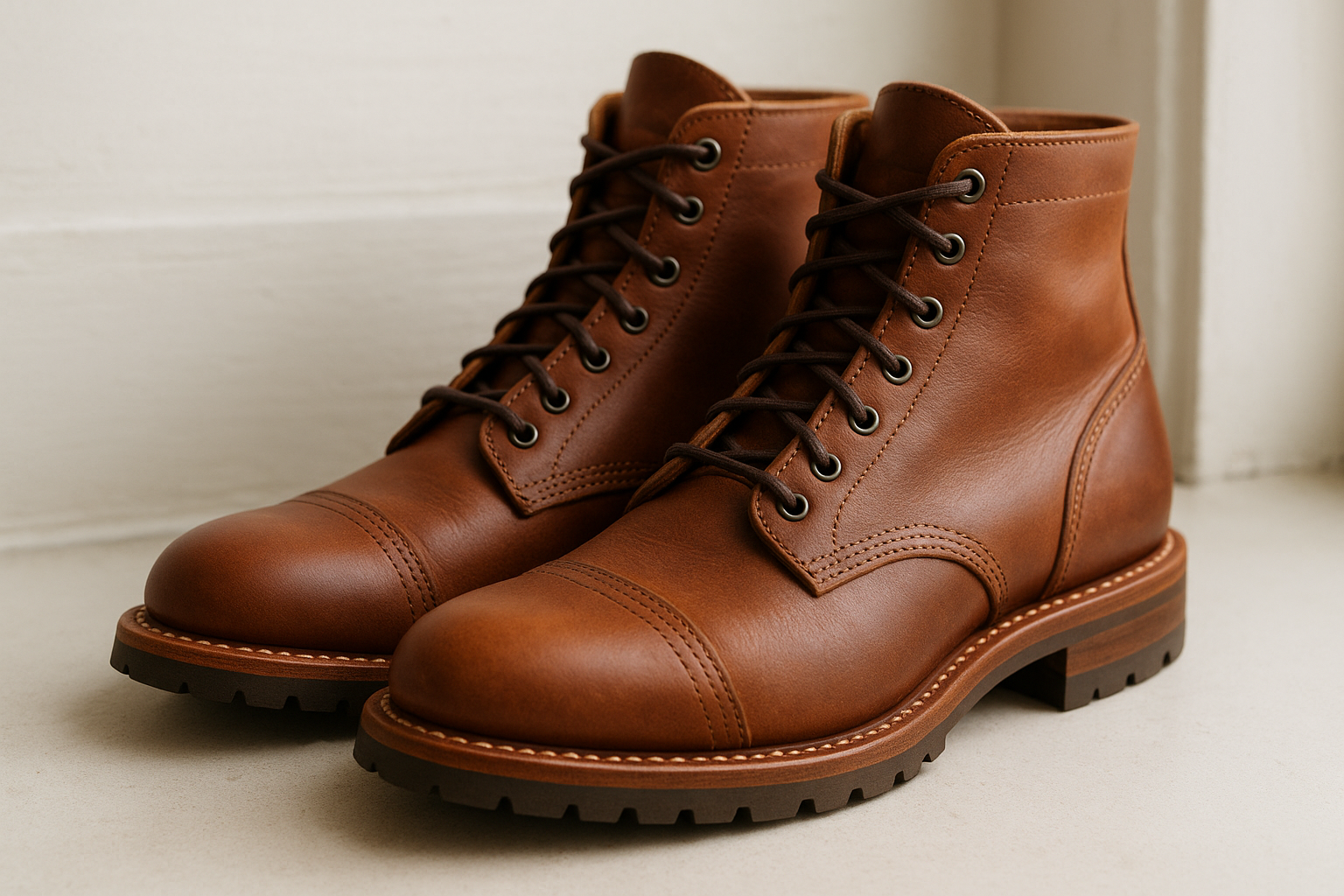
Leather boots carry you through the months when sneakers feel too light and dress shoes feel too formal. A single pair in brown or dark tan leather covers fall, winter, and any occasion that calls for something sturdier than canvas. Among men's basic clothing essentials, boots are the one item that ages better the longer you own them, provided you bought a pair worth breaking in.
What to look for
Construction matters more than brand name here. Look for a Goodyear welt construction, which lets you resole the boot instead of tossing it once the sole wears through. Full-grain leather uppers resist scuffing better than corrected-grain or coated leather, and they develop a patina instead of cracking. Check the toe shape too: a rounded plain toe or cap toe reads more versatile than a pointed or square silhouette. A leather or leather-blend sole holds up outdoors, while a lug sole adds grip for wet weather.
A welted boot you can resole will always beat a cheaper pair you have to replace every winter.
How to style it
Boots pair naturally with heavier fabrics and cooler-weather layers:
- With dark jeans rolled once at the ankle for a clean fall look
- Under chinos for smart-casual office days
- With a cotton crewneck sweater and a jacket for cold commutes
- Paired with wool socks for extra warmth in winter
What to expect to pay
Quality leather boots run from $150 at the low end to $450 for premium, hand-welted versions. Budget boots use glued soles that separate within a season and leather that cracks instead of aging, while a Goodyear-welted pair can be resoled two or three times over a decade. Spend closer to $250-$350 if you want boots that improve with wear instead of falling apart.
10. Quality underwear
Nobody sees this item, but you feel it all day, which is exactly why it belongs on any honest list of men's basic clothing essentials. Cheap underwear bunches, sags, and loses elasticity within a few months, and that discomfort shows up in how you carry yourself even if nobody else notices. A drawer full of the right pair costs less over a year than you'd think, once you stop replacing worn-out multipacks every season.
What to look for
Fabric composition decides comfort more than cut or brand. Look for cotton blended with a small percentage of elastane, usually 5-8%, which keeps shape through hundreds of washes without going baggy at the leg openings. A wider, flat waistband beats a thin elastic band that rolls or digs in by afternoon. Boxer briefs in a mid-length cut work best under slim jeans and chinos alike, avoiding the bunching that longer trunk styles cause under fitted pants.
Underwear you forget you're wearing is the only kind worth buying twice.
How to style it
This one's less about styling and more about consistency underneath everything else on this list:
- Boxer briefs under slim or straight jeans for a clean line
- Trunk-style under looser chinos or joggers for extra coverage
- Moisture-wicking blends for travel days or workouts under everyday clothes
- Dark or neutral colors to avoid show-through under lighter fabrics
What to expect to pay
Quality underwear runs from $15 for a single pair at the low end to $35 for premium modal or Supima cotton blends. Budget multipacks feel soft at first but lose elasticity within a few months, while a denser cotton-elastane weave holds its shape through a full year of regular washing. Spend closer to $20-$25 per pair if you want a rotation that doesn't need replacing every few months, and buy at least seven so laundry day never becomes a wardrobe emergency.
11. No-show and crew socks
Socks rarely make anyone's mental list of men's basic clothing essentials, but the wrong pair undercuts an otherwise sharp outfit in seconds. A no-show sock that slides off your heel mid-walk, or a thin crew sock that bunches inside a boot, tells everyone your wardrobe stops at the ankle. You need both styles in rotation, matched to the shoe you're wearing that day.
What to look for
Fiber content decides how long a sock holds its shape before it stretches out and slides down your foot. Look for combed cotton blended with nylon and a touch of spandex, which resists sagging far better than pure cotton alone. A reinforced heel and toe extend the life of the sock past the thin spots that show up first on cheap pairs. For no-show styles, a silicone grip strip along the ankle keeps the sock anchored inside a sneaker instead of migrating toward your toes by lunchtime.
A sock that stays put all day matters more than any color or pattern printed on it.
How to style it
Match the sock height to the shoe, not the other way around:
- No-show socks with white sneakers or loafers, kept invisible above the shoe line
- Crew socks with boots, especially in colder months for extra warmth
- Ribbed crew socks with chinos and dress shoes for a slightly polished look
- Wool-blend crew socks under boots for wet or freezing weather
Stick to black, navy, or grey for crew socks you'll wear under pants, since color rarely shows anyway.
What to expect to pay
Quality socks run from $3 a pair at the low end to $18 for premium merino or combed cotton blends. Budget multipacks thin out at the heel within a few months, while a denser cotton-nylon weave holds elasticity through a full year of regular washing. Buy a dozen pairs at once so laundry day never leaves you without a matching set.
12. A lightweight jacket
A lightweight jacket closes out this list because it's the piece that makes everything else work across more months of the year. Among men's basic clothing essentials, it fills the gap between a sweater and a heavy winter coat, covering that 45-65°F stretch where you need a shell without the bulk. Once you own one in a neutral color, it becomes the layer you grab by default whether you're heading to work or out for the evening.
What to look for
Fabric and closure decide how versatile the jacket actually is. Look for a cotton or cotton-nylon blend, water-resistant but breathable, in a bomber, field, or overshirt silhouette that layers cleanly over a tee or sweater. Snap or zip closures hold up better than buttons under repeated wear, and ribbed cuffs keep drafts out without adding bulk. Check the lining too; an unlined or lightly lined jacket works across more seasons than a heavily insulated one that only makes sense in winter.
A jacket that layers over everything else beats one that only matches half your closet.
How to style it
A good lightweight jacket moves between casual and slightly dressed-up settings without effort:
- Over a crewneck tee and jeans for cool evenings
- Layered over a hoodie or sweater on colder days
- With chinos and boots for a smart-casual fall outfit
- Thrown over a button-down for travel days
Stick to olive, navy, or black. Those three colors layer over every other item on this list without clashing.
What to expect to pay
Quality lightweight jackets run from $60 at the low end to $250 for premium cotton-nylon versions with reinforced stitching. Budget jackets lose water resistance and shape within a season, while a denser weave with taped seams holds up through years of regular wear. Spend closer to $120-$160 if you want one jacket that replaces the three seasonal ones you'd otherwise buy.
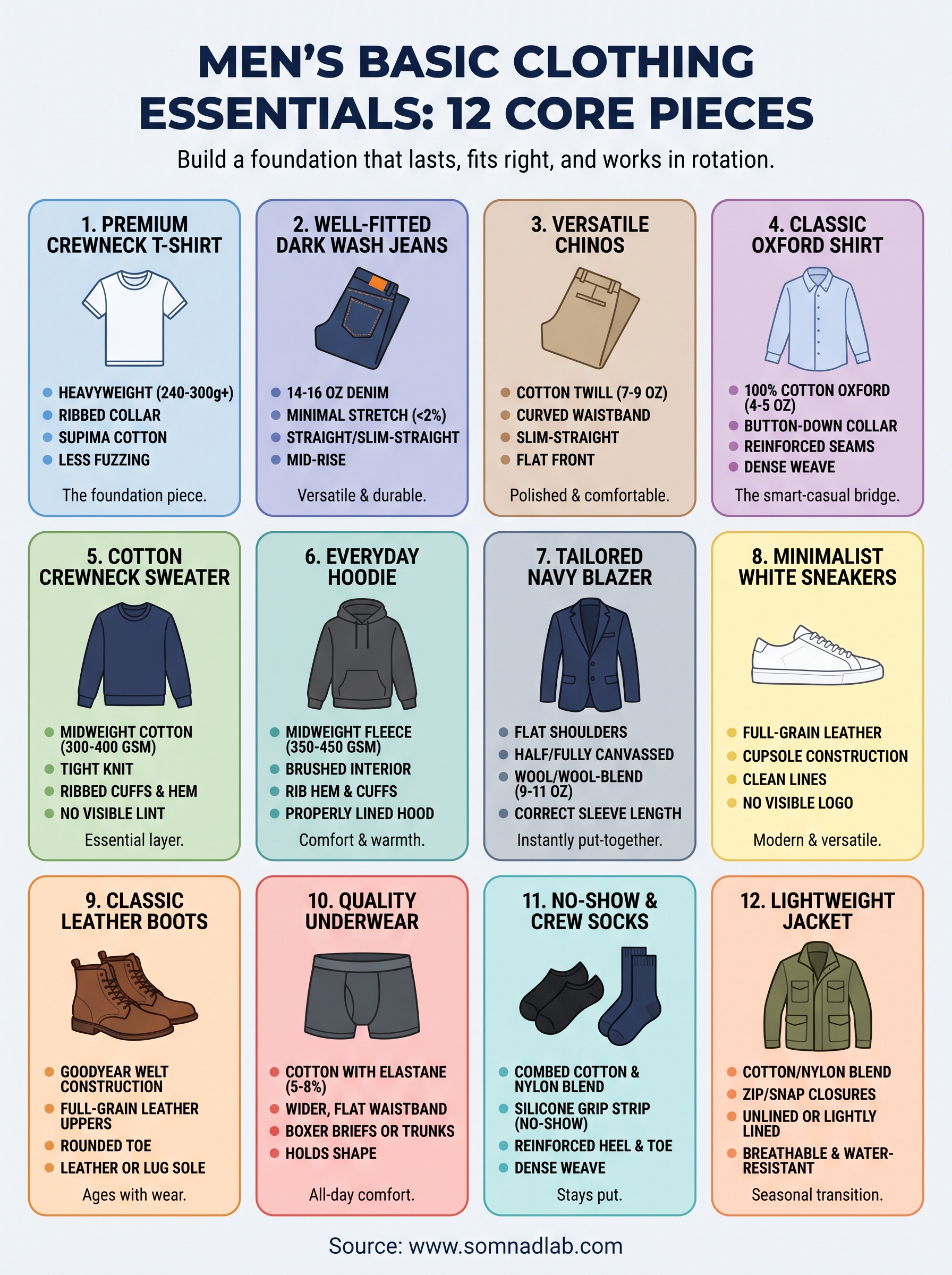
Putting your essentials wardrobe together
You don't need all twelve pieces at once. Start with the tee, the jeans, and one pair of shoes, then build outward as budget allows. Buying fewer, better pieces beats restocking a closet full of items that fade or stretch out within a season. Every item on this list earns its place because it pairs with at least three others, which is exactly how a small wardrobe ends up looking bigger than it is.
Once you've got the basics covered, the returns compound. Fewer laundry emergencies, fewer mornings staring at a full closet with nothing to wear, and fewer replacement purchases eating into money you'd rather spend elsewhere. That's the real payoff of investing in quality basics instead of chasing trends.
If you're starting with the tee, shop SÖMNAD's Supima cotton essentials and build from a foundation that's actually built to last.