


You keep seeing camp collar shirt men show up in your feed, on racks at every store, and you still can't pin down what actually makes one different from a regular button-up. It's not just a shirt with a flat collar. There's a specific construction, a history, and a handful of styling rules that separate a sharp camp collar from a shirt that just happens to skip the collar stand.
This piece answers the question directly: what a camp collar is, why it lays open instead of buttoning to the neck, and how to wear it so it looks intentional rather than like pajamas. You'll get the defining features to check before you buy, plus real ways to style it for work, weekends, and layering into cooler months.
We built this guide the way we build everything at SÖMNAD, with an eye on fabric, fit, and construction over trends. If you care about quality basics that hold their shape and skip the logo, you'll want the same standard applied to your camp collar shirt. Keep reading for a clear breakdown, not a sales pitch.
Why the camp collar shirt is a warm-weather essential
Heat is the whole reason this collar exists. A camp collar shirt ditches the stiff collar stand and interfacing you find on a dress shirt, so there's no extra layer of fabric choking your neck when it's 90 degrees out. Instead, the collar lies flat against your chest, opens into a notch at the top button (or has no top button at all), and lets air move across your skin instead of trapping it. That's the entire engineering behind the style, and it's why you'll also hear it called a revere collar in the UK or a Cuban collar shirt when it shows up with short sleeves and a camp shirt cut.
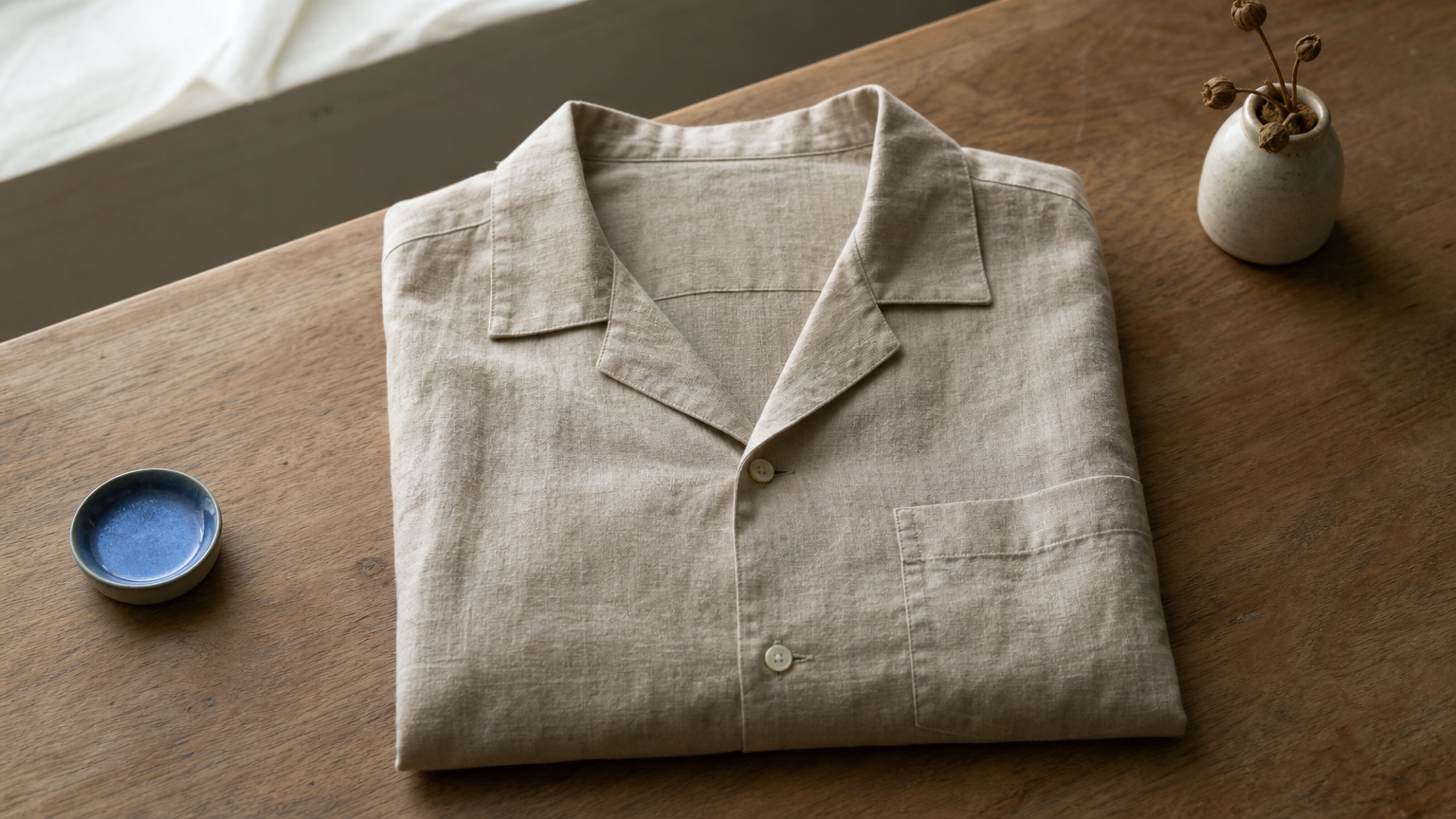
The camp collar isn't a fashion statement first, it's a ventilation system that happens to look good.
The construction that actually matters
Opening the shirt up means the construction has to do more work with less fabric, and that's where cheap versions fall apart. A well-made camp collar uses a two-piece collar, sewn flat with no fusible stiffener, so it drapes instead of curling upward after a few washes. Look for these details before you buy, the same way you'd check fabric and stitching for quality on anything else:
- A collar that lies flat without a hidden button tab pulling it closed
- Reinforced stitching at the notch point, since that's the first spot to fray
- A boxier, slightly dropped shoulder for airflow, not a slim dress-shirt cut
- A single chest pocket, which is traditional and functional for sunglasses or a phone
- Fabric with actual weight to it, since paper-thin cotton wrinkles into a mess by noon
Skip anything with a fused collar. Fusible interfacing bubbles and separates from the fabric after repeated washing, and once that happens, the shirt is done no matter how good the fit was on day one.
A short history that explains the design
Origin stories point to warm-climate regions, from Cuba to the Philippines to coastal Europe, where dress codes needed loosening for people working and socializing in heat and humidity. The guayabera and similar loose, breathable shirts spread through military and civilian wardrobes in the early-to-mid 1900s, and the camp collar version followed the same logic: cut the collar stand, drop the tie requirement, and let the shirt breathe. American GIs and vacationers picked it up and brought it home, which is why you now see it marketed as a resort shirt, a camp shirt, or simply a summer button-up depending on which decade's catalog you're flipping through.
Why it beats the alternatives when it's hot
Comparing it to your other warm-weather options makes the case pretty clearly.
| Shirt style | Airflow at the neck | Structure needed | Best heat range |
|---|---|---|---|
| Dress shirt | Low (collar stand traps heat) | High (interfacing, stays) | Cool to mild |
| Polo | Medium (ribbed collar, tighter fit) | Medium | Mild to warm |
| Camp collar | High (open notch, flat lay) | Low | Warm to hot |
Polos still have their place, but the ribbed collar and closer-fitting body hold more heat than an open camp collar does. Quality here isn't about a trend cycle either. It's the same standard we apply across every piece we make, prioritizing fabric that performs in the heat over one that just photographs well. That's the whole idea behind building a wardrobe on essentials instead of chasing whatever's on the rack this season, and it's a big part of why we think a shirt like our relaxed tee belongs in the same rotation.
How to style a camp collar shirt for any occasion
Versatility is the actual selling point once you get past the ventilation angle. A camp collar shirt moves from a beach day to a casual office without changing anything except what you put under it and how you button it. The trick is treating it like a layering piece instead of a standalone outfit, because the open collar and boxy cut give you room to add a tee underneath, roll the sleeves, or throw a jacket over the top without the whole look falling apart.
Style a camp collar shirt by controlling what's underneath it, not by overthinking the shirt itself.
Layer it instead of wearing it alone
Buttoning a camp collar shirt straight over bare skin works fine at the pool, but it reads as underdressed almost everywhere else. Wearing it as a layering piece over a plain crewneck or the best tee to layer underneath solves that instantly and gives the outfit more texture. Try these combinations depending on where you're headed:
- Open, unbuttoned, over a solid tee and jeans for a casual weekend look
- Buttoned to the second-to-last button, tucked in, with chinos for a smart-casual office day
- Layered under an unstructured blazer for dinner, collar out over the lapel
- Half-tucked with shorts and sneakers for a warm-weather errand run
Tucked, untucked, and everything between
Whether you tuck it depends entirely on the shirt's length and your build, not on some fixed rule. A shirt cut short and boxy, which is traditional for this style, usually looks better untucked or half-tucked, since a full tuck can bunch the extra fabric at the waist. Taller guys with longer torsos can get away with a full tuck more easily, but if you're not sure, half-tuck the front and leave the back alone. It's the fastest way to look put together without looking like you tried too hard.
Dressing it up without losing the point
Elevating the look for a slightly dressier occasion doesn't mean abandoning the camp collar's relaxed identity. Swap sneakers for leather loafers, add a simple watch, and choose a solid or subtly textured fabric instead of a loud print, and the shirt holds up fine at a dinner reservation or a casual wedding. Pushing it further into formal territory, though, defeats the purpose. This shirt was built to loosen things up, so keep the rest of the outfit relaxed enough to match the collar's whole reason for existing.
Choosing the right fit, fabric, and collar shape
Fit determines whether a camp collar shirt looks deliberate or sloppy, and it's the detail most guys skip when they're shopping online. You want a boxy fit through the body, room across the shoulders, and a length that hits right at or just below the belt line, the same relaxed versus regular fit question you face with a tee. Anything slimmer than that fights the whole point of the collar, and anything longer starts to look like a shirt you borrowed. Check the shoulder seam first: it should sit at the edge of your shoulder, not halfway down your arm, and not pulling in toward your neck either.

Get the shoulder seam and the hem length right, and everything else about the fit falls into place.
Fabric weight changes everything
Weight is the single biggest factor separating a shirt that holds up from one that wrinkles into a mess by lunch. Lightweight cotton or linen blends for breathable summer style breathe well but crease hard, which is fine for a beach vacation and less fine for an office day. A heavier cotton, something in the 150 to 200 gsm range, drapes better, resists wrinkling, and still breathes plenty for warm weather, since gsm changes thickness and drape more than anything else on the label. If you've worn our relaxed tee and noticed how a heavier weight actually holds its shape wash after wash instead of going limp, that's the same principle at play here. Cheap camp collar shirts skimp on weight to save on fabric cost, and you feel the difference the first time you iron one.
Collar shape and where it sits
Spread matters more than most buyers realize before they own one. A wider spread lays flatter and shows more chest, which suits an unbuttoned, casual look. A narrower spread sits closer to the neck and works better if you plan to button it higher or layer a tee underneath. Neither is objectively better, but you should match the spread to how you actually plan to wear the shirt, not to whatever's trending.
A quick fit checklist
Running through this list before you buy saves you a return:
- Shoulder seam sits at the edge of your shoulder bone
- Hem lands at or just below your belt line, no lower
- Chest and waist have room to layer a tee without pulling
- Sleeve length hits mid-bicep for short sleeves, wrist bone for long
- Collar lies flat with no curling at the points after a wash
Getting these five details right matters more than the print or color you pick, since a camp collar shirt that fits well looks good in almost any fabric.
Camp collar shirts vs. guayaberas and other lookalikes
Confusion between these styles is understandable, since they all share the same open, flat collar and warm-weather logic. A guayabera is a specific type of camp collar shirt, not a separate category, distinguished by vertical pleats or tucks running down the front and back, plus two or four patch pockets instead of the single chest pocket you'd find on a standard camp shirt. Guayaberas also tend to run longer, cut to be worn untucked as a finished look rather than a casual layer, which traces back to their formal use in Latin American and Caribbean dress codes.
Distinguishing the rest of the lookalikes gets easier once you know what to check first: the collar construction, the pocket count, and the intended hem length.
| Style | Collar | Pockets | Typical hem | Dress level |
|---|---|---|---|---|
| Camp collar shirt | Flat, notched, no stand | One chest pocket | Hits at belt line | Casual to smart-casual |
| Guayabera | Flat, notched | Two or four patch pockets | Longer, worn untucked | Casual to semi-formal |
| Bowling shirt | Flat, often with contrast trim | None or one | Boxy, hip length | Casual |
| Hawaiian/resort shirt | Flat, loose | One or none | Boxy, hip length | Very casual |
If a shirt has pleats down the front and multiple patch pockets, you're looking at a guayabera, not just a plain camp collar shirt.
Cuban collar and revere collar are the same shirt
Naming gets murkier depending on where you're shopping. "Cuban collar" and "revere collar" both describe the exact same construction as a camp collar, just marketed under different regional names, usually the UK and parts of Europe. There's no fabric or fit difference hiding behind the terminology, so don't let a retailer's product title talk you into thinking you're buying something more specialized than what you already understand.
Bowling shirts and resort shirts borrow the collar, not the intent
Sharing the collar shape doesn't mean sharing the purpose. A bowling shirt usually adds contrast piping, a name patch, or a loud print, built for a specific retro look rather than everyday wear. A resort or Hawaiian shirt leans even further into the print, often in rayon or a slippery synthetic that doesn't hold up the way a heavier cotton does. If you want the ventilation and the collar without the costume element, a plain, well-constructed camp collar shirt, worn the way you'd wear our relaxed tee, gets you there without the extra noise.
Outfit ideas for work, weekends, and vacation
Context changes everything about how a camp collar shirt reads, and the same piece can look sloppy or sharp depending on what surrounds it. Building a few go-to combinations for the three settings you'll actually wear it in saves you from guessing every morning, and it also proves the shirt's versatility instead of just claiming it. Below are combinations that hold up whether you're at a desk, running weekend errands, or packing for a trip.
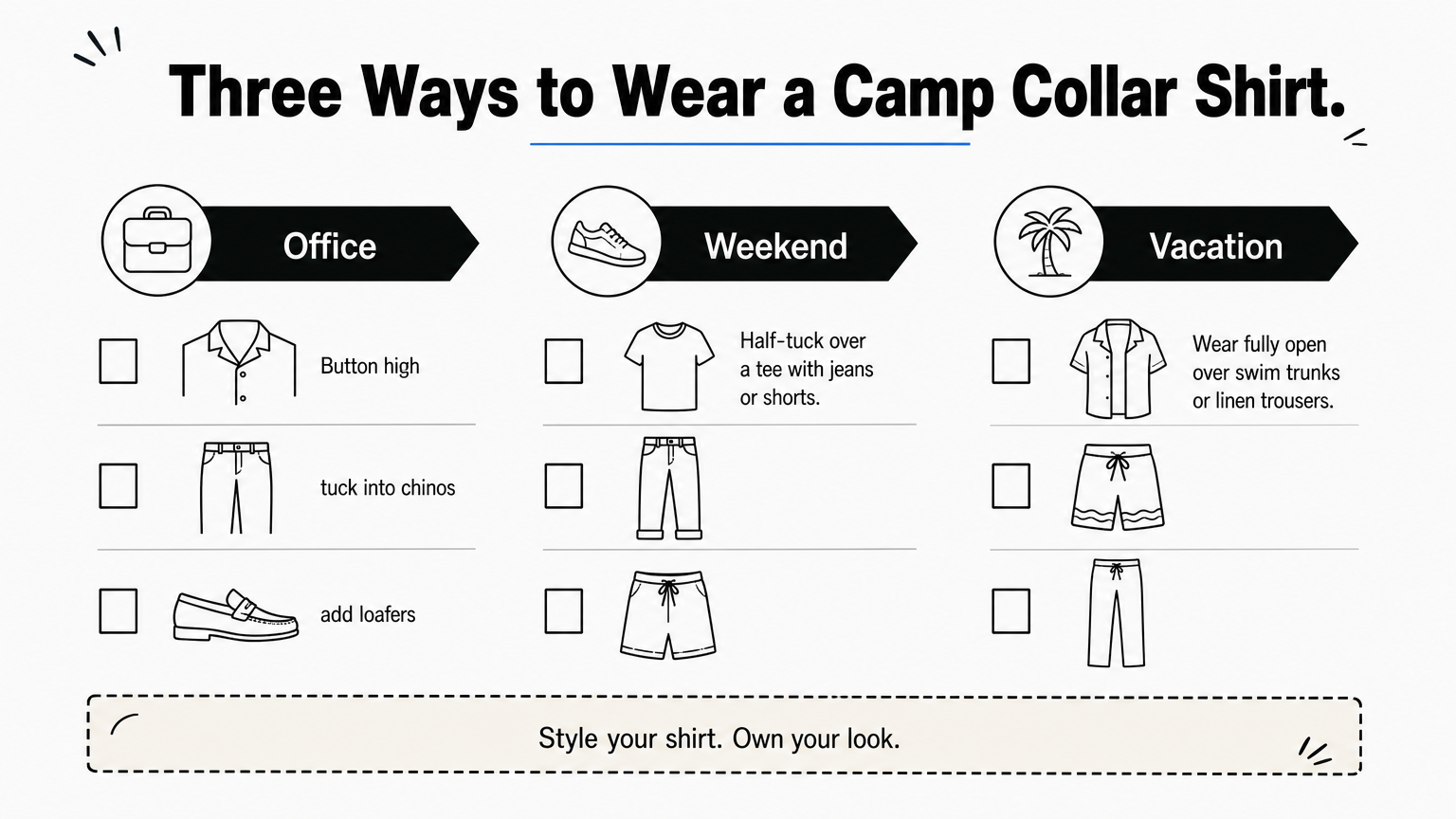
The right outfit around a camp collar shirt does more work than the shirt itself.
Casual office and smart-casual work
Offices that allow business casual give you the most room to make this shirt look deliberate. Buttoning it most of the way, tucking it into tailored chinos, and adding leather sneakers or loafers reads as put-together without feeling stuffy. A men's camp shirt in a solid navy, white, or olive works better here than a bold print, since a quieter fabric photographs as intentional rather than beachy, which is exactly how timeless closet essentials earn their place.
- Buttoned high, tucked, paired with chinos and loafers
- A plain crewneck underneath if the office runs cold
- Solid or subtle texture, no loud prints
- Leather belt matching your shoes for a finished look
Weekend errands and hangouts
Weekends call for the shirt's original purpose, which is comfort without looking like you gave up. Wearing it open over a plain tee, sleeves rolled, with jeans or shorts covers everything from a coffee run to a backyard hangout. Half-tucking the front keeps the silhouette from looking shapeless, and swapping in one of the best relaxed fit tees for men underneath gives you a base layer that holds its shape instead of going limp by the afternoon.
- Unbuttoned or half-buttoned over a tee and jeans
- Half-tuck, sleeves rolled to the forearm
- Shorts and canvas sneakers for warmer days
- Layer a light jacket over the top once it cools off
Vacation and resort wear
Traveling somewhere warm is where this shirt earns its reputation. Pack two or three in different colors, since they pack flat and don't wrinkle badly if you pick a heavier cotton weave. Wearing it fully open over swim trunks works for beach days, while buttoning up a linen-blend long-sleeve shirt over lightweight trousers covers dinner without needing a jacket. This is also where a Cuban collar shirt in a lighter colorway fits naturally, since brighter tones read as intentional on vacation but out of place back at the office.
How to care for your camp collar shirt
Washing this shirt wrong is the fastest way to undo everything the fit and fabric got right. A camp collar shirt made from heavier cotton earns its keep by holding shape wash after wash, but only if you treat the collar and pockets the way you'd treat any structured garment, not like a plain undershirt you can toss in with everything else. The collar has no interfacing to hide behind, so heat, agitation, and harsh detergent show up on it faster than they would on a dress shirt.
Washing without wrecking the collar
Cold water is non-negotiable if you want the color and the fabric weight to last. Hot water shrinks cotton unevenly, and since the collar is unlined, how much heavyweight cotton shrinks shows up immediately as puckering at the notch. Turning the shirt inside out before it goes in the machine protects any pocket stitching and keeps the outer fabric from pilling against zippers or buttons on other clothes in the load.
- Wash cold, on a gentle or normal cycle, inside out
- Skip fabric softener, since it breaks down natural fiber over time
- Use a mild detergent, nothing with bleach or optical brighteners
- Wash with similar weights, not against heavy denim or zippers
Cold water and a gentle cycle protect the collar more than any special detergent ever will.
Drying and ironing the right way
Heat is the real enemy here, more than dirt or sweat. Tumble drying on high pulls moisture out fast but also shrinks the fabric and can warp a collar that has no stiffener holding its shape. Hanging the shirt to air dry, ideally on a wide wooden hanger that matches the shoulder width, keeps the shoulders from developing that pinched look you get from wire hangers, and the same wash, dry and care routine for fine cotton applies here. If you need to iron, do it while the shirt is still slightly damp, on a low or medium setting, and press the collar flat from the underside first so you don't flatten any texture on the front.
Storage that keeps the shape
Storing it properly is where a lot of guys undo the care they just took. Folding a camp collar shirt for long stretches creases the collar points and the front placket, so hanging is worth the closet space if you wear this shirt often. Rotating it with other pieces, including a heavier relaxed tee, also spreads out wear instead of running one shirt into the ground every summer. A revere collar shirt cared for this way easily outlasts a season, which is the entire point of buying one built with real fabric weight in the first place.
A shirt worth keeping in rotation
Strip away the marketing names and regional labels, and a camp collar shirt comes down to a few things: an open, flat collar built for airflow, a boxy fit that skips the fuss, and fabric heavy enough to hold its shape past the first wash. Knowing that difference is what separates a shirt that looks intentional from one that just happens to have a collar without a stand. You've got the construction details to check, the fit checklist, and outfit combinations for work, weekends, and travel, so there's no reason to keep guessing at the rack.
Buying one comes down to the same standard we apply everywhere else in your wardrobe: fabric first, fit second, logos never. If that's the approach you want on every basic you own, browse the SÖMNAD shirts collection and build the rest of your rotation around the same idea.