


The difference between a t-shirt you wear once and forget and one you reach for every single day comes down to one thing: fabric. Choosing the best fabric for men's t-shirts isn't just about softness on the rack, it's about how that shirt holds up after dozens of washes, whether it pills, stretches out, or loses its shape by noon.
At SÖMNAD, we built our entire brand around this obsession. Our relaxed tee uses 300g Supima cotton because we tested material after material and landed on what we believe performs best for everyday wear. But we also know that different needs call for different fabrics, a gym session, a printed design, or a hot commute each demand something specific.
This guide breaks down nine t-shirt fabrics worth knowing about, what each one does well, where it falls short, and which situations suit it best. No filler, no fluff. Just the information you need to pick the right material for how you actually wear your clothes.
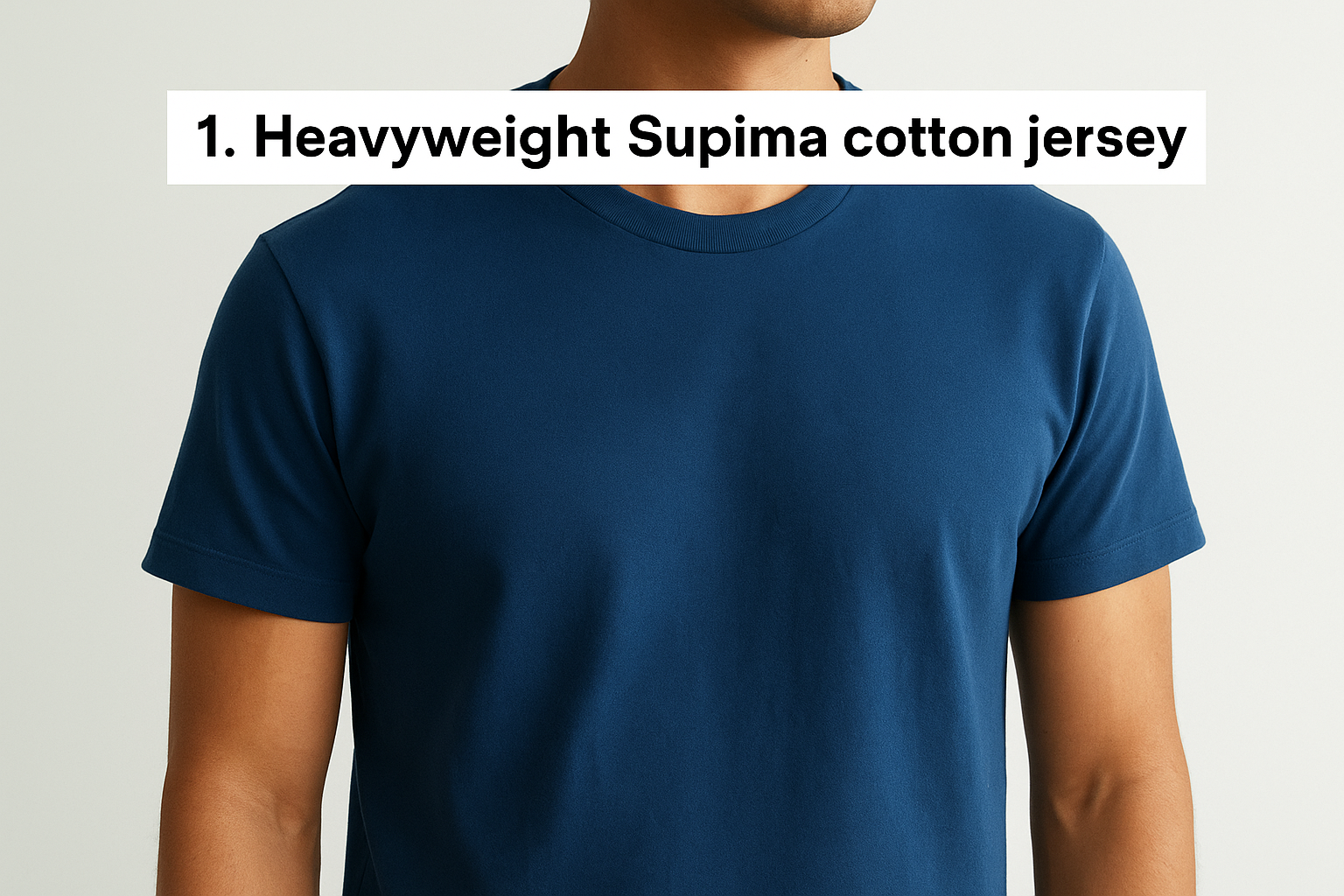
1. Heavyweight Supima cotton jersey
Supima cotton is a premium American-grown fiber that represents less than 1% of all cotton produced worldwide. When knitted into a heavyweight jersey (typically 280-320 grams per square meter), it becomes one of the most reliable daily fabrics available. This is the material SÖMNAD built its core tee around, and the reasoning comes down to how it performs over months and years, not just on the first wear.
What it feels like on-body
The first thing you notice with heavyweight Supima jersey is density without stiffness. It drapes across your shoulders and chest with a settled, substantial feel rather than clinging or pulling. The fibers are longer than standard cotton, which produces a smoother surface that feels noticeably refined against your skin and stays that way after dozens of washes.
Longer Supima fibers mean fewer exposed fiber ends on the fabric surface, which is the core reason this material resists pilling and holds its smooth texture over time.
Strengths and tradeoffs
Heavyweight Supima jersey holds its shape and color depth across repeated washes better than most cotton alternatives. It resists pilling, drapes cleanly, and the weight gives the fabric a structured look that flatters most body types. The tradeoff is breathability in high heat: this fabric works better in cooler months or air-conditioned environments than during a scorching summer commute.
Best for
This fabric suits everyday wear, casual dressing, and layering. If you want a t-shirt that sits well under a jacket or stands on its own without looking thin or disposable, heavyweight Supima jersey is a strong answer. For anyone building a minimal, quality-focused wardrobe, it sits at the top of the list for best fabric for men's t-shirts.
Care and longevity tips
Wash in cold water on a gentle cycle and hang or lay flat to dry. High-heat dryers break down the long fibers over time, which shortens the life of the fabric. With consistent care, a heavyweight Supima tee can remain in regular rotation for years without pilling, fading, or losing its original shape.
What to look for when shopping
Look for a GSM of at least 280, which signals genuine heavyweight construction rather than a mid-weight shirt marketed as heavy. Check that the listing specifically states Supima cotton rather than generic "100% cotton," because fiber origin matters for long-term performance. Supima's licensing program provides third-party verification if you want confirmation of authenticity before buying.
2. Combed ring-spun cotton
Combed ring-spun cotton is a step up from standard cotton through fiber refinement before spinning. The combing process removes short fibers and impurities, producing a smoother, stronger yarn that holds together better across repeated washes.
What it feels like on-body
This fabric feels noticeably softer than regular cotton against your skin, without the slippery quality of synthetics. The weight typically sits in the mid-range (160-220 GSM), giving it a lighter, more relaxed drape that works well in warmer conditions.
Strengths and tradeoffs
Combed ring-spun cotton offers a solid balance of softness and durability at a more accessible price point than Supima. The tradeoff is structural longevity: at lower weights, it can lose shape and develop a worn look faster than heavier premium cotton alternatives.
This fabric is one of the most widely used in quality blank t-shirts, which makes it easy to find across a broad range of fits and colors.
Best for
It works well for everyday casual wear and custom printing, since the smooth surface holds ink cleanly. If you're building a wardrobe on a moderate budget, combed ring-spun is a dependable option when searching for the best fabric for men's t-shirts without a premium price tag.
Care and longevity tips
Wash in cold water and avoid high-heat dryer cycles. Lower GSM versions especially benefit from air drying to preserve their shape over time.
What to look for when shopping
Look for listings that explicitly state combed ring-spun rather than generic "100% cotton." A GSM of 180 or above gives you noticeably better durability and a cleaner drape.
3. Organic cotton
Organic cotton comes from crops grown without synthetic pesticides or fertilizers, and must meet standards like GOTS (Global Organic Textile Standard) to carry that label. Certification tells you about farming practices, not automatically about fiber quality or construction weight.
What it feels like on-body
Organic cotton feels similar to conventional cotton in texture and weight. It tends to stay softer over time because the farming process avoids harsh chemical residues that can affect fiber integrity.
Strengths and tradeoffs
The primary strength is environmental impact: organic farming uses significantly less water and eliminates synthetic chemical runoff. The tradeoff is price, and certification alone doesn't guarantee premium fiber quality. You can find organic cotton in both mediocre and excellent constructions.
Look for GOTS certification specifically, since it covers the entire supply chain from fiber to finished garment, not just the raw cotton.
Best for
Organic cotton suits buyers who prioritize sustainability alongside comfort. It earns a place in any conversation about best fabric for men's t-shirts when environmental credentials factor into your buying decision.
Care and longevity tips
Wash in cold water and air dry when possible. The same principles that apply to conventional cotton keep organic cotton performing longer and reduce shrinkage over repeated cycles.
What to look for when shopping
Seek GOTS-certified garments and check the GSM, since certification alone doesn't indicate weight or construction quality. A GSM of 180 or above gives you noticeably better structure and durability.
4. Cotton-poly blend
Cotton-poly blends combine natural cotton fibers with synthetic polyester in ratios like 50/50 or 60/40. This pairing gives you properties neither fiber delivers alone, sitting between pure comfort and practical durability in most everyday situations.
What it feels like on-body
This fabric feels lighter and more resilient than pure cotton at similar weights. Polyester threads add structure that prevents sagging during a full day of wear, and you get softness from the cotton content alongside a fabric that holds its form rather than stretching out.
Strengths and tradeoffs
The main strength is wrinkle resistance and shape retention. A cotton-poly shirt comes out of the dryer looking cleaner than a pure cotton equivalent at the same price. The tradeoff is breathability: polyester traps heat, so higher polyester ratios feel warm in humid conditions.
A 60/40 cotton-to-polyester ratio gives you the better of both in most everyday use, leaning toward comfort without sacrificing durability.
Best for
Cotton-poly blends sit among the best fabric for men's t-shirts used in custom printing and workwear. The polyester content holds ink and embroidery cleanly, making it a practical pick for branded apparel or team uniforms where consistent appearance matters.
Care and longevity tips
Wash in cold or warm water and tumble dry on low. Polyester tolerates dryer heat better than pure cotton, but lower temperatures still extend the life of the cotton fibers in the blend.
What to look for when shopping
Check the exact blend ratio on the label. A 50/50 blend performs differently than an 80/20 cotton-heavy version, and constructions above 150 GSM avoid that thin, transparent feel.
5. Tri-blend
Tri-blend combines cotton, polyester, and rayon in a single fabric, most commonly in a 50/25/25 ratio. Each fiber contributes something distinct, and the result is a fabric that feels noticeably different from any single-material shirt in your wardrobe.
What it feels like on-body
Tri-blend has a soft, slightly textured drape that feels broken-in from the first wear. The rayon content adds a fluid quality that makes the fabric move with your body rather than against it, giving it a lightweight, worn-in feel that many people find immediately comfortable.
Strengths and tradeoffs
The main strength is tactile softness at a low weight, which suits casual everyday wear and relaxed fits. The tradeoff is durability: rayon weakens when wet, which means repeated washing breaks down the fabric faster than pure cotton or cotton-poly constructions at comparable price points.
If long-term durability is a priority for you, heavier Supima cotton outperforms tri-blend over the life of the garment.
Best for
Tri-blend earns its spot among the best fabric for men's t-shirts for casual wear, vintage-style fits, and lower-intensity everyday use where that soft, relaxed texture matters most to you.
Care and longevity tips
Wash in cold water on a gentle cycle and air dry. Heat damages rayon fibers quickly, so skip the dryer entirely if you want the shirt to hold together beyond the first season.
What to look for when shopping
Check that the listing confirms all three fiber types and their percentages. A GSM between 130 and 160 is typical and appropriate for this fabric category.
6. Polyester performance knit
Polyester performance knit is engineered specifically for movement and moisture management, not for the feel of natural fiber against your skin. You find it in athletic and activewear contexts where sweat control and stretch matter more than softness or drape.
What it feels like on-body
This fabric feels smooth and slightly synthetic to the touch, with a light, stretchy quality that moves freely with your body. It sits closer to your skin than a structured cotton tee and has a slick, cool surface when dry that some people appreciate and others find less appealing for all-day casual wear.
Strengths and tradeoffs
The core strength is moisture-wicking: polyester pulls sweat away from your skin and dries fast, keeping you comfortable during physical activity. The tradeoff is odor retention, since synthetic fibers trap bacteria more readily than natural alternatives, which means performance shirts require more frequent washing.
If you wear a performance tee for anything beyond exercise, that odor issue becomes noticeable within a few hours of wear.
Best for
Polyester performance knit is among the best fabric for men's t-shirts built for sport, training, and outdoor activity. It suits high-output situations where rapid moisture removal during exercise matters more than the everyday comfort of natural cotton.
Care and longevity tips
Wash in cold water and air dry or tumble dry on low. Avoid fabric softeners, which coat polyester fibers and reduce their moisture-wicking capability over time.
What to look for when shopping
Look for moisture-wicking or quick-dry labeling and a GSM between 130 and 160 for a fabric weight that moves freely without feeling too thin or translucent.
7. Modal and lyocell
Modal and lyocell are both semi-synthetic fibers made from processed wood pulp, most commonly beech trees for modal and sustainably sourced wood for lyocell (often sold under the Tencel brand). Neither is cotton, but both deliver a softness level that rivals premium natural fibers at lighter weights, making them worth understanding before you buy.
What it feels like on-body
Both fabrics share a silky, fluid drape that sits close to your skin without clinging. Modal feels slightly warmer to the touch, while lyocell has a cooler, crisper surface texture that makes it particularly comfortable in warmer months or humid conditions.
Strengths and tradeoffs
Modal and lyocell resist shrinkage and pilling better than most cotton alternatives at comparable weights. The tradeoff is structural durability: these fibers break down faster than heavyweight cotton with rough handling or high-heat washing cycles.
Both fibers come from renewable wood sources, which gives them a lower environmental footprint than conventional cotton or polyester at the same weight.
Best for
These fabrics place well among the best fabric for men's t-shirts when softness and drape take priority over longevity. They suit loungewear and weekend wear, especially when you want a lighter, more refined feel against your skin.
Care and longevity tips
Wash in cold water on a gentle cycle and air dry. High heat weakens both fibers quickly, and regular machine drying shortens the garment's lifespan noticeably faster than air drying does.
What to look for when shopping
Look for Tencel branding as a quality signal for lyocell, and confirm the garment lists fiber percentages clearly on the label. A GSM between 150 and 180 gives you enough structure without adding unnecessary weight to the shirt.
8. Linen
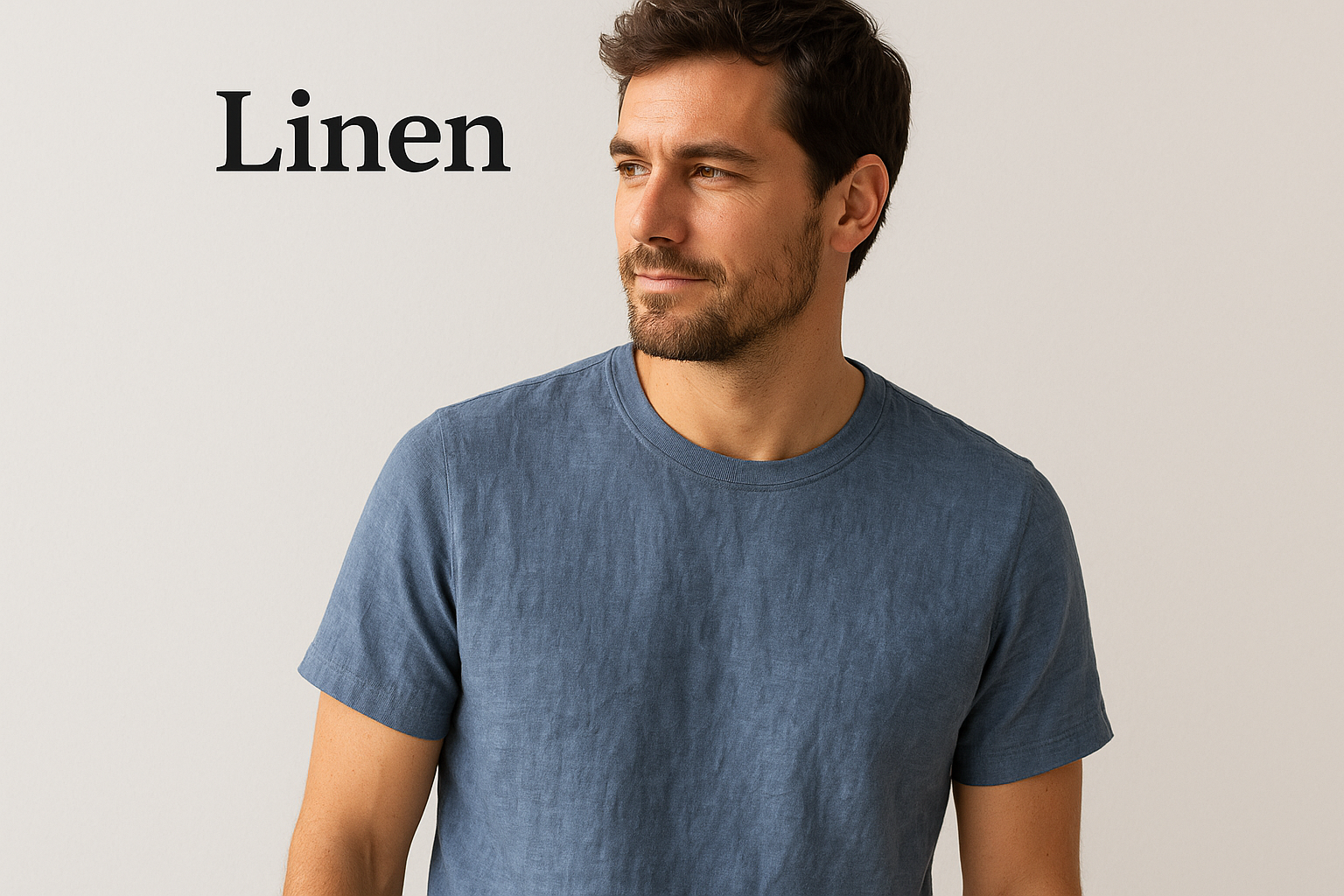
Linen comes from flax plant fibers, making it one of the oldest textiles in use. As a t-shirt material, it sits apart from cotton and synthetics with a distinct texture and temperature-regulating behavior that makes it genuinely useful in specific conditions.
What it feels like on-body
Linen feels noticeably textured and slightly stiff fresh out of the wash, but it softens significantly with each wear and wash cycle. You get a crisp, cool surface against your skin that many people find ideal when temperatures rise.
Strengths and tradeoffs
Linen excels at breathability and moisture absorption, pulling heat away from your body faster than most cotton weights. The tradeoff is wrinkle intensity: linen creases heavily with normal wear and movement, which gives it a casual, relaxed appearance that doesn't suit every context.
Linen becomes softer and more comfortable with each wash, meaning it genuinely improves over time rather than degrading.
Best for
Linen ranks among the best fabric for men's t-shirts worn in hot, humid climates. It suits warm-weather casual wear where breathability matters more than a structured, pressed appearance.
Care and longevity tips
Wash in cold water on a gentle cycle and air dry flat. Machine drying causes significant shrinkage with linen, so skipping the dryer protects both the fit and the fiber integrity over time.
What to look for when shopping
Look for 100% linen construction rather than linen blends if breathability is your main goal. A GSM between 140 and 170 gives you enough structure without adding unnecessary warmth to the shirt.
9. Hemp and hemp blends
Hemp fiber comes from the cannabis sativa plant, and it has earned a genuine place in apparel beyond its novelty status. Modern processing techniques have made hemp t-shirts softer and more wearable than earlier versions, and hemp blended with cotton delivers a fabric worth serious consideration.
What it feels like on-body
Hemp fabric starts slightly coarser than cotton but softens meaningfully with each wear and wash cycle. Pure hemp has a textured, earthy surface, while hemp-cotton blends bring that roughness down and make the fabric feel closer to a mid-weight cotton tee against your skin.
Strengths and tradeoffs
Hemp is exceptionally durable and resists UV degradation and mold better than most natural fibers at comparable weights. The tradeoff is limited availability in refined constructions, and pure hemp shirts can feel stiff through the first few washes before the fiber fully breaks in.
Hemp requires significantly less water and no synthetic pesticides to grow, making it one of the most environmentally efficient textile crops in apparel production.
Best for
Hemp sits among the best fabric for men's t-shirts for buyers who want maximum durability paired with sustainability credentials. It suits casual everyday wear and outdoor contexts where the fabric's natural resilience works in your favor.
Care and longevity tips
Wash in cold water and air dry to preserve the fiber structure over time. Hemp tolerates repeated washing well without pilling or breaking down at the rate lighter cotton blends often do.
What to look for when shopping
Look for hemp-cotton blends of at least 55% hemp for a balance of softness and structural durability. Confirm the GSM sits between 160 and 200 for a shirt with enough weight to wear well across multiple seasons.
A simple way to choose
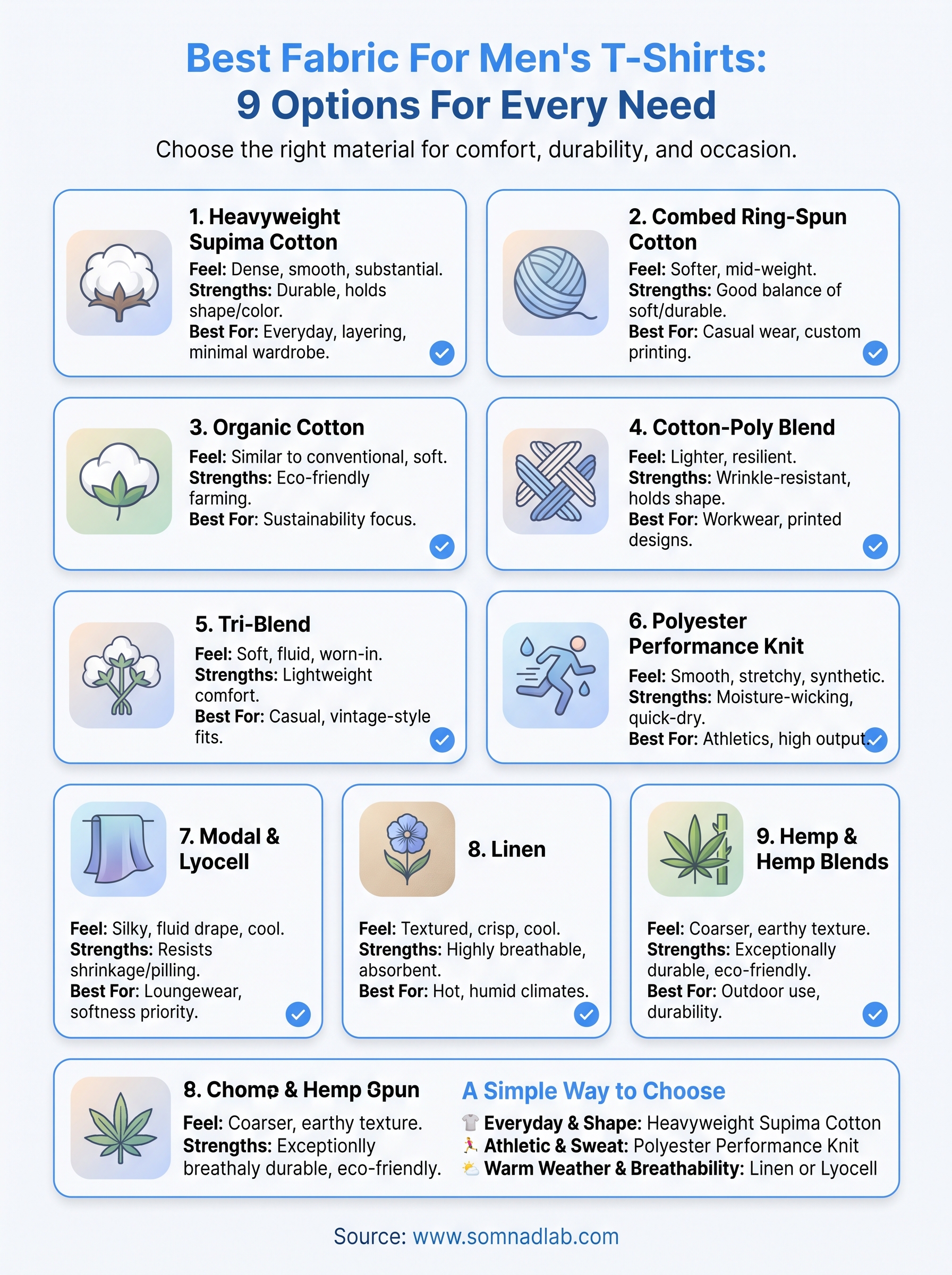
Picking the best fabric for men's t-shirts gets easier when you start with your actual use case rather than the fabric itself. If you want a reliable everyday shirt that holds its shape and gets better with wear, heavyweight Supima cotton is your answer. For athletic use, polyester performance knit handles sweat better than any natural fiber. For warm weather, linen or lyocell gives you the breathability you need.
Your budget and values matter too. Organic cotton and hemp suit buyers who care about environmental impact alongside comfort. Cotton-poly blends make sense when you need consistent results at a lower price point. Tri-blend and modal deliver softness for casual wear, but neither matches the long-term durability of a well-constructed heavyweight cotton tee.
If you want a shirt built around that everyday standard, take a look at the SÖMNAD relaxed tee and see what 300g Supima cotton actually feels like.