


Most people judge clothing by how it looks on a hanger or how it fits in the dressing room. But neither tells you much about whether that piece will hold up after thirty washes, or fall apart after three. Knowing how to identify quality clothing comes down to a set of specific, testable details that anyone can check before handing over their credit card. The difference between a garment that lasts years and one that pills by month two is hiding in the fabric weight, the stitch count, and the seam construction.
At SÖMNAD, we built our entire brand around this principle: quality you can verify, not just quality we claim. Our 300g Supima cotton tees exist because we believe everyday basics deserve the same scrutiny as any high-end purchase. That belief is also why we're breaking down the exact tests we use, and that you can use in any store or on any product page, to separate well-made clothing from the rest.
Below, you'll find seven practical fabric and stitch tests that reveal a garment's true quality. No guesswork, no brand loyalty required, just concrete things to look for and touch before you buy. Each test takes seconds, and together they'll permanently change how you shop.
1. Weight and density test using a premium tee baseline
Fabric weight is one of the most reliable indicators of garment quality, and most shoppers skip right past it. Heavier, denser fabrics signal more raw material per square inch, which directly translates to better coverage, less sheerness, and longer lifespan. A useful reference point: our 300g Supima cotton tee sits at the premium end of what a quality everyday tee should feel like, and you can use that benchmark to calibrate your expectations anywhere you shop.
What to look for
Weight in apparel fabrics is measured in grams per square meter, or GSM. For a T-shirt, anything under 150g is considered lightweight and typically lacks durability. A solid everyday tee falls between 180g and 220g, while premium options like a 300g fabric offer noticeably more substance, better drape, and significantly more resistance to wear. The fabric should feel substantial when you pick it up, not flimsy or paper-thin.
The GSM of a fabric tells you more about long-term durability than any brand label ever will.
How to test it in-store
Pick the garment up by a single corner and hold it out at arm's length. A quality fabric hangs with some weight behind it and doesn't flutter or billow. Then fold it once and press between your fingers. High-density fabric resists compression and springs back; low-density fabric feels thin and stays flat. You can also place your hand behind the fabric and see how clearly your skin shows through.
How to check it online
Look for the GSM listed in the product specifications. Many quality brands include this figure alongside fiber content. If a brand doesn't publish GSM data anywhere, that absence is itself a data point. You can also check customer reviews for comments about weight, sheerness, or whether the item felt lighter than expected.
What it predicts over time
Heavier fabrics resist pilling, sagging, and thinning far better than lightweight alternatives. A 300g tee will still look structured after dozens of washes where a 150g version goes threadbare. Weight alone doesn't guarantee quality, but it strongly correlates with how long a garment stays wearable.
2. Fiber content and blend sanity check
The fiber content label is one of the most reliable tools you have when learning how to identify quality clothing. What a garment is made from directly determines how it breathes, feels against your skin, and holds up through repeated washing, and the label is legally required to be accurate on any garment sold in the US.
What to look for
Natural fibers like 100% Supima cotton, linen, or merino wool generally outperform synthetic blends in breathability and long-term durability. Be skeptical of any product marketed as "premium" that lists polyester above 20%, since that level of synthetic content typically signals a cost-cutting decision rather than a performance benefit. Supima cotton specifically comes from American-grown extra-long staple fibers, producing a noticeably softer and stronger yarn than commodity cotton.
The fiber content label is the one piece of information a manufacturer cannot legally misrepresent on a garment sold in the US.
How to test it in-store
Locate the care label sewn into the garment, usually at the back neckline or side seam. Read the fiber percentages carefully, and if the label is missing, damaged, or uses vague language like "other fibers," treat that as an immediate warning sign.
How to check it online
Product specifications should list complete fiber content by percentage. If a brand only uses terms like "soft fabric" or "premium material" without naming actual fibers, that vagueness is a signal worth noting.
What it predicts over time
High natural fiber content means the garment breathes better, pills less, and ages more gracefully. Synthetic-heavy blends tend to trap heat, build up static, and lose their shape faster with regular washing.
3. Hold-it-to-the-light sheerness test
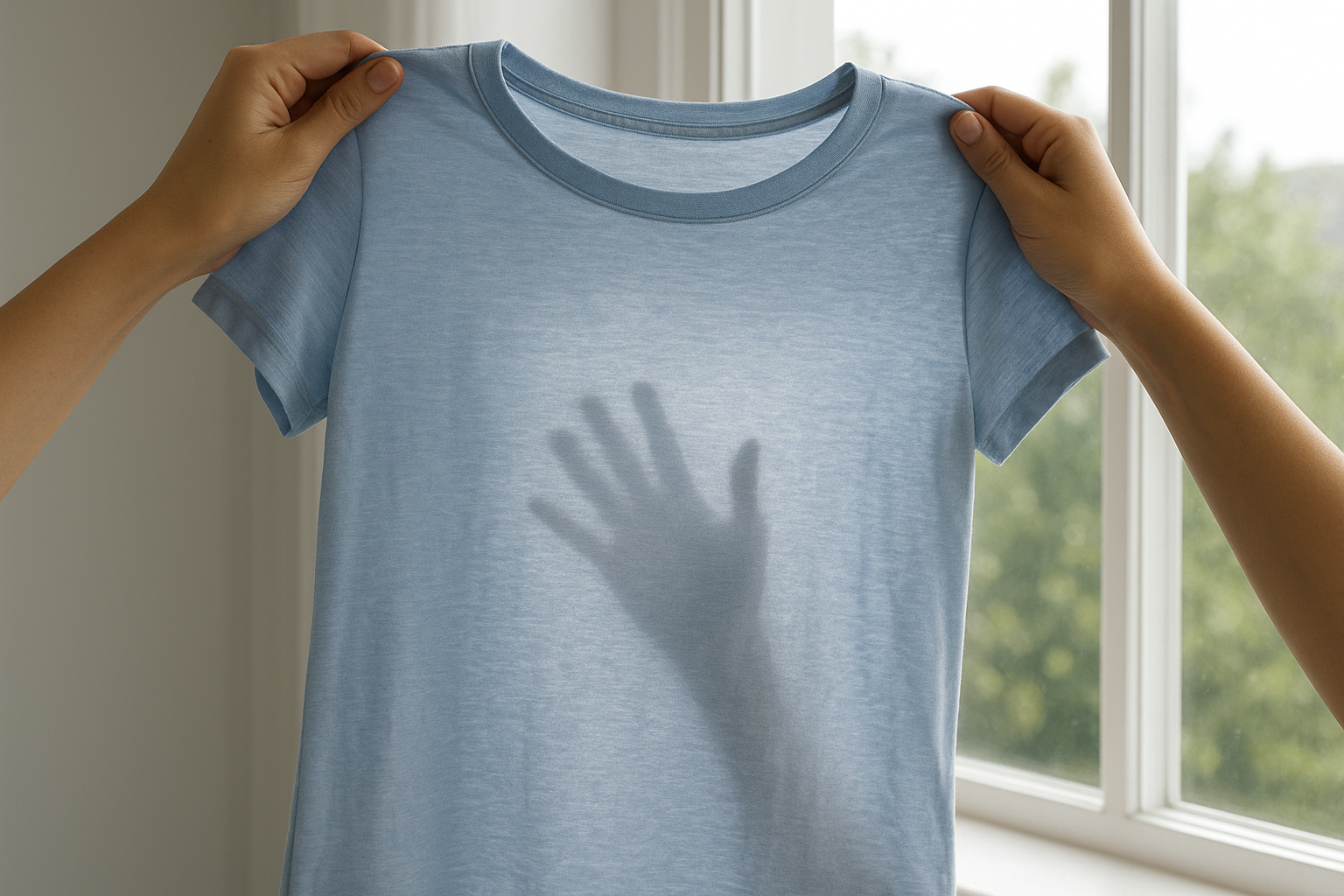
Sheerness is one of the fastest ways to expose a fabric's true density, and it's a test you can run in seconds without any tools. Thin, see-through fabric isn't just a fit problem; it's a structural one that predicts how quickly a garment will wear down under regular use.
What to look for
Opacity under light is what separates a quality fabric from a cheaply constructed one. Hold the garment up toward a window or overhead light source. Quality fabric should block most of the light behind it, showing minimal or no transparency even when stretched slightly. If you can clearly read text or see your hand in detail through the fabric, the weave is too loose or the fiber count too low.
A garment that looks sheer under store lighting will only get worse after washing softens and opens up the weave further.
How to test it in-store
Lift the garment by a single layer and hold it up toward the nearest light source. Don't bunch the fabric or fold it; use one clean, flat panel. Check both the body and the seam areas, since manufacturers sometimes use different fabric weights near hems.
How to check it online
Look for customer photos taken in natural light, not the brand's studio shots. Review comments that mention sheerness, thinning, or see-through fabric after washing.
What it predicts over time
Sheer fabric thins faster, pills more readily, and loses structural integrity sooner. A dense, opaque weave holds its shape wash after wash, which is the whole point of buying a quality basic in the first place.
4. Stretch and recovery test for shape retention
Shape retention separates a garment that looks good after one wear from one that still looks structured after a year of regular use. Fabric that stretches but doesn't recover loses its form quickly, leaving you with a baggy neckline or a distorted hem after a handful of washes.
What to look for
A quality fabric bounces back immediately when you release tension. This recovery comes from tight weave construction or well-integrated natural fiber content, not from added elastane. Pure cotton at a high GSM can hold its shape without any synthetic stretch, which is the mark of genuinely well-constructed fabric.
How to test it in-store
Grab a small section of fabric between two hands and stretch it gently in both directions. Release it and watch what happens. Quality fabric snaps back to its original dimensions within a second. Slow recovery or visible distortion in the weave after you release is a clear sign the fabric will permanently lose shape with regular wear.
A fabric that takes more than a second to recover its shape in the store will look stretched out within months of regular washing.
How to check it online
Search customer reviews for phrases like "stretched out," "lost shape," or "baggy after washing." These words show up consistently for garments with poor recovery. Brands that publish high GSM specs and use quality natural fibers rarely attract this type of complaint.
What it predicts over time
Poor recovery means permanent deformation over time. Necklines stretch, side seams shift forward, and hems pull unevenly. A fabric that passes this test will maintain its intended fit through repeated washing and wearing, which is exactly what you should expect from any garment you pay a premium price for.
5. Stitch consistency test on high-stress seams
Seams are where garments fail first, and the stitching that holds them together tells you exactly how much care went into construction. Stitch consistency on high-stress seams like the shoulder, underarm, and side seams reveals whether a manufacturer [prioritized durability](https://www.somnadlab.com/blogs/insights/slow-fashion-principles) or just got the piece together fast enough to ship.
What to look for
Even, tight stitching with a consistent stitch count per inch is the baseline for a well-made seam. Look for 8 to 12 stitches per inch on stress points; anything fewer leaves gaps that widen under tension. Loose, uneven, or skipped stitches are a direct signal that the seam will split or fray with regular wear.
A seam that already shows irregularities in the store will deteriorate significantly faster once washing and movement apply repeated stress to it.
How to test it in-store
Pull the fabric gently away from the seam on both sides and watch how the stitching responds. The stitches should stay uniform and tight without separating or puckering. Run your fingernail along the seam line; any thread that snags or lifts is a red flag.
How to check it online
Zoom into any product photography showing seam areas, and look for consistent thread lines without bunching. Customer reviews that mention split seams or stitching that unraveled early are far more reliable than brand copy when learning how to identify quality clothing.
What it predicts over time
Tight, consistent stitching holds under repeated stress, while loose seams split along high-movement areas within months. Underarm and shoulder seams take the most strain, so a garment that passes this test there will stay intact across years of regular use.
6. Inside-out seam finish test
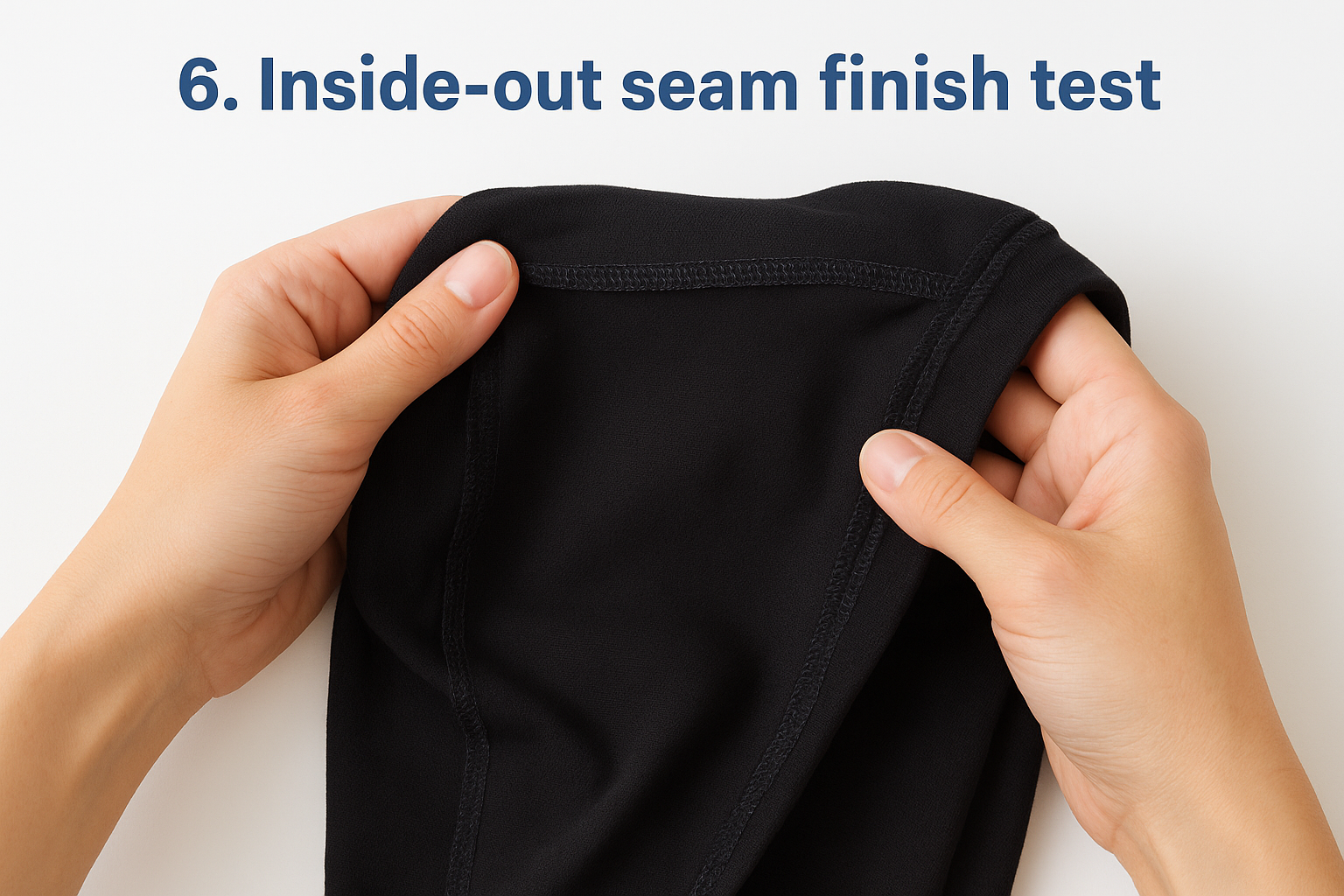
Flipping a garment inside out takes three seconds and reveals more about construction quality than most people ever check. The interior of a well-made garment looks almost as clean as the exterior, with finished edges, no raw threads, and seam allowances wide enough to handle repeated stress without fraying. Brands that cut costs on construction almost always leave the evidence on the inside, where they assume you won't look.
What to look for
Clean seam finishes are the standard on quality garments. Look for serged or bound edges along every seam, not raw, unfinished fabric that will begin fraying after the first wash. Wide seam allowances, typically at least half an inch, signal that the manufacturer left enough material to handle tension without the seam pulling apart at the edge.
A raw, unfinished seam interior is one of the clearest signs of rushed production, regardless of how polished the exterior looks.
How to test it in-store
Turn the garment completely inside out and inspect the shoulder, underarm, and side seams first, since these carry the most stress. Run your fingers along each seam edge and check whether the fabric is finished cleanly or left raw.
How to check it online
Look for interior construction photos in brand imagery or customer reviews. Knowing how to identify quality clothing online often comes down to finding that one review photo showing the inside of a garment.
What it predicts over time
Unfinished seam edges fray progressively with each wash cycle, eventually weakening the seam enough to split. Clean, finished interiors hold their structure indefinitely.
7. Hem and edge finishing test
Hems and edges are the final step in garment construction, and they reveal exactly how much attention a manufacturer paid to the details. Sloppy hem work is easy to overlook when you're focused on fit, but it's one of the clearest signals that shortcuts were taken throughout the entire production process.
What to look for
A quality hem lies completely flat against the fabric with no puckering, bunching, or uneven tension along the edge. Look specifically for these two finishing types, since they separate quality construction from fast production:
- Double-stitched or cover-stitched hems: Hold significantly better on high-movement areas like the bottom hem and sleeve cuffs.
- Single-needle finishes with raw edges: A sign of minimal investment in construction durability.
How to test it in-store
Lay the hem flat against your palm and press it down firmly. A quality hem stays flush without curling or lifting at the corners. Run your fingers along the full hem edge and feel for consistent thread tension from one end to the other without any areas pulling tighter or looser.
A hem that puckers on the hanger will only worsen once washing softens and relaxes the fabric further.
How to check it online
Look for close-up product shots of hem areas rather than full-garment imagery. Customer photos in reviews regularly show hem curling or uneven stitching that brand photography never reveals, which is exactly why review photos matter when you're figuring out how to identify quality clothing from a product page alone.
What it predicts over time
Poorly finished hems curl, fray, and unravel with repeated washing, turning a clean edge into a distorted one within months. A well-executed, flat hem holds its shape through years of regular washing and wearing, staying invisible against the garment the way it was originally intended.
Quick recap and next steps
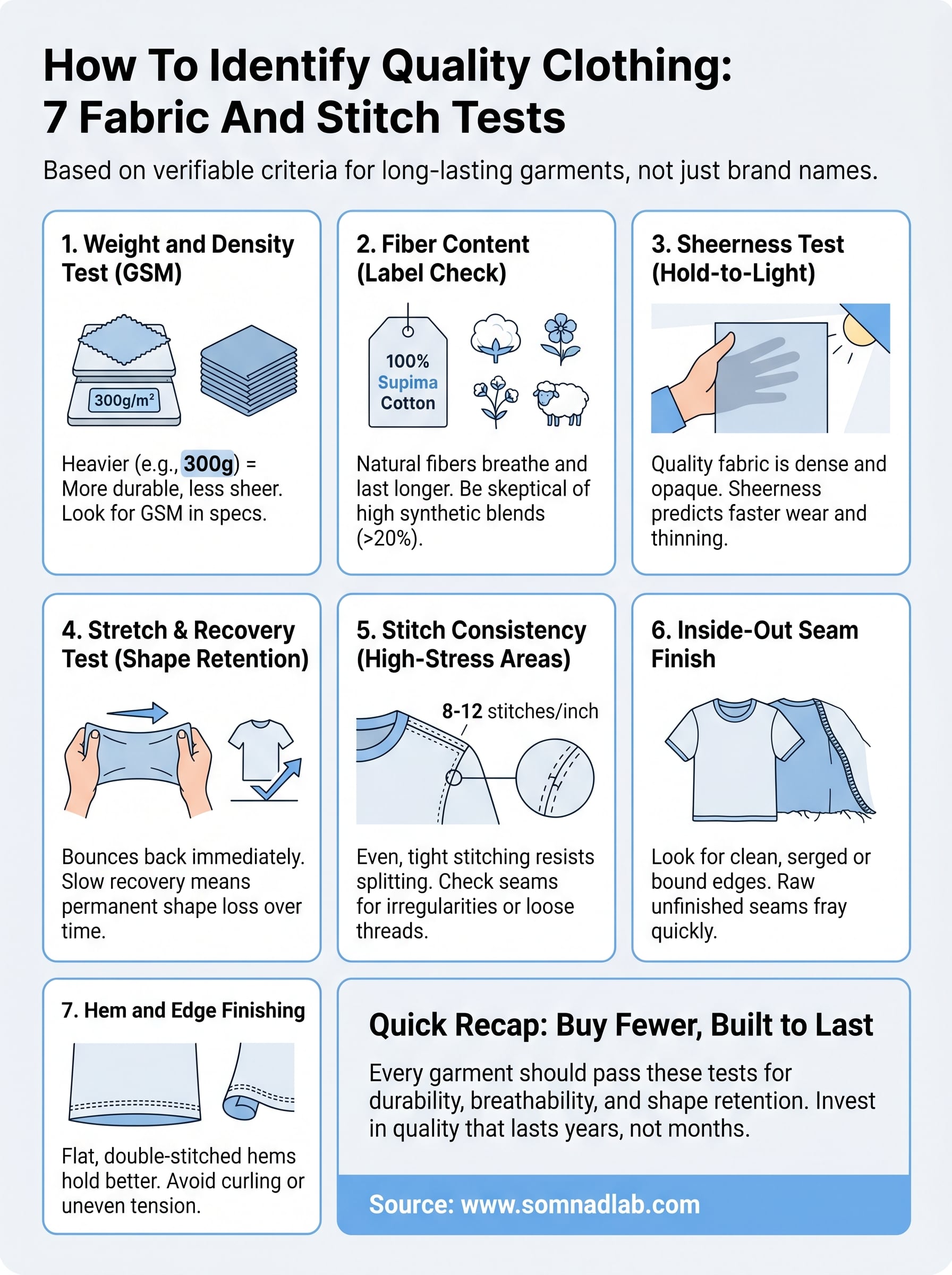
Knowing how to identify quality clothing comes down to seven tests you can run before you buy: fabric weight and density, fiber content, sheerness, stretch recovery, stitch consistency, interior seam finishing, and hem construction. Together, these checks take less than two minutes per garment, and they replace guesswork with concrete, repeatable criteria that hold up across every brand and price point.
Your wardrobe gets simpler when you stop buying pieces that fall apart and start buying fewer things built to last. That shift saves you money over time and removes the frustration of replacing basics every season. Every garment you own should pass these tests without exception, whether you paid $20 or $200 for it.
If you want to see what this standard looks like in practice, explore SÖMNAD's premium everyday essentials and check the specifications against every test covered in this article.