


You're standing in front of a wall of t-shirts, and the tags all say something different: 100% cotton, poly-cotton blend, 100% polyester. The cotton vs polyester t shirt debate isn't just marketing noise. The fiber content determines how a shirt feels against your skin, how it holds up after fifty washes, and whether you'll actually reach for it in six months.
Here's the short answer: cotton wins on comfort and breathability, polyester wins on wrinkle resistance and moisture-wicking, and the fabric weight and weave matter almost as much as the fiber itself, which is why 210gsm vs 300gsm is worth understanding before you buy. A cheap, thin cotton tee will pill and sag faster than a well-made poly blend, which is why so many
Why fabric choice affects comfort and durability
Fabric choice shapes everything from how a shirt feels at 7am to whether it still looks decent after a summer of wear. Fiber structure is the reason: cotton fibers are naturally porous and absorb moisture, while polyester fibers are synthetic strands that repel water and dry fast. That single difference cascades into how the shirt breathes, how it smells by noon, and how it ages in your dresser.
Comfort: how each fabric feels against skin
Cotton's natural fibers let air move through the weave, which is why a 100% cotton tee feels cooler against skin on a warm day. It also absorbs sweat rather than trapping it, so the fabric feels dry-ish even when you're working up a light sweat. Polyester, by contrast, wicks moisture to the surface where it evaporates faster, a trait that makes it popular for workout gear, but it doesn't breathe the same way and can feel clingy or plasticky against skin, especially in humid weather.
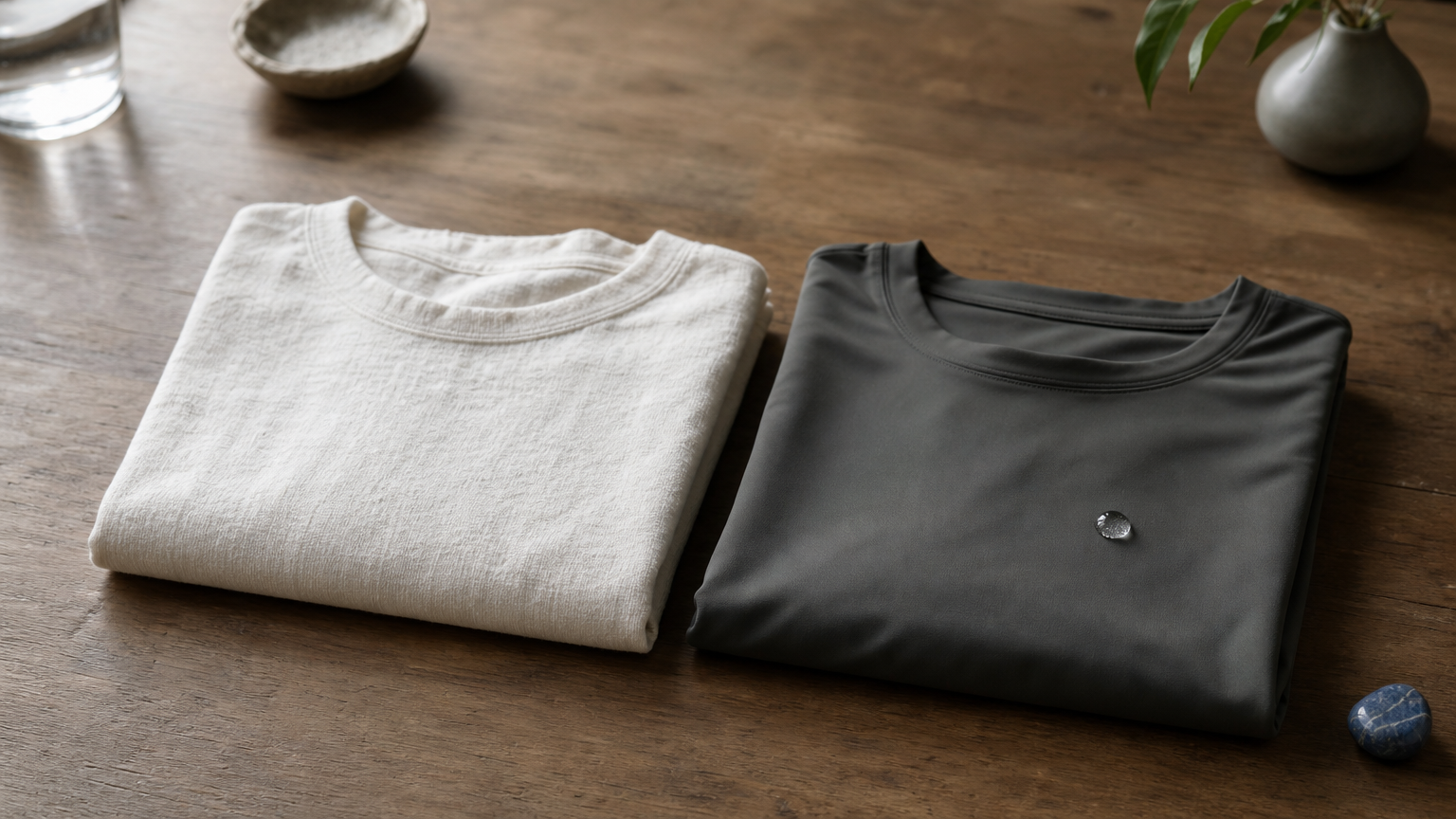
Cotton feels cooler at rest, polyester feels drier in motion.
Durability: how each fabric holds up over time
Durability is where the cotton vs polyester t shirt comparison gets more nuanced. Polyester resists wrinkles, holds its shape through washes, and rarely shrinks, which is why cheap synthetic tees can outlast cheap cotton ones. Loosely woven, low-weight cotton pills and stretches out at the collar within months. Weight and construction close that gap fast, though. A heavyweight cotton like the 300g Supima fiber we use in our relaxed tee resists pilling and holds its shape wash after wash, because dense, long-staple fibers are simply harder to break down than thin, short ones.
| Factor | Cotton | Polyester |
|---|---|---|
| Breathability | High | Moderate to low |
| Moisture handling | Absorbs | Wicks and dries fast |
| Wrinkle resistance | Low to moderate | High |
| Shrinkage risk | Higher (untreated) | Very low |
| Pilling (low quality) | Common | Common |
| Pilling (high quality, heavyweight) | Rare | Rare |
So the real question isn't just cotton versus polyester in the abstract. It's what quality tier of each you're comparing, since a premium heavyweight cotton and a bargain poly-cotton blend behave nothing alike.
How to choose between cotton and polyester tees
Picking between a cotton or polyester tee comes down to how you'll actually wear it, not which fabric sounds nicer on a hangtag. Everyday use favors cotton nearly every time, since you want something soft against skin for hours at a desk or out running errands. High-output activity tips the scale toward polyester or a technical blend, because you need sweat pulled away from your body fast, not sitting on the surface.
Matching fabric to your daily routine
Ask yourself where the shirt will spend most of its life. If it's layered under a jacket, worn to dinner, or lived in on weekends, a heavyweight cotton t-shirt for daily wear gives you comfort and a cleaner drape. If it's headed to the gym five days a week, polyester's quick-dry properties matter more than softness.
Choose cotton for comfort you feel all day, polyester for performance you need for an hour.
A quick decision checklist
Run through this before you buy:
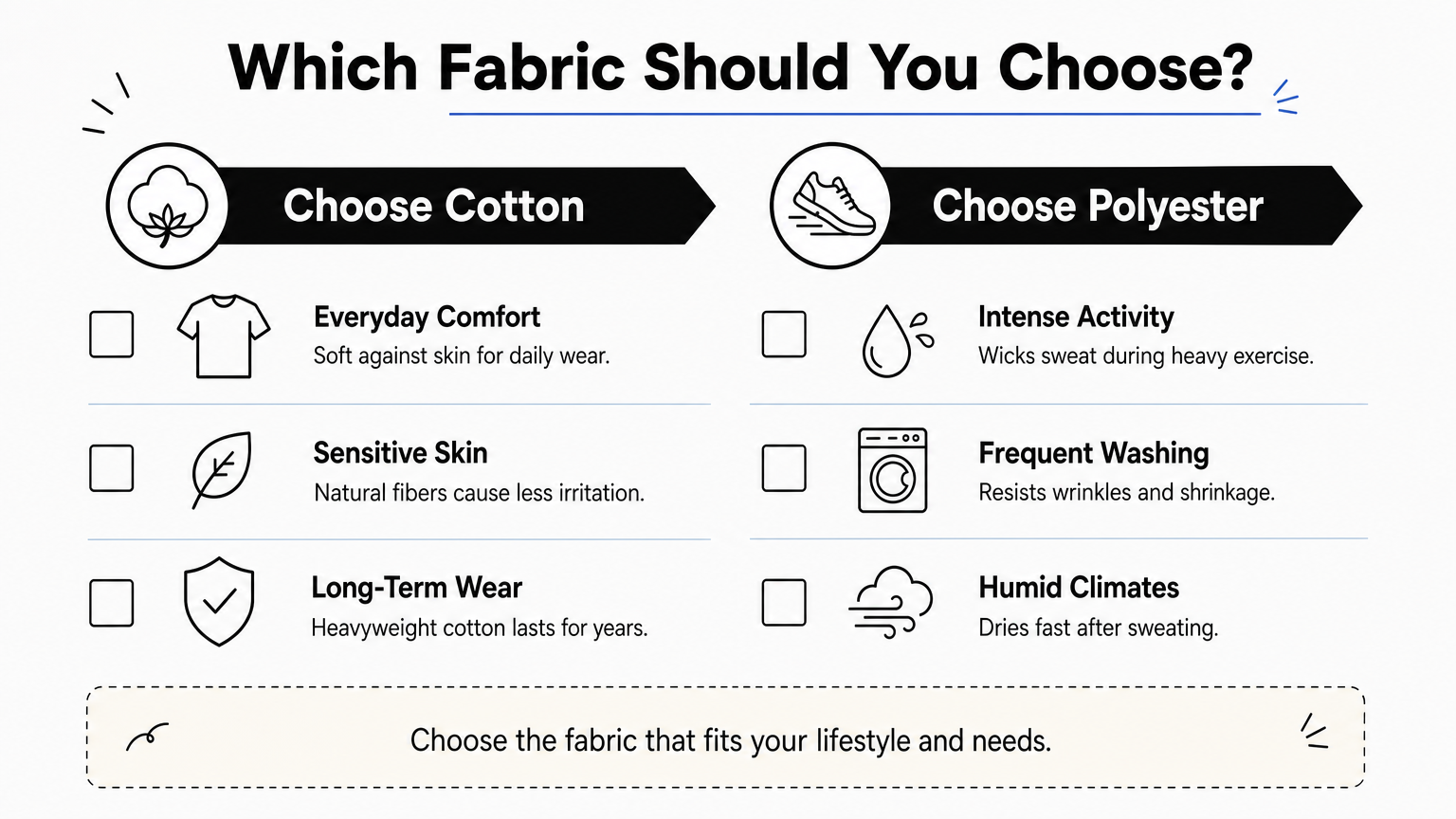
- Climate: Hot and humid? Cotton breathes better at rest; polyester dries faster if you're sweating heavily.
- Activity level: Sedentary or light movement favors cotton; intense exercise favors polyester or a poly-blend.
- Wash frequency: Washing daily? Polyester resists wrinkles and shrinkage better.
- Skin sensitivity: Sensitive skin usually tolerates natural cotton fibers better than synthetic ones.
- Longevity goals: Want a shirt you can wear for years? Invest in heavyweight, long-staple cotton over thin polyester.
There's no universal winner in the cotton t-shirt vs polyester t-shirt debate, only the right fabric for what you're doing that day.
Cotton-polyester blends: the best of both fabrics
Blending fibers solves a problem neither fabric handles alone: cotton's tendency to wrinkle and shrink, and polyester's tendency to feel plasticky against skin. A poly-cotton blend, usually somewhere between 50/50 and 65/35 cotton to polyester, borrows cotton's softness and breathability while picking up polyester's wrinkle resistance and shape retention. That's why so many everyday tees, uniforms, and travel shirts use blended fabric instead of a single fiber, and why it helps to compare every t-shirt fabric option side by side.
What blending actually changes
Ratios matter more than the label suggests. A shirt that's 90% cotton and 10% polyester behaves almost like pure cotton, just with a little extra durability. Flip that to 60% polyester and 40% cotton, and the shirt starts feeling warmer, less breathable, and more synthetic against skin. Blend ratio is the detail worth checking before you buy, not just the word "blend" on the tag.
A blend only works if the ratio favors the fiber you actually want more of.
Where blends make sense, and where they don't
Blends earn their place in gym shirts, travel clothing, and budget multipacks where low-maintenance care beats premium feel. But for a shirt you'll wear against skin all day, every day, a high-quality single fiber usually outperforms a blend built to compromise. That's the reasoning behind our decision to build the SÖMNAD relaxed tee around 300g Supima cotton alone rather than cutting it with synthetic fiber: you get the breathability and softness without diluting either.
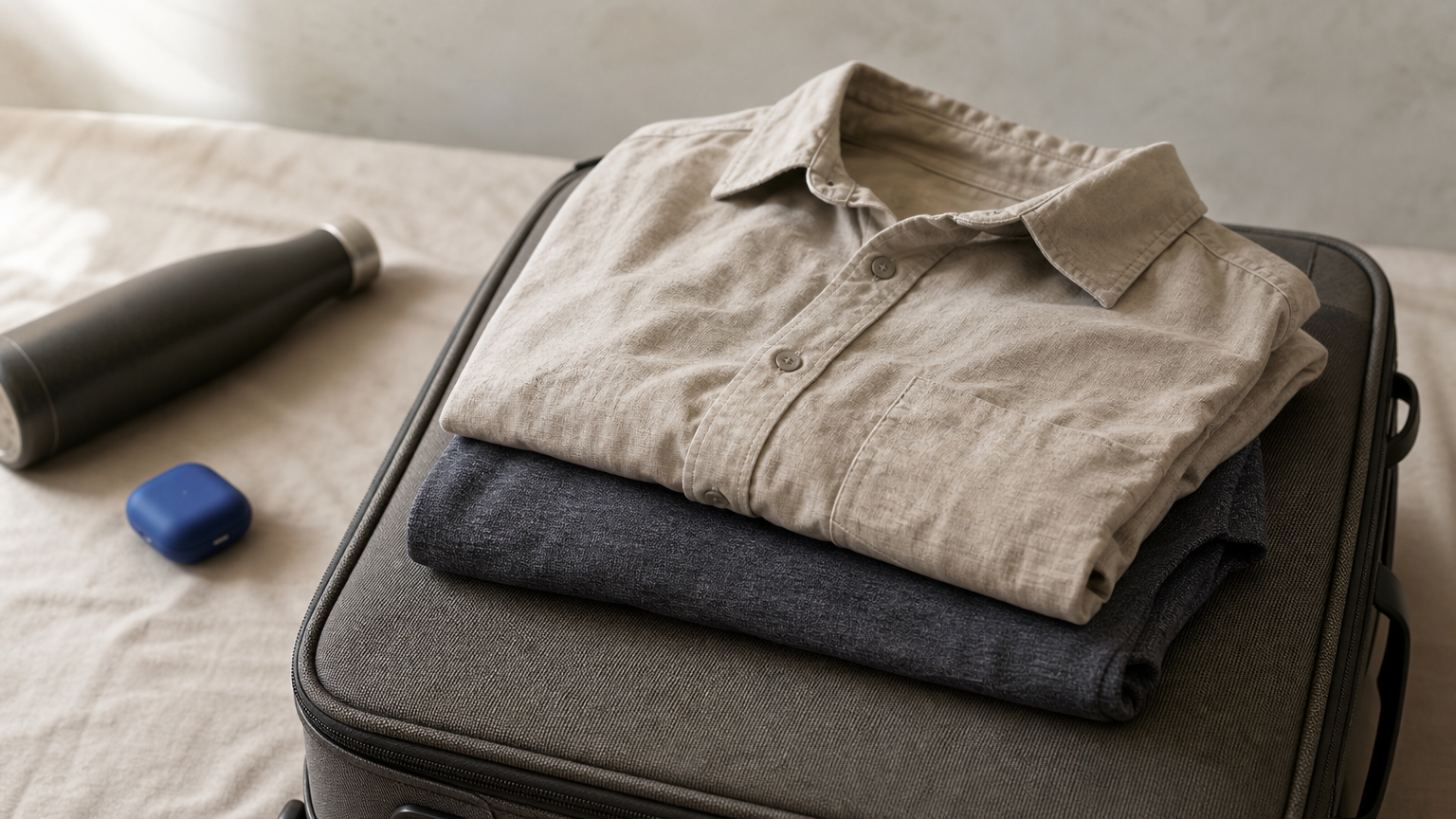
Blends aren't a compromise so much as a different tool for a different job.
Cotton vs polyester at a glance
Sometimes you just want the short version without scrolling back through every section. Here's the cotton versus polyester comparison boiled down to the details that actually change how a shirt performs on your body and in your laundry cycle.
The core tradeoffs in one table
Use this table as a cheat sheet the next time you're checking a tag before checkout:
| Category | Cotton | Polyester |
|---|---|---|
| Feel against skin | Soft, breathable | Smooth, slightly synthetic |
| Best for | Everyday wear, layering | Workouts, travel |
| Care | Machine wash, may shrink untreated | Machine wash, low shrink risk |
| Odor resistance | Lower over long wear | Can trap odor faster |
| Environmental note | Biodegradable natural fiber | Petroleum-based, sheds microplastics |
| Typical lifespan (quality-dependent) | Years with heavyweight fabric | Years with proper care |
What the numbers don't show
Numbers on a spec sheet only tell part of the story. Fabric quality inside each category swings the results more than the fiber name does, which is why a pricier tee feels better on your body, and why a premium cotton tee can outlast a mediocre poly shirt, and vice versa. Odor resistance is a good example: polyester's synthetic fibers hold onto bacteria that cause smell, which is why gym-goers often notice their poly shirts need washing sooner than cotton ones, even after light use.
The fiber on the tag matters less than the quality behind it.
Sustainability is worth a mention too, since cotton is a renewable, biodegradable fiber while polyester comes from petroleum and sheds microplastic fibers in the wash, according to research cited by the EPA on textile pollution.
Finding the right fabric for you
The cotton vs polyester t shirt question doesn't have one right answer, it has a right answer for you. Chasing performance at the gym, sweating through daily workouts, or living out of a suitcase? Polyester or a smart poly-blend earns its keep. Building a wardrobe of everyday staples you'll wear against your skin for years? Heavyweight, long-staple cotton beats synthetic fiber almost every time, especially once you factor in breathability and how a shirt ages after fifty washes.
Quality inside the fiber matters as much as the fiber itself. A thin, cheap cotton tee will let you down just as fast as a flimsy polyester one. That's the whole idea behind building a shirt around 300g Supima cotton instead of cutting corners with a blend. If you want to feel the difference yourself, see the Supima cotton t-shirts that feel truly premium and judge one against whatever's currently in your drawer.