


You see "220 GSM" on a product page and have no idea if that's good, thin, or exactly what you need. GSM stands for grams per square meter, and it's the single most useful number for judging tee weight before you buy, since sizing charts and photos won't tell you how the fabric actually feels or holds up. A 220 gsm t shirt sits in the lightweight-to-midweight zone, closer to a warm-weather layering piece than a heavy-duty staple.
That weight matters because it directly affects drape, opacity, and durability. Lighter fabrics like 220 GSM breathe better and move easily, but they show more wear over time and can feel less substantial than heavier cotton. Understanding where this number falls on the broader spectrum, from thin 150 GSM shirts to dense 300 GSM ones, tells you exactly what to expect before the tee arrives.
We'll break down what 220 GSM actually means in construction terms, compare it against common weights like 180, 240, and 300 GSM, and explain when this weight makes sense versus when you're better off with something heavier. At SÖMNAD, we build our relaxed tee from 300g Supima cotton specifically because we prioritize structure and longevity over lightness, so this comparison also shows why fabric weight is one of the clearest signals of real quality.
Why GSM matters when choosing a t-shirt
Fabric weight tells you more about a shirt's real quality than the price tag or the marketing copy ever will, which is why the plain tees worth buying are usually the ones that publish their specs. Two tees can use the same cotton fiber and still perform completely differently once you factor in thread density and fabric weight. A brand can call its shirt "premium" without disclosing GSM at all, leaving you to guess whether you're paying for substance or just a nicer hangtag. That's the gap GSM closes: it's a physical measurement, not a marketing claim, and it holds steady regardless of how a listing photo is lit or styled.
What GSM actually measures
GSM literally means grams per square meter, so it tells you how much a single square meter of the fabric weighs before it's cut and sewn into a shirt. Mills determine this number by punching a standard-sized swatch out of the fabric and weighing it on a precise scale, then scaling that reading up to the one-square-meter benchmark. It's an industry standard used from technical fabric mills to bolt showrooms, which is why you'll see it on spec sheets long before you see it on a retail tag. The number doesn't care about color, print, or branding. It only measures how much material actually exists per unit of surface area, which is exactly the kind of objective detail that cuts through vague product descriptions.
The GSM number is the one spec a brand can't spin, because it's a physical measurement, not a marketing claim.
How weight translates to real-world performance
Once you know the GSM, you can predict a lot about how the shirt will behave before you ever put it on. Higher GSM cotton is denser, so it resists show-through better, drapes with more structure, and tends to survive more wash cycles before it thins out or develops holes. Lower GSM cotton breathes more freely and feels lighter against skin, which is great in July but means the fabric stretches and sags faster under regular wear. Here's how the common ranges break down:
| GSM Range | Typical Feel | Best Suited For |
|---|---|---|
| 120-160 GSM | Sheer, very light | Undershirts, hot-climate layering |
| 180-220 GSM | Light-to-mid, breathable | Warm-weather daily wear, athletic tees |
| 230-280 GSM | Substantial, structured | Year-round staples, standalone tees |
| 300+ GSM | Dense, heavyweight | Cold-weather wear, long-term durability |
A 220 gsm t shirt sits right at the boundary between those first two categories, much like a 210gsm Supima tee, which explains why it works well for summer rotation but starts to feel thin if you're expecting it to double as a standalone layer in cooler months. That range also tends to show more skin or undergarment color through the fabric under bright light, something worth checking before you buy a light-colored tee in this weight.
Why marketers often skip this number
Retailers love words like "premium," "luxe," and "heavyweight" precisely because those terms sound substantial without committing to anything measurable. GSM forces accountability. If a listing calls a shirt heavyweight but lists no GSM, or lists a number that seems suspiciously low for the described feel, that's a signal to dig further before buying. Sourcing teams and serious apparel buyers request GSM specs as a matter of course, the same way you'd ask for thread count on sheets, because it removes guesswork from a fabric you can't touch before purchase. Shoppers who learn to ask for this number end up with far fewer surprises when the package arrives.
Serious brands treat GSM disclosure as a trust signal rather than a technical footnote. We list our tee's weight upfront on our relaxed tee product page because we'd rather you know exactly what 300 grams of Supima cotton feels like before you order than discover it's lighter or heavier than expected after the fact. Transparency here isn't just good practice, it's the difference between a shopper who trusts your sizing and material claims and one who returns the item because the fabric didn't match the description in their head.
Understanding this number changes how you shop for basics altogether. Instead of relying on adjectives a copywriter chose, you can compare actual specs across brands and price points, which turns a guessing game into an informed decision. That's the real value of knowing what GSM measures and why it shows up on more listings every year.
How to check if a t-shirt is really 220 GSM
Not every tag tells the truth, and GSM claims on product pages are no exception. Brands sometimes round up, estimate loosely, or copy a number from a supplier without verifying it against the finished fabric. Before you trust a listing, it helps to know how mills actually confirm weight, and how you can run a rough version of that same check at home once the shirt arrives.
Ask for the real measurement method
Mills verify GSM using a GSM cutter, a circular die that punches a fabric sample of an exact, standardized size, usually 100 square centimeters. That sample gets weighed on a precision scale, and the reading is mathematically scaled up to represent one full square meter. This is the same process referenced in textile testing standards published by organizations like ASTM International, which sets benchmarks for fabric weight testing across the industry. If a brand can describe this process or point to a lab report, that's a good sign the number on the page reflects an actual test rather than a guess. Vague answers, or a rep who can't explain how the figure was obtained, should make you skeptical of the claim.
If a brand can't explain how they measured the fabric, the GSM number on the label is just a guess dressed up as a spec.
Run your own checks once the shirt arrives
You don't need lab equipment to sanity-check a 220 gsm t shirt once it's in your hands. A few low-tech methods get you close enough to confirm whether the listing was honest:
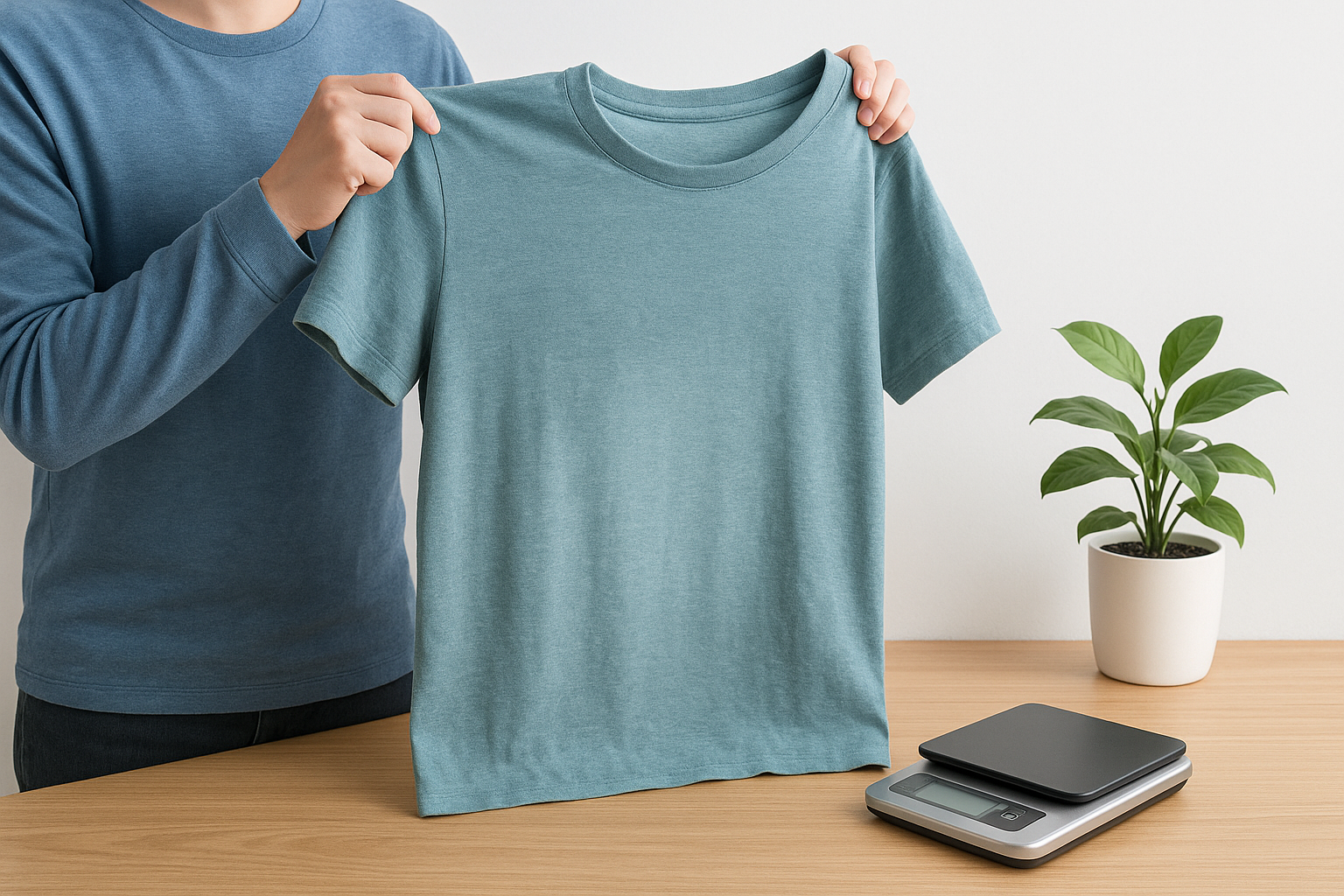
- Hold it up to light. At 220 GSM, you should see faint shadowing from your hand or an undershirt behind the fabric, especially in lighter colors. If the shirt is nearly opaque, it's likely heavier than advertised; if you can read text through it clearly, it may be lighter.
- Compare it side by side. Lay it next to a shirt you already know the GSM of. Fabric density differences between 180 and 260 GSM are noticeable to the touch once you have a reference point.
- Check the drape. Pick the shirt up by the shoulder seam and let it hang. Fabric in the 220 GSM range falls with some movement rather than standing stiff or collapsing limply.
- Weigh it yourself. Cut is a factor, but a size-medium tee at 220 GSM typically lands between 150 and 180 grams total, depending on the pattern. A kitchen scale gets you close enough to flag major discrepancies.
Cross-reference reviews and return rates
Beyond your own hands, other shoppers often catch inconsistencies before you do. Search reviews for mentions of the fabric feeling thinner or heavier than described, since patterns across multiple buyers are more reliable than a single opinion. Return rates and complaints about sizing shrinkage after the first wash can also hint at a fabric that wasn't woven to the weight claimed, since lower-quality cotton at a stated weight often behaves less predictably in the wash than well-constructed fabric at the same GSM.
220 GSM compared to other common fabric weights
Numbers on a spec sheet mean little until you set them side by side. Placing a 220 gsm t shirt next to lighter and heavier options shows exactly where the tradeoffs kick in, from breathability at the low end to structure and longevity at the high end. This isn't about one weight being objectively better than another, it's about matching the fabric to how you actually plan to wear the shirt.
220 GSM versus 180 GSM
Dropping down to 180 GSM gets you a noticeably thinner, more see-through shirt that breathes even better in heat but shows wrinkles and pit stains faster. Fans of ultra-light layering like 180 GSM for hot climates or as an undershirt, but the tradeoff is a shorter lifespan since the fibers have less mass to absorb friction from washing and daily wear. If you've ever had a tee go see-through or develop small holes near the hem after a few months, there's a decent chance it started life at 180 GSM or lower.
220 GSM versus 240 to 260 GSM
Moving up from 220 to the 240 to 260 GSM range adds enough density that the shirt starts to hold its shape on its own, rather than clinging or sagging by midday. That extra weight also cuts down on show-through significantly, which matters if you're buying a light gray or white tee and don't want your undershirt or skin tone visible in bright light. Shoppers who want a shirt that works as a standalone piece, not just a summer layer, usually find this middle range holds up better across seasons.
A shirt's weight range tells you more about its lifespan than its price does.
220 GSM versus 300+ GSM
At 300 GSM and above, you're in genuinely heavyweight territory, the kind of fabric that resists stretching out of shape and survives years of regular washing without visibly thinning, and the thickness, drape, and durability gap between 210gsm and 300gsm shows it clearly. That's the range SÖMNAD builds its relaxed tee in, using 300g Supima cotton specifically because durability and structure matter more to us than shaving grams off for warm-weather comfort, the same logic behind heavyweight cotton t-shirts made for daily wear. The difference in hand-feel is obvious the moment you touch both fabrics: 220 GSM moves and drapes, while 300 GSM has real substance and resists wrinkling even after a full day of wear.
| GSM | Approx. Weight (Size M) | Feel | Typical Lifespan |
|---|---|---|---|
| 180 GSM | 120-140g | Sheer, airy | Shorter, shows wear fast |
| 220 GSM | 150-180g | Light-to-mid, breathable | Moderate |
| 260 GSM | 190-220g | Structured, substantial | Longer |
| 300 GSM | 230-260g | Dense, heavyweight | Longest |
Seeing these weights lined up makes the pattern clear: every step up in fabric weight trades a bit of breathability for durability and structure. Where you land on that scale should depend on climate, how often you wash and wear the shirt, and whether you want it to double as a standalone piece or stay a warm-weather layer.
What a 220 GSM t-shirt feels like to wear
Specs only tell you so much until the fabric is actually against your skin. A 220 gsm t shirt sits in that in-between zone where you notice both the lightness and the limits of the cotton the moment you pull it on. It's not flimsy like a 150 GSM undershirt, but it's not the substantial, almost armor-like feel of a 300 GSM tee either. Knowing what to expect in hand-feel, movement, and temperature helps you decide if this weight matches how you actually want a shirt to perform day to day.
The first touch and initial impression
Picking up a 220 gsm t shirt off a shelf, you'll notice it feels soft and pliable almost immediately, with none of the stiffness that heavier cotton has fresh out of the package. The fabric folds easily and doesn't hold a crease the way denser weaves do, which is part of why it packs down small for travel. Running your hand across it, you'll feel the weave, but it won't feel dense or padded under your fingers. That lighter hand-feel is exactly what makes this weight popular for warm-weather basics, even though it means the shirt gives a little more with wear than something built for structure.
How it moves on your body
Once it's on, the fabric drapes rather than holds a shape, following your movement instead of standing away from your frame. Reach overhead and you'll feel the shirt shift and ride slightly, since there isn't enough mass in the cotton to anchor it in place the way heavier tees do. That fluid drape is comfortable for everyday motion, but it also means the shirt can look a bit loose or rumpled by the end of a long day, especially around the torso where fabric bunches from sitting or bending.
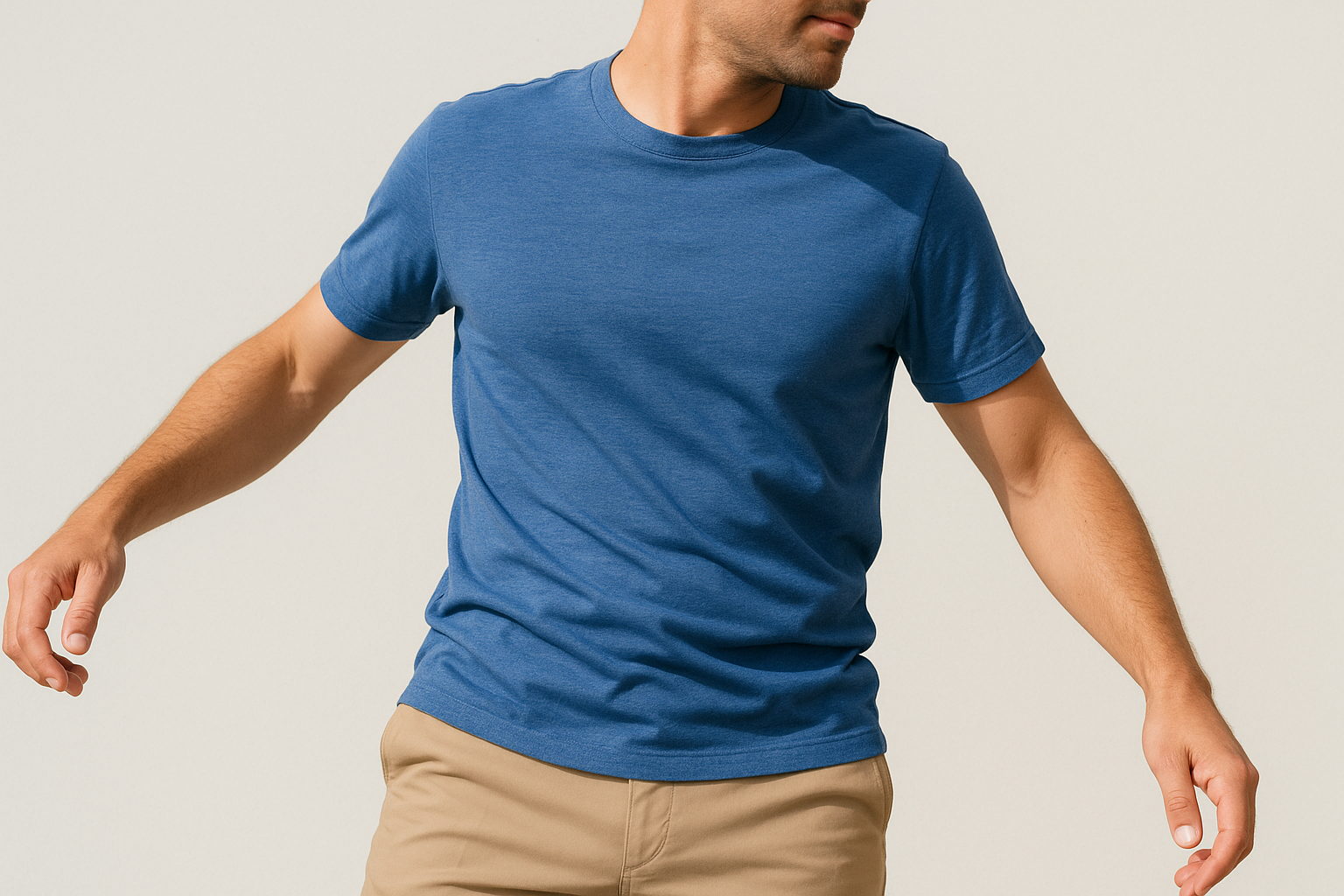
A 220 GSM tee moves with you all day, but it won't hold its shape the way a heavier weave does.
Temperature and how it breathes
Air moves through this weight noticeably faster than through 260 or 300 GSM cotton, which is the main reason people reach for it in summer, alongside lyocell tees that stay cool in heat. You'll feel less heat trapped against your skin, and the fabric dries faster after a workout or a humid commute. The tradeoff shows up the moment temperatures drop: without a jacket or an added layer, a 220 gsm t shirt feels thin in cool weather, offering little insulation on its own. It's built for airflow, not warmth, and that distinction matters if you're picking a single shirt to wear year-round.
What you'll notice after a few wears
A few things become obvious once the shirt has been through several wash and wear cycles:
- Slight pilling can appear faster than on heavier cotton, especially at friction points like under the arms or where a bag strap sits.
- Show-through stays noticeable in lighter colors, so you'll likely keep reaching for an undershirt in white or pale gray versions.
- Softening happens quickly, since lighter fibers relax and break in faster than dense weaves.
- Shape retention is modest, meaning the shirt may stretch slightly at the neckline or hem with repeated wear.
None of this makes 220 GSM a bad choice, it just means the shirt behaves like a lightweight layer rather than a long-haul workhorse, and knowing that upfront keeps expectations realistic.
Best uses for 220 GSM t-shirts
A 220 gsm t shirt earns its place in a wardrobe when the goal is comfort and airflow rather than heavy-duty structure. This weight shines in specific situations and falls short in others, so knowing where it fits best keeps you from buying the wrong shirt for the wrong season or activity. Think of it less as a universal basic and more as a specialized tool for warm conditions and active days.
Warm-weather daily wear
Summer is where 220 gsm cotton does its best work. The fabric's lighter weight means less trapped heat, faster drying after sweat or humidity, and a shirt that doesn't feel like a burden by midafternoon in July or August. If you live somewhere with long stretches of heat, or you're packing for a trip to a warm climate, this weight beats heavier cotton for pure comfort. It's the shirt you reach for on a 90-degree day when a 300 GSM tee would feel like overkill against your skin.
A 220 GSM tee earns its keep in heat, not in cold, and it's most useful when comfort matters more than structure.
Athletic and active use
Breathability also makes this weight a solid pick for light exercise and casual athletic wear. Running errands, a light jog, or a gym session where you want airflow over insulation all suit a shirt in this range better than something denser. The fabric moves with you rather than restricting motion, and since it dries quickly, you're not stuck in a damp shirt long after you've stopped sweating. Just don't expect it to hold up the way a performance-specific technical fabric would under heavy, repeated training.
Layering under heavier pieces
Because it's thin without being sheer, 220 GSM works well as a base layer under a jacket, flannel, or heavier sweater in cooler months, one of the traits shared by the best t-shirts for layering under sweaters and jackets. You get the comfort of lightweight cotton against your skin without adding bulk under a top layer. This is a common use case for people who want one tee that transitions between seasons: worn alone in summer, layered underneath something warmer once temperatures drop.

Where this weight falls short
There are situations where 220 GSM simply isn't the right call. Consider these before you commit to this weight as your go-to:
- Standalone cold-weather wear. Without a jacket, this weight offers little insulation, so it's a poor choice if you need one shirt to keep you warm.
- Long-term daily rotation. If you wear the same shirt several times a week for years, the lighter fibers wear out faster than a heavier weave built for repeated stress.
- Structured or dressier looks. The soft drape that makes this weight comfortable also means it won't hold a crisp, tailored shape the way denser cotton does.
Somnad's own relaxed tee sits at the opposite end of that spectrum, built from 300g Supima cotton specifically for people who want a shirt that works as a year-round staple rather than a seasonal layer. Knowing where 220 GSM excels, and where it doesn't, helps you decide whether you need a lighter shirt for heat or a heavier one built to last.
How to care for a 220 GSM cotton t-shirt
Lighter cotton needs a gentler routine than heavyweight fabric, since there's less fiber mass to absorb friction from washing and drying. A 220 gsm t shirt thins out faster than a 300 GSM tee when it's washed on hot cycles or tumbled dry on high heat, because the fibers simply have less material to spare before they start to weaken. Treat it the way you'd treat any lightweight garment, and you'll stretch its usable life well beyond what careless washing allows.
Washing without stretching or thinning the fabric
Cold water is the single biggest factor in preserving a lighter tee, since heat is what breaks down cotton fibers and causes both shrinkage and premature thinning. Turn the shirt inside out before it goes in the machine, which protects the outer surface from pilling caused by rubbing against zippers, buttons, or other garments. Skip the fabric softener too; it coats fibers with a residue that reduces breathability, which defeats the purpose of choosing a lighter weight in the first place.
Cold water and a gentle cycle do more to preserve a lightweight tee than any fabric softener ever will.
A quick checklist keeps the routine consistent wash after wash:
- Wash in cold water on a gentle or delicate cycle
- Turn the shirt inside out before loading it
- Skip fabric softener and use a mild, residue-free detergent
- Avoid overloading the machine, since crowding increases friction between garments
Drying to prevent shrinkage and pilling
Heat is just as damaging in the dryer as it is in the wash, so air drying is the safest option for a 220 gsm cotton tee, and the same rule explains how much heavyweight cotton shrinks when it's tumbled hot. Laying the shirt flat or hanging it keeps the fabric from stretching out of shape the way tumble drying can, especially around the neckline and hem where lighter cotton is most vulnerable. If you need machine drying, use the lowest heat setting and pull the shirt out while it's still slightly damp, then let it finish air drying on a hanger.
Storage and everyday handling
Storing the shirt properly matters more with lighter fabric than most people expect, since hanger stretch at the shoulders is a real risk over months of repeated use. Folding the shirt and stacking it in a drawer distributes weight more evenly than hanging it, which keeps the shoulder seams from bagging out over time. Rotating which tee you wear also helps, since giving fibers a rest day between wears reduces the cumulative friction that leads to pilling and thinning.
Overall, a little care goes a long way with this weight. None of these habits are complicated, but skipping them is exactly why some 220 GSM shirts look worn out after a few months while others, treated more carefully, hold up for a couple of years.
Common mistakes when judging fabric by GSM alone
GSM tells you a lot, but treating it as the only measure of quality leads to bad purchases just as often as ignoring it does. Shoppers who fixate on the number alone miss the other variables that determine how a shirt actually performs, from the type of cotton used to how tightly it's woven. Knowing where GSM falls short keeps you from over-relying on a single spec when comparing a 220 gsm t shirt against other options on the market.
Assuming higher GSM always means better quality
Bigger numbers feel like a safer bet, but weight alone doesn't guarantee good construction. A shirt can hit 260 GSM using coarse, low-grade cotton that pills and fades faster than a well-made 220 GSM tee built from extra-long staple fiber like Supima. Fiber quality and yarn construction matter just as much as raw weight, and a heavier shirt made from cheap cotton can wear out faster than a lighter one made well.
A high GSM number means nothing if the fiber underneath it is low quality.
Ignoring fiber type and weave alongside the number
Two shirts can share the same GSM and still feel completely different depending on how the yarn is spun and woven. A combed cotton weave at 220 GSM feels noticeably smoother and more refined than an open, loosely knit fabric at the exact same weight, since combing removes short fibers that cause roughness and pilling, one reason it pays to compare t-shirt fabrics side by side. Weave type also affects how the fabric stretches, breathes, and holds its shape, so comparing two shirts by GSM alone without checking the fiber and weave tells you only part of the story.
Trusting a number without knowing how it was tested
Not every brand measures GSM the same way, and some list a supplier's estimate rather than a figure from an actual tested swatch. Relying on a stated GSM without asking how it was verified means you're trusting a number that could be rounded, outdated, or simply wrong. If a listing gives no context for how the fabric was weighed, treat that number as a rough guide rather than a guarantee, and use the hands-on checks covered earlier to confirm it once the shirt arrives.
Overlooking fit, finishing, and stitching
Even a perfectly accurate GSM figure says nothing about seam quality, hem finishing, or how the pattern was cut. A short list of what GSM can't tell you:
- Whether the seams are double-stitched or prone to fraying
- How the shirt fits across the shoulders and through the body
- Whether the collar retains its shape after repeated washing
- How consistent the dye is across the batch
Judging a shirt purely on its weight ignores these details, and a few simple fabric and stitch tests show why a well-constructed tee at a moderate GSM can outlast a poorly finished one at a higher weight. Weight is a starting point for comparison, not the final word on quality, and pairing it with fiber type, weave, and construction gives you a far more accurate picture before you buy.
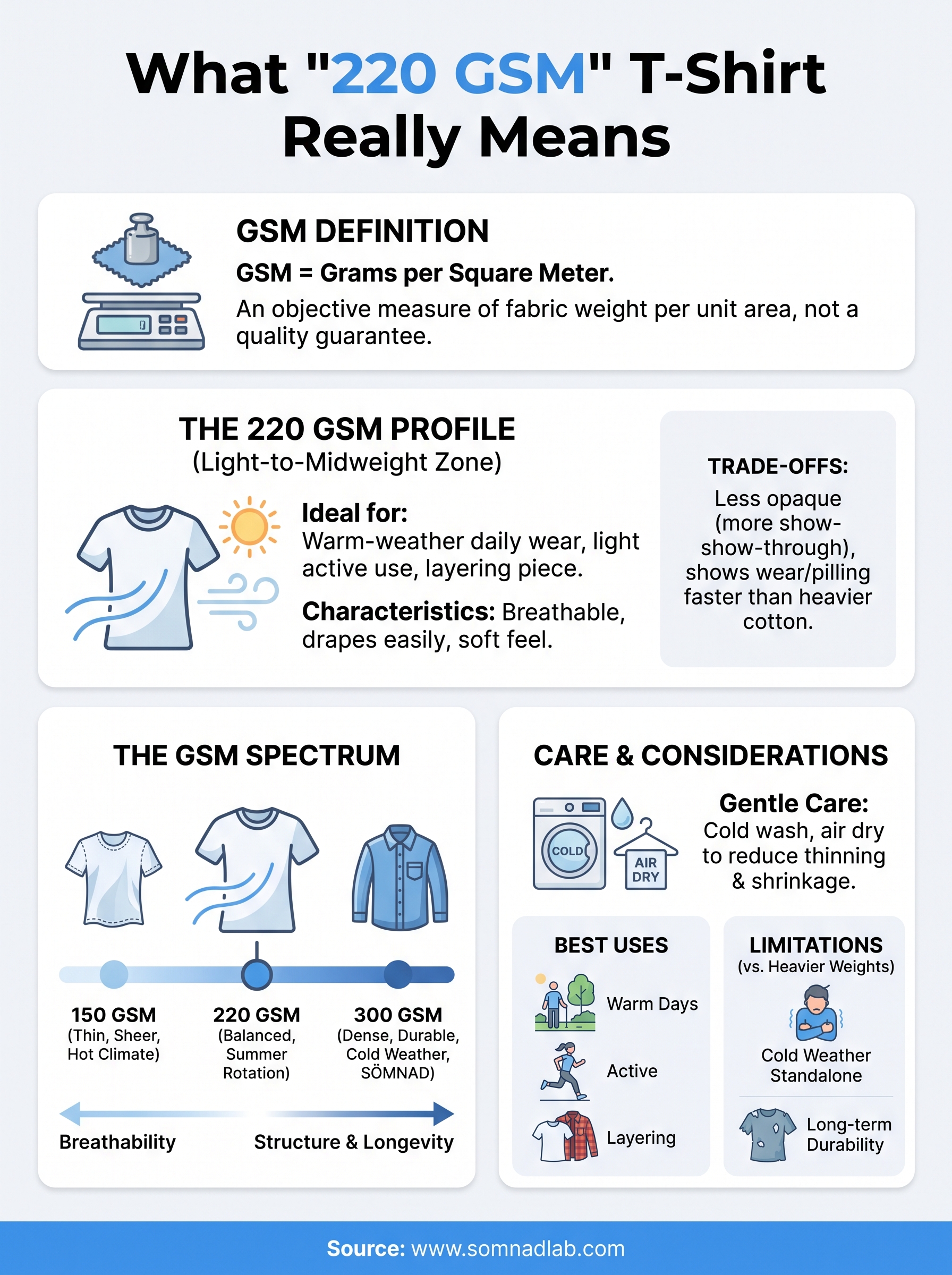
Finding the weight that suits you
A 220 gsm t shirt isn't a bad choice, it's just a specific one. It rewards you with breathability and easy drape in warm weather, and it asks for gentler washing and lower expectations for longevity in return. Knowing that tradeoff upfront, rather than discovering it after three washes, is the whole point of learning what GSM actually measures.
Once you understand where 220 sits against 180, 260, and 300 GSM, the decision stops being a guess. Climate, activity, and how often you rewear a shirt should drive your pick, not a number alone or a word like "premium" on a listing. If you want a tee built for structure and years of wear rather than seasonal rotation, look at heavyweight t-shirts that hold their shape. Our relaxed tee at SÖMNAD is made from 300g Supima cotton for exactly that reason, so you get substance you can feel from the first wear.