


You've seen
Why t-shirt weight affects comfort and durability
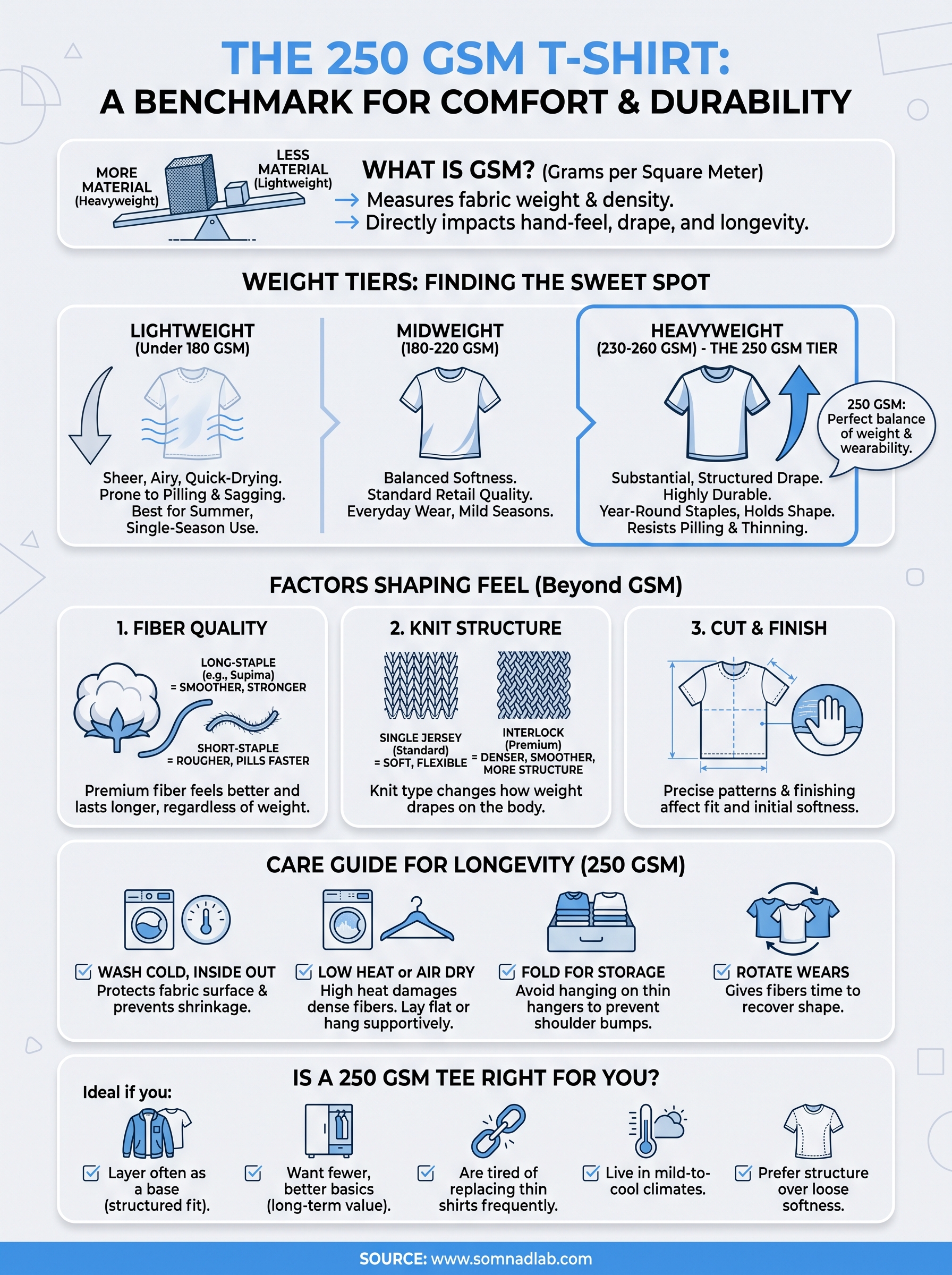
Fabric weight is measured in grams per square meter (GSM), and it tells you how much material is packed into a single tee. A 250 GSM t-shirt sits in the heavyweight bracket, well above the flimsy 120-160 GSM shirts you find in most fast-fashion stores. That extra mass changes almost everything about how the shirt behaves: how it drapes on your body, how it holds up in the wash, and how long it lasts before it starts to sag or thin out.
The direct link between GSM and hand-feel
Grams per square meter isn't an abstract spec sheet number. Run your fingers across a 250 GSM tee and you'll notice the fabric has actual substance, it doesn't feel like it could tear if you tugged too hard. Lightweight shirts under 160 GSM often feel papery and see-through when held up to light, while a 250 GSM shirt has enough density to sit opaque and solid against your skin. That density also affects how the shirt moves with you: a heavier knit holds its shape through the day instead of stretching out at the collar or riding up at the hem, which matters if you're wearing the same tee from a morning workout to an evening dinner.
Why weight predicts durability
Thicker cotton yarns simply have more fiber to wear through before a hole appears. Every wash cycle, every stretch across your shoulders, every friction point where a bag strap rubs the fabric, all of it chips away at the yarn. A 130 GSM shirt might show pilling and thinning after a few months of regular wear, while a 250 GSM cotton tee can absorb years of that same abuse and still look intact. This is the mechanical reason cheap tees feel disposable and heavyweight ones feel like an investment.
Heavier GSM fabric isn't just thicker, it's fabric with more material standing between your daily wear and the first hole.
Comparing common weight tiers
Seeing the ranges side by side makes the differences concrete:
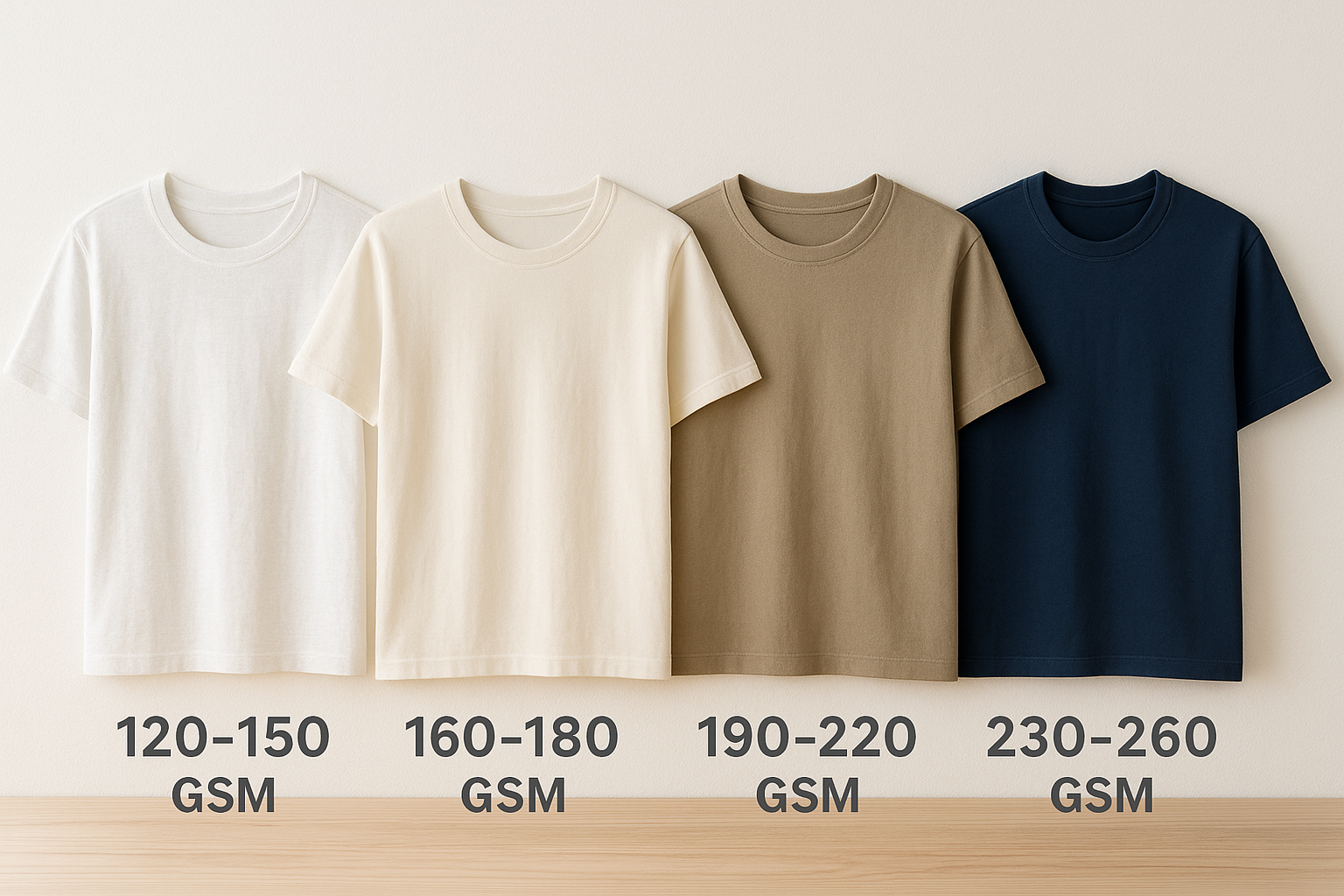
| GSM Range | Category | Typical Feel | Common Use |
|---|---|---|---|
| 120-150 GSM | Lightweight | Sheer, breathable, delicate | Summer layering, festival tees |
| 160-180 GSM | Midweight | Balanced, everyday softness | Standard retail t-shirts |
| 190-220 GSM | Heavier midweight | Sturdier, less see-through | Premium basics, workwear-inspired tees |
| 230-260 GSM | Heavyweight | Substantial, structured drape | Year-round staples, 250 GSM t-shirt tier |
| 270+ GSM | Extra heavyweight | Dense, almost jacket-like | Cold-weather layering, boxy fits |
A shirt in the 250 GSM range sits at the point where fabric weight stops feeling flimsy but hasn't yet crossed into stiff or overly warm territory. That's part of why it's become the benchmark weight for t-shirt shoppers who want longevity without sacrificing everyday wearability.
The trade-off you're accepting
Nothing comes free, though. Heavier fabric usually means less breathability than a lightweight tee, so a 250 GSM shirt runs warmer in July than a 140 GSM one does. It also takes longer to dry after a wash and can feel less flexible if you're used to the give of a thin, well-worn t-shirt. None of this makes 250 GSM a downside, but it does mean the fit and cut matter more: a shirt this substantial needs a clean pattern so the extra weight doesn't turn into bulk, which is exactly why brands building around heavyweight cotton pay close attention to how the fabric is cut, not just how it's woven.
Why the number matters more than marketing claims
Retailers throw around words like "premium" and "quality" constantly, but GSM gives you something they can't spin: an actual measurement. When a product page lists 250 GSM, you know what you're getting before the shirt ever arrives, unlike vague terms such as "heavyweight" or "premium cotton" that carry no fixed number behind them. Comparing GSM specs across brands is one of the fastest ways to sort real quality from marketing language. SÖMNAD's own relaxed tee runs even heavier at 300 GSM, which gives you a useful reference point: anything below 250 GSM trades durability for a lighter feel, and anything meaningfully above it starts trading breathability for structure.
How to tell if a 250 GSM tee fits your needs
Knowing the definition of GSM only gets you halfway there. The real question is whether a 250 GSM t-shirt actually suits how you dress, move, and live day to day. A few quick checks can tell you that before you ever click "add to cart," and they don't require a fabric science degree, just some attention to the details most shoppers skip past.
Check the label before you buy
Start with the product page itself. Any brand confident in its fabric will list the GSM number directly, not bury it under vague language like "premium cotton" or "heavyweight feel." If a listing only uses adjectives and skips the number, treat that as a red flag rather than a compliment. Look for the GSM figure alongside the fiber content, since a 250 GSM shirt woven from cheap, short-staple cotton will still feel rougher and pill faster than a 250 GSM shirt made from long-staple cotton like Supima. Weight and fiber quality work together, not separately.
Test the fabric with your hands
If you can see the shirt in person, hold it up to a light source. A true 250 GSM shirt should show almost no see-through, since the density blocks light the way lightweight tees can't. Stretch the fabric gently across the chest area too. It should resist and bounce back rather than sag or go loose immediately, which tells you the knit has enough structure to hold its shape through wear. Rub the fabric between your fingers for a few seconds; heavyweight cotton has a dry, substantial texture, not a slick or papery one.
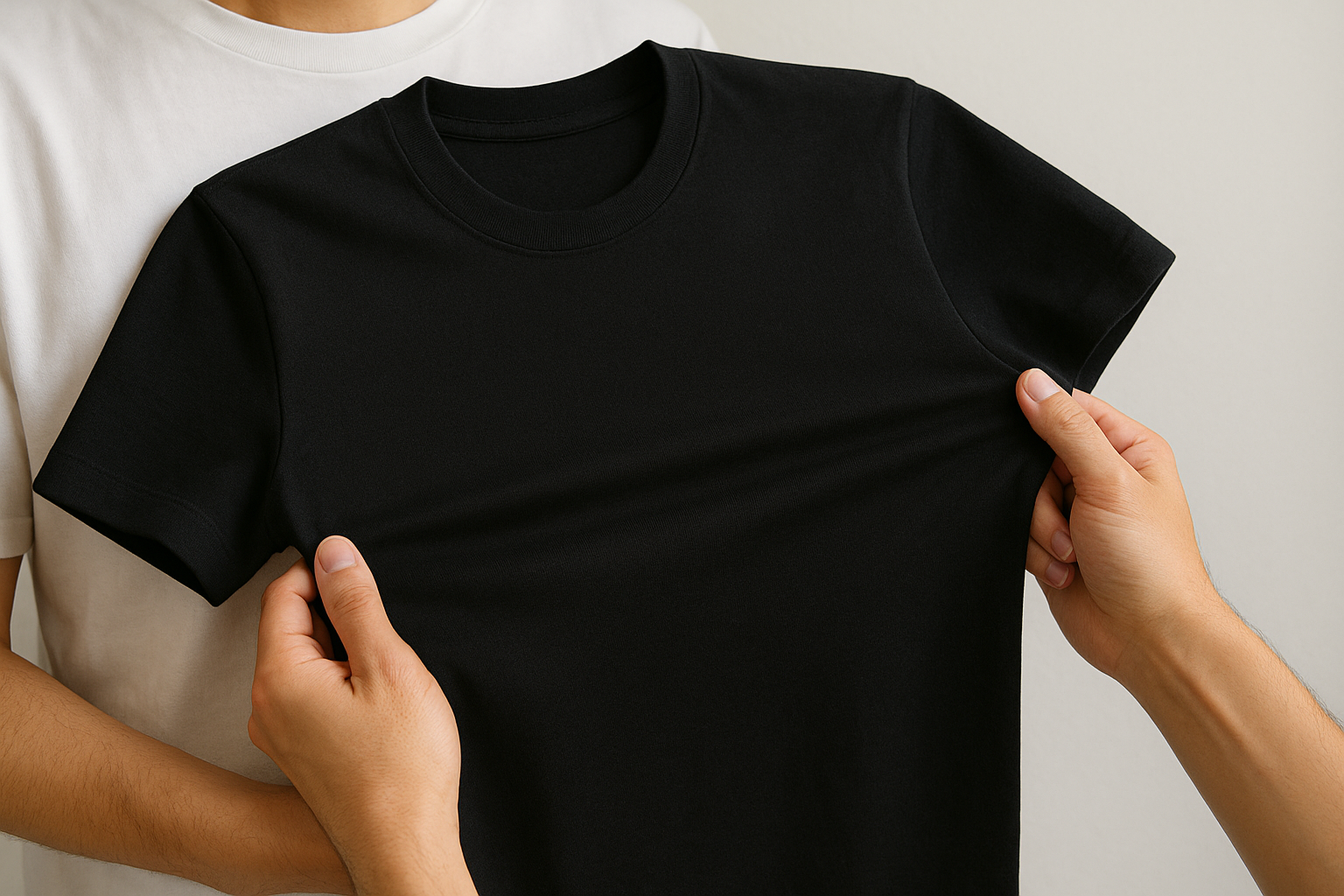
A 250 GSM shirt should feel like it has weight in your hands before it ever touches your body.
Match the weight to your climate and use
Think honestly about where you'll wear the shirt most. Someone living in Phoenix layering under a blazer in July has different needs than someone in Chicago wearing a tee solo through a mild spring. Heavyweight cotton traps more heat than a lightweight knit, so climate should factor into your decision as much as the durability appeal does. If you run warm naturally or work outdoors in summer heat, a 250 GSM tee might feel like one layer too many; if you're usually cold or you layer often, it's likely a better match than anything lighter.
Signs a 250 GSM tee is right for you
Run through this quick checklist before buying:
- You wear tees as a base layer often, under jackets, flannels, or hoodies, where extra structure helps rather than adds bulk.
- You're tired of replacing thin shirts every few months because they've stretched out or gone see-through.
- You live somewhere with mild-to-cool temperatures for most of the year, or you don't mind a slightly warmer shirt in exchange for durability.
- You want a shirt that holds its shape after dozens of washes instead of one that softens into shapelessness.
- You care more about long-term cost per wear than the lowest sticker price on a three-pack of tees.
If most of these sound like you, a 250 GSM tee will likely earn its spot in your rotation. If you run hot year-round or you prefer the loose, broken-in feel of an old, thin t-shirt, you might be happier a notch lower on the weight scale, somewhere in the 190-220 GSM range covered next.
How 250 GSM compares to other fabric weights
Numbers only mean something in context, so it helps to line up 250 GSM against the weights on either side of it. Every tier trades something for something else: breathability for structure, softness for longevity, lightness for shape retention. Once you see those trade-offs side by side, picking the right weight for your closet gets a lot easier.
Lightweight tees: what you give up below 180 GSM
Anything under 180 GSM falls into the lightweight category, the range most mass-market t-shirts occupy. Cotton this thin breathes well and dries fast, which is why it's common in gym shirts and summer basics. But that same thinness means the fabric shows your skin through the weave, stretches out around the collar within a few wears, and rarely survives more than a year of regular washing. Compared to a heavyweight t-shirt at 250 GSM, a lightweight tee feels almost disposable, fine for a single season, not built for a decade of rotation.
Midweight tees: the common middle ground
Between 180 and 220 GSM sits the midweight bracket, and it's the default for most "premium basics" you'll find at mid-range retailers. A midweight t-shirt in this range holds up better than a bargain tee and feels less bulky than something at 250 GSM, which makes it a reasonable pick if you want a step up from fast fashion without committing to the heaviest fabric on the shelf. The catch is that midweight cotton still shows more wear over time than true heavyweight fabric, since there's simply less fiber mass absorbing the friction of daily use.
The heavier the fabric, the more washes it takes before you notice any real change in how it looks or feels.
Heavyweight and beyond: where 300 GSM changes things
Push past 250 GSM and you enter territory occupied by fabrics like the 300 GSM Supima cotton in SÖMNAD's own relaxed tee. The jump from 250 to 300 isn't dramatic in the same way 150 to 250 is, but you'll feel it in the drape: a 300 GSM shirt holds a boxier, more structured shape and runs noticeably warmer. A shopper comparing a 300 gsm t shirt to a 250 GSM one is really deciding how much structure and warmth they want, not choosing between quality tiers, since both sit well above what most retail shirts offer.
Weight tiers at a glance
| Weight Tier | GSM Range | Feels Like | Best Paired With | |---|---|---| | Lightweight | Under 180 | Thin, airy, quick-drying | Hot climates, single-season wear | | Midweight | 180-220 | Balanced, everyday soft | Casual daily wear, mild seasons | | Heavyweight | 230-260 | Substantial, structured | Year-round layering, durability focus | | Extra heavyweight | 270+ | Dense, boxy drape | Cooler climates, statement fit |
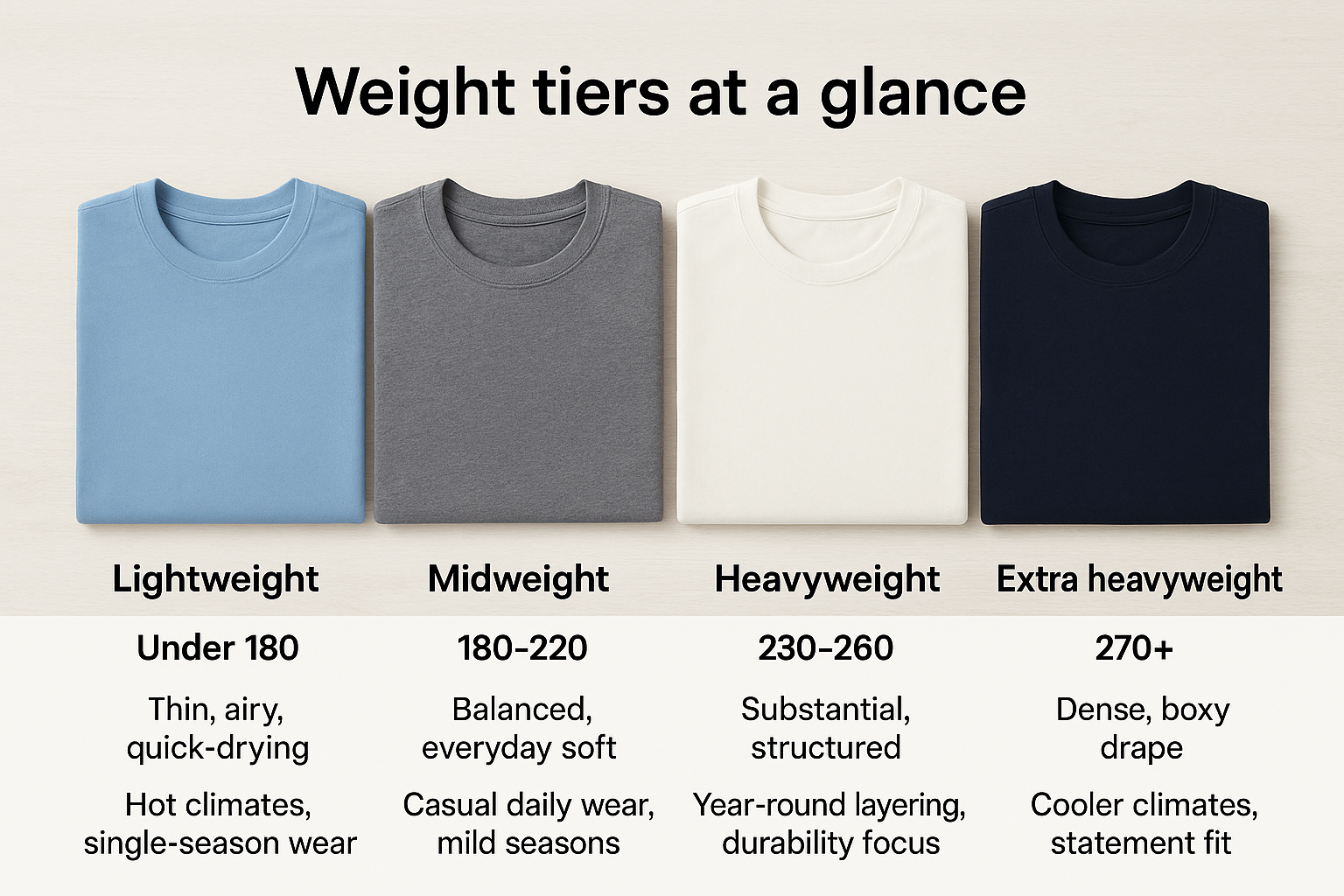
Reading this table next to your own closet usually clears things up fast. If most of your current tees pill or sag within a year, you're probably wearing lightweight or low midweight fabric, and stepping up to 250 GSM will feel like a real upgrade. If you already own heavier basics and want even more structure, 300 GSM is the logical next step rather than a separate category entirely.
What else shapes how a t-shirt feels
GSM tells you how much fabric you're working with, but it doesn't tell you the whole story. Two shirts can both weigh 250 grams per square meter and feel completely different in your hands, one soft and fluid, the other stiff and cardboard-like. The number is a starting point, not a guarantee, and understanding what else goes into the feel of a shirt helps you spot the difference between a genuinely well-made 250 GSM t-shirt and one that's heavy simply because the yarn is coarse.
Fiber quality matters as much as weight
Cotton fiber length changes everything about how a fabric feels against your skin. Long-staple cotton, like Supima or Pima, spins into smoother, stronger yarn with fewer loose fibers poking out, which is why it feels cool and almost silky even at a heavy weight. Short-staple cotton, the kind used in most budget tees, feels rougher and pills faster no matter how many grams you pack into the weave. A 250 GSM shirt made from short-staple cotton can genuinely feel scratchier than a 200 GSM shirt made from long-staple fiber, which is why serious brands list fiber type right next to the weight, not as an afterthought.
The GSM number tells you how much fabric you're wearing, the fiber tells you how it feels once it's on.
Knit structure changes the drape
How the yarn gets knitted into fabric matters just as much as the yarn itself. Single jersey knit, the most common structure, produces a flatter, more flexible fabric. Interlock knit doubles up the loops for extra density and a smoother face, which is part of why some heavyweight tees feel almost structured enough to hold a crease. French terry, with its looped underside, adds bulk without adding as much stiffness. None of these structures show up in a GSM spec, but they change how the same weight of cotton drapes on your body.
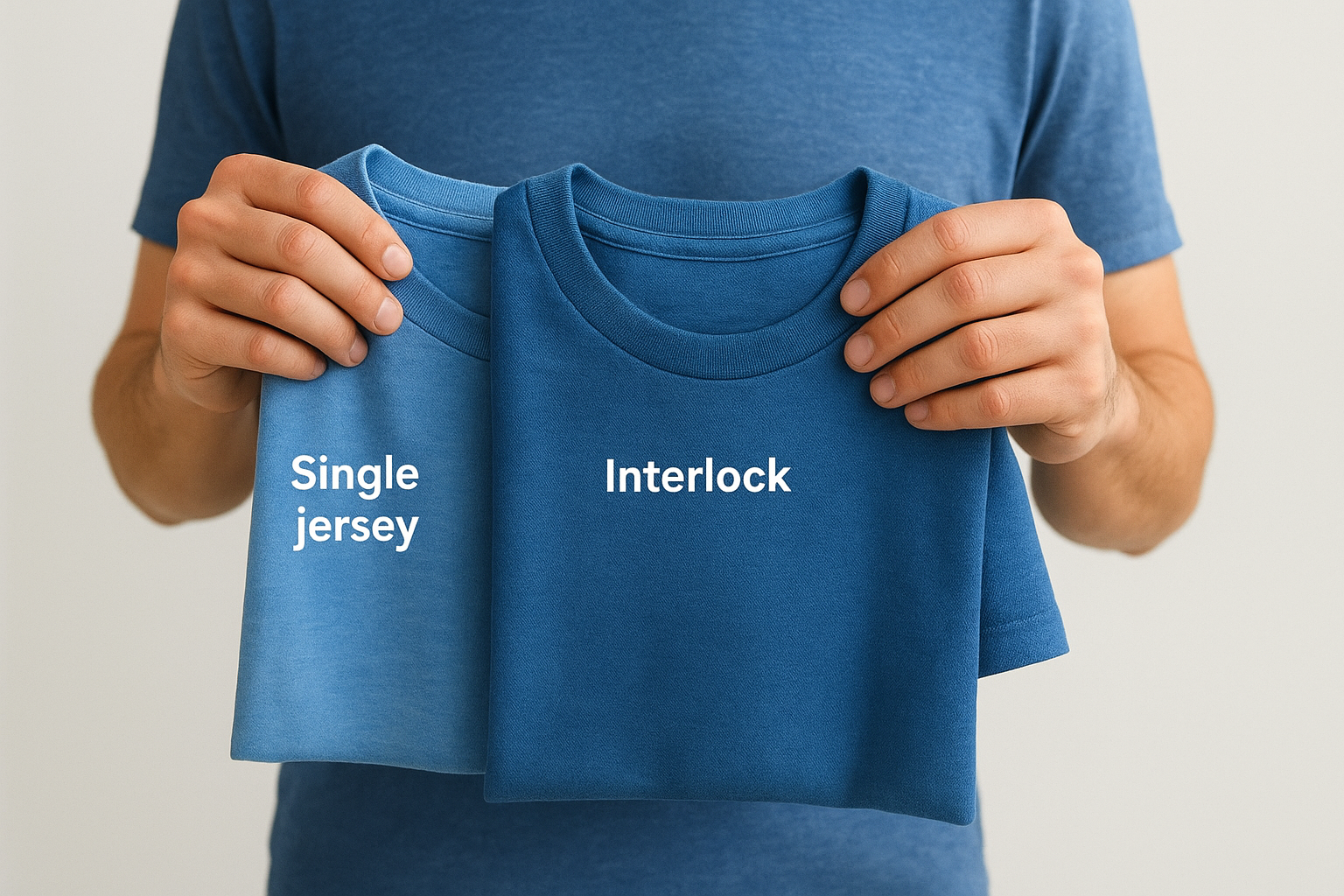
| Knit Type | Typical Feel | Common In |
|---|---|---|
| Single jersey | Soft, flexible, close to the body | Standard t-shirts |
| Interlock | Denser, smoother face, more structure | Premium heavyweight tees |
| French terry | Looped texture, extra bulk | Sweatshirts, some heavyweight basics |
Cut and construction finish the job
Even the best fabric falls flat if the pattern is off. Seam placement and stitch density determine whether a shirt sits cleanly on your shoulders or bunches up under the arms after a wash or two. Loose, sloppy stitching lets seams pucker over time, no matter how heavy the base fabric is, while reinforced shoulder seams and a properly graded neckline keep a shirt looking sharp for years. This is also where fit comes in: a boxy cut on 250 GSM fabric reads differently than a slim cut on the same material, since the extra weight of the fabric amplifies whatever silhouette the pattern was built around.
Dyeing and finishing affect softness
Finally, how a shirt gets dyed and finished after knitting changes its hand-feel more than most shoppers expect. Garment-dyed cotton, dyed after the shirt is sewn rather than before, tends to feel softer and more broken-in right out of the box. Harsh chemical finishes used to speed up production can leave heavyweight cotton feeling stiffer than it needs to, masking some of the natural softness that long-staple fiber should deliver. If a 250 GSM shirt feels unusually rigid straight out of the package, the finishing process is often the reason, not the weight itself.
How to care for a heavyweight cotton t-shirt
Caring for a heavyweight cotton t-shirt doesn't require special detergent or a laundry degree, but the habits that keep a thin tee looking fine for a year will shorten the life of a 250 GSM shirt if you're not paying attention. Denser fabric holds more water, dries slower, and reacts differently to heat than the lightweight cotton most people are used to washing on autopilot. Get the basics right and a 250 GSM t-shirt can genuinely outlast several cheaper shirts combined.
Washing heavyweight cotton correctly
Cold or lukewarm water is the safer default for any heavyweight cotton piece, since hot water accelerates shrinkage and fades color faster than most people expect. Turn the shirt inside out before it goes in the machine, this protects the outer face from friction against zippers, buttons, or rougher fabrics in the same load. Skip fabric softener too. It coats cotton fibers with a waxy residue that actually reduces the fabric's natural breathability and softness over time, which works against everything a well-made heavyweight tee is trying to do.
- Wash in cold or lukewarm water, never hot
- Turn the shirt inside out to protect the surface
- Use a mild, residue-free detergent
- Skip fabric softener and bleach
- Wash with similar weights, not with towels or denim
The heavier the fabric, the more careful the wash cycle needs to be, since dense cotton holds onto both water and detergent longer than thin cotton does.
Drying without damaging the fabric
Heat is the real enemy of heavyweight cotton, more than washing itself. High-heat tumble drying shrinks dense fabric more aggressively than it does lightweight tees, since the extra fiber mass holds moisture longer and takes more sustained heat to fully dry, cooking the fibers in the process. Air drying flat, or on a hanger with the shoulders supported, keeps a 300 GSM Supima shirt like SÖMNAD's relaxed tee from stretching out of shape while it dries. If you need to use a machine, a low-heat or delicate cycle gets the job done without stressing the knit.
Storage and long-term shape retention
Folding matters more than people think. Hanging a heavyweight tee on a thin wire hanger for months can leave shoulder bumps that never fully smooth out, since the fabric's weight pulls against a single narrow point rather than distributing evenly. Folding the shirt flat and storing it in a drawer avoids that problem entirely, and it also keeps the fabric from stretching under its own weight the way lighter cotton rarely does. Rotating which shirts you wear regularly helps too, since letting the same heavyweight tee rest between wears gives the fibers time to spring back into shape rather than compressing further with each use.
A quick care checklist
- Wash cold, inside out, with mild detergent
- Skip the dryer when possible, or use low heat
- Fold for storage instead of hanging on thin hangers
- Rotate shirts in your rotation rather than wearing the same one daily
- Spot-treat stains quickly rather than letting them set through a full wash cycle
Stick to this routine and a heavyweight cotton tee holds its color, shape, and texture far longer than the wash-and-dry habits most people default to for cheaper shirts.
Who gets the most out of a 250 GSM t-shirt
Not every wardrobe needs a heavyweight tee, but for a specific kind of dresser, a 250 GSM t-shirt solves problems a thinner shirt never could. Matching the fabric to the person wearing it matters more than any spec sheet, so it helps to look at the actual habits and priorities that make this weight class worth the extra cost.
The minimalist building a smaller, better wardrobe
Someone trying to own fewer, better things is the clearest match for heavyweight cotton. If you'd rather buy three excellent tees than ten mediocre ones, a 250 GSM t-shirt fits that math exactly, since the fabric is built to survive years of rotation instead of a single season. This is the shopper SÖMNAD designs for directly: someone who wants a relaxed tee that looks the same in year three as it did on day one, without needing a logo or flashy print to justify the price. Quality that shows up in the hand-feel, not the branding, is the whole point.
A smaller wardrobe only works if every piece in it earns its place, and fabric weight is one of the fastest ways to tell which shirts actually will.
People who layer clothing year-round
Anyone who wears tees as a base layer, under flannels, jackets, or hoodies, benefits from the extra structure a heavier knit provides. Thin cotton tends to bunch, ride up, or disappear under a layer, while a heavyweight cotton t-shirt holds its shape and gives the layers on top of it something solid to sit against. This makes 250 GSM a natural fit for people in temperate or cold climates who treat the t-shirt as infrastructure rather than the main event.
Anyone done replacing thin shirts every few months
If you've bought the same three-pack of basics more than once because the last batch stretched out or went see-through, you already know the real cost of cheap fabric. A 250 GSM t-shirt costs more upfront but wears out slower, which usually makes it cheaper per wear over a year or two once you account for how often lightweight shirts need replacing. That math only works, though, if you actually wear the shirt regularly instead of saving it for special occasions.
People who run warm or want the broken-in feel of thin cotton
Heavyweight cotton isn't for everyone, and it's worth saying plainly. If you live somewhere hot most of the year, work outdoors in summer heat, or simply prefer the loose, worn-soft feel of an old t-shirt, a 250 GSM shirt will likely feel heavier and warmer than you want on a daily basis. That's not a flaw in the fabric, it's a mismatch between the weight and the climate or preference involved.
Quick self-check
Run through these before deciding if 250 GSM matches how you actually live:
- You layer often and want a base tee that holds its shape under other clothing.
- You live in a mild or cool climate for most of the year.
- You're tired of replacing shirts that thin out or stretch within months.
- You prefer structure over softness in how a shirt drapes on your body.
- You value fewer, better basics over a large rotation of cheap tees.
If three or more of these sound like you, a 250 GSM tee will likely earn a permanent spot in your closet rather than sitting unworn after the novelty fades.
Choosing the weight that works for you
A 250 GSM t-shirt isn't a marketing buzzword, it's a measurable point where fabric stops feeling flimsy and starts holding its shape wash after wash. You now know how that number translates into hand-feel, durability, and warmth, and how fiber quality, knit structure, and finishing all shape the final result just as much as the weight itself. You also know who this fabric weight actually suits: layering fans, minimalists tired of replacing thin tees, and anyone who values cost per wear over a cheap sticker price.
Only you know your climate, your habits, and how much structure you want against your skin. But if the checklist above sounded like your closet, don't settle for a vague "premium" label on the next tee you buy. Look for the number, feel the fabric, and if you want to skip the guesswork entirely, shop SÖMNAD's heavyweight basics built on exactly this philosophy.