


Most t-shirts fall apart, pill, or lose their shape within a few washes. A 210gsm Supima tee sits in a specific sweet spot, heavy enough to feel substantial on the body, light enough to wear comfortably year-round without overheating. It's become a go-to for people who've stopped buying cheap basics in bulk and started investing in fewer, better pieces.
At SÖMNAD, we build our essentials around Supima cotton (our relaxed tee uses a 300gsm construction for a denser, more structured feel). That hands-on experience with the fiber gives us a clear perspective on what different weights actually deliver, and where 210gsm fits in the spectrum of quality basics.
This article breaks down exactly what a 210gsm Supima tee is, how the weight affects drape, durability, and comfort, and what to look for when comparing options. If you're deciding whether this fabric weight is right for your wardrobe, or wondering how it stacks up against heavier and lighter alternatives, you'll find straightforward answers below.
Why 210gsm and Supima matter
When you look at a t-shirt label, most brands skip past the weight entirely. Fabric weight in grams per square meter (gsm) is one of the clearest signals of how a garment will feel, drape, and hold up after repeated washing. Ignoring it means guessing.
What gsm actually tells you
The gsm number tells you how much one square meter of the fabric weighs. A lower number means a thinner, lighter weave. A higher number means denser thread packing and more material per inch. Here's how common ranges break down:
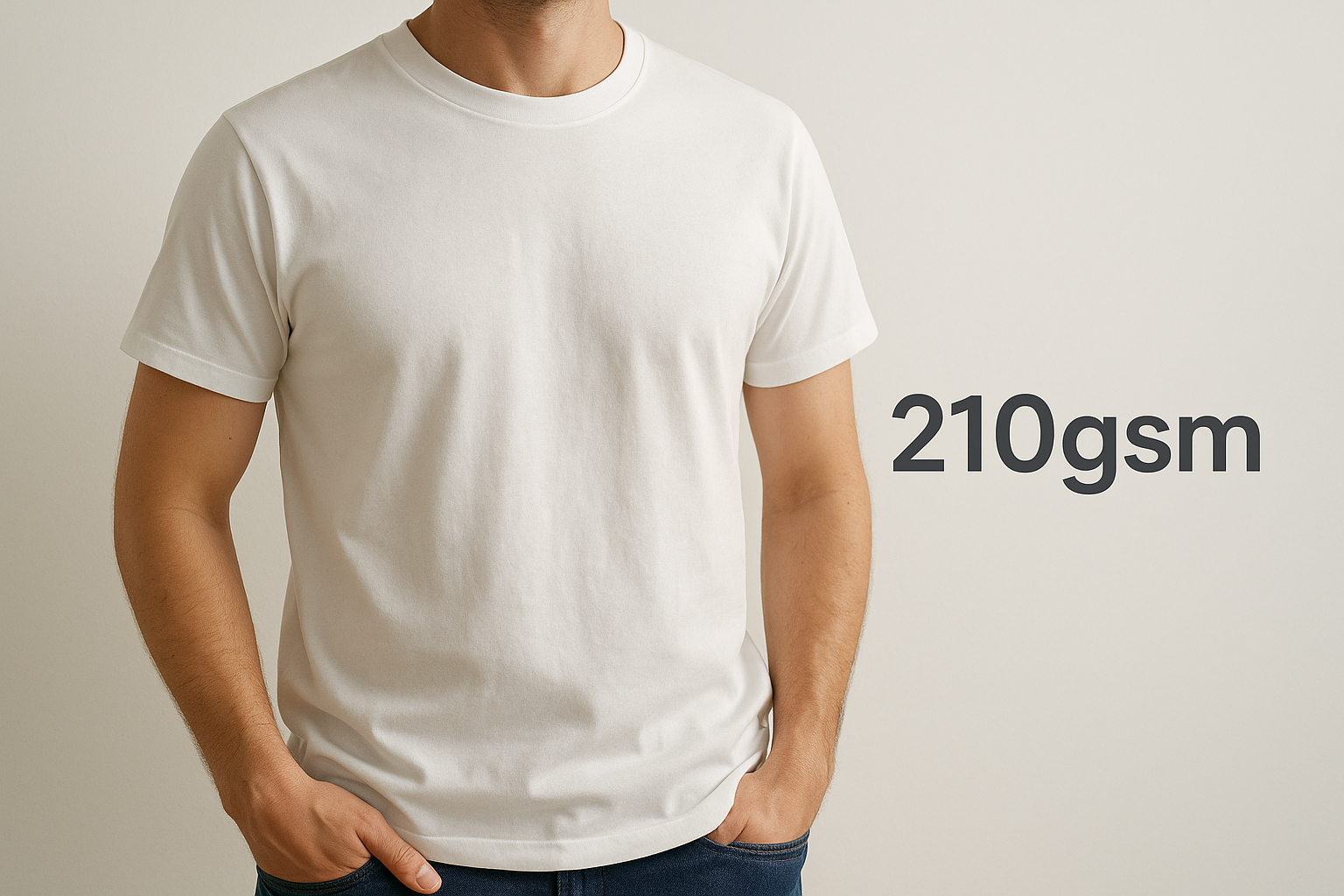
- Under 160gsm: Lightweight, often translucent, minimal structure
- 160-200gsm: Standard weight, typical of mass-market basics
- 200-250gsm: Midweight, better opacity and shape retention
- 250gsm+: Heavyweight, substantial feel, less breathable year-round
At 210gsm, you land firmly in midweight territory: a tee that holds its shape without clinging and drapes cleanly without going see-through.
Fabric weight is one of the most reliable indicators of how a garment performs over time, not the brand name on the tag.
Why Supima cotton is different
Supima cotton is a trademarked, American-grown fiber that accounts for less than 1% of global cotton production. The difference comes down to fiber length: Supima is an extra-long staple cotton, meaning each individual fiber is significantly longer than what standard cotton produces. Longer fibers spin into finer, stronger yarns, which results in fewer exposed fiber ends, less pilling, and a softer surface that holds up through dozens of washes.
Combining Supima's fiber strength with a 210gsm construction gives you a tee that resists the thinning and roughness that turns most basics into rags within a year. For anyone building a wardrobe around fewer, better pieces, that pairing is exactly what makes a 210gsm Supima tee worth the investment.
How 210gsm compares to other tee weights
Knowing where 210gsm sits in the broader weight spectrum helps you make a better buying decision rather than guessing based on brand names. A lightweight tee under 160gsm breathes well in heat but looks thin and tends to fade or pill within months of regular wear. A heavyweight tee above 250gsm feels substantial and structured but can read more like a sweatshirt than a classic t-shirt, especially in warmer weather.
Where 210gsm fits in daily use
A 210gsm Supima tee earns its place by sitting between both extremes. You get enough fabric density to avoid the translucency problem that plagues lighter options, and enough breathability to wear it comfortably through spring and summer. Lighter options below 180gsm also tend to cling to the body and reveal more than most people prefer.
210gsm is the point where a t-shirt stops feeling like an undergarment and starts functioning as a complete outfit.
Heavier options above 260gsm sacrifice breathability for structure, making them better suited as standalone statement pieces than versatile everyday basics. At 210gsm, you keep all-season wearability without giving up the opacity and shape retention that lighter weights simply cannot deliver.
How to spot a high-quality 210gsm Supima tee
Not every brand that lists "Supima" on the label delivers on the promise. A genuine 210gsm Supima tee uses certified fiber, so look for brands that name the specific cotton origin and gsm weight on the product page. If the weight is missing entirely, that's usually a signal the brand doesn't want you making direct comparisons.
What to check before you buy
Feel and construction details tell you a lot before the first wash. Seam quality is one of the clearest indicators: double-stitched side seams handle tension better and resist splitting after repeated wear. Check that the collar ribbing sits flat without curling at the edges, which points to proper construction rather than a cost-cutting shortcut.
A brand confident in its materials will always list the fabric weight and fiber source on the product page, not bury it in fine print.
Look for the words "combed and ring-spun" alongside the Supima label in the fabric description. Combing removes short fibers before spinning, which cuts down on pilling and gives the finished fabric a smoother, more consistent surface that holds up through wash after wash without turning rough or thin.
How to choose fit, size, and style
A 210gsm Supima tee carries enough structure to make fit matter more than it does with a flimsy lightweight option. Because the fabric holds its shape through wash after wash, a poor fit stays visible rather than draping or stretching away from the body the way lighter materials can.
The way a tee fits on day one is exactly how it will fit after 30 washes, so it's worth getting right.
Relaxed vs. fitted cuts
Relaxed cuts work well if you prefer a clean silhouette that layers easily over other pieces or tucks into trousers without bunching. Fitted cuts suit people who want the tee to follow the body more closely, though the midweight fabric construction means it won't cling or stretch out of shape over time.
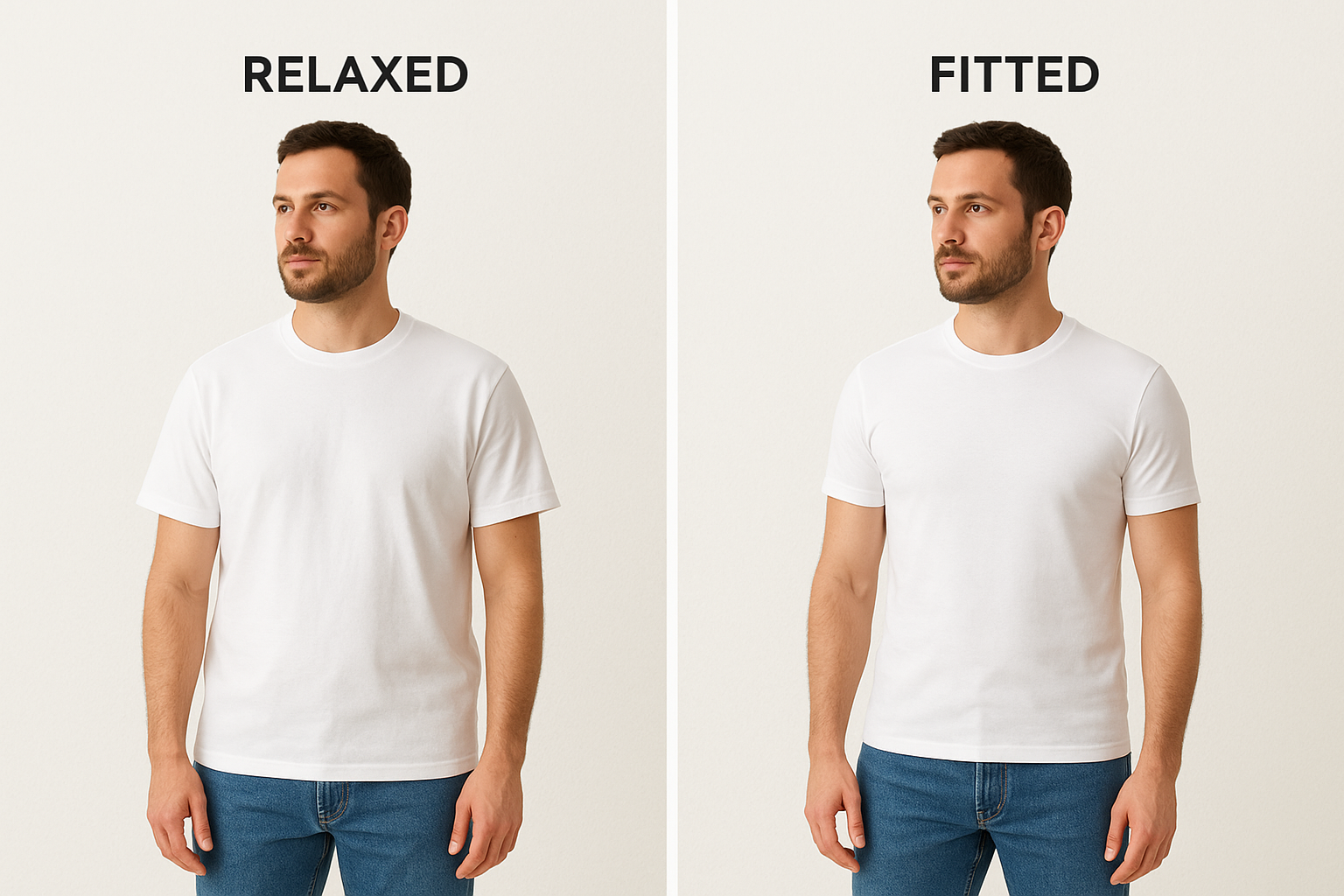
Most brands size midweight tees true to size, but shoulder seam placement is the most reliable fit indicator. The seam should sit right at the edge of your shoulder, not drooping onto your upper arm. Checking the brand's size chart against your actual chest measurement takes two minutes and eliminates most sizing mistakes before they happen.
How to care for Supima tees so they last
Supima cotton's longer fibers give it a durability advantage, but the way you wash and dry a 210gsm Supima tee still determines how long it actually lasts. Treating it correctly from the first wash keeps the fabric from shrinking or losing the softness that makes it worth buying in the first place.
Washing and drying the right way
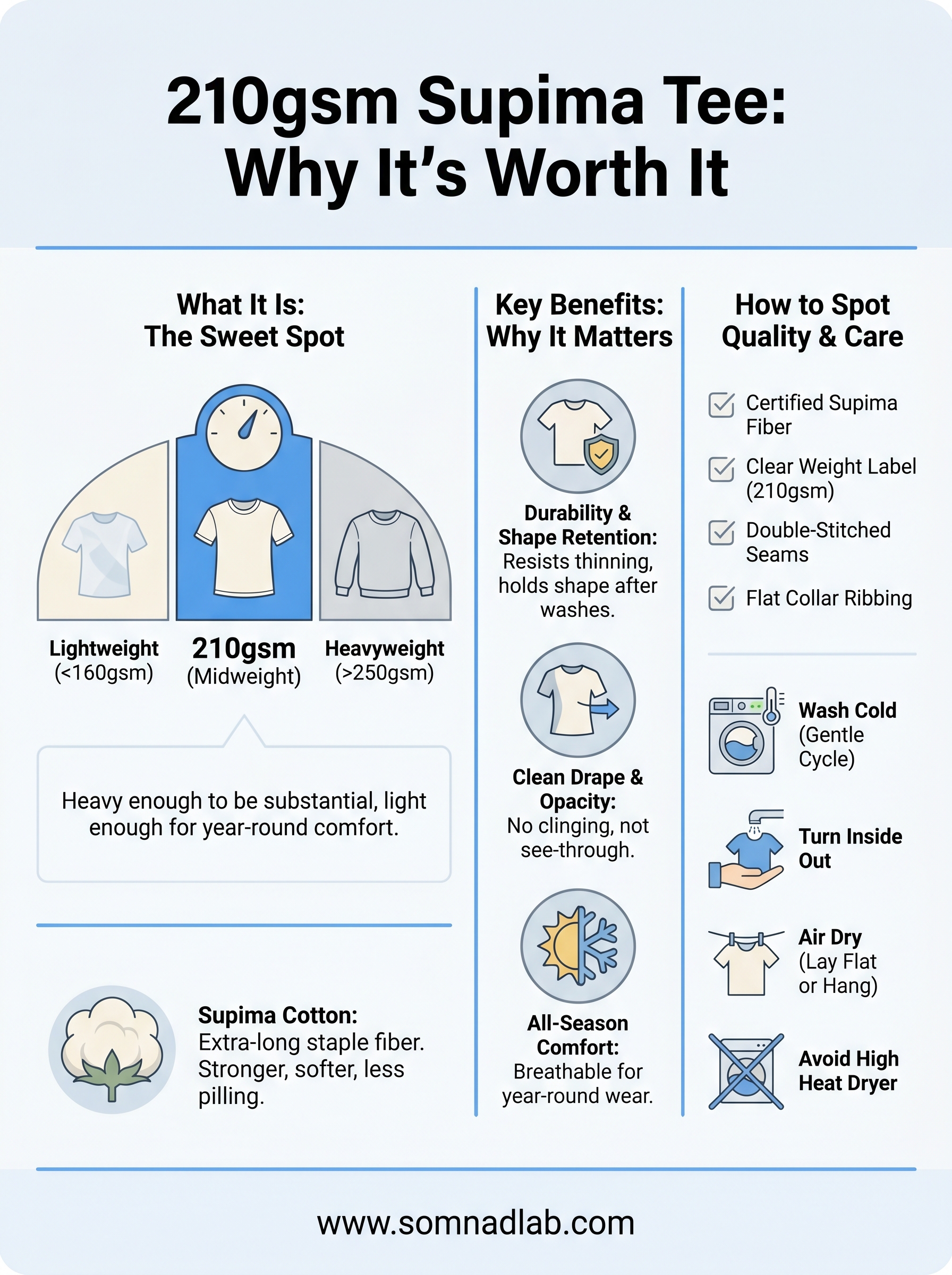
Turn the tee inside out before washing to protect the outer surface from friction and color fading. Cold water on a gentle cycle does the job without stressing the fibers or causing unnecessary shrinkage. Hot water breaks down cotton fibers faster than regular wear does.
The dryer causes more damage to quality cotton than washing does, so air drying is the single best thing you can do for longevity.
Avoid high heat in the dryer entirely if possible. If you use a dryer, low heat for a short cycle removes most moisture without baking the fibers. Pull the tee into shape while it's still slightly damp and lay it flat or hang it to finish drying. That step alone keeps the collar from distorting and the body from losing its clean drape over time.
Final take
A 210gsm Supima tee gives you something most basics don't: a fabric weight and fiber combination that performs consistently over time without falling apart, going thin, or losing its shape after the first dozen washes. You get year-round wearability, better opacity than lightweight alternatives, and a material that rewards proper care with longevity that cheaper options simply can't match.
The details matter when you're buying fewer, better pieces. Certified Supima fiber, clear weight labeling, solid construction at the seams, and a fit that works from day one all separate a genuine quality tee from one that just sounds good on paper. Getting those details right means you stop replacing basics every season and start building a wardrobe that actually holds up.
If that approach to everyday essentials matches how you think about your wardrobe, explore what SÖMNAD builds and see the standard we hold our own basics to.