


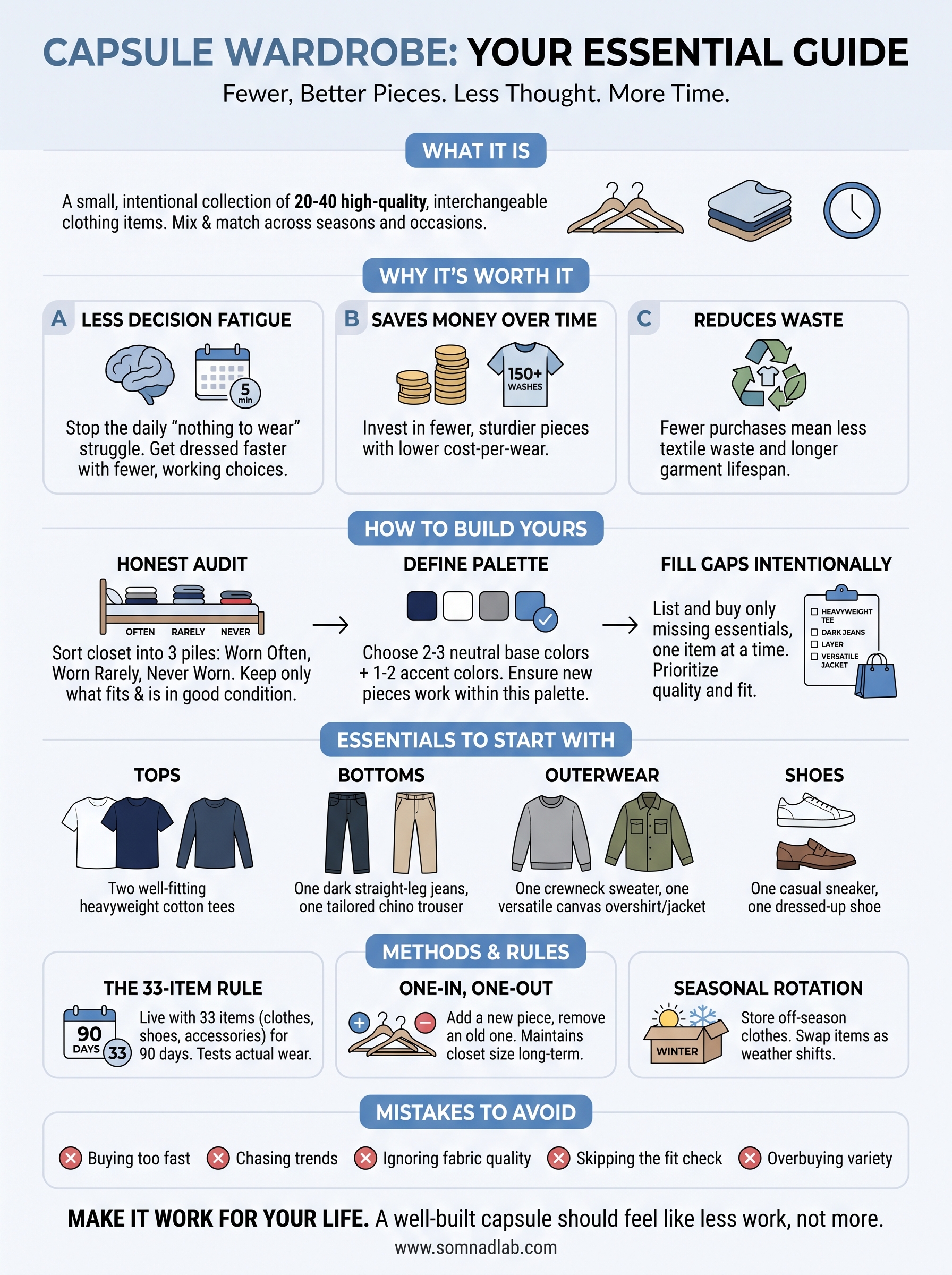
Your closet is packed, yet you still stand there most mornings with nothing to wear. That's the exact problem a capsule wardrobe solves. It's a small, intentional collection of clothing, usually somewhere between 20 and 40 pieces, where every item works with almost everything else you own. No dead weight, no impulse buys gathering dust, just pieces that mix and match across seasons and occasions.
At its core, a capsule wardrobe means choosing fewer, better garments instead of chasing trends or buying in bulk. You pick neutral colors, solid construction, and fabrics that hold up wash after wash, then build outfits by combining and layering those staples in different ways. The result is a closet where getting dressed takes less thought, not more.
This guide walks you through what actually qualifies as a capsule wardrobe, why the concept has stuck around for decades, and the practical steps for building your own from scratch. You'll get a clear framework for auditing what you have, deciding what to keep, and filling the gaps with items designed to last, not just look good on day one.
Why a capsule wardrobe is worth building
Ask anyone who has actually lived with a capsule wardrobe why they stuck with it, and the answer rarely has anything to do with style. It's about friction, or the lack of it. When every piece in your closet works with every other piece, you stop wasting time each morning trying to remember what still fits, what's clean, and what doesn't clash. Getting dressed becomes a five-minute task instead of a small daily negotiation with yourself.
Less decision fatigue, more actual time
Psychologists have a name for what happens when you face too many small choices back to back: decision fatigue. It's the same reason grocery stores stock hundreds of nearly identical cereal boxes and you still leave frustrated. A closet stuffed with 150 items that half-match each other creates that same fatigue before 8 a.m. Trim that down to a curated set of interchangeable staples, and the choice architecture disappears. You're not deciding between hundreds of combinations anymore, just picking from a short list where almost everything already works.
A closet with fewer, better choices costs you less energy than a closet with more options that don't work together.
You save money over time
A capsule wardrobe also changes the math on what you spend. Buying five cheap tees a year at $15 each adds up to the same money as one $75 tee that actually survives 100+ washes without losing its shape. The cost-per-wear calculation almost always favors fewer, sturdier pieces once you track it honestly.
| Approach | Upfront cost | Wears before replacement | Cost per wear |
|---|---|---|---|
| Fast fashion tee | $15 | ~20 | $0.75 |
| Premium cotton tee | $75 | ~150 | $0.50 |
That gap widens fast once you factor in fading, pilling, and stretched-out collars, all of which show up sooner on cheaper fabric.
You cut down on waste
Buying less also means throwing away less, and that matters more than most shoppers realize. The EPA reports that Americans generate over 11 million tons of textile waste every year, much of it from clothing worn only a handful of times before it's discarded (https://www.epa.gov/facts-and-figures-about-materials-waste-and-recycling/textiles-material-specific-data). A capsule wardrobe built on durable construction works against that cycle by design. Fewer purchases means fewer garments heading to a landfill, and clothes that hold their shape for years instead of months naturally reduce your footprint without you having to think about sustainability as a separate goal.
How to build your own capsule wardrobe
Building a capsule wardrobe isn't about buying a curated set overnight. It's a process you work through in stages, starting with what's already hanging in your closet and ending with a short list of pieces you actually need. Rushing this skips the part that makes the whole system work: knowing what you own and how it performs.
Start with an honest audit
Empty your closet onto the bed and sort everything into three piles: worn often, worn rarely, and never worn. Most people find that pile two, the rarely-worn clothes, makes up nearly half their wardrobe. That's the fat you're trimming. Keep only what fits well right now, not what might fit again someday, and set aside anything with visible wear that a good wash won't fix.
You can't build a capsule wardrobe without first knowing exactly what's already taking up space.
Define your color palette
Next, pick two or three neutral base colors (think black, navy, white, or gray) and one or two accent colors that complement them. Every new piece you add should work with this palette, no exceptions. This single rule does more to guarantee mix-and-match flexibility than any other step in the process.
Fill gaps with intention
Once you know what survived the audit and what colors you're working with, list the specific gaps. A capsule wardrobe checklist at this stage might look like:
- One or two well-fitting tees in a heavyweight cotton
- A pair of dark, straight-leg denim jeans
- A neutral layering sweater or crewneck
- One versatile outer jacket for cooler days
- Two pairs of shoes that cover casual and slightly dressed-up occasions
Buy for these gaps only, one item at a time, rather than replacing your whole closet in a single haul. That paced approach keeps you from repeating the same impulse-buying habits a capsule wardrobe is designed to break in the first place.
Capsule wardrobe essentials to start with
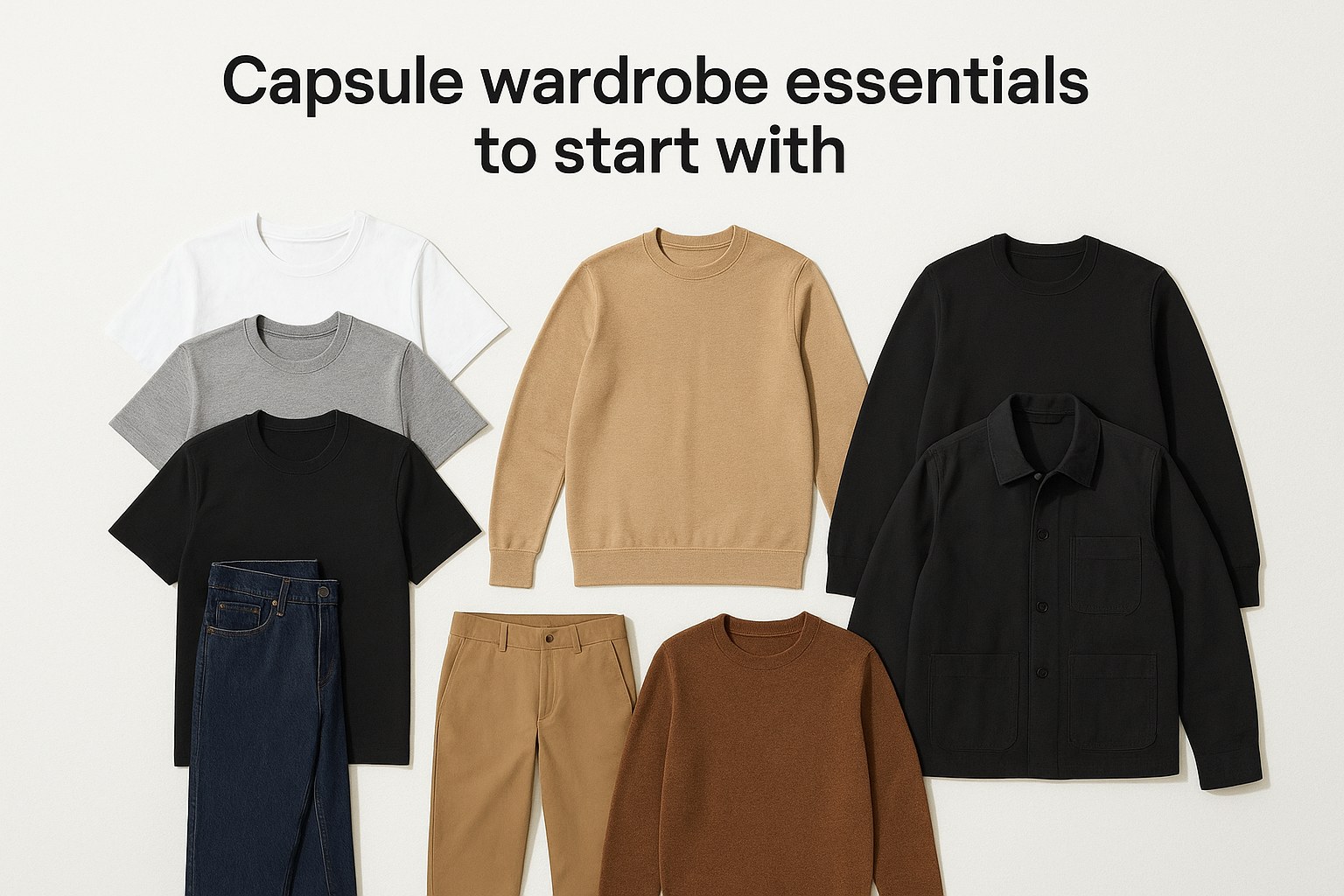
Every capsule wardrobe needs a core set of pieces that do double or triple duty across outfits. These aren't trendy additions, they're the workhorses you'll reach for on repeat, so it pays to buy the best version of each one you can afford rather than settling for whatever's cheapest at checkout.
Tops that anchor everything
Start with two or three well-fitting tees in a heavyweight cotton, something in the 200 to 300 gsm range that holds its shape after dozens of washes instead of thinning out by month three. Add one or two long-sleeve layering pieces in the same neutral palette. These tops sit underneath sweaters, under jackets, or on their own, which is exactly why they carry more outfits than any other category in your closet.
Bottoms you can wear on repeat
One pair of dark, straight-leg jeans and one pair of tailored chinos or trousers cover almost every casual-to-slightly-dressed situation you'll face. Stick to neutral, low-contrast colors here too, since bottoms get worn more often than any single top and need to match the widest range of pieces.
Layers and outerwear
A crewneck sweater and one versatile jacket, something like a canvas overshirt or a lightweight wool coat, round out your temperature range without adding bulk to the closet.
A handful of well-made basics will outperform a closet full of trend pieces every single time.
A starter checklist
| Category | Pieces | Why it matters |
|---|---|---|
| Tops | 2-3 heavyweight tees, 1-2 layering tops | Worn most frequently, sets the tone for fit |
| Bottoms | 1 dark denim, 1 tailored trouser | Matches widest range of tops and shoes |
| Outerwear | 1 sweater, 1 jacket | Covers seasonal shifts without bulk |
| Shoes | 2 pairs (casual + dressed-up) | Rounds out most occasions |
Build from this list first, then expand once you've confirmed each piece earns its spot through actual wear.
Common capsule wardrobe mistakes to avoid
Even with a clear plan, most people trip over the same handful of mistakes when they first try building a capsule wardrobe. Spotting these early saves you from ending up with a smaller closet that still doesn't work.
Buying too fast
Rushing to fill every gap in one shopping trip is the fastest way to undo the whole point of a capsule wardrobe. You end up guessing at fit and color instead of testing pieces against what you already wear. Give each new item a week of actual use before deciding if it earns a permanent spot, and resist the urge to complete the whole list before payday.
A capsule wardrobe built in one weekend rarely survives contact with real life.
Chasing trends instead of basics
A capsule wardrobe isn't the place for a bold print or a seasonal color you'll tire of by spring. Trend pieces pull double duty for maybe one wardrobe cycle, then sit unworn while your neutral staples keep getting used. If you want variety, keep it in accessories, not in the core pieces that need to match everything.
Ignoring fabric quality
A lot of people build a capsule wardrobe around cheap basics, then wonder why the whole system falls apart after six months. Thin cotton pills, seams fray, and colors fade, which means you're back to shopping sooner than planned. Fabric weight and construction matter more here than in a regular wardrobe, since each piece gets worn far more often.
Skipping the fit check
A piece that's slightly off in the shoulders or too short in the body won't get worn no matter how well it matches your palette. Try everything on before it joins the rotation, and don't keep anything you're hoping to "grow into" or "lose weight for." Fit consistency across your closet is what makes outfits feel put together, not just color-matched.
Overbuying variety
Five similar white tees feels like backup, but it's really just clutter in disguise. A true capsule stays lean on purpose, so resist doubling up on pieces that already do the job.
Capsule wardrobe rules and methods worth knowing
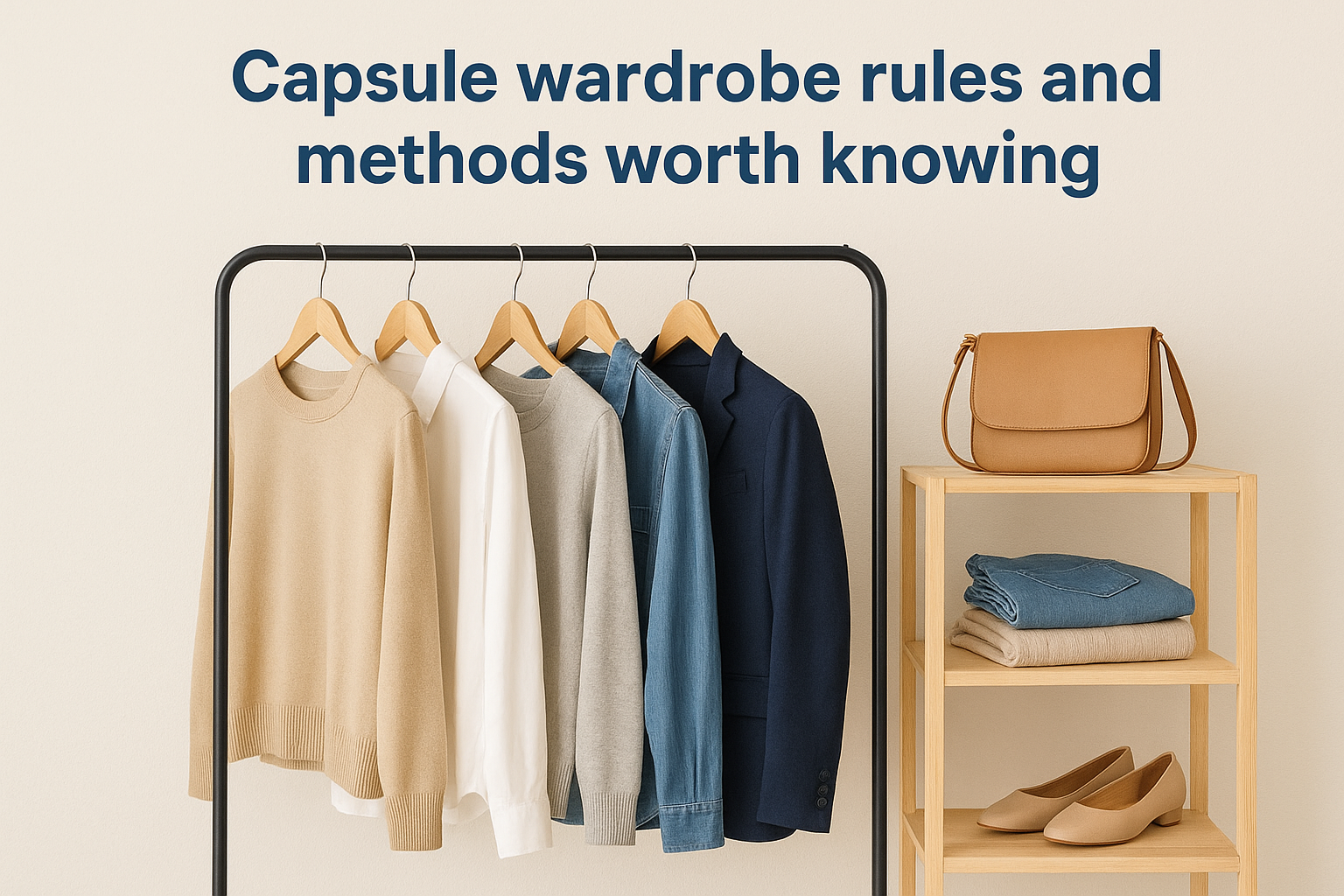
Several named methods have shaped how people approach a capsule wardrobe over the years, and knowing them helps you pick a structure instead of guessing at numbers. None of these are strict laws, they're starting frameworks you can bend to fit your own routine.
The 33-item rule
Caroline Rector's Project 333 popularized the idea of dressing with 33 items for three months, including clothes, shoes, and accessories, but excluding sleepwear and workout gear. It works because the short timeline forces you to notice which pieces you reach for daily and which ones you packed out of habit. Try one 90-day cycle before committing to a permanent number that fits your actual life.
The number matters less than the discipline of tracking what you actually wear.
One-in, one-out
This rule keeps your closet from creeping back up in size. Every time you add a new piece, something else leaves, whether that's a donation, a swap, or a hand-me-down. It's the simplest method here and the easiest to maintain long term, since it never requires a full closet reset.
Seasonal rotation
Rather than keeping every season's clothes accessible at once, store off-season pieces separately and swap them in as the weather shifts. This keeps your active rotation small year-round while still letting you own a coat for January and shorts for July.
Comparing the main methods
| Method | Core rule | Best for |
|---|---|---|
| Project 333 | 33 items for 90 days | Testing what you actually wear |
| One-in, one-out | Add one, remove one | Long-term maintenance |
| Seasonal rotation | Swap stored items by season | Climates with big temperature swings |
Pick one method, run it for a full season, then adjust. Rigid rules rarely survive real life unchanged, but a loose framework keeps your closet from sliding back into clutter.
Making it work for your everyday life
A capsule wardrobe only works if it matches how you actually live, not some idealized version of your mornings. Test the frameworks above, keep what fits your routine, and drop the rest without guilt. The goal was never a perfect number of items, it was a closet where every piece earns its place and getting dressed stops feeling like a chore.
Building one takes patience, but it pays off fast once you notice how little time you spend deciding what to wear. Start small: audit what you own, define your palette, and fill gaps with pieces built to last rather than pieces built to sell fast. Every tee, jean, and jacket you add should outlast a dozen cheaper versions combined.
If you're ready to start filling those gaps with basics made to hold their shape wash after wash, explore SÖMNAD's everyday essentials and see what a well-built capsule feels like.