


Most brands slap a "sustainable" badge on their homepage and call it a day. You're left scrolling through vague claims, stock photos of smiling factory workers, and zero actual proof. If you're trying to figure out how to find ethical clothing brands that back up their words with real practices, the search gets frustrating fast.
This guide gives you a working system, not just a feel-good checklist. You'll learn to read supply chain disclosures, spot the certifications that actually mean something versus the ones that are marketing dressed up as ethics, and use third-party directories built specifically to rate brands on labor and environmental standards.
We cover nine concrete ways to vet a brand before you buy, from checking factory audits to comparing fabric sourcing claims against what's printed on the tag. We built SÖMNAD around the same principles you'll use to evaluate anyone else: honest material sourcing, durable construction, and no marketing noise to hide behind. Read on and you'll walk away with a repeatable process for separating genuinely ethical brands from the ones just borrowing the language.
1. Search ethical fashion directories and rating platforms
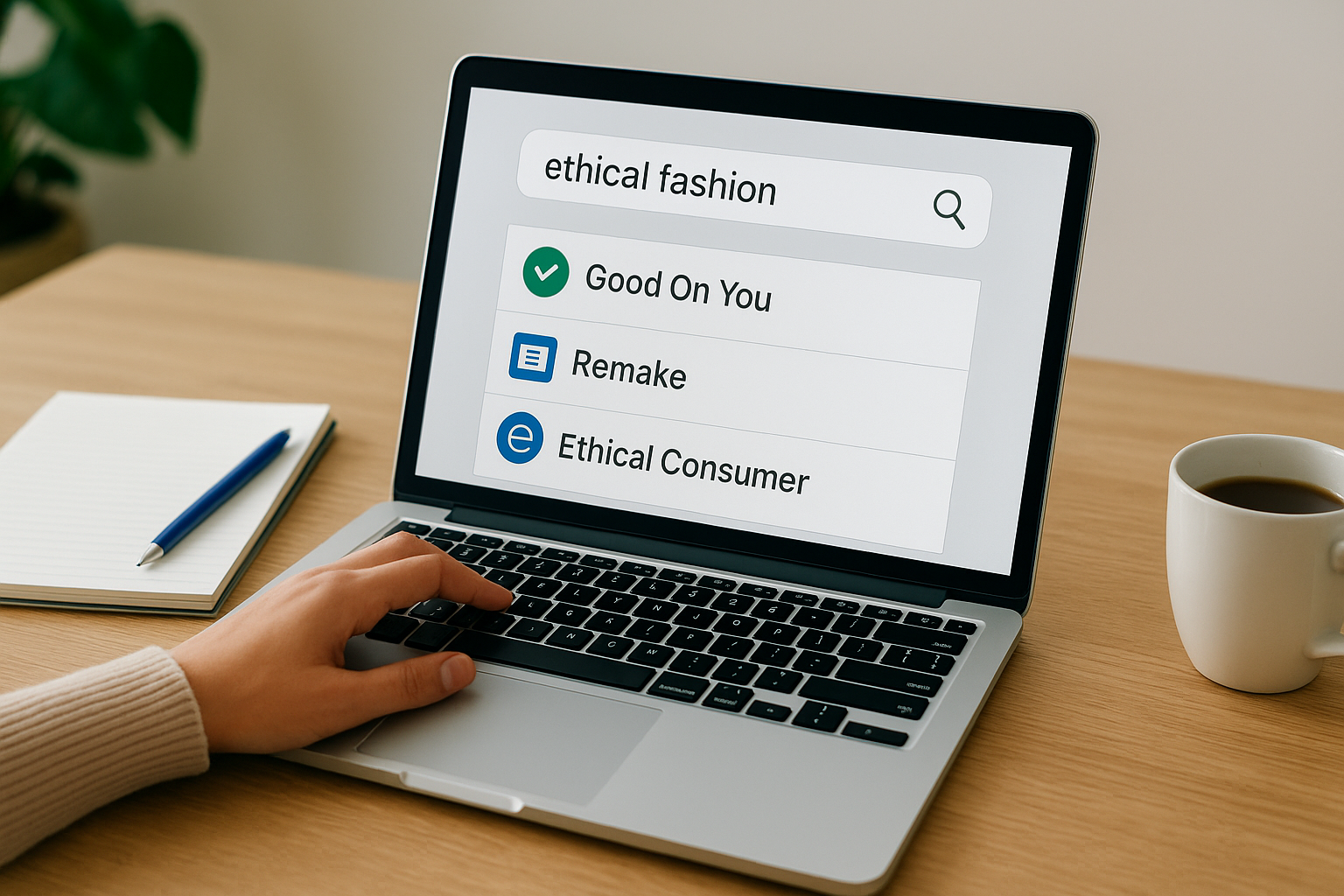
Start here because directories do the grunt work you don't have time for. Sites like Good On You, Remake, and the Ethical Consumer database have already dug through factory audits, labor reports, and environmental filings for thousands of brands. Instead of guessing whether a brand's "sustainable" claim holds up, you get a pre-researched rating based on actual documentation. This is the fastest starting point when you're learning how to find ethical clothing brands without spending your weekend cross-referencing supply chains yourself.
How it works
Most directories assign a letter grade or score (often 1 to 5) across three categories: labor, environment, and animal welfare. Good On You, for example, pulls from over 30 data points including factory certifications, wage transparency, and chemical management before rating a brand "We Avoid," "Not Good Enough," "It's a Start," "Good," or "Great." Remake takes a similar approach but weights worker treatment more heavily, publishing an annual accountability report that names brands by score rather than burying them in a vague category. You search the brand name, and the platform shows you where the rating came from, usually with links to the source audits or reports.
What to look for
Don't just glance at the overall score. Click into the breakdown, because a brand can score high on environment while scoring poorly on labor, or vice versa. Check the date of the last review too. Some directories update annually, others less often, and a brand's practices can shift after a rating goes stale.
| Platform | Focus areas | Rating format |
|---|---|---|
| Good On You | Labor, environment, animal welfare | 5-tier score |
| Remake | Worker wages, transparency | Letter grade (A-F) |
| Ethical Consumer | Environment, labor, animal welfare, politics | 0-20 point score |
| Fashion Revolution | Supply chain transparency | Annual % score |
Here's a quick way to work through a rating before you trust it:
- Note the overall score, then open the category breakdown.
- Check when the data was last verified.
- Look for a linked source document, not just an internal claim.
- Compare the score against the brand's own sustainability page and flag any mismatch.
A rating without a visible source behind it is just an opinion with better formatting.
Best for
Directories work best when you're shopping across a lot of brands at once, like building a new capsule wardrobe or comparing five denim companies before you buy. They're less useful for tiny, newer labels that haven't been reviewed yet, since coverage skews toward brands with enough scale to attract scrutiny. If a brand isn't listed anywhere, that's not automatically a red flag, but it does mean you'll need to fall back on the other methods in this guide, starting with certifications, to do your own verification instead of relying on someone else's.
2. Look for recognized third-party certifications
Certifications exist because self-reported claims aren't verifiable on their own. A third-party certification means an independent body actually inspected the factory, tested the fabric, or audited the payroll records, rather than taking the brand's word for it. When you're figuring out how to find ethical clothing brands, this is the step that turns marketing language into something you can actually check against a standard.
How it works
Certification bodies set specific criteria, then send auditors to verify a brand or supplier meets them before issuing a seal. GOTS (Global Organic Textile Standard) checks organic fiber content and chemical use through the whole production chain, not just the raw cotton. Fair Trade Certified focuses on wages and working conditions at the factory level. OEKO-TEX tests the finished fabric for harmful substances. None of these are self-assessments, they require renewal, and most publish a public database where you can look up whether a specific product or facility is currently certified.
| Certification | What it verifies |
|---|---|
| GOTS | Organic fiber content and chemical processing |
| Fair Trade Certified | Factory wages and working conditions |
| OEKO-TEX | Harmful substances in finished fabric |
| B Corp | Overall social and environmental performance |
What to look for
Check the certification number against the issuing body's public database rather than trusting the logo alone. Some brands print a certification badge on old inventory even after the certification lapsed. Also pay attention to scope: a brand might hold OEKO-TEX certification for one fabric line while the rest of its collection has no third-party check at all.
A logo on a hangtag means nothing until you can verify it against the certifier's own database.
Best for
Certifications work best when you want a quick, verifiable checkpoint for a specific product, like confirming a t-shirt's cotton is actually organic before you pay a premium for it. You can verify claims through the GOTS public database directly. They're less useful for judging a brand's overall ethics, since a single certified fabric doesn't guarantee the rest of the supply chain meets the same bar.
3. Read the brand's supply chain transparency reports
Certifications tell you a fabric or factory passed a specific test. A transparency report tells you the whole story: which factories a brand uses, where they're located, and sometimes what those factories pay workers. If you want to know how to find ethical clothing brands that aren't just cherry-picking one certified product line, this is where you start reading the fine print instead of the marketing copy.
How it works
Brands that take transparency seriously publish a supplier list, usually a PDF or a searchable page, naming the factories that make their clothes and where those facilities sit. Some go further and share a Higg Index score, which measures environmental impact across water use, energy, and chemical management at the facility level. Patagonia and Everlane both publish factory lists you can cross-reference against independent audit databases. The report should update at least annually, and it should name specific facilities, not just countries or regions.
What to look for
Watch for vague language like "ethically made" or "responsibly sourced" without a linked document backing it up. A real transparency report names factories, dates the audit, and discloses problems it found, not just the ones it fixed. Here's a quick checklist to run through:
- Does the brand publish a factory list with specific names and locations?
- Is there a published date on the most recent audit?
- Does the report disclose any violations found, or only successes?
- Can you find the same factory names in an independent database like the Open Apparel Registry?
If a brand can't name a single factory, it can't back up a single ethics claim.
Best for
Transparency reports work best when you're evaluating a mid-size or larger brand that has enough scale to publish real supplier data. Smaller labels sometimes skip formal reports entirely, not because they're hiding anything, but because they haven't built the infrastructure yet. In that case, a direct email asking which factory makes their garments, covered later in this guide, does the same job on a smaller scale.
4. Examine the fabrics and material sourcing
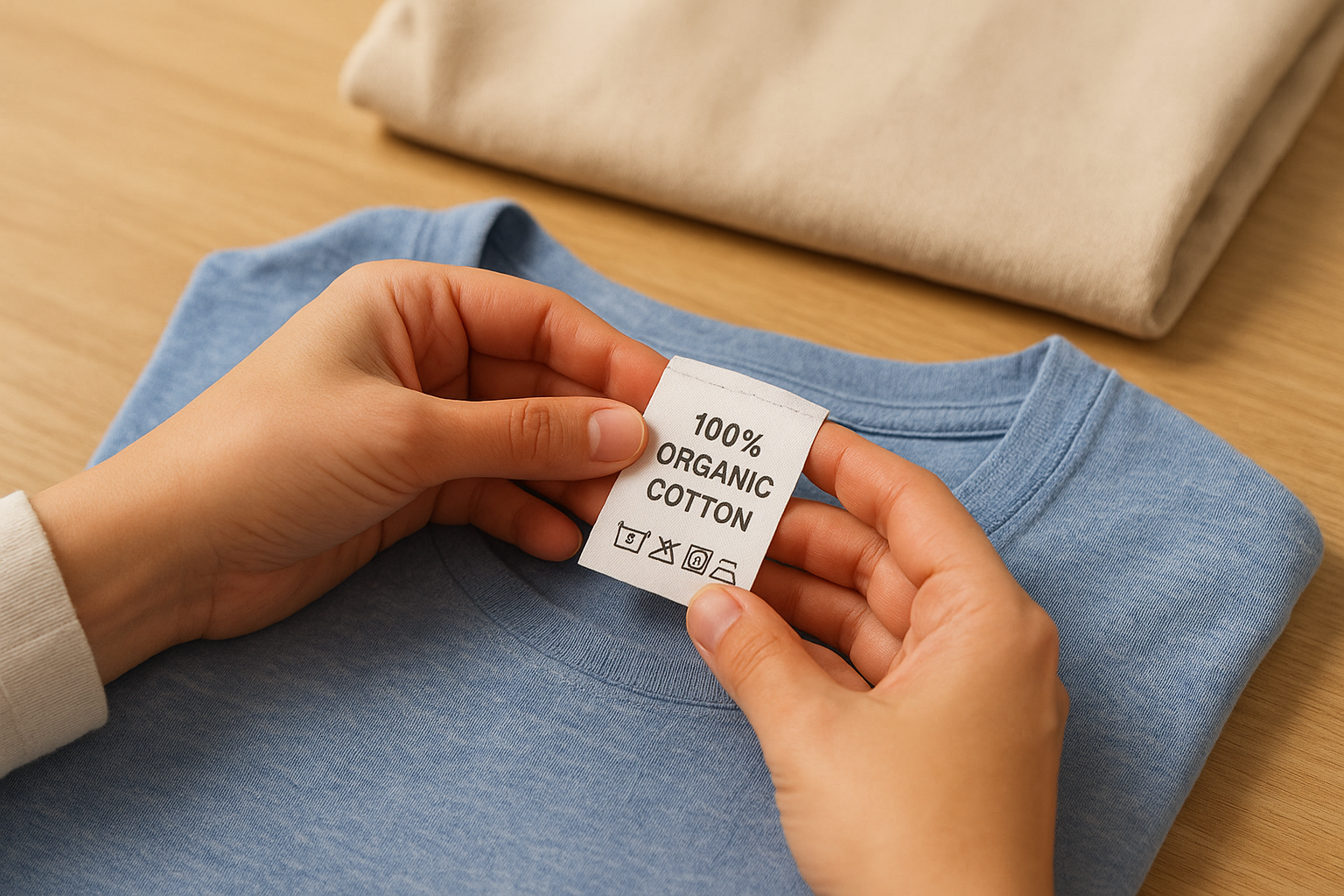
Fabric is where a lot of "sustainable" claims fall apart under scrutiny. A brand can talk about worker welfare all day, but if the shirt is 100% virgin polyester dyed with conventional chemicals, the environmental math doesn't hold up. When you're working out how to find ethical clothing brands, checking the actual fiber content on the tag against what the brand claims on its website is one of the fastest ways to catch inflated marketing.
How it works
Start with the care label, not the product description. Look for specifics: organic cotton, Tencel, recycled polyester, or deadstock fabric, versus generic terms like "eco-friendly materials" that don't name an actual fiber. Then check how the brand sources that fiber. Supima cotton, for example, is grown almost exclusively in the US under strict fiber-length standards, which makes sourcing easier to verify than cotton pulled from a mixed global supply chain. A brand that names its cotton variety, its mill, or its dye process gives you something concrete to check. One that just says "premium fabric" gives you nothing.
What to look for
Run through this list before trusting a fabric claim:
- Does the tag name a specific fiber, not just a category like "natural fabric"?
- Does the brand disclose the country or region where the fiber was grown or processed?
- Is there a blend percentage listed, or does "cotton" secretly mean 60% polyester?
- Does the brand mention dye or finishing chemicals, or stay silent on that step entirely?
If a brand won't name its fiber source, assume the fabric claim is marketing, not fact.
Best for
This method works best when you're comparing basics and staple items, like tees, sweatshirts, and denim, where fabric quality drives most of the environmental and durability impact. It's less useful for judging labor conditions or factory practices, since a great fiber can still come from a factory with poor wages. Pair this check with a certification lookup or a supply chain report to cover both sides: what the garment is made of, and who made it.
5. Check independent ethical brand scorecards
Directories in section one give you a quick score, but independent scorecards dig deeper into a single brand and publish the methodology behind the number. Instead of a five-tier badge, you get a document that shows exactly which questions the brand answered, which it dodged, and how that stacks up against competitors in the same category. If you're serious about how to find ethical clothing brands beyond a surface rating, scorecards are where the homework actually gets shown.
How it works
Organizations like Fashion Revolution publish an annual Fashion Transparency Index that scores hundreds of major brands on a 250-point questionnaire covering policy, traceability, and worker wellbeing. Baptist World Aid runs a similar model with its Ethical Fashion Report, grading brands from A to F based on direct surveys sent to the companies themselves. The key difference from a directory rating is that scorecards usually publish the raw questionnaire responses, so you can see whether a brand answered honestly or left entire sections blank. A blank section counts against the score, which is a detail most marketing pages conveniently skip.
What to look for
Read past the letter grade and check which specific questions dragged the score down. A brand can land a B overall while scoring an F on living wage commitments, which matters a lot if labor conditions are your main concern.
A single letter grade hides more than it reveals until you check which questions actually failed.
Run through this before trusting a scorecard result:
- Confirm the report year, since scores shift annually as brands update policies.
- Check whether the brand responded directly or was scored using public data only.
- Look for the specific category (wages, traceability, environment) driving the grade.
- Cross-reference the same brand against a second scorecard to see if the results agree.
Best for
Scorecards work best when you're deciding between two or three large brands in the same category and want more nuance than a directory badge offers. They're less practical for small, independent labels that don't have the resources to respond to a formal survey, so absence from a scorecard says more about company size than actual ethics.
6. Investigate labor practices and worker wages
Certifications and scorecards give you a snapshot, but wage data specifically deserves its own check because it's the metric brands most often blur. A factory can pass a safety audit and still pay workers below what covers basic needs in that region. If you're serious about how to find ethical clothing brands, you need to separate "legal minimum wage" from "living wage," because brands love to advertise the first while ignoring the second.
How it works
Living wage calculations come from independent researchers like the Global Living Wage Coalition, who compare local cost of living against actual factory pay in a given country. A brand committed to fair labor will state whether it pays a living wage, name the benchmark it uses, and show progress toward closing any gap. Organizations like the Worker Rights Consortium and Clean Clothes Campaign publish factory-specific complaints and wage investigations you can search by brand name, giving you a record that exists outside the company's own reporting.
What to look for
Watch for the difference between a brand saying it pays "above minimum wage" and one that discloses an actual living wage gap with a timeline to close it. Minimum wage in many garment-producing countries sits well below what covers rent and food, so that phrase alone tells you almost nothing.
Paying above minimum wage still isn't the same as paying a living wage.
Run through these questions before trusting a labor claim:
- Does the brand name a specific living wage benchmark, not just "fair pay"?
- Has the Worker Rights Consortium or Clean Clothes Campaign logged any complaints against its factories?
- Does the brand disclose a timeline for closing any wage gap, or just a vague promise?
- Are unions allowed to organize in the named facilities?
Best for
This method works best when labor conditions matter more to you than fabric or environmental impact, since it digs directly into pay and factory treatment rather than materials. It's slower than checking a directory score, so save it for brands you're already leaning toward buying from repeatedly, not every label you glance at once.
7. Review environmental and circularity commitments
Beyond fabric sourcing sits a bigger question: what happens to the garment after you're done with it. Circularity commitments cover take-back programs, repair services, and recycled content targets, all of which tell you whether a brand is planning for a product's whole life or just its first sale. Anyone researching how to find ethical clothing brands should treat this as a separate check from labor or fiber sourcing, since a brand can nail both and still produce clothes destined for a landfill in two years.
How it works
Look for a published sustainability roadmap that sets specific, dated targets rather than a general commitment to "reduce impact." A brand serious about circularity states its current recycled content percentage, names a target year for increasing it, and often runs a take-back or resale program you can actually use. Patagonia's Worn Wear program and Eileen Fisher's Renew resale line are two examples that go beyond a pledge and into operating infrastructure.
What to look for
Check the report for numbers, not adjectives. "Committed to sustainability" means nothing without a percentage or a deadline attached to it.
- Does the brand state a current recycled or deadstock material percentage?
- Is there a target year for reducing virgin material use?
- Does the brand offer repair, resale, or take-back options?
- Is water and carbon data reported per garment, or only as a vague company-wide statement?
A sustainability pledge without a number and a deadline is just a mission statement.
Best for
Circularity checks matter most if you're buying items meant to last years, like outerwear or denim, where end-of-life planning actually gets used. It matters less for a brand's one-off collaboration piece you'll wear for a season, so weigh this method heavier for core, repeat-purchase categories than for limited drops. Combine it with the EPA's textile waste data to see how a brand's claims stack up against industry-wide numbers.
8. Ask the brand direct questions about production
All the directories and certifications in the world can't replace a straight answer from the brand itself. Direct outreach forces a company to respond in real time, and how they respond, fast and specific versus slow and vague, tells you almost as much as the content of the answer. If you're still working out how to find ethical clothing brands after checking public data, emailing the brand directly closes the gaps that reports and scorecards leave open.
How it works
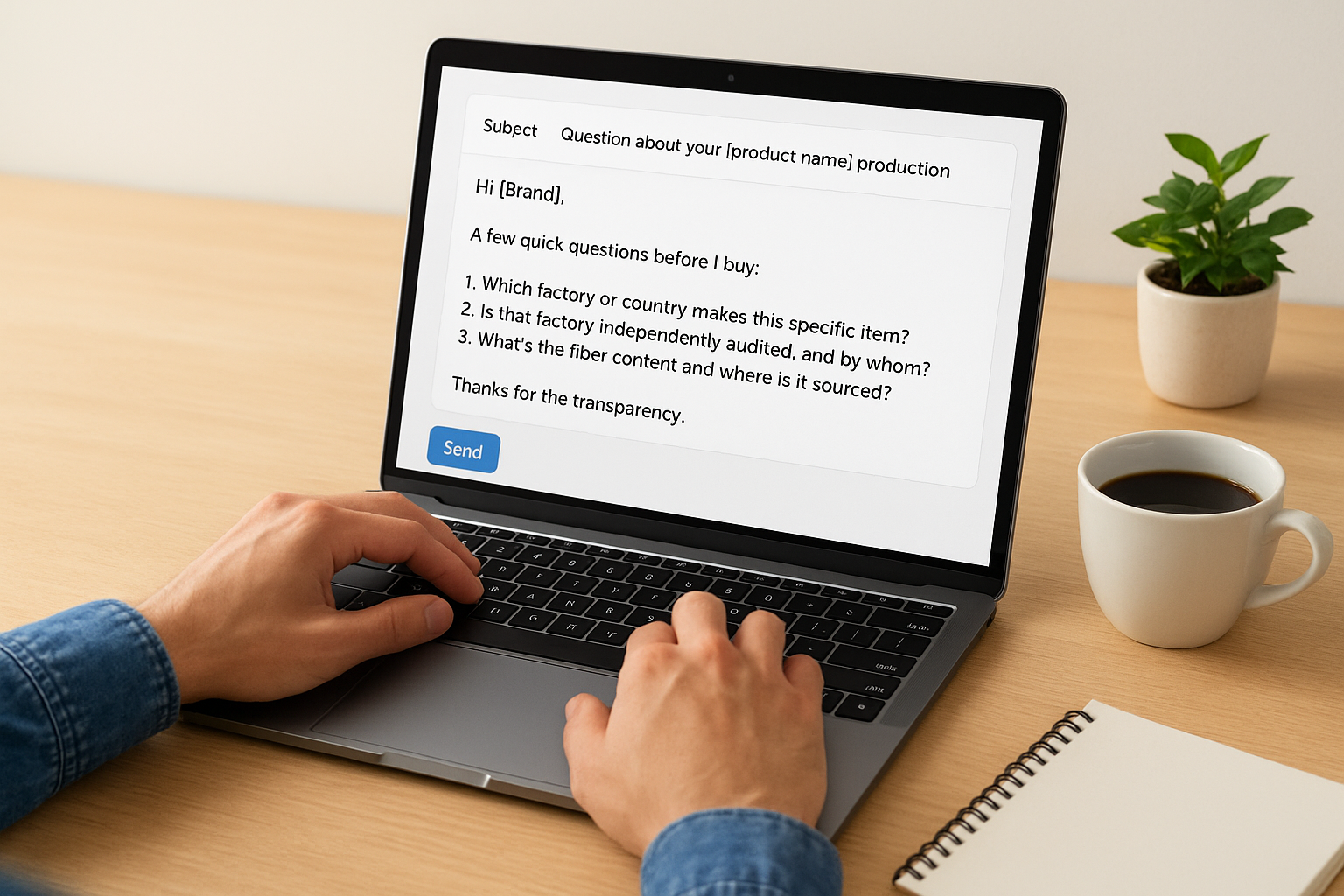
Send a short, specific email through the brand's customer service address or a public contact form, and ask for something concrete rather than a general reassurance. A brand with nothing to hide usually answers within a few days and names an actual factory, certifier, or fabric supplier. One that stalls, sends a copy-pasted marketing paragraph, or ignores the question entirely is telling you something too.
Subject: Question about your [product name] production

Hi [Brand],

A few quick questions before I buy:
1. Which factory or country makes this specific item?
2. Is that factory independently audited, and by whom?
3. What's the fiber content and where is it sourced?

Thanks for the transparency.
What to look for
Pay attention to specificity, not tone. A friendly reply that dodges the factory name is worse than a blunt one that names it. Response speed and detail matter more than how polished the email sounds.
If a brand can't name its own factory in an email, it probably can't back up its ethics claims anywhere else either.
Run through this before deciding the answer counts as trustworthy:
- Did they name a specific factory or region, not just "our overseas partners"?
- Did they cite a certifier or audit body by name?
- Did they answer within a reasonable window, roughly a week?
- Did the reply match what's already published on their site, or contradict it?
Best for
This method works best for smaller or newer brands that haven't published formal reports yet, since a direct question fills the gap that larger companies cover with public disclosures. It's also useful as a tiebreaker when two brands score similarly on a directory or scorecard and you need one more data point to decide.
9. Tap into ethical fashion communities and forums
Directories and certifiers move slowly. Community forums move fast, and they catch problems long before an official report gets published. Reddit threads, dedicated Discord servers, and Instagram comment sections often surface a factory closure, a wage dispute, or a quality drop months before Good On You or Fashion Revolution updates their data. If you're still refining how to find ethical clothing brands after working through the more formal checks, this is where real customers compare notes in real time.
How it works
Subreddits like r/EthicalFashion and r/malefashionadvice's sustainability threads collect firsthand reviews from people who've actually worn the garment for a year, not just unboxed it. Search the brand name plus "ethical" or "sustainability" and you'll usually find a thread within a few pages. Facebook groups built around slow fashion and capsule wardrobes serve the same function, often with members who've emailed brands directly and shared the responses. These spaces work because nobody's getting paid to post a glowing review.
What to look for
Weigh recent posts more heavily than old ones, since a brand's sourcing and factory relationships shift year to year. Look for specifics: a commenter naming a factory location, quoting an actual email reply, or posting a photo of a garment falling apart after light wear tells you more than a one-line "love this brand!" comment.
- Search for the brand name alongside terms like "factory," "wage," or "quality control"
- Check post dates and favor threads from the last 12 months
- Look for repeat complaints across multiple threads, not just one outlier
- Cross-reference any claim made in a forum against a certifier database before treating it as fact
A single scathing review means little, but the same complaint repeated across five threads means something.
Best for
Forums work best as a final gut check after you've already run a brand through directories, certifications, and a direct email. They're not a substitute for verified data, since anyone can post anything, but they're excellent at catching recent problems that official reports haven't caught up to yet.
Building a wardrobe you can trust
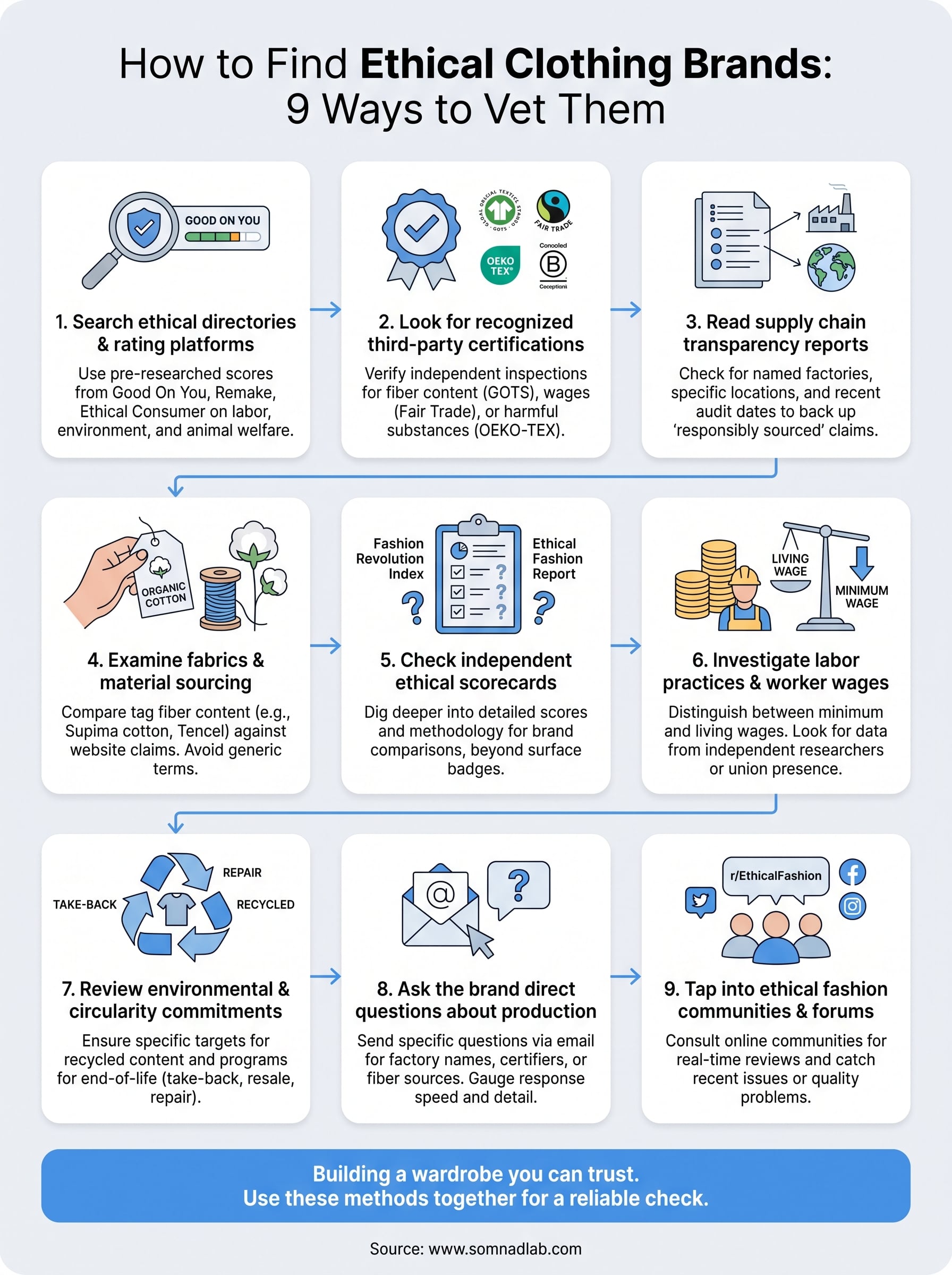
None of these nine methods work well alone. Directories give you a starting score, certifications verify a specific claim, and a direct email fills in whatever gap is left. Run a brand through two or three of these checks before you buy, and you'll catch the difference between real transparency and a well-designed marketing page fast. That's the whole point of learning how to find ethical clothing brands in the first place: building a habit, not chasing a one-time answer.
Once you've got the process down, use it on us too. We publish our fabric sourcing, our fit philosophy, and our stance on why we skip logos entirely, so you're not just taking our word for it. If you want a relaxed tee built on the same standards you just learned to check for, see how SÖMNAD makes its basics and judge it against everything in this guide.