


You've probably seen silk blend t-shirt options popping up as the fabric of the moment, promising a cooler, more luxurious feel than plain cotton. But before you spend real money on one, you want to know if it actually holds up when the temperature climbs, not just how it looks on a hanger.
Here's the short answer: breathability depends on the blend ratio and weave, not just the presence of silk. A shirt that's mostly polyester with a trace of silk will trap heat no matter what the label claims, while a genuine silk-cotton or silk-linen mix can feel remarkably light and airy against skin. Whether it's actually suitable for summer comes down to fiber percentage, weight, and how the fabric is constructed.
In this guide, we'll break down what a silk blend really is, how it compares to pure Supima cotton for everyday wear, and what to check on a product page before buying. We'll also cover why some brands, including ours, stick with 300g Supima cotton instead of silk blends, and when a silk mix might genuinely be worth it for your closet.
Why breathability matters in a silk blend t-shirt
Ask anyone who's worn a synthetic-heavy shirt through a humid July afternoon and they'll tell you fabric choice makes or breaks your comfort long before style ever enters the conversation. Silk blend t-shirt fans often assume silk's reputation for luxury automatically means it breathes well, but that's not always true. The fiber's natural cooling properties only show up when it makes up a meaningful share of the fabric, and when the weave lets air move instead of trapping it against your skin.
How silk fibers behave in heat
Silk itself is a protein fiber, and the finest grades, like mulberry silk, are genuinely good at moisture-wicking, pulling sweat away from your body and letting it evaporate instead of pooling. That's why pure silk pajamas and scarves feel cool to the touch even on warm nights. Combined with a light color and a loose weave, silk can rival cotton for comfort in hot weather. Combined with cheap synthetic filler, though, that natural advantage disappears fast, no matter what the hangtag promises.

A silk blend only breathes as well as its weakest fiber and its tightest weave.
The blend ratio problem
Manufacturers rarely spell out is a silk blend t shirt breathable in plain language on the tag, so you have to do the math yourself from the fiber percentage. A 70/30 silk-cotton blend behaves very differently from a 20/80 silk-polyester mix, even though both get marketed under the same "silk blend" label.
| Blend type | Typical breathability | Best for |
|---|---|---|
| Silk-cotton (majority silk) | High | Warm, humid climates |
| Silk-linen | Very high | Hot, dry summers |
| Silk-polyester (majority poly) | Low | Cooler weather, structured looks |
| Silk-modal | Moderate to high | Mild heat, draping tees |
Check that breakdown against the care label before you buy, because the marketing name on the front of the package tells you almost nothing on its own.
How to choose a silk blend t-shirt for summer
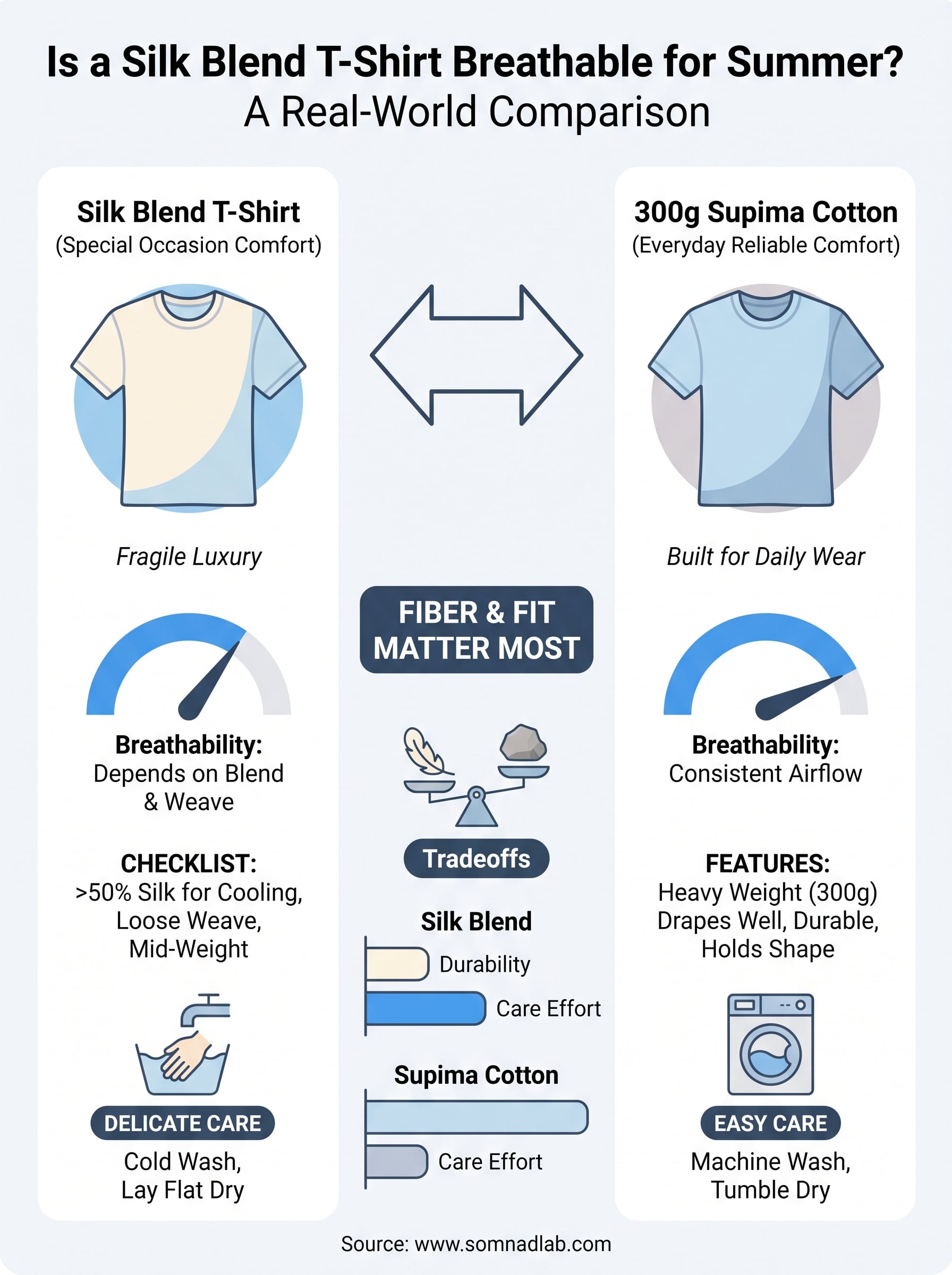
Shopping for a silk blend t shirt for summer means reading past the marketing copy and checking three things: fiber percentage, fabric weight, and weave openness. A tag that just says "silk blend" without numbers should raise a flag, since that vagueness often hides a majority-synthetic mix.
What to check before buying
Go through this quick checklist on any product page before you add a silk blend to your cart, and use the same fabric and stitch tests that reveal quality clothing once the shirt is in your hands:
- Fiber percentage: Look for silk content above 50% if you want real cooling benefit.
- Fabric weight: Anything under 150 grams per square meter drapes light but wears thin fast; heavier isn't always cooler if the weave is dense.
- Weave type: Loose or slightly textured weaves let air pass through better than tight, satin-like finishes.
- Color: Lighter shades reflect heat instead of absorbing it, which matters more in silk blends than people expect.
- Fit: A relaxed cut lets air circulate under the fabric, doing half the cooling work the material can't do alone.
If the label hides the fiber math, assume the blend leans synthetic.
Where fit and weight actually matter more than fiber alone
Sometimes a well-cut, mid-weight blend beats a high-silk-percentage shirt that's cut tight and clings to skin. Testing the drape in person, or reading verified customer reviews on sizing, tells you more than any spec sheet. That's also why brands built around 300g Supima cotton, like SÖMNAD's relaxed tee, focus on fit and weight as much as raw fiber content.
How to care for your silk blend t-shirt
Owning a silk blend t-shirt means treating it more like a delicate garment than a gym tee, since the silk fibers weaken faster than cotton under heat and harsh detergent. Skipping this step is the fastest way to turn a breathable summer shirt into a dull, stiff one after a handful of washes.
Washing without damaging the silk fibers
Running a silk blend through a regular hot cycle strips the natural sheen and shortens the fiber's lifespan within a season. Stick to these steps instead:
- Cold water wash, always, even for lightly worn shirts.
- Delicate cycle or hand wash with a mild, pH-neutral detergent.
- Skip bleach and fabric softener, both break down protein fibers over time.
- Turn the shirt inside out to protect the outer surface from friction.
Heat and harsh detergent do more damage to silk blends than everyday wear ever will.
Drying and storage tips
Laying the shirt flat to dry keeps the weave from stretching out of shape, something that happens quickly when silk blends hang wet on a hanger. Never toss one in the dryer, since tumble heat is exactly what breaks down the fiber's cooling properties over time. Folding rather than hanging long-term also prevents shoulder bumps in lighter weaves. Compare that to a 300g Supima cotton tee, where the washing and drying instructions allow a normal machine cycle without losing shape, one more reason low-maintenance basics often win out for everyday rotation.
Silk blend vs. other summer fabrics
Putting a silk blend t-shirt side by side with linen, pure cotton, and synthetic performance tees shows why fiber choice matters more than marketing language, and why comparing t-shirt fabrics for every need is worth doing before you buy. Each fabric handles heat, moisture, and daily wear differently, and none of them wins on every count. Knowing the tradeoffs upfront saves you from buying a shirt that looks right on paper but disappoints after one hot afternoon.
Comparing the options that matter for summer
Linen breathes exceptionally well and dries fast, but it wrinkles hard and needs ironing to look presentable, which is why many people reach for linen blend tees for cool summer style instead. Pure cotton, especially heavier weaves like 300g Supima, offers reliable airflow, softness, and durability without the fragility silk blends carry. Synthetic tees wick sweat efficiently but trap odor and rarely feel as soft against skin over a full day.
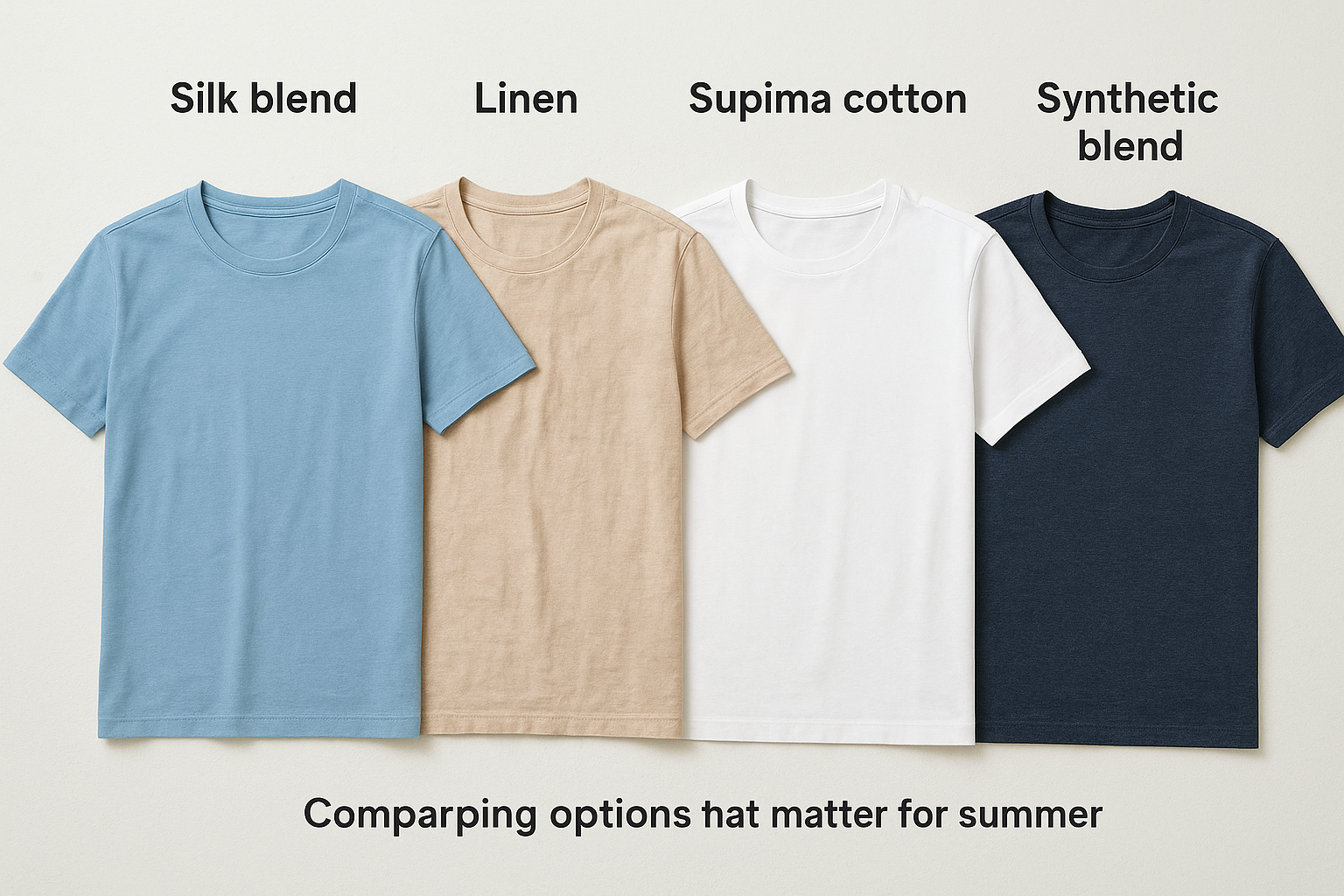
| Fabric | Breathability | Durability | Maintenance |
|---|---|---|---|
| Silk blend | High if silk-majority | Moderate, fragile | High care needed |
| Linen | Very high | High | Wrinkles easily |
| Supima cotton | High | Very high | Low, machine washable |
| Synthetic blend | Moderate | High | Low, but retains odor |
No single fabric wins on breathability, durability, and easy care all at once.
Why fiber content still beats fabric name
A cheap silk-polyester blend can breathe worse than a well-woven cotton tee, which is why the name on the tag matters less than the numbers behind it, the same lesson that shows up when you weigh cupro against real silk. If you want something dependable for everyday summer wear without babying it through delicate cycles, a heavier cotton weave often outperforms a silk blend that demands constant care to stay looking good.
Staying cool without compromise
A silk blend t-shirt can absolutely deliver cool, breathable comfort in summer, but only when the silk percentage is high, the weave is open, and you're willing to hand wash and lay flat every single time. Skip any of those conditions and you end up with a shirt that looks premium but performs worse than a basic cotton tee.
Getting real summer breathability doesn't require chasing a trendy fabric name or babying a delicate blend through every wash cycle. Heavier natural fibers built for daily wear often deliver the same airy feel with none of the fuss, holding their shape wash after wash instead of thinning out after a season.
If you'd rather skip the guesswork and the delicate-cycle instructions, see which Supima cotton t-shirts feel truly premium and get breathable, durable comfort built for everyday summer wear.