


You've probably stood in a fitting room wondering why one tee labeled "relaxed" fits like a sack, while another feels tailored but roomy. The term gets thrown around loosely, and most brands never explain what it actually means on your body. That confusion is exactly what makes shopping for a relaxed fit t-shirt harder than it should be.
A relaxed fit sits between fitted and oversized. It gives you room through the chest and body without drowning your frame, and the shoulder seam typically stays close to where your shoulder actually ends. That's different from an oversized cut, which drops the shoulder seam past your arm and adds volume everywhere, or a relaxed fit crew neck t shirt that keeps a cleaner line at the collar while still allowing you to move and layer freely.
In this article, we'll break down what separates relaxed from loose and oversized, how the fit should hang across your shoulders, chest, and hem, and what to look for in fabric weight and construction so it holds its shape wash after wash. We'll also cover how to style it, whether you're layering under a jacket or wearing it on its own.
Why a relaxed fit t-shirt belongs in your wardrobe
A relaxed fit t-shirt earns its spot in your closet because it works with your body instead of fighting it. Fitted tees show every flex and hunch of a long day. Oversized ones swallow your frame and make you look like you borrowed a shirt from someone twice your size. The relaxed fit hits the middle ground: enough room to sit comfortably at your desk or move through a workout, without erasing your shape entirely.
Comfort you can wear all day
Sitting through back-to-back meetings or running errands for hours, you feel the difference immediately. Breathable fabric paired with a roomier cut through the chest and torso means no pulling at the seams when you reach for something or bend down. Heavyweight cotton, like the 300g Supima we use in our relaxed tee, holds its drape instead of clinging after an hour of wear, which is why Supima cotton tees that feel truly premium wear so well over time.
A relaxed fit t-shirt gives you room to move without looking like you're wearing someone else's clothes.
A cut that works across seasons
Layering season changes everything about how a tee needs to fit. A relaxed silhouette slides under a flannel or light jacket in fall without bunching at the shoulders, and it stands on its own in summer heat because the fabric isn't stretched tight against your skin. That flexibility is why this cut shows up so often in minimalist wardrobes built around fewer, better pieces, and why it anchors most lists of t-shirts for a capsule wardrobe.
Built to last, not just look good
Fabric weight tells you a lot about how a relaxed tee will age, and comparing a 210gsm and a 300gsm tee makes the gap in thickness and drape obvious:
| Fabric weight | Feel | Best for |
|---|---|---|
| Lightweight (120-150 GSM) | Thin, drapes loosely | Warm climates, layering under shirts |
| Midweight (180-220 GSM) | Balanced structure | Everyday wear, year-round |
| Heavyweight (280g+) | Substantial, holds shape | Standalone wear, cooler months, durability |
Thick cotton tees made for daily wear resist the sagging and pilling that turns a relaxed fit sloppy after a few washes. Choosing the right weight up front saves you from replacing tees every season, which fits the whole point of building a wardrobe around fewer, sturdier pieces instead of constant restocking.
Relaxed fit vs. oversized vs. loose: what's the difference
Shoppers often use "relaxed," "oversized," and "loose" as if they're interchangeable, but each term describes a distinct silhouette. Relaxed fit keeps the shoulder seam at or near your natural shoulder point, adds room through the chest and torso, and lands at a standard hip-length hem. Oversized drops the shoulder seam past your arm, often by an inch or more, and adds volume everywhere including the sleeves and hem, which is why oversized tees can look boxy on smaller frames. Loose fit sits somewhere in between but usually skips the structured shoulder entirely, resulting in a shirt that billows rather than drapes.
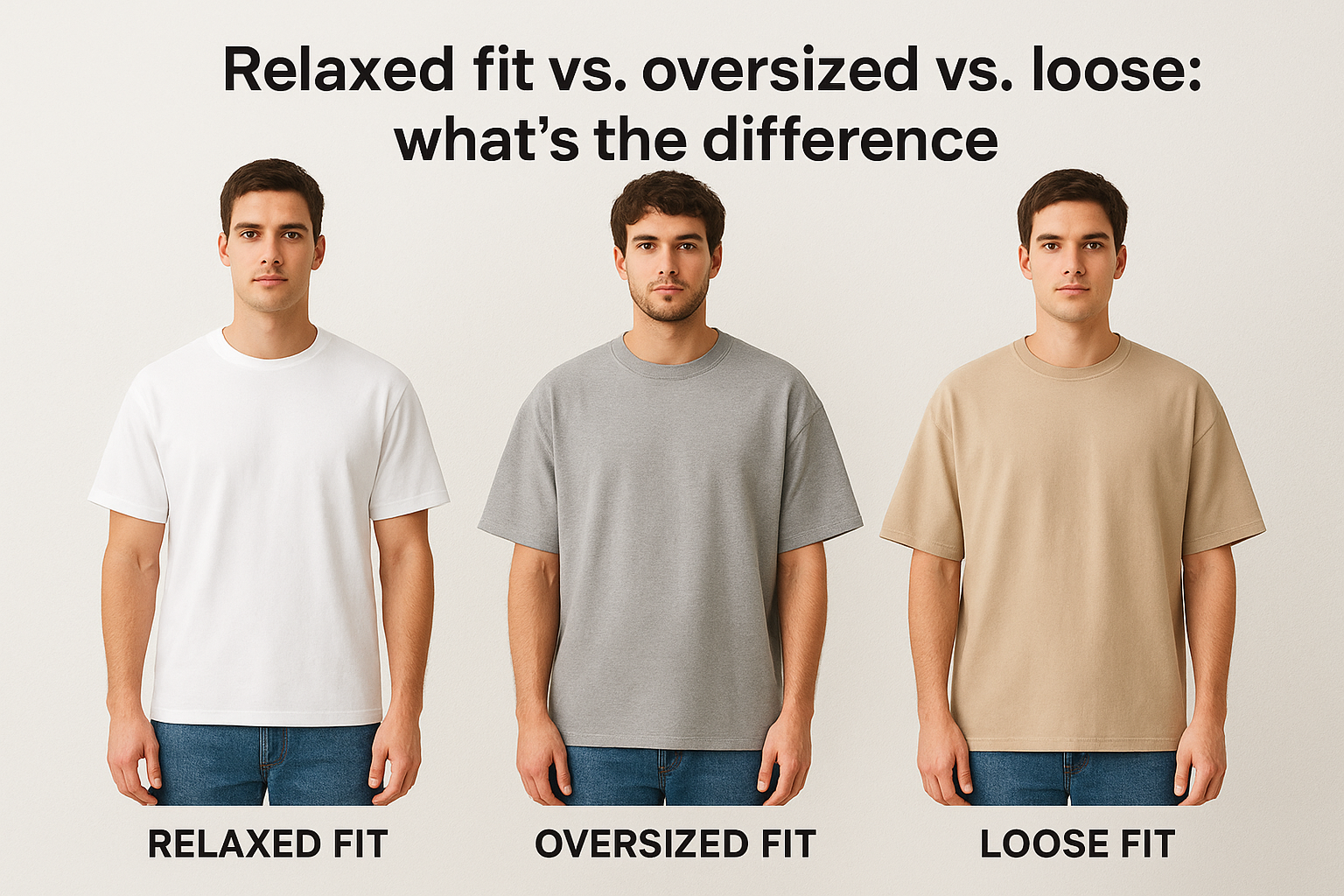
If the shoulder seam sits where your shoulder ends, you're looking at relaxed. If it hangs off the edge, that's oversized.
Comparing the three side by side makes the differences easier to spot when you're scanning a size chart or product photo:
| Fit type | Shoulder seam | Body volume | Hem length |
|---|---|---|---|
| Fitted | At shoulder point | Close to body | Hip or shorter |
| Relaxed | At or near shoulder point | Roomy through chest/torso | Standard hip-length |
| Loose | Slightly dropped | Generous, less structured | Hip-length or longer |
| Oversized | Dropped past shoulder | Maximum volume throughout | Often mid-thigh |
Getting this distinction right matters because a relaxed fit crew neck t shirt is built to layer cleanly under a jacket or blazer, while an oversized tee usually can't without adding bulk you don't want. Knowing which category a shirt falls into before you buy saves you a return and gets you closer to a fit that actually works for your build.
How to style a relaxed fit t-shirt
Styling a plain tee for any occasion comes down to balancing proportions, and a relaxed fit is no different. Because the shirt already carries volume through the chest and torso, pairing it with equally loose bottoms tends to erase your shape entirely. Tapered jeans or slim chinos give the outfit structure on the bottom half while the tee handles the ease up top.
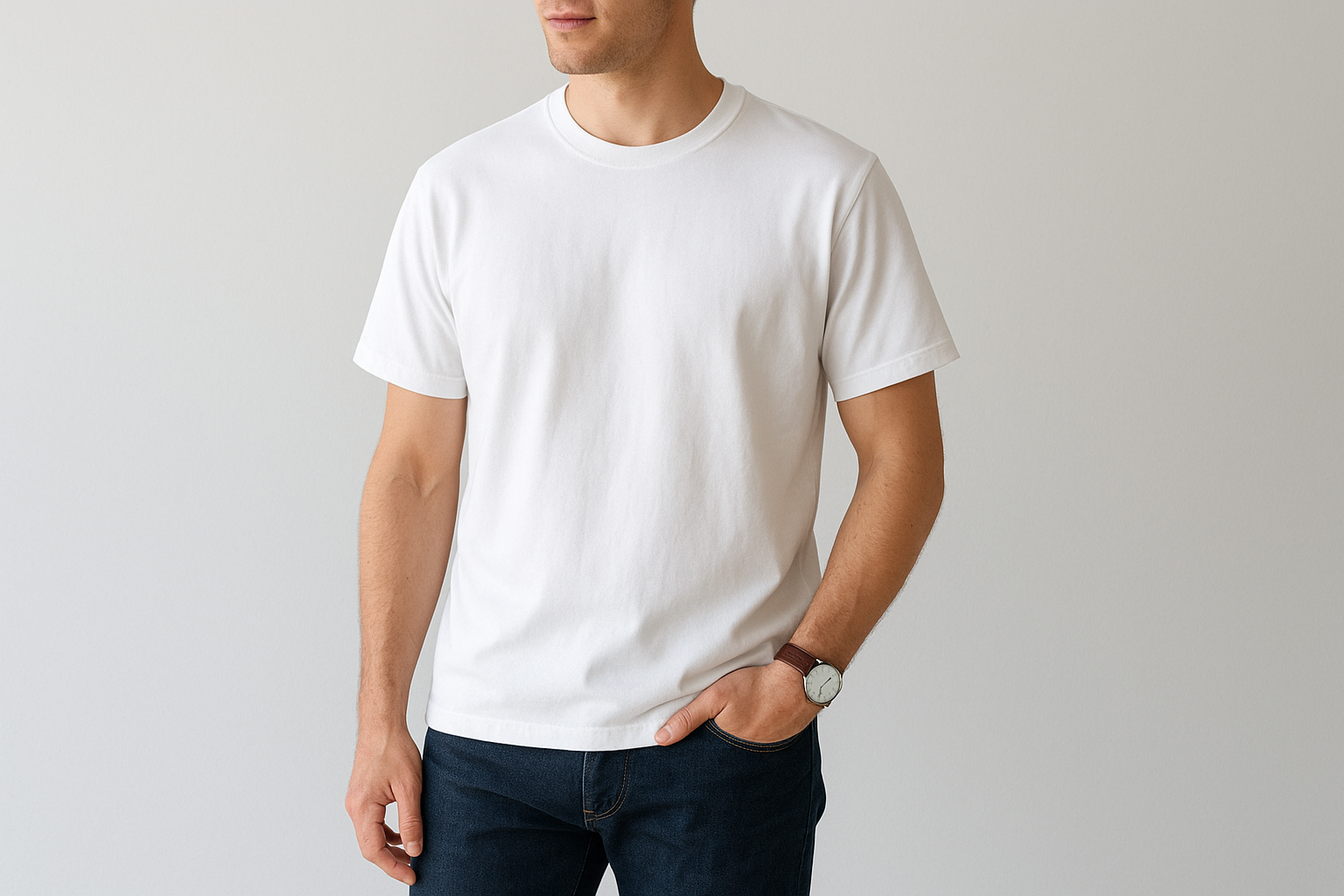
Layering without bulk
Underneath a jacket or overshirt, a relaxed fit crew neck t shirt lies flatter than an oversized one because the shoulder seam sits close to your actual shoulder instead of drooping past it, one reason it ranks among the best tees to layer under sweaters and jackets. That means less fabric bunching at the collar and sleeves when you add a flannel, denim jacket, or blazer on top. Roll the sleeves once if the cuff hits below your elbow, which keeps the layered look intentional rather than accidental.
Pair a relaxed top with tapered or slim bottoms so the outfit reads intentional, not sloppy.
Wearing it on its own
Solo, the tee works best tucked loosely at the front or left untucked with a hem that hits right at the hip. Tucking fully tends to look stiff against the relaxed drape, while leaving it completely untucked with a longer hem can shift the look toward sloppy instead of clean.
Dressing it up or down
Swap sneakers for leather sneakers or loafers and add a simple watch, and the same tee moves from weekend errands to a casual dinner. Minimal styling works in favor of the fit here: one accessory, clean shoes, and nothing that competes with the tee's simplicity, the same logic behind most crew neck outfit ideas.
How to choose the right size for a relaxed fit tee
Getting the size right on a relaxed fit tee takes a different approach than shopping for a fitted one. Chest measurement matters more than shoulder width here, since the extra room is built into the torso, not the shoulder seam. Measure around the fullest part of your chest, then compare that number to the brand's size chart rather than guessing based on your usual size in fitted shirts.
Size a relaxed tee by your chest measurement, not by the size you'd normally grab off the rack.
Reading the size chart correctly
Most size charts break down chest, length, and sometimes sleeve measurements separately, and skipping straight to the size label without checking those numbers is where most sizing mistakes happen. Before you check out, run through this:
- Measure your chest at the widest point, keeping the tape level.
- Compare that number to the chart, not to your usual size label.
- Check the garment length against your preferred hem point, hip-length is standard for relaxed cuts.
- Read recent reviews for notes on whether the tee runs true to size or slightly large.
When to size up or down
Holding true to your measured size usually gives you the intended drape, since relaxed cuts already account for extra room. Sizing up on top of that often pushes the fit into oversized territory, with sleeves that hang past your elbow and a hem that lands mid-thigh instead of at the hip. If you're between two sizes, sizing down tends to preserve the relaxed silhouette better than sizing up, especially in heavier fabrics like 300g Supima cotton, which already has body, won't cling even at a closer fit, and barely moves once you know how much Supima cotton shrinks.
The relaxed fit, simplified
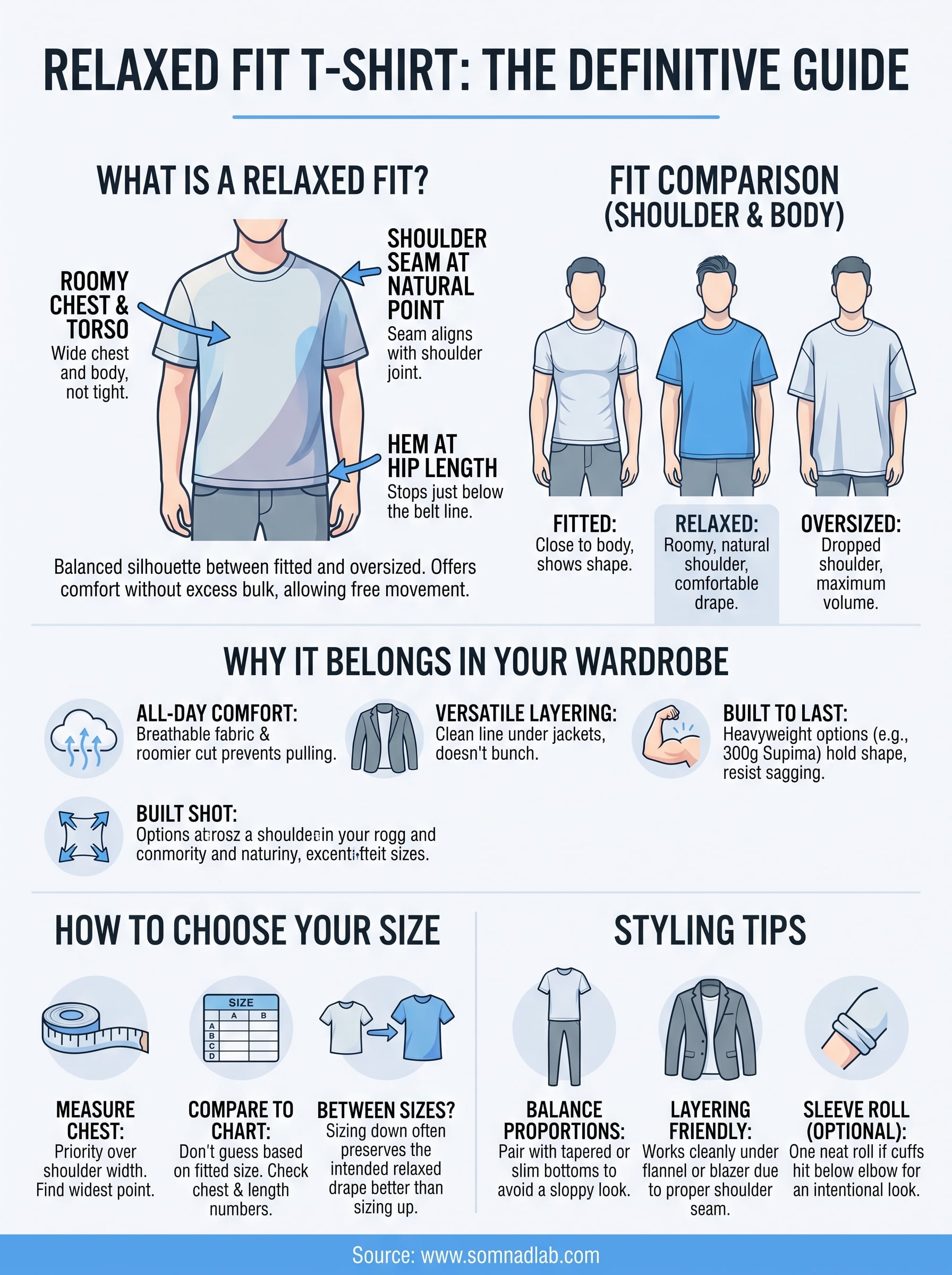
A relaxed fit t-shirt isn't a vague label, it's a specific silhouette: shoulder seam near your actual shoulder, room through the chest and torso, hem sitting at the hip. Once you know that, telling it apart from oversized or loose gets easy, and sizing stops being a guessing game. Measure your chest, check the length against your usual hem preference, and pick a fabric weight that matches how you'll wear it.
Getting this right means fewer returns and a tee that actually earns its spot in rotation, whether you're layering it under a jacket or wearing it solo on a weekend. Quality fabric does the heavy lifting here. A heavyweight cotton holds its shape wash after wash instead of stretching out by week three.
If you're ready to put this fit to the test, see our roundup of the best relaxed fit t-shirts for men, including our own 300g Supima cotton tee, and feel the difference a properly cut relaxed fit makes.