


Mulberry silk is the highest quality silk available, produced by domesticated Bombyx mori silkworms fed an exclusive diet of mulberry leaves. That controlled diet results in fibers that are longer, finer, and more uniform than any other silk variety, which is exactly why it commands a premium. But the term gets thrown around loosely, and not all mulberry silk is created equal. Grades, momme weight, and processing methods all affect what you actually get.
At SÖMNAD, we build our brand around one principle: the material is everything. Whether it's the 300g Supima cotton in our tees or the silk in a pillowcase you sleep on every night, understanding what makes a fabric genuinely superior matters. That's why we put this guide together, to give you the same clarity we demand when sourcing our own materials.
Below, you'll find a straightforward breakdown of what mulberry silk actually is, how its grading system works (including what "6A" and "momme" mean in practice), the real benefits worth paying for, and how to spot quality when you're ready to buy. No fluff, just the information you need to make a smart decision.
Why mulberry silk stands out from other silk
Not all silk starts from the same place. Most silk you'll encounter on the market falls into two broad categories: mulberry silk, produced by domesticated Bombyx mori silkworms, and wild silk varieties like tussah, which come from silkworms that feed on mixed vegetation in open environments. The diet and living conditions of the silkworm directly determine the quality of the fiber it produces, and that gap is larger than most buyers realize.
The fiber difference that changes everything
Wild silkworms produce shorter, coarser, and more irregular filaments because their diet is inconsistent. Bombyx mori worms, by contrast, eat only mulberry leaves in a controlled environment, which produces exceptionally long, uniform filaments that can reach over 1,600 yards from a single cocoon. That uniformity is what gives mulberry silk its signature smoothness. When fibers are consistent in length and diameter, they lie flat and parallel against each other, creating a surface that feels almost frictionless to the touch.
The longer and more uniform the filament, the smoother, stronger, and more lustrous the final fabric.
Tussah silk, the most common wild alternative, has a naturally tan or brown hue and a slightly rough texture. It's not a bad material, but it doesn't come close to the softness or sheen of a high-grade mulberry silk product. Some manufacturers blend tussah with mulberry silk to cut costs, which is one reason reading labels carefully matters so much when you're shopping.
Why those fiber qualities translate to real benefits
The structural consistency of mulberry silk filaments delivers benefits you notice every day. Protein-based fibers, like those in mulberry silk, naturally regulate temperature by wicking moisture and adapting to your body heat, so you stay comfortable whether you sleep warm or cold. That same protein structure, built from fibroin and sericin, is also naturally hypoallergenic, making it resistant to dust mites and less likely to irritate sensitive skin compared to synthetic fabrics like polyester.
Durability is another advantage worth understanding. Because the filaments are long and tightly wound, a well-made mulberry silk item holds its structure through repeated use and washing, provided you care for it correctly. Cheaper silk alternatives break down faster precisely because their shorter, irregular fibers create more friction points that weaken the fabric over time.
How mulberry silk is made and where it comes from
Understanding the production process helps you recognize why mulberry silk costs more and why that cost reflects real labor, not marketing. The journey from silkworm to finished fabric involves multiple labor-intensive stages, each of which directly affects the final quality of what you buy.
From leaf to cocoon
Bombyx mori silkworms hatch from eggs and spend roughly four to six weeks eating mulberry leaves almost continuously. During that feeding period, they grow dramatically before spinning themselves into cocoons using a single continuous filament that can measure up to 1,600 yards in length.
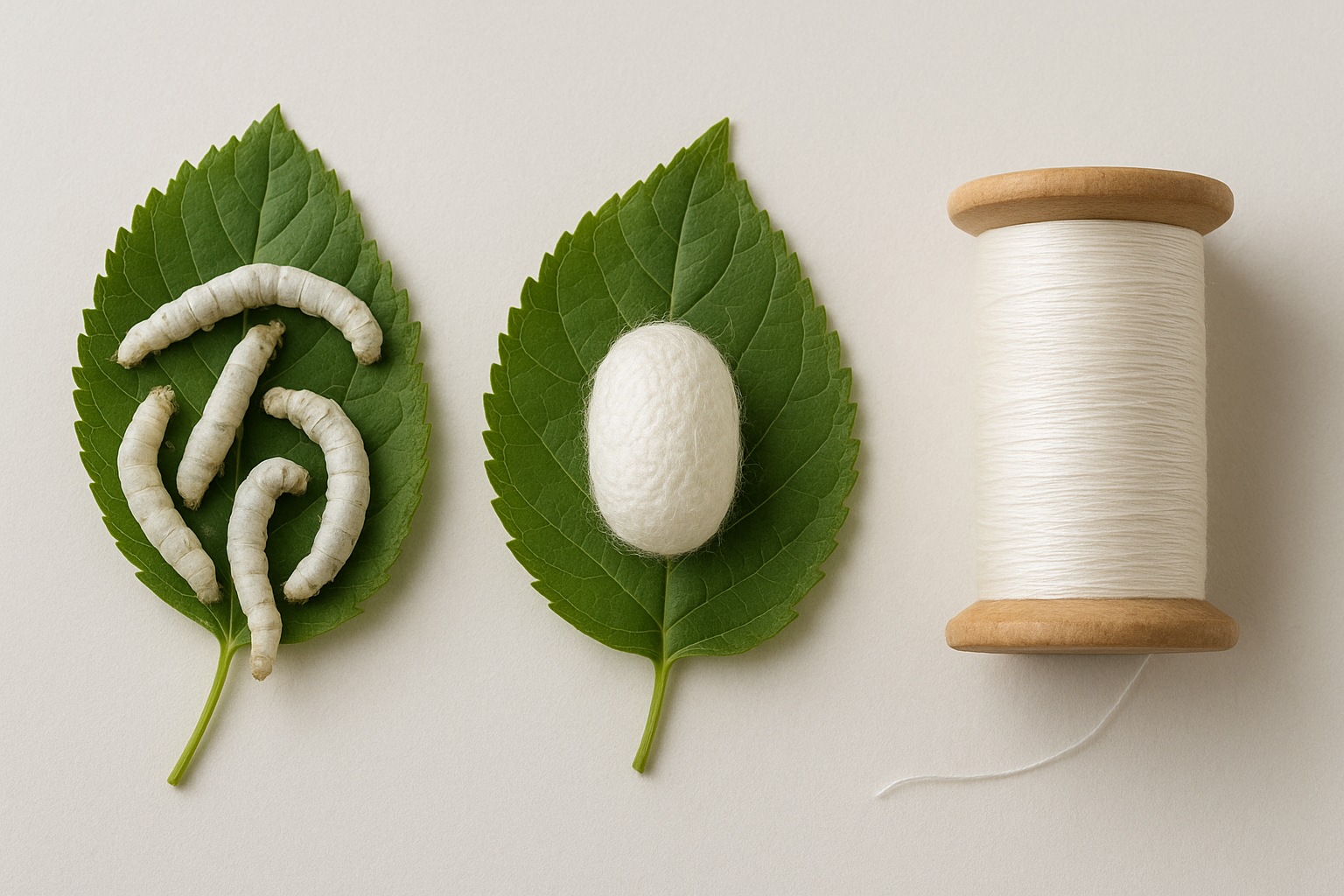
A single cocoon can yield a filament longer than 14 football fields placed end to end.
Producers submerge the cocoons in hot water to loosen the sericin, the natural gum holding the filament together, then carefully unwind each cocoon onto reels in a process called reeling. Broken or short cocoons get carded into lower-grade spun silk instead, which is why intact cocoon quality matters so much to the final product.
Where production happens today
China produces roughly 80 percent of the world's mulberry silk, with India and Japan as the next largest contributors. The industry concentrates in provinces like Jiangsu and Zhejiang, where silk farming traditions go back thousands of years.
Origin alone doesn't guarantee quality, since processing methods and finishing techniques vary widely between manufacturers. Knowing where the silk comes from gives you useful context, but the grade and momme weight on the label tell you far more about what you're actually buying.
How to judge mulberry silk quality by the label
Two numbers on a mulberry silk label tell you most of what you need to know before you commit to a purchase: momme weight and grade. Learning to read both correctly takes about five minutes and will save you from overpaying for mediocre fabric or ending up with something that wears out within months.
Momme weight: the density that determines durability
Momme (mm) measures how much 100 yards of the fabric weighs in pounds at a fixed width. Higher momme means denser, heavier fabric that holds up better through repeated use and washing. A pillowcase in the 19-22mm range is a practical, durable choice for daily use, while anything below 16mm tends to feel thin and loses its shape faster. Luxury bedding typically sits in the 22-25mm range, balancing weight with drape without becoming stiff or uncomfortable.
For most everyday silk items, 19 to 22 momme hits the right balance between comfort and long-term durability.
Silk grades and what 6A actually means
Grading runs from A to 6A, with 6A being the highest standard available. Grade A uses only long, uniform, unbroken filaments, while lower grades incorporate shorter or broken fibers that degrade texture and durability over time. When a product claims 6A mulberry silk, the filaments should be consistent in length and diameter, the weave tight and smooth, and the sheen even across the entire surface.
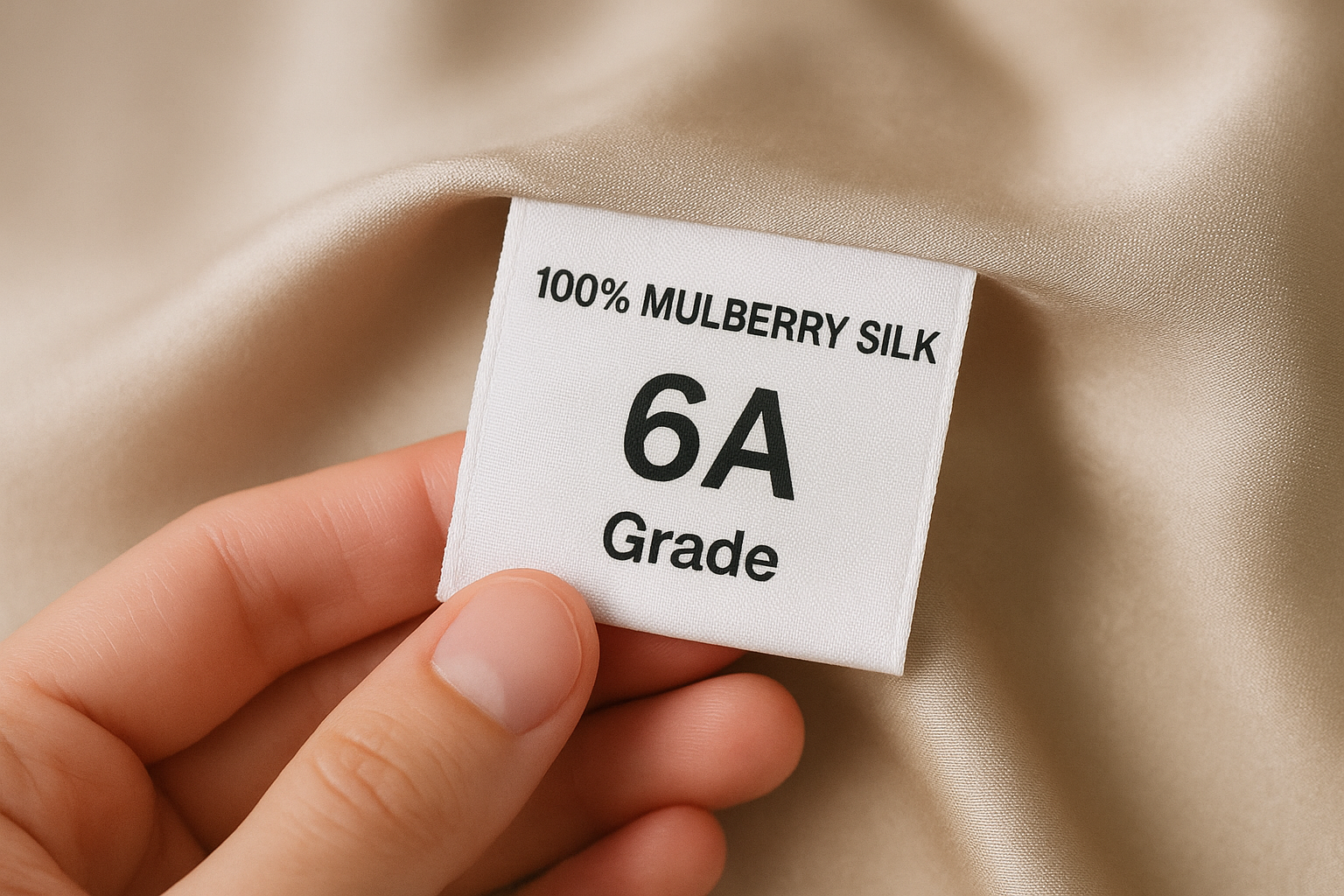
Always check the label for 100% mulberry silk and a clear grade designation. If neither appears, treat that product with skepticism regardless of what the marketing copy says.
How to buy mulberry silk without getting fooled
The mulberry silk market has a counterfeiting problem. Synthetic fabrics like polyester satin get sold under vague descriptions that imply silk without stating it, and blended fabrics get marketed as pure silk when they contain far less than the label suggests. Knowing the right questions to ask before you buy protects your money and ensures you get what you're actually paying for.
Red flags to watch for in product listings
Before you add anything to your cart, look at the product description closely. Phrases like "silk-like," "silky smooth," or "satin finish" are strong signals that the fabric is not actually silk. A legitimate mulberry silk product states "100% mulberry silk" clearly, along with a grade designation and a momme weight. If any of those three details are missing, that absence is your answer.
If a listing avoids stating the fiber content directly, assume it's not real silk.
Price is another useful signal. Genuine high-grade mulberry silk requires significant labor and raw material cost to produce. A pillowcase priced at $15 is almost certainly not 100% mulberry silk, regardless of what the listing claims.
Simple tests you can do after purchase
Once your item arrives, two quick checks help confirm what you bought. The burn test involves pulling a small thread from an inconspicuous seam and burning it with a lighter. Real silk smells like burnt hair, turns to ash, and self-extinguishes when the flame is removed. Synthetic materials melt, bead up, and smell like burning plastic. These tests won't replace a trustworthy seller, but they confirm whether what arrived matches what was promised.
How to care for mulberry silk so it lasts
Mulberry silk is durable when you treat it correctly, but it will degrade quickly if you ignore a few basic rules. Protein-based fibers react poorly to heat, harsh chemicals, and rough mechanical action, so most care guidelines for silk come down to avoiding those three things consistently.
Washing and drying correctly
Hand washing in cool water with a pH-neutral detergent is the safest method for most silk items. Submerge the item gently, swirl it for a minute or two, and rinse thoroughly without wringing or twisting. If you use a machine, select the delicate cycle with cold water and place the item inside a mesh laundry bag to reduce friction against other fabrics.
Never use bleach or enzyme-based detergents on silk; both break down the protein structure of the fiber permanently.
Dry your silk items flat or hang them away from direct sunlight, which causes color fading over time. Skip the dryer entirely since heat weakens the filaments and causes irreversible shrinkage.
Storage habits that protect the fabric
Store silk items in a cool, dry space away from moisture, which encourages mildew, and away from direct light that degrades color and fiber integrity over time. Folding works better than hanging for most silk pieces since hanging on wire or narrow hangers can stretch the fabric at the shoulders over long periods.
Cedar blocks or lavender sachets placed nearby deter moths without the chemical damage that mothballs cause. Check stored silk every few months to confirm the storage environment hasn't shifted in humidity or temperature.
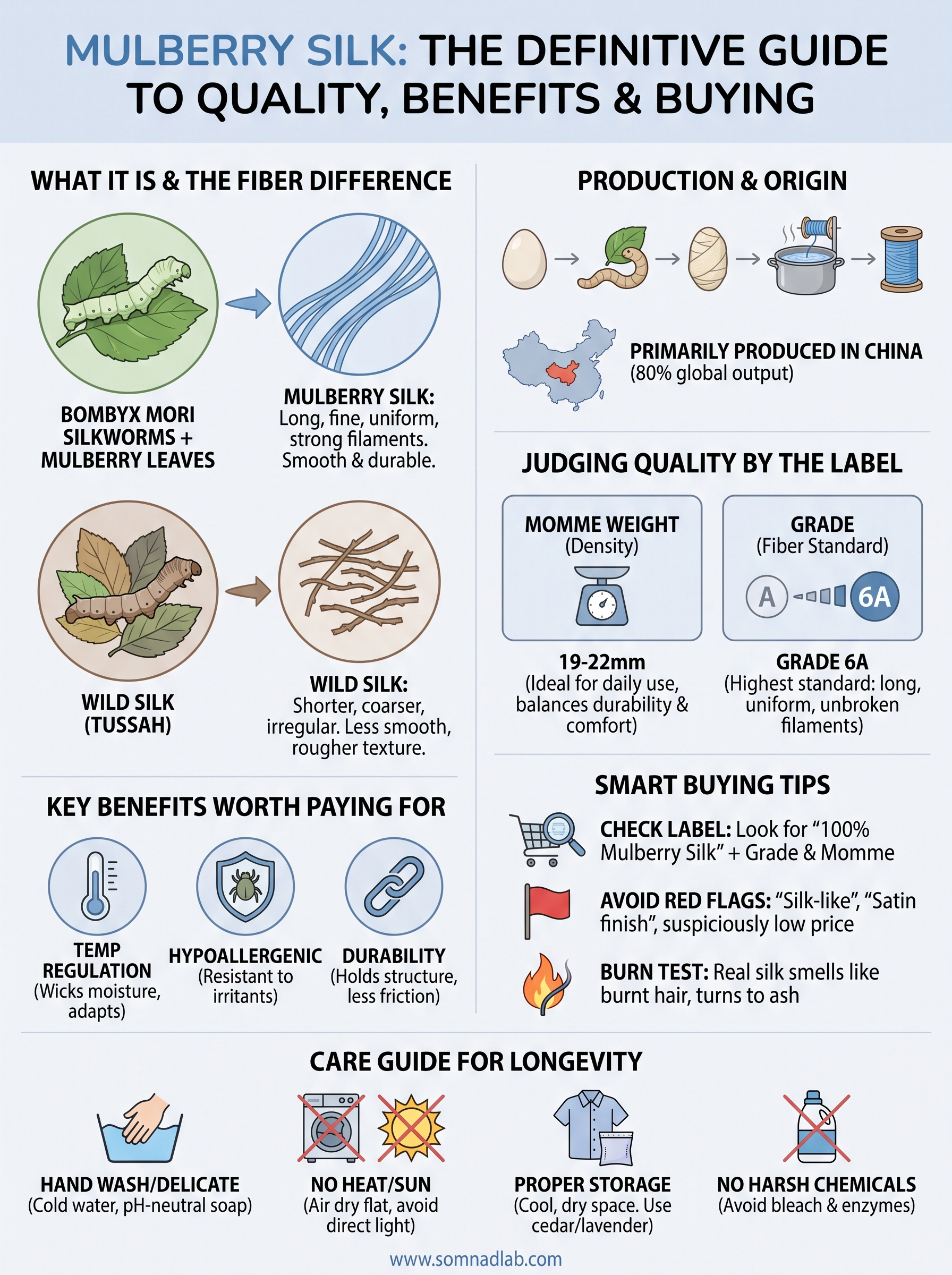
Final takeaways
Mulberry silk earns its reputation through measurable qualities: long uniform filaments, a controlled production process, and properties that synthetic fabrics simply cannot replicate. When you shop, focus on three label details: 100% mulberry silk, a grade of 6A, and a momme weight between 19 and 22 for everyday use. If a listing skips any of those, move on. Price matters too. Genuine high-grade silk costs real money to produce, and anything priced suspiciously low is almost certainly not what it claims to be. Once you have the real thing, caring for it is straightforward: cool water, gentle handling, no heat, and proper storage. Those habits protect the fiber structure and keep your investment performing the way it should for years. Quality fabric rewards the people who pay attention to it.
At SÖMNAD, we apply that same standard to everything we make. If you value fabric that actually performs, shop SÖMNAD's premium essentials.