


If you've ever held a garment made from cupro, you probably noticed how closely it mimics the drape and sheen of silk. That resemblance is exactly why the cupro vs silk debate keeps coming up, and why it's worth understanding what actually separates these two fabrics before you spend money on either. They look similar on the surface, but the differences in origin, price, care, and environmental impact are significant.
At SÖMNAD, we obsess over fabric selection because material is the foundation of everything we make. We believe the best clothing decisions start with understanding what you're wearing against your skin, not just how it looks on a hanger. That philosophy applies whether you're choosing a premium cotton tee or deciding between cupro and silk for a dressier piece.
This guide breaks down both fabrics across the categories that matter most: feel and texture, long-term durability, cost, and sustainability. By the end, you'll have a clear picture of which fabric fits your priorities, and your wardrobe.
What cupro and silk are and how they are made
Understanding the cupro vs silk comparison starts with knowing what each material actually is. These fabrics come from completely different sources and go through distinct production processes, which shapes everything from how they feel against your skin to how much you pay for them at checkout.
What silk is and where it comes from
Silk is a natural protein fiber produced by silkworms, most commonly the Bombyx mori species. Silkworms spin cocoons made of a continuous filament of raw silk, and workers unravel those cocoons in hot water to extract the thread. A single cocoon can yield between 600 and 900 meters of usable filament, which gets twisted together with strands from multiple cocoons to form the yarn that's then woven or knit into fabric. The entire process is manual and time-intensive, which explains why silk has held a premium price point across centuries of textile history.
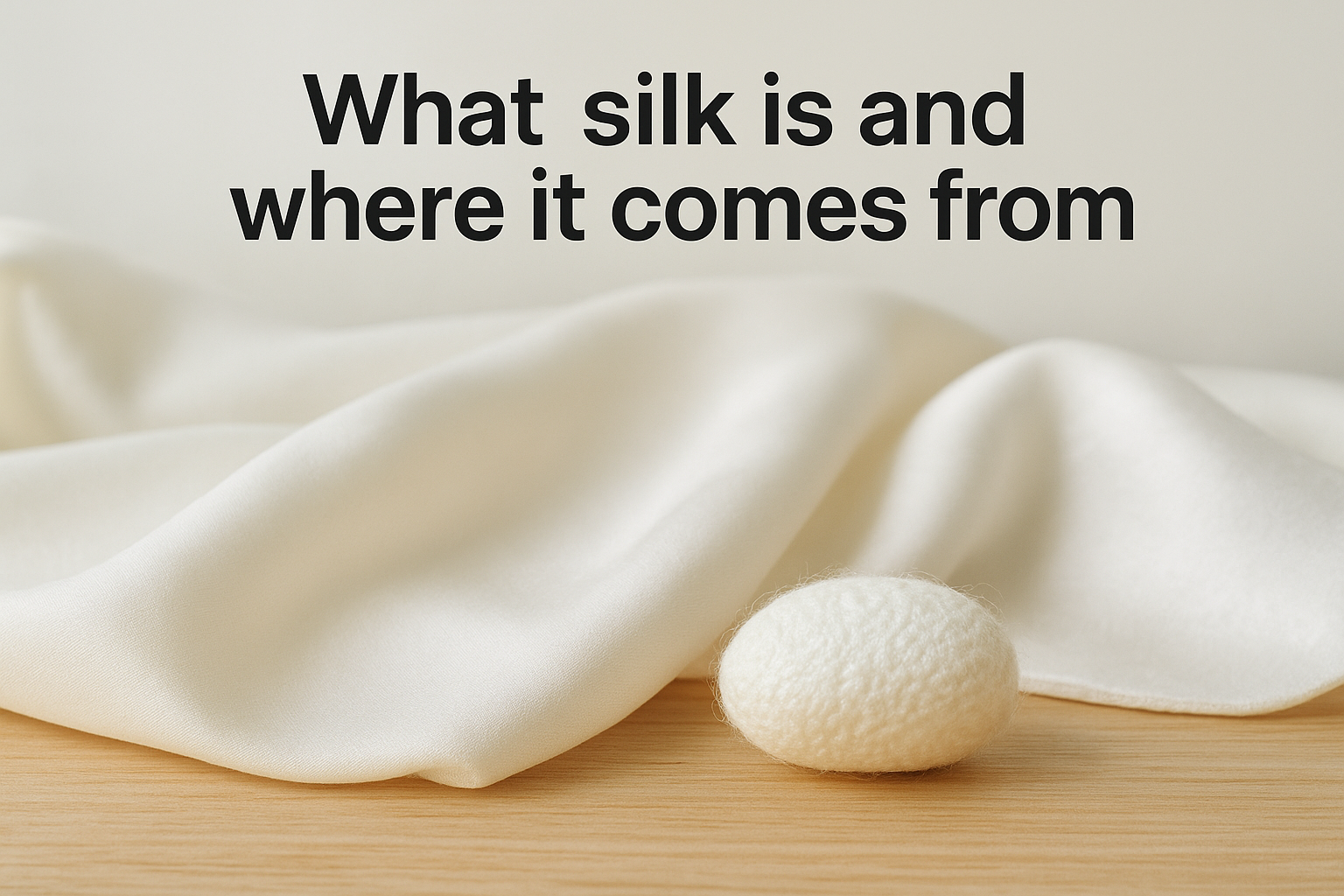
Silk's labor-intensive harvesting and the sheer volume of silkworms required to produce even a small amount of fabric make it one of the most expensive natural fibers available, and that cost lands directly on you as the buyer.
The finished fabric is smooth, lightweight, and naturally temperature-regulating, keeping you cool in summer and relatively warm when temperatures drop. Silk's characteristic luster comes from the triangular prism-like structure of its fibers, which reflects light at multiple angles at the same time. That optical quality is what gives silk its distinctive visual depth, something synthetic fabrics have spent decades trying to replicate.
What cupro is and where it comes from
Cupro is a regenerated cellulose fiber, meaning it originates as plant matter and undergoes chemical transformation to become a textile. Manufacturers use cotton linter as the raw material, which is the short fiber that clings to cottonseed after the main cotton harvest has been processed. That linter dissolves in a solution of copper and ammonia, then gets pushed through tiny nozzles called spinnerets to form continuous filaments, which are washed and dried into the finished fiber. The name cupro comes directly from that copper-based production method.
Because cupro starts as a cotton byproduct and goes through significant chemical processing, it sits in a category often called semi-synthetic. The finished fiber is soft, breathable, and fluid, with a drape that closely resembles silk at a fraction of the price. Most of the world's cupro comes from Japan, where Asahi Kasei produces it under the brand name Bemberg and recycles the copper solution used in manufacturing to reduce waste output.
Why the cupro vs silk choice matters
The fabric you pick affects more than how a garment looks. Comfort, care requirements, and long-term cost all shift depending on whether you choose cupro or silk, and making the wrong call means wearing something that doesn't work for your actual lifestyle. The cupro vs silk decision is more consequential than most people realize when they're standing in a store or scrolling through product pages.
Budget and value
Silk commands a steep price because of its labor-intensive production process and limited global supply. A silk blouse or dress typically costs significantly more than the equivalent piece in cupro, sometimes two to three times the price. If you're building a wardrobe that balances quality with practicality, cupro gives you similar drape and sheen at a fraction of the investment, which frees up budget for other pieces that genuinely benefit from silk's unique properties.
Here are the key cost-related factors to keep in mind:
- Purchase price: Silk garments typically run two to three times more than comparable cupro pieces
- Care costs: Silk often requires dry cleaning; cupro usually tolerates gentle hand washing at home
- Replacement frequency: Both hold up well with proper care, but silk repairs tend to cost more
Ethics and lifestyle fit
Your personal values and daily habits play a large role in this decision. Silk production requires killing silkworms to harvest intact cocoons, which makes it off-limits for vegans and many people who prefer animal-free clothing. Cupro sidesteps that issue entirely since it derives from plant-based cotton byproduct, making it the default choice if wearing animal products conflicts with how you want to dress.
Choosing between these two fabrics isn't just about aesthetics; it's about matching a material to what you actually need it to do day to day.
Beyond ethics, your care routine matters too. Silk demands delicate handling, often dry cleaning or very careful hand washing, while cupro tolerates slightly more relaxed treatment. If you want fabric that performs without constant maintenance, cupro is the more practical everyday choice.
How to choose between cupro and silk
Narrowing down the cupro vs silk decision comes down to a few practical questions about how you actually live and dress. Both fabrics deliver a fluid, elevated look, but they perform differently depending on the occasion, your budget, and how much effort you're willing to put into garment care. Before you commit, it helps to think through a handful of concrete scenarios rather than treating this as a purely aesthetic choice.
Consider your use case
The occasion shapes this decision significantly. Silk performs exceptionally well for formal or special-occasion pieces, such as eveningwear or investment dresses you'll wear a handful of times per year. Cupro works better for garments you plan to wear regularly and wash at home, like blouses, liners, or transitional pieces that rotate through your weekly wardrobe. If you're outfitting yourself for everyday use, cupro's lower maintenance requirement makes it the more sensible pick.
If you want something you can reach for on a Tuesday morning without thinking twice about care, cupro is the fabric that fits that lifestyle.
Here's a quick breakdown to guide your thinking:
- Formal events, special occasions: Silk is worth the investment
- Everyday wear, regular rotation: Cupro handles the demand better
- Vegan or animal-free lifestyle: Cupro is the only option
Think about your care routine
Your laundry habits matter more than most people admit when choosing a fabric. Silk requires delicate handling and frequently needs professional dry cleaning, which adds ongoing cost over time. Cupro tolerates gentle machine or hand washing, making it a realistic choice if you don't want to schedule trips to the dry cleaner every few weeks.
Consider these care differences before buying:
- Silk: typically dry-clean only, hand wash with extreme caution
- Cupro: hand wash or gentle machine cycle, air dry flat
How cupro and silk compare in real life
Reading about fabric properties is useful, but nothing replaces understanding how these materials actually behave when you wear them. The cupro vs silk comparison shifts when you move from specs to lived experience, and the differences show up in ways that directly affect your comfort and satisfaction with a garment over time.
Texture and drape
Both fabrics feel smooth against the skin, but they deliver that smoothness differently. Silk feels distinctly cool on first contact and carries a subtle crispness that cupro doesn't quite replicate. Cupro feels softer and more pliable from the start, with a fluid drape that moves easily with your body rather than holding its shape the way silk can. If you've worn a silk blouse, you've likely noticed how it maintains a slight structure even on warm days. Cupro relaxes more readily, which gives it an effortless, lived-in quality that works well for everyday layering.
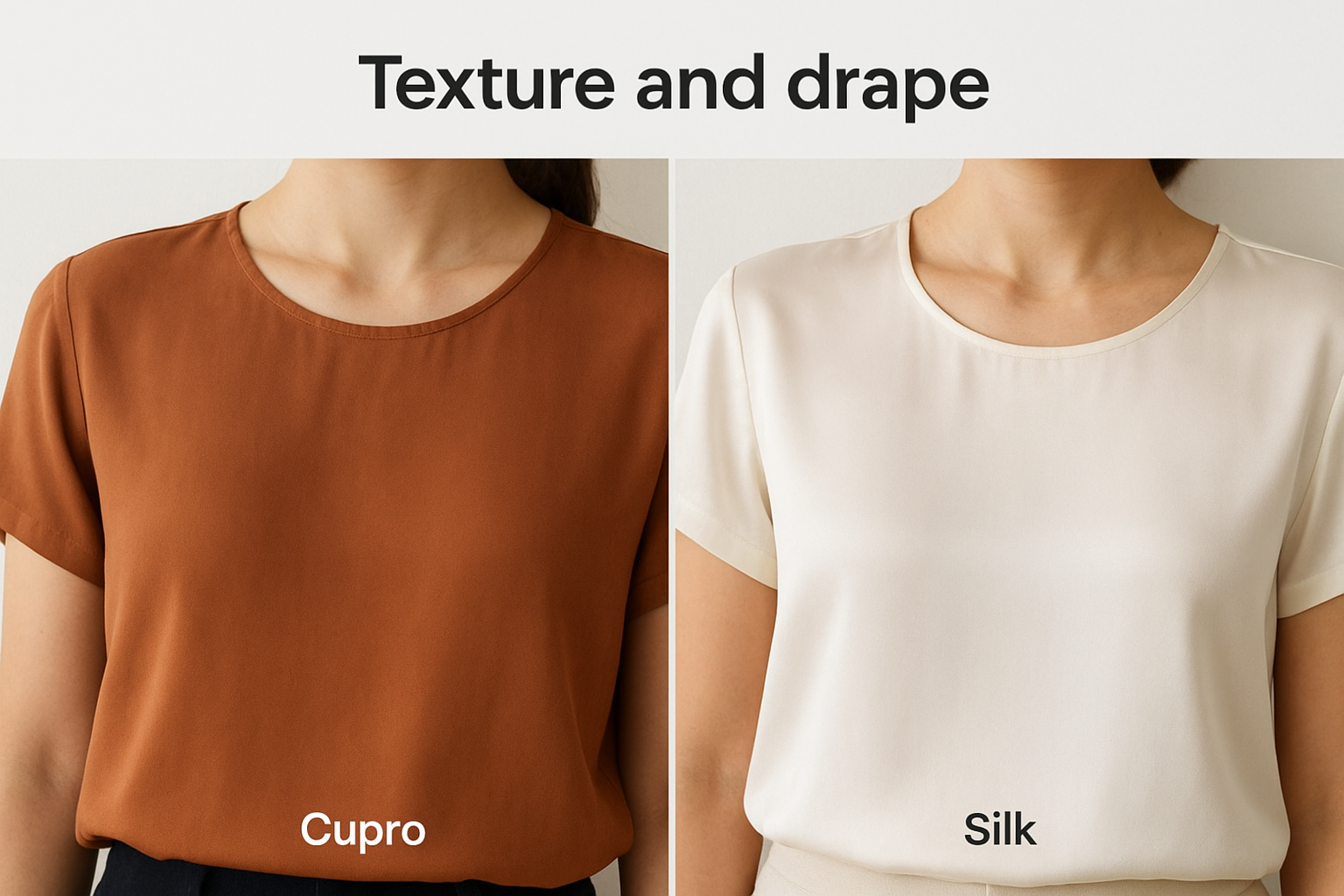
The texture difference is real but subtle; most people couldn't identify which fabric they were wearing without being told.
Durability and wear over time
Silk is surprisingly fragile for its price point. It snags easily on rough surfaces, fades when exposed to direct sunlight, and weakens with repeated washing if you're not careful. Cupro holds up more consistently under regular use. It resists pilling better than silk and tolerates the minor friction that comes with everyday movement. Neither fabric should go in a hot dryer, but cupro forgives small care mistakes more readily than silk does. If you're investing in a garment you plan to wear often, cupro's durability gives you more return on that investment without requiring the careful handling that silk demands to stay in good condition.
Sustainability, ethics, and what "vegan silk" really means
The cupro vs silk conversation doesn't end at feel and price. Both fabrics carry environmental and ethical baggage worth understanding before you buy, and the term "vegan silk" gets thrown around loosely enough that it deserves a straight definition. Knowing what's behind each label helps you make decisions that align with your values, not just your budget.
The environmental cost of silk production
Silk's production process is resource-heavy at every stage. Silkworms require mulberry leaves grown specifically for their diet, which demands agricultural land, water, and labor on a significant scale. Beyond the resource use, conventional silk harvesting kills silkworms inside their cocoons by submerging them in boiling water to preserve the intact filament thread. That step is why silk is categorically not vegan, regardless of how the fabric is marketed or positioned.
If wearing animal-derived materials conflicts with your values, silk is off the table, and no amount of "natural" branding changes that.
What makes cupro more sustainable, and where it falls short
Cupro starts from cotton linter, a byproduct that would otherwise go to waste, which gives it a raw material advantage over silk. Asahi Kasei, the primary cupro manufacturer, runs a closed-loop system that recovers and recycles the copper and ammonia used in production, reducing chemical waste compared to many other semi-synthetic processes. That makes cupro a more responsible choice on the production side.
The limitation is that chemical processing is still involved, and cupro doesn't break down as readily as fully natural fibers. It occupies a middle ground: better than virgin synthetics like polyester, but not as clean as organic cotton or linen.
What "vegan silk" actually means
The phrase "vegan silk" typically refers to any fabric that mimics silk's drape and sheen without using animal-derived fibers. Cupro qualifies under that definition because it derives entirely from plant-based cotton byproduct. You'll also see the term applied to fabrics like Tencel and satin-weave polyester, but cupro remains the closest match to silk's texture and movement among the plant-based options.
Final take
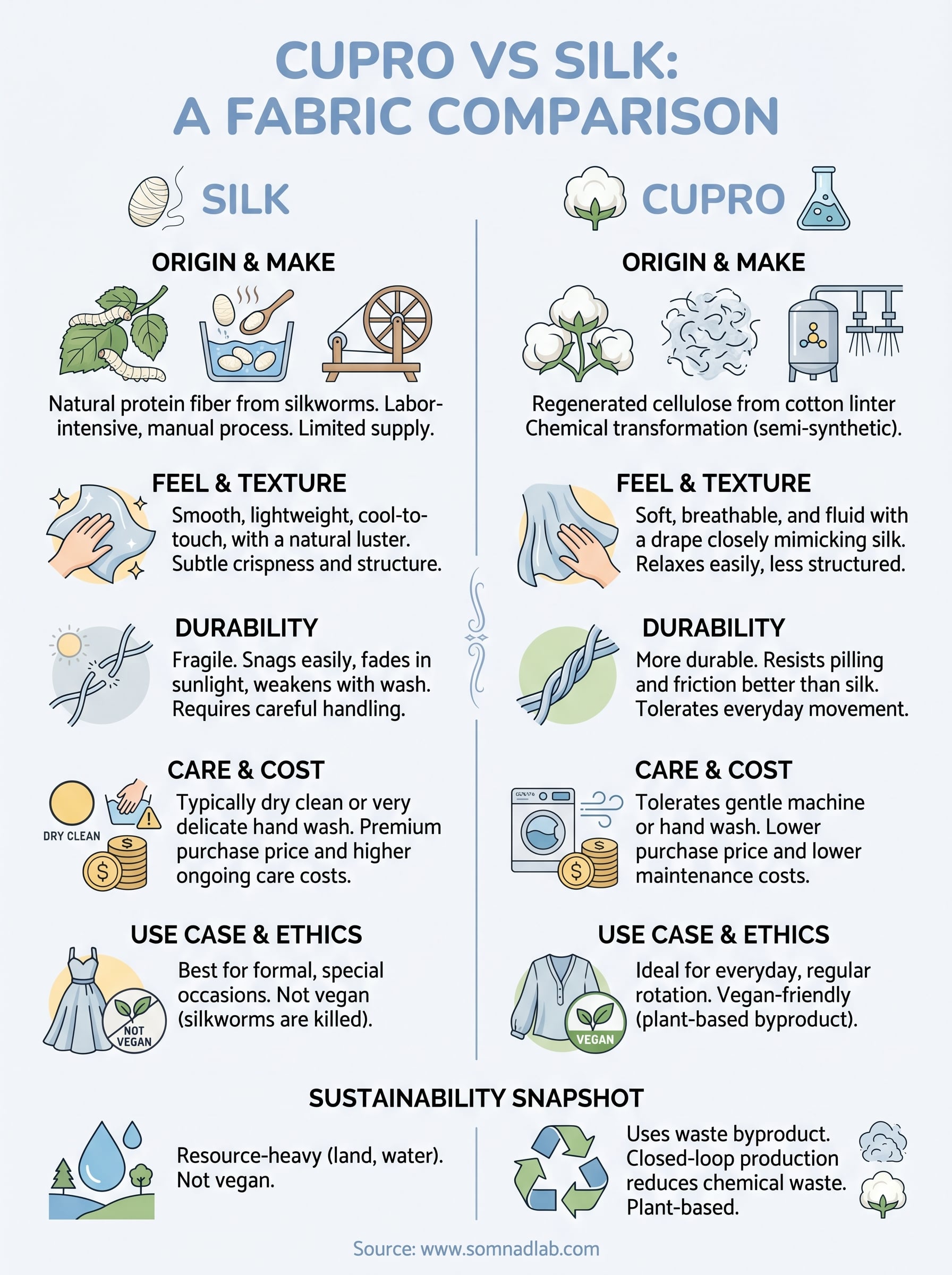
The cupro vs silk decision comes down to what you actually need from a fabric. Silk delivers unmatched luster and temperature regulation for special occasions, but it asks for careful handling and comes with a price that reflects every step of its labor-intensive production. Cupro gives you most of the visual appeal at a lower cost, with better durability and no animal products involved in the process.
Neither fabric is universally better. Silk earns its place in a wardrobe built around elevated, occasional-wear pieces. Cupro earns its place in one built around daily use and practical care. If you're vegan, the choice is already made for you. If budget matters, cupro stretches further without sacrificing the fluid, refined look you're after.
At SÖMNAD, we apply the same thinking to everything we make. If you care about fabric quality and honest construction, explore premium everyday essentials built to last.