


Most people don't have a wardrobe problem, they have a buying problem. Years of impulse purchases, trend-chasing, and settling for whatever fits "well enough" leave closets stuffed with clothes and nothing to wear. Learning how to build a quality wardrobe means unlearning that cycle and starting with intention.
A great wardrobe isn't about owning more. It's about owning fewer pieces that actually work, items made from materials that hold up, cuts that flatter without trying too hard, and colors that pair with everything else you own. That's the capsule wardrobe philosophy stripped down to its core: buy less, but buy right.
At SÖMNAD, this idea drives everything we make. We build premium everyday essentials, like our 300g Supima cotton tees, because we believe the foundation of any strong wardrobe starts with basics you never have to think twice about. No logos, no gimmicks. Just fabric, fit, and construction that earn their place in your rotation.
This guide walks you through the full process, step by step. You'll learn how to audit what you already own, identify the core pieces every versatile wardrobe needs, choose materials that last, and build a personal style that doesn't expire with the season. Whether you're starting from scratch or finally replacing a closet full of mediocre clothes, this is your blueprint.
What a quality wardrobe really means
"Quality wardrobe" gets used constantly, but most definitions stop at "buy expensive things." That's not what it means. A quality wardrobe is a collection where every piece earns its place through utility, durability, and versatility. It's not defined by designer labels or high price tags. It's defined by how well each item performs over time and how naturally it pairs with everything else you own.
Quality is not the same as expensive
Price and quality often correlate, but they're not the same thing. A $300 shirt from a brand built on marketing spend can still pill after six washes. A well-constructed $60 tee made from premium Supima cotton can hold its shape for years. When you think about how to build a quality wardrobe, the real question isn't "how much did this cost?" It's "how much value does this deliver per wear?"
Cost per wear is one of the most practical frameworks for evaluating any clothing purchase: divide the price by how many times you'll realistically wear the item over its lifetime.
A $200 jacket you wear 150 times over five years costs about $1.33 per wear. A $30 shirt you wear three times before it fades and gets donated costs $10 per wear. Longevity beats cheapness every time, and internalizing that math shifts how you shop entirely.
The three pillars of a quality piece
When you evaluate any garment, three factors tell you almost everything you need to know: fabric, construction, and fit. Each one affects the others, and a weakness in any single pillar undermines the whole piece.
Fabric is where quality starts. Natural fibers like Supima cotton, merino wool, and linen breathe better, feel better on skin, and age more gracefully than synthetic blends. Supima cotton, grown in the US, produces longer fibers than standard cotton, which translates directly to a softer feel and greater resistance to pilling. Read the fiber content label before you buy, not after.
Construction is what you feel when you turn a garment inside out. Check the stitching density (more stitches per inch means stronger seams), look at how hems and cuffs are finished, and feel the weight and evenness of the fabric. Thin, uneven material or loose threads at the seams are immediate red flags, regardless of the brand name on the label.
Fit is the factor most people overlook because it seems fixable. But a poorly cut garment fights your body instead of working with it. Look for clean lines through the shoulder and torso with enough room to move without pulling. Sleeves should end at the right point without bunching. A great fabric in a bad cut still looks cheap.
What versatility actually looks like
A quality wardrobe is also a versatile wardrobe. Versatility doesn't mean owning only neutral colors or dressing like you're going to the same place every day. It means each piece works with at least three other items you already own. Before you buy anything, run that test mentally. Can this pair with your everyday pants, your usual shoes, and your go-to jacket? If the answer is no, you're looking at a specialty item, not a building block.
The table below shows how versatility scales across different piece types:
| Piece Type | Pairs With | Versatility |
|---|---|---|
| White or off-white tee | Nearly everything | Very high |
| Dark wash straight-leg jeans | Most tops and shoes | Very high |
| Neutral chino | Casual and smart casual | High |
| Patterned statement shirt | Limited combinations | Low |
| Trend-specific outerwear | Seasonal, limited | Low |
Pieces with high versatility anchor your wardrobe and carry the most weight in your daily rotation. Pieces with low versatility cost you money and closet space without giving much back.
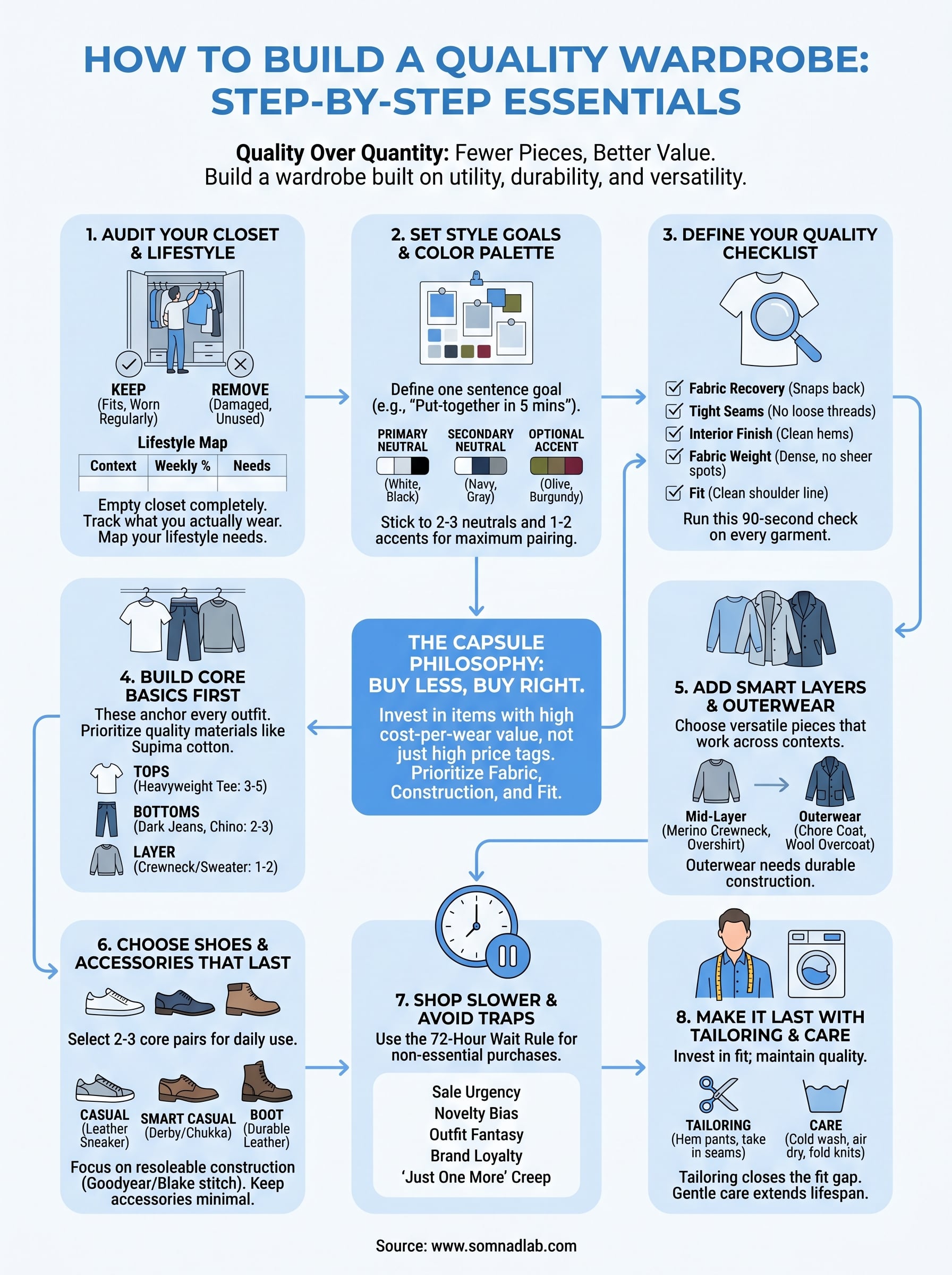
Step 1. Audit your closet and your lifestyle
Before you buy a single new piece, you need an honest picture of what you already own and how you actually live. Most people skip this step and jump straight to shopping, which is exactly how they end up back where they started: too many clothes and nothing that works together. This audit takes about two hours and sets the foundation for everything that follows in how to build a quality wardrobe.
Empty the closet completely
Pull everything out and put it on your bed or floor. This matters because seeing all your clothes at once forces an honest reckoning. When items hide behind other items, you rationalize keeping things that have no real place in your rotation. Lay it all flat: tops, bottoms, outerwear, shoes, and accessories.
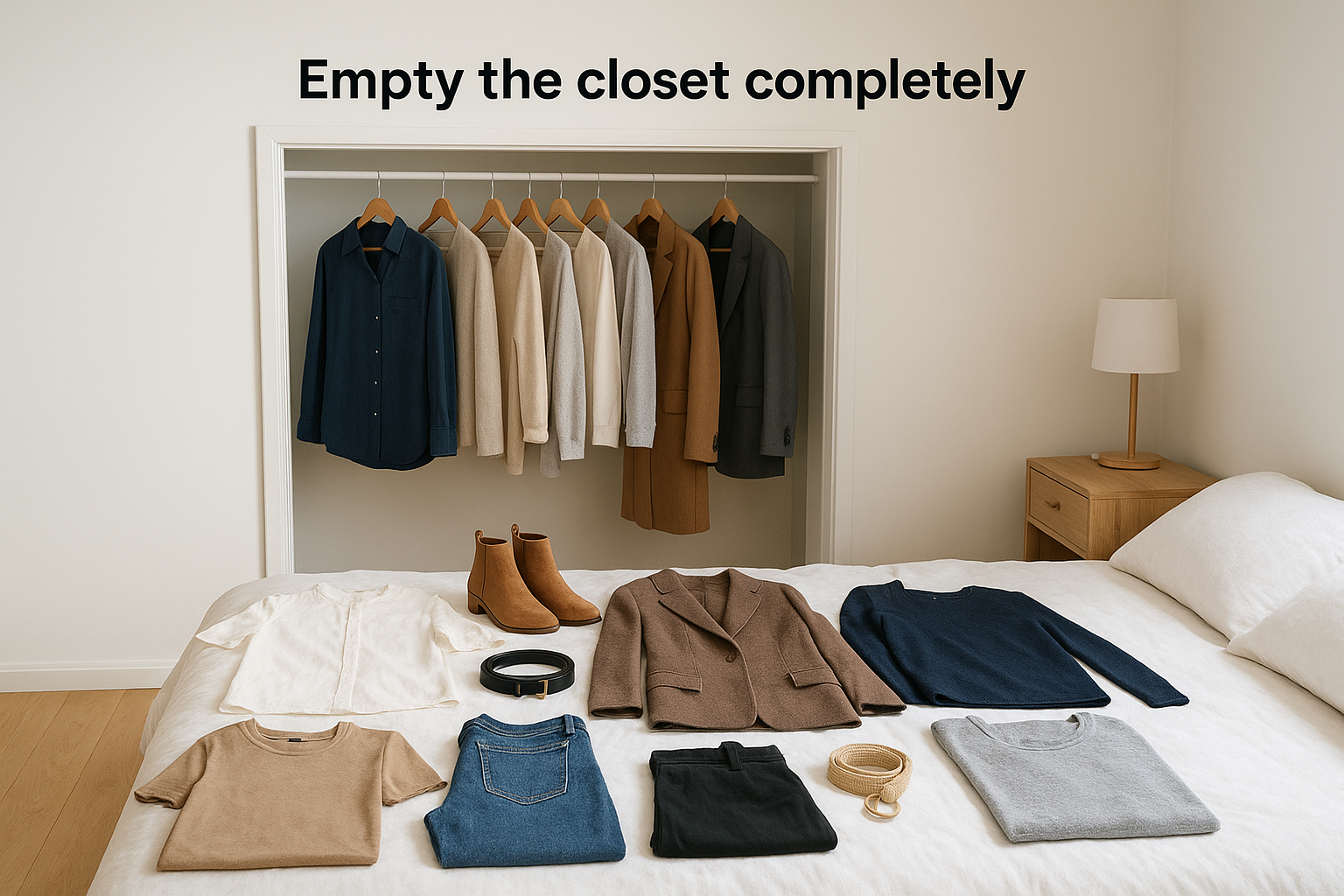
Now go through each item and sort it into three piles: keep, question, and remove. Keep means you wear it regularly and it fits well. Question means you haven't touched it in six months. Remove means it's damaged, doesn't fit, or you've never actually worn it. Be direct with yourself here, because this pile is where you stop wasting money.
Track what you actually wear
After sorting, pay attention to what you reach for every week without thinking. Those are your real wardrobe anchors, not the items you bought with the best intentions. If the same five pieces cover most of your week, that tells you exactly where your baseline sits and what gaps need filling.
The clothes you wear without thinking are your real style, not the ones you bought hoping to become someone else.
A practical tracking method: for two to four weeks, hang worn items on the right side of the rod and untouched items on the left. At the end, everything on the left side shows what isn't earning its place.
Map your lifestyle
Your wardrobe needs to reflect where you actually go, not where you think you might go someday. Take a week and tally how you spend your time: working from home, in an office, running errands, socializing, exercising. If you work remotely 70% of the time, your wardrobe should skew toward comfortable, polished basics, not business formal hanging unused.
Use this template to map your lifestyle breakdown before you buy anything new:
| Context | Weekly % | Wardrobe Needs |
|---|---|---|
| Work (remote or office) | % | Tops, pants, layers |
| Casual / errands | % | Tees, jeans, outerwear |
| Social / going out | % | Smart casual, shoes |
| Active / exercise | % | Athletic wear |
Fill in your percentages honestly. This table becomes your buying filter and your reality check for every step ahead.
Step 2. Set your style goals and color palette
Once you know what you own and how you live, the next step is deciding what direction you're heading. Without a clear style goal and a defined color palette, shopping stays reactive. You grab what looks good in the store without knowing whether it fits your actual life. This step gives you a practical filter that makes every future purchase faster and more intentional.
Define what you want your style to do
Your style goal doesn't need to be poetic. It just needs to be specific and honest. Are you building a wardrobe that moves across casual and smart casual? Do you want every outfit to feel put-together with minimal effort? Start by writing one sentence that describes what you want your clothes to do for you on an average day.
A few concrete examples:
- "I want to get dressed in under five minutes and still look deliberate."
- "I want pieces that work at my desk, at lunch, and on a weekend without a change of clothes."
- "I want a wardrobe built on quality basics that don't need accessories to look complete."
Use that sentence as a filter going forward. Every piece you consider buying should either support that goal or have a clear, specific reason to exist in your closet.
Your style goal is your decision-making shortcut. If a piece doesn't pass the filter, it doesn't belong.
Build your color palette
Color is one of the most practical tools in learning how to build a quality wardrobe that works effortlessly day to day. A tight palette means everything pairs with everything, which multiplies the number of outfits you can build from a small number of pieces without any extra thought.
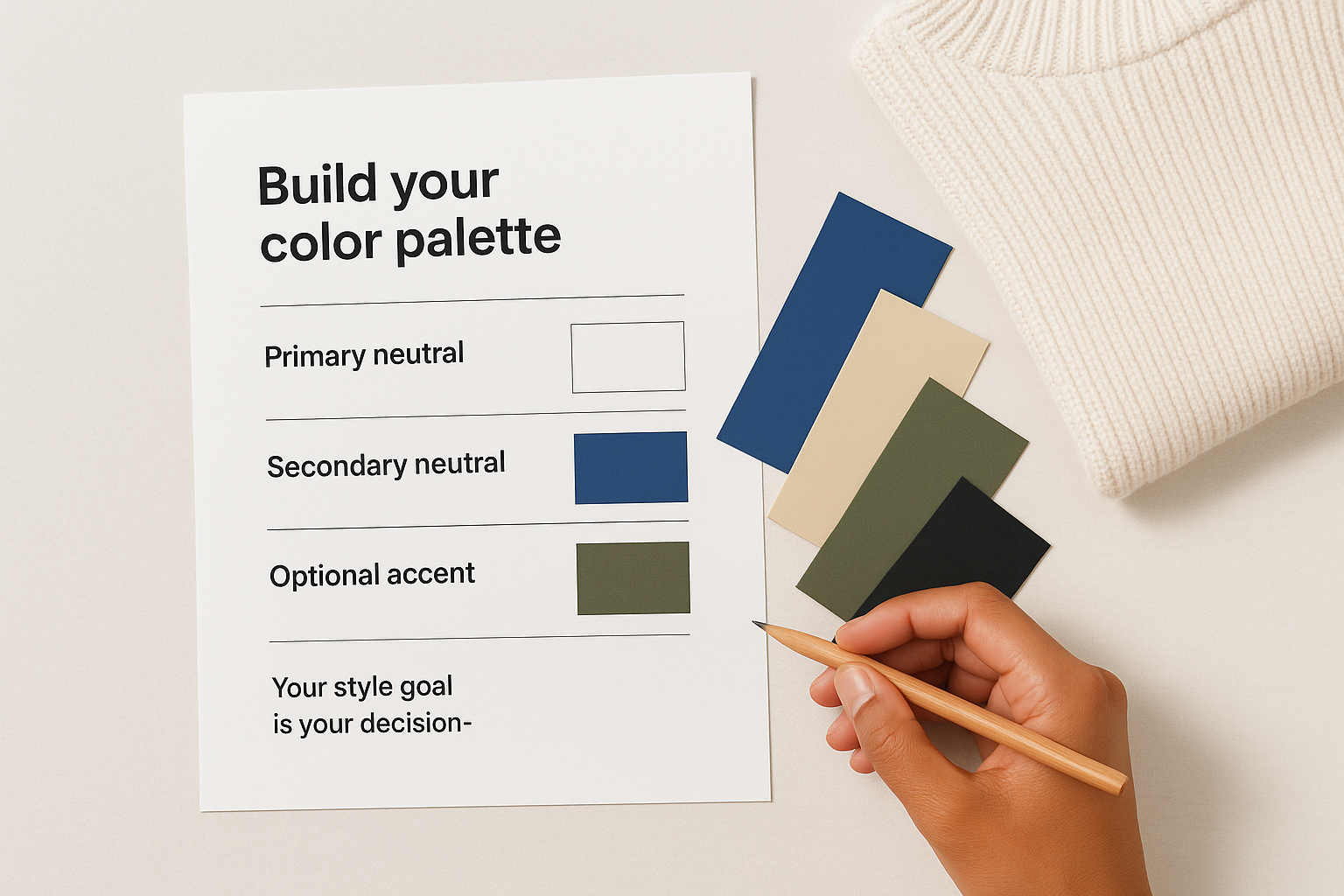
Start by identifying two to three neutrals and one or two optional accent colors. Use this template to define yours:
| Role | Color |
|---|---|
| Primary neutral | (e.g., white, off-white, black) |
| Secondary neutral | (e.g., navy, gray, stone) |
| Optional accent | (e.g., olive, burgundy, camel) |
Stick to colors that fit your daily context and that you already gravitate toward naturally. Check your "keep" pile from Step 1. The colors that appear most often reveal your natural palette without any guesswork. Write the palette down and keep it on your phone for when you shop. This one move eliminates the "it looked good in the store" problem that derails most buying decisions before they even happen.
Step 3. Define your quality checklist
Knowing what quality looks like in theory is one thing. Knowing how to spot it in a store or on a product page in under two minutes is another. This step gives you a repeatable checklist you can apply to every purchase going forward. When you know exactly what to look for, learning how to build a quality wardrobe stops feeling like guesswork and starts feeling like a trained skill you carry everywhere.
How to evaluate a garment in hand
When you pick up a piece in a store, three quick physical checks tell you most of what you need to know before you even try it on. Start with the fabric: grip a section lightly and stretch it slightly, then release. Quality fabric snaps back without losing its shape. Thin or loosely woven material stretches and stays distorted, which is exactly what happens after ten washes at home.
Next, turn the garment inside out and inspect the seams. Tightly stitched seams with consistent spacing and no loose threads signal solid construction. Raw, unfinished interior edges or seams that pucker under light tension tell you the garment won't survive a season of regular use.
Finally, check the weight by holding the fabric against your palm. Heavier, evenly dense fabric indicates a higher yarn count and more material per square inch, both of which translate directly to durability and a better drape on your body over time. A piece that feels thin or sheer in your hand will look that way on your body too.
If a garment fails any one of these three checks, no price drop or brand name should change your decision.
Your quality checklist template
Use this checklist before any clothing purchase, whether you're shopping in person or reviewing a product page online. Keep it on your phone so it's always available when you need it:
| Check | What to look for | Pass / Fail |
|---|---|---|
| Fabric content | Natural fibers (Supima cotton, merino, linen) at 80% or higher | |
| Fabric recovery | Stretches and snaps back without distortion | |
| Seam stitching | Tight, even, no loose threads or puckering | |
| Interior finish | Clean hems, reinforced stress points at cuffs and collar | |
| Fabric weight | Dense, even feel with no thin or sheer spots | |
| Fit through shoulder | Seam sits at the edge of the shoulder bone, not inside it | |
| Color evenness | No uneven dye, fading, or inconsistent saturation across panels |
Running through all seven checks before you commit takes about ninety seconds. That ninety seconds eliminates most poor purchases before they reach your closet and drain your budget.
Step 4. Build your core basics first
With your audit done, your style goal set, and your quality checklist ready, you can start buying with purpose. The sequence matters: core basics come first, everything else comes later. Basics are the pieces you reach for every single day, the items that anchor every outfit you build. When you figure out how to build a quality wardrobe the right way, getting the basics right before adding anything else is what separates a functional wardrobe from a closet full of interesting pieces that never work together.
Getting the basics right means every layer, shoe, or accessory you add later has a strong foundation to work with.
The essential pieces every core wardrobe needs
Your core basics should cover three categories: tops, bottoms, and one foundational layer. Within each category, keep the count low and the quality high. A single premium tee worn 80 times beats three mediocre ones you rotate out of obligation. Use this table as your starting template and adjust quantities based on your lifestyle breakdown from Step 1:
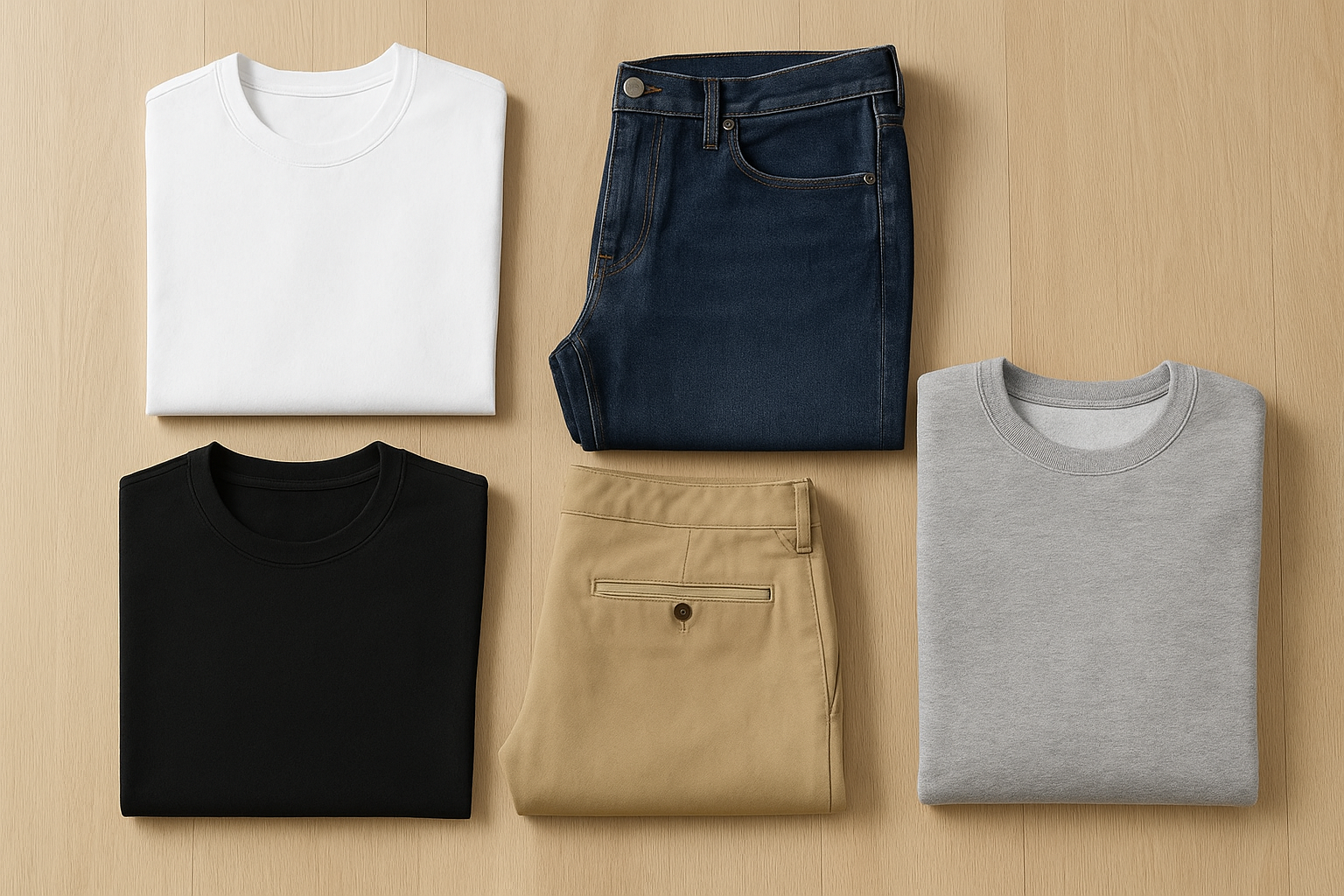
| Category | Item | Recommended Quantity |
|---|---|---|
| Tops | Heavyweight plain tee (white or off-white) | 2-3 |
| Tops | Heavyweight plain tee (secondary neutral) | 1-2 |
| Bottoms | Dark wash straight-leg jeans | 1-2 |
| Bottoms | Neutral chino or trouser | 1 |
| Layer | Crewneck sweatshirt or fine-knit sweater | 1-2 |
Prioritize fabric weight and fiber content for every item on this list. For tees specifically, look for 280g or heavier cotton, ideally long-staple varieties like Supima, which resist pilling and hold their shape through repeated washing. Lighter tees look fine on a hanger and wear out fast in practice.
How to prioritize what you buy first
Don't try to fill every row in the table at once. Start with the category you reach for most based on your lifestyle map from Step 1. If you work casually from home and wear jeans and a tee five days a week, your first investment should be two or three high-quality tops that anchor those daily outfits. Get those right before you move to anything else.
Once your most-worn category is covered, move to the second. Buy one item at a time, wear it for two weeks, and confirm it earns its place before buying the next. This paced approach stops you from bulk-buying and ending up back at a closet full of clothes you don't reach for.
Step 5. Add smart layers and outerwear
Once your core basics are in place, layers and outerwear move your wardrobe from functional to genuinely flexible. Smart layering is what lets the same foundational pieces cover a wider range of occasions and temperatures without buying separate outfits for each context. This is where knowing how to build a quality wardrobe starts to pay off visually: the right layer transforms a plain tee and jeans from casual to polished in seconds.
Choose layers that work across contexts
Your mid-layer needs to do real work. It sits between your base and your outerwear, so it needs to pair cleanly with both without adding bulk or clashing in texture. Start with one or two pieces that are neutral in color and simple in structure: a fine-knit merino crewneck or a relaxed overshirt in a muted tone covers most layering needs without demanding a specific outfit around it.
Use this table to identify which layer types offer the most versatility across your daily contexts:
| Layer Type | Works For | Fabric to Look For |
|---|---|---|
| Fine-knit crewneck | Casual, smart casual, travel | Merino wool or Supima cotton |
| Relaxed overshirt | Casual, weekend, layering over tees | Brushed cotton or linen |
| Zip-up fleece | Outdoor, active, off-duty | Recycled fleece, midweight |
| Lightweight cardigan | Smart casual, indoors, transitional | Merino or cotton blend |
Buy from the top of this list first and work down based on your lifestyle map from Step 1. If you spend most of your time in casual or smart casual contexts, a quality crewneck delivers more value per wear than anything else in this category.
The best mid-layer is the one you forget you're wearing because it pairs with everything you already own without any extra thought.
What to look for in outerwear
Outerwear takes more abuse than any other garment in your closet, so construction quality matters more here than almost anywhere else. Look for reinforced seams at the shoulders and underarms, which are the stress points that fail first on cheaper jackets. Weather resistance and weight should match your climate directly: a heavy wool overcoat works for cold, dry winters, while a technical shell does more in wet or variable conditions.
Limit yourself to two outerwear pieces to start: one for mild weather and one for cold. A structured chore coat or harrington jacket handles spring and fall, while a wool overcoat or down jacket covers winter. Stick to your established color palette and confirm each piece pairs with your existing core basics before you commit.
Step 6. Choose shoes and accessories that last
Shoes and accessories finish every outfit you build, but they also drain budgets fast when you buy without a plan. The same logic that governs how to build a quality wardrobe in clothing applies directly here: fewer, better pieces that work across multiple contexts always outperform a pile of cheap options that each serve only one purpose.
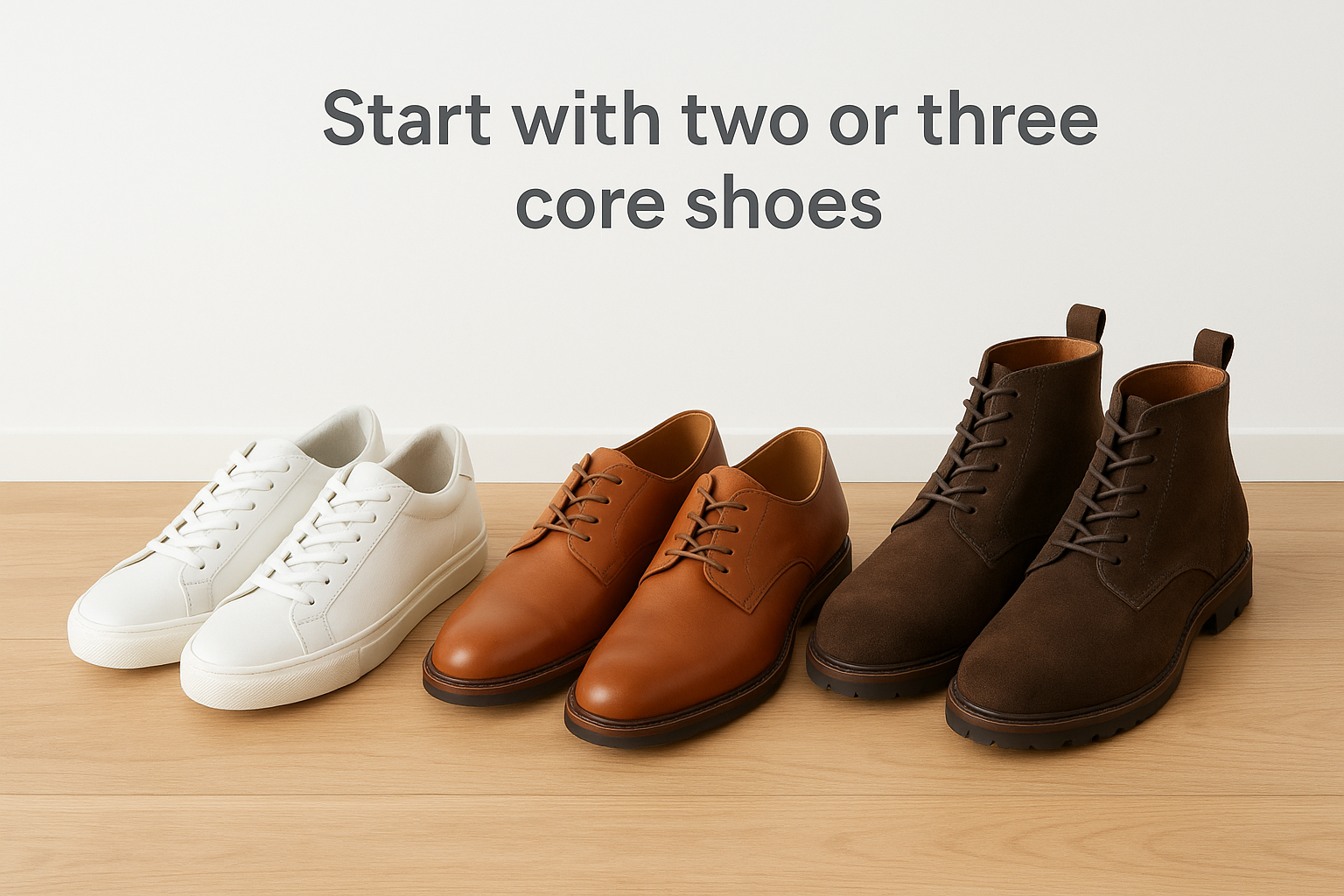
Start with two or three core shoes
Your shoe rotation needs to cover your most common daily contexts without gaps or redundancies. Start with the footwear categories you actually need based on your lifestyle map from Step 1, then fill in one category at a time. For most people, three pairs cover nearly every situation: a clean, low-profile leather or suede sneaker for casual wear, a plain leather derby or chukka for smart casual occasions, and a durable boot for colder months or rougher conditions.
When evaluating shoe quality, focus on three construction markers before anything else:
| Check | What to look for |
|---|---|
| Sole construction | Goodyear welt or Blake stitch allows resoling; glued soles do not |
| Upper material | Full-grain leather or suede resoles and ages well; bonded materials crack |
| Stitching at toe box | Even, tight stitching with no separation at the seam |
A shoe you can resole is a shoe you own for a decade; a glued flat shoe is a shoe you replace every two years.
Stick to your established color palette when choosing shoes. A white or off-white sneaker, a tan or cognac leather shoe, and a dark brown or black boot cover nearly every combination your existing wardrobe can build.
Keep accessories minimal and functional
Accessories work best when they serve a clear purpose and pair without effort. A leather belt in a color that matches your shoes, a simple watch with a clean face, and one functional bag give you everything you need for daily use without crowding your choices. Each accessory should connect to at least three outfits you already wear, not exist as a standalone statement.
Avoid buying accessories because they look compelling in isolation. A bold watch or patterned bag adds complexity that narrows its own pairing options significantly. Instead, treat accessories as supporting elements that make your core pieces look more intentional. Buy one at a time, wear it for two weeks, and confirm it earns a permanent place before you add the next.
Step 7. Shop slower and avoid common traps
Once your core pieces are in place, the biggest threat to your wardrobe isn't a gap in what you own. It's buying momentum, the habit of adding pieces long after your actual needs are covered. Learning how to build a quality wardrobe means recognizing that the goal is a finished, functional collection, not an open-ended shopping project. Every purchase you make from this point forward needs to earn its place, and slowing down the buying pace is what makes that standard stick.
Slow down the buying decision
The single most effective rule for buying better is the 72-hour wait. When you find a piece you want, don't purchase it immediately. Walk away, wait three full days, then revisit the decision with fresh eyes. If the item still feels necessary and passes your quality checklist from Step 3, buy it. If the impulse fades, you just saved your budget from a mistake. Most reactive purchases don't survive this test, and that's the point.
A piece that still feels necessary three days later is a piece that earns a place in your rotation.
Apply this waiting period to every non-essential purchase, including sale items. A discounted price creates urgency that clouds your judgment fast. The same piece at 40% off is still a poor choice if it doesn't match your color palette, fit your lifestyle breakdown, or pair with at least three things you already own.
The traps that derail most buyers
Several patterns pull buyers off course even after they commit to building with intention. Naming each trap explicitly is the most direct way to stop it before it costs you money. Use this table as a reference when you shop:
| Trap | What happens | Counter-move |
|---|---|---|
| Sale urgency | You buy because the price drops, not because you need the item | Apply your 72-hour rule regardless of the discount |
| Novelty bias | A new piece feels exciting but duplicates something you already own | Check your "keep" pile before any new purchase |
| Outfit fantasy | You buy for an occasion that rarely comes up | Match every purchase to your lifestyle percentages from Step 1 |
| Brand loyalty | You trust a label and skip the quality checklist on the specific piece | Run the checklist on every item individually, every time |
| "Just one more" creep | Basics multiply until the collection loses focus | Set a hard cap on quantities per category and hold to it |
Pattern recognition matters more here than willpower. Once you can name what's happening while it's happening, you interrupt the decision before money leaves your account. Keep this table as a screenshot on your phone so it's available every time you shop. Staying consistent with your filter is what separates a wardrobe that keeps getting better from one that slowly drifts back toward clutter.
Step 8. Make it last with tailoring and care
Buying well is only half the equation. The other half is keeping what you own in top condition long enough to get real value from it. Most premium pieces fail prematurely not because of poor construction but because of poor maintenance: wrong wash temperatures, careless storage, and small fit issues left uncorrected until they become permanent. Knowing how to build a quality wardrobe includes knowing how to protect it after it's built.
Use tailoring to close the fit gap
No garment fits every body perfectly off the rack. Even a well-constructed piece in the right size might need minor adjustments to sit exactly where it should. A local tailor can take in a side seam, shorten a sleeve, or taper a trouser leg for between $10 and $30 per alteration, turning a good fit into a precise one. That small investment multiplies the value of every piece it touches.
A tailored basic outperforms an expensive untailored piece every single time because fit is what the eye actually reads.
Focus your tailoring budget on your highest-frequency pieces first: the tees, trousers, and outerwear you wear most often based on your lifestyle map from Step 1. Hemming a trouser or slimming the body of an overshirt takes under a week and changes how the whole outfit reads. Bring a tailor a reference piece that already fits well so they have a clear target to match.
Care for your clothes the right way
How you wash, dry, and store garments determines how long they actually last. Most fabric damage happens in the laundry, not through wear. Use this care reference as your baseline for the core pieces your wardrobe is built on:
| Garment Type | Wash Method | Dry Method | Storage |
|---|---|---|---|
| Supima cotton tee | Cold, gentle cycle | Air dry flat | Folded, not hung |
| Merino wool knit | Hand wash or wool cycle | Lay flat to dry | Folded on shelf |
| Denim jeans | Cold, inside out, infrequent | Air dry, hang by waist | Hung or folded |
| Wool outerwear | Dry clean or hand wash | Lay flat | Hung on wide hanger |
| Leather shoes | Wipe clean, leather conditioner monthly | Room temperature | Cedar shoe trees inserted |
Wash less frequently than you think you need to. Supima cotton tees and denim jeans both hold up far longer when you spot-clean between wears and wash only when genuinely necessary. Every unnecessary wash cycle accelerates fiber breakdown, color fade, and shape loss. Treat your best pieces with the same deliberateness you used when you chose them.
Next steps
You now have a complete, step-by-step system for how to build a quality wardrobe that actually holds together over time. The process starts with an honest audit, moves through a defined palette and quality checklist, and builds outward from your core basics to layers, shoes, and long-term care. Every step reinforces the one before it, so skipping ahead costs you more time and money in the long run.
The next move is simple: start with Step 1 today. Pull everything out of your closet, sort it honestly, and write down your lifestyle breakdown. That single action gives you more clarity than any amount of shopping research. Once you know your baseline, the rest of the guide follows naturally.
When you're ready to invest in basics that anchor the whole system, explore premium everyday essentials at SÖMNAD. Built for durability and fit, with no logos and no excess.