


You sweat through another tee by 10 a.m. and you're done guessing which shirt actually holds up. A breathable t-shirt isn't just a marketing label stitched onto a tag. It's a specific combination of fiber, weave, and weight that lets air move and moisture escape instead of trapping heat against your skin.
If you're shopping for a breathable everyday t shirt men can wear from a morning commute to a workout and back, the fabric matters more than the fit or the price tag. Cotton, linen, and synthetic performance blends all handle heat and sweat differently, and knowing those differences saves you from buying the same disappointing shirt twice.
This guide breaks down what actually makes a shirt breathable, from fiber structure to weave density, and compares the trade-offs between natural and synthetic options. We'll also look at why something like 300g Supima cotton, the fabric we use at SÖMNAD, strikes a different balance than typical performance tees, so you can pick what fits your day, not just your closet.
Why breathability matters more than you think
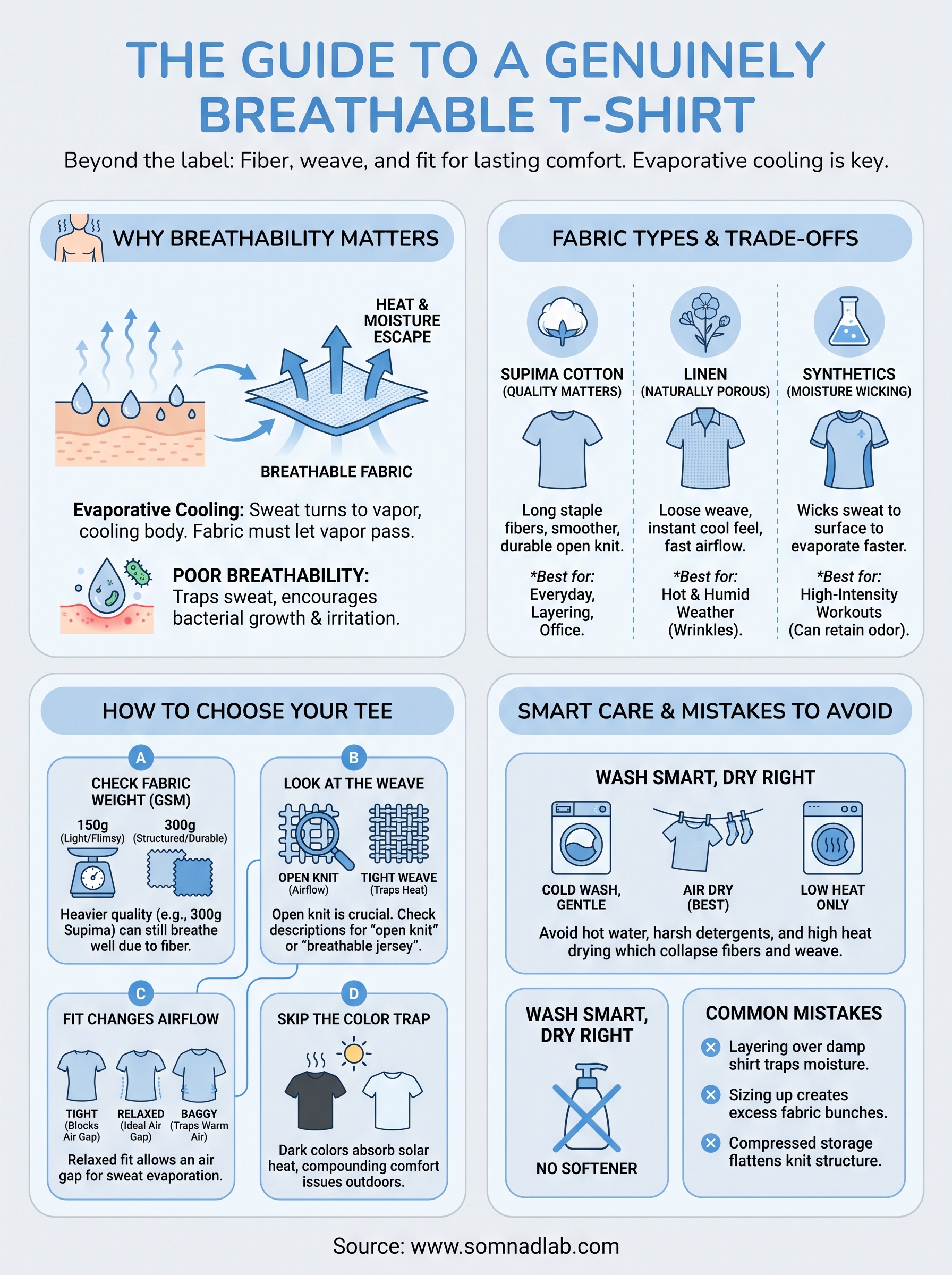
Most guys blame a hot day when a shirt sticks to their back, but the real culprit is usually the fabric, not the weather. Your body cools itself through evaporative cooling: sweat rises to the surface of your skin and pulls heat away as it evaporates into the air. A breathable t-shirt lets that vapor pass through the fabric and escape. A poorly constructed one traps the moisture against your skin instead, so you stay damp, sticky, and warmer than you'd be without a shirt at all. That's the whole mechanism in a nutshell, and it explains why two shirts that look identical on a hanger can feel completely different by lunchtime.
A shirt that can't move air and moisture off your skin will always feel hotter than the actual temperature around you.
The hidden cost of poor breathability
When sweat has nowhere to go, it doesn't just sit there quietly. Trapped moisture creates the perfect environment for bacterial growth, which is the actual source of body odor, not the sweat itself. Damp fabric rubbing against skin for hours also raises the risk of skin irritation and chafing, especially under the arms and along the waistband where friction is already highest. None of this shows up on a spec sheet, but it's the difference between a shirt you forget you're wearing and one you're peeling off your back by 3 p.m.
Here's what tends to show up when a t-shirt isn't doing its job:
- Visible sweat rings that don't fade even after you cool down
- A shirt that clings to your skin instead of hanging naturally
- A musty smell that returns within an hour of putting it on
- Overheating indoors, even in air-conditioned spaces
- Fabric that feels heavier and damper as the day goes on
If you recognize two or more of these from your own closet, it's not your body. It's the shirt.
Breathability affects more than just gym days
People assume breathability only matters for workouts, but that's a narrow way to think about it. Everyday situations put just as much stress on a shirt: a packed subway car in July, a warm office with the thermostat set for someone else's comfort, a layered outfit where a heavy tee traps heat under a jacket. Everyday comfort depends on a shirt that adjusts with you throughout the day, not one built for a single, intense burst of activity and nothing else. That's exactly why anyone searching for a breathable everyday t shirt men can rely on for both a workday and a workout needs to think beyond gym-specific marketing claims.
Temperature swings matter here too. You might walk out into cool morning air, sit in a warm office by 10 a.m., then step back outside into afternoon heat. A shirt that breathes well handles all three without you needing to change clothes or reach for a jacket you don't actually need. This is where natural fibers like Supima cotton often outperform their reputation. People assume cotton is the
The fabrics that make a t-shirt breathable
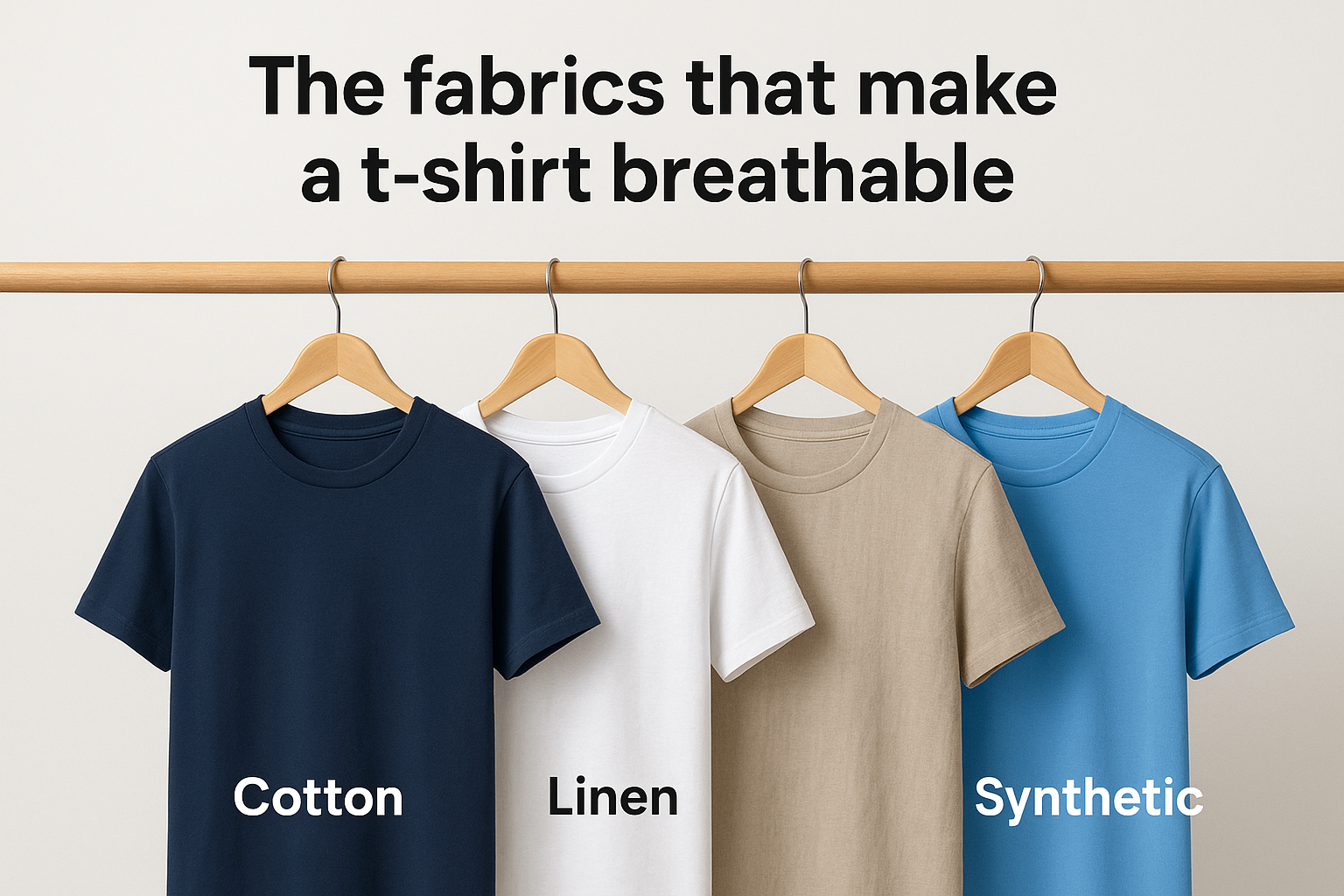
Fabric choice decides almost everything about how a shirt performs once you're moving or sweating. Fiber type determines how much moisture the material can absorb before it feels wet, and weave density determines how easily air actually passes through the cloth. A shirt can be labeled "breathable" on the tag and still fail on both counts if the underlying fabric wasn't built for airflow in the first place. Understanding the handful of materials that dominate the t-shirt market makes it much easier to spot the real thing.
Cotton and why quality varies so much
Cotton gets a mixed reputation because so much of it is grown and processed cheaply, using short fibers that pill, thin out, and trap heat once they're woven into a tight, low-quality knit. Supima cotton is a different category entirely. Its extra-long staple fibers create a smoother, more breathable knit that resists the thinning and pilling that make cheap cotton feel stuffy after a few washes. A 300g Supima tee, like the one SÖMNAD builds its relaxed fit around, stays structured enough to hang well while still letting air move through the weave. That combination is why premium cotton keeps showing up in serious comparisons of a breathable everyday t shirt men actually want to wear year-round, not just in summer.
Not all cotton breathes the same way, the fiber length and weave quality decide whether it cools you down or holds heat in.
Linen and why it runs cooler but wrinkles faster
Linen comes from flax fibers that are naturally more porous than cotton, which is why a linen shirt often feels cooler the moment you put it on. Its loose, textured weave lets air pass through almost immediately, making it a strong pick for hot, humid climates. The trade-off is durability and structure: linen wrinkles fast, softens unevenly over time, and doesn't hold its shape through repeated wear the way a well-constructed cotton tee does. It's a great niche fabric for specific weather, but not always the most practical daily-wear fabric if you want one shirt that works across seasons.
Synthetic and performance blends
Polyester and nylon blends dominate the athletic and gym-wear space because they wick moisture along the fiber surface instead of absorbing it, pushing sweat outward to evaporate faster. That makes them genuinely useful during intense workouts. The downside shows up over time: synthetic fibers trap odor-causing bacteria more stubbornly than natural fibers, and they can feel clammy the moment you stop moving and your body cools down.
| Fabric | Best for | Breathability source | Common drawback |
|---|---|---|---|
| Supima cotton (300g) | Everyday wear, layering | Long-staple fiber, open knit | Higher upfront cost |
| Standard cotton | Casual, low-intensity wear | Basic knit airflow | Pills, thins over time |
| Linen | Hot, dry climates | Loose weave, porous fiber | Wrinkles, less structure |
| Polyester/nylon blend | Workouts, high-sweat activity | Moisture-wicking surface | Retains odor, clammy feel |
How to choose a breathable everyday t-shirt for men
Picking a shirt that actually breathes takes more than reading "moisture-wicking" on a hangtag. Fabric weight, weave, fit, and color all interact to decide how a breathable t-shirt performs once you're sweating in it. Skip any one of these and you're back to guessing, which is exactly how most guys end up with a drawer full of tees they never reach for.
Check the fabric weight first
Grams per square meter, or GSM, tells you how dense a fabric is, and it's one of the fastest ways to predict comfort before you even try a shirt on. A lightweight tee under 150 GSM breathes easily but often feels flimsy and see-through after a few washes. Heavier fabrics above 220 GSM, like the 300g Supima cotton SÖMNAD builds its tees from, hold their shape and resist wear without sacrificing airflow, because fiber quality matters more than the raw number on the label.
A heavier fabric isn't automatically less breathable, fiber quality decides that far more than the number on the label.
Look past the fiber to the weave
Two shirts made from identical cotton can perform completely differently depending on how tightly the yarns are knitted together. A loose, open knit lets air pass through the fabric itself, while a tight, compressed weave traps heat even when the fiber underneath is high quality. Holding a shirt up to light isn't always possible when you're buying online, so check the product description for terms like "open knit" or "breathable jersey" instead of relying on the fiber name alone.
Fit changes how much air actually moves
Sizing plays a bigger role in breathability than most guys expect. A shirt that's too tight presses fabric against your skin, blocking the air gap that lets sweat evaporate before it soaks through. Baggy shirts, on the other hand, bunch up and trap warm air in folds instead of letting it circulate. A relaxed, clean fit that skims the body without clinging gives sweat room to evaporate while still looking put together, which is why fit sits right alongside fabric in any honest breathability comparison, especially for guys hunting for a breathable everyday t shirt men can wear from desk to gym without changing.
Skip the color trap
Darker colors absorb more heat from sunlight, which matters if you're wearing your tee outside for any stretch of the day. This isn't a breathability issue in the fabric sense, but it stacks on top of whatever the material is already doing, so a dark, heavy synthetic tee in direct sun compounds both problems at once. Run through this checklist before you buy:
- Confirm the GSM falls in a range that matches your climate and activity level
- Look for "open knit" or similar weave language in the product description
- Choose a relaxed fit over anything skin-tight or oversized
- Factor in color if you'll be outdoors for long stretches
- Check the fiber source, long-staple cotton like Supima outperforms generic blends
How to care for your t-shirt without losing breathability
Buying the right fabric only gets you halfway there. Laundry habits wear down breathability faster than daily wear does, and most guys don't realize their washing machine is the reason a once-airy tee now feels like a plastic bag by August. A breathable t-shirt loses its open knit structure when heat, harsh detergent, or the dryer compress the fibers over time, so the care routine matters almost as much as the fabric choice itself.
The washing machine does more damage to breathability than a full year of regular wear.
Washing habits that protect the fabric
Cold water keeps fibers relaxed instead of shrinking them tight, which is exactly what happens when hot water hits cotton or Supima blends wash after wash. Turning the shirt inside out before it goes in the machine also protects the outer surface from the friction that thins fabric and opens it up to pilling. Follow a short routine and you'll get years more life out of a quality tee:
- Wash in cold water on a gentle cycle
- Turn the shirt inside out before washing
- Skip fabric softener, it coats fibers and blocks airflow
- Use a mild, residue-free detergent
- Wash with similar fabrics, not heavy items like jeans or towels
Getting this part right is a small habit that pays off every single time you put the shirt on.
Drying methods that matter more than you think
High heat from a dryer is the fastest way to collapse the open knit that makes a fabric breathe in the first place. Repeated exposure to a hot dryer shrinks the yarn, tightens the weave, and leaves you with a stiffer, denser shirt that traps heat instead of releasing it. Air drying flat or on a hanger keeps the fibers loose and preserves the loft that lets air pass through. If you need to use a machine, a low-heat or air-only setting protects the fabric almost as well as line drying does, and it takes only a few extra minutes to set the dial correctly.
Detergent and fabric softener pitfalls
Softener seems harmless, but it works by coating fibers in a thin waxy layer that smooths out texture, and that same coating blocks the tiny air pockets a breathable fabric depends on. Over several washes, that buildup accumulates and the shirt starts to feel heavier and warmer even though nothing about the fiber itself has changed. Detergent residue does something similar when you use too much or don't rinse thoroughly, so a smaller amount of detergent on a longer rinse cycle actually protects breathability better than a heavy dose meant to fight odor. Odor control, ironically, comes more from proper drying and fiber quality than from stronger detergent, so skip the extra scoop and trust the wash routine instead.
Matching breathable fabrics to your activity and climate
No single fabric wins in every situation, and pretending otherwise is how guys end up with a closet full of shirts that only work half the year. Climate and activity level should drive your fabric choice as much as fit or price, because the same tee that feels perfect on a humid August afternoon can feel clammy and cold the moment temperatures drop or you step into air conditioning. Matching the shirt to the day, rather than buying one "do everything" tee, gets you closer to the comfort you're actually after.

Hot and humid weather
Thick, humid air slows evaporation no matter how good your shirt is, so the fabric needs to move air quickly and resist clinging when sweat builds up. Linen performs well here because its loose weave lets air pass through almost instantly, though it wrinkles fast and loses shape if you're wearing it for a full workday. A lighter-weight Supima cotton, in the 180 to 220 GSM range, splits the difference by staying breathable without the wrinkling or the flimsiness you get from ultra-thin synthetic blends.
Dry heat and everyday warm days
Dry climates are more forgiving because sweat evaporates fast on its own, which means fabric weight matters less than fit and weave. This is where a breathable everyday t shirt men wear for both errands and light exercise earns its keep, since a mid-weight cotton handles temperature swings between shaded and sunny spots without you needing to change shirts. Heavier Supima cotton around 300 GSM still breathes well in dry heat because the open knit does the work that raw thinness would otherwise have to do.
The right fabric for your climate matters more than the highest breathability rating on a tag.
Cold mornings and layering
Breathability doesn't disappear just because the temperature drops. A tee worn under a jacket or sweater still needs to move moisture away from your skin, or you'll end up damp and cold once you take the outer layer off. Cotton and Supima blends layer better than most performance synthetics because they don't trap the clammy feeling synthetics leave behind once you cool down indoors.
Matching fabric to activity level
Activity intensity changes the equation just as much as weather does. Here's a quick way to think about it:
| Activity level | Best fabric choice | Why it works |
|---|---|---|
| Light activity, office wear | Supima cotton (220-300 GSM) | Structured, breathable, holds shape all day |
| Moderate activity, errands, travel | Mid-weight cotton or cotton blend | Balances airflow with durability |
| High-intensity workouts | Polyester/nylon performance blend | Fast moisture-wicking during heavy sweat |
| Hot, humid outdoor days | Linen or lightweight cotton | Maximizes airflow through open weave |
Sizing your fabric to your day, rather than defaulting to whatever's clean in the drawer, is the difference between a shirt that adapts and one that fights you by noon.
Common mistakes that make a shirt feel less breathable
Even a genuinely breathable t-shirt can feel stifling if you're undoing its benefits with habits you don't think twice about. Most of these mistakes have nothing to do with the fabric itself and everything to do with how you wear, layer, or store the shirt before it ever touches your skin. Fixing them costs nothing and takes less effort than switching brands.
Layering over a damp shirt
Grabbing a jacket or hoodie before your tee has fully dried from the last time you wore it traps moisture between layers instead of letting it evaporate. That trapped dampness turns into a heat pocket, which defeats the purpose of a breathable fabric no matter how open the knit is. Give a shirt time to air out completely between wears, especially in humid climates where fabric holds moisture longer than you'd expect.
Layering a fresh jacket over a damp shirt cancels out even the best breathable fabric.
Sizing up out of habit
Buying a size larger than you need seems like a safe move, but excess fabric bunches under the arms and around the torso, creating folds where warm air gets stuck instead of moving. A shirt that's too loose behaves almost like a tight one in this sense, since airflow depends on the fabric sitting close enough to your body without pressing against it. Stick with the size that gives you a clean, relaxed fit rather than defaulting to a bigger number for comfort.
Ignoring what's underneath
Wearing a breathable outer tee over a thick, non-breathable undershirt undoes most of the benefit, since sweat still has to pass through that inner layer before it can escape. The same problem shows up when guys wear a quality cotton tee under a synthetic base layer during workouts, trapping heat between two fabrics that don't move air the same way. Match your layers so nothing underneath is working against the shirt on top.
Storing shirts folded and compressed
Tightly packed drawers press fibers flat over time, and a compressed knit doesn't spring back to its original loft as easily as you'd think. This is a slow, cumulative mistake rather than an obvious one, but it shows up as a shirt that feels stiffer and less airy after months in a crowded drawer. A quick fix list:
- Fold shirts loosely instead of stacking them tightly
- Avoid overpacking drawers so fabric can breathe even in storage
- Rotate your shirts instead of wearing the same one repeatedly between washes
- Let a worn shirt air out fully before folding it away
- Keep heavier synthetic layers separate from cotton tees in storage
Small habits like these decide whether a well-made shirt keeps performing for years or starts feeling flat within a few months, regardless of how good the fabric was on day one.
Choosing comfort that lasts
A breathable t-shirt comes down to a handful of decisions: fiber quality, weave density, fit, and how you wash the thing once you own it. Get those right and you stop guessing every morning whether today's shirt will hold up through a commute, a meeting, and whatever comes after work. Skip the marketing claims printed on a hangtag and check the fabric weight, the knit, and the fit instead, since those are the details that actually decide whether you're comfortable by lunch or peeling a damp shirt off your back.
Quality fabric isn't about chasing a trend or a logo. It's about buying fewer shirts that actually perform, wash after wash, season after season. That's the whole idea behind 300g Supima cotton done right: less, but better. If you're ready to put everything in this guide into practice, shop the relaxed tee at SÖMNAD and feel the difference for yourself.