


Most t-shirts force a trade-off. Cotton breathes well but wrinkles and loses shape. Synthetics hold up but feel plastic against your skin. A lyocell cotton t-shirt splits the difference, combining the natural comfort of cotton with lyocell's silky drape, moisture management, and reduced environmental footprint. It's a blend that genuinely performs better than either fiber on its own.
At SÖMNAD, we obsess over fabric construction because we believe the material is the product. Our foundation is built on premium cotton essentials, and that deep focus on fiber quality gives us a clear perspective on where blends like lyocell-cotton sit in the hierarchy of everyday basics worth owning.
This guide breaks down what makes the lyocell-cotton blend work, how it compares to pure cotton and other common fabric options, what to look for when buying, and how to care for it so the shirt keeps its shape and softness wash after wash. If you're weighing your options before a purchase, this is everything you need to make a confident decision.
Why choose a lyocell cotton t-shirt
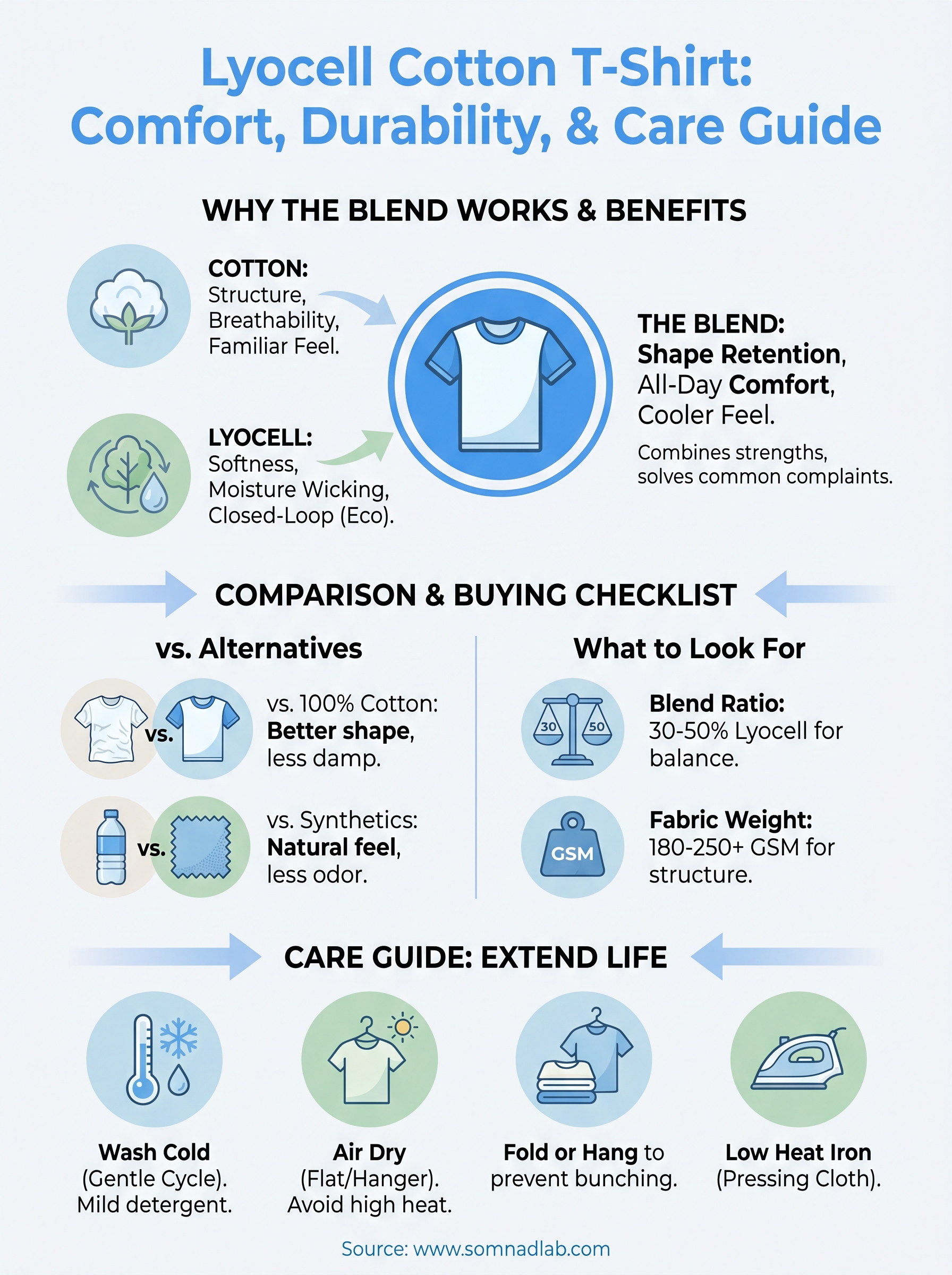
The short answer: this blend solves the most common complaints about everyday t-shirts without trading one problem for another. A lyocell cotton t-shirt sits softer against your skin than a standard cotton tee, drapes more naturally, and manages moisture better during warm-weather wear or active moments. You get the familiar comfort of cotton with a noticeable upgrade in how the shirt actually feels and moves.
Comfort that holds up all day
Lyocell fibers are smooth at the microscopic level, which is why garments that include them feel distinctly soft right out of the bag. When blended with cotton, this smoothness transfers to the finished fabric without making it feel slippery or synthetic. Your skin stays cooler because lyocell pulls moisture away from the body and releases it into the air faster than cotton alone. The result is a shirt you can wear from morning to evening without that heavy, damp feeling that pure cotton sometimes develops.
A fabric's ability to move moisture matters more than most people realize - it directly affects how comfortable you feel hours into wearing a shirt, not just in the first five minutes.
Shape retention over repeated wear
Cotton is comfortable, but it has a known weakness: it loses structure over time. Repeated washing and wearing stretches fibers, softens hems, and rounds out collars. Lyocell adds dimensional stability to the blend, meaning the shirt holds its shape through more wash cycles. The neck stays where it should, and the body doesn't bag out at the bottom. If you've ever retired a cotton tee after six months because it looked worn out before it actually was, this is the specific problem the blend addresses.
A more responsible material choice
Lyocell is produced using a closed-loop manufacturing process, where the solvent used to break down wood pulp into fiber gets recovered and reused rather than discharged as waste. This matters if you care about how your clothing is made, not just how it performs. Pairing it with cotton, a well-understood natural fiber, keeps the blend grounded in materials with decades of real-world performance data behind them.
What lyocell and cotton each contribute
Understanding the blend starts with knowing what each fiber does on its own. Both lyocell and cotton bring distinct strengths to a lyocell cotton t-shirt, and the combination works specifically because these strengths address each other's weaknesses.
What lyocell brings
Lyocell is derived from wood pulp, typically eucalyptus, processed into fiber through a closed-loop solvent system. The fiber is exceptionally smooth at the microscopic level, which gives it a soft, slightly silky feel against your skin. It also wicks moisture away from the body faster than cotton alone, keeping you cooler and more comfortable during extended wear.
One less-obvious advantage is that lyocell is notably strong when wet, which means it holds up through repeated washing without degrading as quickly as other natural fibers. That strength directly contributes to how long a blended garment maintains its softness and shape over time.
Lyocell's wet-strength is a practical benefit - it reduces fiber stress during washing, which extends how long the garment actually performs well.
What cotton brings
Cotton handles structural body and breathability. Without it, lyocell fabric can feel too fluid and lose the clean silhouette most people expect from a t-shirt. Cotton grounds the blend in a familiar hand feel while giving the fabric enough weight and structure to sit properly on your body.
Dye acceptance is another area where cotton strengthens the blend. Cotton takes color evenly and consistently, which means the finished fabric holds its appearance wash after wash. Its centuries-long track record in everyday clothing also means its performance is well-documented and predictable across different climates and conditions.
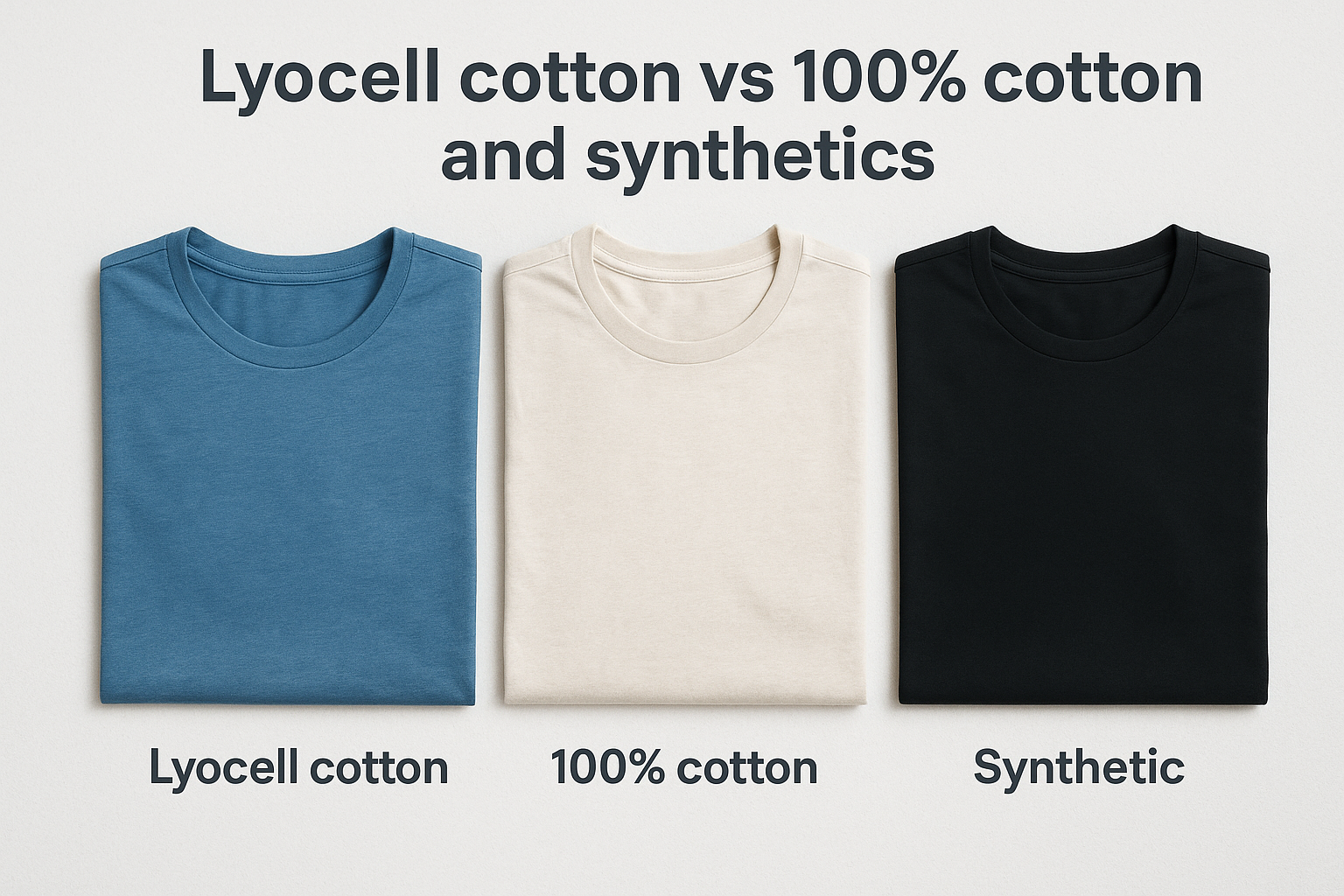
Lyocell cotton vs 100% cotton and synthetics
Knowing how the blend stacks up against pure cotton and synthetic options helps you understand exactly what you're getting when you pick up a lyocell cotton t-shirt. The differences show up in how the shirt feels on day one and how it holds together after a year of regular wear.
How it compares to 100% cotton
Pure cotton is the benchmark most people use when evaluating a basic tee. It's breathable, familiar, and dye-friendly, but it has real limitations. Cotton stretches out, softens in ways that destroy a clean silhouette, and holds onto moisture longer than a lyocell blend does. The lyocell-cotton combination keeps everything cotton does well while adding shape retention and faster moisture release that straight cotton cannot match on its own.
If your current cotton tees look worn out after six months but still have life in them, the blend's added dimensional stability is the specific fix you're looking for.
How it compares to synthetics
Synthetics like polyester hold their shape and dry fast, but they trap heat and develop odor more readily than natural fibers. They also feel noticeably plastic against bare skin, especially in warm conditions.
A lyocell cotton blend delivers comparable durability and moisture management without those trade-offs. You get a fabric that breathes like a natural fiber and holds up like a performance material, without the clammy feel that synthetic tees often leave behind after a few hours of wear.
How to choose the right blend and build
Not all lyocell cotton blends perform the same. The ratio of lyocell to cotton matters as much as the fact that both fibers are present, and the fabric weight determines whether the shirt works as a standalone layer or needs something over it.
Look at the blend ratio
A blend hovering around 30-50% lyocell gives you the moisture management and smoothness benefits without making the fabric too fluid to hold a clean shape. Lower ratios, like 10-15% lyocell, often deliver minimal performance gains over standard cotton. Higher lyocell content can tip the fabric toward a drapey character that some people prefer, but it may lack the structured silhouette most buyers expect from a basic tee. Aim for a ratio in the middle range for the best balance of comfort and structure.
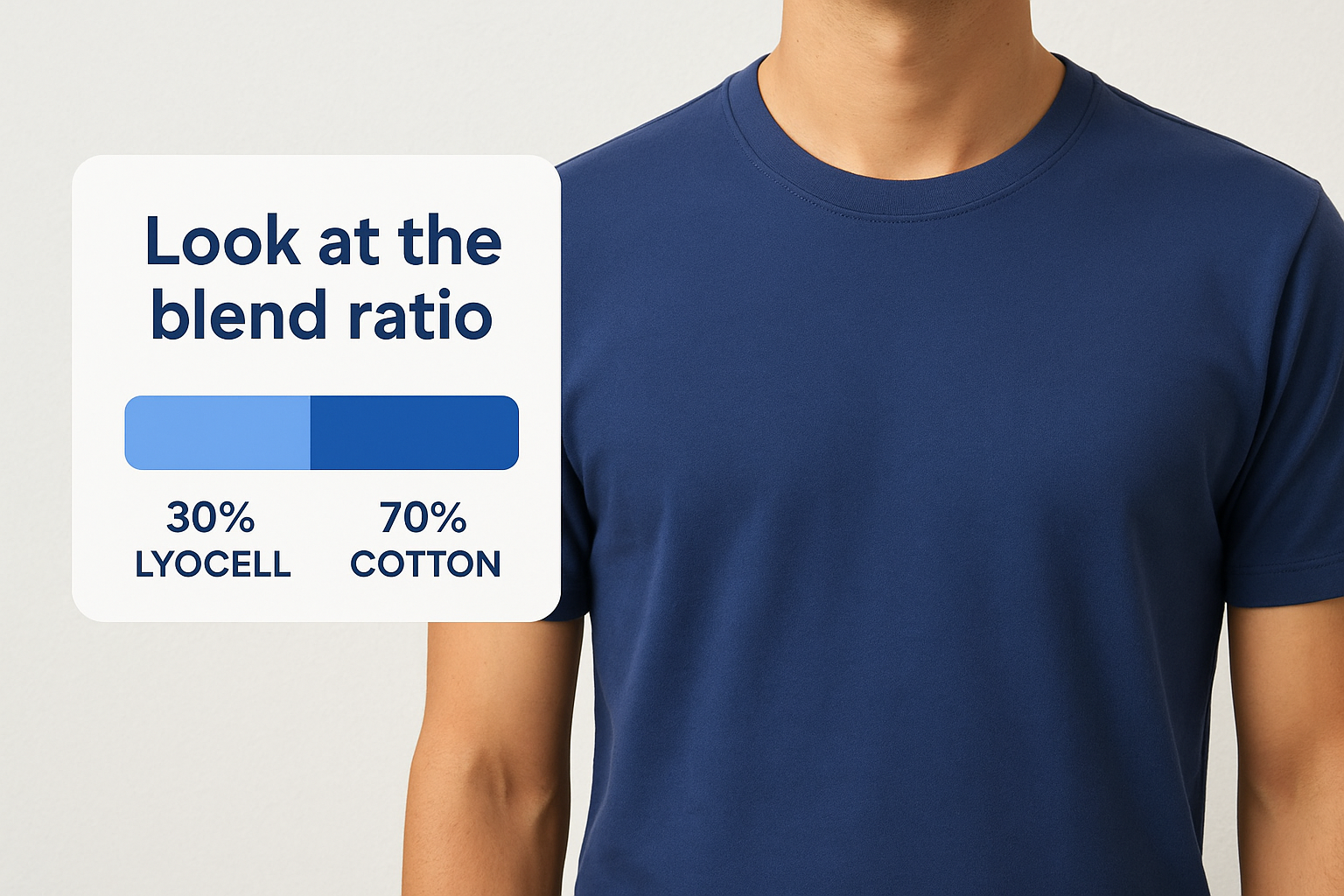
A blend ratio close to 30% lyocell is generally the floor for noticing a real difference in how the shirt drapes and manages moisture.
Check the fabric weight
Fabric weight, measured in grams per square meter (GSM), tells you how substantial the shirt will feel on your body. A lyocell cotton t-shirt in the 180-220 GSM range suits warm weather and layering well. Heavier weights, 250 GSM and above, deliver a more premium, structured feel that holds its shape better and wears more opaque. If you plan to wear the shirt on its own rather than under another layer, choose a weight at the higher end of that range to get the cleanest result.
How to wash and care for lyocell cotton tees
A lyocell cotton t-shirt is more durable than pure lyocell on its own, but it still rewards a little care during washing. Lyocell fibers degrade faster under high heat, and cotton shrinks in hot cycles. Treat the blend properly and you'll get consistent softness and shape retention over hundreds of washes.
Washing machine settings
Turn the shirt inside out before loading it. Use cold water on a gentle cycle to reduce mechanical stress on the fibers and prevent shrinkage. A mild liquid detergent performs better than powder, which can leave residue sitting in the fabric's weave.
Cold water washing is the single most effective step you can take to extend how long the shirt holds its shape and color.
Avoid washing with heavy items like jeans or towels in the same load. Friction from coarser fabrics accelerates fiber breakdown over time, and keeping similar garment weights together reduces unnecessary wear on the shirt.
Drying and storage
Skip the dryer when possible. Air drying flat or on a hanger protects the shirt's structure far better than machine drying, which combines heat and agitation that gradually break down lyocell fibers. If you do use a dryer, choose the lowest heat setting available and remove the shirt while it's still slightly damp.
Store the shirt folded or hung rather than bunched. Iron on a low to medium setting if needed, and place a pressing cloth between the iron and the fabric to avoid direct heat contact that can dull the surface over time.
Final takeaways
A lyocell cotton t-shirt gives you something most basics cannot deliver: comfort that holds up alongside shape that doesn't disappear after a few months of regular wear. The blend works because each fiber addresses what the other lacks. Lyocell adds smoothness and moisture management while cotton provides structure and familiar breathability. Together, they produce a shirt that performs better over time than pure cotton or synthetics.
Choosing the right blend ratio and fabric weight makes the difference between a shirt you wear occasionally and one you reach for constantly. Cold-water washing and air drying protect the fabric so it keeps delivering that combination of softness and structure wash after wash.
If you're building a wardrobe around premium everyday essentials and clean construction, explore SÖMNAD's collection and see what that standard looks like in practice.