


Cupro has been quietly showing up in more premium basics over the past few years, and for good reason. It drapes well, feels soft against skin, and carries a subtle sheen that elevates even the simplest silhouette. But when someone searches for a breathable cupro tee, they're usually asking a more specific question: will this fabric actually keep me comfortable when it's hot? That's a fair thing to wonder, especially when you're spending more on a single tee than most people spend on a pack of five.
At SÖMNAD, we build everything around material performance, not branding, not trends. Our focus on premium everyday essentials means we spend a disproportionate amount of time studying how fabrics behave on the body, across seasons, and after dozens of washes. Cupro is a material we respect, and one worth understanding before you buy. Whether it ends up in your rotation depends on what you actually need from your clothing.
This article breaks down what cupro is, how it's made, and, most importantly, how it performs in heat compared to other common tee fabrics. We'll cover its moisture-handling properties, where it excels, where it falls short, and who it's best suited for. No hype, just an honest look at the material so you can decide if a cupro tee belongs in your warm-weather wardrobe.
Why people look for cupro tees for heat
People who search for a breathable cupro tee are almost always coming from a specific frustration. They've tried their usual cotton tees in summer and found them wanting. You know the feeling: sweat builds up, the fabric clings, and by mid-afternoon you're uncomfortable in a shirt that felt fine in the morning. That experience pushes people to look for alternatives, and cupro keeps coming up as a serious option.
The limitation of common warm-weather fabrics
Cotton is the default choice for tees, and it earns that reputation in moderate temperatures. The problem is that standard cotton absorbs moisture and holds it, which means sweat doesn't move away from your skin. It stays trapped between the fabric and your body. The heavier the cotton, the longer it takes to release that moisture. For anyone wearing a tee through a full day in heat, that's a real comfort issue.
Cotton's moisture retention works well in dry, mild conditions, but in actual summer heat it tends to make you feel heavier and stickier as the day goes on.
Synthetics like polyester seem like a logical fix because they wick moisture more aggressively than cotton. The tradeoff is texture and odor. Polyester moves moisture quickly, but it also clings to body odor in a way that natural and semi-natural fibers don't, and it often feels slick or clinical against skin. If you care about how a tee looks and feels beyond the gym, synthetic performance fabrics fall short of what most people want from a premium everyday shirt.
Where cupro fits in that comparison
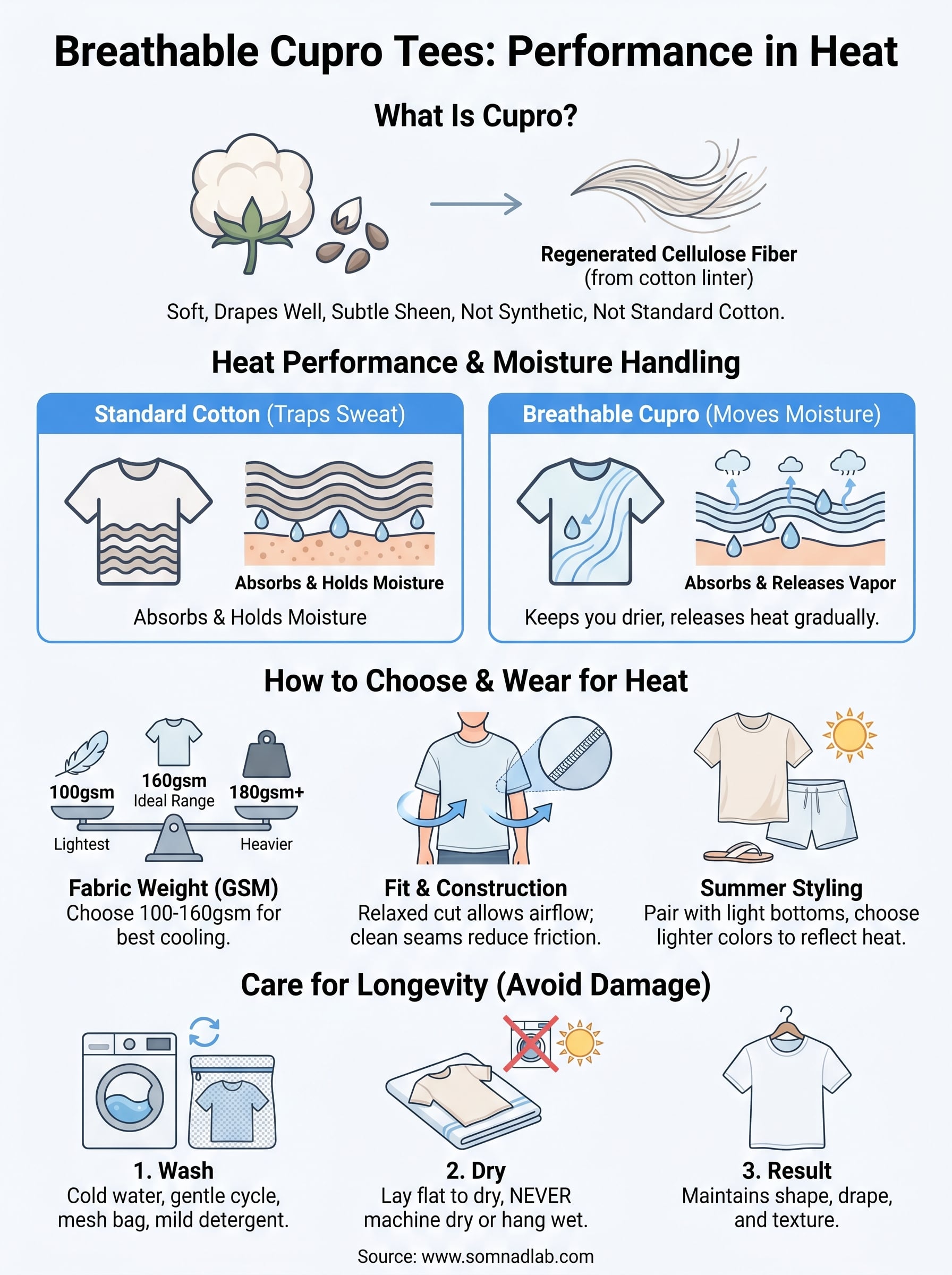
Cupro is a regenerated cellulose fiber derived from cotton linter, the short fibers left over after processing cotton seeds. Because of that cellulose structure, it behaves similarly to natural fibers but with a finer, more fluid drape. It moves moisture more efficiently than woven cotton, and it doesn't carry the odor issues that come with synthetics.
That puts cupro in a specific gap in the market. You get better moisture movement than cotton and a far more refined texture than polyester. For people who want a tee that performs in warm weather without looking like athletic gear, that combination is exactly what draws them to explore the fabric further.
How breathable cupro really is
Cupro handles heat reasonably well, but "breathable" means something specific and it's worth being precise about what cupro does and doesn't do. The fabric doesn't block airflow the way dense synthetics can, and its moisture-handling properties are genuinely better than standard cotton. That said, breathability isn't a single quality. It involves how air moves through a fabric, how quickly it pulls sweat away from your skin, and how fast it releases that moisture back into the air.
What the fiber structure actually does
Cupro's cellulose structure absorbs moisture into the fiber itself rather than pushing it to the surface like a synthetic would. That absorption keeps you from feeling immediately wet or sticky when you start to sweat. The fiber then releases that moisture as vapor, which happens gradually rather than all at once.

This absorption-and-release cycle is what makes a breathable cupro tee feel more comfortable through a long day compared to a cotton tee of the same weight.
Because the fibers are extremely fine, cupro fabric tends to be lightweight even when it's woven tightly. That fine construction allows more air movement than a heavier cotton weave, which contributes to the cooler feel people notice when they first wear it.
Where cupro has limits
Cupro is not a performance fabric. If you're doing anything physically intense in hot weather, it won't keep up with moisture-wicking synthetics designed for that purpose. It's also prone to water spotting, which means visible wet patches can form if you sweat heavily in concentrated areas. For moderate heat and everyday wear, those limits rarely matter. For high-exertion situations, they do.
How to pick a breathable cupro tee
Not every cupro tee performs the same way. Fabric weight, construction quality, and garment finish all affect how comfortable it feels in warm weather. Knowing what to look for before you buy saves you from spending on something that doesn't deliver what the material is actually capable of. The difference between a well-made cupro tee and a poorly executed one is significant, and it usually shows up the first time you wear it in real heat.
Look at fabric weight first
Cupro tees typically range from around 100gsm to 180gsm. Lighter weights move air more freely and feel cooler against skin, which is exactly what you want from a breathable cupro tee worn in heat. Anything above 160gsm starts to feel heavier and may trap more warmth than expected. If a product listing doesn't include fabric weight, that's a gap in transparency worth noting before you commit to a purchase.
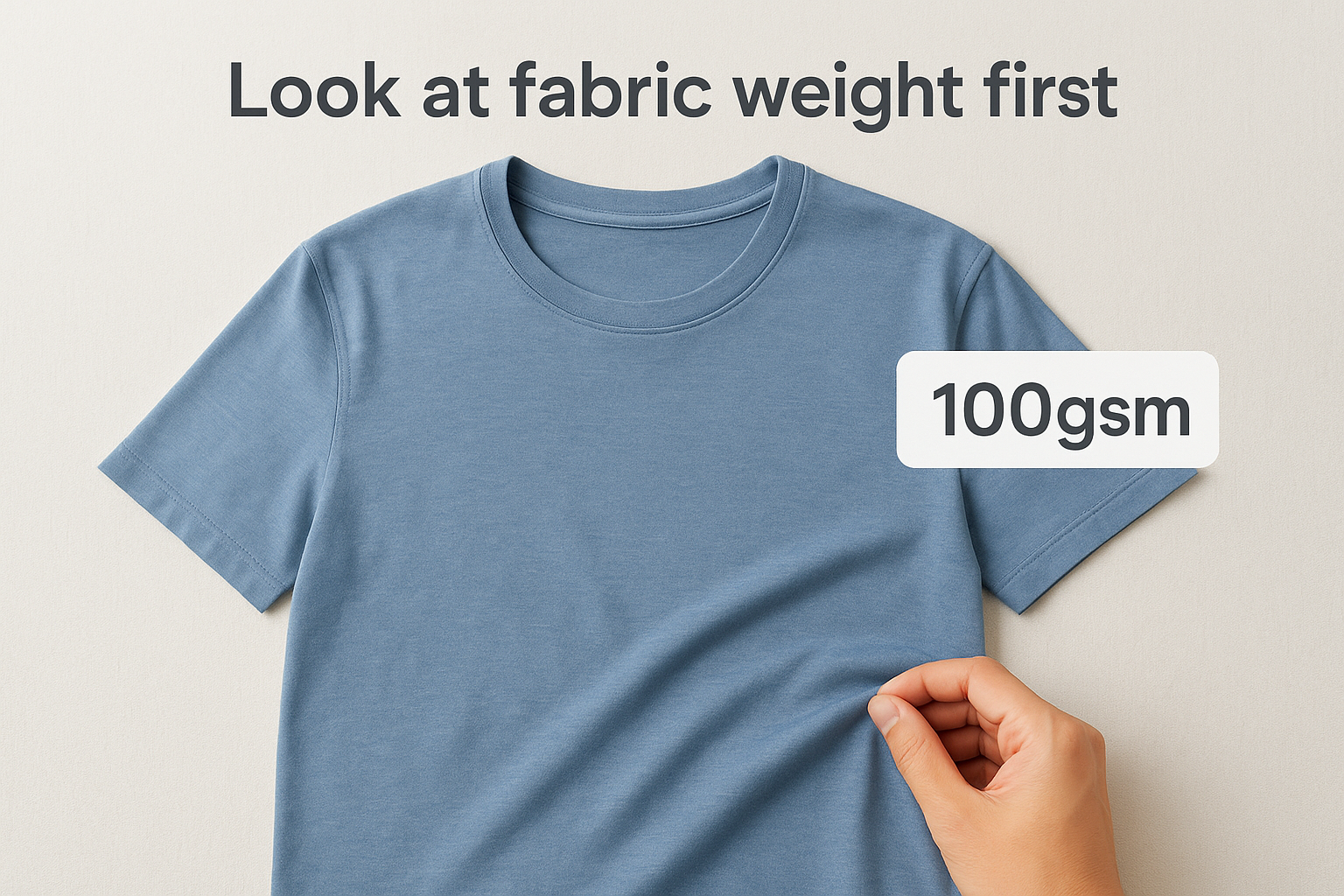
When a brand doesn't disclose fabric weight, the number usually doesn't support the price point.
Check the cut and construction
Fit affects airflow more than most people factor in when selecting a tee. A relaxed or slightly oversized cut allows air to circulate between the fabric and your body, which meaningfully improves comfort in warm conditions. Tight or rigid tailoring that presses against the torso cancels out the moisture-handling advantages cupro provides.
Beyond fit, pay close attention to seam construction and hem finishing. Flatlock seams reduce friction against skin during extended wear, and clean hems without heavy stitch lines allow the fabric to drape naturally rather than pulling or bunching. These construction details signal that a manufacturer understands the material, not just the aesthetic it produces.
How to wear a cupro tee in summer
A breathable cupro tee works best in summer when you build outfits around movement and airflow, not layers that trap heat. The fabric's natural drape makes it versatile enough to wear alone on hot days or lightly layered when temperatures shift between morning and afternoon.
Keep the rest of the outfit lightweight
Pairing your cupro tee with heavy trousers or thick denim defeats the purpose of wearing a fabric designed to manage heat. In summer, linen or lightweight chino pants in neutral tones complement the subtle sheen of cupro without adding bulk. The goal is a complete outfit that breathes, not just a single piece that does.
Cupro reads as more elevated than a basic cotton tee, so it works equally well for casual outings and low-key work environments without requiring a change of clothes.
Footwear and accessories follow the same logic. Open shoes or minimal sneakers keep the overall feel consistent with the light, unfussy character of the tee. Avoid heavy bags or layered accessories that add visual and physical weight on warm days.
Choose colors that handle heat better
Lighter colors reflect heat, while darker shades absorb it. In direct sun, a pale gray, off-white, or sage green cupro tee will keep you noticeably more comfortable than navy or black. This applies to most fabrics, but it matters more when you're choosing a tee specifically for warm-weather comfort.
Medium tones like dusty blue or stone also work well because they hide minor perspiration better than pure white while still reflecting more light than deep colors. Picking the right shade extends how long you stay comfortable through a full day outside.
How to wash and dry cupro without damage
Cupro is more delicate than cotton, and how you wash it determines how long it holds its shape, drape, and texture. Most damage happens not from wearing the fabric but from careless laundering. If you've invested in a breathable cupro tee, a few consistent habits protect that investment over time.
Washing cupro correctly
Cold water and a gentle cycle are the baseline for washing cupro. Hot water weakens the cellulose fibers and causes shrinkage you can't reverse. Turn the garment inside out before washing to reduce friction on the outer surface, and use a mild, pH-neutral detergent without bleach or optical brighteners, which degrade the fiber structure.
Hand washing in cold water is the safest option if you want to extend the life of the fabric as long as possible.
If you use a machine, place the tee in a mesh laundry bag to limit mechanical friction during the spin cycle. Avoid washing cupro alongside heavy items like denim or towels, which create abrasion that damages delicate fibers over repeated washes.
Drying without shrinkage or distortion
Never put cupro in a dryer. Heat from machine drying causes irreversible shrinkage and dulls the natural sheen that makes the fabric worth wearing. Lay the tee flat on a clean towel after washing, reshape it gently to its original dimensions, and let it air dry away from direct sunlight. Hanging it while wet stretches the fabric under its own weight, distorting the shoulder seams and hemline over time.
A few things to avoid during drying:
- Direct sunlight, which fades color and weakens fiber integrity
- Hanging while wet, which pulls the shape out of alignment
- Any heat source placed near the garment to speed up drying
Final takeaways
Cupro is a genuinely capable warm-weather fabric when you understand what it does and doesn't offer. A breathable cupro tee handles moderate heat well, moves moisture more efficiently than standard cotton, and avoids the odor problems that come with synthetics. It's not a performance fabric for high-output situations, but for everyday wear in summer, it delivers real comfort without sacrificing how the garment looks or feels.
Your best results come from choosing lighter fabric weights, relaxed cuts, and pairing the tee with equally lightweight pieces. Wash it in cold water, skip the dryer, and it holds its shape and texture for a long time. The material rewards straightforward care with lasting quality.
If you want a tee built on exactly these principles, including superior fabric selection and clean construction, take a look at what SÖMNAD makes for everyday wear. Less markup, more material.