


A cool touch t-shirt promises something appealing: fabric that actually feels cold against your skin the moment you put it on. Marketing for these shirts often features phrases like "instant cooling" and "temperature-regulating technology," which raises a fair question, does the science back it up, or is this mostly a selling point dressed in technical language?
The answer is more nuanced than most product pages suggest. Some cool touch fabrics genuinely conduct heat away from your body faster than conventional cotton, while others rely on synthetic blends that create a brief cool sensation but trap moisture over time. Understanding the difference matters, especially if you're spending more for what's marketed as performance fabric. At SÖMNAD, we build our essentials around 300g Supima cotton, a material chosen for breathability and durability, not gimmicks, so we think a lot about what fabric actually does versus what brands claim it does.
This article breaks down how cool touch technology works at the fiber level, which materials deliver real thermal benefits, and whether these shirts hold up across a full day of wear. We'll cover the mechanisms behind contact cooling, the trade-offs between synthetics and natural fibers, and help you figure out if a cool touch t-shirt is worth the investment, or if a well-made cotton tee already does the job.
What a cool touch T-shirt is
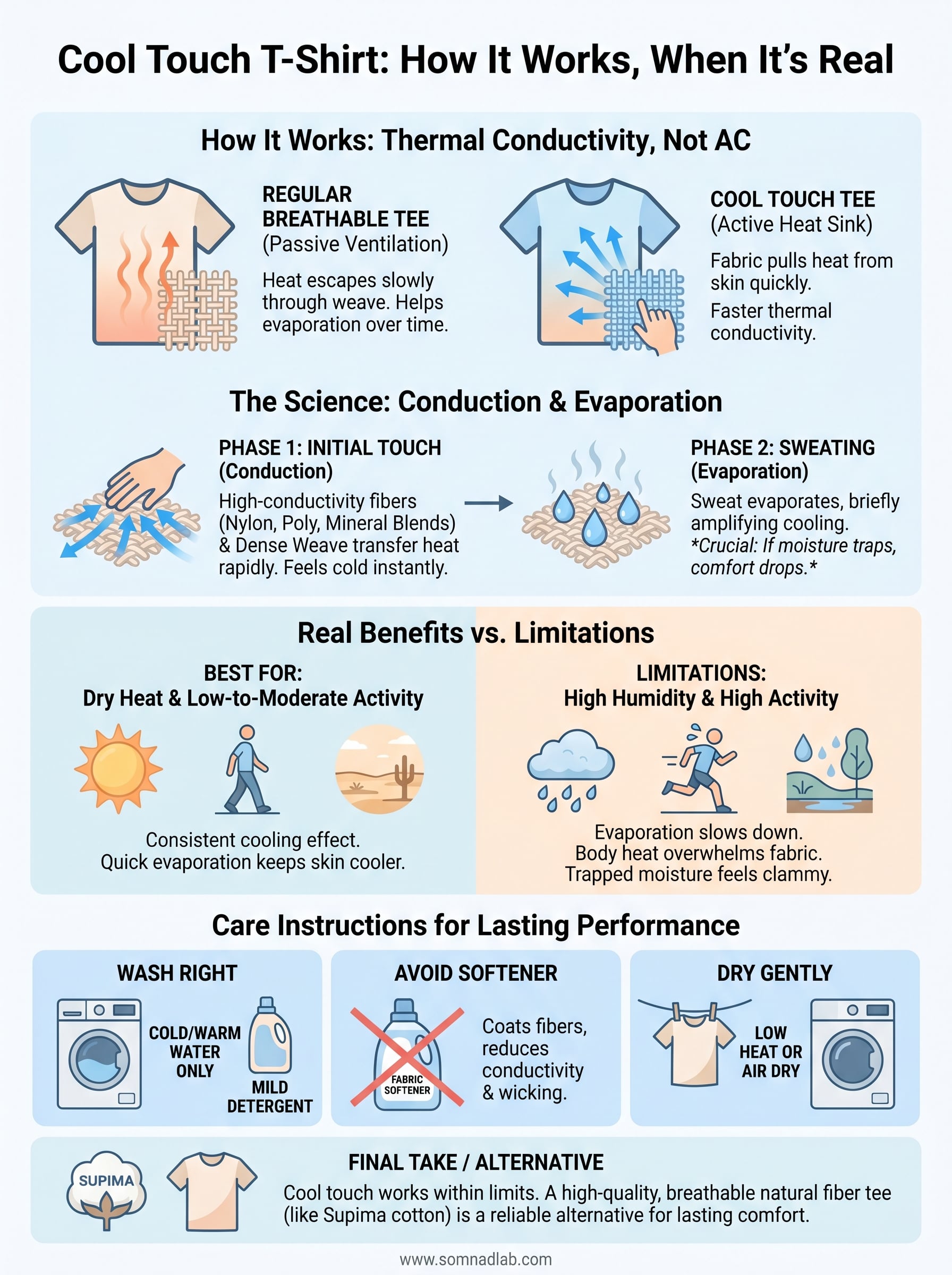
A cool touch t-shirt is a garment made from fabric engineered to draw heat away from your skin faster than standard materials do. The defining trait isn't air conditioning built into the fiber. It's thermal conductivity: the rate at which a material transfers heat from a warm surface, your skin, to a cooler environment. When you put one on, the fabric pulls body heat away quickly, and your skin receptors register that transfer as a cooling sensation. The effect is real, but it works within specific physical limits.
What separates it from a regular breathable shirt
A standard breathable cotton tee lets air move through its weave, which helps sweat evaporate and reduces overall warmth over time. A cool touch shirt does something different: it actively conducts heat away at the point of contact. Think of it this way: a breathable shirt is passive ventilation, while a cool touch shirt acts more like a heat sink against your skin. The materials involved typically include nylon, polyester, or specialty blended fibers that have measurably higher thermal conductivity than conventional cotton. The difference is most noticeable in the first few seconds after putting the shirt on, before your body heat stabilizes the fabric temperature.
The cooling sensation you feel when touching metal in a cool room follows the same principle: metal conducts heat away from your skin rapidly, and your nerves interpret that transfer as cold.
Where fabric construction fits in
The weave structure plays as large a role as the fiber itself. Tighter, denser weaves in high-conductivity materials maximize skin contact and accelerate heat transfer. Looser weaves in the same material reduce the effect considerably. Brands market these garments under various names, including "cooling fabric," "ice feel," and "contact cool," but they all describe the same underlying mechanism: faster-than-average thermal conductivity at the skin surface. Knowing this helps you cut through marketing language and evaluate whether a specific shirt will actually perform the way the product page suggests.
How cool touch fabrics create that feeling
The cooling sensation from a cool touch t-shirt comes down to one core physical property: thermal conductivity. High-conductivity fibers pull heat away from your skin faster than cotton does, and your thermoreceptors register that rapid heat transfer as a cold feeling. Weave density multiplies this effect by maximizing skin contact area.
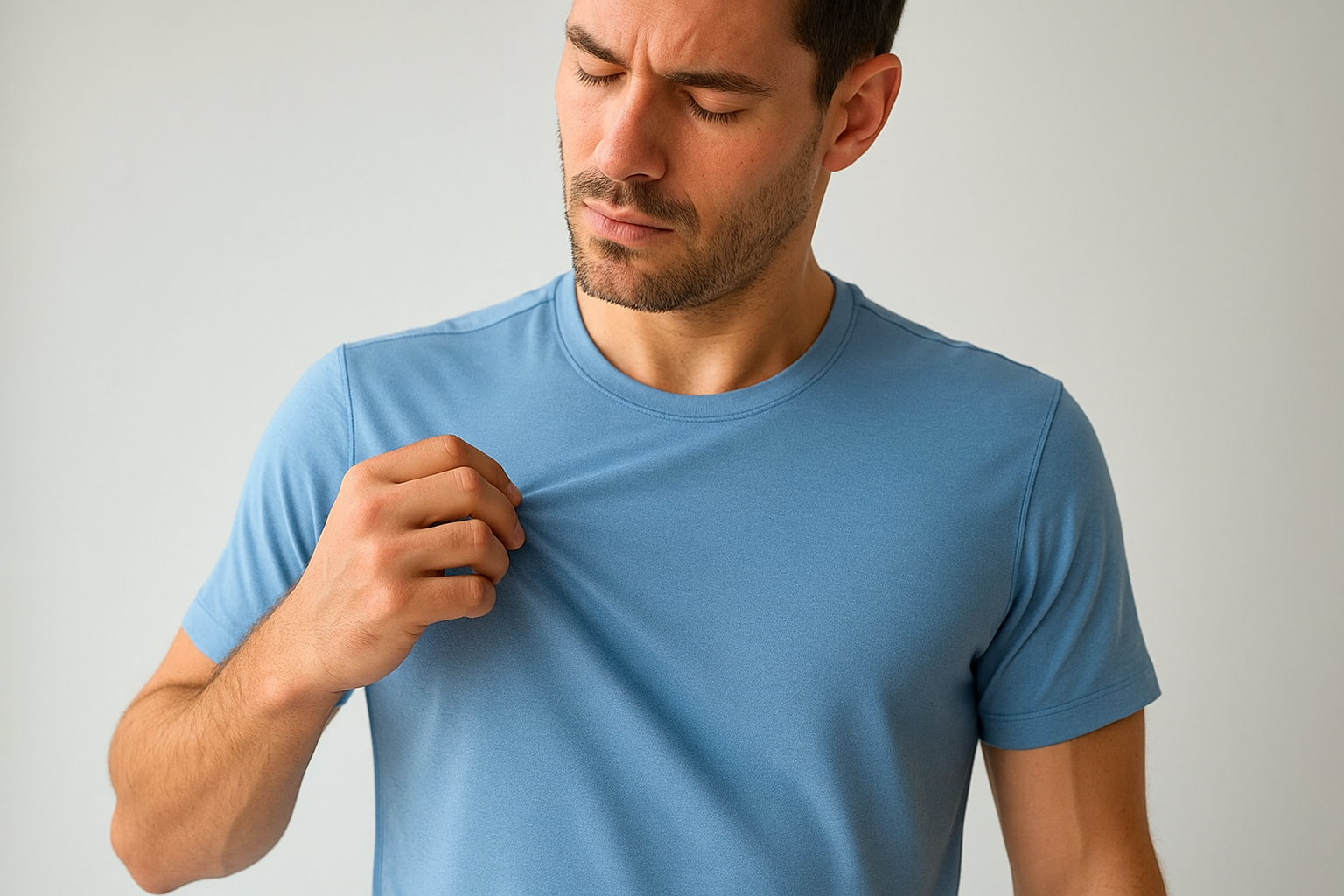
The faster a material conducts heat away from your skin, the colder it feels at first touch, regardless of air temperature.
The fibers behind the effect
Nylon and polyester dominate cool touch fabrics because they conduct heat roughly three to five times faster than standard cotton. Manufacturers also treat some fibers with mineral-based additives like jade or titanium to push conductivity even higher. Common fiber types you'll find include:
- Standard nylon or polyester blends
- Jade-infused or titanium-treated fibers
- Xylitol-treated fabrics
What happens when you sweat
Once you start sweating, the cooling mechanism shifts from conduction to evaporation. Moisture on your skin transfers heat even faster briefly, which can amplify the cool sensation for a short time.
If the fabric traps moisture instead of wicking it outward, comfort drops quickly and the shirt turns warm and clammy. This is why weave structure and fiber wicking capacity both matter for all-day performance, not just that initial contact feeling.
Do cool touch T-shirts really keep you cooler
The honest answer is yes, but with conditions. A cool touch t-shirt genuinely lowers the temperature at your skin surface during initial wear, and that effect is measurable, not just marketing language. Research on thermal conductivity in textiles confirms that high-conductivity synthetic fibers transfer heat away from your skin faster than cotton does. But "feeling cooler" and "staying cooler all day" are two different things.
The cooling effect is real at contact, but how long it lasts depends entirely on conditions like humidity, your activity level, and fabric construction.
Where they deliver real benefit
Cool touch shirts perform best in dry heat and low-to-moderate activity situations. When ambient temperatures are high but humidity stays low, fast heat conduction combined with quick evaporation keeps your skin noticeably cooler than a standard cotton tee would.
Situations where you'll notice the biggest difference include commuting, light outdoor errands, and casual warm-weather wear. In these contexts, the shirt consistently outperforms standard options across a full day.
Where the benefit shrinks
In high humidity environments, the evaporative side of the cooling equation weakens significantly. Sweat stays on the fabric longer, and the initial contact cooling fades once the shirt reaches your body temperature.
Heavy activity accelerates this problem, since your body generates heat faster than even a high-conductivity fabric can conduct away. At that point, wicking capacity and fit matter more than thermal conductivity alone.
How to choose one for your climate and use
Choosing the right cool touch t-shirt starts with being honest about where and how you'll wear it. Two people buying the same shirt can have completely different experiences based on their local humidity levels and typical activity. Matching the shirt's construction to your actual conditions matters more than chasing the highest conductivity rating on a spec sheet.

Your climate determines which cooling mechanism, conduction or evaporation, carries more of the workload throughout the day.
Dry climates and light activity
In dry heat, both conduction and evaporation work in your favor simultaneously. A tighter-weave synthetic blend maximizes skin contact and moves sweat away quickly. Look for nylon-dominant fabrics with a close fit, since they'll deliver that cool sensation consistently across the day rather than just at first wear.
Key fabric features to prioritize in dry climates:
- High-conductivity nylon or polyester content above 80%
- Tight weave structure for maximum skin contact
- Lightweight construction under 150g per square meter
Humid climates and higher activity
Humid conditions shift your priority from conductivity to moisture management. You want a shirt with strong wicking capacity and a looser weave that allows airflow even when evaporation slows down. For higher-intensity use like commuting on foot or outdoor work, focus on fabrics that pull sweat outward fast rather than those marketed purely on contact-cool sensation.
A well-ventilated construction with reliable wicking outperforms a high-conductivity fabric that traps moisture once your body temperature climbs under load.
How to wear and care for cooling performance
How you wear and wash a cool touch t-shirt directly affects how long the cooling properties hold up. The physics of contact cooling depend on unobstructed skin contact and a clean, open fiber structure, both of which degrade with poor fit choices or the wrong laundry habits.
Washing with harsh detergents or high heat breaks down the fiber treatments that give cool touch fabrics their conductivity advantage.
Wearing it right
A fitted cut outperforms a loose one for contact cooling, since fabric that sits flat against your skin transfers heat consistently rather than in patches. Avoid layering a cool touch shirt under heavy outerwear if you want the benefit, since trapped heat accumulates faster than the fabric can conduct it away, canceling out the cooling effect entirely.
Washing and maintaining the fabric
Cold or warm water, not hot, preserves both the fiber structure and any mineral-based treatments applied to the fabric during manufacturing. Use a mild detergent and skip fabric softener entirely, since softener coats fibers and reduces their wicking and conductivity performance over time. Air drying is preferable to a hot dryer for the same reason.
Key washing rules to follow:
- Wash in cold or warm water only
- Skip fabric softener every wash
- Air dry or tumble dry on low heat only
Final take
A cool touch t-shirt delivers a real, measurable benefit, but it works within clear limits. The contact-cooling effect is genuine at the fiber level, and in dry heat with light activity, you'll notice a consistent difference compared to a standard tee. In high humidity or heavy exertion, the advantage shrinks fast, and fabric construction matters more than any single conductivity claim printed on a spec page.
If the cooling properties interest you but synthetic feel doesn't suit your skin, a premium natural fiber tee built with tight construction and superior breathability covers most of what you need across everyday warm-weather wear. At SÖMNAD, we design around 300g Supima cotton that prioritizes real breathability and lasting comfort without synthetic shortcuts or inflated claims. If you want a foundation piece that performs honestly across seasons, explore the SÖMNAD relaxed tee and see how material quality holds up where it counts.