


You've seen the number on product pages and wondered if it actually matters. A 300 gsm t shirt sits at the heavyweight end of the spectrum, and that weight changes how a shirt feels, drapes, and holds up after fifty washes. Most everyday tees run 150 to 200 gsm, which explains why they feel thin, show your skin tone through the fabric, and lose shape within a few months.
GSM stands for grams per square meter, and it's the most reliable way to measure fabric density before you buy. At 300 gsm, you get a substantial hand feel without the stiffness of canvas, plus enough structure that the shirt doesn't cling or wrinkle the way lighter cotton does. This weight also tends to signal better cotton quality, since brands using premium fibers like Supima have less reason to cut corners on density.
In this article, we'll break down exactly what 300 gsm means in practical terms, how it compares to lighter and heavier weights, and what to look for whether you're buying retail or sourcing blanks. We'll also cover pricing expectations, so you know what you're actually paying for.
Why 300 GSM matters for quality and durability
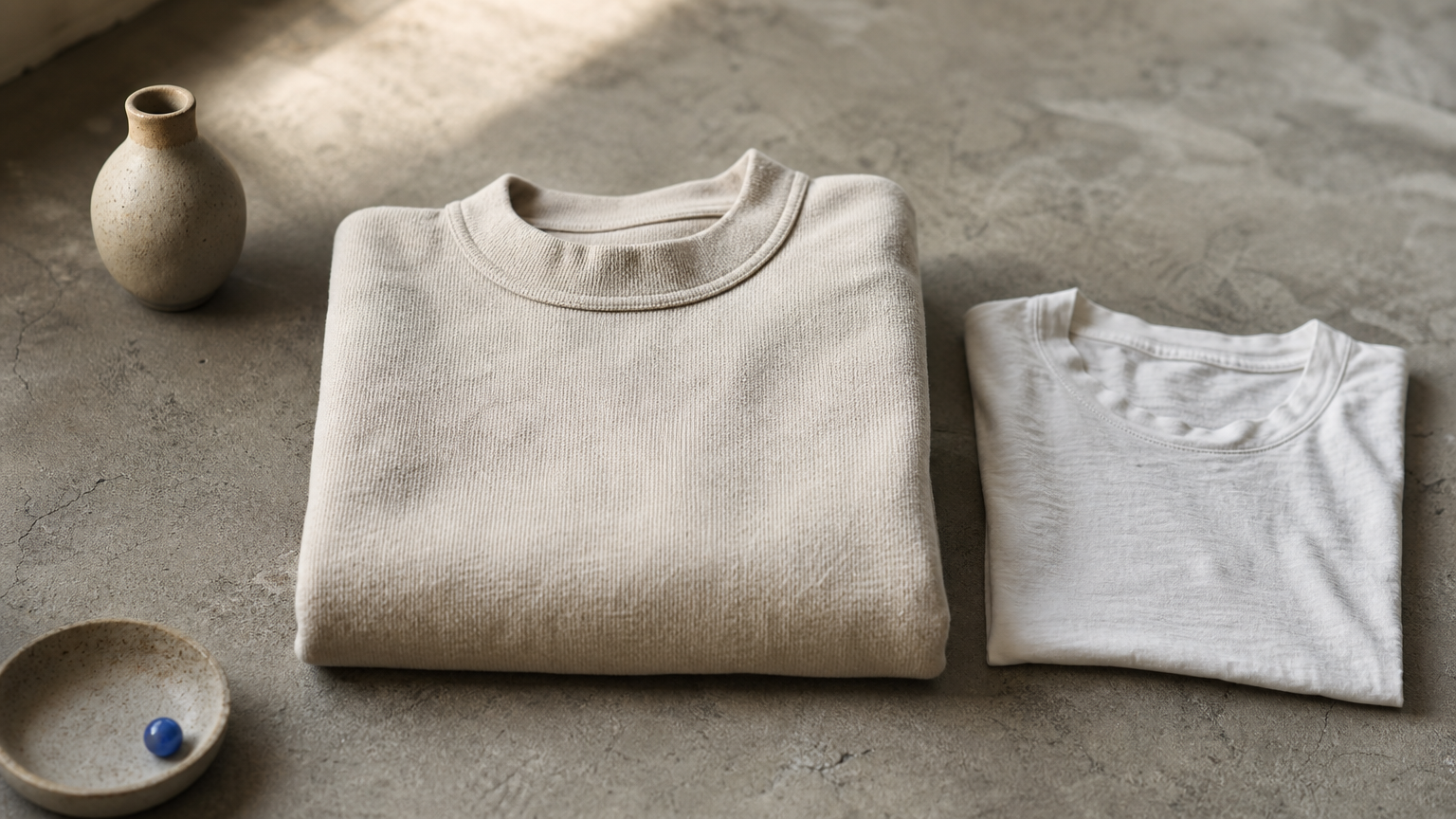
Weight is the single best predictor of how long a tee will survive your closet. Cotton fibers at 300 gsm are packed tighter per square meter, which means the yarn has more mass to resist pilling, stretching, and the thinning that happens around the collar and underarms after repeated washes. A heavyweight t-shirt built this way keeps its shape wash after wash instead of sagging into a shapeless bag by month three, which is why thick, logo-free tees tend to stay in rotation for years.
How density affects everyday wear
Think about what a shirt actually goes through: stretching when you pull it over your head, friction against a bag strap, sun exposure, dryer heat. Lighter tees around 150 to 180 gsm show wear fast because there's simply less fiber to absorb that stress. At 300 gsm, the fabric density gives the shirt a buffer, so small abrasions don't turn into visible thinning or holes.
A heavier tee isn't just softer to touch, it's structurally built to survive years of washing, not months.
Why brands choose this weight specifically
Manufacturers who commit to 300 gsm are usually making a statement about construction quality overall. Cutting fabric this heavy costs more in raw material, so brands rarely pair it with cheap stitching or loose seams. That's why a 300 gsm cotton tee often comes with reinforced shoulder seams, double-needle hems, and tighter rib knit collars that don't stretch out after the first year.
Durability here isn't abstract. It translates to fewer replacement purchases, which matters if you're trying to build a wardrobe of basics that actually last instead of cycling through fast fashion tees every season. The upfront cost buys you time, not just texture.
How to tell if a 300 GSM tee is worth the price
Price alone won't tell you if a 300 gsm t shirt is legitimate or just marketed that way. Some brands print the gsm number on a tag without ever testing the actual weave density, so you need to check beyond the label.
Feel and stretch test
Grab the fabric between two fingers and pull gently across the grain. Genuine 300 gsm cotton resists stretching and springs back instead of sagging. Hold it up to light too; a true heavyweight tee should show minimal see-through, even over a darker undershirt. If the shirt feels thin or floppy despite a high gsm claim, the fabric density printed on the tag probably doesn't match reality.
If you can see your hand through the shirt when you hold it to a window, the gsm number on the tag is marketing, not fact.
Price benchmarks to expect
Expect to pay $35 to $65 for a genuinely heavyweight tee made from quality cotton like Supima, and it's worth understanding whether Supima cotton justifies the cost before you commit. Anything under $20 at this weight usually means cheaper, shorter-staple fibers that pill fast despite the number on the label.
300 GSM compared to other common fabric weights
Numbers mean more with context. A 300 gsm t shirt sits firmly in heavyweight territory, but seeing it next to lighter and even heavier fabrics makes the tradeoffs obvious, especially once you compare how 210gsm and 300gsm tees differ in thickness and drape. Below is a quick reference for what each range actually feels like on your body.
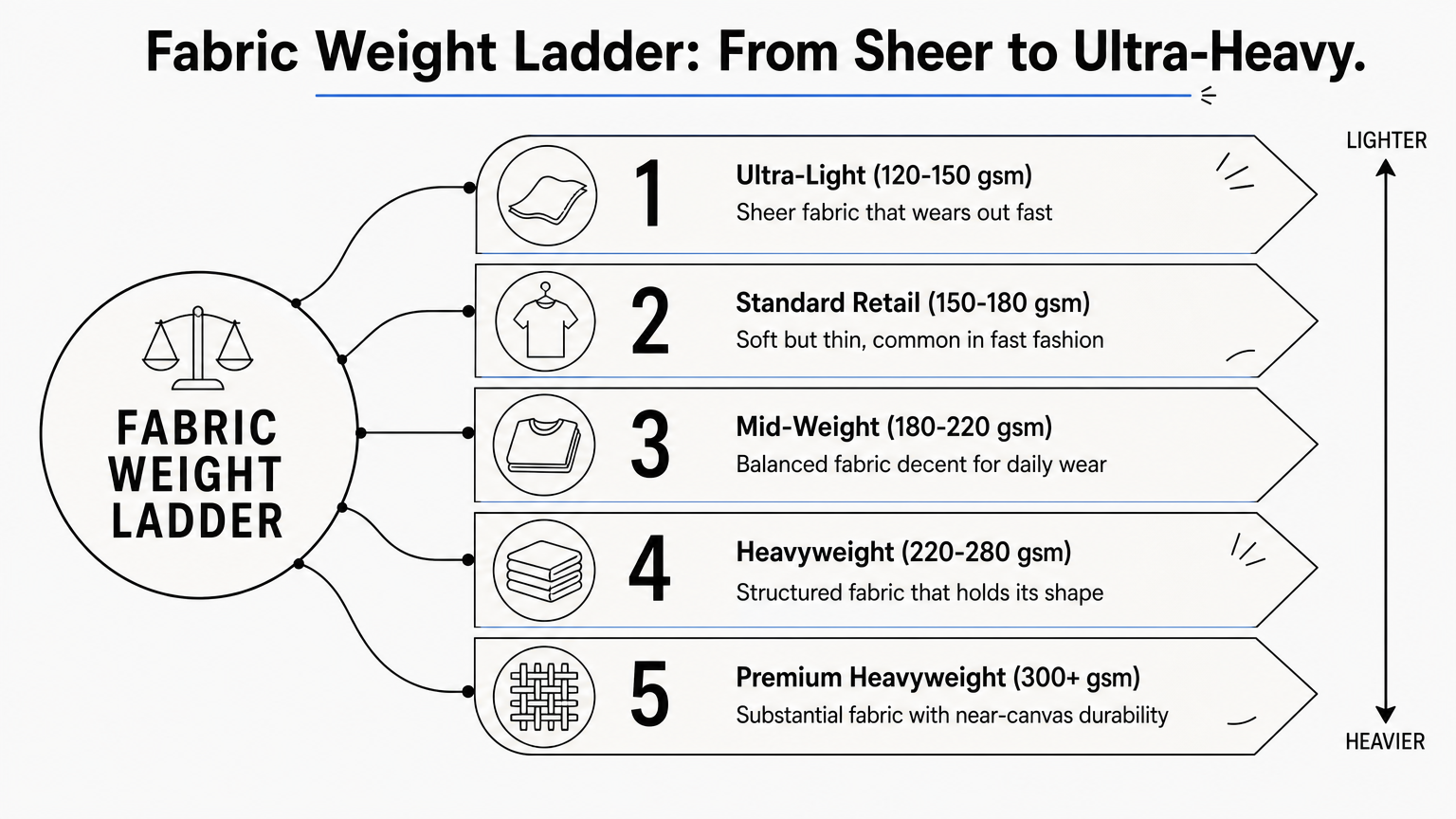
| GSM Range | Category | Feel & Use Case |
|---|---|---|
| 120-150 | Ultra-light | Sheer, summer layering, wears out fast |
| 150-180 | Standard retail tee | Soft but thin, common in fast fashion |
| 180-220 | Mid-weight | Balanced, decent for daily wear |
| 220-280 | Heavyweight | Structured, holds shape well |
| 300+ | Premium heavyweight | Substantial, near-canvas durability |
| 350+ | Ultra-heavy | Stiff, workwear or streetwear focus |
Once you've worn a 300 gsm tee, going back to a 150 gsm shirt feels like wearing a paper bag.
Somewhere between 220 and 280 gsm, tees start feeling like real garments instead of disposable basics, and that's often marketed as midweight cotton. Beyond 300, you're entering territory better suited to boxy streetwear cuts than a fitted, everyday heavyweight t-shirt. For most wardrobes, 300 gsm hits the sweet spot: dense enough to last years, not so thick it feels like outerwear.
What to look for when buying a 300 GSM t-shirt
Buying a 300 gsm t shirt means looking past the marketing copy and checking the details that actually predict longevity. Focus on fiber source, stitching, and fit before you swipe your card, especially if you're paying premium prices.
Fabric composition and fiber quality
Check whether the tag lists Supima, Pima, or long-staple cotton, and know the difference between Supima and Pima cotton before you decide. These fibers spin into stronger yarn, so the cotton quality holds up even at high density instead of pilling within weeks. Avoid vague labels like "100% cotton" with no fiber type specified; that's often a sign of shorter, cheaper staples.
The fiber type on the tag matters as much as the gsm number itself.
Construction details that signal quality
Run through this checklist before buying:
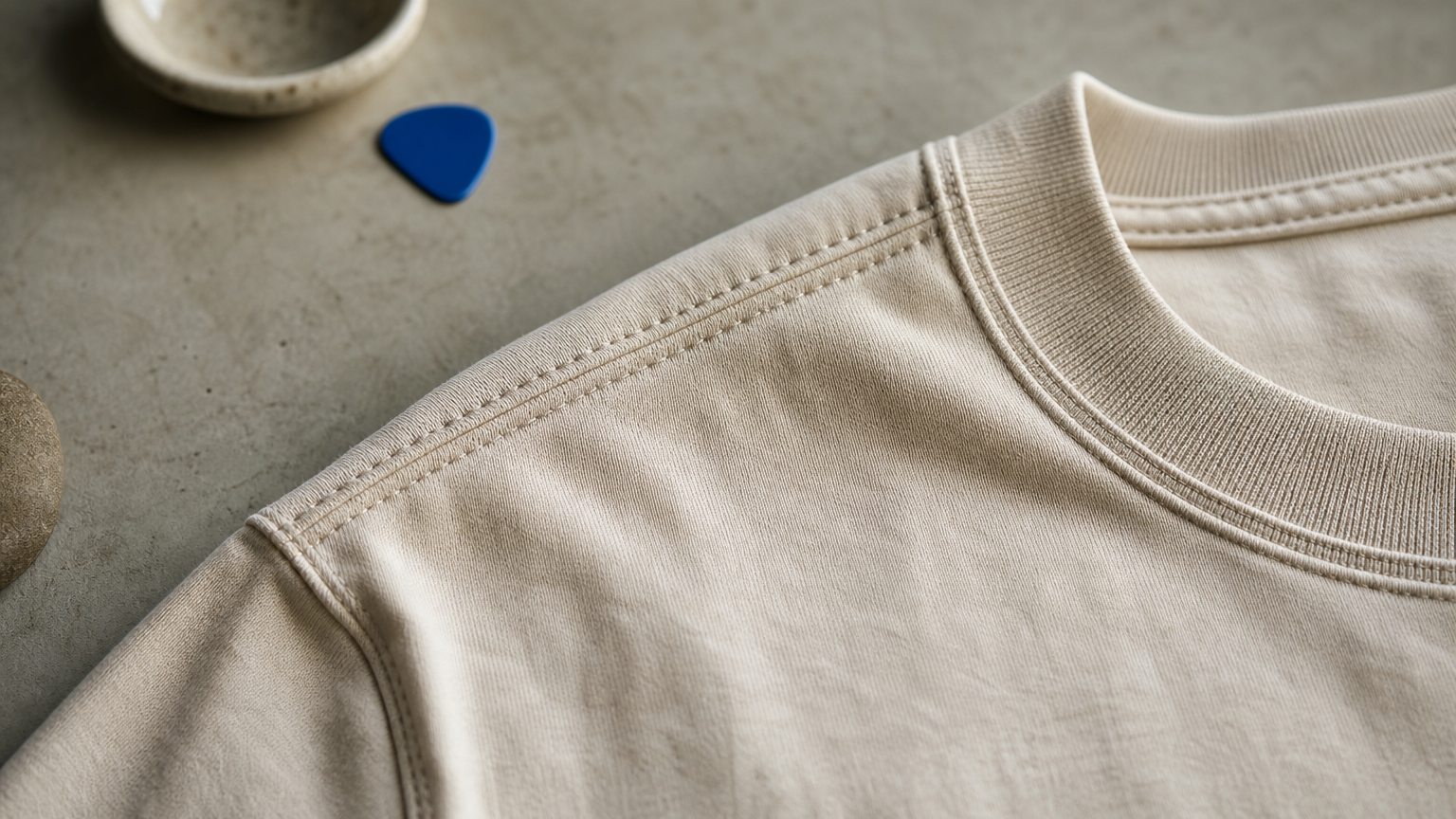
- Double-needle stitching at hems and sleeves
- Reinforced shoulder seams
- Ribbed collar that resists stretching
- Pre-shrunk fabric noted on the label
- Consistent stitch spacing with no loose threads
A shirt built from a genuine heavyweight fabric should feel solid at every seam, not just across the chest, and a few fabric and stitch tests will tell you quickly. Sloppy stitching on a supposedly premium tee usually means the brand cut corners somewhere to hit a price point.
Caring for your 300 GSM t-shirt to make it last
Even the best 300 gsm t shirt won't survive years of abuse if you wash it wrong. Heavier cotton holds more water and takes longer to dry, so your laundry routine needs small adjustments compared to how you'd treat a thin tee.
Washing without wrecking the fabric
Wash in cold water on a gentle cycle, and turn the shirt inside out to protect the outer surface from friction against zippers or buttons in the same load. Skip fabric softener, since it coats cotton fibers and reduces the breathability that makes heavyweight cotton comfortable in the first place. Use a mild detergent and avoid overloading the machine, which causes uneven agitation and stretches the ribbed collar; the full Supima cotton washing instructions cover the rest of the routine.
Cold water and a gentle cycle do more for longevity than any fabric softener ever will.
Drying and storage habits that protect shape
Skip the dryer's high heat setting entirely. High heat breaks down the fiber structure over time and is also the main reason heavyweight cotton shrinks, even in a heavyweight t-shirt built to last. Instead, follow these steps:
- Air dry flat or on a hanger
- Avoid direct sunlight, which fades color
- Fold rather than hang long-term to prevent shoulder stretching
- Store in a drawer away from moisture
These habits keep the fabric dense and structured for years, not just months.
Choosing the right weight for your wardrobe
A 300 gsm t shirt isn't a marketing gimmick, it's a real threshold where cotton stops feeling disposable and starts feeling like a garment you'll own for years. You've seen why the density matters, how to verify it before buying, and what separates a genuine heavyweight tee from a shirt with an inflated number on the tag. The construction details and care habits we covered aren't optional extras either; they're what actually delivers on the durability that 300 gsm promises in the first place.
Building a wardrobe around fewer, better basics means fewer replacement purchases and less closet clutter overall. Quality doesn't need a logo to prove itself, it shows up in the weight, the stitching, and how the shirt holds up after fifty washes. If you want a tee built exactly to that standard, see our picks for the Supima cotton t-shirts that feel truly premium, including SÖMNAD's relaxed tee made from 300g Supima cotton.