


The debate around slow fashion vs fast fashion isn't just about price tags or aesthetics, it's about two fundamentally different approaches to how clothing gets made, worn, and eventually discarded. One model prioritizes speed and volume. The other prioritizes materials, construction, and longevity. And the gap between them affects everything from your wallet to the environment.
At SÖMNAD, we build premium everyday essentials from fabrics like 300g Supima cotton, garments designed to hold their shape and earn their place in your rotation for years, not weeks. That philosophy puts us firmly on one side of this conversation. But rather than just tell you what we believe, we'd rather break down the actual differences so you can decide for yourself.
This article covers the core definitions, environmental impact, ethical considerations, and the real cost-per-wear math behind both models. Whether you're rethinking your buying habits or just curious about what separates a $10 tee from a $50 one, you'll walk away with a clear picture of how these two systems operate, and where your money actually goes.
What fast fashion and slow fashion mean
Understanding the slow fashion vs fast fashion divide starts with recognizing that these aren't just two different price points. They represent two entirely different business models, each built around a specific set of priorities. One treats clothing as a consumable. The other treats it as a considered investment. How a brand designs and produces a garment shapes everything downstream, from the materials it sources to the wages it pays its workers.
Fast fashion: volume over everything
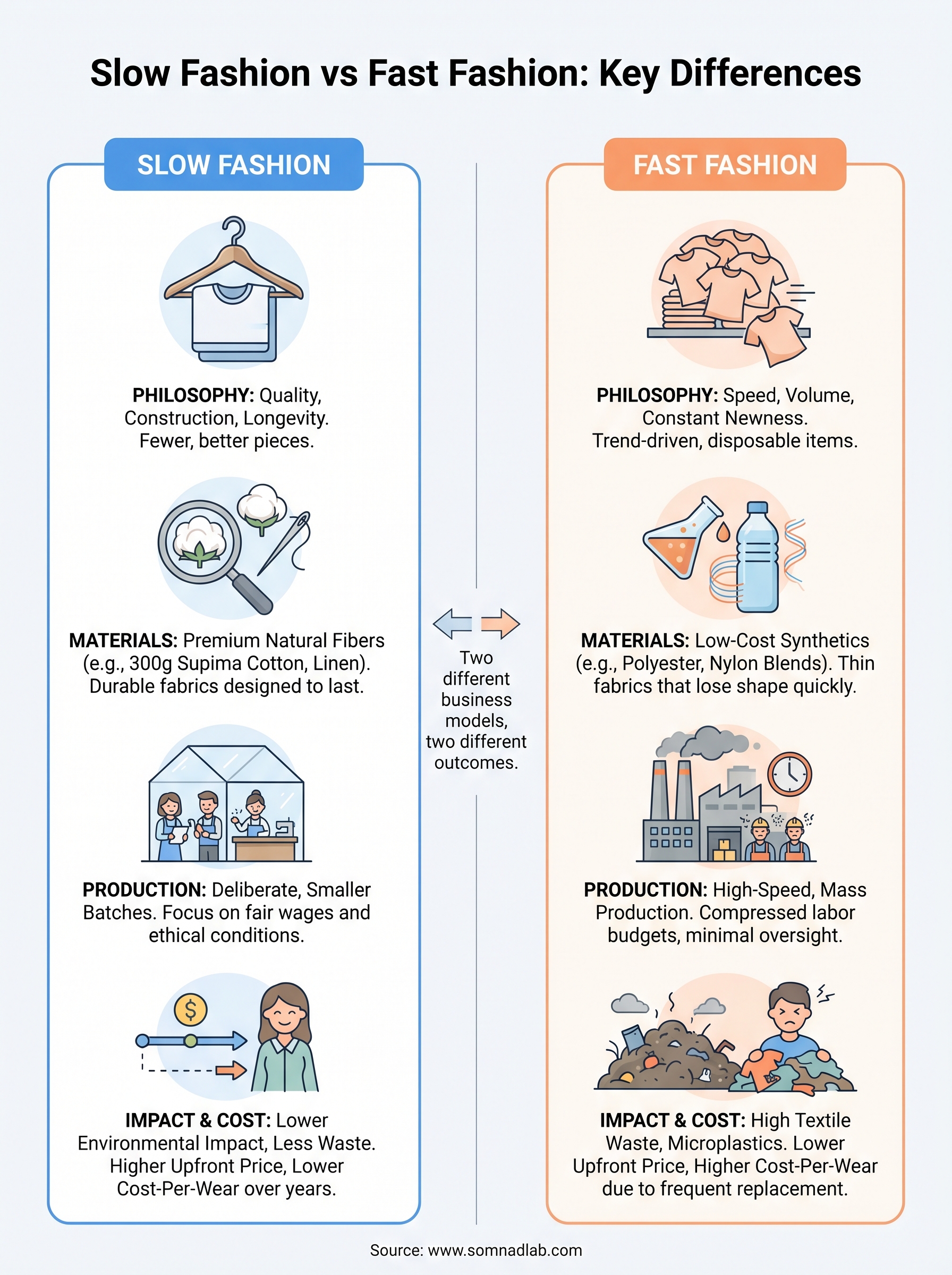
Fast fashion brands run on a high-speed production cycle that moves clothing from concept to retail shelf in as little as two to four weeks. The entire model depends on constant newness, which is why these brands release dozens of micro-collections per year rather than the traditional two seasons. Garments are built from low-cost synthetic materials like polyester or nylon, engineered to keep margins wide rather than to hold up over time. Disposability isn't a side effect of this model. It's the point.
Here's what that typically looks like in practice:
- Trend-driven designs that cycle out within weeks
- Thin, synthetic fabrics that lose shape quickly
- Low price points that make replacement feel easy
Slow fashion: fewer, better pieces
Slow fashion takes the opposite position. Brands operating this way invest in higher-quality materials and more deliberate construction because the goal is longevity, not turnover. Production runs tend to be smaller, sourcing is more selective, and the garments themselves are built to hold up through repeated wear and washing.
The defining question with any garment is simple: was it built to last, or built to be replaced?
Slow fashion pieces aren't designed to chase a trend. They're designed to outlast one. That single intention at the design stage shapes the entire supply chain, from fabric selection to the skill level required of the people sewing the final seam.
Where the real costs show up
When you compare slow fashion vs fast fashion, the price tag tells only part of the story. The real costs show up in places most brands prefer you not to examine: environmental damage, labor conditions, and the long-term financial drain of replacing low-quality items every few months.
Environmental and human impact
Fast fashion produces enormous amounts of textile waste each year. Garments made from synthetic blends shed microplastics with every wash cycle, and because they're designed to be disposable, most end up in landfills within a year or two of purchase. Low-cost production also relies on chemical-intensive dyeing processes that contaminate water supplies near manufacturing facilities in producing countries.
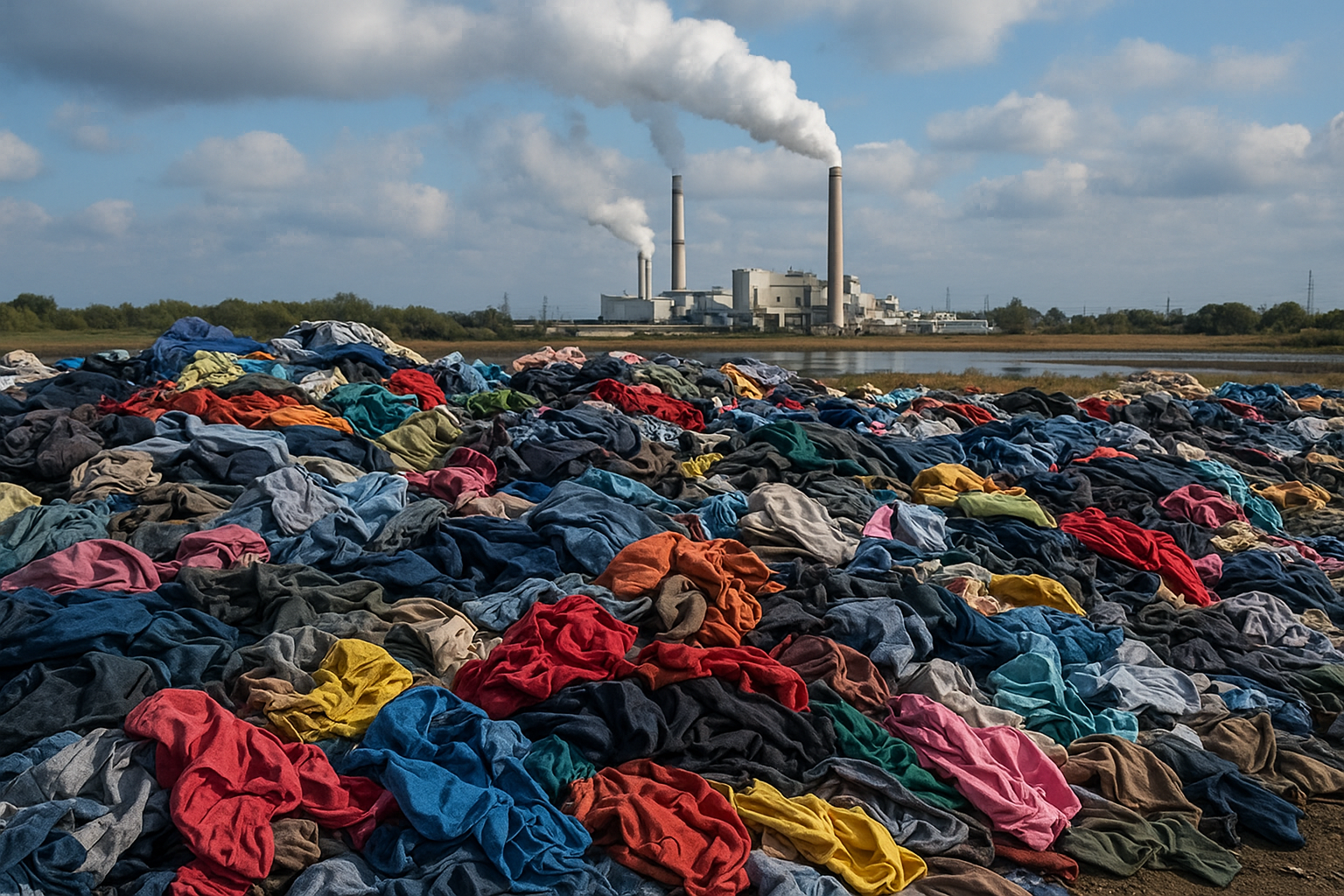
The environmental cost of a $12 shirt doesn't disappear when you throw it away. It just moves somewhere else.
Behind low retail prices sits a compressed labor budget. Fast fashion brands hit their margins by manufacturing in regions where wages stay minimal and oversight is limited. The people sewing your garments often work long hours under unsafe conditions for pay that doesn't cover basic living costs. Slow fashion brands typically run smaller production batches, which makes it far easier to verify the conditions at every step.
Quality and cost per wear: the math
The slow fashion vs fast fashion divide becomes clearest when you run the numbers. A $15 tee that falls apart after 10 washes costs you $1.50 per wear. A $60 tee built from quality fabric that survives 300 washes costs you just $0.20 per wear. The premium piece wins on price over time, even though it feels expensive at checkout.
The cost-per-wear calculation
Cost per wear is straightforward: divide the price by the number of times you actually wear it. Fast fashion garments typically last six to twelve months before they stretch, fade, or pill beyond use. Slow fashion pieces, made from materials like 300g Supima cotton, hold their structure for years and soften rather than degrade with washing. That difference compounds fast across your entire wardrobe.
The real price of a garment isn't what you pay at the register. It's what you pay across every single wear.
Higher-quality fibers like Supima cotton and quality linen resist pilling and retain their shape through repeated washing. Fast fashion fabrics, typically thin polyester blends, start deteriorating almost immediately. You end up replacing them more often, which costs you more money over time and pushes far more textile waste into landfills.
How to spot fast vs slow fashion in the wild
Identifying where a brand sits on the slow fashion vs fast fashion spectrum doesn't require deep research. A few quick checks at the point of purchase tell you most of what you need to know. The garment itself carries most of the evidence if you know what to look for.
Check the fabric label first
The fabric composition is your fastest signal. Natural fibers like Supima cotton, linen, or merino wool indicate a brand investing in quality raw materials. Polyester, acrylic, or vague blends labeled without specifics suggest cost-cutting from the start. Weight matters too: thin fabric that feels flimsy in your hands rarely improves with wear.
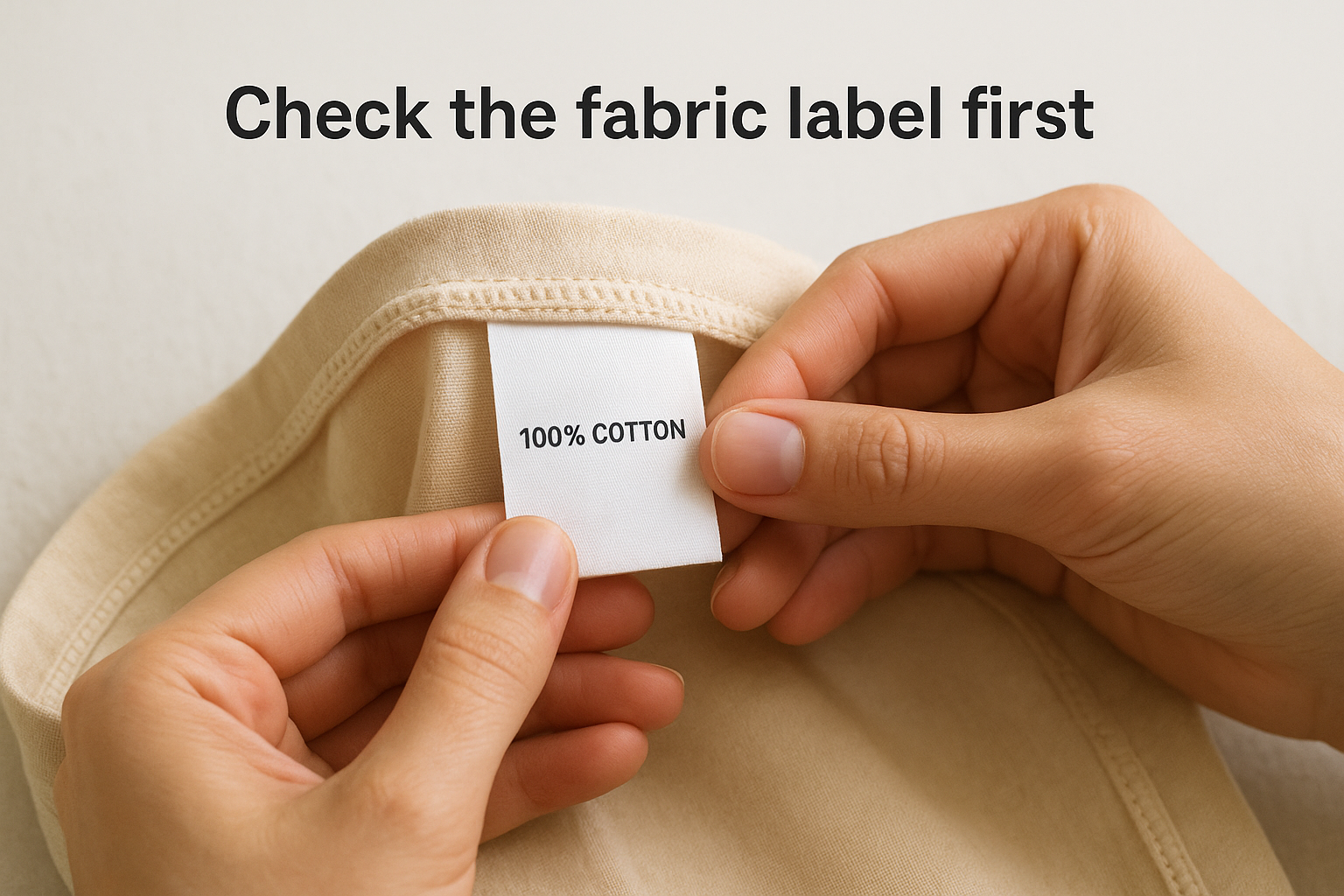
If a brand won't tell you exactly what's in the fabric, that's usually because the answer wouldn't sell the shirt.
Look at the price and production signals
Extremely low prices are a reliable warning sign. A well-constructed garment made from quality fabric simply cannot cost $8, because the materials alone cost more than that. Check whether the brand publishes clear information about where and how items are produced. Slow fashion brands tend to be transparent about their process because it's a feature, not a liability. Fast fashion brands rarely highlight it.
How to build a slower, better wardrobe
Shifting from fast fashion habits to a slower approach doesn't mean throwing out everything you own and starting over. The most practical move is a gradual one: buying fewer things, but making sure each one actually earns its place in your wardrobe before you bring it home.
Start with what you already own
Before you spend anything, take stock of what you actually wear. Most people cycle through 20% of their clothes 80% of the time. That pattern reveals the gaps worth filling, and it helps you stop buying duplicates of things that already aren't working. Identifying your real wardrobe core makes every future purchase more deliberate.
Buy less, but buy with intention
When you do buy something new, run it through a simple filter. Ask yourself whether you'd still want it six months from now, whether it layers with what you already own, and whether the fabric and construction justify the price. Applying the slow fashion vs fast fashion lens here is useful: you're not looking for the cheapest option, you're looking for the one that holds up longest.
One well-made piece you wear constantly beats five cheap ones you rotate out of guilt.
Build from core categories first, starting with the items you reach for most: everyday tees, a reliable layer, and a pair of pants that works across multiple situations.
Your next purchase, made simpler
The slow fashion vs fast fashion question ultimately comes down to a single, repeatable choice: buy for now or buy for keeps. Every purchase you make either adds a piece that earns its place in your wardrobe for years, or adds something that quietly costs you more money and generates more waste over time. That choice is yours to make, and now you have the framework to make it clearly and consistently.
Pick one category you reach for constantly, like a well-made everyday tee, and replace it with something built to last. That single swap builds the habit better than any overnight overhaul. As you build out your wardrobe with fewer, better pieces, the difference compounds quickly. When you're ready to start with a foundational piece made from premium materials and nothing extra, explore what SÖMNAD makes.