


You just pulled a lyocell tee out of the dryer and it looks smaller than yesterday. Before you write off the fabric, here's the short answer to does lyocell shrink: yes, but usually less than cotton, and almost always because of heat rather than the fiber itself. Lyocell is prone to relaxation shrinkage, meaning the fibers settle back into their natural state after being stretched during manufacturing, and hot water or high dryer heat speeds that process up.
The real question isn't whether shrinkage happens, it's how much you should expect and what actually causes it. Most lyocell garments shrink somewhere between 2% and 5% on the first wash if you use warm water and machine drying, but that number drops close to zero with cold water washing and air drying. Fiber structure, weave, and any cotton blending in the fabric all change the outcome too.
We make relaxed tees from heavyweight Supima cotton at SÖMNAD, so we've spent plenty of time testing how different fibers hold their shape wash after wash. In this article, you'll get the real numbers behind lyocell shrinkage, why it happens at a fiber level, and the exact washing and drying steps that keep your garments fitting the way they did on day one.
Why lyocell shrinks in the first place
Lyocell, the fiber behind a lyocell t-shirt, starts life as wood pulp, usually from eucalyptus or beech trees, which gets dissolved in a solvent and spun into long cellulose fibers. This process, called solvent spinning, produces smoother and more uniform fibers than traditional cotton, but it doesn't make the fabric immune to movement. During weaving or knitting, mills stretch these fibers under tension to create tight, even yarns, and that stretching is exactly what sets up future shrinkage.
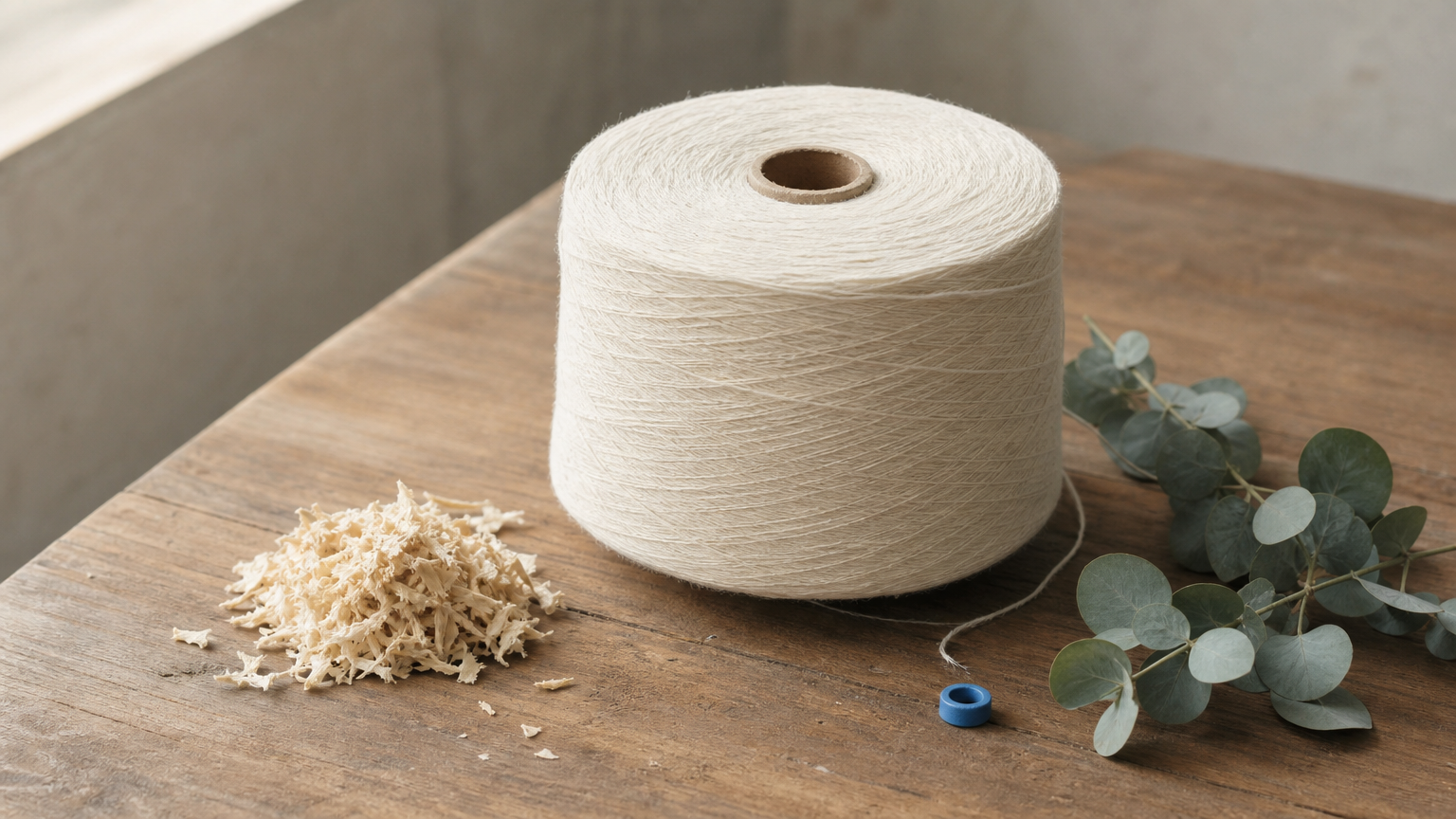
Relaxation shrinkage is the main culprit
Manufacturers hold lyocell fibers in an elongated state while the fabric is built, and the fibers stay that way until something disrupts the tension holding them there. Water is the disruptor. When lyocell absorbs moisture, the cellulose chains swell and the temporary bonds created during production start to loosen, letting the fibers pull back toward their natural, shorter length. This return to a resting state is called relaxation shrinkage, and it's the same mechanism behind most first-wash shrinkage in cotton and rayon, just less pronounced in lyocell because of how the fiber is engineered.
Lyocell doesn't shrink because the fiber is unstable, it shrinks because water lets stretched fibers finally relax.
Heat speeds up what water starts
Water alone causes some shrinkage, but heat is what turns a minor size change into a noticeable one. Hot water opens up the fiber structure faster and more aggressively than cold water, and a hot dryer cycle compounds the effect by tumbling the fabric while it's still damp and pliable. That combination of moisture and heat explains why a lyocell shirt washed in cold water and hung to dry might lose almost nothing, while the same shirt washed hot and machine dried can drop a full size in the shoulders.
Weave, blend, and finish change the outcome
Not every lyocell garment shrinks the same amount, and the fabric's construction explains most of the variation. A tightly woven lyocell twill resists shrinkage better than a loose lyocell jersey, because there's less slack in the yarns to begin with. Blending also matters: pure lyocell tends to shrink less than lyocell and cotton blended tees, since cotton fibers shrink more readily on their own and pull the blended fabric along with them.
| Fabric factor | Effect on shrinkage |
|---|---|
| Tight weave (twill, denim-style) | Lower shrinkage, less slack in yarns |
| Loose knit (jersey, rib) | Higher shrinkage, more fiber movement |
| 100% lyocell | Moderate, predictable shrinkage |
| Lyocell-cotton blend | Higher shrinkage, cotton pulls fabric tighter |
| Lyocell-spandex blend | Lower visible shrinkage, elastane resists tightening |
| Pre-shrunk or enzyme-washed finish | Minimal additional shrinkage |
Finishing treatments play a role too. Many lyocell garments go through a pre-shrinking or enzyme-wash process at the factory specifically to remove most of that built-in tension before the fabric ever reaches you. That's part of why some lyocell pieces barely change size after repeated washes, while others, especially cheaper or unfinished fabric, still have plenty of relaxation left to give up in your washing machine.
How to wash lyocell without shrinking it
Washing lyocell correctly comes down to two variables you fully control: water temperature and cycle intensity. Cold water washing keeps the cellulose fibers from swelling too fast, and a gentle cycle avoids the mechanical agitation that pushes fibers into their relaxed, shorter state faster than plain soaking would. Skip these steps and you're basically inviting the shrinkage you're trying to avoid.
Set the right water temperature
Stick to cold or lukewarm water, ideally under 86°F (30°C), every time you wash lyocell. Warmer water accelerates fiber swelling, and anything above that threshold starts behaving like the hot-water scenario that causes noticeable shrinkage in the first place. If your washing machine has a dedicated "cold" or "delicate" temperature setting, use it by default rather than relying on whatever the last load happened to use.
Cold water isn't a suggestion for lyocell, it's the single biggest lever you have over shrinkage.
Choose a gentle detergent and cycle
Harsh detergents and long, high-agitation cycles wear down the smooth surface that makes lyocell feel soft in the first place, and that wear accelerates fiber relaxation too. A mild, pH-neutral detergent protects the fabric's finish while still cleaning effectively. Skip fabric softener, since it coats fibers and can actually mask early signs of shrinkage rather than prevent it.
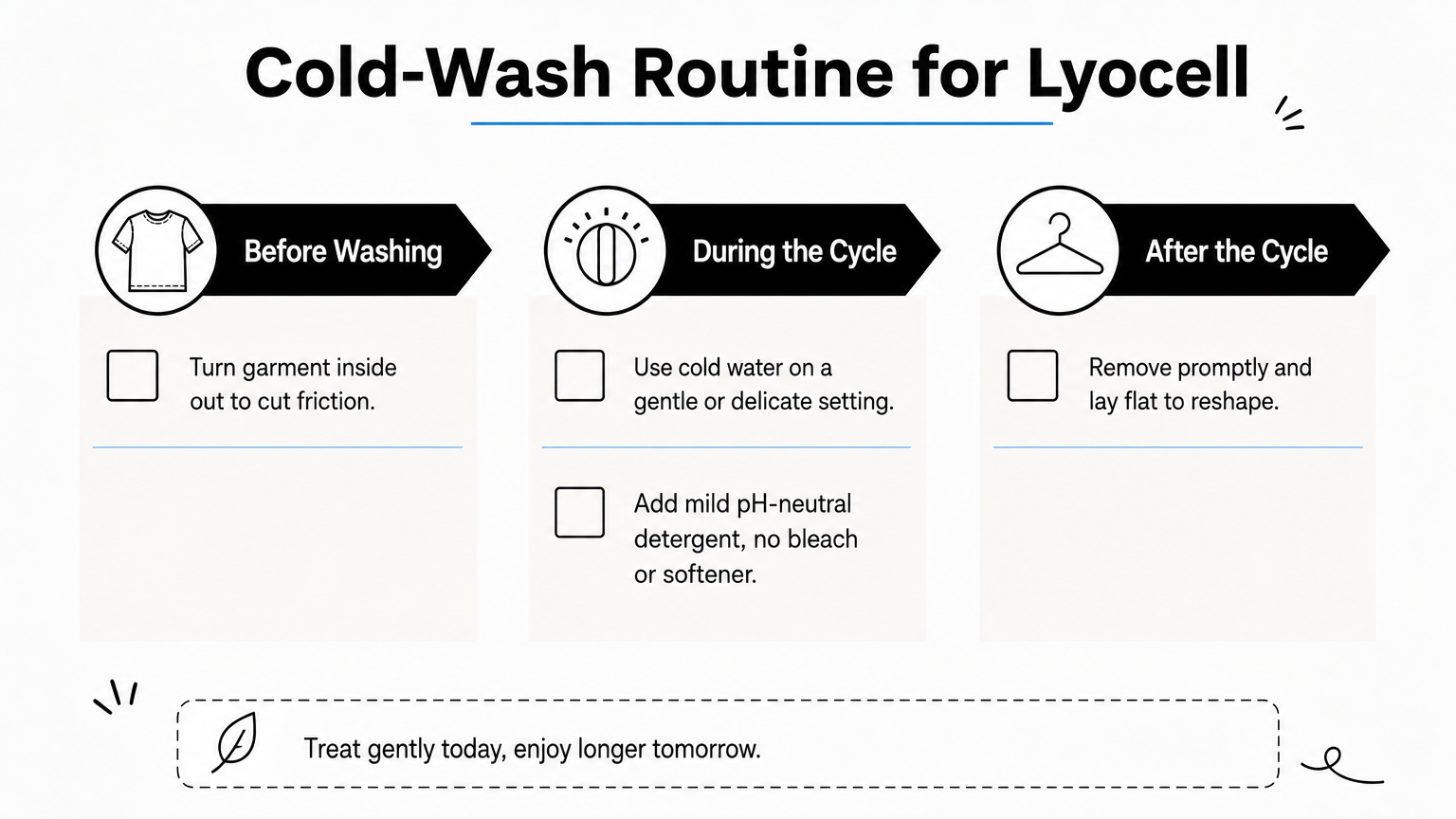
Follow this basic routine for any lyocell garment:
- Turn the item inside out before washing to reduce surface friction
- Use cold water and a gentle or delicate cycle setting
- Wash with similar lightweight fabrics, not heavy items like towels or jeans
- Use a small amount of mild detergent, no bleach or fabric softener
- Remove the garment promptly once the cycle ends to avoid extended damp bunching
Handwashing works even better if you're dealing with a delicate or loosely knit piece. Fill a basin with cold water, add a small amount of detergent, swirl the garment gently for a minute or two, then rinse without wringing or twisting the fabric.
Garments made from heavier, tightly constructed fabrics tolerate a bit more handling than lightweight lyocell knits do. We build our relaxed tees from 300g Supima cotton specifically because that density holds its shape through repeated cold washes, and the same logic applies to lyocell: denser weaves forgive more washing mistakes than thin, loosely knit versions of the same fiber, which is also how much heavyweight cotton shrinks compared to lighter jersey.
Drying and ironing lyocell the right way
Drying causes more lyocell shrinkage than washing ever does, because a tumble dryer combines heat and constant tumbling in a way no washing machine cycle matches. High heat exposure while the fibers are still damp locks in whatever relaxation started during the wash cycle, so the drying step is really where a lyocell garment decides its final size. If you get one step right in your whole care routine, make it this one.
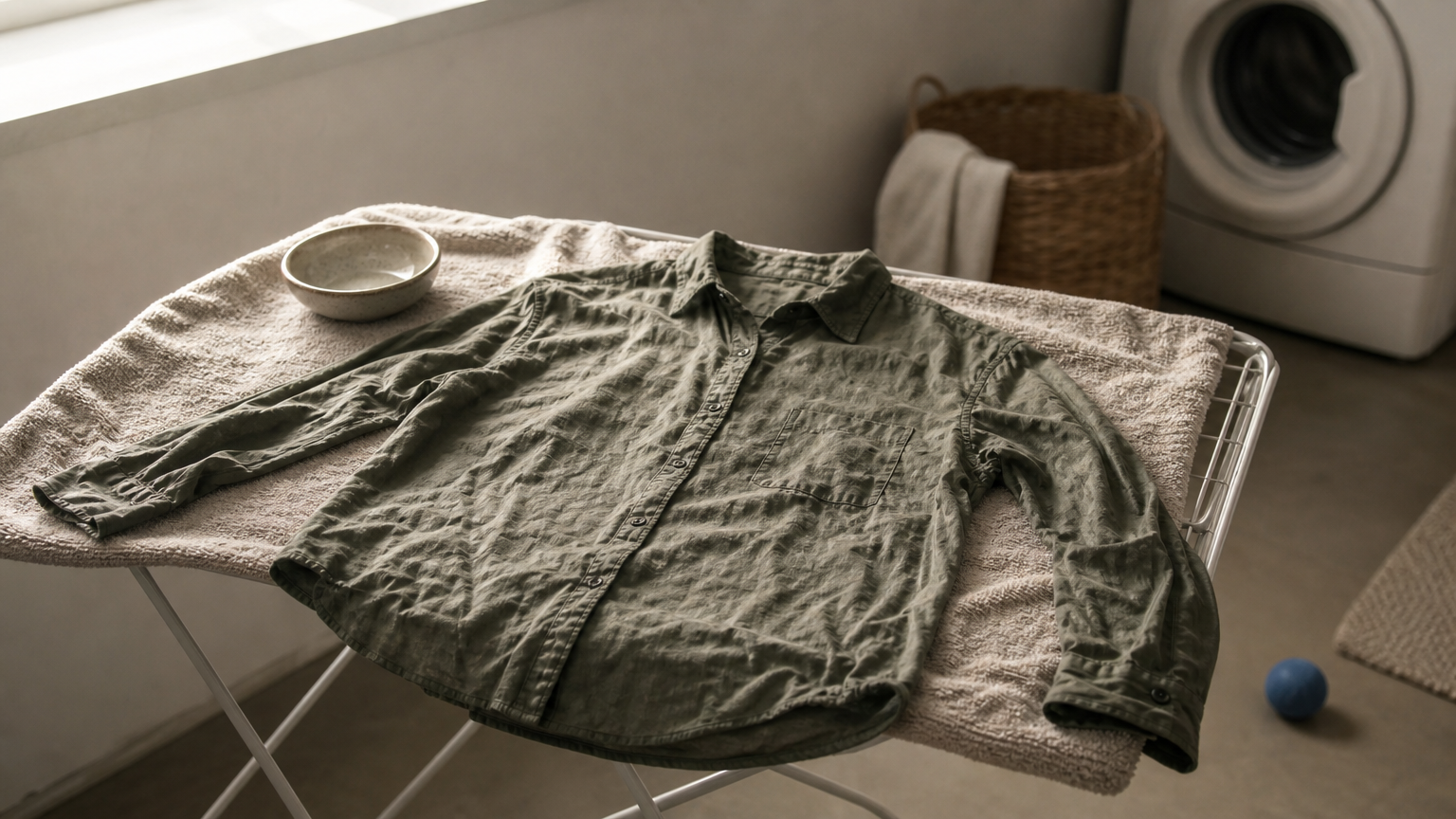
Air drying beats the dryer every time
Lay lyocell garments flat on a towel or drying rack instead of hanging them, since wet lyocell stretches under its own weight and can distort the shoulders or hem if left on a hanger. Flat drying keeps the fabric supported evenly and lets it dry at room temperature without any added heat to trigger further fiber relaxation. Reshape the garment gently while it's still damp, smoothing out the collar, sleeves, and hem to their original dimensions before it fully dries.
Skip the dryer entirely and you eliminate the single biggest cause of lyocell shrinkage after the first wash.
If you need a dryer for convenience, use these settings to limit damage:
- Select the lowest heat or air-fluff setting available
- Remove the garment while it's still slightly damp, not bone dry
- Keep cycle time short, five to ten minutes at most
- Avoid mixing lyocell with heavier fabrics that extend drying time
Ironing without setting in shrinkage
Lyocell tolerates ironing well, but the iron temperature setting matters as much as it does in the wash. Use a low to medium heat setting, always with the garment slightly damp or with a pressing cloth between the iron and fabric, since dry heat applied directly can scorch the smooth cellulose surface and cause it to stiffen unevenly. A quick pass on the wrinkled areas, moving the iron rather than pressing it stationary, gets creases out without adding any real risk of further shrinkage.
Steaming works as a gentler alternative if you want to avoid direct heat altogether. Hang the garment and pass a handheld steamer over it, which relaxes wrinkles through moisture and light heat rather than pressure and direct contact. Either method restores a clean, finished look without undoing the careful cold-wash routine that kept the garment close to its original size in the first place.
How lyocell shrinkage compares to cotton and other fabrics
Cotton gets a reputation as the shrink-prone fabric, and for good reason: untreated cotton can lose 5% to 10% of its size on the first hot wash, roughly double what lyocell typically loses under the same conditions, though premium Supima cotton shrinkage rates land much lower. Lyocell shrinks less than standard cotton because the solvent-spinning process produces longer, more uniform fibers with fewer weak points for water to exploit, one of several differences worth weighing when you compare a lyocell tee against a cotton one. That said, lyocell isn't the most shrink-resistant option out there, and knowing where it lands next to other common fabrics helps set realistic expectations before you buy.
A side-by-side look at shrinkage rates
Numbers vary by weave and finish, but the general pattern holds across most garments you'll actually buy. Use this table as a rough guide rather than an exact promise for any single item:
| Fabric | Typical first-wash shrinkage | Main cause |
|---|---|---|
| Untreated cotton | 5% to 10% | Loose fiber structure, high water absorption |
| Pre-shrunk cotton | 1% to 3% | Factory shrinking removes most slack |
| Lyocell | 2% to 5% | Relaxation shrinkage from stretched fibers |
| Modal | 2% to 4% | Similar cellulose structure to lyocell |
| Viscose/rayon | 5% to 10% | Weak wet strength, high fiber swelling |
| Wool | 10%+ if agitated hot | Felting from fiber scales, not just relaxation |
| Polyester | Under 1% | Synthetic fiber resists moisture absorption |
Lyocell sits closer to synthetic-level stability than most people expect from a plant-based fabric.
Why the fiber source matters more than the label
Modal and lyocell come from the same general family, both made from wood pulp through similar spinning processes, and that shared origin explains why their shrinkage numbers sit so close together. Rayon, despite also starting as cellulose, shrinks far more aggressively because its manufacturing process leaves the fibers weaker when wet, without the reinforced structure lyocell gets from its specific solvent treatment. Polyester and other synthetics barely shrink at all since the fibers don't absorb water the way plant-based ones do, which is part of why blends with even a small percentage of synthetic fiber tend to hold their shape better than pure natural fabrics.
Understanding these comparisons matters when you're shopping for premium lyocell tees worth buying, not just when you're doing laundry. A lyocell-cotton blend will shrink more than pure lyocell, a lyocell-spandex blend will shrink less, and a 100% lyocell knit will land somewhere predictable in between if you wash it cold and skip the dryer.
What to do if your lyocell garment already shrank
Finding a shrunken lyocell shirt in your dresser doesn't have to mean writing it off completely. Because lyocell shrinkage is mostly a relaxation issue rather than fiber damage, you can often coax the fibers back toward their original length with the right combination of moisture and gentle stretching. The fix works best on garments that shrank once, not ones that have been through multiple hot-water-and-dryer cycles, since repeated heat exposure eventually locks fibers into their shorter state for good.
The soak-and-stretch method
Start by soaking the garment in lukewarm water mixed with a small amount of hair conditioner or baby shampoo for about 20 minutes. The conditioner's ingredients help relax the cellulose fibers and make them more pliable, which gives you room to reshape the fabric while it's wet.
- Remove the garment and gently press out excess water, don't wring it
- Lay it flat on a towel and stretch the fabric by hand toward its original dimensions
- Pin the edges to a towel or drying rack if you need to hold the shape
- Let it air dry completely without moving it, checking the shape once or twice
- Repeat the soak if the first attempt only partially restores the size
A shrunken lyocell garment is often a stretching problem, not a permanent loss, as long as you catch it early.
When the shrinkage is permanent
Some garments won't respond to stretching no matter how careful you are, and it helps to know why before you spend an evening on a lost cause. Loosely knit lyocell jersey that's been through a hot dryer cycle several times has usually lost most of its recoverable stretch, since each heat exposure locks in a little more of the fiber's relaxed state. Blended fabrics behave differently too: if a garment contains a meaningful percentage of cotton, the cotton fibers may have shrunk beyond what the lyocell stretching can compensate for, since the two fibers don't loosen and re-stretch at the same rate. In these cases, the more realistic move is accepting the new size, repurposing the garment, or treating it as a lesson for how you wash the next one.
Caring for lyocell over the long run
Most lyocell shrinkage happens in the first wash, and it happens because of heat, not because the fiber is somehow unstable. Once you switch to cold water and skip the dryer, the fabric settles into its shape and holds it through years of wear. Treat lyocell the way you'd treat any premium fabric: gentle cycles, low heat, and a little patience with air drying.
So does lyocell shrink? Yes, a little, but nowhere near as much as cotton, and almost none of it is unavoidable once you know the routine. The same principle applies to any quality basic in your closet: fabric density and construction matter as much as the fiber itself when it comes to holding shape wash after wash. If you want a wardrobe staple that's built to resist shrinkage from day one, see our picks for Supima cotton t-shirts that feel truly premium, including our own relaxed tee in heavyweight Supima designed to keep its fit long after the first wash.