


A lyocell t-shirt shows up in more and more product lines every year, and for good reason. The fabric is soft, breathable, and made from wood pulp through a closed-loop production process that recycles most of its solvents. If you've been comparing it to cotton or polyester and wondering whether it actually lives up to the claims, you're asking the right questions.
At SÖMNAD, we spend an unreasonable amount of time studying fabrics. Our own tees are built on 300g Supima cotton because we believe it's the best material for the job we're solving. But that conviction only exists because we've tested, worn, and picked apart alternatives, lyocell included. We know where it shines, where it falls short, and what to look for when you're shopping for it.
This article breaks down exactly what lyocell is, how it performs in a t-shirt, the genuine pros and cons you should weigh, and practical buying tips to help you avoid overpaying for underwhelming quality. No hype, just what we've learned from years of obsessing over everyday essentials.
Why lyocell works for T-shirts
Lyocell has a fiber structure that's fundamentally different from cotton or synthetic materials. The fibers are smooth and round at the microscopic level, which means the fabric doesn't scratch or irritate skin the way some other textiles do. For a t-shirt that you wear directly against your body every day, that smoothness is something you notice immediately and continue to appreciate over time. The fabric also has enough natural body to hold a clean shape without feeling stiff or overly constructed, which is exactly what a well-made everyday essential should do.
Softness and drape
A lyocell t-shirt tends to feel noticeably soft straight out of the package, and that softness holds up across multiple washes because the fiber doesn't break down the same way cotton does in its first few cycles. The fabric also has a natural drape, meaning it falls cleanly against your body rather than bunching or sticking in awkward places. That quality makes it look more refined than most entry-level basics, even in very simple cuts without any added design detail.
Lyocell's drape comes from its fiber density and smoothness, not from added softeners or chemical treatments, which is why the quality tends to hold longer than treated cotton.
The feel also shifts depending on how the yarn is spun and finished. Tightly spun lyocell produces a crisper, more structured hand feel, while loosely spun versions lean softer and more fluid. When you're shopping, pay attention to the fabric weight and the manufacturer's finish notes to understand which direction a specific garment goes.
Moisture and temperature management
Lyocell absorbs moisture more efficiently than polyester and releases it quickly, which keeps you comfortable during warmer weather or any activity that generates heat. The fiber is hydrophilic by nature, meaning it actively pulls moisture away from your skin rather than letting it pool on the surface. That characteristic is a meaningful practical advantage over synthetics, especially if you live somewhere warm or travel frequently and need a single shirt to stay comfortable across different conditions.
Temperature regulation is also more balanced than what most synthetic fabrics offer. Lyocell doesn't trap heat the way polyester does, so it stays wearable when temperatures climb. It also layers reasonably well in cooler weather because the open fiber structure breathes without losing form. For a single-layer everyday piece, that range of comfort across different temperatures is easy to overlook until you've actually worn it through a full season.
How lyocell is made and what TENCEL means
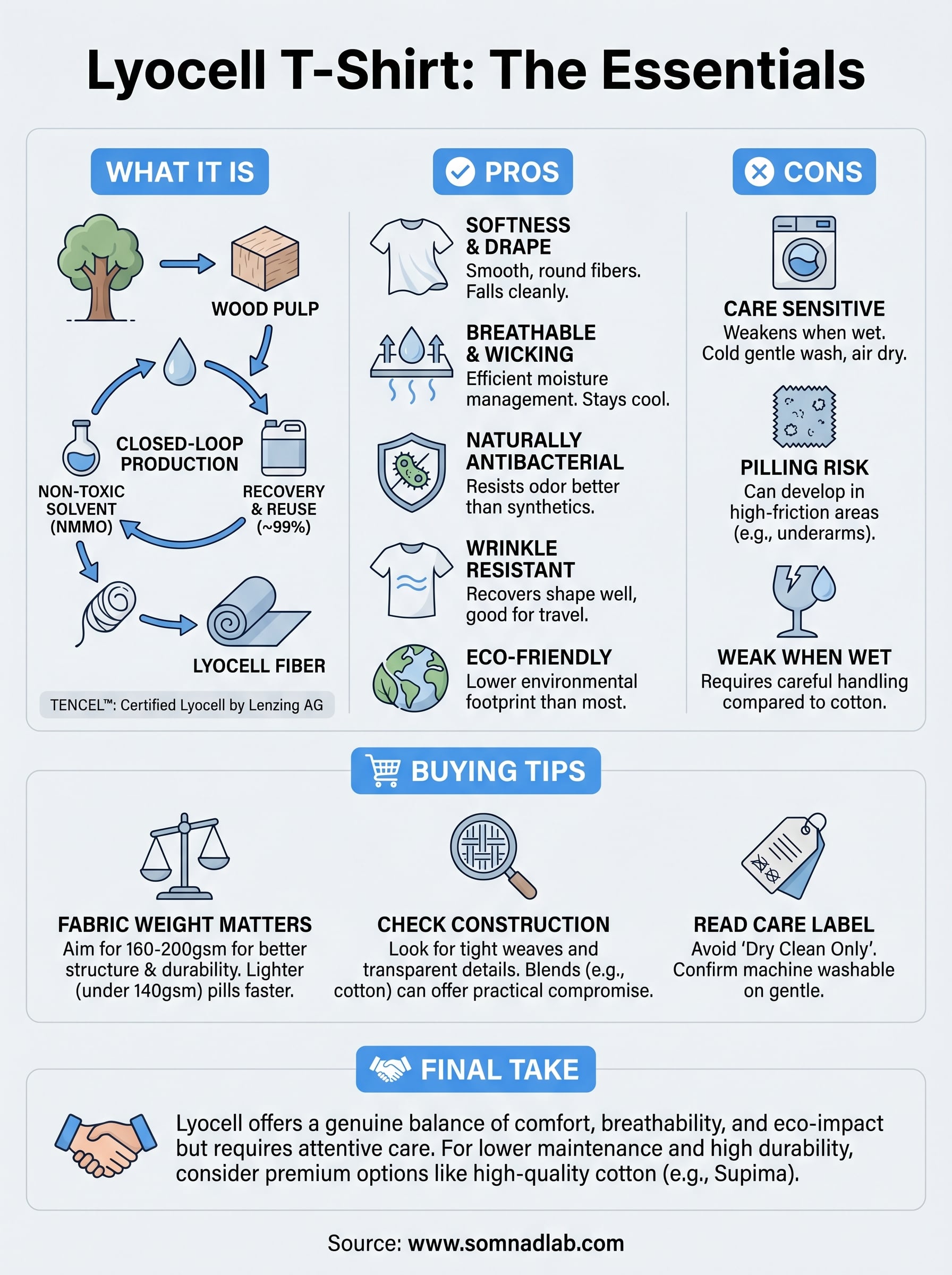
Lyocell starts with wood pulp, most commonly sourced from eucalyptus trees grown on sustainably managed land. Manufacturers dissolve that pulp in a non-toxic solvent called N-Methylmorpholine N-oxide (NMMO), which turns it into a liquid solution that gets extruded through fine nozzles to form fibers. The process is notably efficient because the solvent gets recovered and reused at a rate of around 99%, which is why lyocell consistently earns better sustainability marks than viscose or conventional rayon.
The closed-loop process in practice
Once the fibers are extruded and solidified in a water bath, they get washed, dried, and cut to the length needed for spinning into yarn. That yarn then goes through standard textile finishing steps before it becomes the fabric in your lyocell t-shirt. The closed-loop system matters here because it means far fewer chemicals escape into wastewater compared to older cellulosic fiber production methods. The result is a fabric with a lower environmental footprint that doesn't require you to compromise on feel or performance.
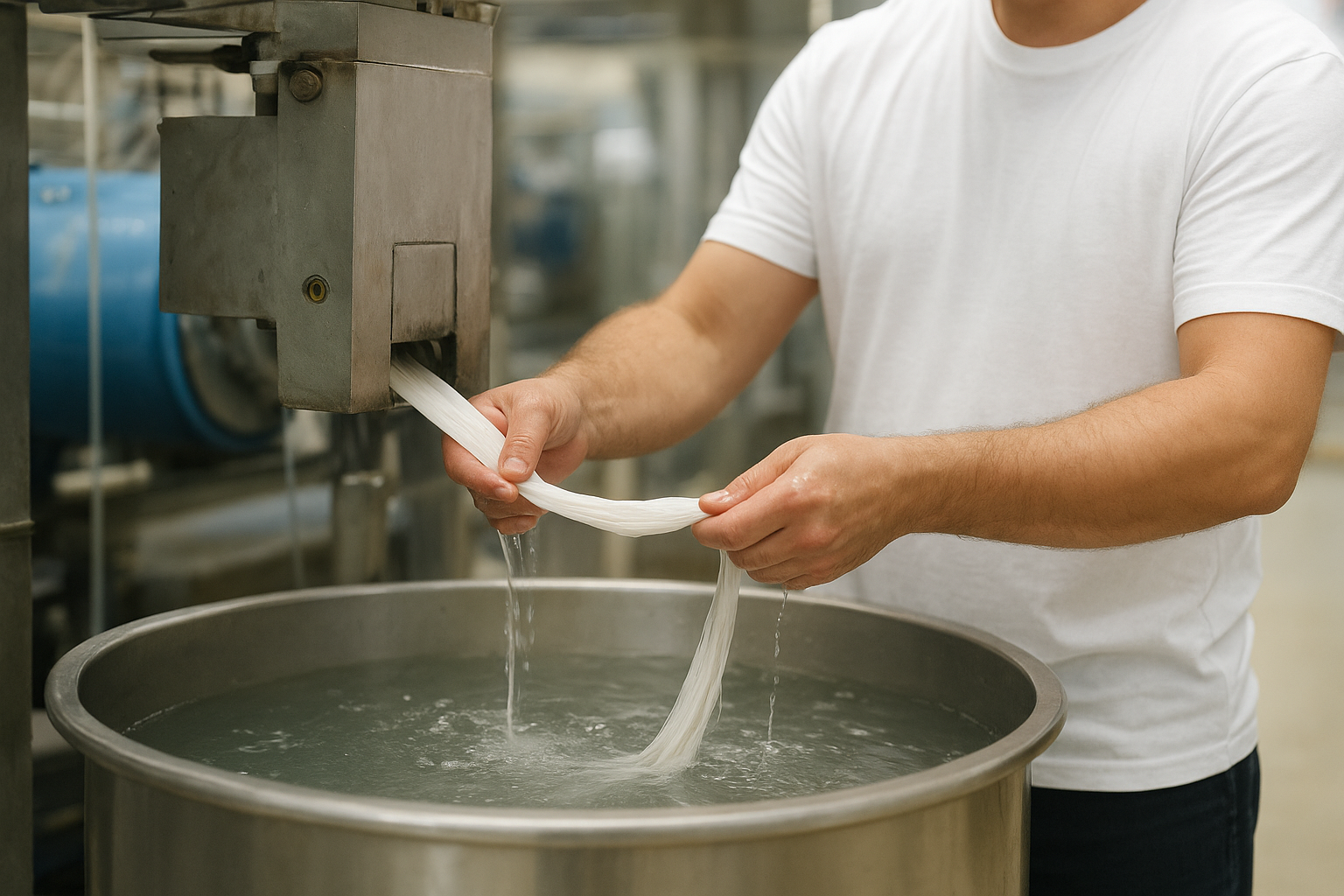
The closed-loop production process is what separates lyocell from viscose and modal, even though all three start from the same raw material source.
What TENCEL actually means
TENCEL is a brand name owned by the Austrian company Lenzing AG, and it refers specifically to lyocell (and some modal) fibers produced in their facilities. When you see TENCEL on a label, it signals that the fiber meets Lenzing's quality and environmental standards, which are independently verified. Not every lyocell fabric carries the TENCEL name, but garments that do give you an additional layer of traceability. Generic lyocell can still be high quality, but the TENCEL label removes some of the guesswork about sourcing and production practices.
Pros and cons of lyocell in real wear
Knowing how lyocell performs in theory is one thing; knowing how it holds up after repeated wear and washing is what actually matters when you're deciding whether to spend money on it. A lyocell t-shirt can deliver genuinely impressive results in daily use, but it also has real limitations that other fabrics don't share.
Where lyocell excels
Lyocell's biggest practical advantages show up in comfort and appearance. The fabric stays soft wash after wash, resists odor better than most synthetics due to its moisture-wicking structure, and maintains a cleaner, more polished look than standard cotton basics in similar price ranges. Because the fibers are naturally anti-bacterial, lyocell tends to stay fresher longer between washes, which is a meaningful benefit if you're wearing it regularly.
Lyocell's odor resistance is a function of its fiber structure, not a chemical treatment, so it doesn't wear off the way treated fabrics do.
It also wrinkles less than linen and recovers its shape better than loosely woven cotton, which makes it a reliable travel option for long days when you won't have access to an iron.
Where lyocell falls short
The most significant drawback is care sensitivity. Lyocell weakens when wet, which means aggressive machine washing or high heat can damage the fibers faster than cotton or polyester. You'll typically need to wash it on a gentle cycle with cold water and lay it flat or hang it to dry. That's not complicated, but it does require more attention than throwing it in with your regular laundry.
Pilling can also develop along high-friction areas like underarms and side seams, particularly when lyocell is woven at lighter weights.
Lyocell vs cotton, polyester, and blends
Choosing between lyocell and other common t-shirt fabrics comes down to what you need from your clothing and how much care you're willing to invest. Each material has a distinct set of trade-offs, and understanding them upfront helps you avoid spending money on something that doesn't match your actual routine and priorities.
Lyocell vs cotton
Cotton remains the benchmark for everyday wear because it's durable, easy to care for, and available at every price point. A lyocell t-shirt, by comparison, feels softer and drapes more cleanly from day one, but cotton is tougher under machine washing and handles heat without the same risk of fiber damage. High-quality cotton like Supima or Pima also builds character over time, softening gradually with each wash rather than becoming fragile when wet. If longevity with minimal care is your priority, cotton wins that comparison clearly.
Lyocell's softness advantage is real from the first wear, but cotton's durability makes it easier to maintain across years of regular use.
Lyocell vs polyester and blends
Polyester is the lowest-maintenance option of the three, but it traps heat and doesn't move moisture the way natural or semi-natural fibers do. Wearing a pure polyester tee in warm weather is noticeably less comfortable than either lyocell or cotton because the synthetic structure simply doesn't breathe. Blends that combine lyocell with cotton or spandex sit in the middle: you get some of the softness and drape of lyocell alongside improved durability or stretch, depending on the blend ratio. Those blended options are often a practical compromise if you want lyocell's feel without fully committing to its more attentive care routine.
How to buy a lyocell T-shirt that lasts
Buying a lyocell t-shirt that holds up over time means looking past the marketing language on the product page and focusing on a few specific details that actually predict how the garment will perform. Most brands won't make it easy for you, but the information you need is usually there if you know where to look.
Check the fabric weight and weave
Fabric weight is the single most useful number when comparing lyocell garments. Lighter weights, typically under 140gsm, pill faster and wear thin more quickly along high-friction areas. Look for garments in the 160-200gsm range if you want something that maintains structure through regular wear and washing.
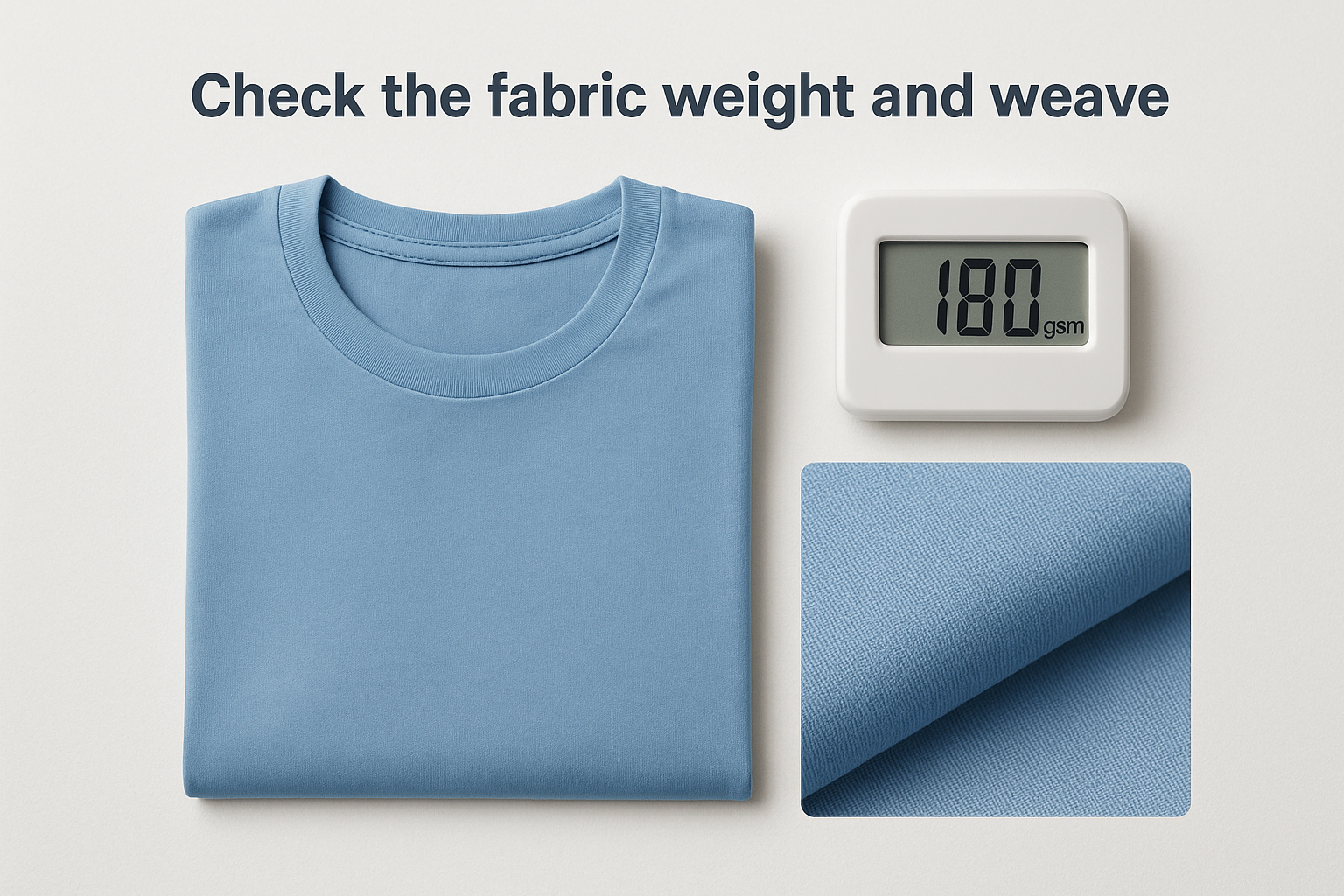
A heavier fabric weight costs more to produce, which is why garments at the lower end of the price range almost always cut corners here.
Weave type also matters. A tightly woven construction holds its shape better than a loose weave and resists pilling longer. If the product page lists construction details, that transparency alone signals a brand paying attention to how the garment is actually built.
Look at the care label before you commit
The care instructions tell you a lot about the fabric quality before you buy. Lyocell that requires dry cleaning only typically means the brand used a lower-quality fiber or finish that can't handle regular washing. What you want to see is cold machine wash on gentle with hang or flat dry, which indicates the fabric is finished well enough to handle real-life use without special treatment.
You should also verify whether the garment is 100% lyocell or a blend, since blends with cotton or spandex typically tolerate more casual care while still offering a softer hand feel than pure synthetic options.
Final take
A lyocell t-shirt offers a genuine combination of softness, breathability, and lower environmental impact that few fabrics can match at comparable price points. But it asks something in return: careful washing, attention to fabric weight before you buy, and realistic expectations about how it holds up under stress compared to more durable options like high-quality cotton.
If lyocell fits your lifestyle and care routine, buy from a brand that's transparent about construction details and fiber sourcing. If you want the same refined feel and clean drape with zero compromise on durability, premium everyday essentials built from superior materials are worth your attention. At SÖMNAD, we built our tees on 300g Supima cotton because we believe the best everyday shirt is one you don't have to think twice about washing, wearing, or reaching for again tomorrow.