


Choosing between a lyocell vs cotton t-shirt comes down to what you actually care about: how the fabric feels against your skin, how it handles heat and moisture, and whether it'll hold up after dozens of washes. Both materials have earned their reputation in the basics space, but they perform very differently in practice.
At SÖMNAD, we build our tees from 300g Supima cotton, a deliberate choice we made after testing extensively across fabric types, including lyocell. We have strong opinions, but we also believe you deserve a straight comparison so you can decide what works for your wardrobe.
This guide breaks down lyocell and cotton across the categories that actually matter: comfort, breathability, durability, and sustainability. No fluff, no spin, just an honest look at where each fabric wins and where it falls short, so you can spend your money with confidence.
Why fabric choice matters for t-shirts
A t-shirt sits closer to your skin than almost any other garment you own. The fabric it's made from directly shapes how comfortable you feel during an eight-hour workday, a workout, or a casual evening out. When you're comparing a lyocell vs cotton t-shirt, you're not just picking a material preference. You're making a decision that affects how you feel every single time you wear it, and one that compounds across dozens or hundreds of wears over the shirt's life.
How fabric affects your skin
Your skin reacts differently to different fibers. Natural and semi-synthetic fabrics interact with moisture, heat, and movement in distinct ways, which means what works for someone in a humid climate might frustrate someone in a drier one. Sensitive skin tends to respond well to smooth, low-friction surfaces, while rougher weaves can cause irritation over time, especially around the collar and underarm seams.
The fabric you choose for a t-shirt isn't a minor detail. It's the difference between a shirt you reach for constantly and one that stays folded at the back of a drawer.
Fiber structure also determines how much a shirt pills, loses shape, or traps odor after repeated washes. A tightly woven or long-staple cotton, for example, resists pilling far better than a short-staple blend, giving you a cleaner surface across many more wears before the shirt starts looking tired.
How fabric affects long-term value
Price per wear is a more useful metric than sticker price alone. A t-shirt that costs twice as much but lasts four times longer and holds its shape through all of it delivers significantly better value in real terms. Material quality is the single biggest driver of longevity in a basic tee, ahead of stitching, cut, or even your care routine.
Your laundry habits also factor in more than most people expect. Some fabrics demand cold water, air drying, or detergents with specific pH levels just to maintain their integrity. If a shirt requires that level of attention to avoid shrinking or warping, that friction adds up across the life of the garment. Knowing what each fabric actually demands upfront helps you shop with a realistic picture of what you're committing to.
How lyocell and cotton are made
Understanding where these fabrics come from helps explain why they behave so differently in a lyocell vs cotton t-shirt comparison. The production process shapes everything from fiber strength to how the fabric responds to washing.
Cotton: field to fabric
Cotton fibers grow inside the bolls of the cotton plant and are harvested, cleaned, and spun into yarn. The quality of the final fabric depends heavily on fiber length: longer staple varieties like Supima or Pima cotton produce smoother, stronger yarn with less surface fuzz, while shorter staple cotton yields a rougher texture that breaks down faster under repeated washing. Once spun, cotton yarn is woven or knit into fabric, a relatively straightforward process that uses minimal chemical inputs beyond dyeing.
Lyocell: wood pulp to fiber
Lyocell starts from a completely different source. Wood pulp, typically from eucalyptus, beech, or oak trees, is dissolved in a solvent called NMMO to create a thick liquid solution. That solution is pushed through tiny nozzles to form fibers, which are then washed, dried, and spun into yarn.
The closed-loop production system used in lyocell manufacturing recovers and reuses roughly 99% of the solvent, which significantly reduces chemical waste compared to older cellulosic processes like rayon.
The resulting fiber is naturally smooth at the microscopic level, which gives lyocell its characteristic softness and low friction against skin. That smoothness, however, also means lyocell fibers can fibrillate, creating a surface fuzz under friction if the fabric is not finished correctly.
Comfort and breathability in real wear
Both fabrics feel noticeably different the moment you put them on, and that gap becomes clearer across a full day of wear. In a lyocell vs cotton t-shirt comparison, comfort is not just about initial softness; it is about how each fabric handles your body heat and moisture through hours of continuous use in real conditions.
How each fabric manages moisture
Lyocell pulls moisture away from your skin quickly due to its smooth fiber structure, making it efficient at wicking during low-intensity activity. The downside is that lyocell can cling to your body when the fabric becomes saturated, which many wearers find uncomfortable during anything physically demanding. Long-staple cotton like Supima absorbs moisture steadily rather than redirecting it, holding sweat away from your skin without that clingy, wet-fabric sensation.
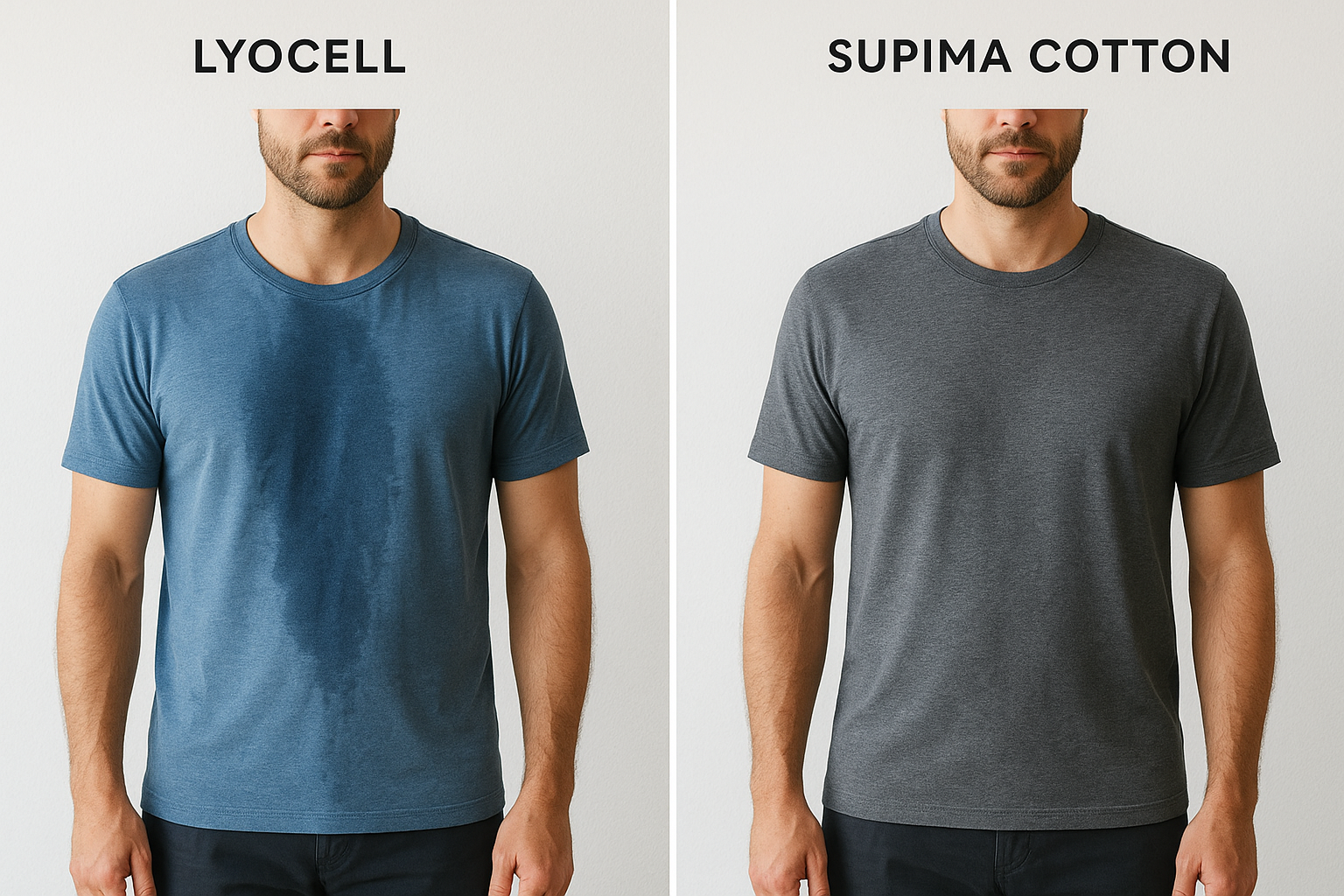
For everyday wear at moderate activity levels, most people find cotton's moisture absorption more natural and comfortable than lyocell's wicking behavior.
| Property | Lyocell | Supima Cotton |
|---|---|---|
| Moisture management | Wicks quickly | Absorbs steadily |
| Feel when wet | Can cling | Stays relaxed |
| Breathability | High | High |
Which fabric is more breathable day-to-day
Both materials breathe well in dry conditions, but they diverge in humid or warm environments. Lyocell's smooth fibers allow airflow through the weave with minimal resistance, keeping the fabric cool to the touch initially. Cotton performs more consistently in sustained heat because it absorbs rather than traps moisture against your skin, which prevents the damp, weighted feeling that lyocell can develop after extended wear.
Durability, shrinkage, and care
When you're deciding between a lyocell vs cotton t-shirt, durability is where the gap becomes most obvious after six months of regular wear. How a fabric responds to washing, drying, and friction tells you far more about its real-world value than how it feels on a store rack.
How each fabric holds up over time
Supima cotton's long-staple fibers bind together tightly during spinning, which makes the resulting yarn more resistant to pilling, tearing, and surface degradation. A well-constructed Supima tee holds its shape and surface quality through dozens of washes without the texture breaking down noticeably. Lyocell is softer initially, but its fibers are more vulnerable to friction during washing, which can cause fibrillation and surface fuzz unless the fabric receives a specific finishing treatment.
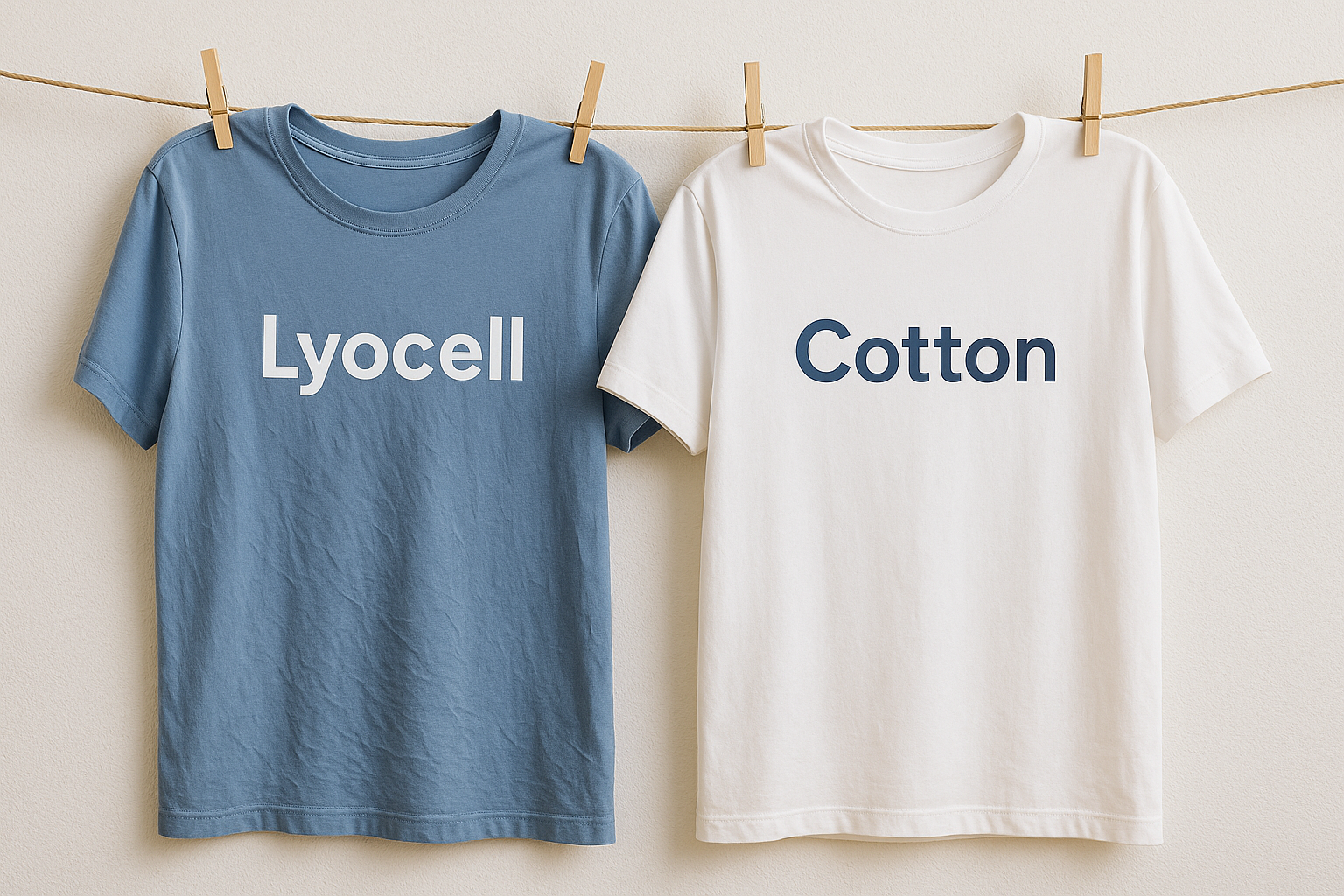
Cotton's resistance to structural breakdown under repeated mechanical stress gives it a meaningful durability advantage over lyocell in everyday t-shirt use.
Care requirements for each fabric
Lyocell requires more careful handling than most people expect. It performs best washed in cold water on a gentle cycle and air-dried flat, because agitation and heat accelerate fiber breakdown and increase shrinkage risk. Supima cotton tolerates machine washing reliably, and while cold water and low-heat drying remain best practice for preserving shape, it holds up considerably better under normal laundry conditions than lyocell does.
Your care routine directly affects how long either shirt lasts. If you prefer low-maintenance clothing that fits your actual schedule rather than an ideal one, cotton is the more practical long-term choice.
Sustainability, cost, and best use cases
When you're making a final call in the lyocell vs cotton t-shirt debate, sustainability and cost play a larger role than most buyers factor in upfront. Both fabrics have genuine environmental credentials, but they differ in where those advantages actually show up across production, use, and end of life.
Which fabric is more sustainable
Lyocell's closed-loop solvent system recovers up to 99% of processing chemicals, which significantly reduces its chemical waste footprint compared to conventional fabrics. Eucalyptus trees, the most common lyocell source, grow quickly with minimal water and no pesticides. Cotton carries a heavier water footprint in production, but Supima cotton farming in the United States operates under stricter environmental standards than commodity cotton grown elsewhere, narrowing that gap considerably.
Durability is its own sustainability metric: a shirt that lasts five years replaces three or four disposable alternatives and keeps that material out of landfill longer.
How cost compares across the life of the shirt
Lyocell t-shirts typically cost more than standard cotton shirts at the point of purchase, and their higher care demands add friction over time. Supima cotton sits at a premium over commodity cotton but rewards that investment with consistent durability that keeps cost-per-wear low across years of regular use.
Which fabric suits your wardrobe best
Lyocell performs well in light layering pieces and low-friction wear where its softness and drape are most noticeable. If you want a foundational everyday tee that holds up through varied activities, temperatures, and laundry cycles without demanding special treatment, Supima cotton is the stronger long-term choice.
| Use case | Better fabric |
|---|---|
| Everyday basics | Supima cotton |
| Soft layering pieces | Lyocell |
| Low-maintenance wardrobe | Supima cotton |
| Tactile, draped silhouettes | Lyocell |
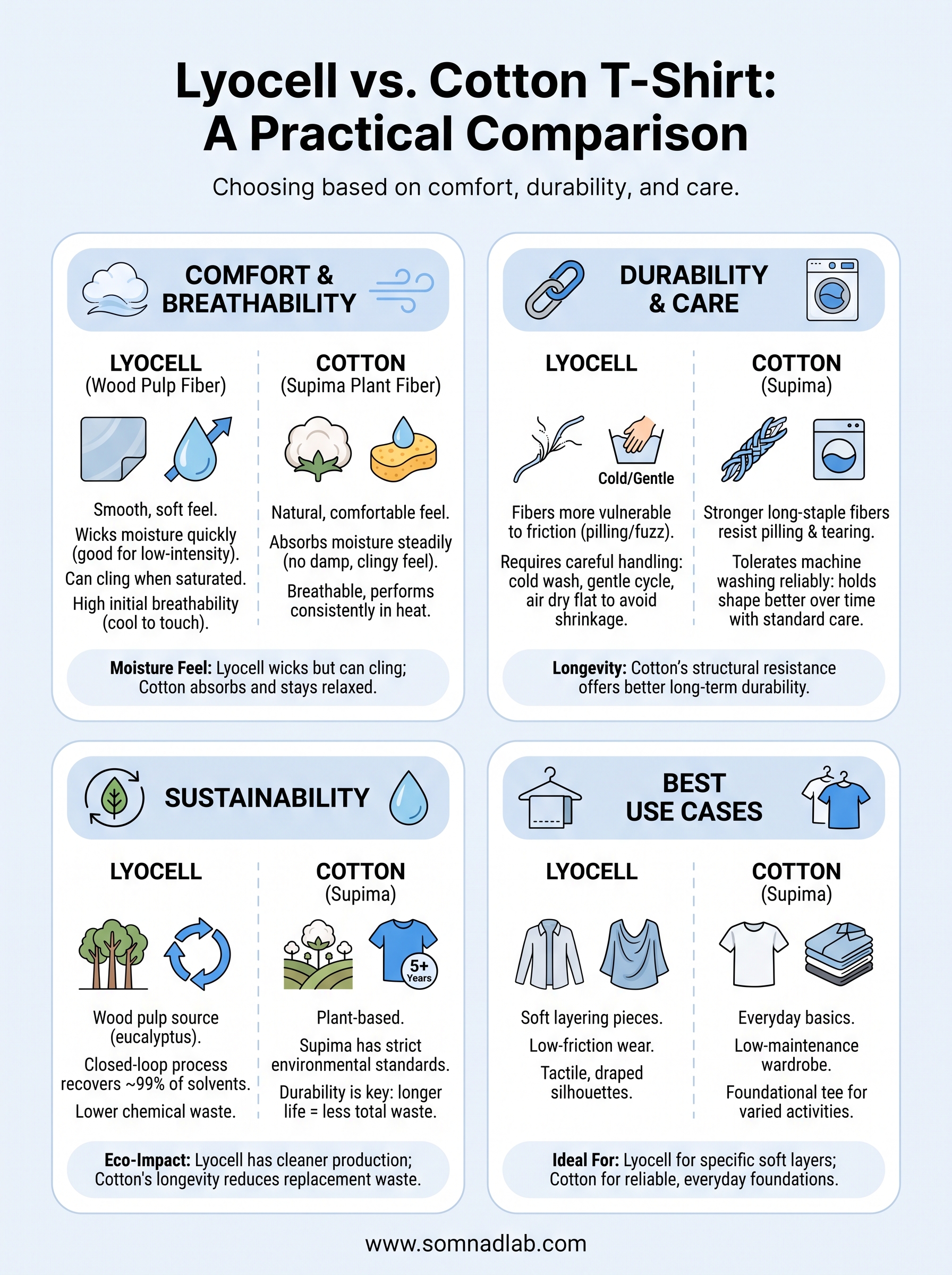
Quick recap
The lyocell vs cotton t-shirt comparison comes down to what you prioritize in everyday wear. Lyocell offers initial softness and efficient moisture-wicking, but it demands careful laundering and loses structural integrity faster under friction and heat. Supima cotton absorbs moisture naturally, resists pilling, tolerates machine washing reliably, and holds its shape across years of regular use.
Both fabrics carry genuine sustainability credentials, but durability is its own form of sustainability: a shirt that lasts five years is always the better environmental choice over one that looks worn after a season.
If you want a foundational everyday tee built from 300g Supima cotton that combines long-staple durability with a clean, relaxed fit and no visible branding, the SÖMNAD relaxed tee is worth a close look. It is the kind of shirt you buy once and reach for constantly, without thinking about it.