


Summer heat exposes cheap shirts fast. A tee that felt fine in March turns limp, see-through, or stinky by July, and you end up buying replacements every year instead of owning something that lasts. If you're hunting for the best summer shirts for men, you already know the usual suspects (thin polyester blends, boxy fast-fashion tees) don't hold up once the temperature climbs past 85.
This guide skips the vague "stay cool and stylish" advice and gets specific: which fabric weights and weaves actually breathe, which fits work under an open shirt or on their own, and which shirts survive repeated washing without stretching out at the collar. We tested for weight, drape, and how a shirt looks after ten wears, not just how it photographs on day one.
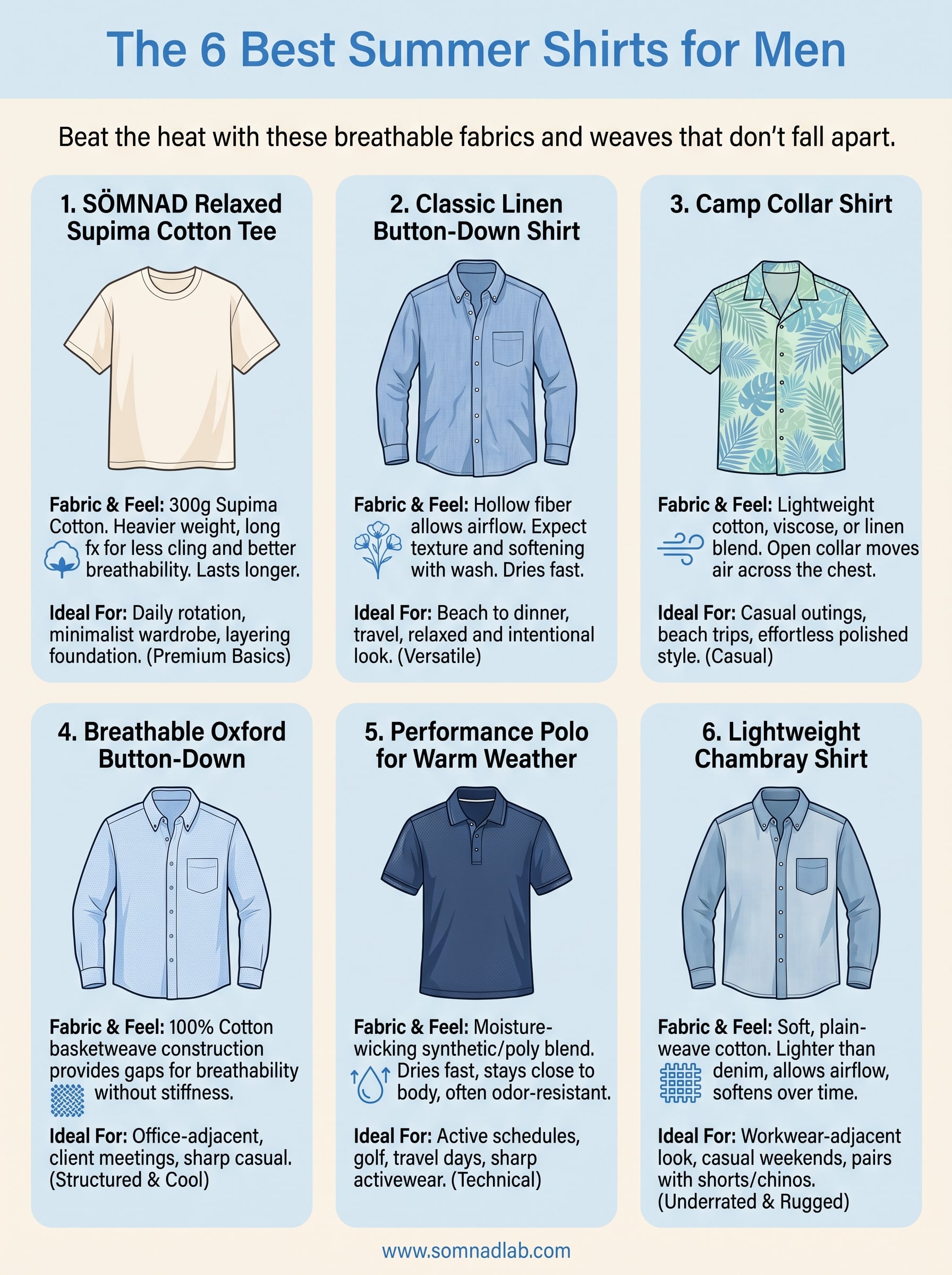
Below are six shirts worth your money this season, ranging from a 300g Supima cotton tee built for daily rotation to lighter linen and technical options for travel or heavy sweat days. Each pick covers material breakdown, fit notes, and who it's actually for, so you can build a summer wardrobe that looks clean without a logo doing the talking.
1. SÖMNAD's relaxed Supima cotton tee
SÖMNAD's relaxed tee tops this list because it solves the exact problem summer clothing usually creates: fabric that either overheats you or falls apart after a few washes. Built from 300g Supima cotton, it sits heavier than the average summer tee on paper, but the long-staple fiber breathes better than thin, cheap cotton blends that trap heat and sweat against your skin. This isn't a shirt you rotate out after one season. It's designed to be the piece you reach for daily, whether you're wearing it solo or layering it under an open button-down on cooler summer evenings.
Fabric and feel
Like the other premium Supima cotton t-shirts worth buying, this one uses longer fibers than standard upland cotton, which means fewer loose ends, less pilling, and a smoother hand-feel against the skin. At 300g, the fabric has enough structure to hold its shape through the day without clinging when you sweat. Breathable weight here doesn't mean flimsy. It means the weave lets air move while the fabric itself resists going sheer or saggy, two failures that plague lighter tees marketed as "summer-ready."
A summer tee only earns its place in rotation if it still looks sharp after ten washes, not just on day one.
Who it's for
This tee suits guys who want their clothing to do the talking through material and fit, not logos. If you gravitate toward a minimalist wardrobe and prefer fewer, better pieces over a closet full of fast-fashion basics, this is your foundation piece, and it sits alongside the other capsule wardrobe tee picks worth owning. It also works well for anyone layering: like the best relaxed-cut tees you'll wear daily, it gives room to wear under a linen overshirt without looking bulky, and the weight holds up whether you're commuting, working from home, or heading out for drinks.
Price range
SÖMNAD's tee sits in the premium basics category, priced higher than a three-pack from a big-box retailer but well below designer label markups. You're paying for the fabric and construction, not a printed logo or seasonal trend. Given the durability, most buyers find the cost-per-wear drops fast once you account for how few times you'll need to replace it compared to cheaper alternatives that stretch out or thin at the collar within a year.
2. Classic linen button-down shirt
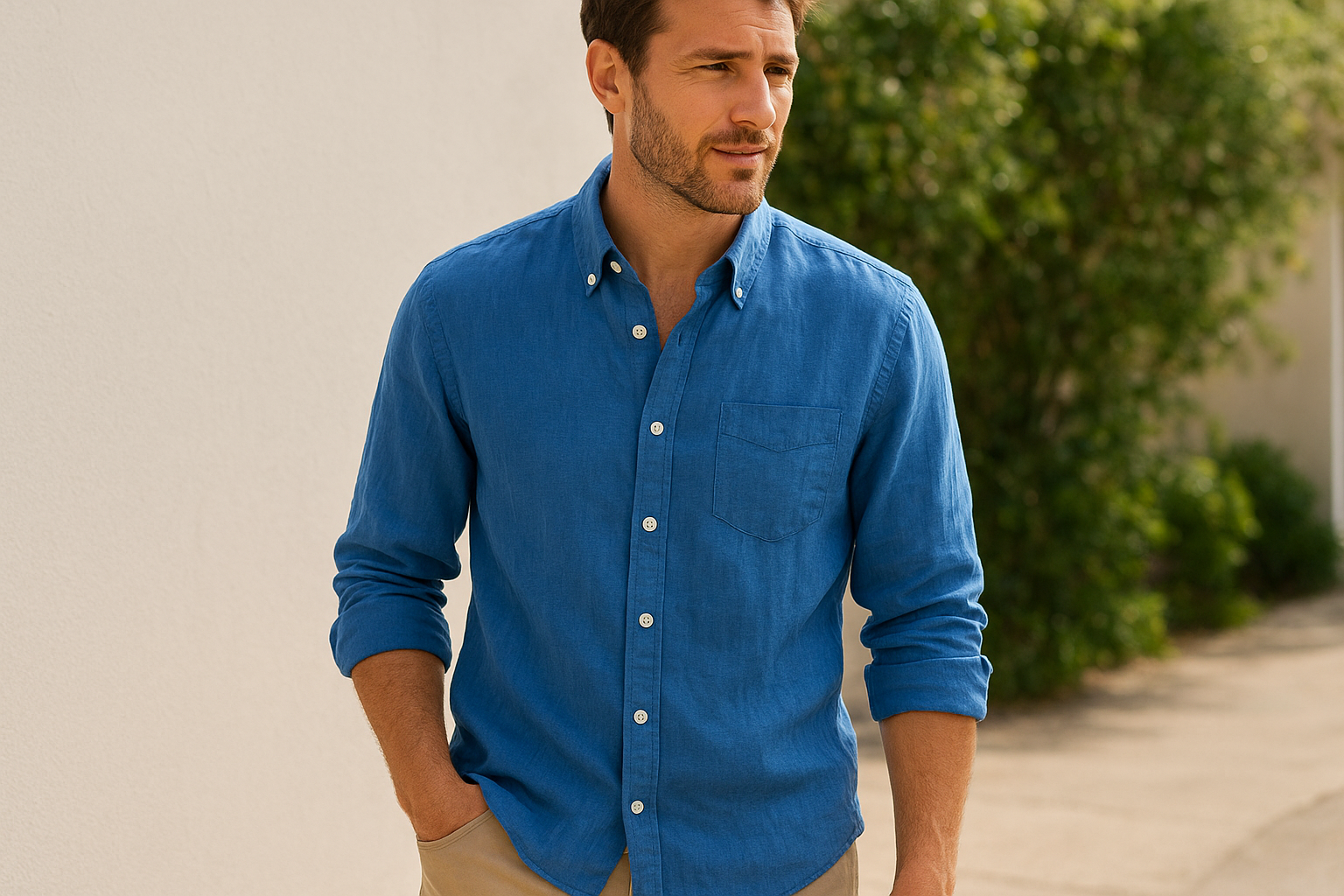
Linen earns its reputation as the go-to summer shirt fabric because the fiber itself is hollow, letting air pass through in a way cotton can't match. A classic linen button-down works as both a standalone shirt in 95-degree heat and a light layer over a tee once the sun drops. This is one of the most versatile men's summer shirts you can own precisely because it moves between beach, office, and dinner without changing character.
Fabric and feel
Expect visible texture and wrinkles, that's the nature of linen, not a flaw. The weave is looser than cotton, which speeds up drying time and keeps the fabric from clinging when you sweat. Good linen softens with every wash instead of breaking down, so a shirt that feels slightly stiff out of the box will drape better by its fifth wear, the same reason linen blend t-shirts work so well in heat.
Linen's wrinkles aren't a defect, they're proof the fabric is doing its job of staying loose and breathable.
Who it's for
This shirt suits guys who don't mind a relaxed, slightly rumpled look and want something that reads as intentional, not sloppy. It's a strong pick for travel, since linen packs small and doesn't hold odor the way synthetic blends do.
Price range
Quality linen button-downs typically run $60 to $120. Anything cheaper often means a linen-cotton blend with less breathability, so check the fabric composition label before buying.
3. Camp collar shirt for effortless style
Camp collar shirts trade the buttoned-up structure of a dress shirt for an open, notched collar that sits flat against the chest. No third button, no undershirt needed, just a shirt built to breathe from the neck down. This style has become one of the most requested summer shirts for men because it looks finished even when worn open over a tee or buttoned to the second hole with nothing underneath.
Fabric and feel
Expect lightweight cotton, viscose, or a linen blend here, along with fluid options like a breathable cupro fabric, all chosen to move air across the chest and back without the shirt collapsing into wrinkles by noon. The boxy, slightly cropped cut keeps fabric off your skin, which matters more in July than any technical claim printed on a hangtag. Most versions skip a full button placket at the neck, so the collar lays open by design rather than by accident.
A camp collar shirt does its best work unbuttoned, letting air move where a regular collar would trap heat.
Who it's for
Guys who want a shirt that reads polished without effort should reach for this one. It suits beach trips, casual dinners, and travel days where packing light matters more than pressing a shirt each morning.
Price range
Expect to pay $45 to $90 depending on fabric. Rayon and viscose blends sit at the lower end, while linen or linen-cotton versions push toward the top of that range.
4. Breathable oxford button-down shirt
Oxford cloth built its reputation in humid climates for a reason: the basketweave construction leaves small gaps between fibers that let air pass through even when the shirt is buttoned to the collar. A breathable oxford button-down gives you the structure of a dress shirt without the stiffness of poplin or twill, which makes it one of the few summer shirts for men that works in a boardroom and on a patio without a wardrobe change.
Fabric and feel
Oxford weave uses a thicker yarn than typical dress shirting, but the loose basketweave keeps the fabric from feeling heavy. Look for 100% cotton oxford over cotton-poly blends, since synthetic fibers trap heat and sweat instead of releasing it. A slightly heavier oxford, in the 4 to 5 ounce range, actually breathes better than ultra-thin versions that go translucent and cling to your back by noon.
Oxford weave proves that structure and breathability aren't opposites, the gaps in the weave do the cooling work.
Who it's for
Office-adjacent dress codes suit this shirt best. If your summer involves client meetings, dinners after work, or any setting where a tee reads too casual, this button-down fills that gap without overheating you the way a full dress shirt would.
Price range
Quality cotton oxfords generally run $50 to $100. Below that range, expect a poly blend that sacrifices breathability for wrinkle resistance.
5. Performance polo for warm weather
A performance polo swaps traditional pique cotton for moisture-wicking synthetic or cotton-poly blends engineered to move sweat away from skin instead of holding onto it. This is the shirt that closes the gap between a dress shirt and a gym tee, giving you a collar and a clean silhouette while still functioning through a sweaty commute or a round of golf. Among hot weather shirts for men, this one leans hardest on technical fabric science rather than natural fiber breathability.
Fabric and feel
Most performance polos blend polyester with a small percentage of spandex or elastane, sometimes cut with cotton for a softer hand. The knit stays close to the body without clinging, and the fabric dries fast enough that a quick sweat during a walk to the car won't show by the time you're inside. Odor-resistant treatments and cool touch finishes are common here, which matters more in this category than in cotton or linen shirts that need a wash after every wear.
A performance polo earns its keep on the days a cotton shirt would already be soaked through.
Who it's for
This shirt suits guys with active summer schedules: golf, travel days with long layovers, or office dress codes that allow a polo but demand it look sharp by 5 p.m. It's less suited to anyone who prioritizes natural fiber feel over function.
Price range
Expect to pay $40 to $85. Brand-name performance fabric and reinforced seams push prices toward the top of that range.
6. Lightweight chambray shirt
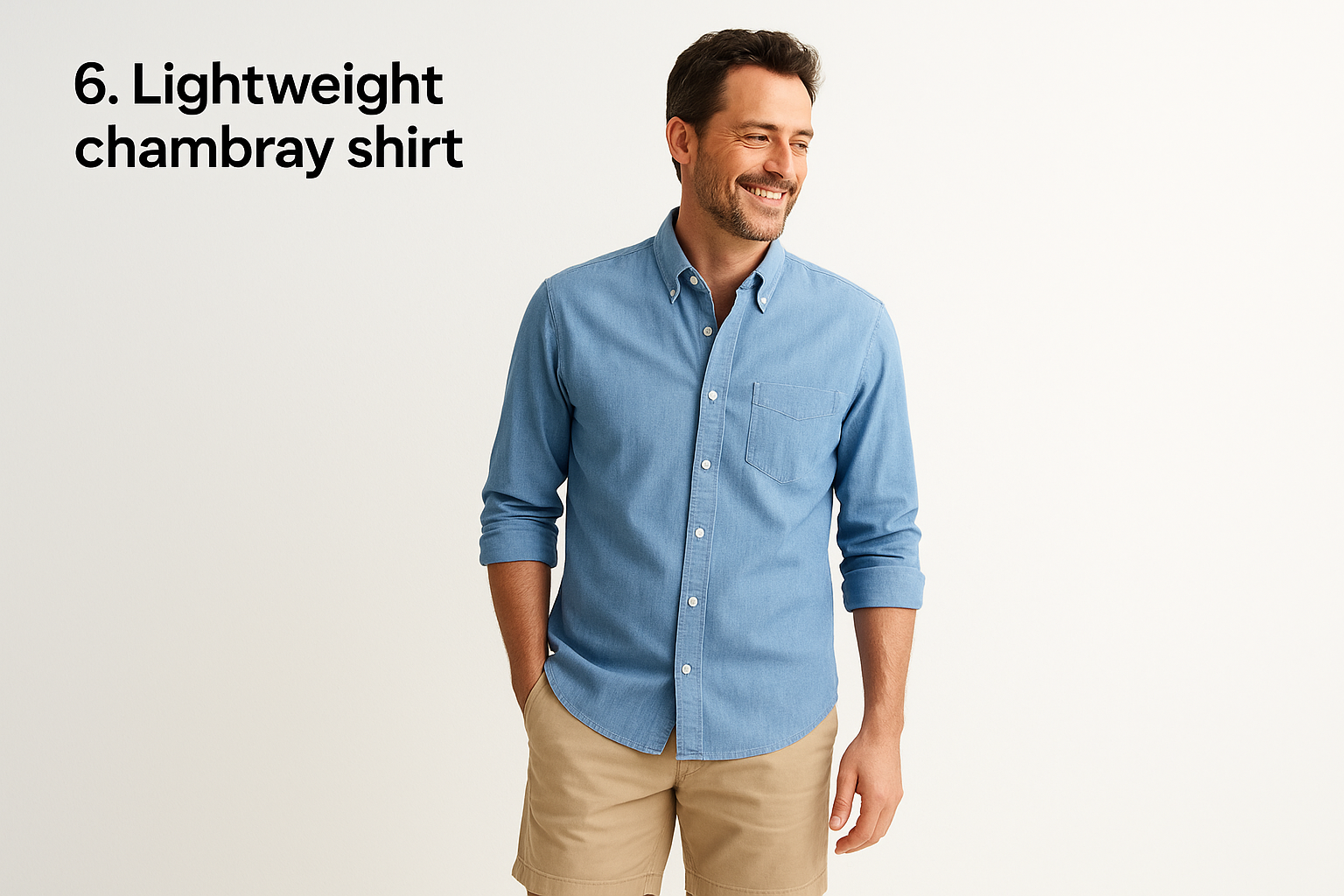
Chambray gets mistaken for denim at a glance, but the two share almost nothing beyond color. Where denim uses a heavy twill weave, chambray is a plain-weave cotton shirt fabric, lighter and softer from the first wear. That construction makes it one of the more underrated lightweight summer shirts you can own, since it reads as slightly rugged without the weight or heat retention denim carries.
Fabric and feel
Expect a soft, matte cotton with a faint two-tone effect from the weave, usually somewhere between 4 and 5 ounces per yard. Good chambray softens fast, so a shirt that feels a bit stiff in the store will relax into something closer to a broken-in tee within a few washes. Airflow through the weave keeps it from trapping heat the way denim or twill would, and the fabric hides sweat better than a solid white oxford.
Chambray gives you denim's look with none of denim's heat, which is the entire point of wearing it in July.
Who it's for
Guys who want a shirt that pairs with shorts or chinos without looking dressed up should reach for chambray. It suits weekend errands, casual Fridays, and anyone who wants a workwear-adjacent look that still breathes through August heat.
Price range
Chambray shirts typically run $45 to $95. Mass-market versions dip lower but often use a cotton-poly blend that undercuts the breathability that makes chambray worth choosing in the first place.
Putting together your summer rotation
You don't need six new shirts to beat the heat, you need two or three that actually match how you spend your summer. Start with a breathable base layer you can wear daily, add a linen or camp collar piece for dinners and travel, and keep a performance polo or oxford on hand for anything office-adjacent. Skip the shirts that only look good in a product photo. The real test is week three, when a cheap tee has already gone see-through and yours hasn't.
Every pick on this list earns its spot through fabric and construction, not branding, which is the whole point of building a minimalist wardrobe that works past one season. If you're starting from scratch, build around a foundation piece first. Shop SÖMNAD's Coastline linen-blend shirt and give your summer rotation a piece that won't quit by August.