


You've probably picked up two tees that look almost identical on the hanger, only to have one feel like a paper napkin and the other feel like it could survive a decade of laundry. That difference comes down to fabric weight. What is a heavyweight t shirt? It's a shirt built from denser cotton, usually measured in GSM (grams per square meter) or ounces, that gives you more structure, less see-through fabric, and a fit that holds its shape wash after wash.
The short answer: heavyweight tees typically run 200 GSM and up, often reaching 300 GSM in the best Supima cotton builds, while lightweight tees sit closer to 120 to 180 GSM and feel thinner, breezier, and less durable over time. Neither is objectively better, it depends on how you plan to wear the shirt and what you expect from it after fifty washes.
In this article, we'll break down exactly what separates a heavyweight vs lightweight t shirt, walk through GSM numbers and what they mean for fit and drape, and lay out the real heavyweight t shirt pros and cons so you can decide which fabric weight actually fits your wardrobe, your climate, and how long you want your basics to last.
Why fabric weight matters more than you think
Most people shop by touch and hope, which is why fabric weight gets ignored until a shirt fails you. The number to look for is GSM, grams per square meter, and it's the closest thing the industry has to an objective spec sheet for a t-shirt. Some brands quote ounces per square yard instead, but the math converts cleanly: 1 oz/yd² is roughly 34 GSM. Once you know this number, you can compare two shirts from completely different brands and know, before you even touch either one, which will hold its shape longer.
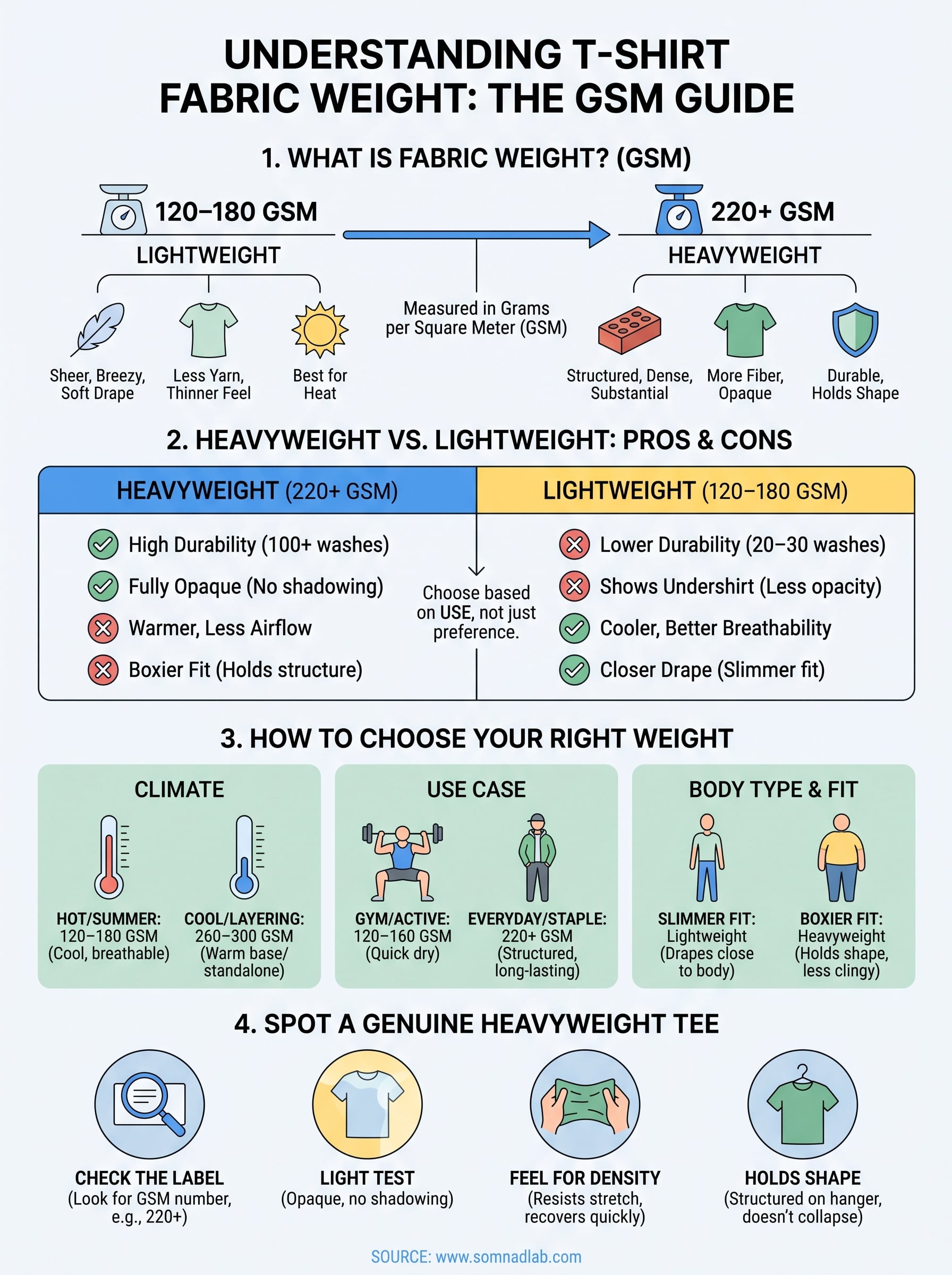
Lightweight fabric sits at the other end of that scale, and it's worth understanding what you're actually getting when a tag says "lightweight." A shirt in the 120 to 180 GSM range uses less yarn per square inch, which means less material cost, faster production, and a shirt that drapes close to the body instead of holding structure. That's not automatically bad. Lightweight tees breathe better in heat and layer easily under jackets. But the tradeoff is real: thinner fabric shows more skin through the weave, stretches out faster at the collar and hem, and pills sooner because there's less fiber mass to resist friction.
| Category | GSM Range | Oz Equivalent | Typical Feel |
|---|---|---|---|
| Ultra-lightweight | 100–140 | 3–4 oz | Sheer, breezy, minimal structure |
| Lightweight | 140–180 | 4–5.3 oz | Soft drape, casual layering |
| Midweight | 180–220 | 5.3–6.5 oz | Balanced, everyday standard |
| Heavyweight | 220–280 | 6.5–8.2 oz | Structured, dense, substantial |
| Ultra-heavyweight | 280+ | 8.2 oz+ | Boxy, workwear-grade, near-indestructible |
Once you see the numbers laid out this way, the appeal of a heavier build becomes obvious. Denser fabric resists pilling because there's more fiber packed into every square inch, so friction has less exposed thread to grab onto. It also holds a garment-dyed color longer, since thicker yarn absorbs and retains dye more evenly through repeated wash cycles.
A shirt's GSM tells you more about how it will look after fifty washes than any marketing description ever will.
Rather than take a brand's word for it, check the tag or product page for the actual GSM figure. If a listing only says "premium cotton" without a number, that's usually a sign the fabric wouldn't hold up well under scrutiny. SÖMNAD lists its 300 GSM Supima cotton relaxed tee specs plainly for exactly this reason: the number does the convincing, not the copy. Weight also affects opacity in ways that matter for everyday wear. A 300 GSM tee stays fully opaque against a bright shirt underneath or direct sunlight, while a 150 GSM tee will show shadowing at the chest and shoulders almost immediately. That single detail decides whether a shirt looks intentional or looks cheap in a photo.
Heavyweight vs lightweight t-shirts: pros, cons, and uses
Once you understand GSM, the real question becomes practical: which weight actually serves you better day to day? The honest answer is that both have a place, but they solve different problems. Heavyweight cotton earns its keep in shirts you want to last years, wear as a standalone piece, or rely on for structure without needing an undershirt. Lightweight fabric earns its keep in hot climates, gym rotations, and layering pieces you don't expect to survive five years of washing.
Breaking down the actual heavyweight t shirt pros and cons makes the tradeoff concrete instead of abstract:
| Factor | Heavyweight (220+ GSM) | Lightweight (120–180 GSM) |
|---|---|---|
| Durability | Holds shape 100+ washes | Wears thin in 20–30 washes |
| Opacity | Fully opaque, no shadowing | Shows undershirt lines |
| Breathability | Warmer, less airflow | Cooler, better for heat |
| Structure | Boxy, holds collar shape | Drapes close to body |
| Layering | Bulkier under jackets | Slides under layers easily |
| Cost per wear | Lower over time | Higher over time despite lower price |
The lightest shirt in your drawer usually costs you more per wear, not less, once you count how fast you replace it.
Situations decide the winner more than preference does. If you live somewhere with real summers, a 300 GSM tee will feel like overkill by July, and a 150 GSM shirt makes more sense for daily comfort. If you're building a small, durable rotation of basics you wear on repeat, heavyweight cotton is the better investment because it resists the pilling and stretching that make lightweight shirts look tired within a season.
Think about how a shirt actually functions in your closet, not just how it feels off the rack. A heavyweight tee worn alone, with sleeves cuffed, reads as a finished outfit because the fabric holds its own shape. A lightweight tee under an open shirt or jacket disappears into the layer, which is exactly what you want when it's not the star of the outfit. Neither approach is wrong, but matching the shirt's weight to its job stops you from buying the wrong tee twice.
How to choose the right t-shirt weight for you
Most people default to whatever weight their favorite brand happens to sell, but the smarter approach starts with your actual life. Climate, body type, and how you plan to style the shirt all point toward a specific GSM range, and matching those factors upfront saves you from a drawer full of tees you never reach for.
Start with your climate
Anyone asking what is a lightweight t shirt good for usually lives somewhere hot, and that's the right instinct. If your summers regularly hit 85 degrees or higher, a 150 to 180 GSM shirt keeps you comfortable without excess sweat trapped against the fabric. If your climate skews cooler or you layer often, a heavyweight tee in the 260 to 300 GSM range works as both a standalone shirt and a base layer that doesn't feel flimsy under a jacket.
Match weight to how you'll wear it
Consider the actual use case before you buy:
- Everyday standalone shirt: Choose 220 GSM or higher for structure and opacity.
- Gym or workout rotation: Choose 120 to 160 GSM for breathability and quick drying.
- Layering under jackets or flannels: Choose lightweight fabric so it doesn't add bulk.
- Long-term wardrobe staple: Choose heavyweight cotton for a shirt that survives years, not seasons.
The right weight isn't the heaviest or lightest option, it's the one that matches how you'll actually wear the shirt tomorrow morning.
Factor in body type and fit
Heavier fabric holds a boxier, more structured shape, which flatters a broader range of body types because it doesn't cling to every contour. Lightweight fabric drapes closer to the body, which some people prefer for a slimmer silhouette but which also shows more than a heavier weave would. If you're unsure, a midweight tee around 200 GSM splits the difference and works reasonably well across seasons and body types, though it won't excel at either extreme the way a dedicated heavyweight or lightweight shirt does.
Ultimately, the choice comes down to being honest about your habits. If you already own five thin tees that pill and stretch within a year, that's a signal to try heavier fabric next, not a signal to keep buying the same weight and hoping for a different result.
How to spot a genuinely heavyweight t-shirt before you buy
Marketing copy loves the word "heavyweight," but plenty of shirts wear that label without earning it. Before you add anything to cart, you need a way to verify fabric weight that doesn't rely on the brand's own adjectives. A few quick checks separate a genuinely dense cotton tee from one that's just priced like one.
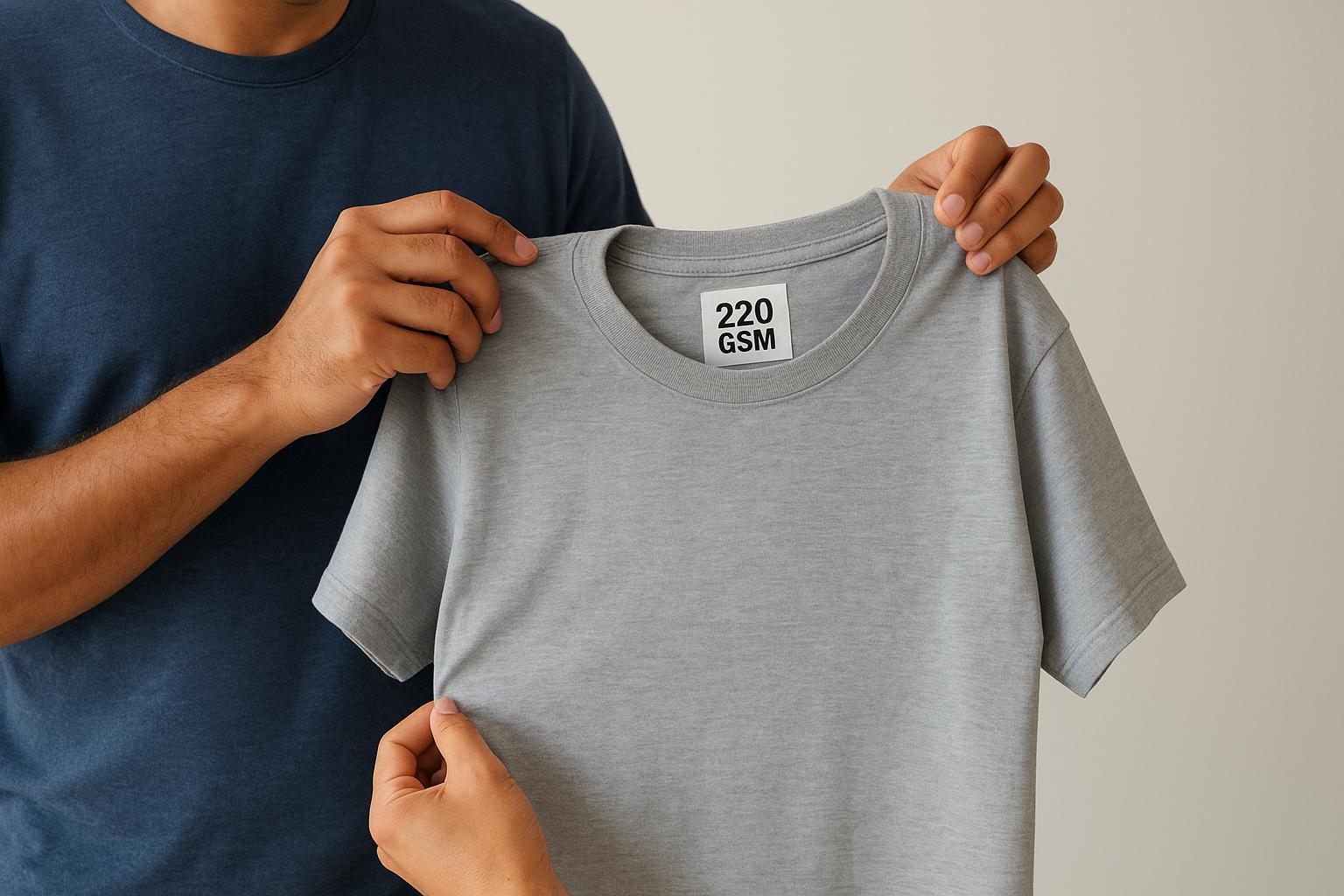
Check the label before the fabric
Reading the product page or tag is the fastest test, and it should list an actual GSM number, not just "premium" or "heavyweight cotton." A shirt worth calling heavyweight will say 220 GSM or higher somewhere in the specs, the way SÖMNAD lists its 300 GSM Supima cotton tee right on the product page. If a listing dodges the number entirely, assume the fabric wouldn't survive the comparison.
If a brand won't print the GSM, it's usually because the number wouldn't help their case.
Feel for density, not softness
Softness and weight are two different things, and confusing them costs people money constantly. Hold the shirt up to a light source: a true heavyweight tee stays opaque, while a shirt masquerading as heavy will show shadowing through the weave. Stretch the hem gently between two fingers. Dense cotton resists that stretch and springs back; thin cotton gives way immediately and doesn't fully recover.
Watch how it holds shape off the rack
Notice the collar and shoulder seams before you even try the shirt on. A genuinely heavyweight tee holds a slight structure on the hanger instead of collapsing into a limp drape. Check the checklist below before you commit to a purchase:
- Confirm the GSM figure is listed explicitly, not implied
- Hold the shirt to light and check for shadowing
- Stretch the hem and watch how fast it recovers
- Look at how the collar sits unworn on a hanger
- Read reviews mentioning pilling or shrinkage after multiple washes
Running through these five checks takes less than a minute and saves you from another tee that looks substantial in a photo but feels like nothing once it arrives.
Finding the right weight for your wardrobe
At this point, the answer to what is a heavyweight t shirt should feel obvious: it's a tee built from dense, high-GSM cotton that holds structure, resists pilling, and outlasts thinner fabric wash after wash. Lightweight shirts still earn their place for hot climates and layering, but if you're tired of tees that go limp and see-through after a season, the fix isn't luck, it's the GSM number printed on the tag.
Stop guessing based on how a shirt feels in the store and start checking the spec. A genuinely heavyweight tee should list its weight plainly, no vague marketing required. If you want a shirt built on that standard from the start, check out SÖMNAD's 300 GSM Supima cotton tee and see what a real heavyweight fabric feels like against everything else in your drawer.