


You pull a lyocell shirt out of your bag after a flight and it looks like you slept in it. So does lyocell wrinkle? Yes, it does, though less than linen and more than a synthetic blend. Lyocell is a wood-pulp fiber, and that natural origin means it creases under pressure, moisture, and heat the same way cotton or rayon does. Anyone who's packed lyocell for a trip or worn it through a humid afternoon has seen the creases show up fast.
The good news is that lyocell's wrinkles behave differently than most fabrics. Because the fibers are smooth and semi-absorbent, wrinkle prevention is genuinely achievable with the right washing, drying, and storage habits, and existing creases usually release with a quick steam or a low-heat iron rather than a full pressing session. You don't need special equipment, just the right routine.
Below, we break down why lyocell wrinkles at the fiber level, how it compares to cotton and linen, and the specific care techniques that keep it smooth from hanger to wear. If you're building a wardrobe of low-maintenance basics, like the tees made from extra-long staple Supima cotton we produce at SÖMNAD, understanding how a fabric handles wrinkles matters just as much as how it feels against your skin.
Why lyocell wrinkles in the first place
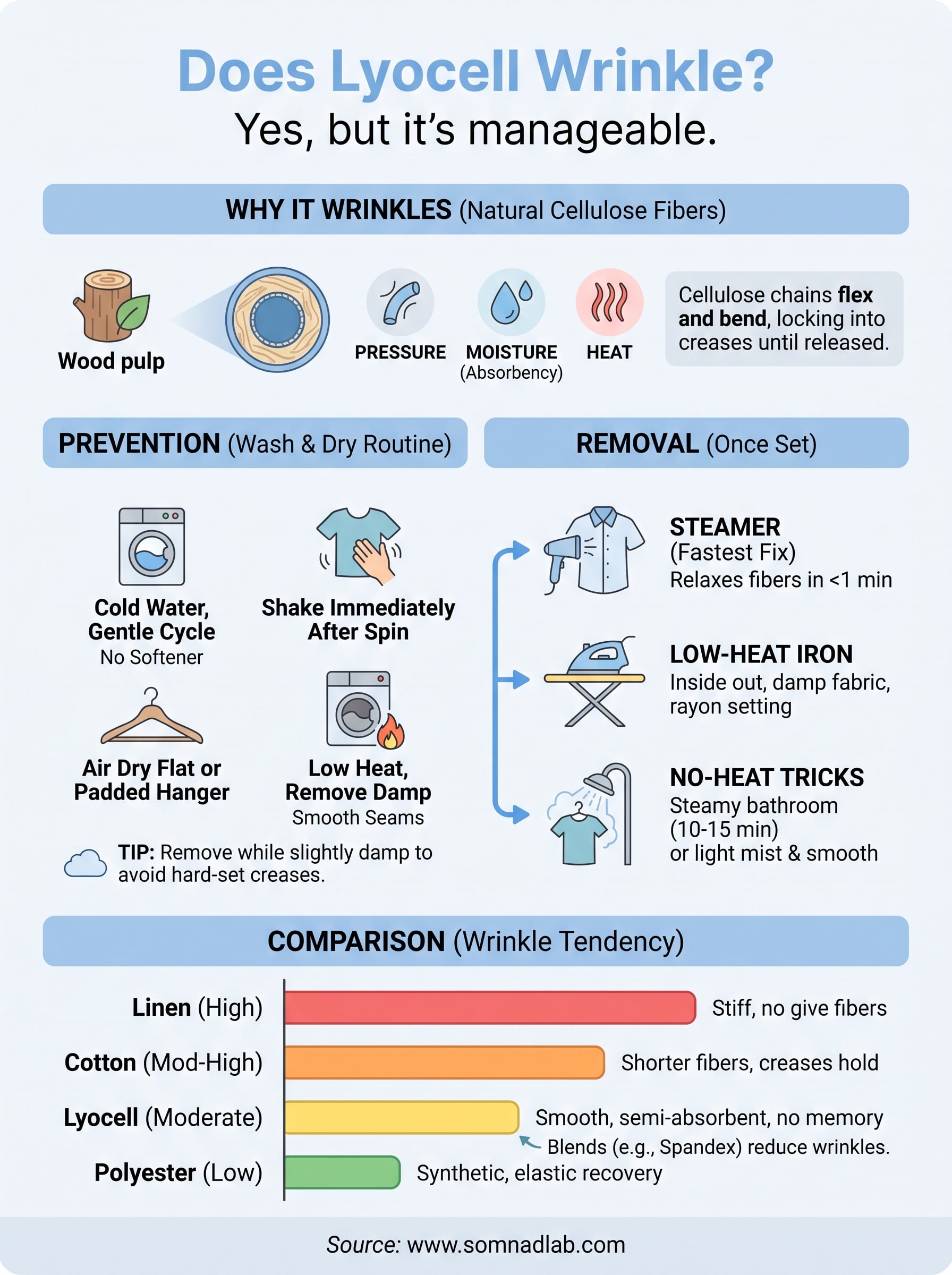
Lyocell wrinkles because of what it's made from, not because of a manufacturing flaw. The fiber comes from wood pulp, usually eucalyptus, that's dissolved and reformed into long cellulose filaments through a closed-loop solvent process, which is what a lyocell t-shirt is made of. That cellulose structure is the same basic building block found in cotton and linen, and it's exactly why lyocell creases when you sit, sleep, or stuff it into a suitcase. Natural cellulose fibers flex and bend under pressure instead of springing back the way synthetic polymers do, so a crease that forms in the fabric tends to stay put until heat or moisture releases it.
The role of moisture absorption
Lyocell is highly absorbent, pulling in more moisture than cotton and almost as much as rayon. That's part of why it feels cool and breathable against skin, but it's also why humid air, sweat, or a damp towel left folded overnight can set a wrinkle fast. Water molecules slip between the cellulose chains and temporarily loosen the fiber's internal bonds. When the fabric dries again, those chains re-lock in whatever position they were bent into at the time, which is usually a fold, a crease from your knee, or the crumpled shape of a packed shirt.
Lyocell doesn't wrinkle because it's poorly made; it wrinkles because it's genuinely a plant fiber, and plant fibers crease.
How it differs from synthetic and blended fabrics
Polyester and other synthetics resist wrinkling because their fibers are extruded plastic filaments with a rigid molecular structure that snaps back into shape. Lyocell has no such memory. That's also why a lyocell-spandex blend or a lyocell and cotton mix wrinkles less than pure lyocell: adding even a small percentage of an elastic or synthetic fiber gives the fabric some spring-back that pure cellulose lacks.
| Fiber | Wrinkle tendency | Why |
|---|---|---|
| Linen | High | Stiff, long cellulose fibers with almost no elasticity |
| Lyocell | Moderate | Smooth cellulose fibers, semi-absorbent, no fiber memory |
| Cotton | Moderate to high | Shorter cellulose fibers, absorbent, creases hold |
| Polyester | Low | Synthetic filament with elastic recovery |
Understanding this fiber-level behavior is the key to managing lyocell well. Since the wrinkling comes from moisture and pressure acting on cellulose, the fix isn't avoiding the fabric, it's controlling how you wash, dry, and store it, which is exactly what the next section covers.
How to wash and dry lyocell to avoid wrinkles
Most lyocell wrinkles form in the washer and dryer, not on your body. Getting the wash cycle and drying method right prevents most creases before they ever set, which matters more than any post-wash fix.
Washing settings that matter
Start with cold or lukewarm water on a gentle or delicate cycle. Heat and agitation are what twist cellulose fibers into stubborn folds, so a gentle cycle keeps the fabric moving without crushing it against other items. Skip the fabric softener, since it coats the fibers and can actually make creases cling harder. Wash lyocell with similar lightweight pieces, not with heavy jeans or towels that add friction and pressure, and follow the same garment care guide you'd use for any fine knit.
Cold water and a gentle cycle do more to prevent lyocell wrinkles than any iron ever will.
Drying without setting creases
Remove lyocell from the washer right away and shake each piece out before it dries into a wrinkled ball. Air drying flat or on a padded hanger is the safest route, but a low-heat dryer setting works too if you pull items out while still slightly damp.
- Shake out garments immediately after the spin cycle
- Air dry flat or hang on padded hangers, not wire ones
- If using a dryer, choose low heat and remove promptly
- Smooth seams and hems by hand while damp
Timing is everything here. Once lyocell dries completely with a crease locked into place, you're back to needing steam or an iron, so pulling it early saves you that extra step.
How to remove wrinkles once they set in
Sometimes a lyocell shirt dries with the crease already locked in, and no amount of hand-smoothing brings it back. At that point, steam removal is your fastest fix, since it re-introduces the moisture that loosens the cellulose bonds without soaking the whole garment. A handheld steamer or the steam setting on your iron, held an inch or two above the fabric, relaxes most creases in under a minute.
A few seconds of steam does what an iron takes five minutes to accomplish, with less risk of scorching the fabric.
Using an iron safely
If you don't own a steamer, an iron works fine as long as you respect lyocell's low heat tolerance. Turn the dial to the setting made for rayon or silk, never cotton or linen, and iron the garment inside out while it's still slightly damp. Pressing dry lyocell on high heat can scorch the fibers or leave a shine on dark colors.
Quick tricks without a steamer or iron
Not every wrinkle needs equipment. Try these low-effort fixes first:
- Hang the garment in a steamy bathroom for 10 to 15 minutes while you shower
- Mist lightly with water from a spray bottle and smooth by hand
- Roll the item in a slightly damp towel for a few minutes, then hang to dry
These methods work because they reintroduce just enough moisture to loosen the fiber's bonds, letting gravity and a smooth surface do the rest of the work.
How lyocell compares to other wrinkle-prone fabrics
Comparing lyocell to other natural fibers puts its wrinkle behavior in context. Anyone shopping for low-maintenance fabric wants to know where a material lands before buying, and lyocell sits in a useful middle ground. It creases more than polyester or nylon but noticeably less than the fibers people usually reach for when they want a natural feel.
Lyocell vs. cotton and linen
Linen wrinkles the fastest of the three because its fibers are stiff and long with almost no give, so a crease from sitting shows up within minutes, which is why many summer pieces use a linen blend t-shirt construction instead. Cotton falls in the middle, holding creases well but softening slightly with each wash as the fibers relax, one of several differences worth knowing when you compare lyocell and cotton tees. Lyocell's smoother, more uniform fiber surface means folds don't dig in as deep, so a wrinkle-resistant fabric it isn't, but it recovers faster than either alternative once you apply steam or heat.
If you want the coolness of linen without the ironing routine, lyocell is the closer match.
Lyocell vs. wrinkle-resistant blends
Blended fabrics change the equation entirely. Mixing lyocell with elastane, polyester, or even a small amount of cotton reduces creasing because the added fiber springs back into shape.
- Lyocell-spandex blends: stretch recovery cuts visible wrinkling significantly
- Lyocell-polyester blends: near wrinkle-free, though less breathable
- 100% lyocell: softest hand feel, but needs the most care
Stretch percentage matters more than the blend ratio for how crisp a piece stays through the day.
Keeping your lyocell looking crisp
So does lyocell wrinkle? Yes, but now you know it's manageable rather than inevitable. The fiber-level cause is simple: cellulose bends under moisture and pressure, and it stays bent until you reintroduce heat or steam. Wash cold on a gentle cycle, pull garments from the dryer while still damp, and hang them properly, and you'll skip most creases before they form. When one does set, a quick steam session or a low-heat iron fixes it in under a minute, no dry cleaner required.
Treat lyocell the way you'd treat any quality natural fiber: with a little attention, not constant fuss. That mindset is exactly what we build into every piece at SÖMNAD, where fabric choice and construction matter more than logos or trends. If you want basics that hold their shape wash after wash without demanding a whole care routine, see which premium lyocell tee brands are worth buying and the difference quality material makes.