


Most people know cotton. Plenty know linen. But mention cupro, and you'll get blank stares, even from people who care deeply about what they wear. A cupro blend tee sits at an interesting intersection: it borrows the silky drape and breathability of cupro (a regenerated cellulose fiber made from cotton linter) and combines it with other fibers to balance durability, cost, and comfort. The result is a shirt that feels noticeably different the moment you put it on.
At SÖMNAD, we build everything around fabric quality, it's the foundation of our entire approach to premium essentials. That obsession means we spend a lot of time studying materials, testing hand feel, evaluating how fibers hold up wash after wash. So when customers ask about cupro blends, we take the question seriously. Understanding what a fabric actually does matters more than any marketing claim printed on a hangtag. And cupro blends deserve a closer, honest look at both their strengths and limitations.
This guide breaks down exactly what a cupro blend tee is, how it performs compared to other premium fabrics, where it falls short, and what to look for if you decide to buy one. No hype, just the details you need to make a smart decision about whether this fabric belongs in your rotation.
Why cupro blend tees matter in your wardrobe
Most premium tee options cluster around two extremes: heavy cotton that wears well but feels stiff, or thin jersey that drapes nicely but pills and fades fast. A cupro blend tee occupies different territory. It offers a fabric weight and hand feel that sit closer to silk or fine viscose, while still functioning as an everyday shirt you can wear in multiple settings. The fact that most people have never heard of cupro means the market has not fully caught up with it, which is actually an opportunity for you to build a more refined wardrobe without chasing hype or paying brand premiums.
The gap most basic tees leave
Cotton is the default fabric for a reason: it breathes, it washes well, and most people find it comfortable. But standard cotton tees often lack the fluid drape that makes a shirt look polished rather than just clean. When you put on a shirt that has cupro in its construction, the drop of the fabric across your shoulders and chest looks more intentional and refined, even if the cut itself is completely simple. That single difference changes how a tee fits into your wardrobe, moving it from something you throw on to something you actively choose.
The fabric closest to your skin shapes how you carry yourself. A shirt that moves well makes everything else easier.
What cupro adds that cotton alone cannot
Cupro's main contribution is moisture management combined with a smooth surface texture. It pulls heat and humidity away from your skin quickly, which matters in warmer months or during the more active parts of your day. When blended with cotton or another stabilizing fiber, you get durability added to that performance, so the shirt does not stretch out or lose its shape after repeated washing. That combination is genuinely difficult to find in a single fabric type. Most people cycle through tees every season because their shirts fade, pill, or bag out at the collar, and cupro blends address two of those three problems directly. Understanding what cupro actually contributes helps you shop with clarity instead of guesswork.
How cupro blend fabric is made and what it is
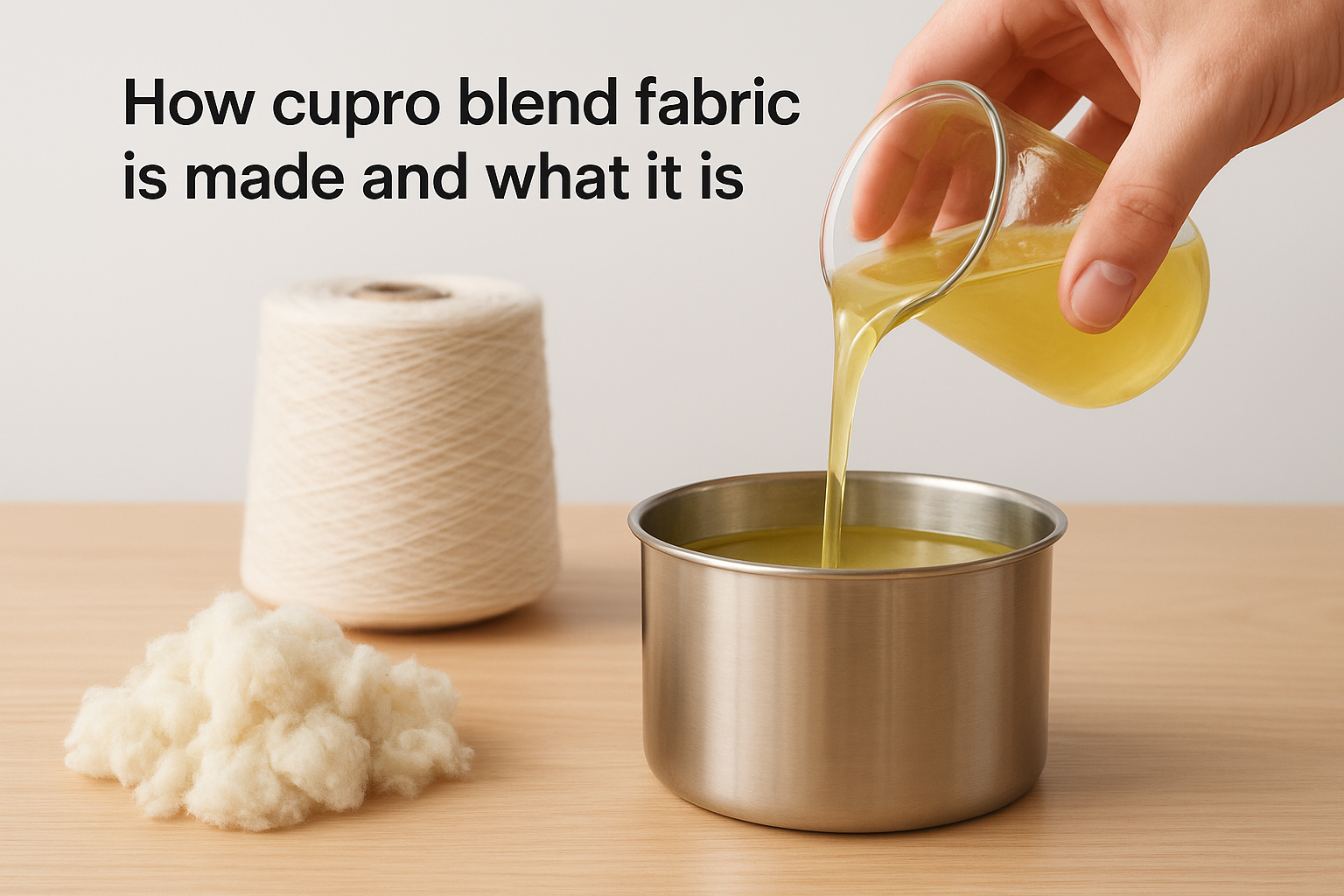
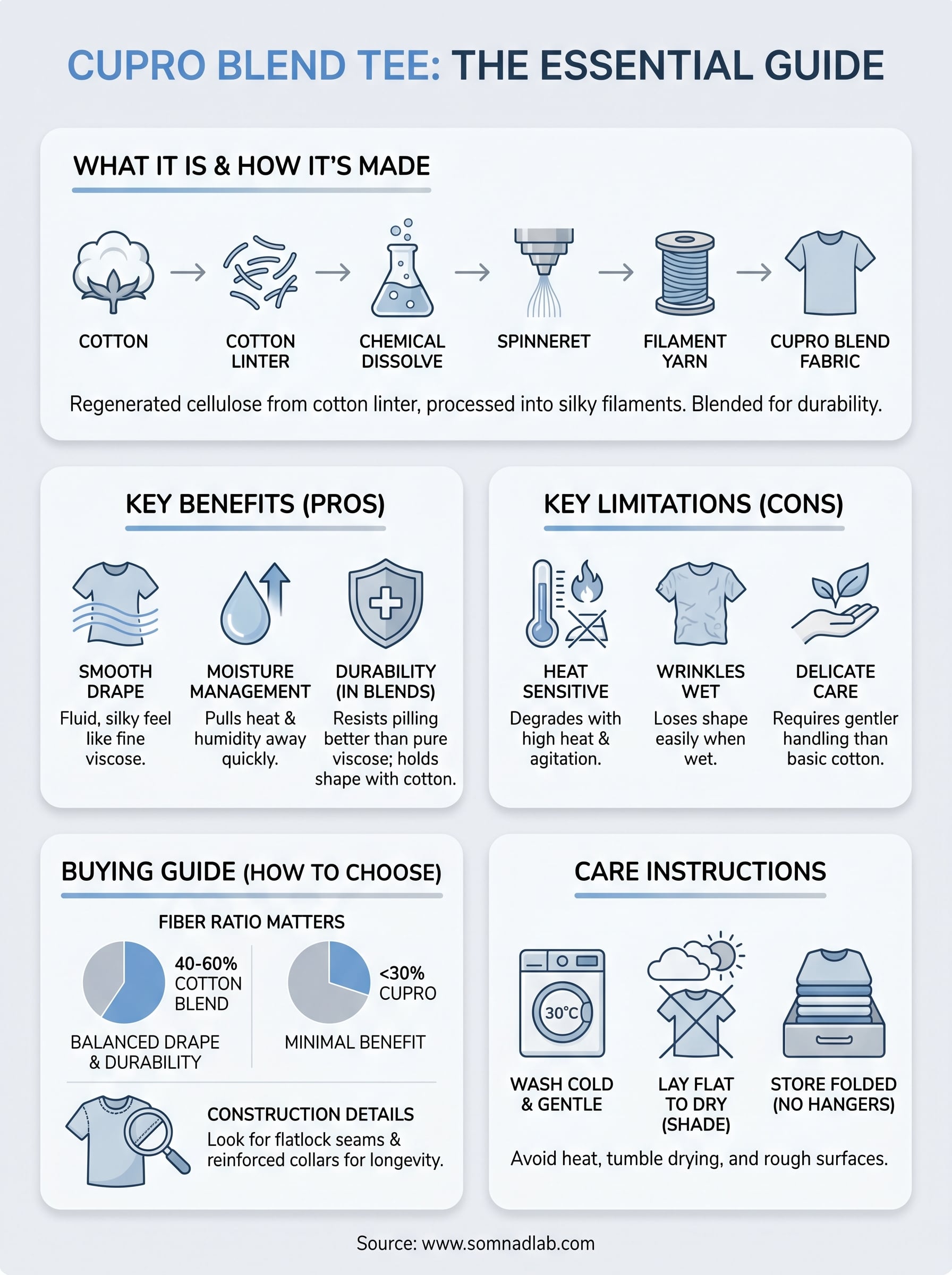
Cupro starts as cotton linter, the short fibers left over after cotton is ginned. Manufacturers dissolve those fibers using a copper-ammonia solution, then force the resulting liquid through fine spinnerets to form long, continuous filament fibers. Those fibers are washed, dried, and spun into yarn. The process resembles viscose production, but the raw material and chemistry differ, which gives cupro a distinctively silky surface and stronger moisture response than standard viscose.
Why manufacturers blend cupro with other fibers
Pure cupro is expensive to produce and too delicate for everyday wear on its own. Blending it with cotton, modal, or polyester adds the structural support the fabric needs. Cotton improves wash durability and shape retention. Modal brings softness and stretch recovery. Polyester lowers production costs and increases abrasion resistance.
The secondary fiber in a blend does most of the structural work. Cupro provides feel; the blend partner provides longevity.
Your cupro blend tee performs based on the specific ratio used. A 50/50 cupro-cotton construction behaves very differently from a 30/70 cupro-polyester one. Knowing the ratio before you buy tells you whether the shirt prioritizes feel or durability, and that distinction matters when you are building a wardrobe around pieces you plan to keep long-term.
Pros and cons of a cupro blend tee
Every fabric involves trade-offs, and a cupro blend tee is no different. Before you invest in one, it helps to see the full picture clearly so you can decide if the benefits actually match your needs and habits.
What cupro blend tees do well
Cupro blends offer a smooth, lightweight drape that most cotton tees cannot match. The fabric breathes well, manages moisture effectively, and resists the kind of clinging that makes synthetic shirts uncomfortable in warmer temperatures. When blended with cotton or modal, you also get a surface that resists pilling better than pure viscose, which extends the shirt's usable life significantly.
A fabric that stays smooth after repeated wear is worth more than one that feels good only on the first wash.
- Drape and texture: noticeably silkier surface than standard cotton
- Moisture management: pulls humidity away from skin efficiently
- Pilling resistance: blended construction reduces surface degradation
Where cupro blends fall short
The fabric is more sensitive to heat and agitation than cotton, which means washing on a hot cycle or tumble drying will degrade it faster. Even in a blend, cupro retains its tendency to wrinkle and lose shape when wet, which does not disappear entirely. You need to treat these shirts with more care than a standard cotton tee, and that daily reality matters if you prefer low-maintenance clothing.
How to choose a cupro blend tee that lasts
Not every cupro blend tee is built equally, and the fiber ratio determines most of what you experience day-to-day. A shirt with a higher cupro percentage will feel smoother and drape better, but it will also demand more careful handling. Before you buy, look at the fabric breakdown on the product page or label and decide whether the ratio matches your lifestyle.
Check the fiber ratio first
A cupro-cotton blend sitting around 40-60% cotton gives you the best balance of drape and durability for everyday wear. If the blend leans heavily toward polyester, you gain abrasion resistance but lose the fluid feel that makes cupro worth seeking out in the first place. Ratios below 30% cupro often produce a shirt that performs more like its dominant fiber, which means you are paying a premium for minimal benefit.
The ratio tells you what the shirt actually is. Read it before you read anything else on the label.
Look at the construction details
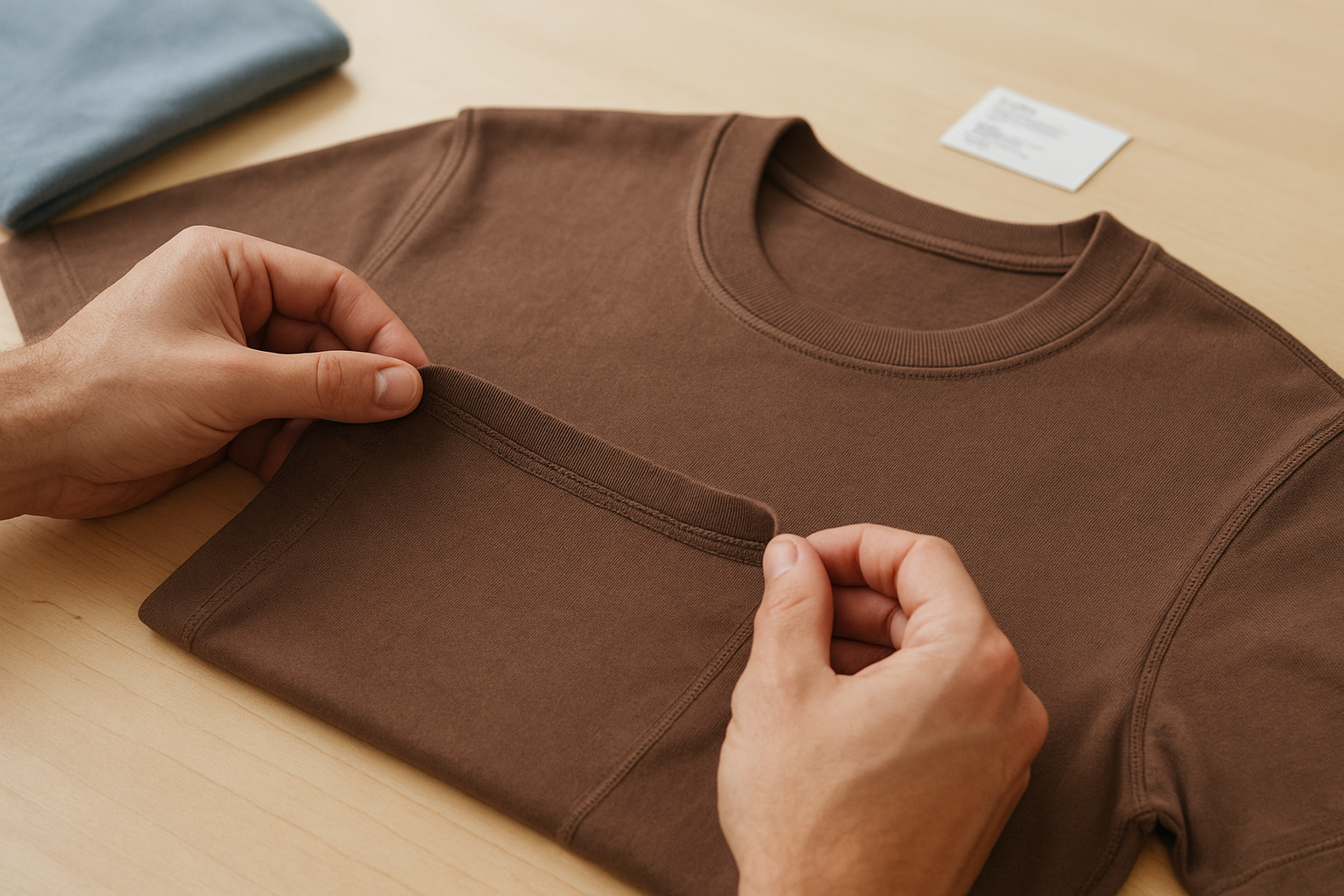
Seam finishing and collar construction reveal how carefully a manufacturer thought through the long-term performance of a shirt. Flatlock seams reduce irritation and hold up better through repeated washing. A reinforced collar ribbing prevents the stretching that ruins the neckline after a dozen washes. These details add up to a shirt that stays presentable well past its first season.
How to care for a cupro blend tee
Cupro reacts poorly to heat and rough handling, so your washing routine directly determines how long the shirt holds its shape and surface texture. Treat your cupro blend tee the same way you would treat a silk or fine knit garment. Cold water and minimal agitation protect the fiber structure better than any specialized detergent or treatment product.
Washing and drying
Use a mild, pH-neutral detergent and keep the water temperature at or below 30°C (86°F). Press water out gently rather than wringing, then lay the shirt flat to dry away from direct sunlight. Tumble drying on any heat setting accelerates fiber breakdown faster than almost any other habit.
Flat drying in the shade is the single most effective thing you can do to extend a cupro shirt's life.
- Cycle: gentle or delicate only
- Water temperature: 30°C or below
- Drying method: flat, away from heat and direct sun
Storing the shirt properly
Store your cupro pieces folded rather than hung, since the fabric's weight pulls at the shoulder seams over time when left on a hanger. This matters more with cupro blends than with heavier cotton shirts because the lighter, smoother fabric has less structural resistance to sustained tension.
Avoid packing the shirt tightly against rough textures in a drawer or shelf. Friction against abrasive fabric surfaces wears down the smooth finish that makes a cupro blend worth owning in the first place.
Quick recap and next step
A cupro blend tee combines the silky drape and moisture management of cupro fiber with the structural durability of cotton, modal, or polyester. The blend ratio determines everything: how the shirt feels, how it performs across seasons, and how much care it demands from you. Higher cupro percentages deliver better surface texture and drape, while higher cotton content delivers easier maintenance and longer shape retention.
Caring for the shirt correctly, meaning cold water, gentle cycles, and flat drying, extends its lifespan significantly. Seam quality and collar construction tell you more about long-term performance than any marketing description on the product page. Read the label, check the fiber ratio, and treat the fabric with the same attention you would give a fine knit or a silk garment.
If you want to see what premium fabric quality actually looks and feels like in a well-constructed everyday essential, explore SÖMNAD's premium everyday tees and judge the difference for yourself.