


You've probably stood in front of a mirror wearing a "regular fit" tee that somehow feels tight across the chest and baggy at the waist, wondering why nothing seems to fit right. That confusion usually comes down to not knowing what relaxed fit actually means versus the half dozen other fit labels brands slap on tags.
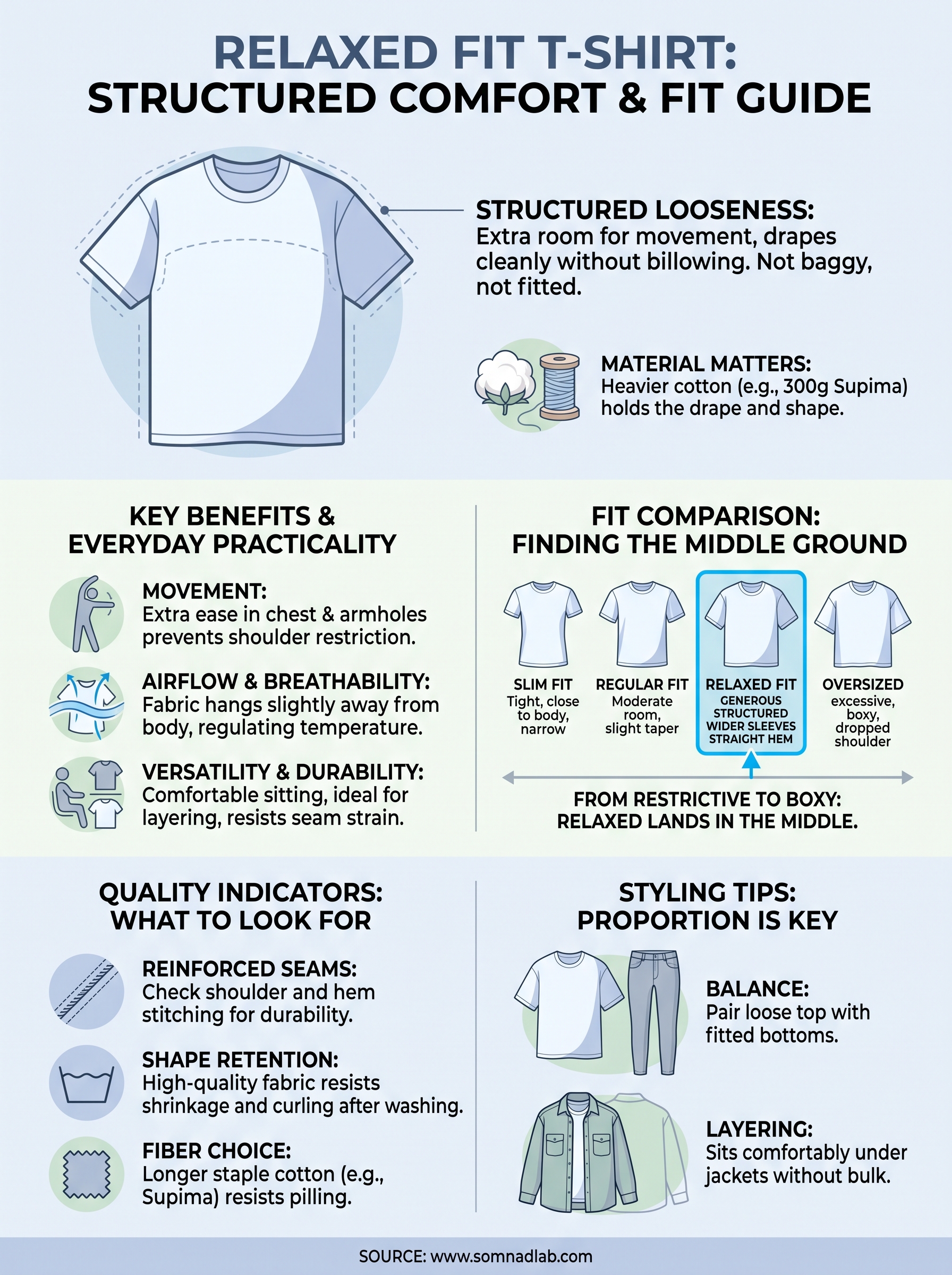
A relaxed fit t-shirt is cut with extra room through the chest, waist, and sleeves, giving your body space to move without the shirt clinging to it. It's not sloppy or shapeless like an oversized tee, and it's not fitted like a slim cut. Think of it as the middle ground: structured looseness that drapes cleanly instead of billowing out. The fabric matters here too, since a heavier cotton like 300g Supima holds that drape without losing its shape after washes.
In this article, we'll break down the exact measurements and construction details that define relaxed fit, then compare it side by side with regular, slim, and oversized fits so you know precisely what you're buying before it shows up at your door.
Why relaxed fit t-shirts matter for everyday comfort
Why comfort starts with room to move
Movement is where fit either works for you or against you, and this is the core reason relaxed fit exists as a category. A tight armhole or a narrow chest cut restricts your shoulders every time you reach overhead, drive, or carry groceries. Relaxed fit tees add extra ease through the chest and underarm, so the fabric moves with your body instead of pulling against it. That difference sounds small on paper but shows up constantly, whether you're bending down to tie your shoes or stretching during a long workday at a desk.
A shirt that restricts your shoulders isn't doing its job, no matter how good the fabric feels on the hanger.
The everyday practicality of relaxed fit
Breathability also improves when a shirt isn't plastered against your skin. Airflow between the fabric and your body helps regulate temperature, which matters more than people realize in a heavier cotton like 300g Supima. A slim cut in that same weight would trap heat and feel stiff by midday. Relaxed fit lets the fabric hang slightly away from your torso, so you get the durability of a substantial cotton without the sauna effect that comes with a tighter cut in a heavyweight fabric.
Comfort compounds over a full day of wear, and this is where relaxed fit earns its reputation as the practical choice for basics. Consider how a shirt actually gets used:
- Sitting for hours: a relaxed cut doesn't bunch or ride up at the waist the way a slim fit does.
- Layering: extra room in the chest and shoulders means a tee sits comfortably under a jacket or over a base layer without pulling.
- Repeated washing: looser weaves in relaxed cuts tend to show less strain at the seams over time, since the fabric isn't stretched tight against your frame.
- Temperature swings: the slight gap between shirt and skin helps regulate warmth in both cool mornings and warmer afternoons.
Each of these situations is ordinary, not extreme, which is exactly why the fit matters so much for people who wear a tee daily rather than occasionally.
Who benefits most from relaxed fit tees
Bodies vary, and that's the practical argument for relaxed fit over a strict slim cut. Someone with broader shoulders or a fuller build often finds that regular or slim fits pull at the seams, while a relaxed cut accommodates that shape without looking baggy. Meanwhile, someone with a leaner frame can wear relaxed fit as an intentional style choice, layering it under an open shirt or letting it drape loosely with the sleeves rolled.
Guys and women both reach for relaxed fit for the same underlying reason: all-day wearability without sacrificing a clean silhouette. It's why so many premium basics brands build their entire lineup around this cut instead of offering ten variations of slim. When a shirt is meant to be worn constantly, comfort has to win over a tight, photo-ready cut that only looks good standing still. That's the practical case for relaxed fit, and it's also why understanding what makes a t-shirt "relaxed" versus just "loose" matters before you buy one.
How to tell if a t-shirt is truly relaxed fit
Many brands print "relaxed fit" on a tag without actually cutting the shirt that way, so you need to check the construction yourself rather than trust the label. Measurements tell the real story, and a few specific spots on the shirt will confirm whether you're holding a true relaxed cut or just a regular tee with a marketing spin.
Check these measurement points
Lay the shirt flat and look at how it's built through the body, not just how it feels when you try it on. A genuine relaxed fit will show consistent extra room in these areas:
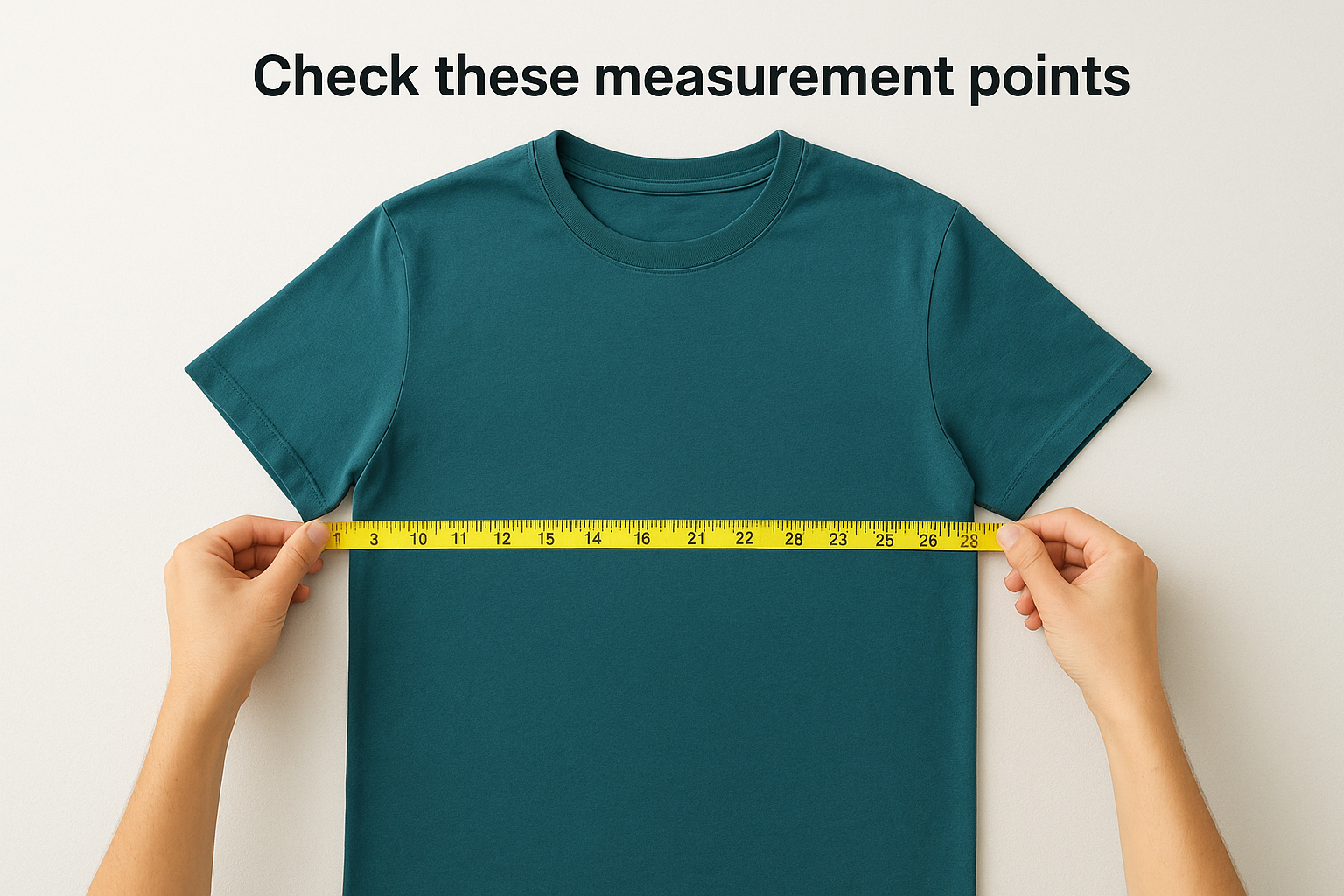
- Chest width: measure straight across from underarm to underarm; relaxed fit typically adds 2 to 4 inches of ease compared to a slim cut in the same size.
- Shoulder seams: they should sit slightly wider than your natural shoulder line, not pulled tight or drooping past your arm.
- Sleeve opening: a relaxed sleeve has enough circumference that you can pinch an inch of fabric without stretching it.
- Hem width: the shirt should taper only slightly, if at all, from chest to hem, avoiding the boxy flare of an oversized cut or the narrow taper of a slim fit.
- Armhole depth: a deeper armhole (not cut close to the body) is a hallmark of relaxed construction and one of the easiest details to spot on a hanger.
If the armhole is cut tight and high, no amount of extra chest fabric makes it a real relaxed fit.
What the drape tells you
Beyond the tape measure, watch how the shirt behaves once it's on your body. A true drape falls straight down from the shoulders with a slight curve inward at the waist, never clinging to your torso but also never billowing like a tent. Pull the front hem gently away from your stomach; a relaxed fit should give you an inch or two of slack before you feel resistance. If there's no give at all, you're looking at a regular fit mislabeled as relaxed.
The fabric weight test
Fabric weight changes how a relaxed cut reads on your frame. A lightweight cotton in a relaxed pattern can look shapeless, while a heavier fabric like 300g Supima holds the intended silhouette and drapes with structure instead of collapsing. That's the difference between a tee that looks intentional and one that just looks big.
Relaxed fit vs regular, slim, and oversized t-shirts
Comparing fits side by side makes the differences obvious in a way that trying shirts on one at a time never does. Chest ease, sleeve width, and hem shape all shift depending on the cut, and once you see the numbers lined up, you stop guessing which tag actually matches which shirt on your body. Answering what is a relaxed fit t-shirt really means understanding it in relation to the three fits it constantly gets confused with.
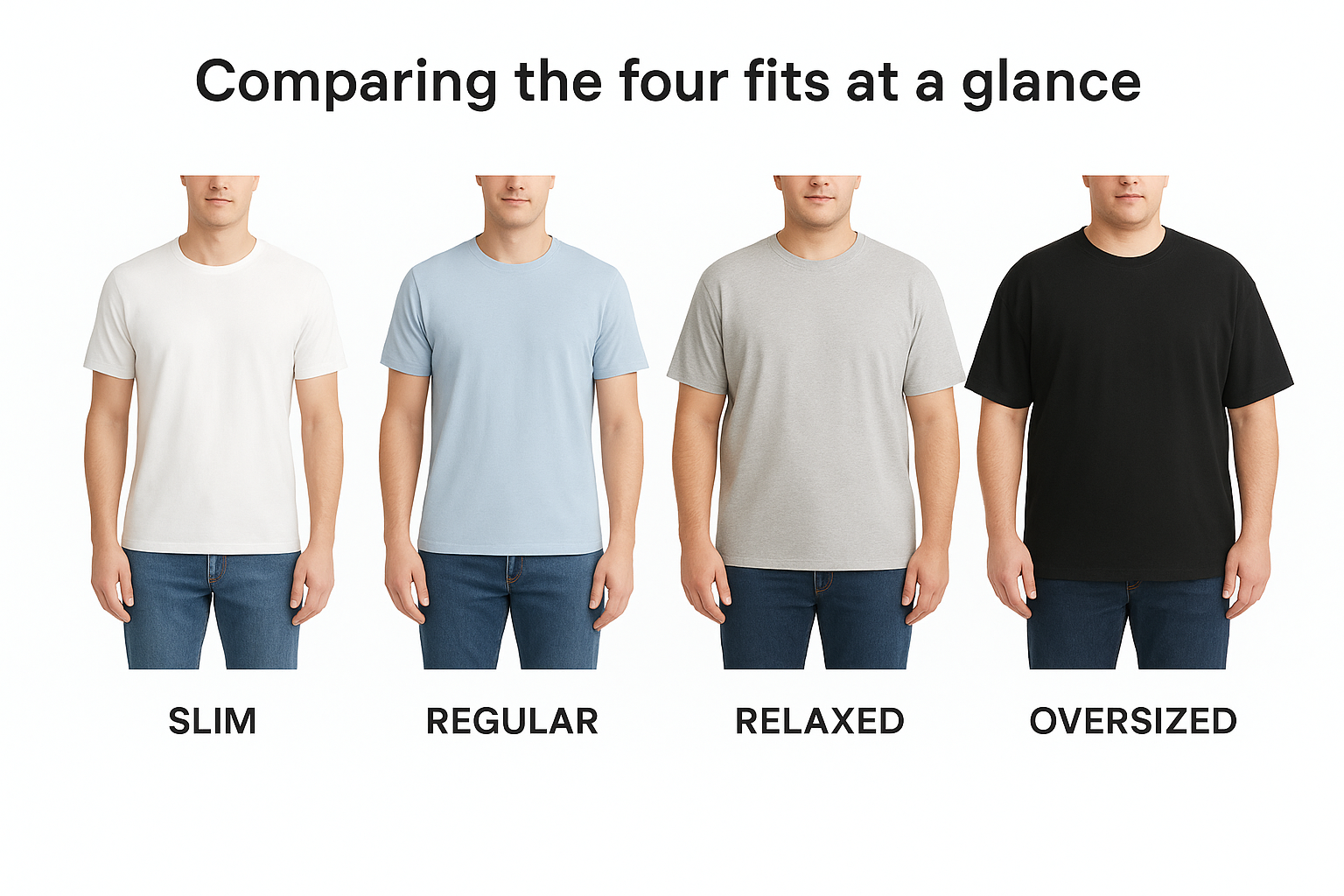
Comparing the four fits at a glance
Each fit follows a distinct pattern in how much room it adds and where that room shows up. The table below breaks down the typical differences you'll find across most premium basics brands.
| Fit Type | Chest Ease | Sleeve Fit | Hem Shape | Best For |
|---|---|---|---|---|
| Slim | Minimal, close to body | Tight around bicep | Tapers narrow | Layering under jackets, athletic builds |
| Regular | Moderate, some room | Standard, slight taper | Straight, minor taper | Everyday wear, most body types |
| Relaxed | Generous, structured | Wider, room to move | Straight, minimal taper | All-day comfort, broader builds |
| Oversized | Excessive, boxy | Wide, dropped shoulder | Wide, boxy | Streetwear looks, layering over other pieces |
Where relaxed fit sits between slim and oversized
Slim fit sits closest to your body, which works fine for a jacket layer but pulls across the chest the moment you move fast or reach overhead. Oversized goes the opposite direction, dropping the shoulder seam past your actual shoulder and adding so much fabric that the shirt loses its shape entirely. Relaxed fit lands in the middle, keeping the shoulder seam roughly in place while adding ease through the body, so it never looks like you're wearing someone else's shirt.
Slim restricts, oversized hides your shape, relaxed does neither.
Regular fit, meanwhile, is the closest cousin to relaxed but with less room in the chest and a tighter armhole. That smaller difference is exactly why so many shoppers get the two confused, and it's why checking actual measurement points matters more than trusting whatever the label says.
Styling tips for wearing a relaxed fit t-shirt
A relaxed fit tee only looks intentional when the rest of your outfit balances the extra room instead of fighting it. Proportion is the whole game here: pair a looser top with something more fitted on the bottom, and the outfit reads as put-together rather than sloppy. Skip that balance and you end up looking like you grabbed whatever was clean, which defeats the purpose of buying a well-cut shirt in the first place.
Balance the top with fitted bottoms
The easiest rule to remember is that volume up top calls for less volume down below. Slim or straight-leg denim, tapered chinos, or tailored shorts all give the relaxed tee somewhere to land visually instead of adding bulk on bulk. If you tuck the shirt, even a partial front tuck, you reveal the waistband and keep the silhouette from swallowing your frame.
Loose on top, fitted on bottom keeps a relaxed tee looking deliberate instead of accidental.
Layering without adding bulk
Layering is where relaxed fit actually shines, since the extra chest and shoulder room means the tee sits comfortably under an open shirt, a light jacket, or a cardigan without pulling at the seams. Layering ease is one thing a slim cut can't offer, because there's simply no spare fabric to work with underneath another piece. A few combinations that work reliably:
- Relaxed tee under an unbuttoned overshirt, sleeves pushed up slightly for structure
- Relaxed tee with a lightweight bomber, left open at the chest
- Relaxed tee tucked into high-rise trousers, worn under a blazer for a smarter look
Choosing the right size
Sizing up on a relaxed fit rarely helps and often hurts the silhouette you're going for. Going a size up on a shirt already cut with extra ease pushes the shoulder seams past your actual shoulders, which starts to blur into oversized territory whether that's the intent or not. Stick to your regular size in a relaxed cut, and let the pattern itself provide the room instead of chasing more space through sizing.
Matching fabric weight to the occasion
A heavier fabric like 300g Supima cotton holds its shape well enough to wear a relaxed tee on its own in warmer weather, tucked or untucked, without looking limp by afternoon. Lighter relaxed tees drape more and work better as a layering piece rather than a standalone shirt, since they lose structure faster over the course of a day.
What makes a relaxed fit t-shirt high quality
Cut alone doesn't make a relaxed fit t-shirt worth buying. Fabric quality and construction determine whether that extra room stays clean and structured or turns into a sagging mess after a few washes. Understanding what is a relaxed fit t-shirt at its best means looking past the silhouette and into the details most shoppers never check: fiber type, seam construction, and how the fabric behaves over time.
Fabric weight and fiber choice
Heavier cotton holds a relaxed silhouette in a way lighter blends simply can't. A 300g Supima cotton has enough substance to drape with structure, so the extra chest and shoulder room reads as intentional rather than shapeless. Lower-weight cotton, especially blended with polyester, tends to go limp by midday, losing the clean lines that make relaxed fit look deliberate. Supima specifically matters here because its longer fibers resist pilling and hold shape through repeated wear, unlike shorter-staple cotton that breaks down fast.
A relaxed cut is only as good as the fabric holding its shape underneath it.
Seam and stitching details
Flip the shirt inside out and check the seams before you check anything else. Reinforced shoulder seams and double-stitched hems keep the extra fabric from stretching out of place, which matters more on a relaxed cut than a slim one since there's simply more fabric moving with your body. Cheap construction shows up fastest at the underarm and side seams, where a loose fit puts the most stress during normal movement like reaching or bending.
Shape retention after washing
Washing is the real test of quality, not the fit on day one. A well-made relaxed tee should come out of the dryer looking close to how it went in, with the shoulder seams still sitting where they belong and the hem holding its shape instead of curling. Signs of a poorly constructed shirt include:
- Shrinkage that pulls the chest tight after just a few washes
- Sleeve openings that stretch out and never bounce back
- Hems that ripple or curl instead of lying flat
- Fabric that thins and becomes see-through at the shoulders
A genuinely premium construction avoids all of that, which is exactly why fabric weight and stitching quality matter as much as the cut itself when you're deciding if a relaxed tee is worth the price tag.
Finding the fit that works for you
A relaxed fit t-shirt gives you room through the chest, shoulders, and sleeves without drifting into oversized territory, and that middle ground is exactly why it works for daily wear. You now know how to check the actual measurements, spot the difference between relaxed and its regular, slim, and oversized cousins, and judge whether the fabric behind the cut can hold its shape wash after wash. Construction quality matters just as much as the pattern itself, since a great cut in a weak fabric still ends up sagging by week two.
The next step is simple: try one on, check the seams, pull the hem, and see how it drapes on your own frame. If you want a shirt built on 300g Supima cotton with the reinforced seams and clean drape this article describes, shop SÖMNAD's relaxed tee and see the difference for yourself.