


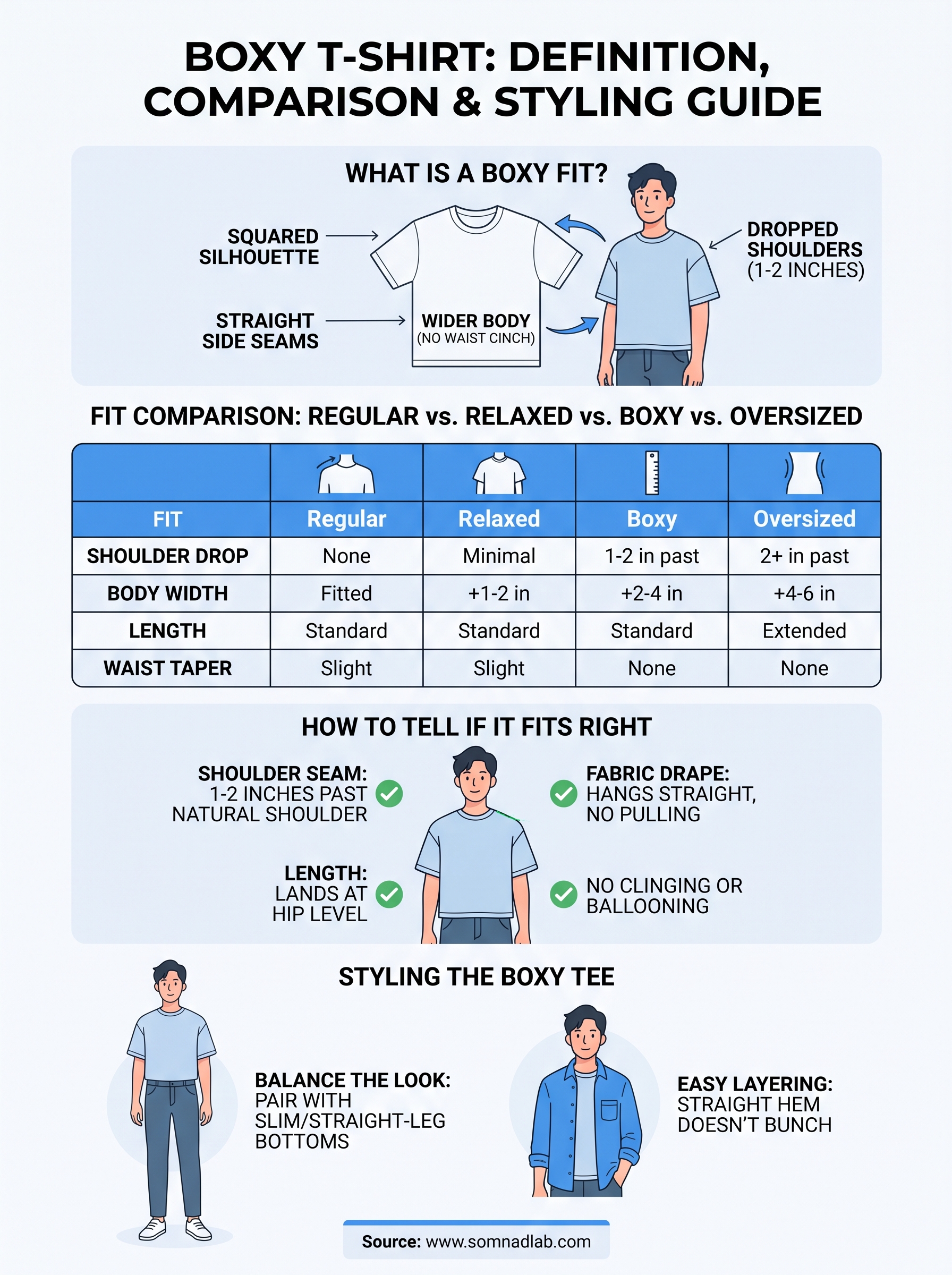
You've probably stared at a size chart wondering why one tee is labeled "boxy" and another "relaxed," even though they look nearly identical in the product photo. What is a boxy t shirt, exactly? It's a fit built on a squared-off silhouette: straight side seams, a wider body, and dropped shoulders that skip the natural taper of a regular tee. There's no cinching at the waist and no curve through the torso, just a clean rectangle of fabric that hangs the same way from chest to hem.
That structure is also what separates it from other loose fits. An oversized vs boxy t shirt comparison comes down to scale: oversized just means bigger everywhere, while boxy keeps the length in check and focuses the extra room on width and shoulder drop. Compare boxy fit vs relaxed fit tee styles and you'll notice relaxed fits still follow some body shape, just with more give.
This guide breaks down the actual measurements, construction details, and styling differences behind each fit, so you can pick the shape that matches how you actually want your everyday tee to sit and wear.
Why the boxy fit has become a wardrobe staple
Fashion cycles used to swing decisively between fitted and loose, but the boxy tee occupies a middle ground that's proven surprisingly durable. Unlike trend-driven silhouettes that fade in a season, this shape offers structural predictability: the same square cut looks right whether you're 5'6" or 6'2", because it doesn't rely on hugging specific body proportions to look intentional.
From streetwear roots to daily rotation
Boxy cuts trace back to workwear and skate culture, where roomier shoulders and straight hems let fabric move without binding. That heritage still shows up today. Brands making premium basics that actually last picked up the shape because it photographs well on a hanger and on a body, and because it pairs a clean look with genuine comfort. What started as a niche streetwear detail is now a default option on nearly every basics site you'll find.
The construction advantage
A boxy tee's flat, squared pattern actually uses fabric more efficiently than a tapered cut, which matters when you're working with heavier material. Heavier cotton, like the 300g Supima weight found in structured tees, holds its shape better in a boxy cut than a fitted one, and it helps to know how 300gsm compares to lighter 210gsm jersey before judging the fabric drape over time.
A boxy tee stays boxy wash after wash because nothing in the construction is fighting your body shape to begin with.
Why it suits how people actually dress now
Layering habits changed the calculus too. A boxy silhouette slides over a base layer or under a jacket without bunching at the waist, which a fitted tee can't do without looking sloppy. It also solves a practical problem: consistent sizing across brands and seasons. Instead of chasing an exact fit every time you shop, you buy your usual size and let the cut do the work. That reliability is a big part of why boxy has moved from a style statement to a wardrobe default, especially for anyone building a small rotation of essentials rather than a closet full of one-off pieces.
Boxy vs oversized vs relaxed fit: what actually changes
Menus of "loose fit" tees can blur together until you look at what each cut actually changes: shoulder seam placement, hem width, and how much fabric hangs past your natural body line. Regular fit tapers slightly at the waist and sits close to the shoulder seam. Relaxed fit adds an inch or two of room through the body but keeps the shoulder seam roughly where your shoulder ends. Boxy fit drops that seam past your shoulder point and keeps the same width from chest to hem, no taper at all. Oversized fit takes the boxy blueprint and scales it up further, adding length and width beyond what boxy offers.
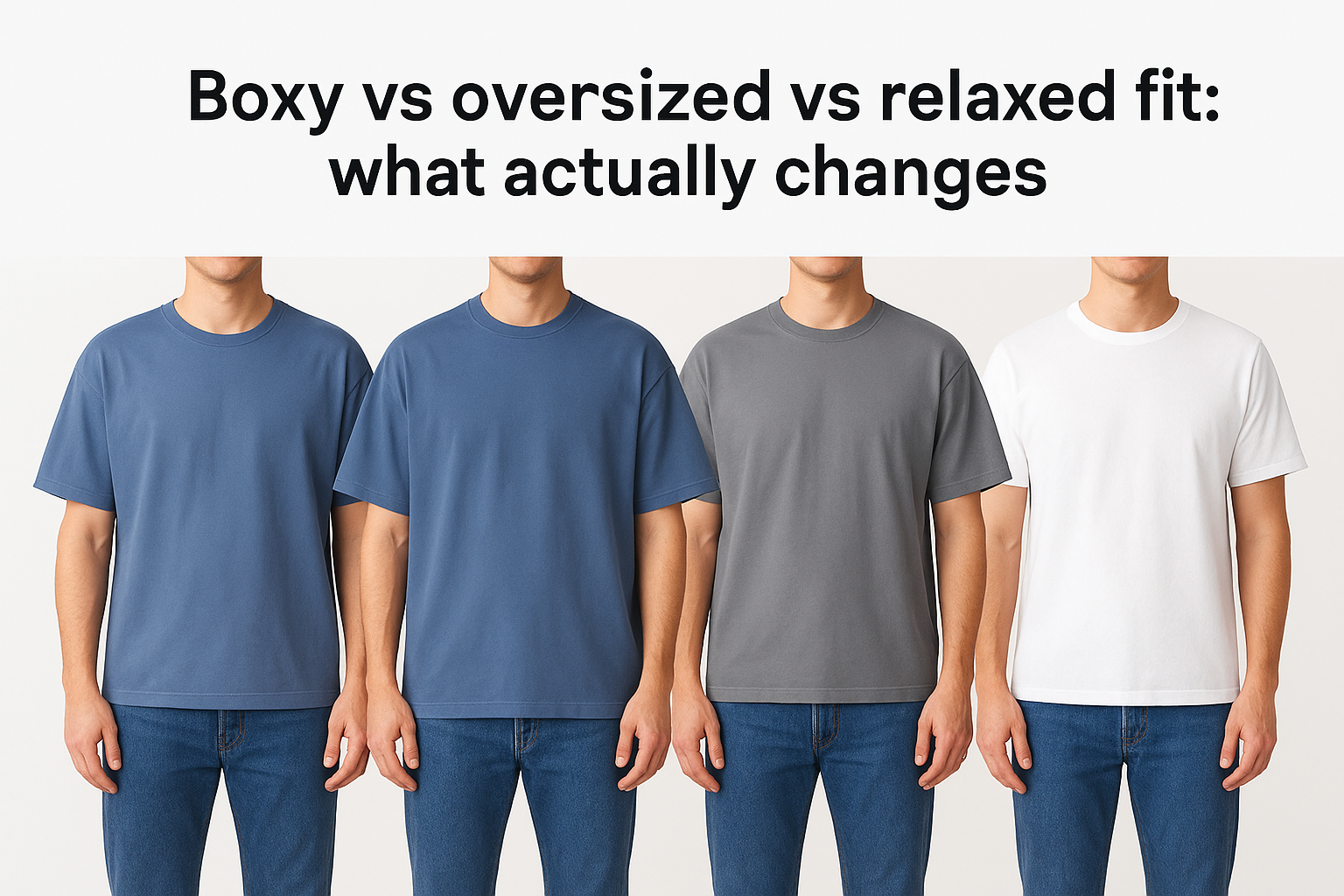
Boxy is about shape, oversized is about size, and once you know the difference, sizing charts stop being confusing.
Here's how the four fits typically compare on a standard men's medium:
| Fit | Shoulder drop | Body width | Length | Waist taper |
|---|---|---|---|---|
| Regular | None | Fitted | Standard | Slight |
| Relaxed | Minimal | +1-2 in | Standard | Slight |
| Boxy | 1-2 in past shoulder | +2-4 in | Standard | None |
| Oversized | 2+ in past shoulder | +4-6 in | Extended | None |
Sizing charts rarely spell this out, so this table is worth screenshotting before your next order. If you're deciding between a boxy fit vs relaxed fit tee, the real question is whether you want the shoulder seam to move at all. If it stays put, you're looking at relaxed, and it helps to know how relaxed and regular fits differ before you order. If it drops, you're in boxy or oversized territory, and length is what separates those two.
How to tell if a boxy tee fits you right
Grab a tee you already own and check the shoulder seam first. On a properly fitting boxy shirt, that seam sits an inch or two past your actual shoulder point, not right at the edge and not halfway down your arm. If it lands mid-bicep, you've picked up an oversized cut by mistake, not a boxy one.
Next, look at how the fabric falls from your chest to the hem. A correct boxy fit hangs straight down without pulling tight across the chest or ballooning out at the sides. There should be enough room to pinch about two inches of fabric at the ribs without the shirt looking baggy elsewhere.
If you can move your arms freely without the fabric tugging at the shoulder seam, the fit is doing its job.
Length matters just as much as width. A boxy tee should end around the top of your hip, roughly where a regular tee would, since boxy changes shoulder and body width, not overall length. Run through this quick checklist before you commit to a size:
- Shoulder seam sits past your natural shoulder line, not on it
- No pulling or stretching across the chest when you raise your arms
- Hem lands at hip level, not mid-thigh
- Sleeves sit loose but don't hang past the elbow
- Fabric drapes flat instead of clinging or ballooning
Once a tee checks every box on that list, you've found your actual size reference for future orders, no more guessing.
How to style a boxy t-shirt for everyday wear
Styling a boxy tee comes down to balance. Because the shirt already carries volume up top, you want your bottoms to counter that width instead of adding to it. Slim or straight-leg pants work best here, giving your silhouette a clear top-to-bottom contrast instead of a shapeless block.
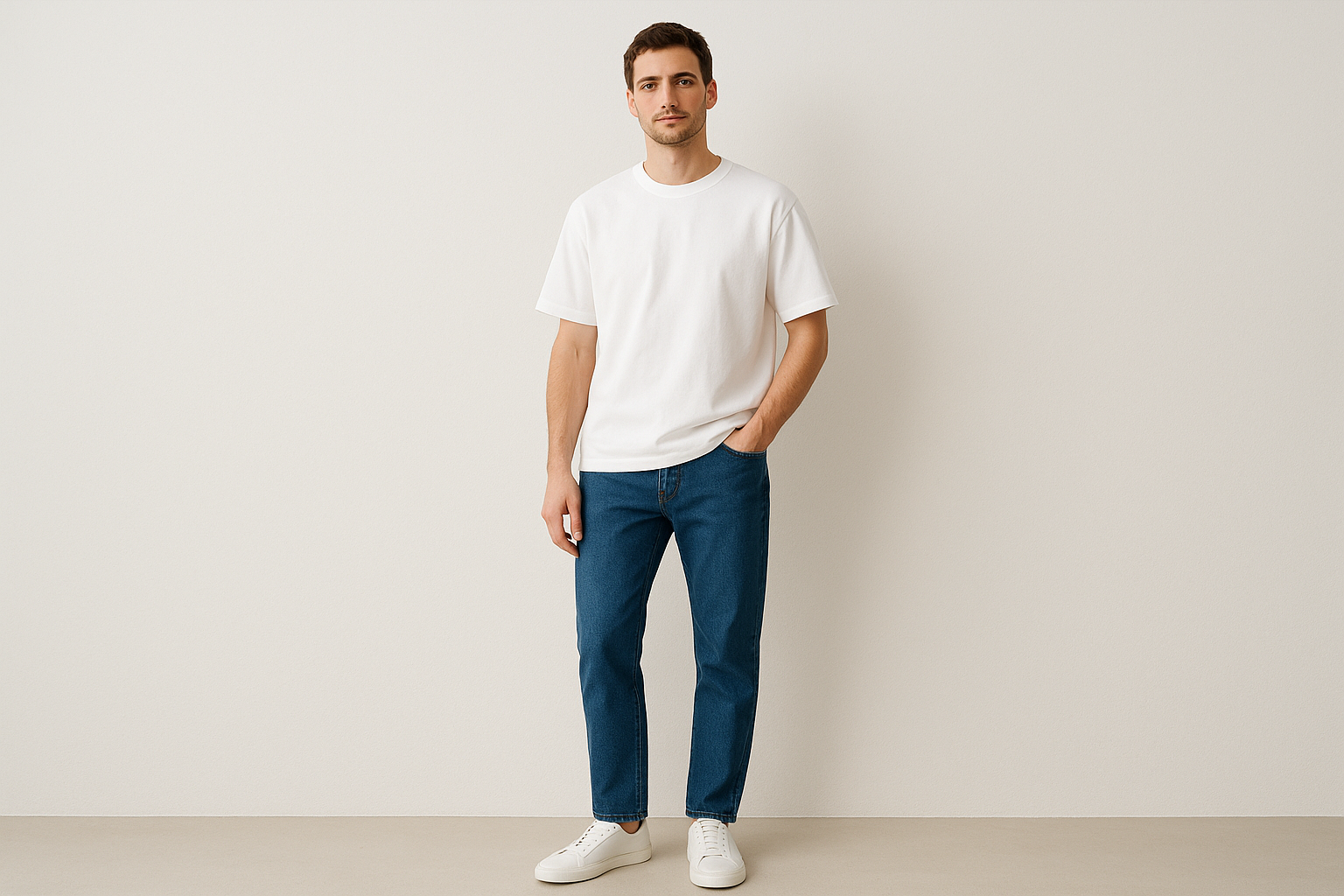
Pairing with bottoms
Tapered denim, chinos, or slim joggers all pull the eye downward and keep the boxy shape from swallowing your frame, and the same logic drives most ways to style a plain tee. Skip anything with heavy volume at the ankle. Wide-leg trousers can work, but only if the tee is tucked or the proportions are otherwise deliberate, not accidental.
Balance the boxy top with something narrower on the bottom, and the whole outfit reads intentional instead of oversized by mistake.
Layering without bulk
A boxy tee's straight hem makes it easy to layer under an open shirt, a light jacket, or a crewneck without bunching at the waist. Because the shoulder seam already sits past your natural line, adding another layer over it doesn't distort the fit the way it would with a fitted tee. This is where a quality basics tee actually earns its keep, since the best tees for layering under sweaters and jackets hold shape under repeated wear instead of stretching out.
A few reliable combinations to build from:
- Boxy tee, tapered denim, and low sneakers for a clean daily default
- Boxy tee tucked into wide trousers with a belt to define the waist
- Boxy tee under an unbuttoned overshirt for cooler weather
Start with one of these and adjust from there once you know how your specific cut hangs.
Choosing the fit that works for you
At this point, the difference between a boxy, oversized, and relaxed tee shouldn't feel like guesswork anymore. Boxy fit gives you a squared shoulder drop and straight body without adding extra length, which is exactly why it works for daily wear instead of just statement outfits. Deciding between them really comes down to how much shoulder drop and width you want, not which one is objectively better.
Every fit has its place, but if you want a shape that stays consistent wash after wash and pairs with almost anything in your closet, boxy is the safer long-term bet. Quality fabric matters just as much as the cut itself, since a good 300g cotton tee holds its shape instead of stretching out after a few washes.
If you're ready to feel the difference a properly cut boxy tee makes, see which loose-fit tees men actually wear daily and how the fit holds up in your own rotation.