


You've probably picked up a supima cotton t-shirt in a store and noticed it just feels different. Heavier, smoother, and somehow already broken in. Then you saw the price tag and wondered if that difference is real or just clever marketing.
It's real. Supima is an American-grown cotton with extra-long fibers that make yarn stronger, smoother, and more resistant to pilling than the standard cotton used in most tees. That's why a well-made supima cotton tee holds its shape wash after wash instead of stretching out or going thin at the collar within a few months. Whether you're comparing a fitted style or a supima cotton oversized t shirt, the fabric behaves the same way: it drapes better and lasts longer because the fiber itself is built differently.
In this article, we'll break down what actually makes Supima cotton premium, how it stacks up against Pima and regular cotton, and what to look for when comparing brands so you're not just paying more for a name. We built our own 300g Supima tee around these exact principles, so we know the details that separate a genuinely better shirt from a marked-up basic.
Why Supima cotton t-shirts are worth the higher price
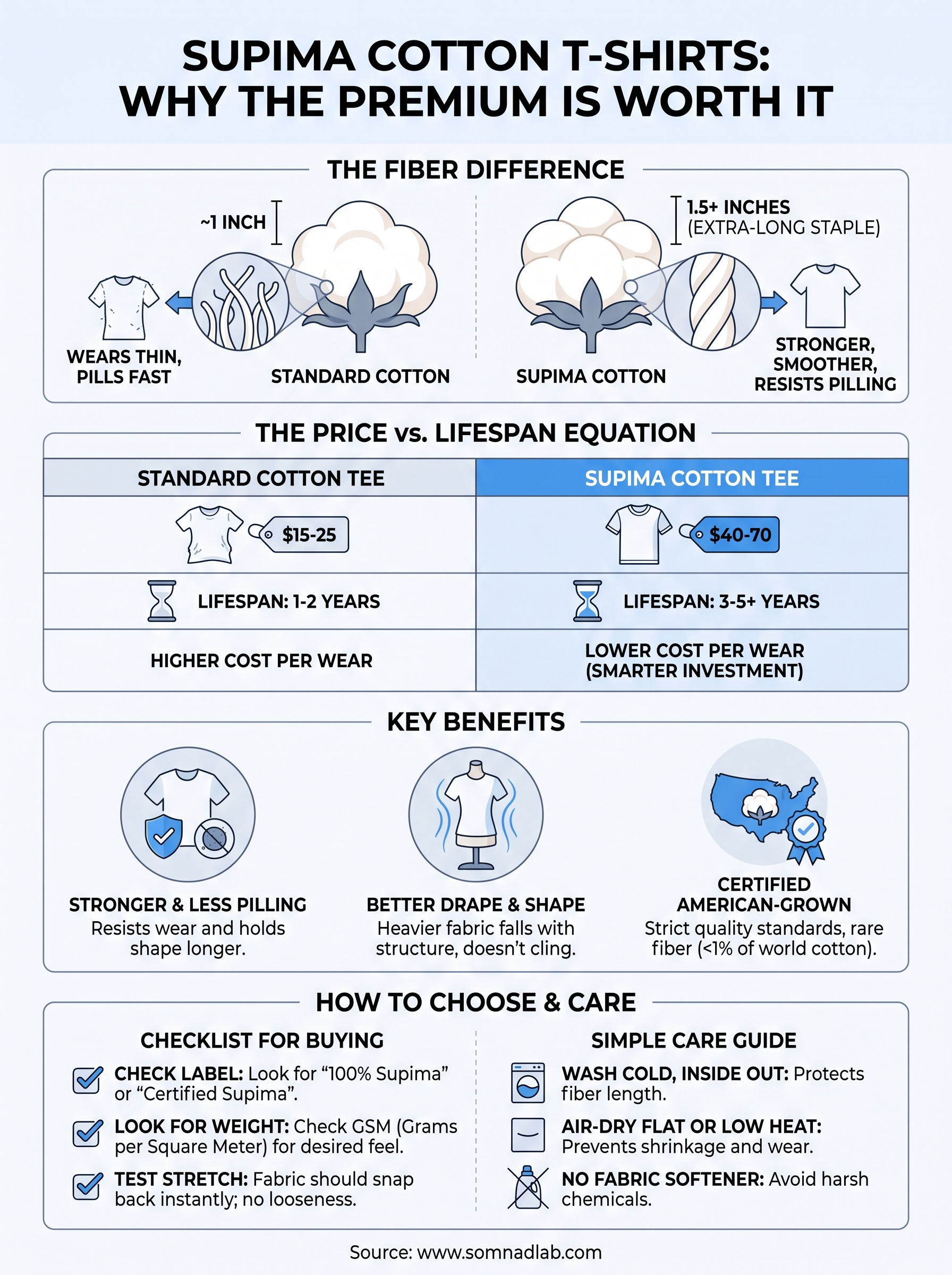
Start with the fiber itself. Supima cotton fibers run 1.5 inches or longer, compared to roughly 1 inch for standard upland cotton. That extra length lets spinners twist thinner, tighter yarns with fewer loose ends poking out, which is exactly why a supima cotton t-shirt resists pilling and holds its shape long after a cheaper tee has gone thin at the seams. The Supima organization, which certifies genuine American-grown Supima, notes that this fiber accounts for less than 1% of the world's cotton crop, so scarcity alone explains part of the premium.
A longer fiber means fewer weak points in the yarn, and fewer weak points means a shirt that survives years of washing instead of months.
The math behind the price tag
Here's a quick comparison of what you're actually paying for when you move up from a basic cotton tee to Supima.
| Factor | Standard cotton tee | Supima cotton tee |
|---|---|---|
| Fiber length | ~1 inch | 1.5+ inches |
| Typical fabric weight | 150-180g | 250-300g |
| Pilling after 20 washes | Noticeable | Minimal |
| Expected lifespan | 1-2 years | 3-5+ years |
| Price range | $15-25 | $40-70 |
Once you divide that price by actual wears, the gap shrinks fast. A $60 shirt that lasts five years costs you far less per wear than a $20 shirt you replace every eight months.
Weight and drape you can feel
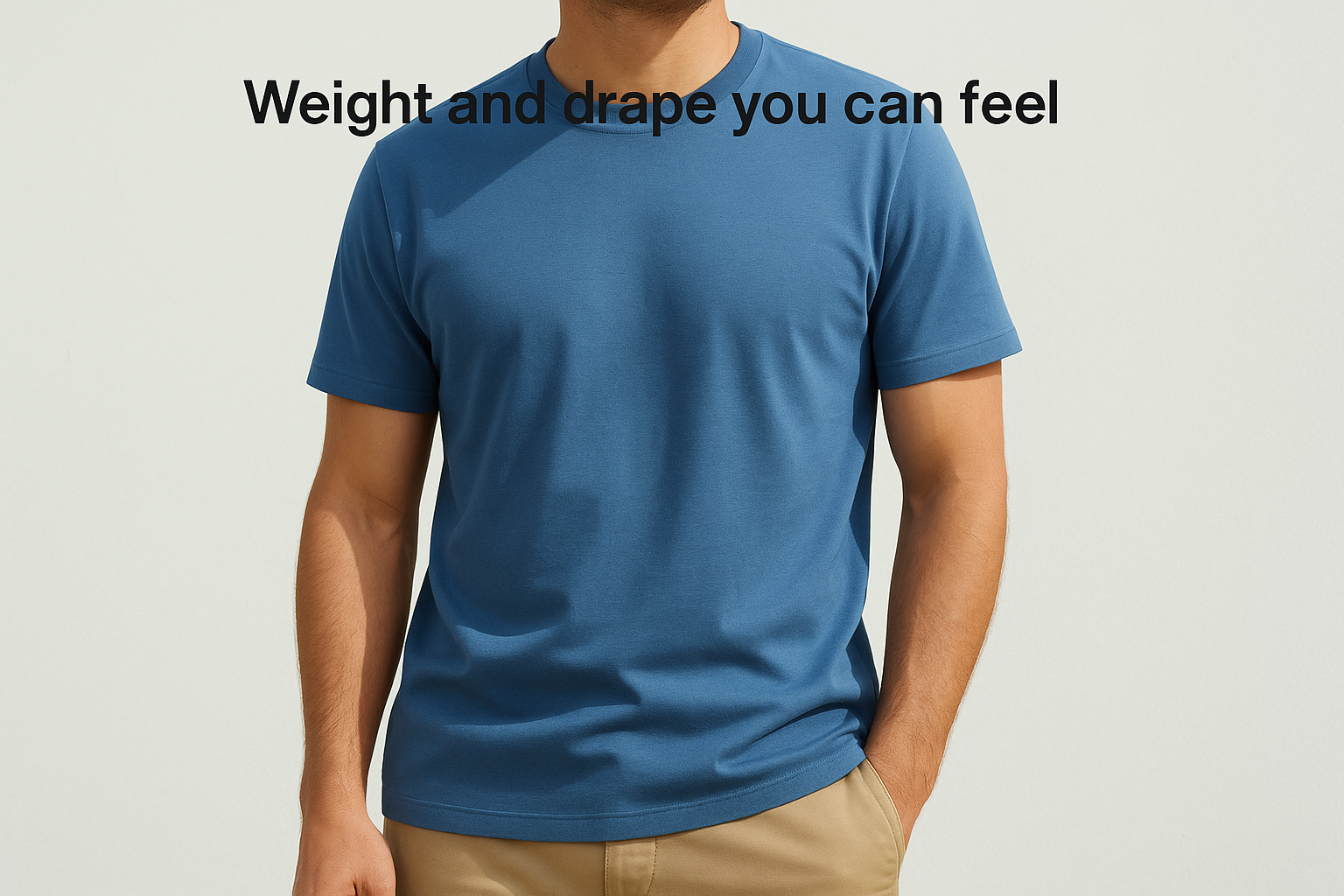
Quality Supima construction usually lands between 250 and 300 grams per square meter, noticeably heavier than the thin tees stacked at fast-fashion retailers. That weight isn't just about durability. It changes how the shirt drapes on your body, whether you're wearing a fitted crew neck or a supima cotton oversized t shirt meant to hang loose without looking sloppy. Heavier, longer-staple fabric falls with structure instead of clinging or wrinkling after an hour of wear.
Ultimately, the higher price reflects real material science, not brand markup. You're paying for a fiber that's rarer, a yarn that's stronger, and a garment that's engineered to outlast several cheaper replacements.
How to choose the right Supima cotton t-shirt for you
Not every shirt labeled Supima delivers the same quality, so you need to know what to check before you buy. Fabric weight, fit, and certification all matter more than the brand name printed on the tag.
Match the fit to how you'll wear it
Decide whether you want a fitted crew, a classic regular fit, or a supima cotton oversized t shirt before you shop by weight alone. Oversized styles need heavier fabric, ideally 280g or more, to hang with structure instead of looking like a bedsheet. A fitted tee can work slightly lighter, around 240 to 260g, since your body provides the shape the fabric doesn't have to create on its own.
The right weight depends on the silhouette you want, not just the fiber inside the shirt.
Check the label, not just the marketing copy
Look for these details before you buy any supima cotton t-shirt:
- "100% Supima" or "Certified Supima" on the tag, not just "premium cotton"
- Fabric weight listed in grams per square meter (GSM)
- Country of origin, since genuine Supima is grown in the US
- Seam construction, especially at the collar and shoulders
Test the stretch and recovery
Stretch the fabric gently across the chest. Quality Supima knit snaps back into shape almost instantly. If it stays stretched or feels loose after a light pull, you're likely looking at a blend or lower-grade cotton dressed up with Supima branding.
Supima vs. regular cotton and other premium fabrics
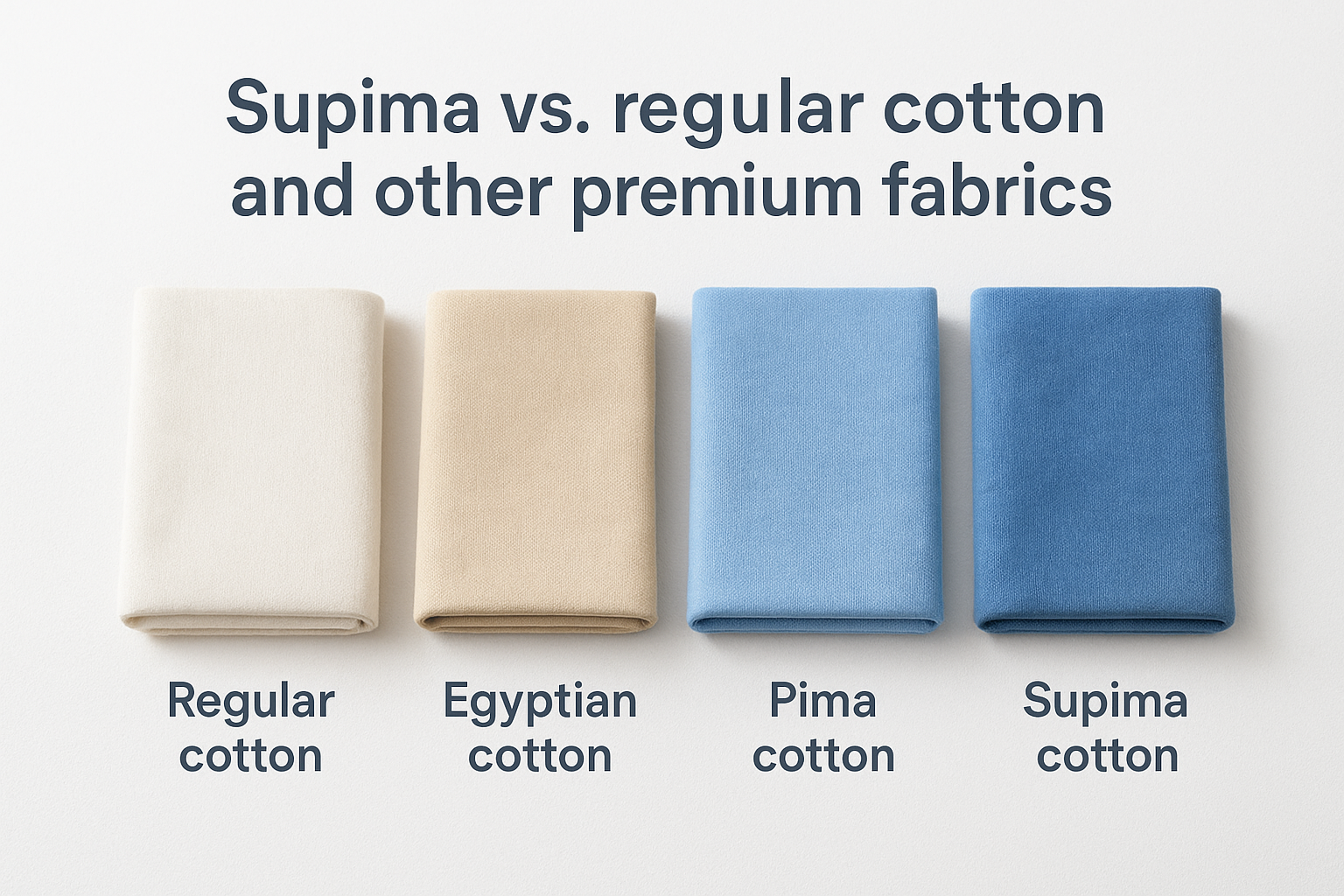
Once you understand Supima, the next question is how it compares to the other fabrics competing for shelf space. Regular cotton, Pima, and Egyptian cotton all get marketed as premium, but they're not interchangeable, and knowing the differences helps you avoid paying Supima prices for something else.
Pima, Egyptian, and Supima aren't the same thing
Pima cotton is a general category of extra-long-staple cotton grown in several countries, including Peru and parts of Asia. Supima is a trademarked, certified subset of Pima grown exclusively in the United States under strict quality standards. Egyptian cotton follows similar fiber-length logic but comes with less consistent certification, which means quality varies more from one supplier to the next.
Supima is the only long-staple cotton with a certification system that actually verifies where and how it was grown.
| Fabric | Fiber length | Certification | Typical feel | |---|---|---| | Regular upland cotton | ~1 inch | None | Softer at first, wears thin fast | | Egyptian cotton | 1.3-1.5 inches | Inconsistent | Smooth, variable quality | | Pima cotton | 1.4+ inches | Loose category | Smooth, durable | | Supima cotton | 1.5+ inches | USDA-backed, trademarked | Smooth, dense, long-lasting |
Stack them side by side and the pattern holds: longer fiber consistently means fewer loose ends, tighter yarn, and a shirt that resists pilling. Uncertified claims of "Egyptian" or "Pima" cotton often blend in shorter fibers to cut costs, so a supima cotton t-shirt with real certification is usually your safest bet if durability matters more than a lower price.
How to care for a Supima cotton t-shirt so it lasts
Buying quality fabric only pays off if you actually take care of it. A supima cotton t-shirt can outlast five cheap tees, but only if you wash it in a way that protects the long fibers instead of breaking them down early.
Wash cold and skip the harsh cycles
Cold water and a gentle cycle keep the yarn intact far longer than hot water ever will. Heat weakens cotton fibers over time, which shortens the effective lifespan of even premium Supima. Turn the shirt inside out before washing to protect the outer surface from friction against zippers, buttons, or rough fabric in the same load.
Cold water isn't a suggestion for Supima, it's the single habit that determines whether your shirt lasts three years or eight.
Skip the dryer when you can
High heat is the fastest way to shrink a supima cotton tee and break down the fibers that made it worth buying in the first place. Air-drying flat preserves both the weight and the drape, especially important if you own a supima cotton oversized t shirt that depends on structured fabric to hang correctly. If you need a dryer, use low heat and pull the shirt out slightly damp.
Simple care checklist
- Wash cold, inside out
- Use a mild detergent, skip fabric softener
- Air-dry flat or on a hanger
- Iron on low heat only if needed
- Store folded, not on hooks, to avoid shoulder stretching
What this means for your next t-shirt
A supima cotton t-shirt isn't a marketing label, it's a real difference in fiber, yarn, and how a shirt holds up over years of actual wear. Once you've felt the weight and drape of genuine long-staple cotton, cheaper tees start to feel disposable by comparison, and that's not an accident. Certification matters, weight matters, and how you wash the shirt matters just as much as what you paid for it.
Buying fewer, better shirts isn't a compromise, it's the whole point. You spend more upfront and less over time, and you stop replacing the same thin tee every few months. That's the thinking behind our own 300g supima cotton tee, built with no logos and no shortcuts, just fabric and fit designed to last. If you're ready to see the difference for yourself, shop the SÖMNAD collection.