


You've bought the $8 three-pack from the big box store, and you've probably bought the $60 tee from a trendy label with a logo on the chest. Both wore out or wore thin within a year. Somewhere between those two extremes sits a category most people can't quite define, even though they know it when they feel it against their skin. That's what premium basic t-shirts actually are, and why the price difference isn't just markup for a name.
The real distinction comes down to three things you can check with your own hands: fabric weight and fiber quality, a cut that skips the excess without clinging or ballooning, and construction that holds its shape wash after wash instead of sagging by month three. A shirt built on those three pillars looks the same on day one and day two hundred.
In this article, we break down exactly what separates a premium tee from a basic one, covering cotton types like Supima, fabric weight in grams, seam and collar construction, and the fit details that make a shirt layer well and last. By the end, you'll know precisely what to look for before you buy your next one.
Why the difference matters when you shop for tees
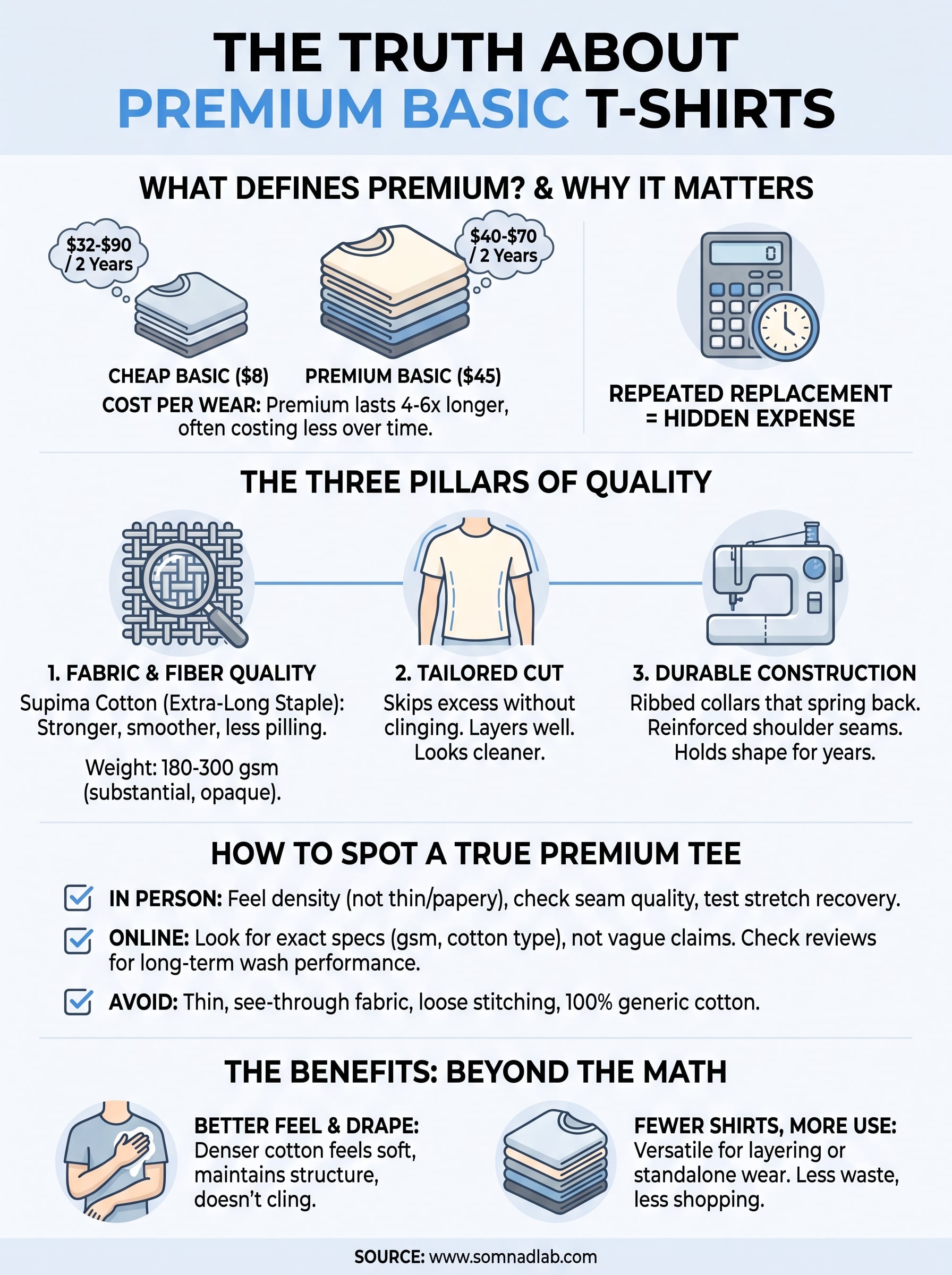
Most people treat a t-shirt as a disposable item, something you grab in a three-pack and replace when it stretches out or turns gray at the collar. That mindset costs more than it saves. A cheap tee that costs $8 but dies after fifteen washes runs you more per wear than a $45 shirt that survives 150 washes without losing its shape. Cost per wear is the math that actually matters, and it's the reason premium basic t shirts keep showing up in closets of people who used to buy in bulk.
The real cost of cheap basics
Think about what happens to a low-quality tee over its lifespan. The collar loosens within a month. The fabric pills under your arms. The shoulders sag forward because the seams weren't reinforced. You end up buying the same shirt three or four times a year, and each replacement carries its own shipping footprint, packaging waste, and manufacturing cost. Repeated replacement is the hidden expense nobody puts on the price tag.
A shirt you replace four times a year isn't cheaper than one you buy once and wear for four years.
A quick comparison
Here's what that difference looks like laid out side by side, based on typical wear patterns for a shirt worn once or twice weekly:
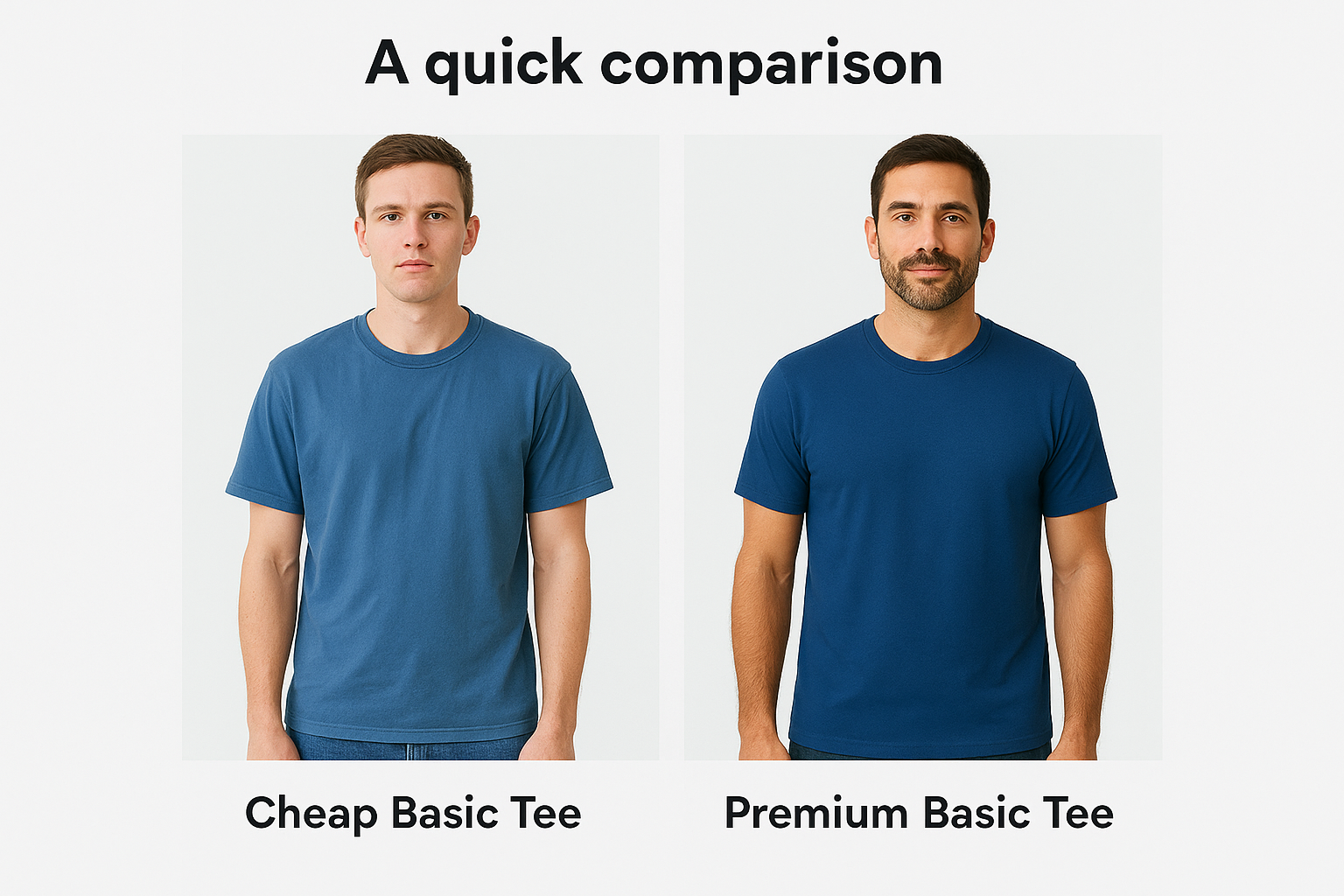
| Factor | Cheap Basic Tee | Premium Basic Tee |
|---|---|---|
| Typical price | $8-$15 | $40-$70 |
| Fabric weight | 120-160 gsm | 180-300 gsm |
| Washes before visible wear | 15-25 | 100+ |
| Shape retention | Loses shape within weeks | Holds shape for years |
| Replacements needed over 2 years | 4-6 | 0-1 |
| Approximate 2-year cost | $32-$90 | $40-$70 |
That table tells the real story. Once you factor in replacement cycles, the premium option often costs the same or less over time, and you spend far less energy shopping for shirts you don't even like that much.
Fit and versatility matter too
Outside the math, there's a practical reason the difference shows up the moment you get dressed. A basic tee that's too boxy or too clingy limits how you can style it. You can't layer it under a jacket without bunching, and you can't wear it alone without it looking sloppy. A well-cut premium tee does both jobs, which means fewer shirts doing more work in your rotation. Versatile styling is part of what you're paying for, not just the fabric on its own.
Quality also affects how a shirt looks against your skin day to day. Thin, low-grade cotton shows every wrinkle and clings in ways that feel unflattering by afternoon. Denser, better-woven cotton drapes instead of clinging, and it keeps its structure whether you're at a desk or outside in the heat. That's the difference between a shirt you forget you're wearing and one you keep adjusting all day.
How to spot a true premium basic in the store or online
Finding actual premium basic t-shirts takes more than reading a price tag, since plenty of brands charge premium money for a shirt that's barely better than the three-pack at the drugstore. You need to know what to check, whether you're holding the shirt in a store or scrolling a product page with nothing but a photo and a description to go on.
What to check in person
If you can touch the shirt, start with the fabric itself. Hold it up to light and see how much you can see through it. A dense, tightly woven cotton blocks light better than a thin one, and it won't feel papery between your fingers. Stretch the fabric gently across the grain and let go. It should snap back instead of staying stretched out, which tells you the knit has real recovery built in.
If a shirt feels thin enough to see through, it won't survive a year of regular washing.
Check the seams next, especially at the shoulders and sleeves. Flat, even stitching with no puckering signals real construction. Loose threads or uneven seams are a warning sign no matter what the price says.
What to check online
Online, you're relying on the brand's honesty, so look for specific details instead of vague marketing language:
- Fabric weight in grams per square meter (gsm): anything under 180 gsm is closer to basic than premium
- Fiber type named specifically, like Supima or pima cotton, not just "100% cotton"
- Construction details, such as reinforced seams or a ribbed collar that holds its shape
- Return policy and reviews that mention wash performance after months of use, not just first impressions
Brands confident in their materials list this information upfront. Vague product pages that skip fabric weight and fiber origin are usually hiding a shirt that's basic in every sense but the price.
Fabric, fit, and construction: the details that set them apart
Every premium basic t-shirt earns that label through specific, checkable details, not vague claims about quality. Once you know what those details are, you can compare two shirts side by side and see exactly why one costs more and lasts longer.
Cotton quality starts the story
Fiber length determines almost everything else. Supima cotton, grown from extra-long staple fibers, spins into yarn that's stronger and smoother than the short-staple cotton used in most basics. Shorter fibers fray and pill within weeks because the ends work loose from the yarn. Longer fibers stay locked together, which is why a Supima tee resists pilling under the arms and across the back long after a standard cotton shirt has gone fuzzy.
Fiber length, not thread count, decides how long a cotton shirt keeps its surface smooth.
Weight and knit density carry the fabric's structure
Grams per square meter, or gsm, measures how much fabric is packed into the weave. A shirt around 300 gsm feels substantial and opaque, while anything under 180 gsm tends to show light through it and thin out fast. Denser knits also hold their shape better through the dryer, so the shirt you buy in June still fits the same way in December.
Fit details separate structure from bulk
Fit is where craftsmanship shows up visually. A clean, tailored cut skips excess fabric at the sides and sleeves without pulling tight across the chest, so the shirt layers under a jacket or stands alone. Ribbed collars that spring back after stretching, double-stitched hems, and shoulder seams set slightly forward all prevent the sagging and twisting that ruins cheaper shirts within a season. Together, these construction choices are what make premium basic t shirts hold their form wear after wear, instead of just looking good on the hanger.
Is the higher price actually worth it?
Yes, for most people who wear the same handful of tees on repeat, a premium tee earns back its price within the first year. The math from the cost-per-wear comparison holds up in practice, not just on paper: a shirt that survives 150 washes without stretching out saves you the time, money, and hassle of replacing it three or four times over the same stretch. If you're the type who wears a plain tee almost daily, that durability isn't a luxury, it's the whole point of paying more upfront.
Breaking down where the money goes
Money spent on a premium basic goes toward things you can actually feel: longer-staple cotton, denser knitting, reinforced seams, and a pattern cut by someone thinking about how the shirt drapes rather than how cheaply it can be assembled. None of that shows up in a $10 tee, because none of it fits the margins that price allows. Higher fabric cost and slower, more careful construction are the two line items driving most of the price gap, not branding or packaging.
You're not paying for the logo, you're paying for the shirt still fitting the same way two years from now.
When premium isn't worth it
Sometimes the higher price doesn't pay off, and it's worth being honest about that. If you need a shirt for painting the garage or a one-time event, a cheap basic does the job fine, since you're not banking on longevity. Occasional wearers, people who rotate through dozens of tees, or anyone buying strictly for a short-term use case won't see the same return that a daily-wear customer does. Premium basic t shirts make the most sense for the shirts in heavy rotation, the ones you reach for three times a week, not the ones sitting at the back of a drawer.
Caring for premium tees so they last
Owning premium basic t-shirts only pays off if you treat them right, since even the best Supima cotton wears down faster under bad habits. The good news is that proper care takes almost no extra time, just a few adjustments to how you wash and store shirts you already own.
Washing without wrecking the fabric
Cold water is the single biggest factor in keeping dense cotton from shrinking or losing its color. Hot water breaks down the fibers faster and sets in shrinkage that no amount of stretching fixes afterward. Turning shirts inside out before washing protects the outer surface from friction against zippers, buttons, and other fabrics in the load, which cuts down on pilling significantly.
Cold water and a gentle cycle do more for a tee's lifespan than any fabric they're made from.
Skip fabric softener, too. It coats cotton fibers with a residue that reduces breathability and, over time, makes the fabric feel less soft rather than more.
Drying and storage habits that protect fit
Heat from a dryer is where most premium tees actually meet their end, since high heat breaks down the elastic recovery in ribbed collars and cuffs. Air drying flat, or on a low-heat tumble setting, keeps the knit dense and prevents the fabric from thinning out prematurely. Folding shirts instead of hanging them also matters more than people expect, since hangers stretch the shoulder seams out of shape over months of storage.
Quick reference for keeping a premium tee in shape:
- Wash in cold water, inside out
- Skip the fabric softener
- Air dry or use low heat only
- Fold instead of hanging
- Avoid overloading the washer, which increases friction
These habits protect the exact features that separate premium basic t shirts from cheaper ones. Skipping them defeats the purpose of paying more for better construction in the first place.
Choosing tees that earn their place in your closet
A good tee shouldn't be a throwaway purchase you make four times a year without thinking about it. Once you know what to check, fabric weight, fiber quality, seam construction, and a fit that skips excess without clinging, picking a premium basic gets a lot simpler. You're not guessing anymore. You're checking specifics, the same way you'd check specs on anything else you plan to use for years.
Spend your money on shirts built to last, not shirts you'll replace next season. That's the whole case for premium basic t-shirts: fewer purchases, less waste, and a tee that still fits right long after the cheap version has gone thin and shapeless.
If you're ready to put that checklist to use, see how our relaxed tee holds up, built from 300g Supima cotton with the fit and construction this article just walked you through.